The One Thing To Do With Your Florida Desert Rose In June To Keep It Blooming
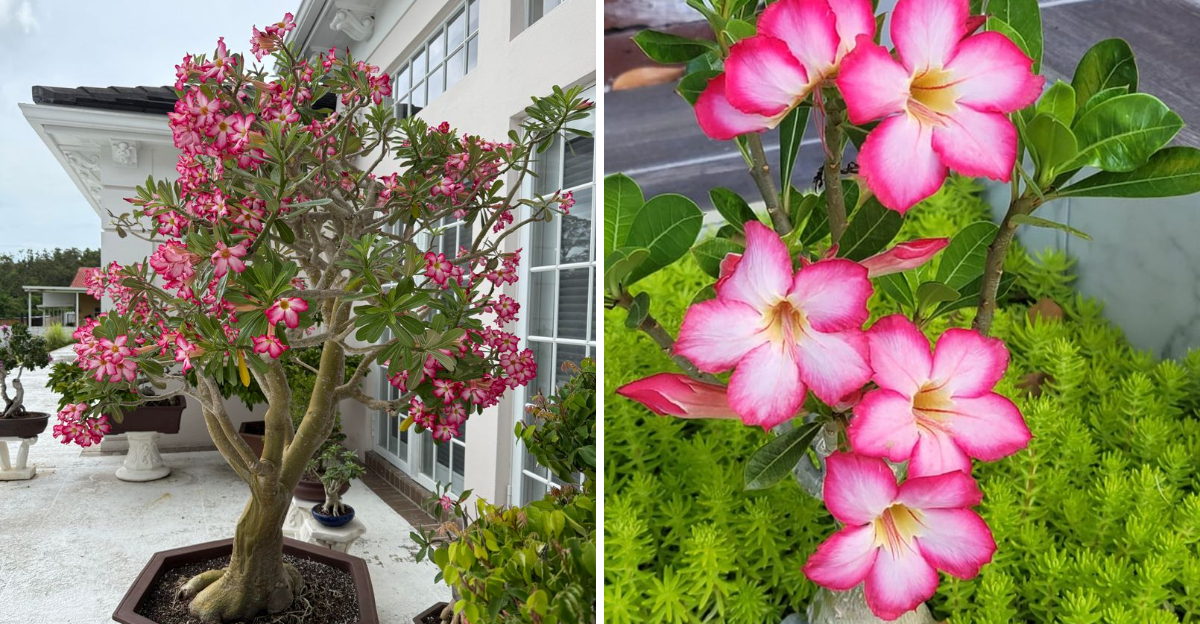
June is when desert rose growing in Florida gets genuinely interesting. The heat is building, sunshine is intense, warm nights are settling in, and rainy season is arriving right on schedule with those afternoon downpours.
For a plant that loves heat and light but really dislikes wet feet, that combination requires some thoughtful management.
Here is the thing though, if there is one non-negotiable for keeping desert rose blooming through a Florida summer, it is light.
Six or more hours of bright direct sun each day is what this plant needs to perform at its best, and without it, even the most attentive care routine will fall short.
Get the light right first and everything else clicks into place much more easily.
1. Six Hours Of Bright Light Matters Most
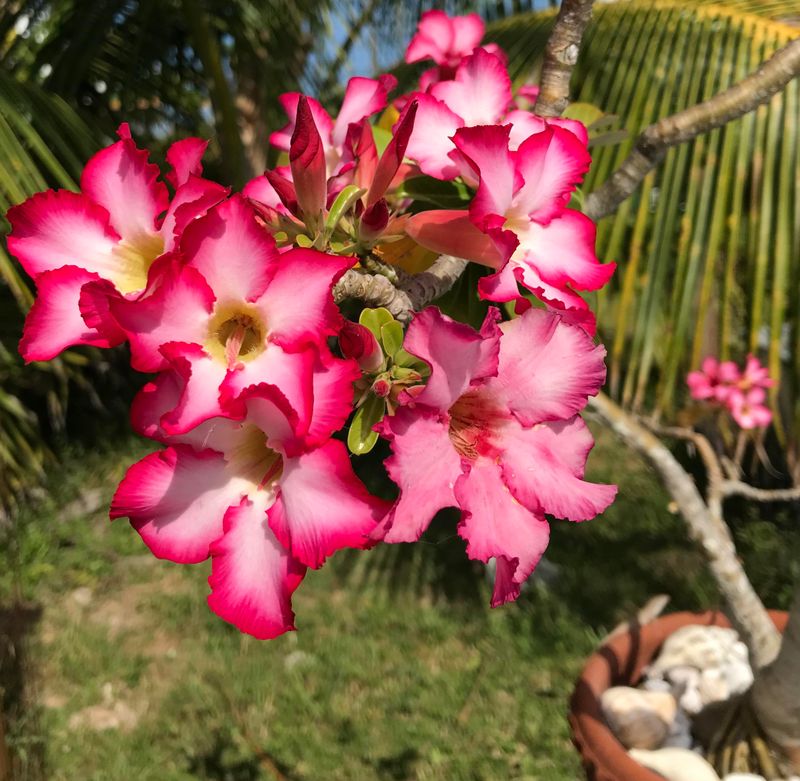
Sunshine is one of the most important things your desert rose needs in June. Florida summers offer long days filled with intense, direct light, and this plant genuinely thrives when it soaks up six or more hours of that brightness each day.
Placing your plant in a spot where it receives consistent, unfiltered light can support stronger stems, healthier leaves, and better chances of flowering through the summer season.
Many homeowners notice that plants moved to shadier spots during hot months tend to slow down or produce fewer blooms.
While a little afternoon shade during the most intense heat of the day is sometimes used by gardeners, too much shade overall can work against your plant.
Brighter locations tend to support more active growth.
Watch how light moves across your patio or yard through the day in June. The sun angle shifts slightly compared to spring, so a spot that worked well in March might now get more shade from a roof overhang or nearby tree.
Adjusting the container position by even a few feet can make a noticeable difference.
Aim for a location that stays bright from morning through early afternoon for the most consistent light exposure your desert rose can use during Florida’s warm and active summer growing period.
2. Morning Sun Can Support Summer Blooming
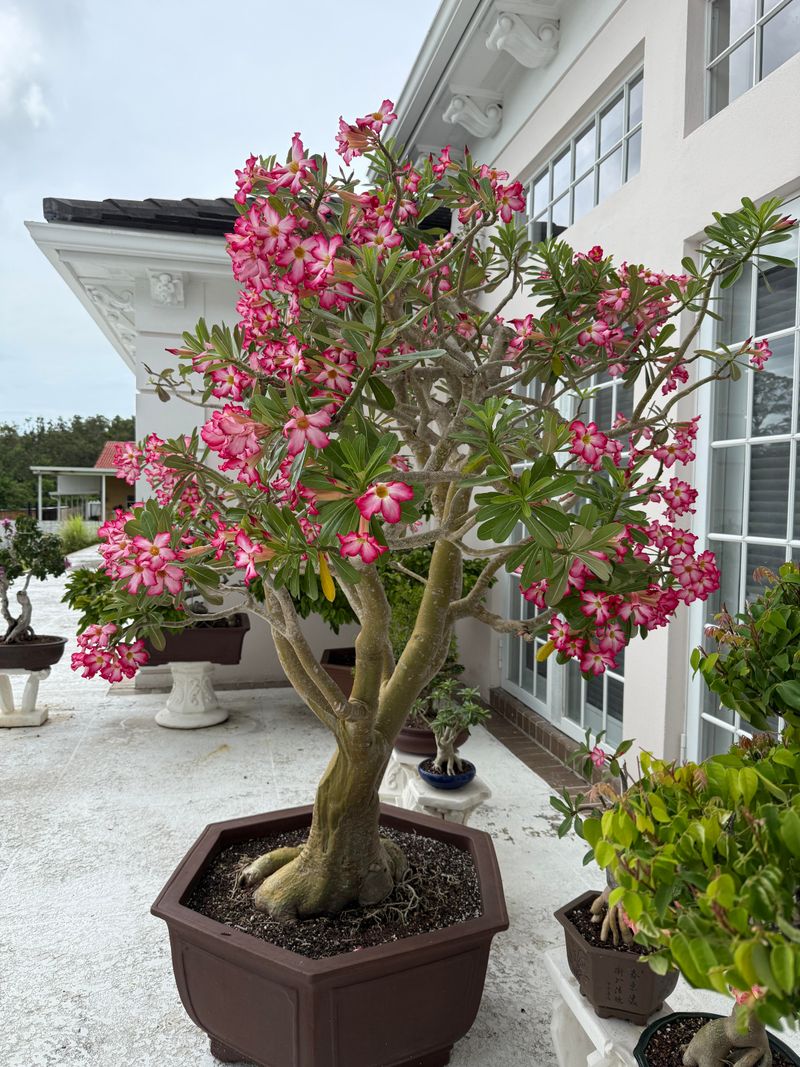
Morning sun can be a smart starting point for a Florida desert rose in June because it gives the plant strong light before the day reaches its hottest stretch.
Desert rose needs bright light to flower well, and UF/IFAS notes that six or more hours of bright light each day helps maintain summer flowering.
In a Florida yard, that might mean a sunny patio, a bright porch edge, a driveway container, or another open spot where the plant is not shaded for half the day.
I usually check light before blaming fertilizer, because a shaded desert rose may grow leaves while producing fewer blooms.
If the plant only gets a short patch of early sun, it may still need a brighter location to reach that useful six-hour range. Morning sun also helps after humid nights or rainy weather by warming the plant and encouraging the top of the potting mix to dry more evenly.
Your Florida Garden Changes Every Week. Your Plan Should Too.
Gardening in Florida changes quickly throughout the season. Every Friday you’ll receive a simple weekly plan showing exactly what to plant, prune, fertilize, harvest, and protect so you never miss the right timing.
That said, light is only part of the picture. The pot still needs drainage holes, and the soil mix should let water move through freely.
A bright location with wet, heavy soil can still cause trouble. If your plant looks leafy but bloom is weak, try moving it gradually into brighter morning light first, then watch how it responds over the next few weeks before adjusting your care again later.
3. Too Much Shade Can Reduce Flowers
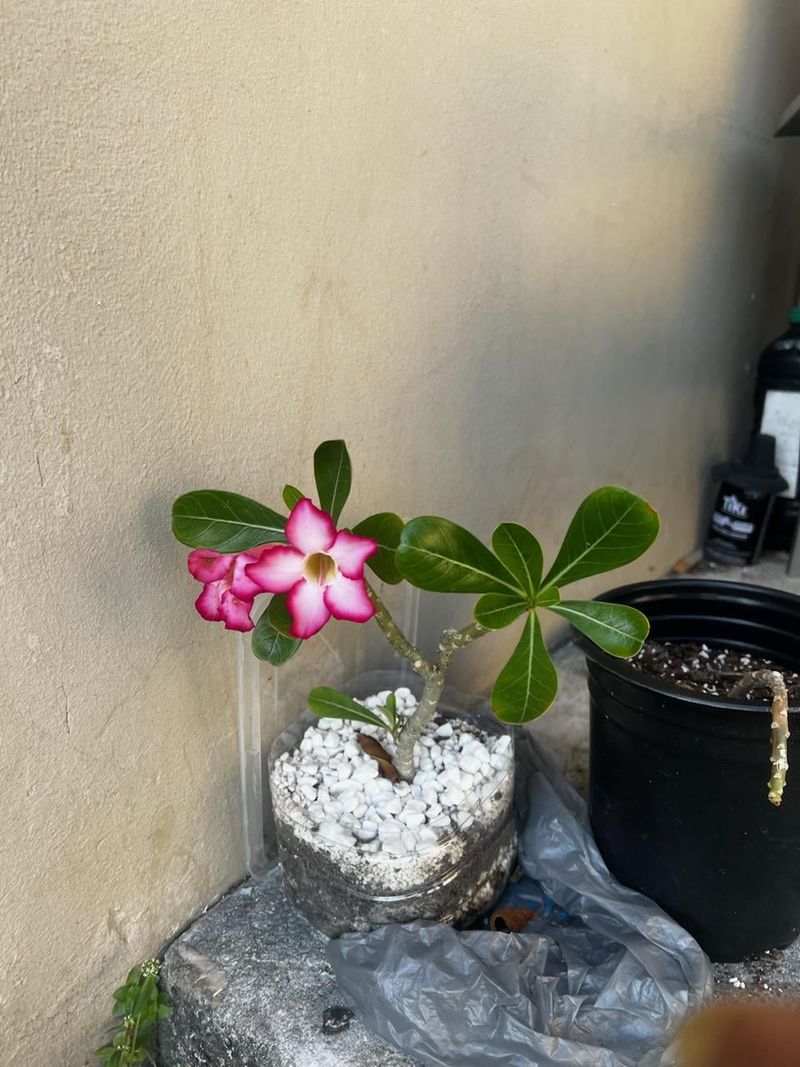
Too much shade is one of the first things I would check when a Florida desert rose looks healthy but is not blooming much in June. This plant can grow leaves in less light, but leaf growth is not the same as good flowering.
Desert rose needs bright sunlight to flower well, and low light can lead to a plant that looks green but does not put on the summer show you expected.
In Florida, shade can sneak up on a plant as nearby shrubs fill in, palm fronds stretch overhead, or a patio roof blocks more sun than you realize.
A spot that worked in spring may not give the same useful light once nearby plants have filled out for summer. If your desert rose has been sitting in a shady corner, do not rush to solve the problem with extra fertilizer.
More fertilizer will not make up for weak light, and too much feeding can create its own stress. Start by watching the spot for a full day.
Count how many hours of bright light the plant actually receives, not just how bright the area looks when you walk by. If it is getting only filtered light or a short burst of sun, move it gradually to a brighter place.
A slow move helps the plant adjust to stronger Florida sun without sudden stress.
4. Container Placement Makes Light Easier To Control
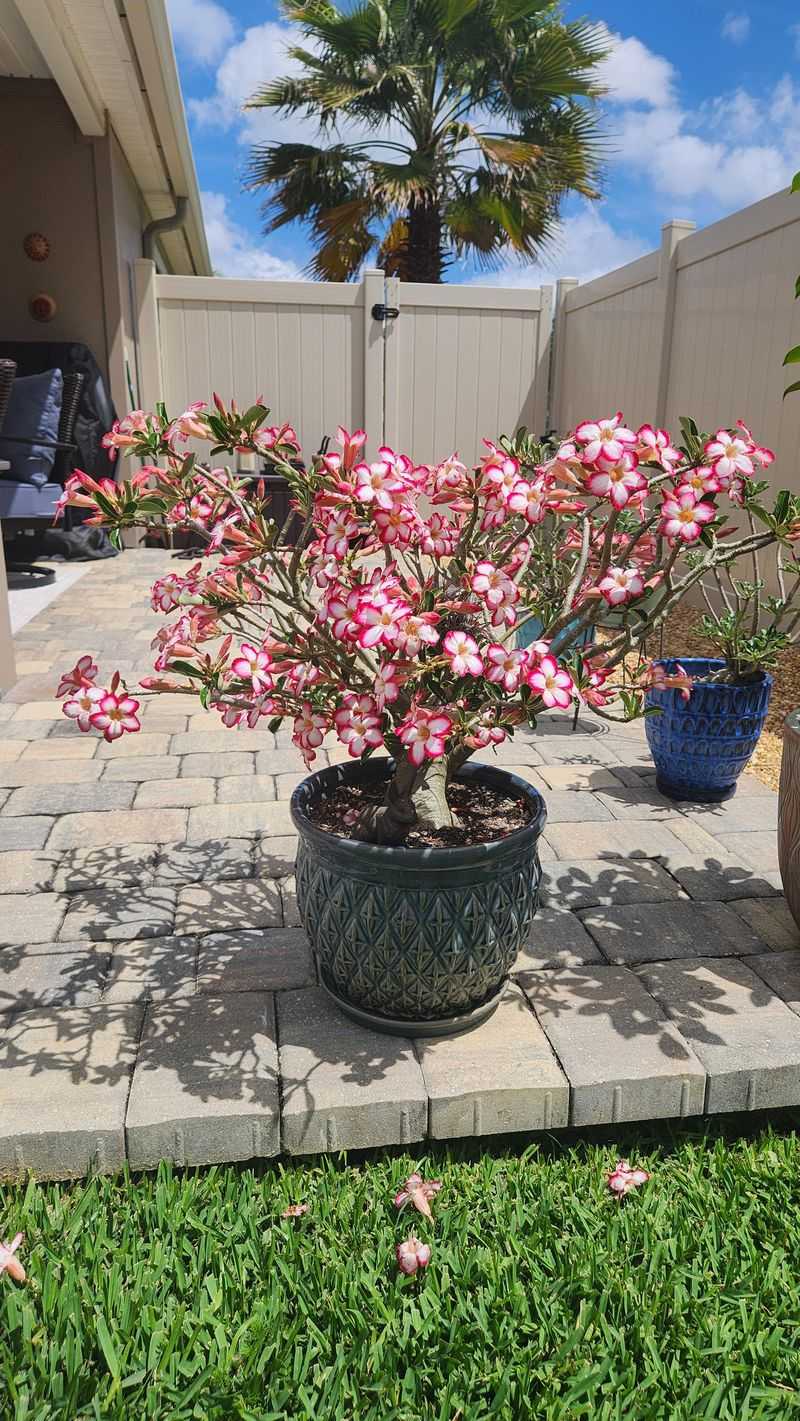
A container-grown desert rose gives you one big advantage in June: you can move it until the light is right. In Florida, that matters because summer sun, rain, shade, and reflected heat can all change from one side of a patio to another.
A pot near a wall may receive bright morning sun, while another spot only a few feet away may fall into shade by midmorning. If your desert rose is not blooming well, try treating placement like part of your care routine.
Look for a location that gives the plant strong bright light for much of the day, while still allowing water to drain freely after rain or watering. Before moving the pot, lift or tilt it carefully to make sure it is not too heavy to handle safely.
Containers also make it easier to protect the plant from overly wet conditions during long rainy stretches.
You can shift the pot away from roof runoff, sprinkler overspray, or low spots where water splashes back against the base.
I like containers for desert rose because they let you respond to Florida weather instead of fighting it. Just make sure the container has drainage holes and is not sitting in a saucer full of water.
A bright spot helps most when the roots are not staying wet for too long.
5. Patio Plants May Need A Brighter Spot
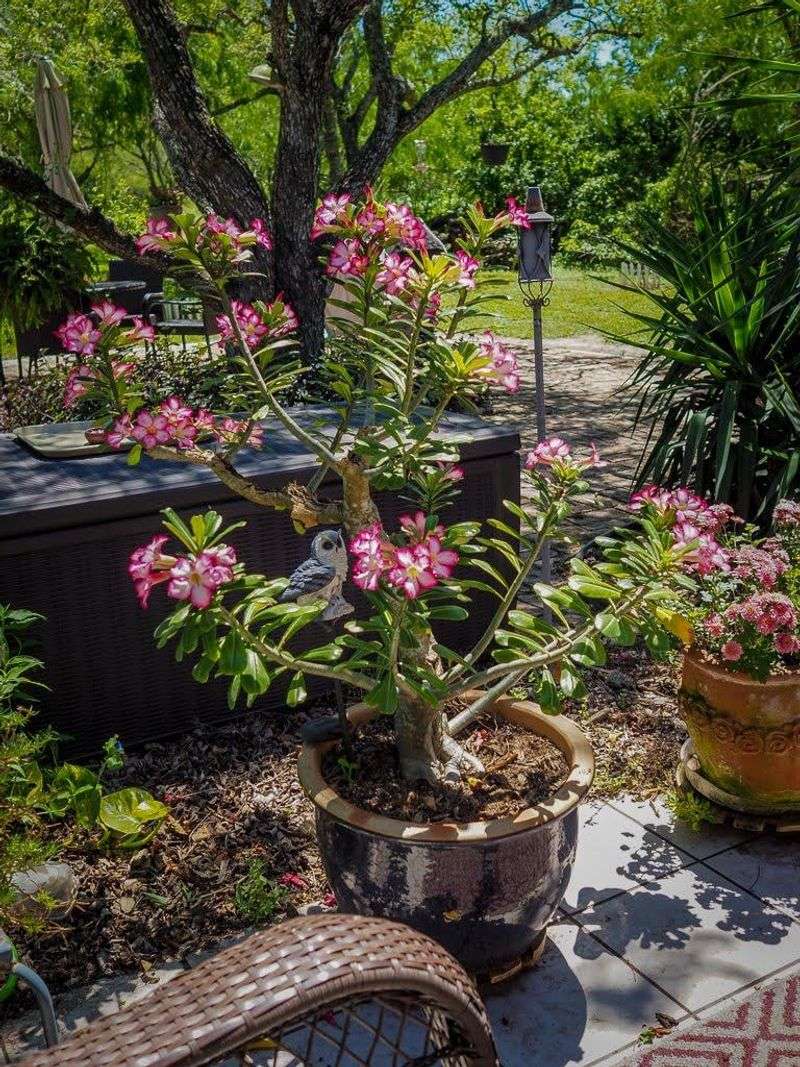
Patios can fool you into thinking a desert rose is getting more sun than it really is. The space may feel hot, bright, and open to people, but the plant may be shaded by a screen enclosure, porch roof, fence, awning, nearby tree, or even other containers.
In June, a Florida desert rose needs enough bright light to support flowering, so a patio plant that sits in shade for much of the day may grow without blooming strongly.
Even one or two extra hours of bright morning light can sometimes make a noticeable difference in how the plant responds.
I would start by checking the shadow pattern. Look at the plant in the morning, around midday, and again later in the afternoon.
If the pot is shaded most of the time, move it closer to the bright edge of the patio or to a sunnier corner where it receives more direct light. Do this gradually if the plant has been in shade for a while.
A sudden move from dim shade into intense sun can stress leaves, especially during hot weather. Also check what happens after rain.
Some patio spots collect runoff from the roof or hold humidity around crowded pots. A brighter location with better airflow and drainage can often make June care much easier.
6. June Rain Should Not Replace Sunlight
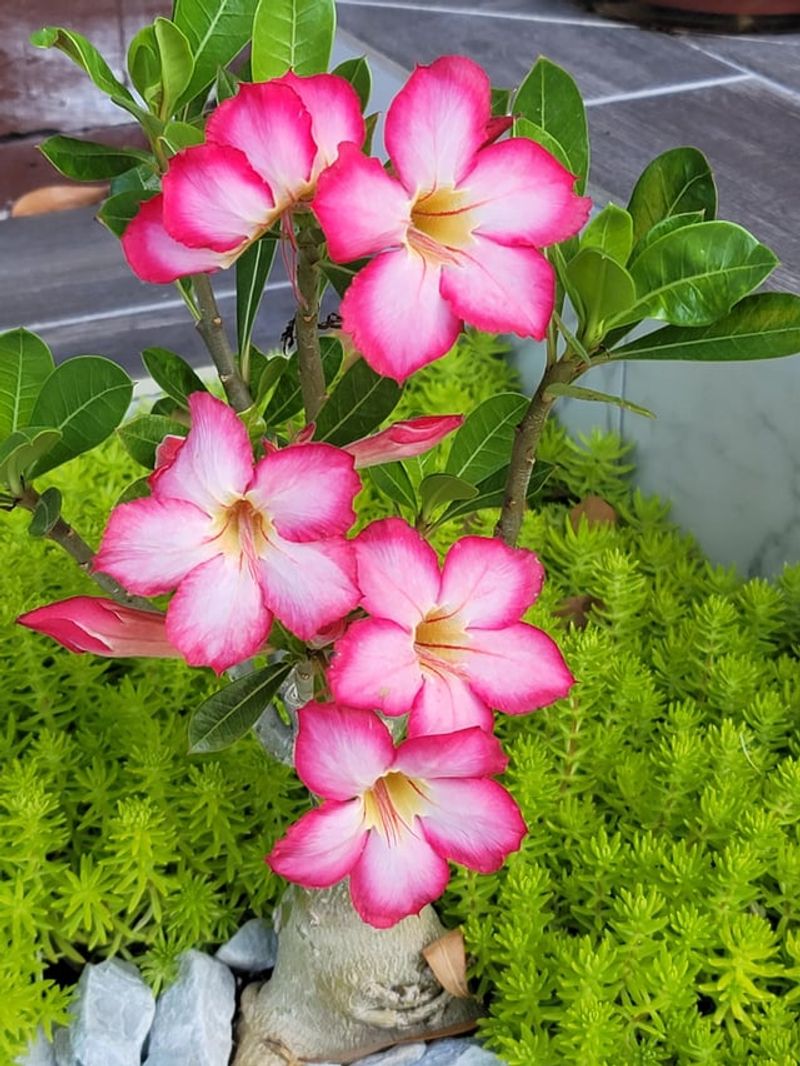
June rain can make a Florida desert rose look well cared for, but rainfall does not replace the bright light this plant needs for strong summer flowering. Desert rose is a succulent, and it responds best to warm, bright, well-drained conditions.
During Florida’s rainy season, the plant may receive plenty of water while still sitting in a spot that is too shaded. That combination can be frustrating because the leaves may stay green, but blooms may slow down.
Rain can also make gardeners less likely to move containers, since the plant looks hydrated already. I would separate the two needs in my mind: water is one part of care, and light is another.
A rain-soaked pot in a dim corner may look fine for a while, but it is not giving the plant the bright, dry-leaning conditions it prefers. After several cloudy or rainy days, check whether your desert rose still receives strong light when the sun returns.
If it sits under a covered patio or deep tree shade, rain alone will not solve weak flowering. Also be careful with watering after storms.
If the potting mix is still damp, adding more water may keep the roots too wet. In June, the better routine is to watch rainfall, check soil moisture, and make sure the plant still has a bright, sunny position.
7. Strong Light Works Best With Good Drainage
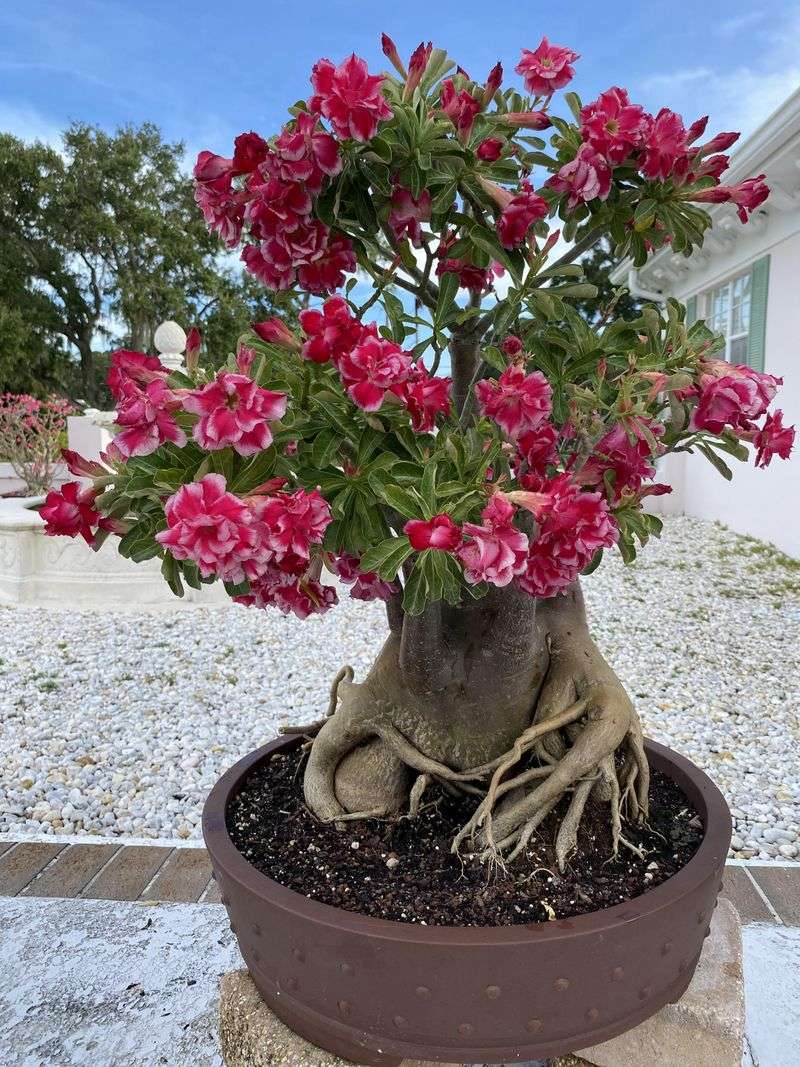
Strong light can support summer flowering, but it works best when the desert rose is also planted in a fast-draining setup. In Florida, June can bring intense sun one day and heavy rain the next, so both parts of care matter.
A desert rose sitting in bright light may still struggle if the potting mix stays wet around the roots. This plant is often grown in containers for a reason: pots can offer better drainage and easier placement than many garden beds.
A cactus-style or fast-draining mix is often a better fit than a heavy moisture-holding soil. The container should have open drainage holes, and water should be able to move through instead of pooling at the bottom.
I also avoid packing organic mulch against the swollen base, because extra moisture around that area can create problems during wet weather.
If the pot feels heavy for several days after rain, that is a useful clue that the mix may be holding more moisture than desert rose prefers.
If you are moving a desert rose into stronger light in June, check the soil and pot at the same time. Bright sun may help the surface dry faster, but it cannot fix a pot that drains poorly.
For the best summer care, give the plant bright light, warm conditions, and a root zone that does not stay soggy.
8. Watch The Plant For Light Stress Signs
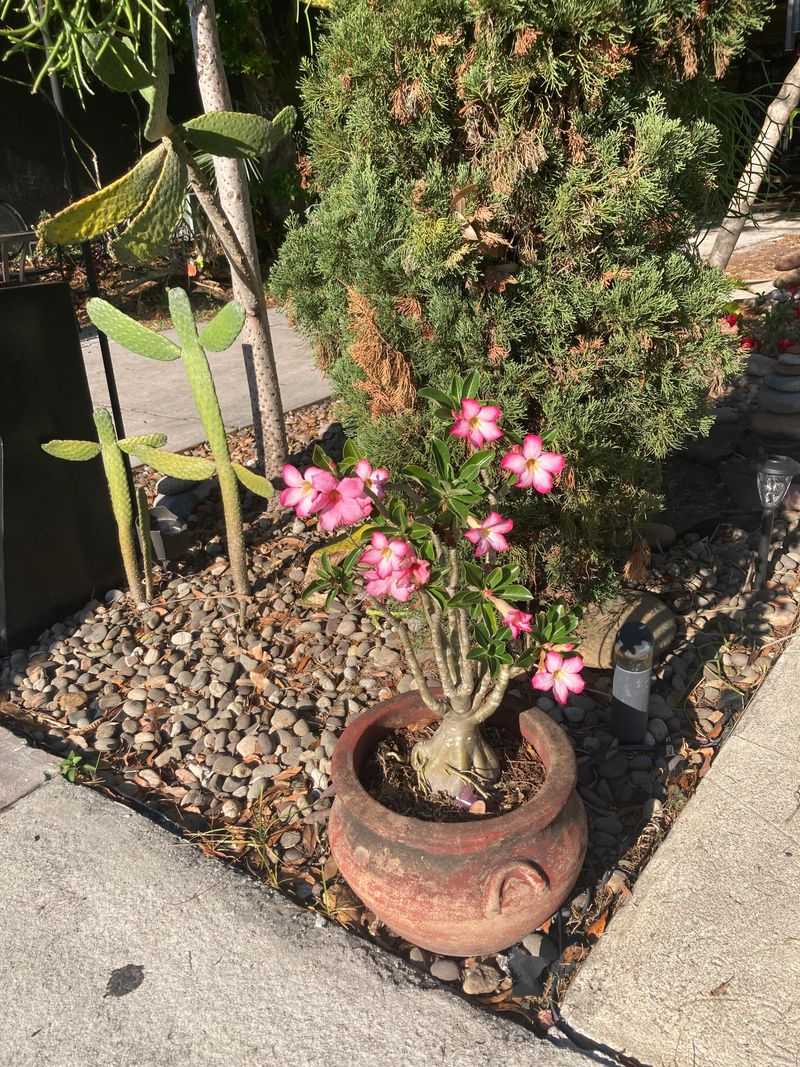
A desert rose can tell you quite a bit if you watch it closely after changing its light. In June, Florida sun can be strong, so moving a shaded plant into a brighter place should be done with some care.
If the plant has been living under a covered patio or in filtered light, give it a gradual adjustment instead of placing it straight into the hottest open spot. Watch the leaves over the next several days.
Some adjustment is possible, but sudden leaf scorch, faded-looking patches, or a generally stressed appearance can mean the move was too abrupt.
On the other hand, long stretches of shade may show up as fewer flowers, softer growth, or a plant that seems leafy but not very productive.
A plant that keeps reaching toward the brightest side of the patio may also be telling you it needs a better-lit position. I like to make one change at a time, then observe.
Move the pot to brighter morning light, keep watering careful, and check that the soil drains well. Avoid changing light, fertilizer, and water all at once, because then it becomes harder to know what helped or what caused stress.
A steady approach is often better for desert rose, especially in Florida’s mix of heat, humidity, and sudden June rain.