The One Thing Texas Plumeria Owners Skip In June That Ruins Blooms By August
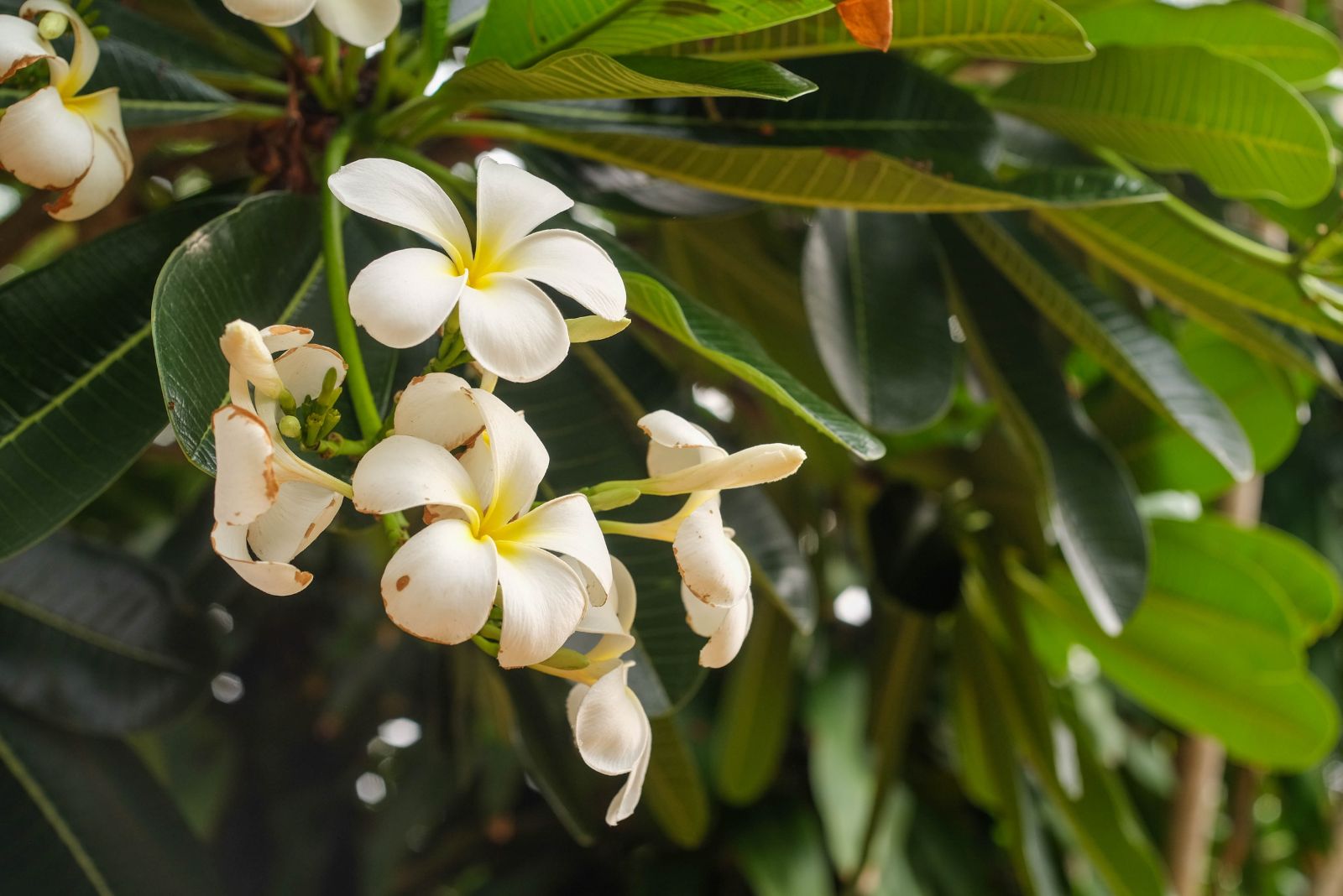
Plumeria owners in Texas put real effort into getting their plants through winter dormancy, repotting at the right time, and positioning them where the summer sun can work its magic.
After all that careful setup, it is a specific thing that gets skipped in June that quietly determines whether those plants deliver an impressive bloom season or fall short of what they were clearly capable of.
The gap shows up in August when blooms are either abundant and consistent or frustratingly sparse, and by then the window to do anything about it has already closed.
Most plumeria owners do not connect the August disappointment to a June oversight because the two feel separated by enough time that the link is not obvious.
The relationship between what happens in June and what the plant does two months later is direct though, and understanding it changes how you approach this particular stretch of the growing season with your plumeria.
Skipping Bloom-Boost Fertilizer In June
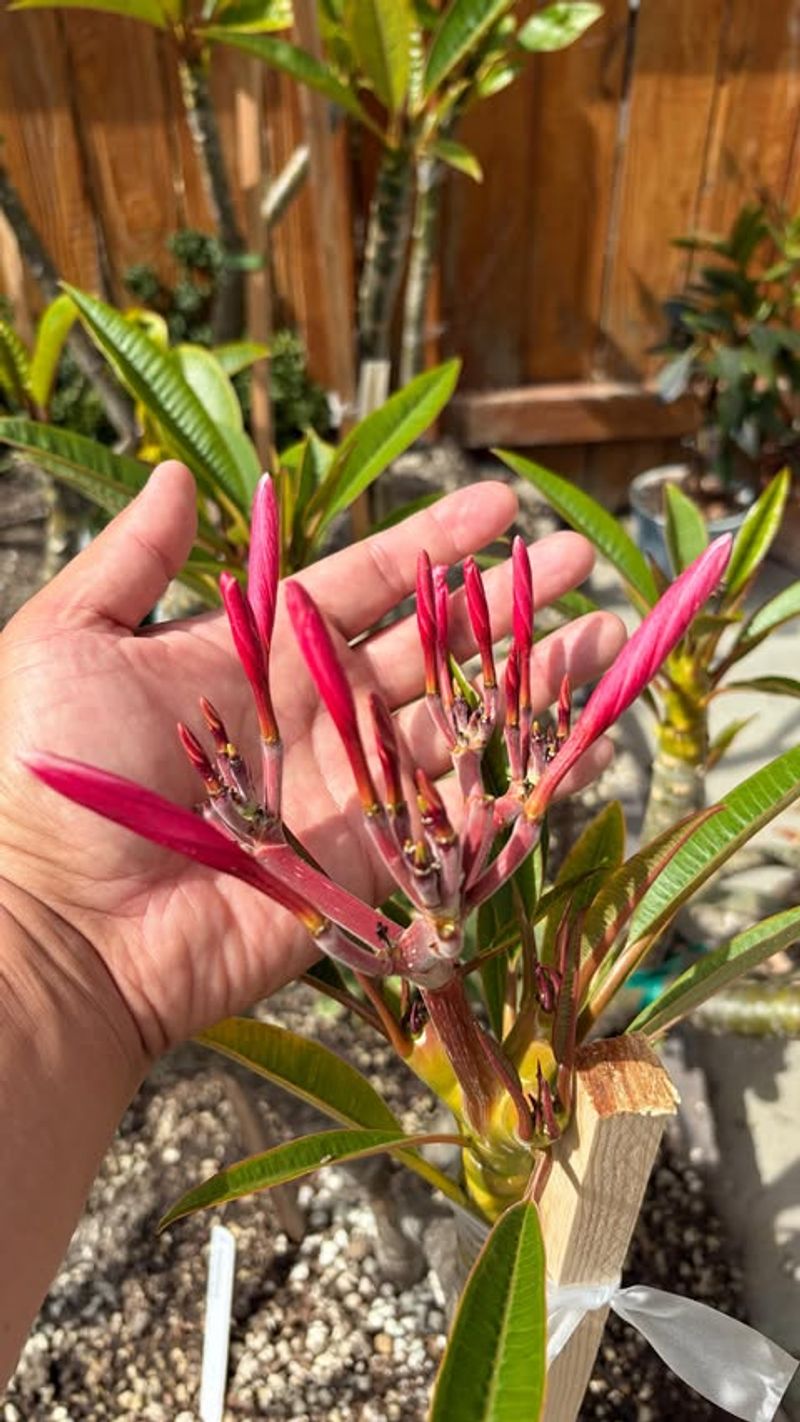
Picture this: it is late August, the Texas heat is at its worst, and your plumeria is covered in thick, shiny green leaves. Sounds good, right?
Not exactly. If there are no flowers, something went wrong months ago, and that something is almost always a skipped feeding in June.
Many Texas gardeners forget to use bloom-boost fertilizer in early summer. Life gets busy, and fertilizing feels like a task that can wait.
But for plumeria, June is not a month you can skip. The plant uses this exact window to decide whether it will form flower buds or just grow more leaves.
When no bloom-boost fertilizer is applied in June, the plant defaults to vegetative growth. It puts its energy into stems and foliage because that is what the available nutrients support.
Nitrogen, which is found in most standard fertilizers, pushes leaf production. Without a high-phosphorus formula to signal bud formation, flowers simply never start developing.
By the time August arrives, the plant looks beautiful on the outside but is completely flowerless. Gardeners often assume the plant is sick or that the Texas heat is to blame.
In reality, the problem started weeks earlier when the bloom-boost bottle stayed on the shelf.
The fix is straightforward. Make June fertilizing a non-negotiable part of your plumeria care routine. Set a reminder if you need to. Buy the fertilizer ahead of time so it is ready to go.
One feeding at the right moment can completely change what your plant does for the rest of the summer.
Why June Is Critical For Plumeria Blooming
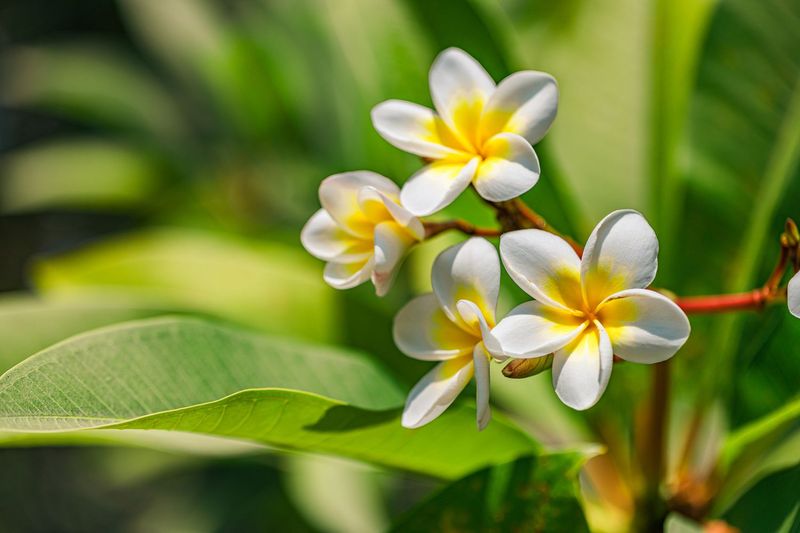
Timing is everything when it comes to plumeria flowers. Most people think of summer as one long, uniform growing season, but plumeria actually works on a tighter schedule than that.
Flower buds begin forming in early to mid-summer, which means June is not just another month. It is the month that sets the tone for everything that follows.
Here in Texas, plumeria wakes up fast after winter dormancy. By late spring, the plant is already pushing new growth.
Your Texas Garden Changes Every Week. Your Plan Should Too.
Gardening in Texas changes quickly throughout the season. Every Friday you’ll receive a simple weekly plan showing exactly what to plant, prune, fertilize, harvest, and protect so you never miss the right timing.
June is when it shifts gears and starts making decisions about reproduction, which is exactly what flowering is. If the right nutrients are present during this shift, the plant invests energy in making buds.
If they are not there, it stays in leaf-growing mode instead. Nutrient timing matters more than most gardeners realize. A plant cannot go back and form buds it missed weeks ago.
Once the bud-initiation window closes, the plant moves on to other growth priorities. No amount of fertilizer in July or August will fully make up for what was missing in June.
Skipping proper feeding during this critical period means foliage takes priority. The plant is not doing anything wrong.
It is just working with what it has. When phosphorus levels are low and nitrogen is high, leaves win every time.
Understanding this timeline changes how you approach plumeria care. June stops feeling optional and starts feeling urgent.
Gardeners who treat June fertilizing as a priority consistently see more blooms, more color, and more fragrance from their plants by late summer. That is not a coincidence. That is biology working in your favor.
The Role Of Bloom-Boost Fertilizer
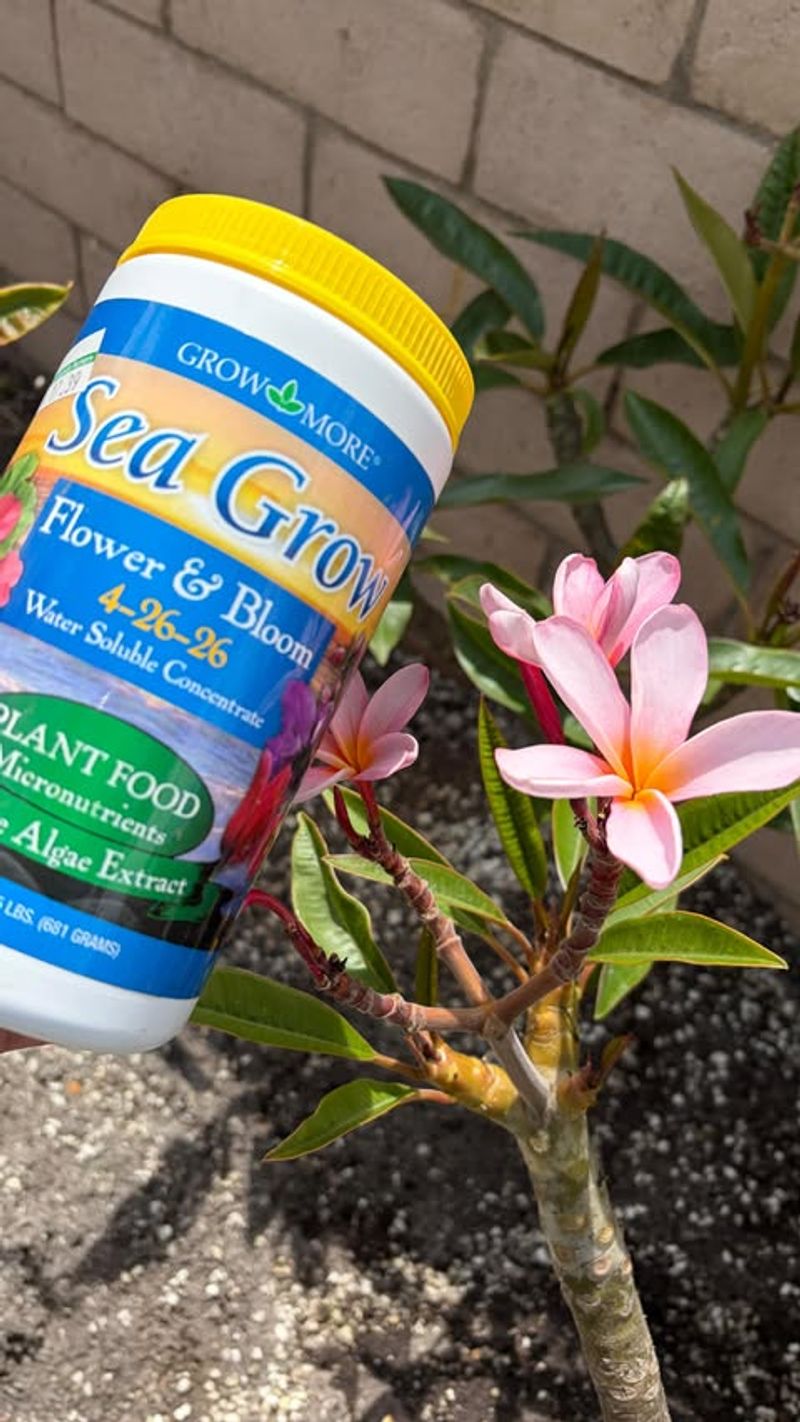
Not all fertilizers are created equal, and plumeria makes that very clear. Walk into any garden center and you will find shelves full of fertilizer options.
The numbers on the bag matter more than the brand name. For plumeria to bloom, you need a formula with a high middle number, which represents phosphorus.
Phosphorus is the nutrient responsible for stimulating bud initiation and flower formation. When phosphorus levels are adequate during June, the plant gets the chemical signal it needs to start building flower buds.
Without it, that signal never comes, and the plant just keeps growing leaves because that is the easier path.
Nitrogen-heavy or balanced fertilizers are the wrong choice for summer plumeria feeding. A standard 10-10-10 formula might seem safe, but it encourages leafy growth just as much as it supports anything else.
For flowering, you want something closer to a 10-30-10 or similar ratio where phosphorus clearly dominates. Some gardeners use a dedicated bloom booster labeled specifically for tropical plants or flowering shrubs.
Potassium, the third number on the bag, also plays a supporting role. It helps with overall plant health and stress resistance, which matters a lot in the Texas summer heat.
A fertilizer that balances high phosphorus with moderate potassium gives plumeria the best shot at producing strong, long-lasting blooms.
Using the right fertilizer is not complicated once you know what to look for. Flip the bag over, check the numbers, and choose the one where the middle number stands out.
That one simple habit could be the difference between a flower-covered plumeria and a very leafy, flowerless disappointment come August.
Correct Application Technique
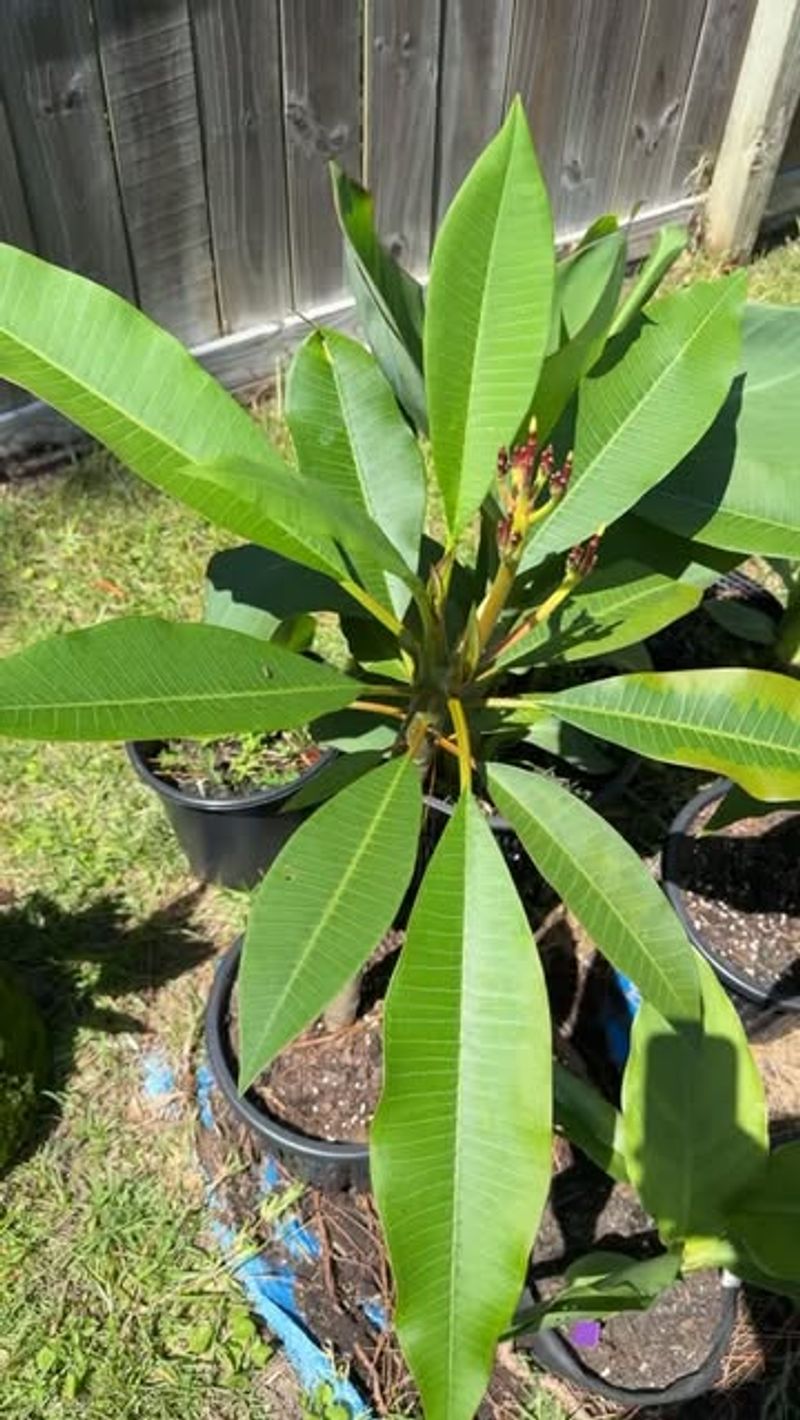
Even the right fertilizer can cause problems if it is applied the wrong way. Plumeria roots are sensitive, and dumping fertilizer directly against the trunk or on dry soil can lead to root stress. Getting the technique right is just as important as choosing the correct product.
For in-ground plumeria, spread granular bloom-boost fertilizer in a wide ring around the plant, starting about six inches from the base and extending out to the edge of the canopy. This targets the active root zone without concentrating too much product in one spot.
Avoid piling fertilizer up against the stem. Always water deeply right after applying to help nutrients move down into the soil where roots can actually reach them.
Potted plumeria in Texas heat needs a slightly different approach. Use a liquid bloom-boost fertilizer or a slow-release granular formula at half the recommended dosage.
Containers dry out faster and nutrients flush out more quickly with each watering. Feeding every two to three weeks in June works better than one heavy application for potted plants.
Frequency matters too. For in-ground plants, one solid application in early June followed by a second feeding in late June covers the bud-initiation window well.
Do not over-fertilize thinking more is better. Too much phosphorus can interfere with the plant’s ability to absorb other nutrients it needs.
Watering after every fertilizer application is non-negotiable. Dry soil slows nutrient absorption significantly.
A good deep watering right after feeding helps the fertilizer reach the root zone quickly and starts working within days. Keep this habit consistent and your plumeria will respond with the blooms you are hoping for.
Supporting Care For Summer Bloom
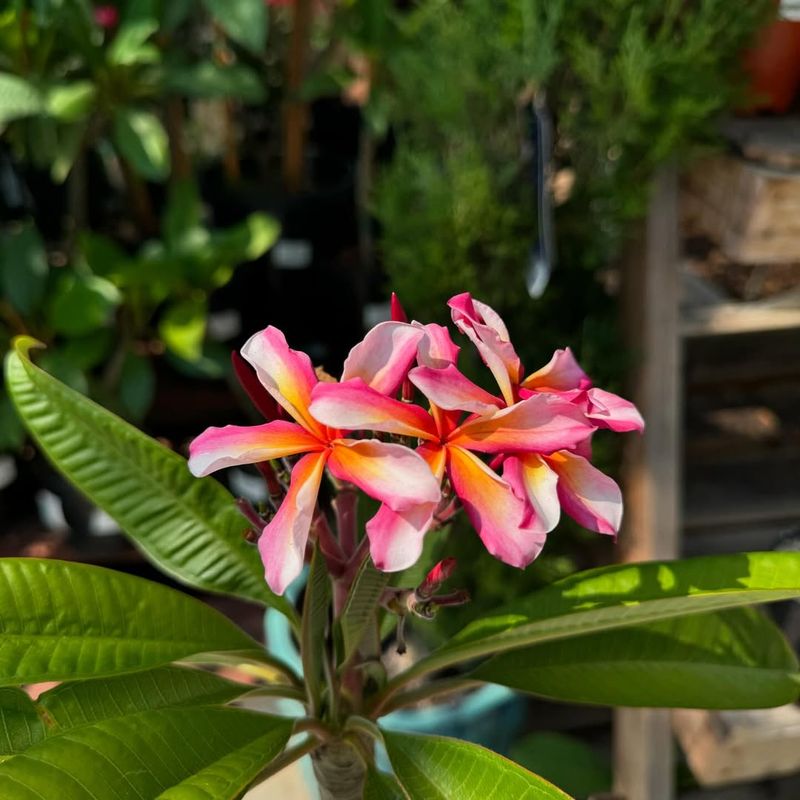
Fertilizing is the most important step, but it works best when the rest of your care routine is also on point. Think of bloom-boost fertilizer as the spark. The other care habits are the fuel that keeps the fire going all summer long.
Full sun is absolutely essential for plumeria to flower well. The plant needs at least six hours of direct sunlight every day.
In Texas, finding a spot with plenty of sun is usually easy, but make sure nearby trees or structures are not casting shade during peak daylight hours. Less sun means less energy for flower production, even when fertilizer is perfect.
Watering needs to be consistent but not excessive. Plumeria likes to dry out slightly between waterings.
Waterlogged roots struggle to absorb nutrients, which defeats the purpose of fertilizing in the first place.
In the Texas summer heat, potted plumeria may need water every day or every other day. In-ground plants can usually go a few days between deep waterings depending on rainfall.
Light pruning in early June can also help redirect the plant’s energy toward flower production. Removing any dry or weak branch tips encourages the plant to focus on the healthy growth points where buds are most likely to form.
Do not prune heavily at this stage. A light touch is all that is needed. Putting these habits together creates the ideal environment for plumeria to thrive.
Sun, water, and a little pruning all work together with bloom-boost fertilizer to give your plant every possible advantage.
When conditions are right, plumeria rewards you generously with weeks of beautiful, fragrant blooms.
Consequences Of Skipping Fertilizer
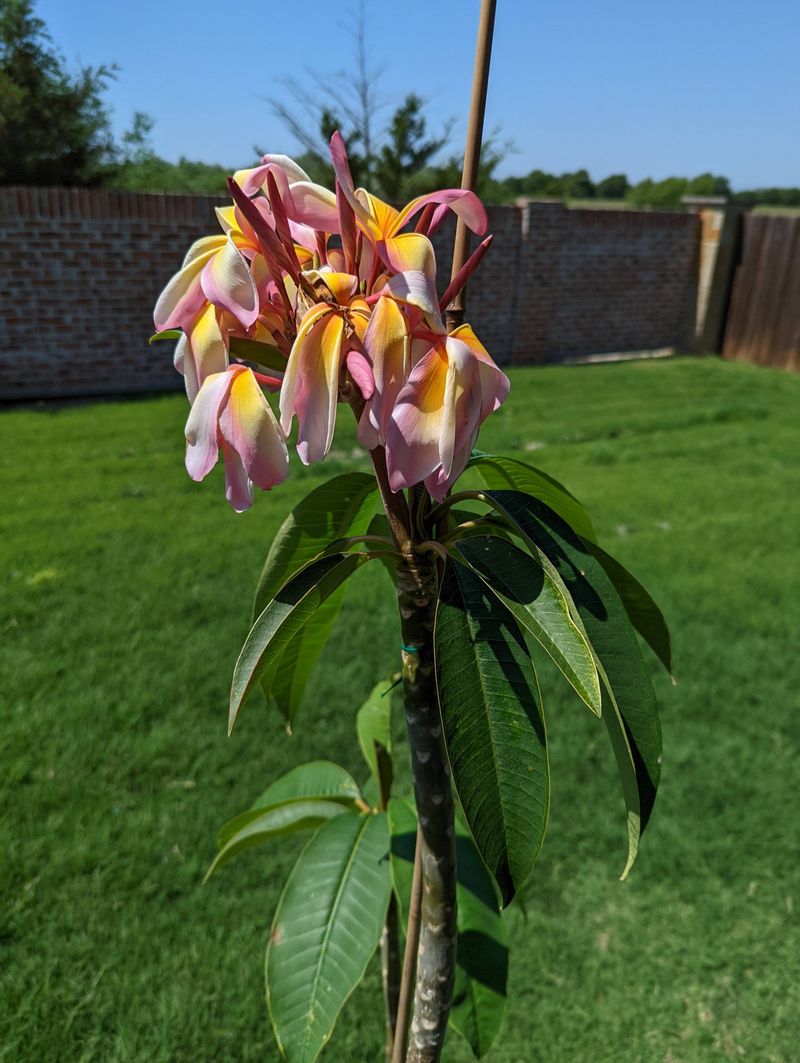
Skipping bloom-boost fertilizer in June does not show up as a problem right away. That is actually what makes it so tricky.
Through June and July, the plant looks perfectly fine. The leaves are green, the stems are thick, and everything appears healthy.
The real consequence does not reveal itself until August, and by then, it is too late to fix it for that season.
What happens inside the plant is the real story. Without adequate phosphorus during the bud-initiation window, flower buds simply never form.
The plant channels all available energy into vegetative growth instead. Every week that passes in July without buds developing is another week closer to a flowerless August.
By mid-August, gardeners who skipped June fertilizing are left with plants that look almost too healthy. Big, glossy leaves fill out the canopy.
But there are no flower clusters, no fragrance drifting across the yard, and no color to show off. For gardeners who planted plumeria specifically for its famous blooms, this outcome is genuinely frustrating after months of watering and waiting.
The experience also creates confusion. People start questioning whether their plant is the wrong variety, whether the soil is bad, or whether the Texas climate is just too extreme.
Rarely do they trace the problem back to a missed fertilizer application in June because the connection is not obvious when so much time has passed. Learning this lesson once is usually enough to change behavior permanently.
June bloom-boost fertilization is the single most impactful thing a Texas plumeria owner can do to guarantee late-summer flowering success. Mark the calendar, buy the fertilizer early, and do not skip it.