Stop Watering Florida Gardenias This Way (It Causes More Yellowing Than Any Pest)
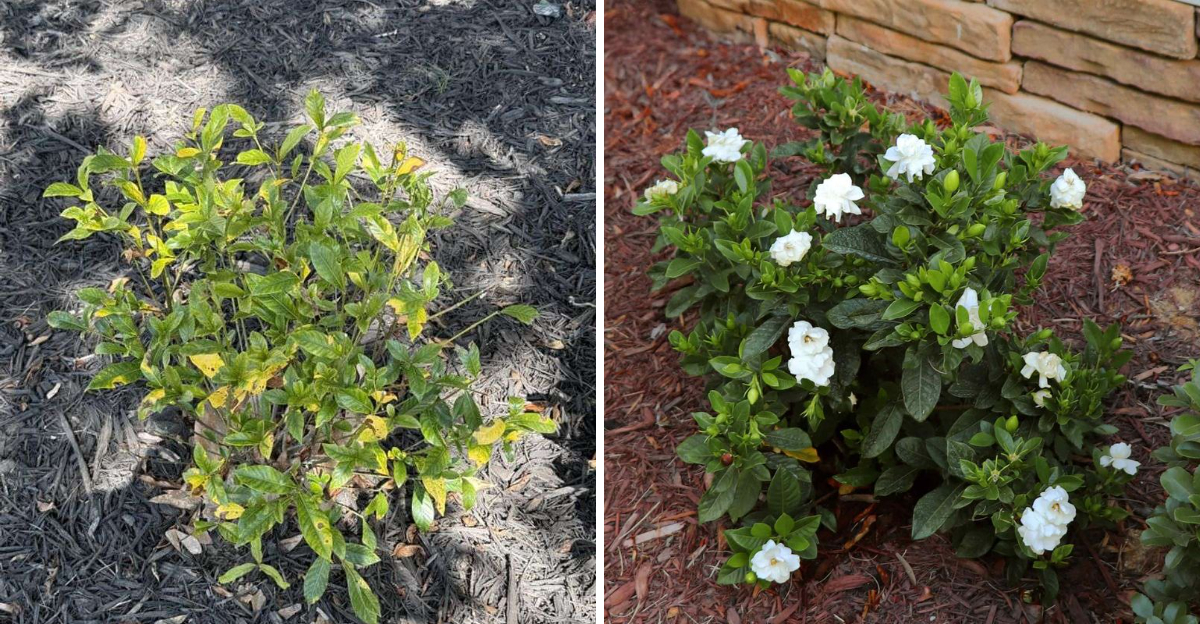
Yellowing gardenia leaves send Florida gardeners straight down a rabbit hole of pest sprays, fungicide treatments, and soil amendments that do not fix anything.
Weeks go by, money gets spent, and the leaves keep turning yellow because nobody stopped to look at the actual culprit first.
Watering. Specifically, the way most people do it.
Florida gardenias are fussy about moisture in ways that catch even experienced gardeners off guard. Too much, too little, the wrong time of day, the wrong delivery method.
Any one of these can trigger that same yellowing that looks exactly like a pest problem or a nutrient deficiency. It is one of the most common cases of misdiagnosis in Florida gardening.
The good news is that fixing a watering habit is free and immediate. No products, no waiting on treatments to kick in.
You just need to know what you have been doing wrong.
1. Shallow Sprinkling Leaves Gardenia Roots Struggling
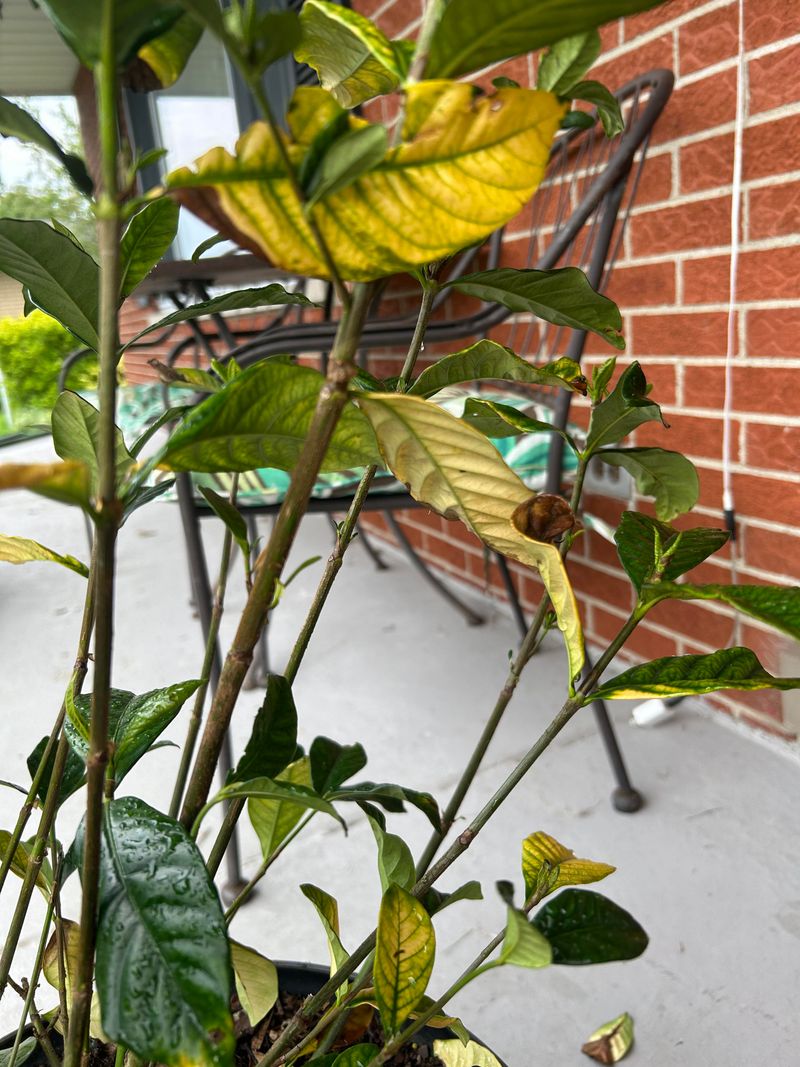
Running a sprinkler for a few minutes and calling it done is one of the most common watering habits that quietly stresses gardenias. Light sprinkling wets the top layer of soil but may not reach the active root zone where moisture is actually needed.
Roots that stay dry beneath a damp surface crust cannot take up water or nutrients efficiently, and the plant starts to show that stress through yellowing leaves.
Gardenias grown in sandy soils face this challenge even more because water moves through quickly. Surface moisture can disappear within hours, leaving roots dry again before the next watering.
According to UF/IFAS guidance, deep, infrequent watering encourages roots to grow downward and access more stable moisture rather than staying shallow and vulnerable.
A practical rule is to water slowly and thoroughly, allowing moisture to soak several inches into the root zone. Let the soil drain and dry slightly before watering again.
Checking soil moisture a few inches below the surface before turning on the hose helps you water based on actual need rather than schedule. That small habit shift can make a noticeable difference in leaf color and overall plant health.
2. Yellow Leaves Often Point Below The Soil
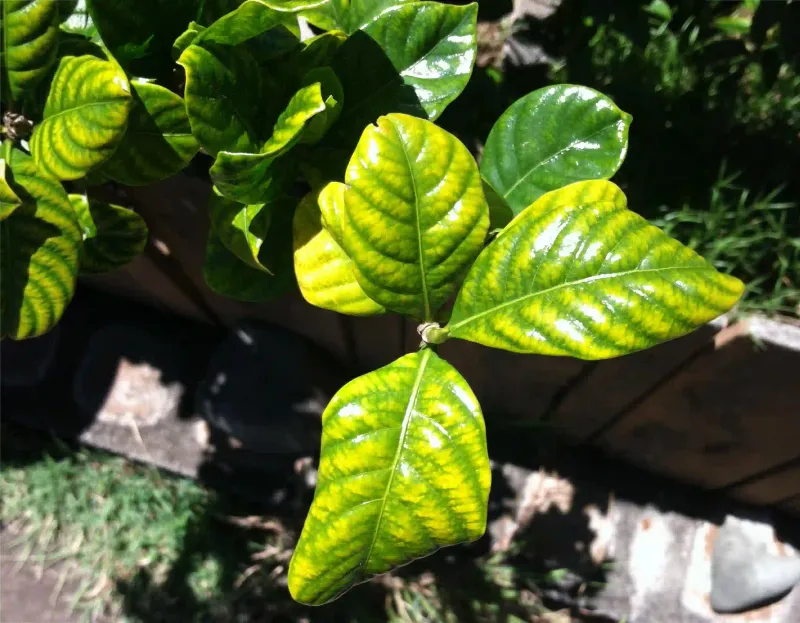
Spotting yellow leaves on a gardenia and immediately reaching for a pest spray is understandable. Whiteflies, aphids, scales, and mealybugs can all affect gardenias, and they are real concerns worth watching for.
But roots, moisture levels, and soil conditions are often the first place to look when leaves start losing their deep green color.
Gardenias prefer moist, well-drained, acidic soil with a pH between 5.0 and 6.0, according to UF/IFAS Gardening Solutions. When soil stays too wet, drains too poorly, or dries out unevenly, roots struggle to function.
Nutrient uptake slows, and the plant cannot move iron and other minerals into new growth efficiently. That is one reason yellowing often shows up on younger leaves first.
Checking the soil before blaming pests is simply a smarter first step. Push a finger or a soil probe a few inches down near the root zone.
Your Florida Garden Changes Every Week. Your Plan Should Too.
Gardening in Florida changes quickly throughout the season. Every Friday you’ll receive a simple weekly plan showing exactly what to plant, prune, fertilize, harvest, and protect so you never miss the right timing.
Notice whether the soil feels soggy, bone dry, or somewhere in between. If moisture is uneven or drainage seems sluggish, adjusting your watering approach may resolve the yellowing faster than any spray treatment.
Pests still deserve attention, but soil conditions deserve it first.
3. Soggy Roots Can Look Like A Pest Problem
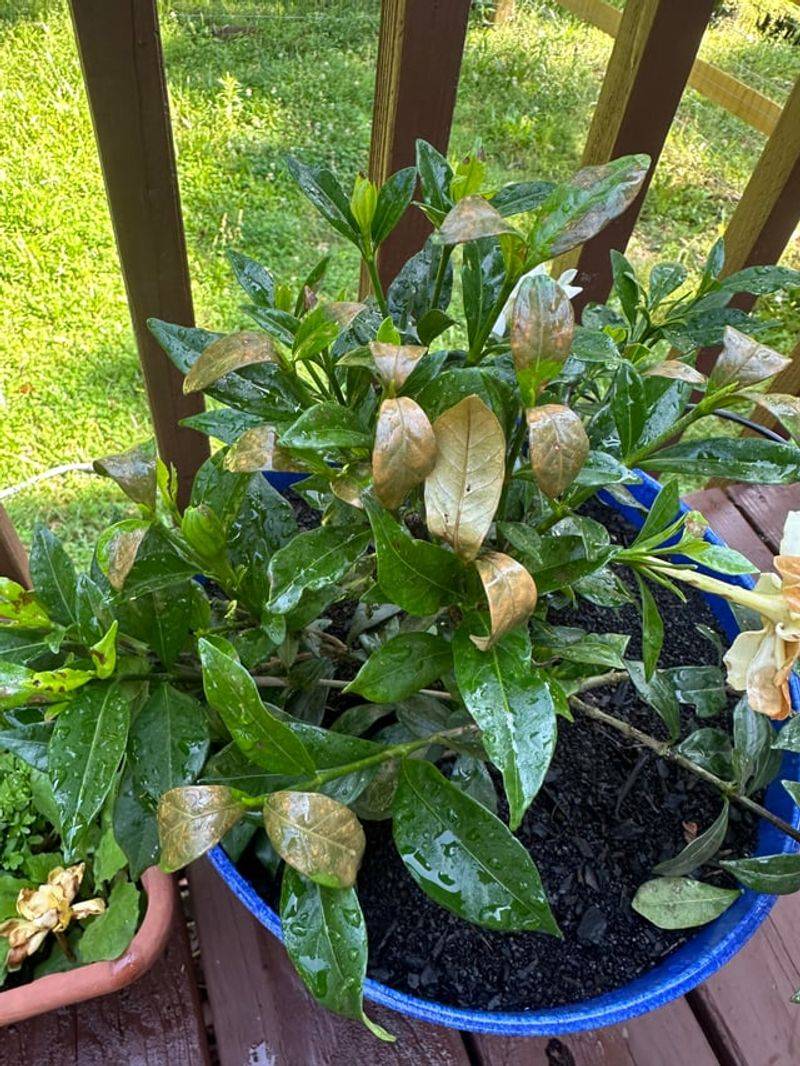
Waterlogged soil around a gardenia can produce symptoms that look surprisingly similar to a pest problem. Yellowing leaves, drooping stems, and poor new growth can all point to overwatering or poor drainage just as easily as they point to insects.
Knowing the difference saves time and avoids treatments the plant does not actually need.
Gardenias dislike sitting in wet soil for extended periods. When the root zone stays saturated, oxygen levels in the soil drop, roots become less effective, and the plant begins to struggle.
This can lead to yellowing that spreads gradually across older leaves and eventually affects newer growth as well.
Checking drainage around your plant is a practical first step. After a heavy rain or a watering session, observe whether water pools around the base or drains away within a reasonable time.
Notice whether mulch has become a thick, soggy mat that holds moisture against the stem. Nearby downspouts, paved surfaces, or sloped ground can also direct runoff toward the plant without you realizing it.
If water consistently sits around the root zone, improving drainage or adjusting the planting site will do more for leaf color than any pest treatment. Soggy roots need air, not more moisture.
4. Fast Dry Downs Stress Buds And Leaves
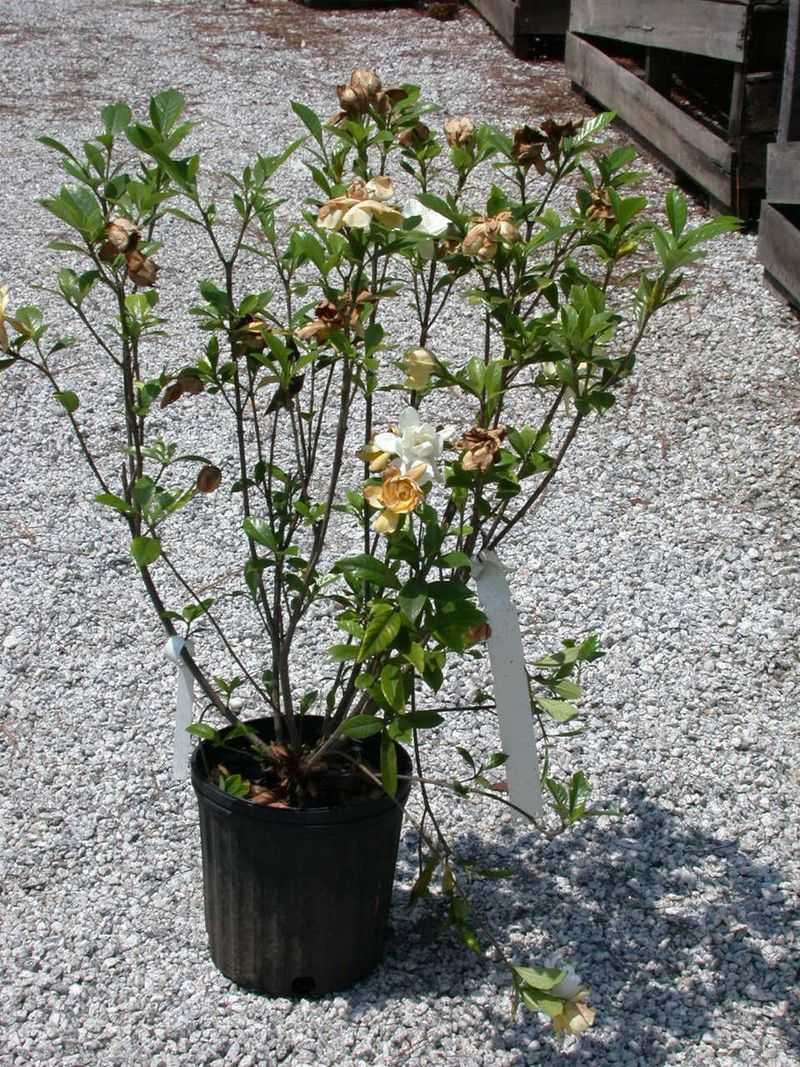
Sandy soil, blazing summer heat, and reflected warmth from patios or walls can make the moisture around a gardenia disappear faster than most Florida gardeners expect. One day the soil feels fine, and the next it is dry several inches down.
That kind of rapid dry-down puts real stress on the plant, and leaves and buds are often the first to show it.
Uneven moisture is particularly hard on gardenias during flowering. Buds may drop before opening, and leaves can develop yellow patches or edges when the root zone swings between dry and wet too frequently.
Container plants face this challenge even more sharply because pot volume limits how much moisture reserve is available between waterings.
Rather than watering on a fixed schedule, monitoring soil moisture gives you better results. A simple finger test a few inches below the surface tells you whether the soil still holds enough moisture or whether it is time to water again.
During summer heat, in-ground gardenias may need water more frequently than in cooler months. Containers may need checking every day or two.
Staying attentive to actual soil conditions rather than watering out of habit helps keep moisture levels steady. That steadiness supports healthy leaves and buds throughout the season.
5. Poor Drainage Makes Every Watering Riskier
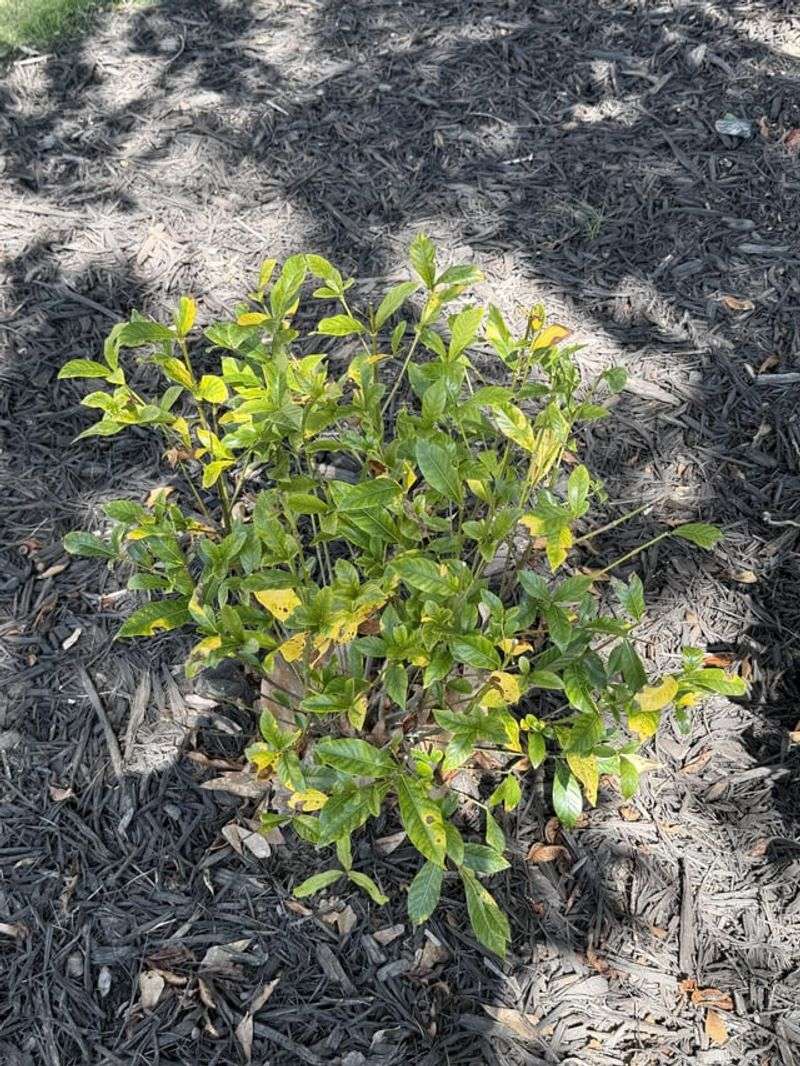
Even the most careful watering routine can backfire when a gardenia is planted in the wrong spot. Compacted soil, low-lying areas that collect water, and containers without adequate drainage holes all create conditions where water has nowhere to go.
When the root zone stays wet too long after each watering, plant health declines steadily.
UF/IFAS guidance on gardenia culture emphasizes well-drained soil as a basic requirement. Planting in a site where water stands after rain or irrigation puts roots in a difficult position regardless of how thoughtfully you water.
Over time, roots in waterlogged soil become less effective at taking up nutrients, which shows up as yellowing and poor growth.
Improving drainage before or after planting makes a real difference. Raised beds or slightly elevated planting spots allow excess water to move away from the root zone.
For containers, always use a mix designed for good drainage, and make sure pots have open drainage holes that are not blocked. Avoid placing saucers under outdoor pots that collect and hold water against the bottom of the container.
If a gardenia is already planted in a poorly drained spot and struggling, it may need to move. Transplanting to a better location during cooler months may be the most effective solution available.
6. Mulch Helps Moisture Stay More Even
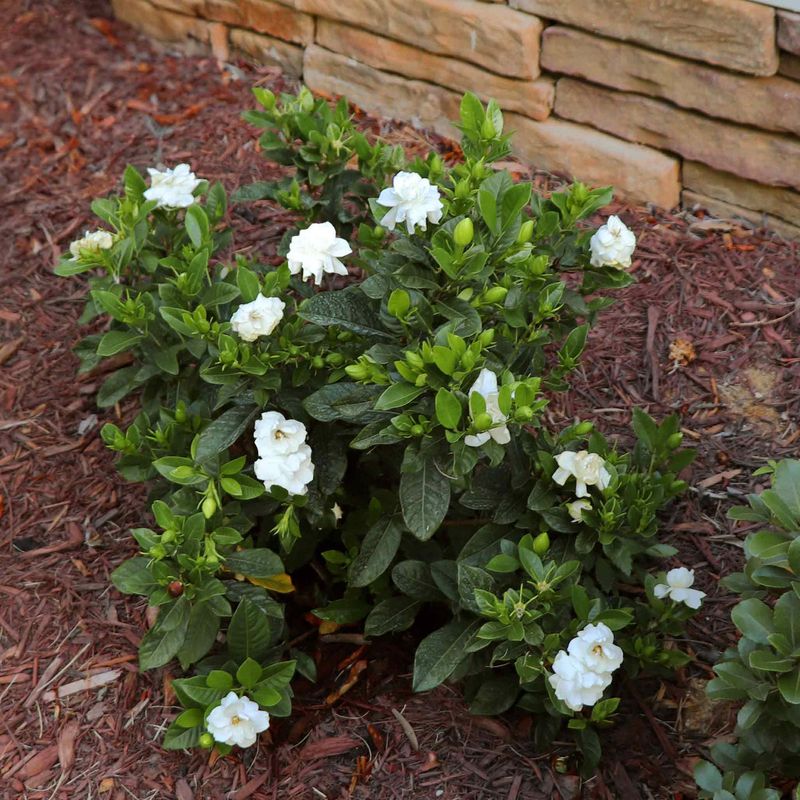
A light layer of mulch around a gardenia does more than make the bed look tidy. Mulch slows evaporation from the soil surface, which helps keep moisture levels more consistent between waterings.
In this state’s intense summer heat, that buffer can reduce the rapid dry-down cycles that stress roots and contribute to leaf yellowing.
Pine bark mulch is a popular choice for gardenias in this region partly because it breaks down slowly and can contribute mild acidity to the soil over time.
UF/IFAS recommendations support using organic mulch around landscape plants to conserve moisture and moderate soil temperature.
A layer of two to three inches is generally sufficient for most in-ground plantings.
There is an important caution worth keeping in mind. Piling mulch against the trunk or creating a thick, dense mat that stays soggy can trap too much moisture and create conditions that harm the stem and shallow roots.
Pull mulch back a few inches from the base of the plant to allow air circulation. The goal is to moderate soil moisture, not to create a wet barrier around the stem.
Used thoughtfully, mulch is a low-effort tool that supports steadier watering results without adding complexity to your routine.
7. Containers Need A Different Watering Rhythm
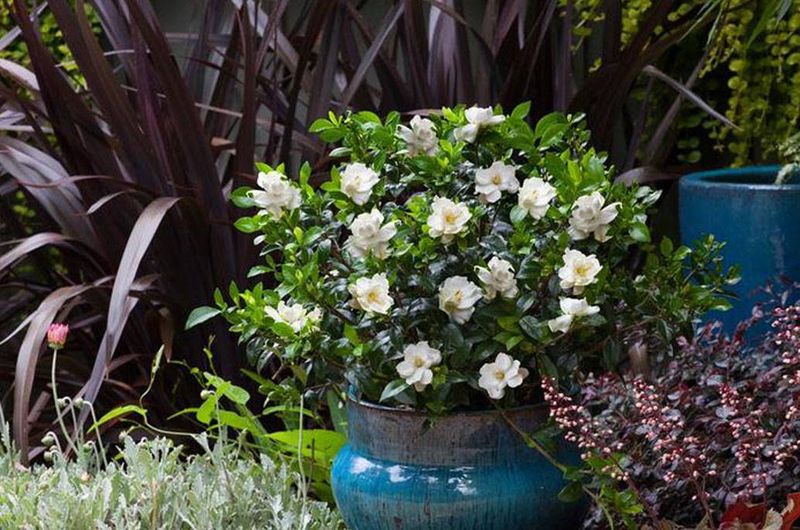
Potted gardenias play by slightly different rules than those planted in the ground, and watering is where that difference shows up most clearly. Containers dry out faster because the soil volume is limited and exposed to heat on all sides.
At the same time, a pot without proper drainage can become waterlogged quickly, leaving roots in conditions that are just as harmful as drought.
Pot size, potting mix, sun exposure, and drainage hole placement all affect how fast a container dries out. A small pot in direct afternoon sun on a concrete patio may need water every day or two during summer.
A larger pot in a partially shaded spot may hold moisture much longer. Watering on a fixed schedule without checking the mix first often leads to either overwatering or underwatering.
Before adding water to a container gardenia, press a finger about two inches into the potting mix. If it feels moist, wait.
If it feels dry, water thoroughly until water flows out of the drainage holes. Never let a potted gardenia sit in a saucer filled with standing water for more than an hour or two.
Choosing a well-draining potting mix rather than dense garden soil also helps containers stay in the right moisture range more consistently throughout the season.
8. Morning Watering Keeps Leaves And Roots Happier
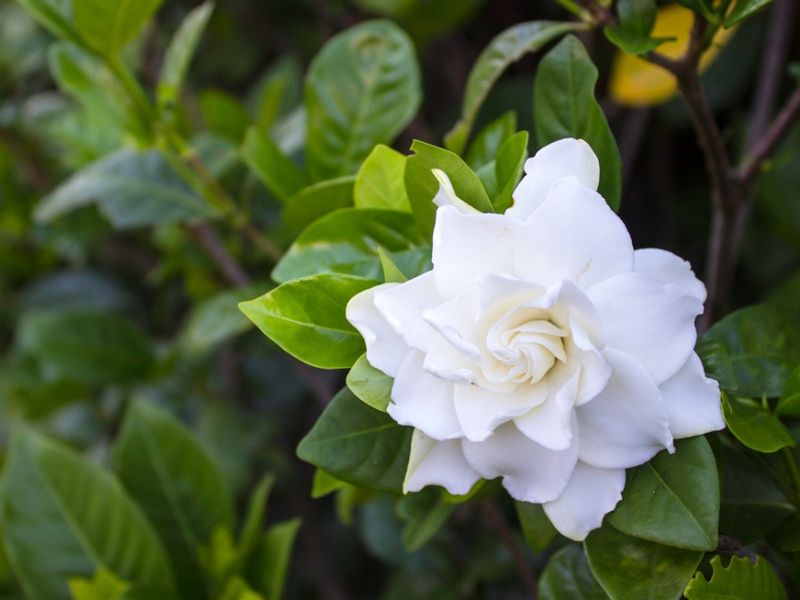
Timing a watering session might seem like a minor detail, but in warm, humid Florida conditions it can affect both leaf health and soil moisture management.
Morning watering gives moisture time to soak into the root zone before afternoon heat accelerates evaporation.
Roots get the benefit of the water, and the soil surface dries naturally as the day warms up.
Watering the soil rather than spraying leaves is a habit worth building. Wet foliage in humid conditions can encourage certain fungal issues over time, and directing water to the root zone is simply more efficient.
A slow, steady stream at the base of the plant does more for root health than a broad spray that wets leaves and misses deeper soil layers.
After heavy rain, skip the scheduled watering and check soil moisture before adding more. This state’s rainy season can deliver significant rainfall in short bursts.
Adding irrigation on top of a saturated root zone is a common way to tip a gardenia toward overwatering stress. Adjusting your watering routine based on actual weather and soil conditions is the kind of attentive care that keeps gardenias greener and healthier.
It also makes them less likely to show the frustrating yellowing that sends gardeners searching for answers in all the wrong places.