The Meaning Behind A Mockingbird Singing Outside Your Florida Window
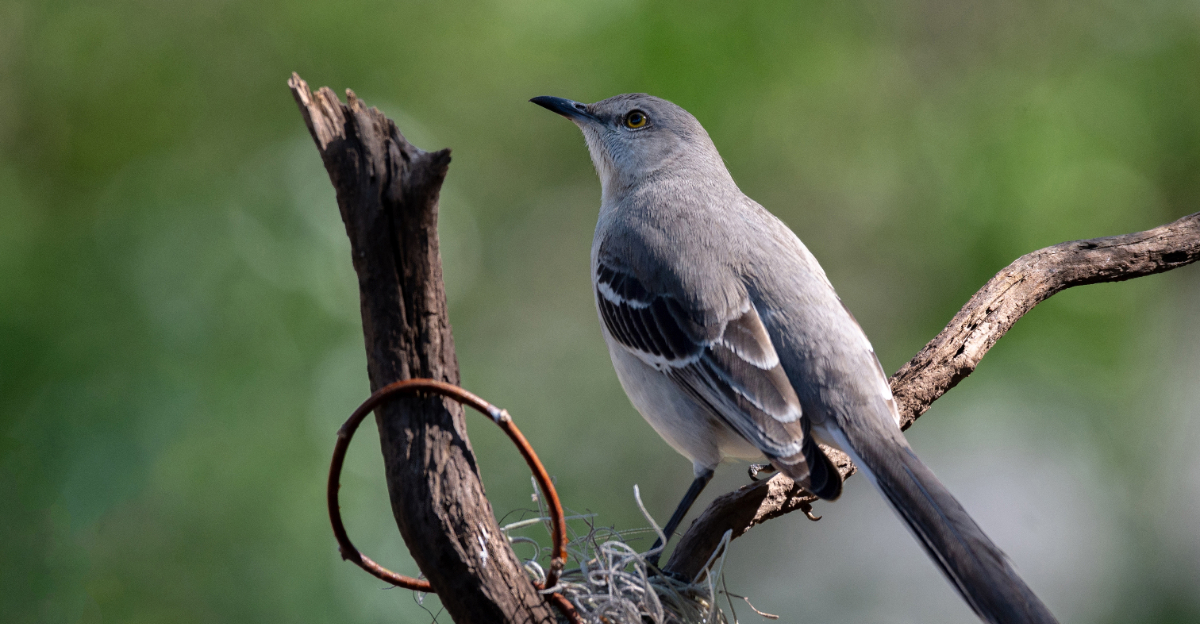
Three in the morning. Every window closed.
And somewhere outside, a mockingbird is running through its entire catalog at full volume like the neighborhood asked for a concert and nobody told you. Florida residents know this experience.
Most have opinions about it. What almost nobody stops to consider is why that particular window, that particular night, that particular bird.
A mockingbird singing outside a Florida home is not random noise. It is purposeful behavior that points to something specific about the yard it has decided to perform in front of.
The natural history behind a midnight mockingbird performance is genuinely interesting. The cultural meaning attached to one singing near a home runs even deeper.
Across the South, across Florida specifically, this moment has carried significance that goes well beyond a lost night of sleep. Both stories are worth knowing.
Even at three in the morning.
1. That Song Usually Means Territory Is Nearby
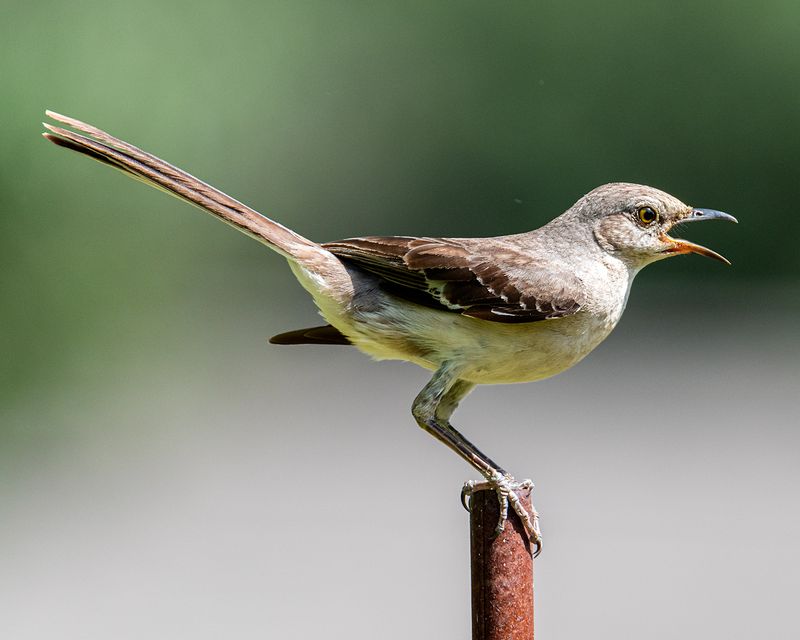
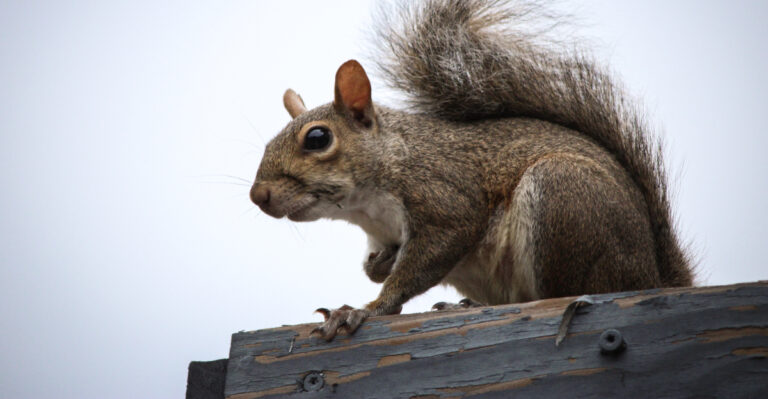
From the top of a fence post or a roofline edge, a northern mockingbird stakes its claim loud and clear. The song you hear outside your window is most often a territorial signal, a way the bird announces that this space belongs to it.
According to the Cornell Lab of Ornithology, northern mockingbirds actively defend territories that include feeding areas, perches, and protective cover.
A singing bird near your window is not reacting to you personally. It has simply chosen a high, visible spot that gives it a wide sightline over the area it considers its own.
Fences, palms, oaks, rooftop edges, and utility lines all serve this purpose well.
Territory can shift between seasons. A bird may defend one area during breeding season and a separate area during fall and winter when berry sources become important.
Watching where the bird sings from each day can help you understand which part of your Florida yard or neighboring space it considers valuable. Observing quietly from indoors is the best approach.
The bird is doing exactly what it is built to do, and the yard nearby is clearly worth defending.
2. A Male May Be Trying To Attract A Mate
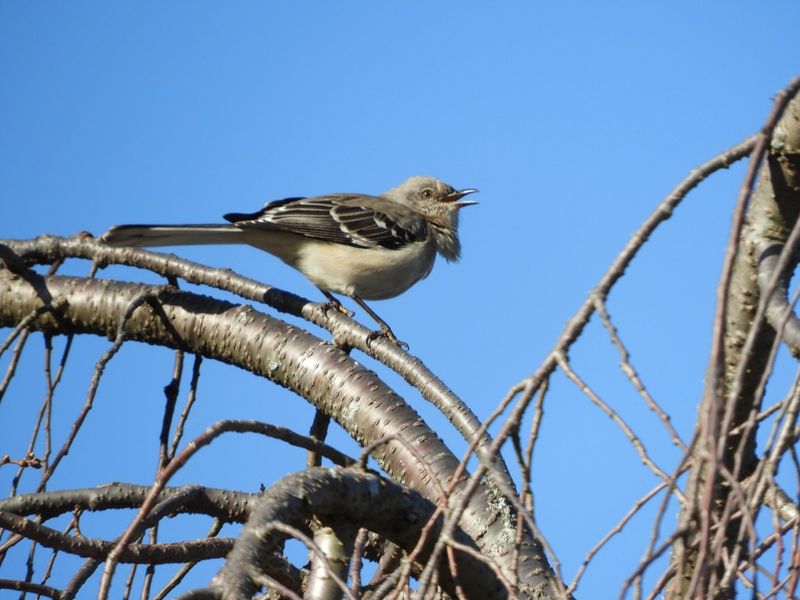
Long, looping song sessions from a visible perch are one of the most recognizable signs of a male mockingbird in breeding mode.
The Cornell Lab of Ornithology notes that male northern mockingbirds sing to attract females, especially during the spring breeding season.
A male may cycle through dozens of distinct phrases in a single performance, repeating each one several times before switching.
If you notice a bird singing from the same elevated spot day after day, especially in late winter through early summer, mate attraction may be part of what is happening.
The longer and more varied the song, the more it may signal a healthy, experienced singer.
Females are believed to assess song complexity when choosing a mate.
You do not need to identify the bird’s exact relationship status from one morning’s performance. The behavior is natural, seasonal, and does not require any response from you.
Your Florida Garden Changes Every Week. Your Plan Should Too.
Gardening in Florida changes quickly throughout the season. Every Friday you’ll receive a simple weekly plan showing exactly what to plant, prune, fertilize, harvest, and protect so you never miss the right timing.
Watching from a window while the bird performs from a nearby palm or oak is genuinely one of the better wildlife moments a local Florida yard can offer.
Let the performance continue without interference, and appreciate the effort behind every repeated phrase.
3. Night Singing Can Come From An Unpaired Bird
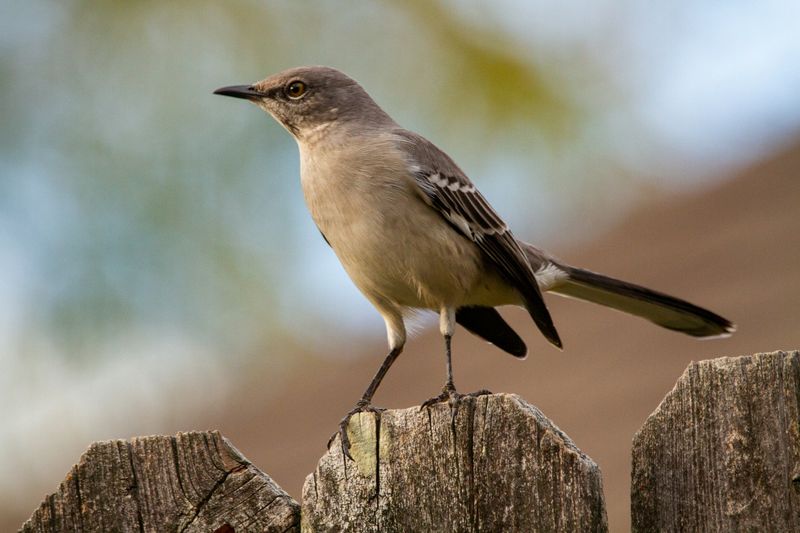
Hearing a mockingbird at two in the morning can feel startling the first time it happens. Research supported by the Cornell Lab of Ornithology suggests that unmated males are more likely to sing at night, particularly during breeding season.
The idea is that continued singing after dark may help attract a mate who has not yet been found.
Night singing near a window can feel louder than daytime song simply because the neighborhood is quieter. There are no traffic sounds, lawn mowers, or conversations to soften the sound.
A bird singing from a rooftop, fence, or tree just outside a bedroom window can carry clearly through glass.
If the sound disrupts sleep, a few simple adjustments can help without bothering the bird at all. Closing the window, running a small fan for background noise, or using a white noise app can soften the impact.
These are gentle solutions that respect the bird’s natural behavior. Avoid any attempt to silence the bird by disturbing it, removing perches, or making loud noises.
Not every nighttime singer is unpaired, but the behavior is well-documented and completely normal for this species during certain times of year.
4. Your Window May Sit Near A Favorite Perch
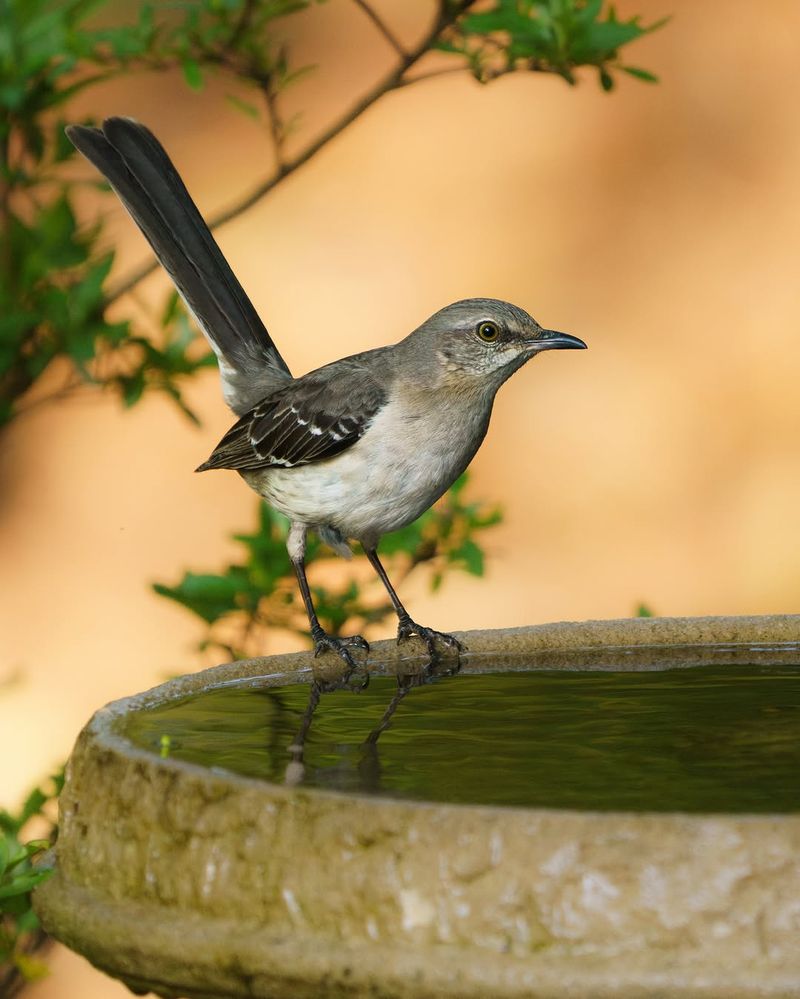
Mockingbirds are creatures of habit when it comes to perch selection. A bird that returns to the same spot near your window likely finds that location useful.
It may offer height, open sightlines, nearby food, or easy access to cover. Rooftop edges, fence tops, utility wires, palm fronds, and oak limbs near windows all fit the profile of a preferred perch.
Windows can sometimes create a problem if they reflect movement or a competing bird’s image. If a mockingbird repeatedly approaches or taps at a window, it may be reacting to its own reflection, mistaking it for a rival.
In that case, temporarily covering the outside of the glass with a non-reflective material or applying window markers can reduce the reflection without harming the bird.
Most of the time, though, a bird near a window is simply using the best available perch in the area. Watching from inside without tapping on the glass or approaching the window suddenly allows you to observe natural behavior up close.
Notice what the bird does between songs: where it flies, what it watches, and which direction it returns from. These small details reveal a lot about how it uses the space around your Florida home.
5. Repeated Songs Can Signal Nesting Season
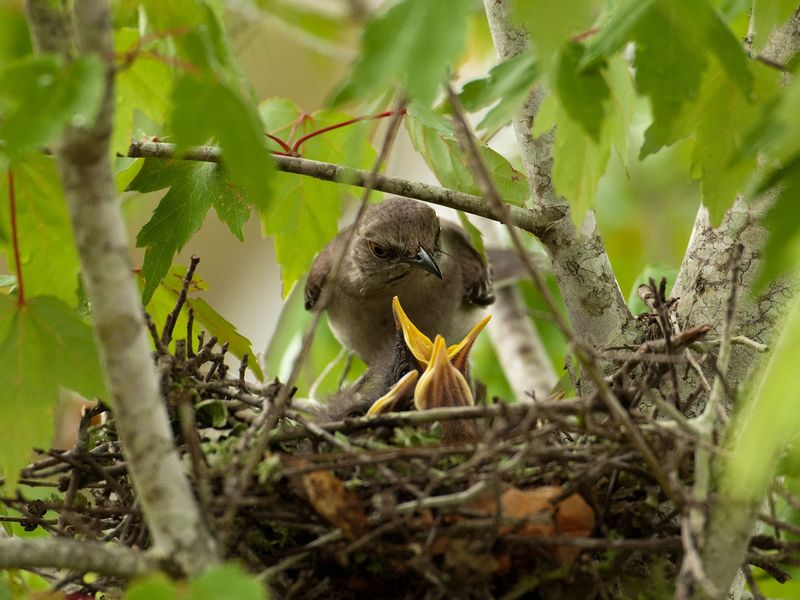
When a mockingbird’s presence near your window shifts from occasional to constant, nesting season may be underway nearby.
Increased song frequency, defensive behavior toward other birds or animals, and adults carrying small sticks or plant fibers are all signs worth noticing.
Northern mockingbirds typically nest in shrubs, small trees, and dense vegetation, often in residential yards across this state.
Spotting these signs does not mean a nest is inside your window box or directly on your home. It may simply mean that a pair is using a nearby hedge, ornamental shrub, or low tree branch in the surrounding area.
If you suspect nesting activity, the most helpful thing you can do is leave the area alone.
Avoid trimming shrubs, moving yard furniture near suspected sites, or letting pets roam freely around dense plantings during this time.
Native birds, their nests, eggs, and young are generally protected under federal law, so it is best to observe from a distance and let the process unfold naturally.
Adults will alert loudly if they feel threatened, which is itself a useful signal to step back. Nesting season is temporary, and the reward of watching fledglings leave the nest is worth the patience.
6. Mimicked Sounds Show Off The Bird’s Skill
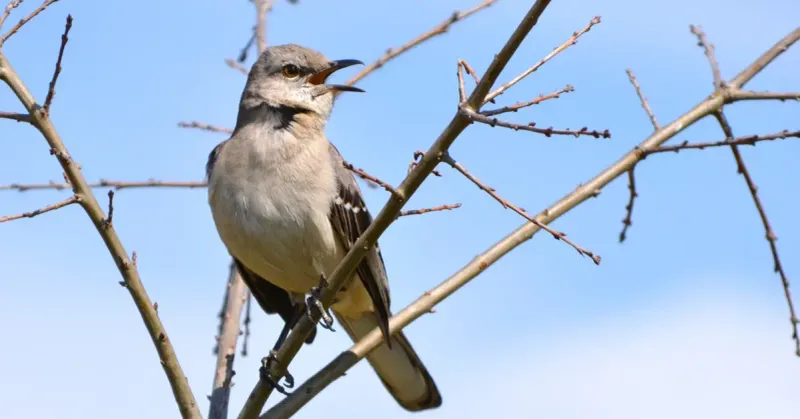
One of the most remarkable things about a mockingbird’s song is that much of it is borrowed. The northern mockingbird is one of North America’s most skilled vocal mimics, capable of copying the songs of dozens of other bird species.
According to the Cornell Lab of Ornithology, a single male may learn over 200 song types in its lifetime. These can include other birds, frogs, and mechanical neighborhood sounds.
When you hear a blue jay, cardinal, and red-winged blackbird from one spot within minutes, you may be hearing one mockingbird. It is likely cycling through its repertoire.
Each phrase is typically repeated several times before the bird switches to the next, which helps distinguish it from the actual species being copied.
Mimicry serves a real purpose in the bird’s communication and display. A larger, more varied song library may signal experience and fitness to potential mates.
It also helps hold territory by making one bird sound like many. Far from being a trick or a mystery, this behavior is a sign of a healthy, active individual doing exactly what its biology is designed to do.
Listening closely makes the performance even more impressive.
7. Native Shrubs Can Make The Yard More Appealing
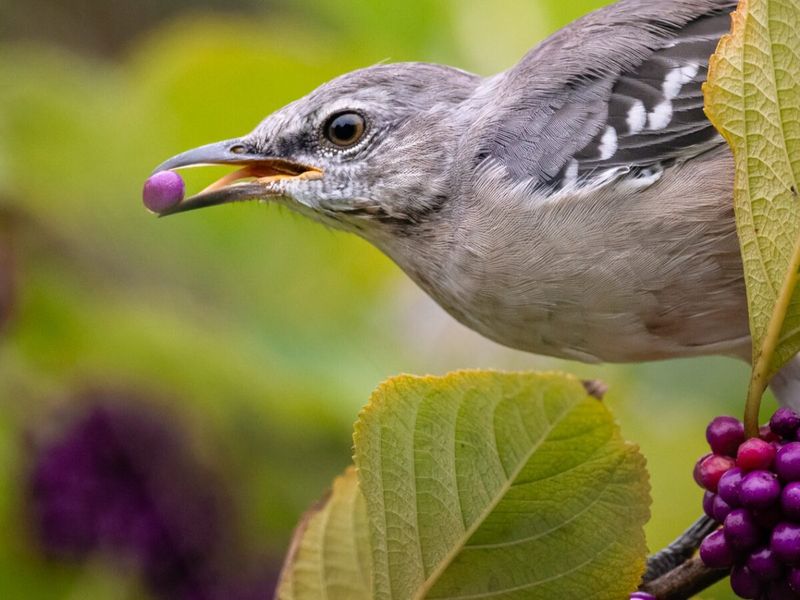
A mockingbird singing outside your window may be telling you something about the quality of habitat your yard already offers. Native and Florida-Friendly plantings provide the berries, insects, and shelter that mockingbirds rely on throughout the year.
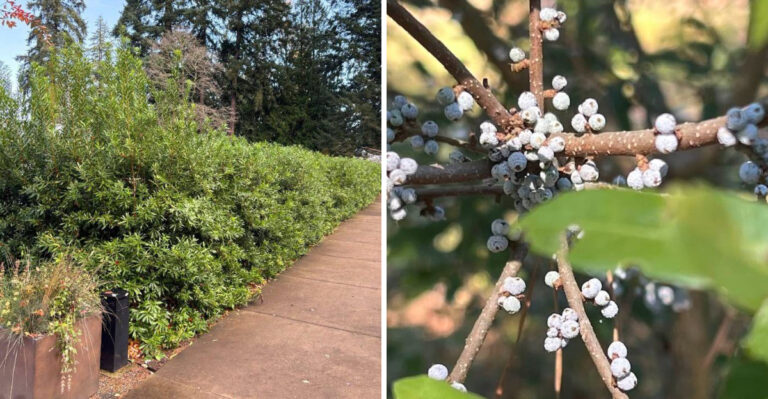
Beautyberry, wax myrtle, Simpson’s stopper, wild coffee, firebush, and sabal palm are native species. Used thoughtfully, they can support local wildlife.
Mockingbirds are omnivores, eating both insects and fruit depending on the season. A yard with layered plantings, open perch spots, and active insect populations gives the bird more reasons to stay.
Reducing unnecessary pesticide use helps protect insect populations. Mockingbirds and their nestlings depend on those insects as a protein source, especially during breeding season.
No single plant guarantees that a mockingbird will sing outside your window. Habitat value builds over time as plantings mature and the yard develops a mix of cover, food, and open space.
UF/IFAS Extension and Florida-Friendly Landscaping resources offer guidance on selecting native plants suited to your region’s soil and light conditions. Starting with a few native shrubs along a fence line or under a window can increase the yard’s appeal.
Over time, it may draw local wildlife, including this vocal songbird.
8. The Real Meaning Is A Yard Worth Defending
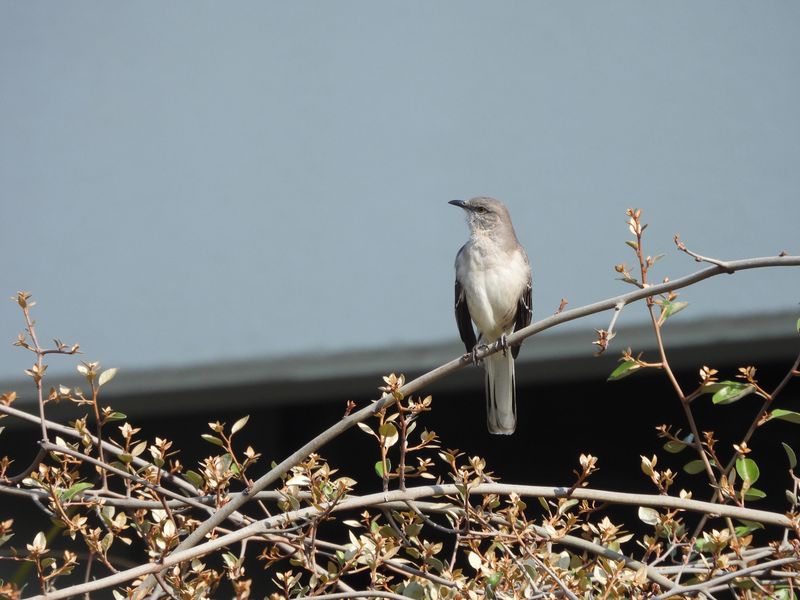
Step back from the song for a moment and look at the bigger picture. A northern mockingbird singing outside your window is not delivering a message meant for you.
It is responding to the territory, food, cover, and seasonal conditions that your yard and neighborhood provide. That is the real meaning, and it is genuinely worth appreciating.
Territory defense, mate attraction, nesting activity, and favorite perches all come together in that stream of song. When a bird returns to the same fence post or rooftop edge morning after morning, it means the area offers something worth using.
Good perch height, nearby fruiting shrubs, available insects, and protective cover all contribute to why a mockingbird chooses one yard over another.
The best response to a singing mockingbird is simple observation. Watch from indoors and note the perches it uses.
Pay attention to whether it carries food or nesting material, and listen for the range of mimicked calls. Keep pets from roaming near suspected nesting areas, delay trimming shrubs if activity looks seasonal, and let the bird do what it does best.
A yard that earns a mockingbird’s daily performance is a yard doing something right for local wildlife.