The Common June Watering Mistake Behind Early Fruit Drop On Arizona Citrus
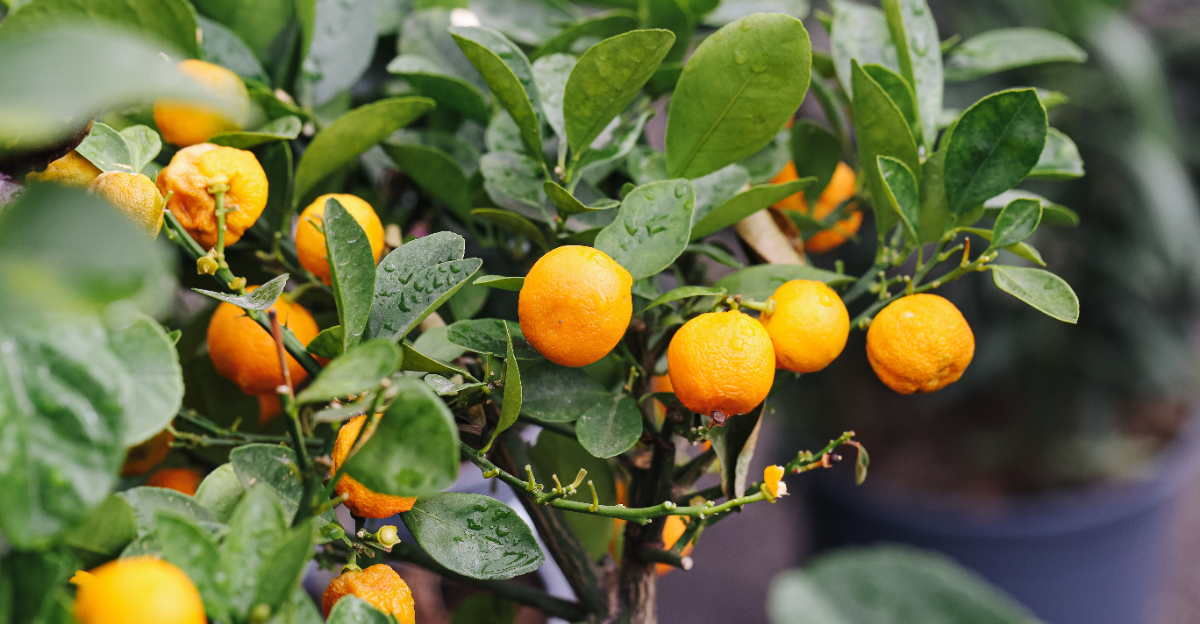
Watching small citrus fruits begin to form is one of the most satisfying parts of the growing season. After months of care, the tree finally starts showing signs that a harvest may be on the way.
Everything looks promising, and it is easy to imagine branches filled with fruit later in the year.
That is why it can be frustrating to walk outside and find fruit scattered beneath the tree much sooner than expected. Many gardeners immediately assume insects, disease, or extreme heat are to blame.
Those concerns often get the attention first because they seem like the obvious explanation.
In Arizona, this is a common sight during June. The surprising part is that some of the biggest problems begin with good intentions.
While trying to help citrus trees handle rising temperatures, it is possible to create issues that stay hidden at first. By the time fruit starts dropping, the real cause is often something most people never suspected.
1. Watering Too Often Can Lead To Early Fruit Drop
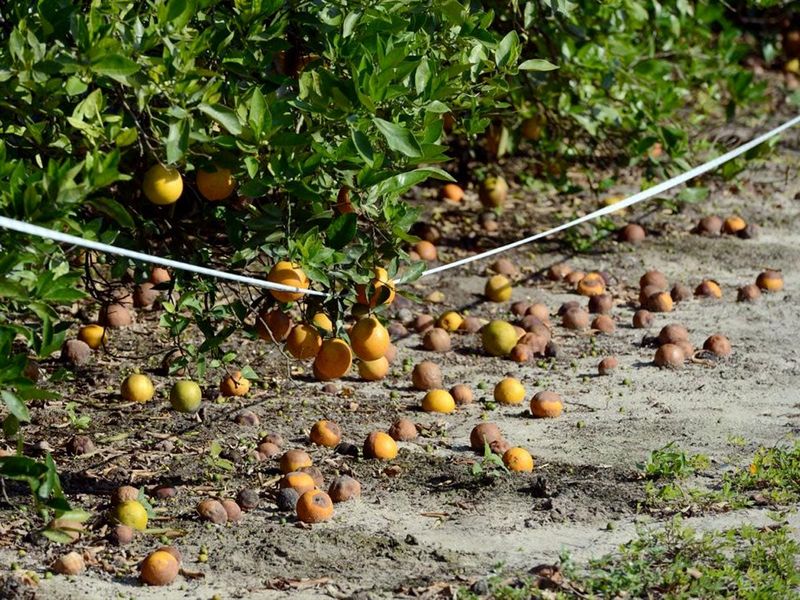
Overwatering is the sneaky culprit most people never suspect. When roots sit in soggy soil too long, they struggle to pull in oxygen.
That stress travels straight up to the fruit, and the tree responds by dropping it early.
Citrus trees in hot desert regions do not need water every single day, even in June. Frequent shallow watering trains roots to stay near the surface.
Surface roots dry out faster and leave the tree more vulnerable during heat spikes.
Most established citrus trees in the low desert do best with deep watering every five to seven days in summer. That schedule can shift based on soil type and tree size, but the key principle stays the same.
Less frequent, deeper watering beats constant light watering every time.
Watch your fruit closely in early June. If small green fruits start falling in clusters, overwatering is often the first thing worth checking.
Pull back the irrigation frequency before assuming the tree has a disease or pest problem.
A simple soil check takes about thirty seconds. Push a screwdriver or wooden dowel about six inches into the ground near the root zone.
2. Check Soil Before Running Irrigation
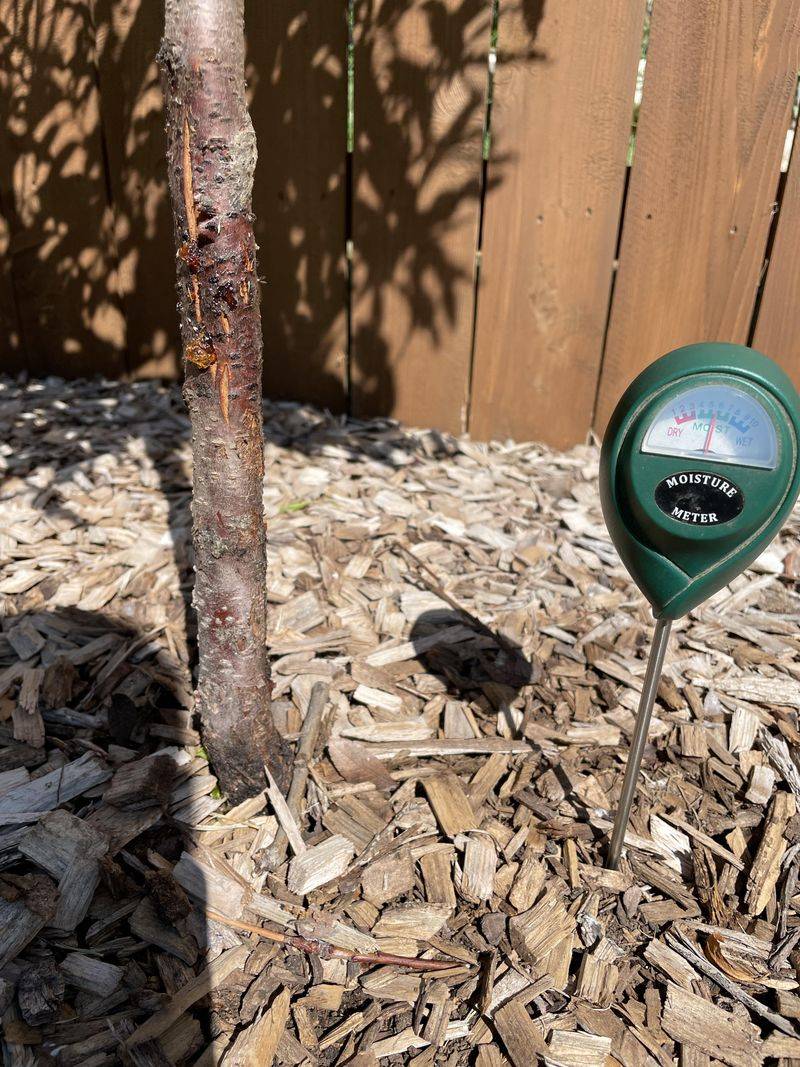
Guessing when to water is one of the most common and costly habits in citrus care. Soil conditions change fast in summer heat, and running irrigation on a fixed schedule without checking first often leads to problems.
The tree ends up either too wet or too dry, and both extremes trigger fruit drop.
Sandy soils drain fast and may need water sooner. Clay-heavy soils hold moisture longer and need more time between sessions.
Knowing your soil type helps you adjust your schedule rather than blindly following a calendar.
A wooden dowel works great as a low-cost moisture probe. Push it about eight to ten inches deep and pull it out slowly.
Damp soil clings to the wood. Dry soil leaves it clean.
That simple test tells you more than any timer or guesswork ever could.
Your Arizona Garden Changes Every Week. Your Plan Should Too.
Gardening in Arizona changes quickly throughout the season. Every Friday you’ll receive a simple weekly plan showing exactly what to plant, prune, fertilize, harvest, and protect so you never miss the right timing.
Check the soil at least twenty-four hours before your scheduled irrigation runs. If it still feels moist at six inches down, delay watering by a day.
Repeat the test until the soil reaches a slightly dry but not bone-dry point before watering again.
Fruit trees give off signals when soil moisture is off. Slight leaf curl in the early morning, before the heat of the day hits, usually points to drought stress.
3. Deep Watering Encourages Deeper Root Growth
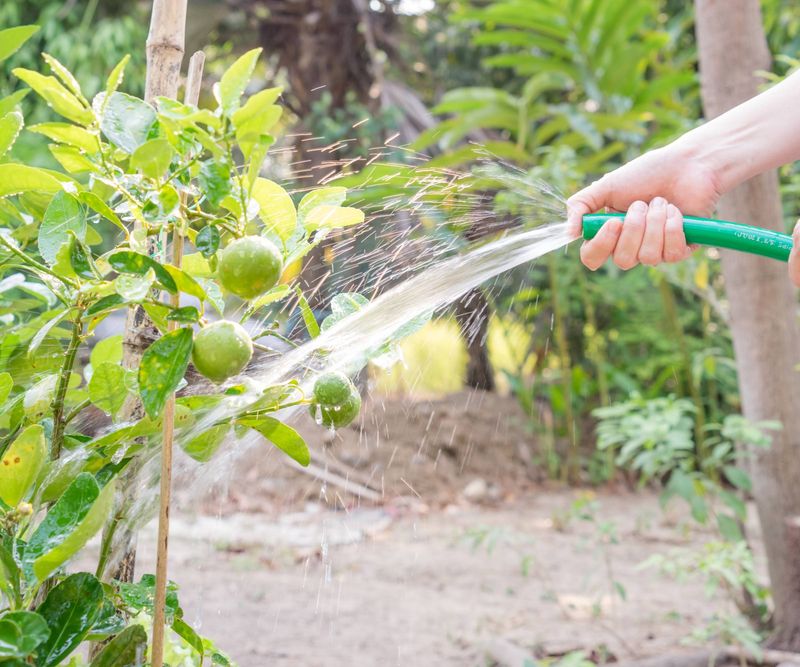
Roots follow water. Short, shallow watering sessions train roots to stay in the top few inches of soil.
That zone heats up fast in summer and dries out between waterings, leaving the tree struggling when temperatures climb past 110 degrees.
Deep watering pushes moisture down to twelve, eighteen, even twenty-four inches below the surface. Roots chase that moisture downward.
Deeper roots tap into cooler, more stable soil layers that hold moisture longer between irrigation cycles.
A slow, long watering session works better than a quick burst. Drip emitters left running for several hours allow water to penetrate gradually without pooling or running off.
That slow soak reaches the root zone where it actually does some good.
Basin watering is another solid method. Build a low dirt berm around the drip line of the tree, fill it with water, and let it soak in completely before walking away.
Repeat once or twice during each session. The water goes deep rather than spreading sideways across the surface.
Deep-rooted trees in desert climates handle heat stress much better than shallow-rooted ones. They can access subsoil moisture during brief dry spells between irrigation cycles.
That buffer matters a lot in June when temperatures stay high day and night.
4. Watch For Yellowing Leaves And Stressed Growth
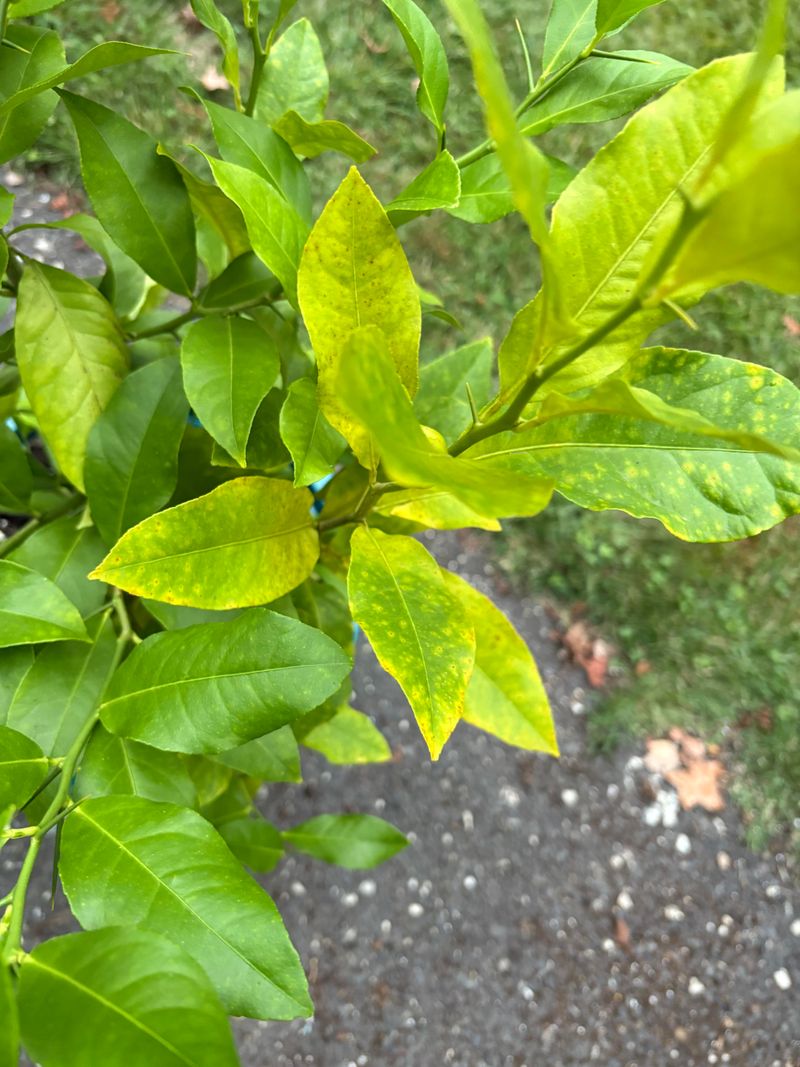
Yellow leaves are one of the clearest signs a citrus tree is struggling. Most people assume it means the tree needs more water, but that is not always true.
Overwatering causes yellowing just as often as drought does, and treating the wrong problem makes things worse.
New growth that comes in pale or yellowish usually points to a nutrient issue or root stress caused by soggy soil. Older leaves turning yellow and dropping in summer often signal heat stress combined with inconsistent watering.
Both conditions put fruit at risk.
Look at where the yellowing starts. If it begins on older interior leaves and works outward, nitrogen deficiency is a likely cause.
If new leaves look yellow with green veins, iron chlorosis may be the issue, which is common in the alkaline desert soils found across the region.
Stressed growth, like short stunted new shoots or leaves that curl and crisp at the edges, often points to root zone problems. Roots that cannot function properly cannot feed new growth or support developing fruit.
The tree sheds fruit as a survival response.
Correcting watering habits often resolves mild yellowing within a few weeks. Fertilizing while the tree is under water stress can backfire and cause more damage.
5. Keep Moisture Levels More Consistent
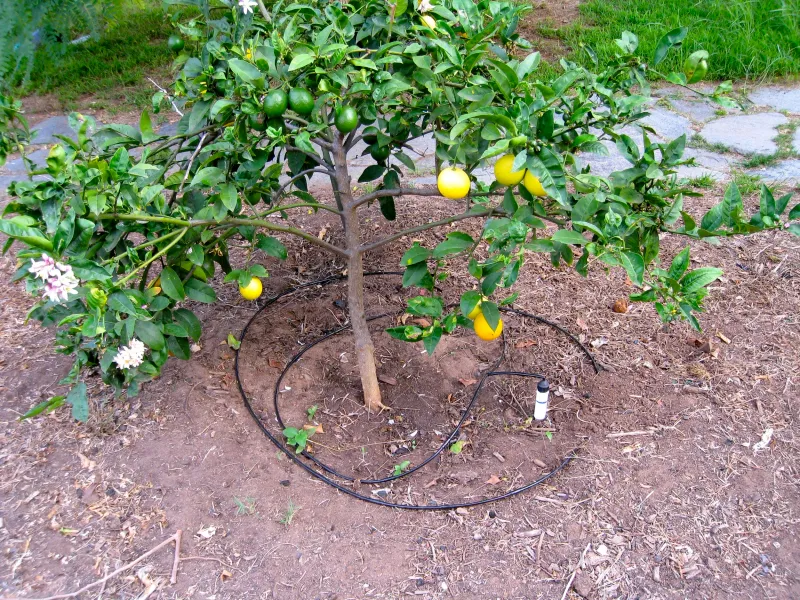
Inconsistent watering swings stress citrus trees more than most people realize. Letting the soil go bone dry, then flooding it, then drying it out again creates a cycle that confuses the tree.
Fruit that starts developing during a dry spell often drops when the next heavy watering hits.
Citrus trees prefer steady moisture levels, not perfect wetness all the time, but a predictable rhythm they can adapt to. When soil swings from dry to saturated repeatedly, the tree cannot regulate water uptake properly.
That instability often shows up as fruit drop.
Setting a reliable irrigation schedule and sticking to it matters more in June than any other month. Temperatures are rising fast, evaporation rates are high, and the tree is already under natural stress from the heat.
Reliable watering reduces one major variable it has to deal with.
Smart irrigation controllers help if your schedule is unpredictable. Some models adjust run times based on local weather data and temperature readings.
That kind of automated adjustment keeps moisture levels more stable without requiring you to manually check every few days.
Even without a smart controller, a simple weekly check and adjustment routine makes a real difference. Run irrigation, wait a day, check soil depth, and note how quickly it dried.
6. Mulch Bare Soil Around The Root Zone
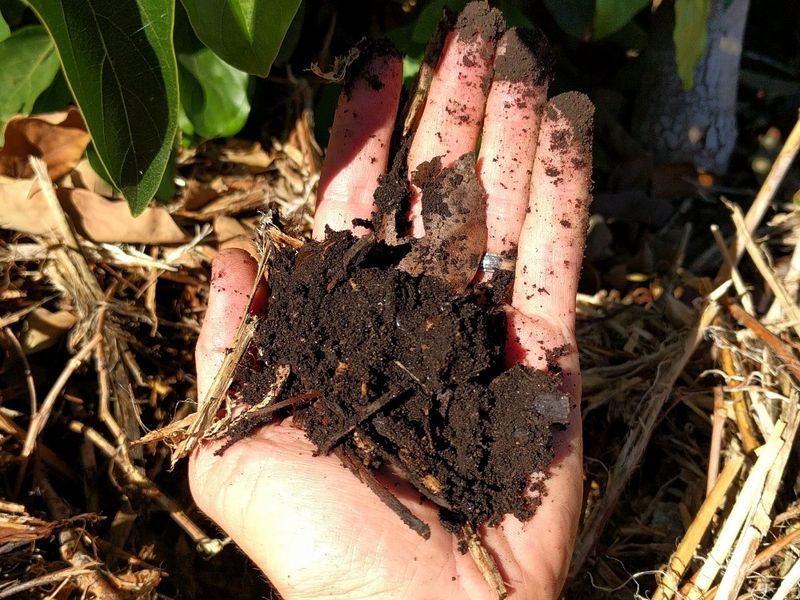
Bare desert soil in June absorbs heat like a skillet. Soil temperatures at the surface can climb high enough to damage feeder roots and stress the entire root zone.
That kind of heat stress contributes directly to early fruit drop, and it is largely preventable.
A three to four inch layer of wood chip mulch spread around the root zone changes everything. Mulch shades the soil, slows evaporation, and keeps soil temperatures significantly cooler than bare ground.
Roots stay more comfortable and function better under those conditions.
Keep mulch pulled back a few inches from the trunk itself. Mulch piled against the bark traps moisture and can lead to rot over time.
The goal is to cover the area from just outside the trunk out to the drip line, which is roughly where the outer branches reach.
Wood chips work well for desert citrus. Straw and shredded bark are also solid options.
Avoid fine-textured mulches that compact easily and block water from reaching the soil below. Coarser materials allow irrigation water to penetrate while still holding moisture in the root zone.
Mulched trees typically need slightly less frequent watering than bare-soil trees because evaporation slows down significantly.
7. Adjust Irrigation As Summer Heat Builds
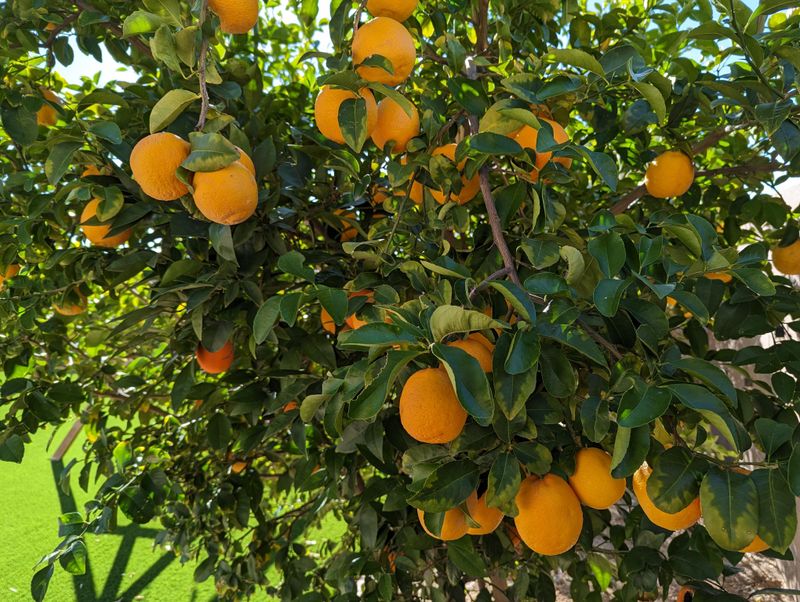
June in the desert is not a flat month. Temperatures at the start of June can feel manageable, but by the final weeks, heat becomes relentless.
A watering schedule that worked on June first may be completely wrong by June twenty-fifth.
Irrigation needs to scale with heat. As temperatures climb, evaporation increases and trees pull more water to stay cool through transpiration.
That demand goes up fast, and a static schedule that does not account for rising heat leaves trees underwatered at the worst possible time.
Check your irrigation schedule every ten days throughout June. Small adjustments, like adding five to ten minutes to each session or bumping frequency from every six days to every five, can prevent moisture deficits before they trigger fruit drop.
Small changes matter more than dramatic overhauls.
Pay attention to local forecast data rather than just the calendar. A stretch of 112-degree days requires more irrigation than a mild week sitting around 100 degrees.
Weather-based adjustments keep your schedule in sync with actual conditions rather than assumptions.
Monsoon season typically arrives in early to mid-July across much of the desert Southwest. Once rains begin, irrigation needs can drop significantly.