The Best Set-And-Forget Florida Plants For A New Homeowner Who Doesn’t Know Where To Start
New home, new yard, zero idea what to do with it. Florida does not make this easy on beginners.
The climate is aggressive, and the soil is often terrible. Plants that look great at the garden center have a habit of falling apart the moment a Florida summer gets serious about itself.
Most new homeowners start by making expensive mistakes. The wrong plant in the wrong spot, too much water, too little, a yard that looks promising in March and defeated by August.
There is a shorter path. Our state has a lineup of plants that genuinely forgive beginner mistakes and handle the heat and rain without constant intervention.
They still manage to look like someone knew what they were doing when they planted them. No deep gardening knowledge required.
No complicated maintenance schedules. Just plants that work with Florida instead of constantly fighting it.
1. Fakahatchee Grass Gives Big Texture Without Big Demands
Some yards just need volume. Before any flowers or color, a new homeowner sometimes just needs something that looks established and full.
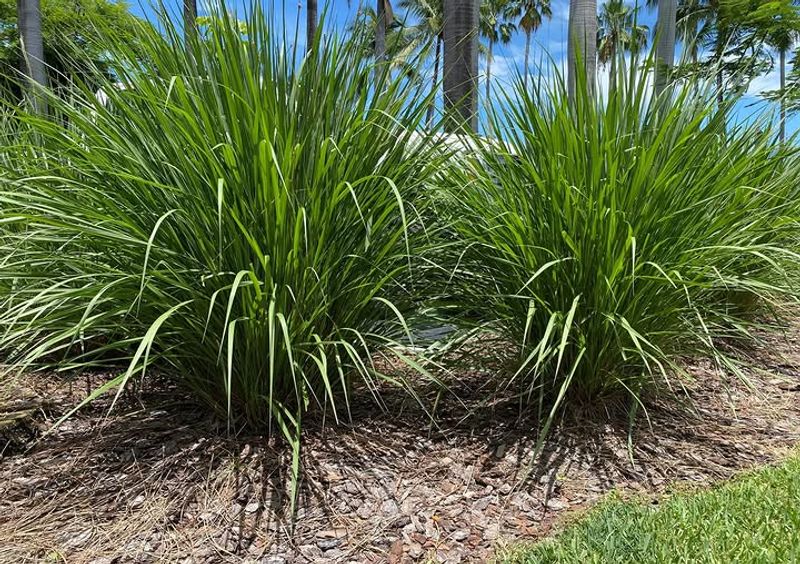
Fakahatchee grass delivers that in a way few native plants can match. Known botanically as Tripsacum dactyloides, this bold clumping grass grows in sunny to partly sunny spots.
It creates an instant sense of structure with its wide arching leaves and generous spread.
Mature clumps can reach six feet tall and equally wide, so placement matters from day one. Give it room away from walkways, small patios, and tight foundation beds where it will feel cramped.
It works well as an accent at a property corner, a mass planting along a fence line, or a natural buffer between a lawn and a wilder garden edge.
Wildlife value is real with this grass. Birds use the seed heads, and the dense clumping habit provides cover for small animals.
It handles sandy and clay soils, tolerates occasional flooding, and grows across much of this state from northern regions to southern regions. Water it regularly during the first season to get roots established, then ease back.
Trimming old foliage once a year in late winter keeps it looking tidy without much effort.
2. Coral Honeysuckle Makes A Fence Feel Finished Fast
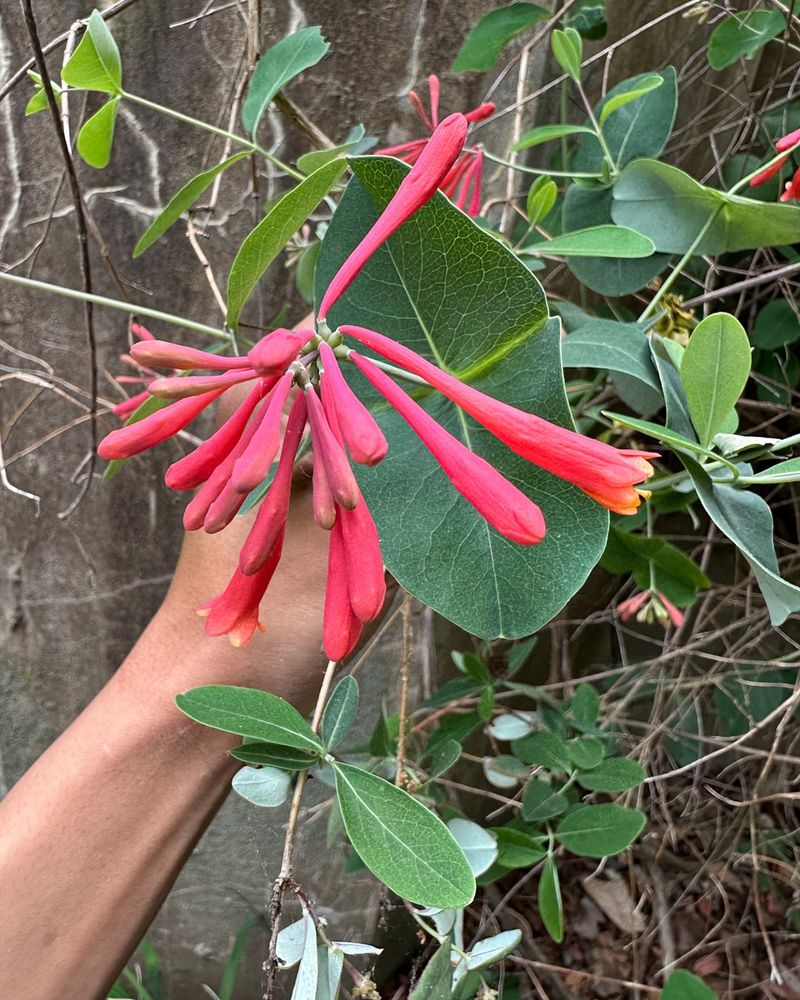
A bare chain-link or wooden fence is one of the first things a new homeowner notices and one of the easiest things to fix with the right native vine.
Coral honeysuckle, Lonicera sempervirens, is a twining native vine that wraps around fences, trellises, and arbors.
It does that without the aggressive spreading habit of non-native honeysuckle species that have caused problems across the Southeast.
Tubular red to orange flowers bloom heavily in spring and can reappear sporadically through the warmer months. Hummingbirds are strongly attracted to those blooms, and the berries that follow attract songbirds later in the season.
It is not a privacy screen on its own, especially in the first year. But it does make a bare structure feel more intentional and finished relatively quickly with proper support.
Plant coral honeysuckle in full sun to light shade and give it something to climb from the start. Sandy, well-drained soil suits it well, and it handles the heat across central and southern regions with ease.
Your Florida Garden Changes Every Week. Your Plan Should Too.
Gardening in Florida changes quickly throughout the season. Every Friday you’ll receive a simple weekly plan showing exactly what to plant, prune, fertilize, harvest, and protect so you never miss the right timing.
Northern regions can grow it successfully too. Water regularly through the first growing season, then taper off as roots establish.
Light pruning after the main bloom keeps it tidy without removing too much new growth. Avoid planting it where it has no structure to climb, as it needs support to perform at its best.
3. Spotted Beebalm Brings Pollinators Without Fussy Care
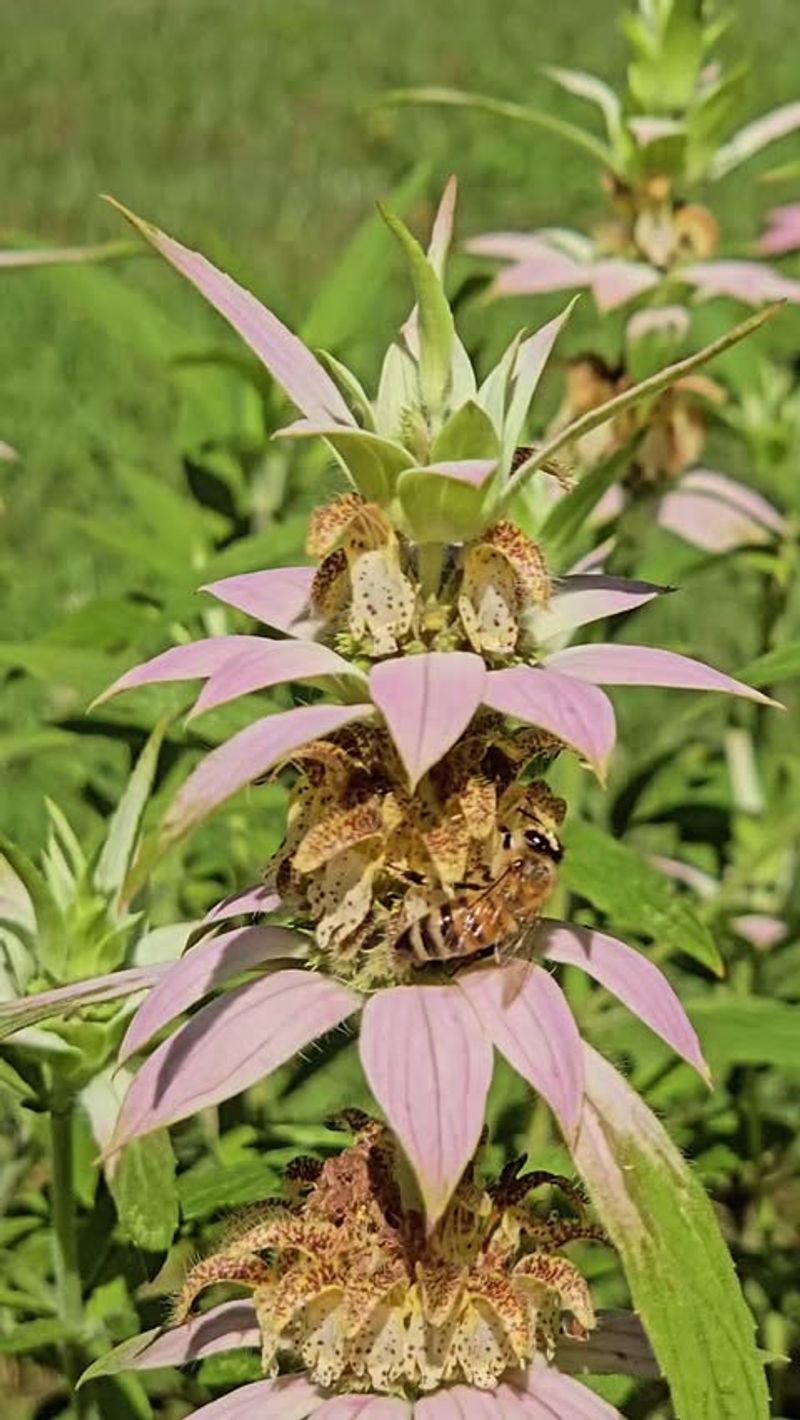
Walk past a patch of spotted beebalm on a warm afternoon and you will likely hear it before you see it.
Bumblebees, native bees, and other pollinators swarm the layered whorls of tubular flowers, creating a low buzzing energy that signals a healthy native planting.
Monarda punctata is a native wildflower built for sunny, sandy, and well-drained beds across this state. That makes it a strong pick for new homeowners who have dry or fast-draining soil.
The flowers are unusual and striking, with pale yellow tubes spotted in purple, surrounded by showy pinkish to lavender bracts that do much of the visual work. Foliage is aromatic when brushed, carrying a pleasant oregano-like scent.
The overall look is relaxed and wildflower-casual rather than formal. That makes spotted beebalm a better fit for naturalistic plantings, cottage-style beds, and open native gardens than clipped foundation rows.
Be honest with yourself about where this plant belongs. It is not a tidy, controlled shrub.
Where it is happy in sunny, dry, sandy conditions, it may reseed and spread gently over time. That is a feature in a naturalistic bed but can feel messy in a formal setting.
Plant it in full sun with sharp drainage, water during establishment, and then step back. It is short-lived as a perennial but reseeds reliably enough to persist in the right spot.
4. Dwarf Firebush Keeps Warm Yards Bright And Manageable
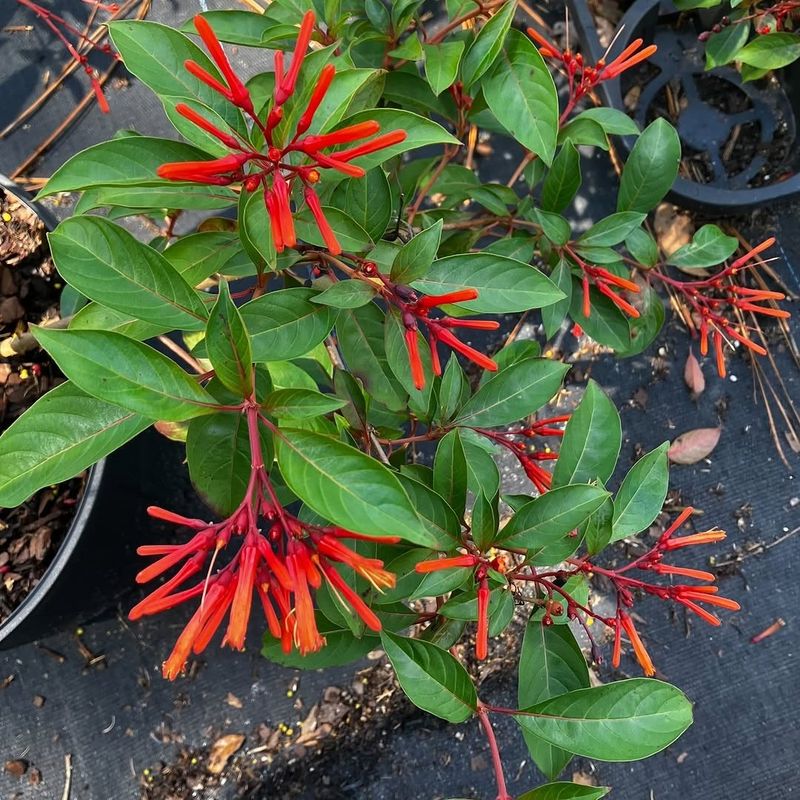
Few native shrubs bring the kind of sustained color and wildlife activity that firebush does. The compact or dwarf selections make that energy accessible even in smaller yards.
Hamelia patens is a native Florida shrub with tubular orange to red flowers that bloom for months across the warm season. Those flowers draw hummingbirds, butterflies, and native bees with reliable consistency.
Dwarf or compact selections stay more manageable in size than the standard species, which can grow quite large.
Before buying, confirm with your nursery that you are purchasing a Florida-native or Florida-friendly selection rather than a non-native cultivar.
Some varieties sold in garden centers are not native species. Reputable native plant nurseries and UF/IFAS Extension resources can help you sort that out before you spend money on the wrong plant.
Firebush thrives in warm conditions and performs best in southern regions and warmer central areas. Cooler northern regions can grow it, but expect seasonal dieback after cold snaps, and the plant may behave more like a perennial than a shrub in those areas.
Plant in full sun to light shade in well-drained soil. Water consistently through establishment, then reduce frequency as roots settle in.
Pruning in late winter or early spring encourages fresh growth and a tidier shape. It is a high-reward plant for warm, sunny spots where color and wildlife activity are the goal.
5. Golden Creeper Covers Sandy Spots With Coastal Ease
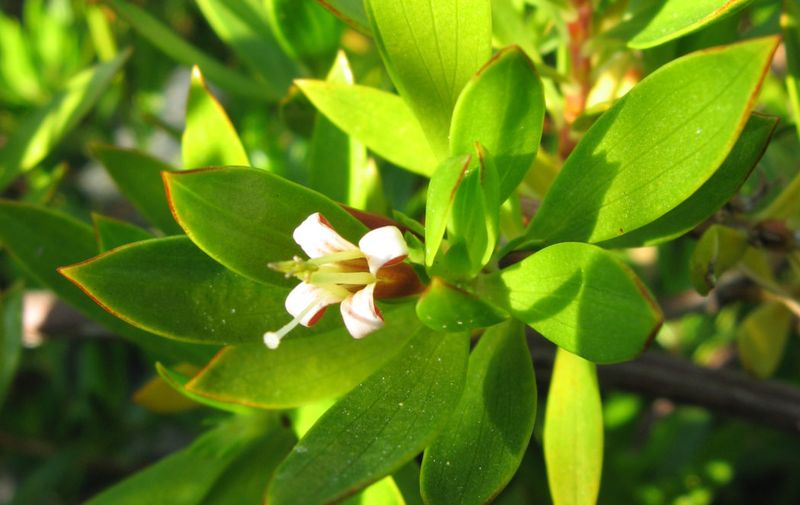
Sandy coastal yards can feel like a landscaping puzzle. Grass struggles, mulch blows away, and most ornamental groundcovers sulk in salt air and dry, fast-draining soil.
Golden creeper, Ernodea littoralis, is a native low shrub or trailing groundcover that actually belongs in those conditions. It thrives where many plants would struggle to survive.
It spreads low across sandy ground, producing small tubular flowers that transition to small berries with wildlife value. Salt tolerance makes it a practical choice for coastal sites exposed to sea spray or salty soils.
The plant’s spreading habit covers open sandy patches and bare ground without the aggressive takeover behavior of non-native groundcovers. It does spread steadily over time when placed in conditions it likes.
Golden creeper is best matched to coastal or warm sandy sites in southern regions and coastal central areas. It is not a universal solution for inland suburban yards with heavier soils or significant shade.
Sun exposure and excellent drainage are non-negotiable for this plant to perform well. Water during the establishment period, then taper off significantly since it is built for dry, lean conditions once settled.
Avoid overwatering, as roots in soggy soil will not perform the way they do in sharp, sandy, well-drained ground. Used in the right spot, it is one of the more satisfying low-maintenance groundcovers available to coastal homeowners in this state.
6. Walter’s Viburnum Builds Structure Without Bamboo Drama
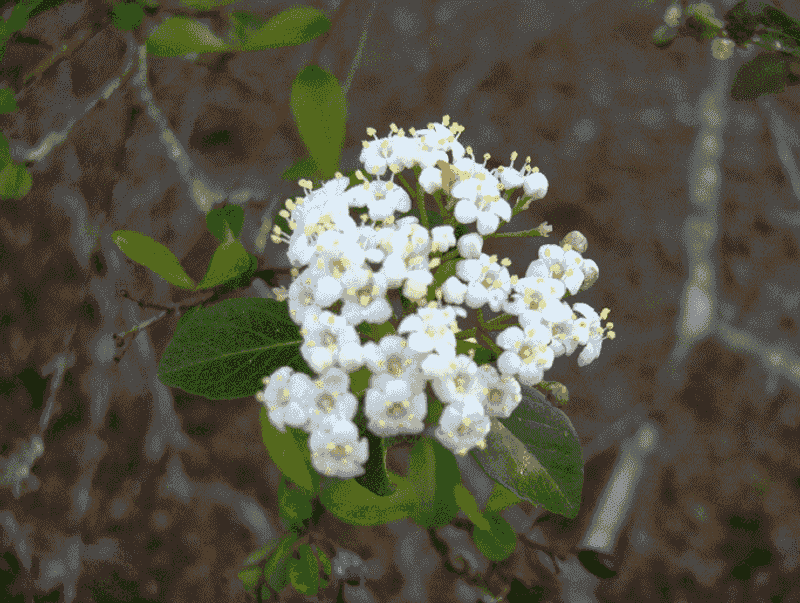
Privacy is one of the first things new homeowners think about. The temptation to grab fast-growing bamboo or other aggressive plants is understandable when you are staring at your neighbor’s yard through a chain-link fence.
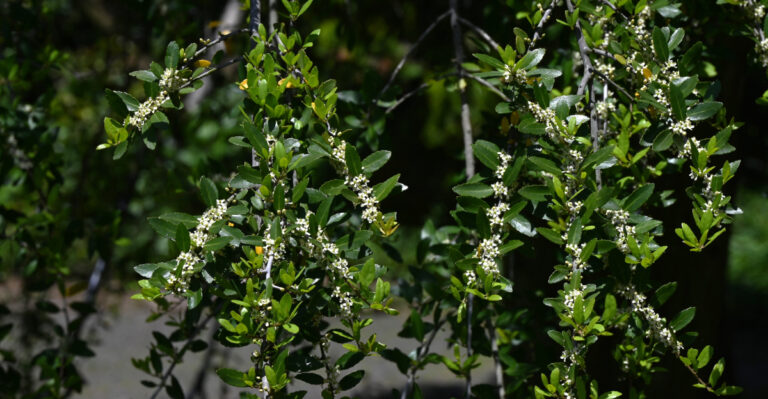
Walter’s viburnum, Viburnum obovatum, is a native shrub or small tree that builds real screening and structure over time. It does that without creating a plant management problem for years to come.
Small white flower clusters cover the plant in late winter to early spring, often before most other plants in the yard have woken up. Birds feed on the dark berries that follow.
Depending on cultivar and how you prune it, Walter’s viburnum can serve as a clipped formal hedge or a loose informal screen. It can also become a small multi-stemmed tree at the edge of a property.
Some cultivars stay compact at four to six feet while others reach fifteen feet or more, so knowing your cultivar before planting saves a lot of correction later.
It grows across a wide range of this state, from northern regions to southern regions, and tolerates a variety of soil types including sandy and clay soils. Full sun to partial shade both work.
Water regularly through the first year, and prune after flowering to shape as desired. Because it is semi-evergreen to evergreen depending on the winter, it provides year-round visual structure that bare deciduous plants cannot offer in a new yard.
7. Twinflower Softens Sunny Ground With Easy Native Blooms
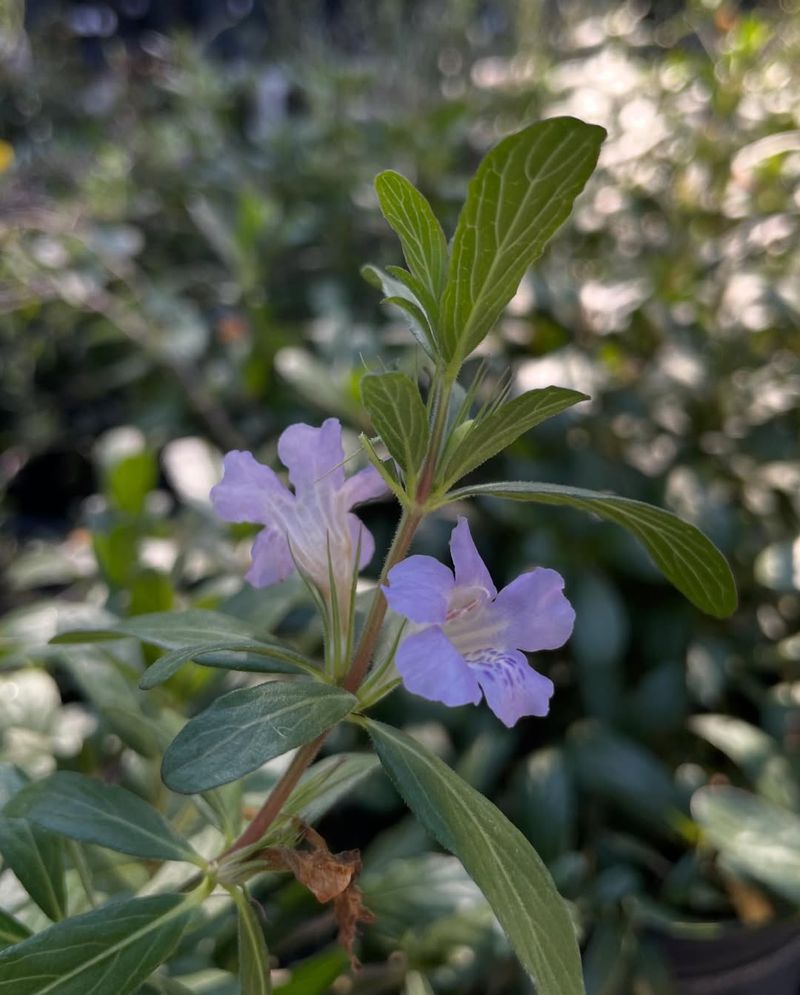
Ground-level gaps in a new yard are easy to overlook. The bare patches between stepping stones, the edges of a sunny bed, and the open strips along a driveway add up quickly into a yard that feels unfinished.
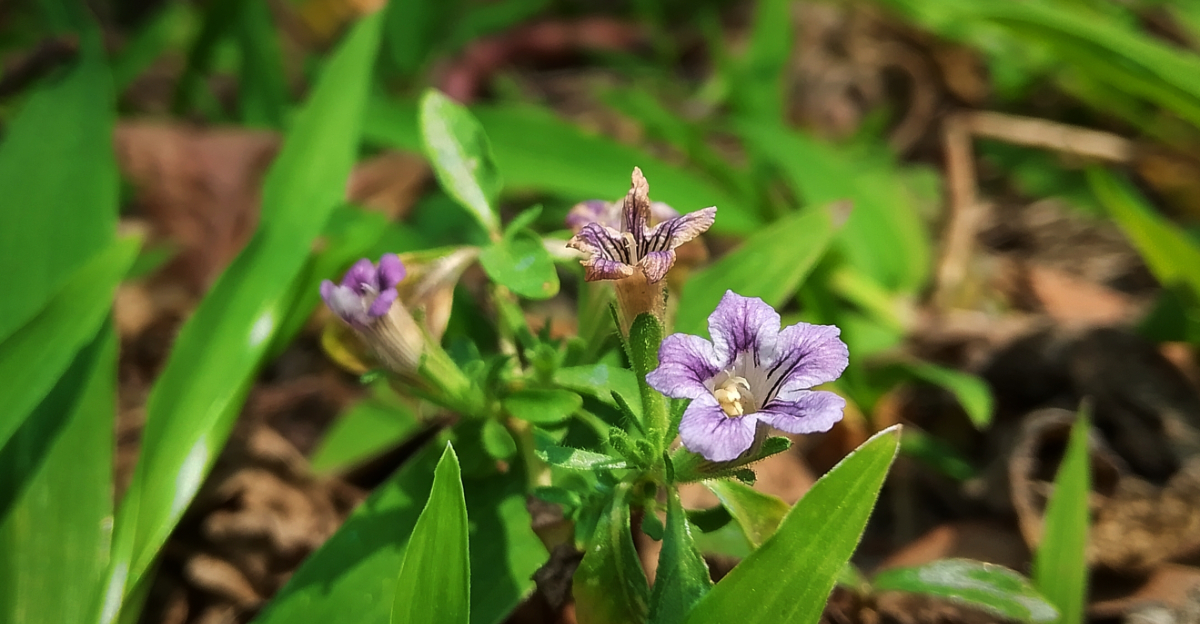
Twinflower, Dyschoriste oblongifolia, is a low-growing native groundcover that fills those spaces with small purple blooms and soft green foliage. It does that without demanding much in return.
The flowers are small and tubular, appearing in pairs, which gives the plant its common name. They attract native bees and small pollinators throughout the warmer months.
The plant stays low, spreading gently to cover open ground in sunny to partly sunny spots. It is a soft filler rather than a bold statement plant, which is exactly what many bare bed edges and open patches need.
Be realistic about where twinflower belongs. It is not built for heavy foot traffic and will not hold up as a lawn replacement in areas where people walk regularly.
Sandy, well-drained soil in a sunny spot is its comfort zone, and it grows across much of this state with reasonable success. Water during establishment to help roots get settled, then reduce watering as the plant matures.
It spreads gradually without becoming aggressive. In the right site, it creates a quiet, finished look that ties a native planting together without drawing attention away from showier plants nearby.
8. Beautyberry Earns Its Name Every Single Fall
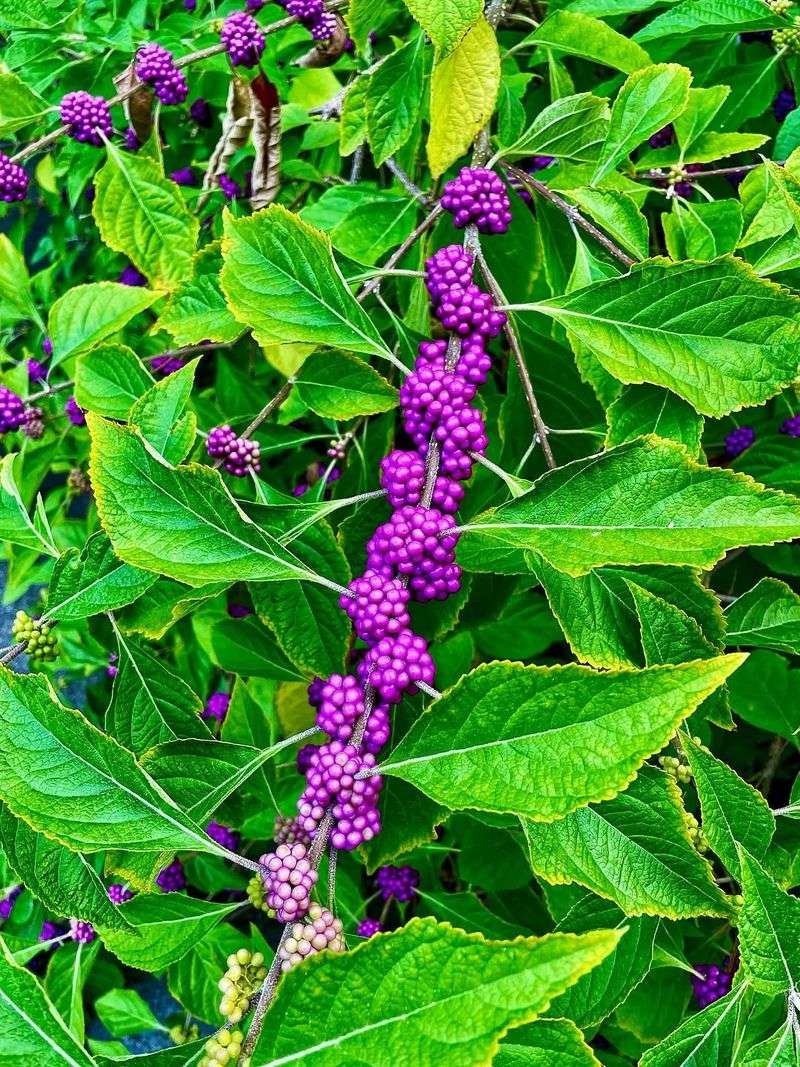
Nothing in a Florida yard quite stops visitors in their tracks the way American beautyberry does in late summer and fall. Callicarpa americana is a native shrub that produces clusters of vivid magenta-purple berries directly on its stems.
The effect looks almost unreal, like someone hand-painted each cluster and arranged them deliberately. For a new homeowner who wants a conversation-starting plant that practically cares for itself, this is a strong contender.
The berries are a critical food source for birds, including mockingbirds, catbirds, and robins. The shrub also supports pollinators during its bloom period earlier in the season.
It grows in full sun to partial shade, which makes it one of the more flexible native shrubs for yards that have a mix of light conditions. Partial shade often suits it well and keeps the plant from looking stressed during the hottest months.
Mature size ranges from four to eight feet tall and wide, so it needs room but is not overwhelming in most suburban yards. It grows across northern, central, and southern regions of this state.
Prune it hard in late winter, cutting stems back close to the ground, and it will flush back vigorously with fresh growth and a full berry display by fall. Sandy or loamy soils both work, and it handles this state’s rainy season without complaint once established.
9. Sunshine Mimosa Turns A Bare Lawn Edge Into Something Fun
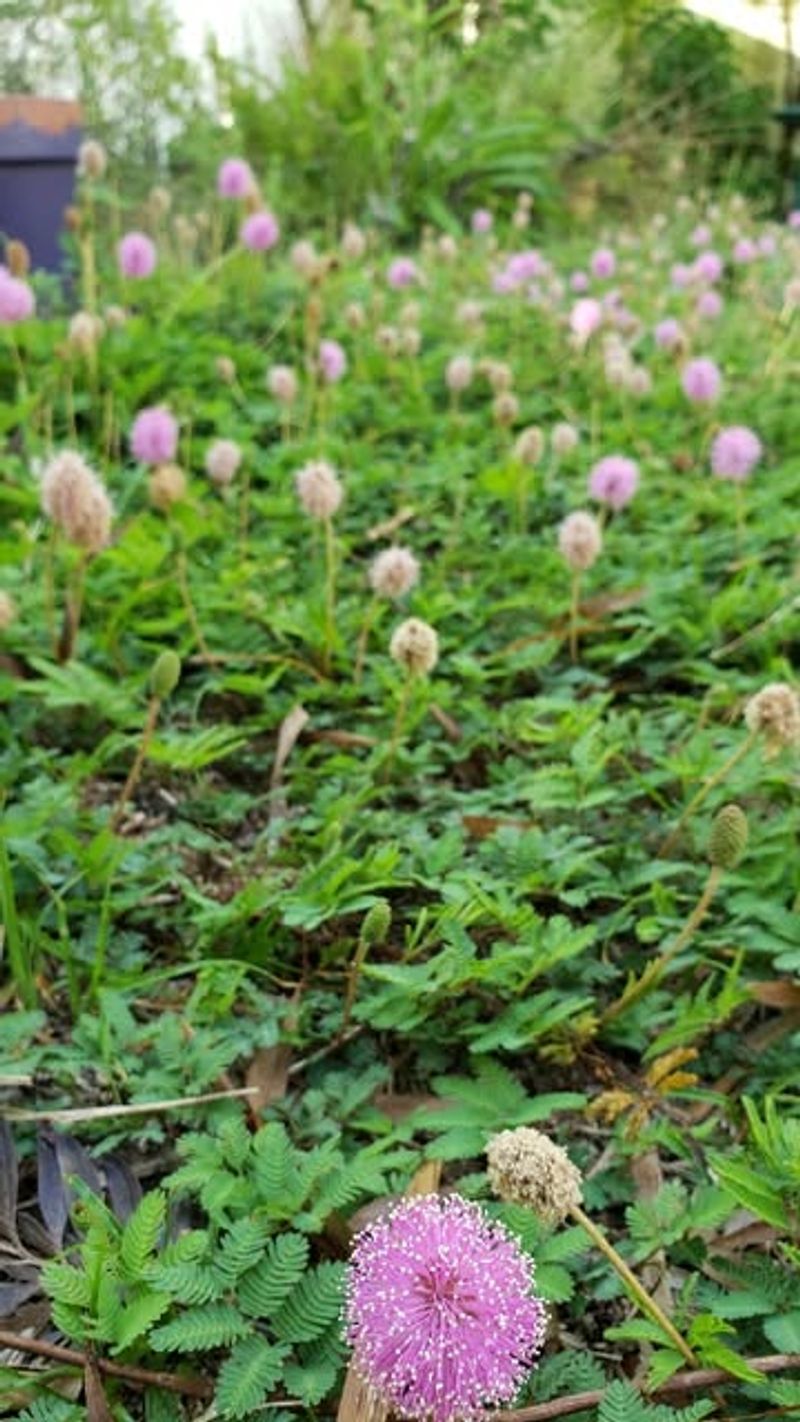
Bare lawn edges and open sunny patches in warm-region yards often get covered with mulch and left alone, but sunshine mimosa offers a livelier option. Mimosa strigillosa is a native groundcover that spreads low across sunny ground.
It produces small pink powder-puff flowers that attract butterflies and native bees throughout the warm season. It is cheerful, low, and genuinely useful in spots where grass has given up.
One of its most entertaining qualities is its touch-sensitivity. Leaves fold up when brushed or touched, which delights kids and curious adults alike.
This is a completely harmless response and the leaves reopen within minutes. That quirky behavior aside, it functions as a practical groundcover in full sun with well-drained to moderately moist soil in warm and coastal regions.
Sunshine mimosa spreads by runners and can cover ground steadily, so give it room and place it where spreading is welcome rather than problematic.
It does not handle heavy foot traffic well and works best along edges, open patches, and sunny beds where it can spread without being walked on repeatedly.
It is most reliable in southern and warmer central regions and may not persist through hard freezes in northern areas. Water during establishment, then reduce as it fills in.
Once settled, it handles heat and dry spells with much more resilience than most lawn alternatives.
10. Muhly Grass Turns Pink In October Like Clockwork
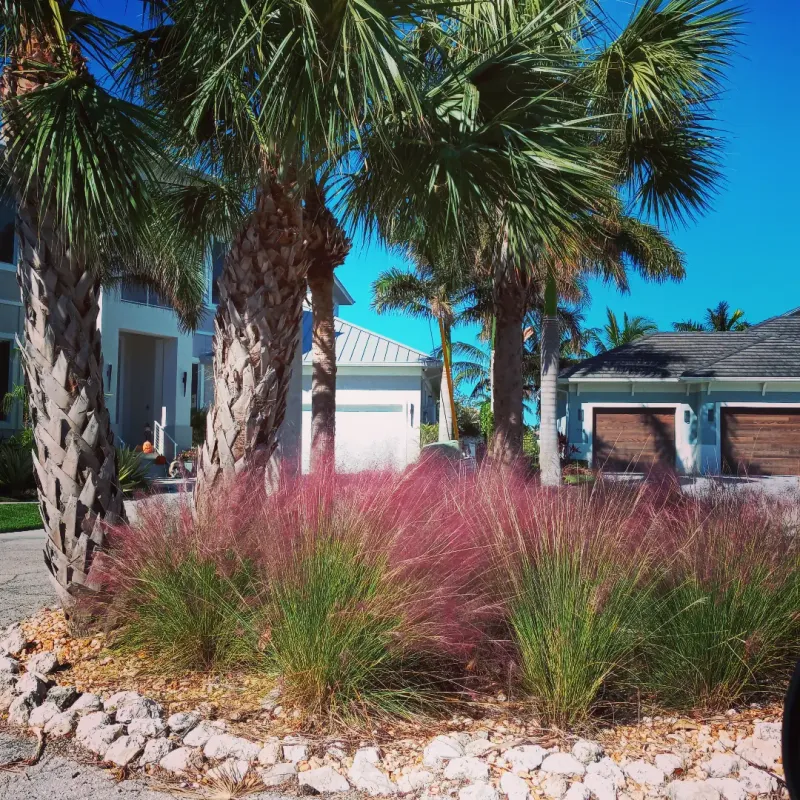
Every October, something almost theatrical happens in yards across this state where Gulf muhly grass is planted.
Muhlenbergia capillaris sends up a haze of pink to rosy-purple flower plumes that catch the light in a way that makes the whole planting look soft and almost glowing.
For a new homeowner who wants a reliable seasonal moment in the yard, this native grass delivers one without requiring special treatment to make it happen.
Outside of its fall display, muhly grass is a tidy clumping grass with fine-textured foliage that stays green through most of the year. It grows in full sun with well-drained soil, handles sandy conditions well, and tolerates drought once established.
Clumps reach roughly two to three feet tall and wide, making them manageable for most yard sizes as accent plants, mass plantings along a fence, or border edges.
It grows well across northern, central, and southern regions of this state and is widely available at native plant nurseries. Cut back the old foliage in late winter before new growth emerges to keep clumps looking fresh.
Water consistently during the first growing season to help roots develop, then reduce irrigation significantly. Overwatering and heavy soils are the main conditions to avoid.
Planted in the right sunny, well-drained spot, Gulf muhly grass is one of the most rewarding low-effort natives a beginner can add to a new yard.