These Are The Signs Your Pennsylvania Rhododendron May Have Root Rot And What To Do Right Away
Rhododendrons are one of those plants that can look absolutely spectacular in a Pennsylvania landscape, right up until they don’t.
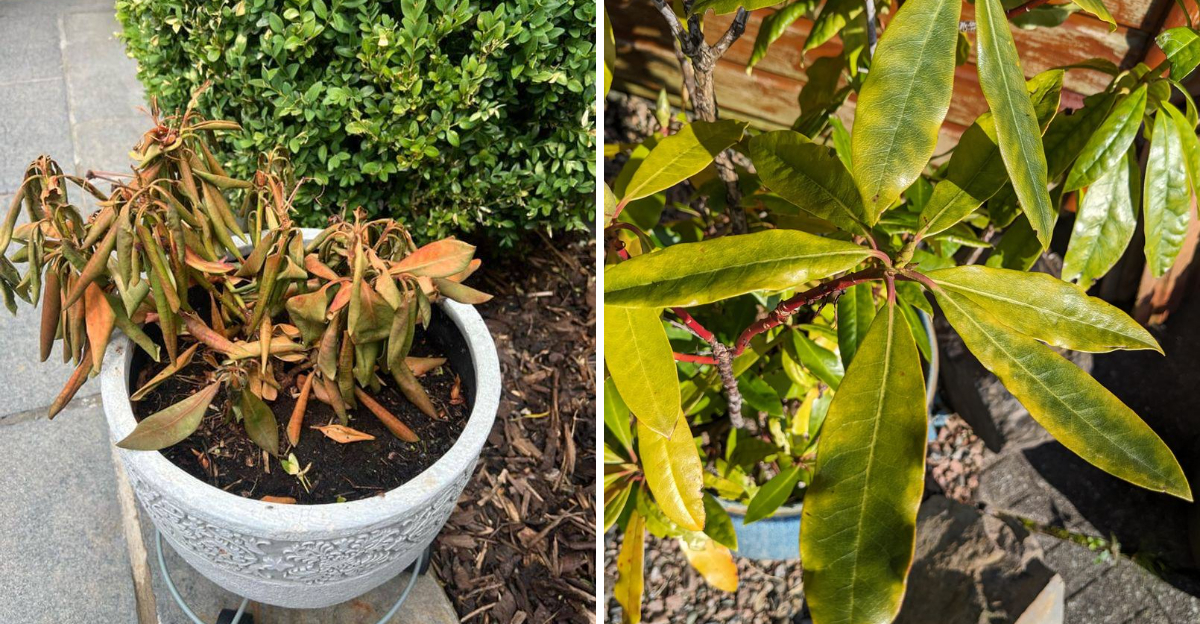
If yours has been putting out yellowing leaves, wilting stems, or weak new growth that just never seems to pick up, you are probably already wondering what went wrong.
Here is the part that surprises a lot of gardeners: the answer is often too much water, not too little.
Pennsylvania springs are wet, clay soils hold moisture longer than most plants appreciate, and shaded foundation beds can stay damp for days after a heavy rain.
Rhododendrons have strong opinions about all of this.
A water mold called Phytophthora loves those exact conditions and produces symptoms that look remarkably like drought stress, which means a lot of well-meaning gardeners end up making the situation considerably worse by reaching for the hose.
1. Wilting Leaves Even When Soil Is Moist
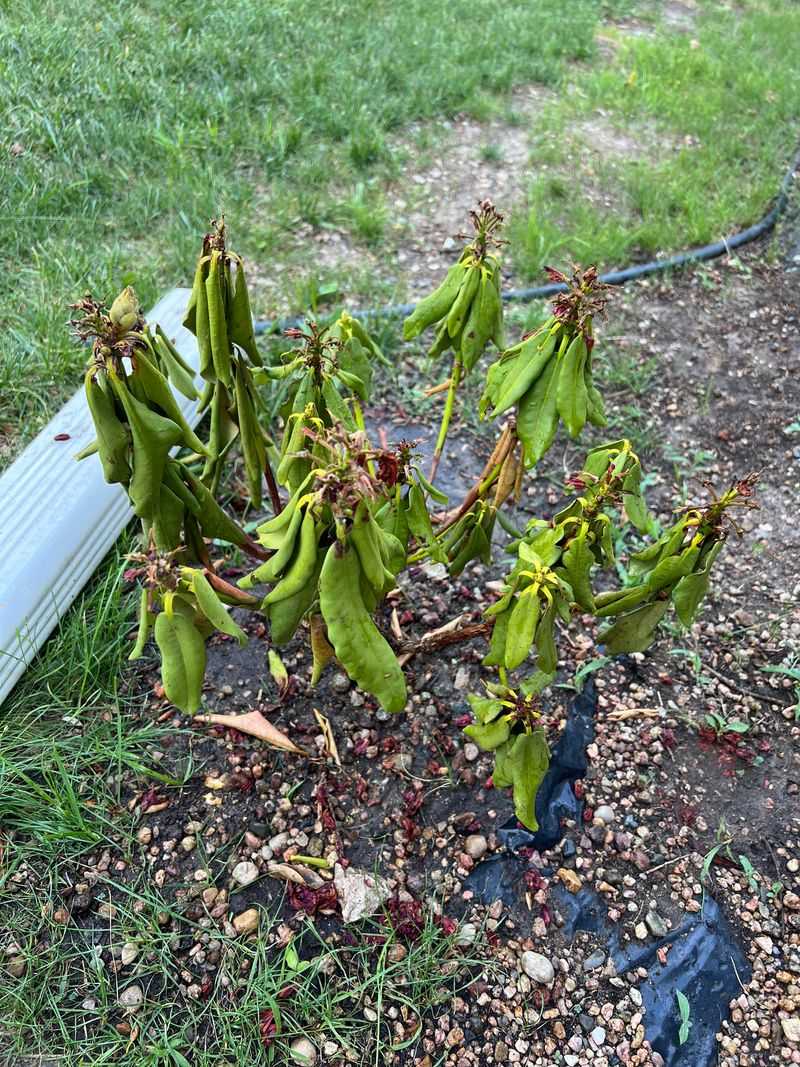
A shrub that looks thirsty despite damp soil is one of the most confusing things a Pennsylvania gardener can come across in spring or summer.
You water the plant, the soil feels wet to the touch, yet the leaves keep drooping and curling inward like the plant is begging for a drink.
That contradiction is actually one of the clearest early signals that something may be going wrong underground.
When Phytophthora root rot takes hold, it damages the roots in a way that prevents them from pulling water up into the plant, even when moisture is sitting right there in the soil.
The plant essentially loses its ability to hydrate itself, so the leaves respond the same way they would during a dry spell.
Many Pennsylvania gardeners make the mistake of watering more at this point, which can make conditions worse by adding even more moisture to already saturated ground.
Before assuming a wilting rhododendron needs water, press two fingers about two inches into the soil near the root zone. If the soil feels cool and damp, extra watering is likely not the answer.
Take a closer look at the overall planting conditions, including drainage, nearby downspouts, and how long the soil stays wet after a rain.
Catching this sign early gives you the best chance of helping the shrub recover before the root system loses too much of its function.
2. Yellowing Leaves And Weak Color
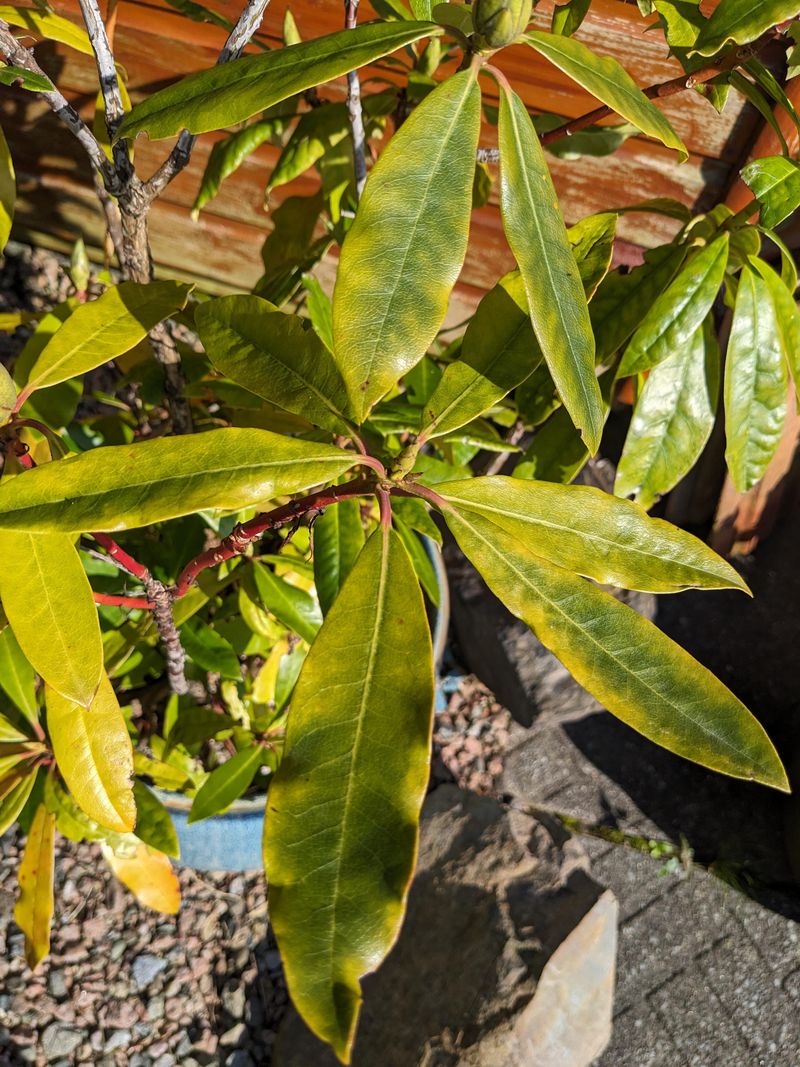
Pale yellow leaves on a rhododendron can send a gardener straight to the garden center looking for fertilizer, and while nutrient deficiencies are sometimes to blame, root rot is another possibility that deserves a careful look first.
When roots are compromised by excess moisture and Phytophthora infection, they lose the ability to absorb nutrients from the soil, which shows up as yellowing foliage even in beds that have been fertilized recently.
In Pennsylvania, rhododendrons planted near foundations, under dense tree canopies, or in low-lying beds are especially prone to this kind of root stress.
The yellowing often starts on older leaves toward the interior of the shrub and gradually spreads outward.
Unlike the bright, uniform yellow you might see with iron chlorosis, root rot yellowing tends to look dull and uneven, sometimes accompanied by a general loss of the deep, glossy green color that healthy rhododendrons are known for.
Your Pennsylvania Garden Changes Every Week. Your Plan Should Too.
Gardening in Pennsylvania changes quickly throughout the season. Every Friday you’ll receive a simple weekly plan showing exactly what to plant, prune, fertilize, harvest, and protect so you never miss the right timing.
If you notice the color fading and the leaves look limp along with the yellowing, that combination is worth taking seriously. Check the soil drainage in the area and think back to whether the bed stayed soggy after recent rains.
Adding fertilizer to a plant already struggling with root rot will not restore the color and may stress the shrub further.
Addressing the underlying moisture problem is the more useful first step before considering any nutritional treatment for the plant.
3. Stunted Growth Or Poor New Growth
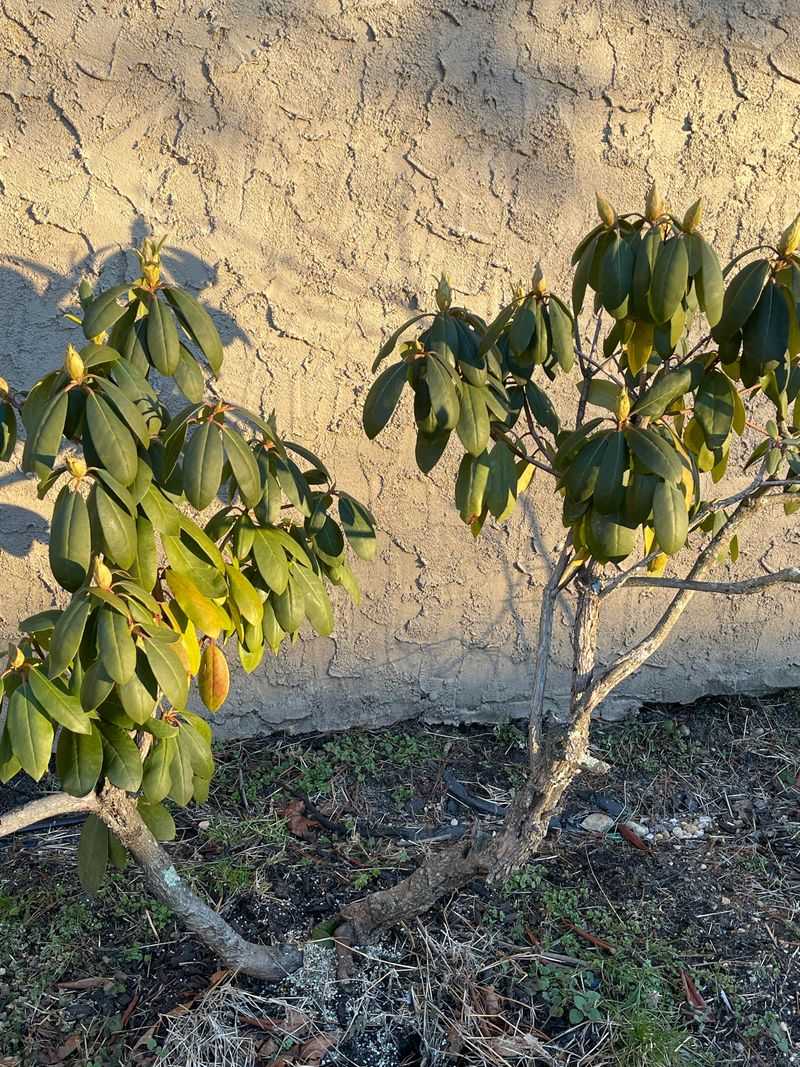
Spring is supposed to bring a burst of fresh growth to rhododendrons, with new buds swelling and young leaves unfurling in shades of bright green.
When that growth comes in thin, short, or noticeably weaker than it was in previous years, it can be a sign that the root system is struggling to support the plant the way it should.
Stunted growth is easy to overlook at first because it happens gradually. You might notice the new shoots seem shorter than usual, or the flower buds fail to develop fully before the blooming season.
Over time, the overall size and density of the shrub may seem to stall or even shrink slightly as older stems stop pushing out healthy new growth.
In Pennsylvania landscapes, this kind of slow decline can go unnoticed for a season or two before gardeners realize something is genuinely wrong.
Root rot reduces the root system’s ability to take up water and nutrients, both of which are essential for producing strong new growth in spring and early summer.
A shrub that looks healthy from a distance but produces noticeably less vigorous growth than it used to is worth examining more carefully.
Check the soil conditions around the base, look for any soft or discolored stems near the soil line, and consider whether the planting spot has drainage challenges that might be holding excess moisture around the roots longer than the plant can tolerate.
4. Few Healthy Feeder Roots
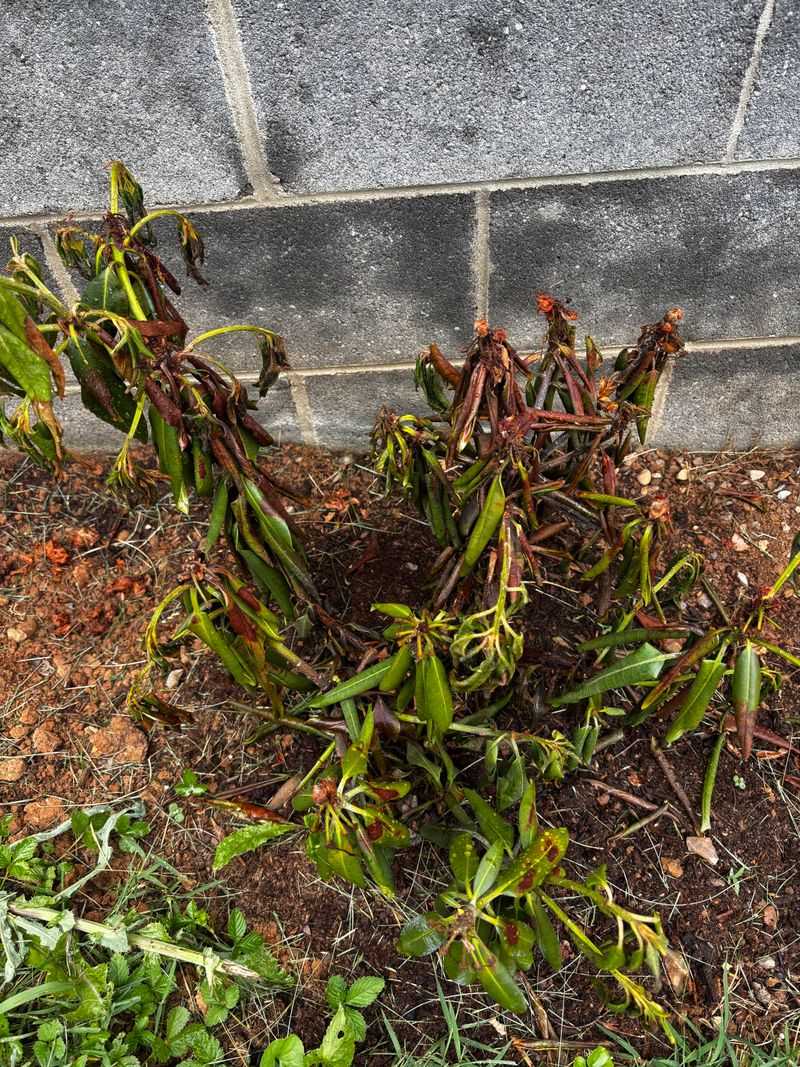
Feeder roots are the fine, thread-like roots that do most of the heavy lifting when it comes to pulling water and nutrients out of the soil.
Rhododendrons rely on a dense network of these shallow roots to stay nourished and hydrated, so when those roots are reduced or compromised, the whole plant feels the impact fairly quickly.
Phytophthora root rot tends to target feeder roots first, turning them brown, soft, and mushy rather than the firm, white, or tan color you would expect from healthy roots.
If you gently loosen the soil around the base of a struggling rhododendron and examine the root zone, sparse or discolored feeder roots are a telling sign that root rot may be involved.
Healthy rhododendron roots should feel firm and have a light color; roots that crumble or feel slippery when touched have likely been damaged by excess moisture and fungal activity.
Pennsylvania gardeners who dig around a suspect shrub should do so carefully to avoid causing additional stress to an already weakened root system.
Use a hand trowel and work slowly around the outer edge of the root zone rather than digging straight down near the crown.
If you find very few healthy roots despite the shrub being established for several years, that is a strong indicator that drainage and soil moisture management need to be addressed as soon as the conditions allow for it.
5. Red-Brown Discoloration Near The Soil Line
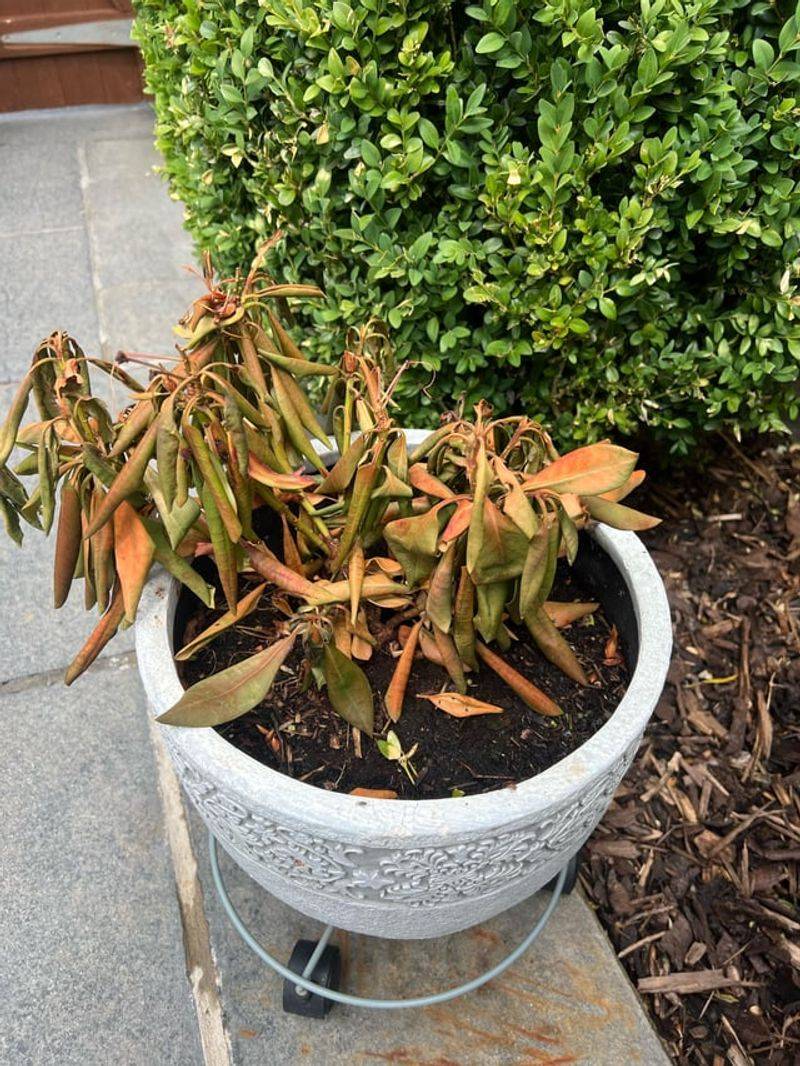
One of the more telling physical signs of Phytophthora root rot is a reddish-brown discoloration that appears in the stem tissue just at or slightly above the soil line.
Unlike normal bark color, this discoloration tends to look waterlogged and dark, almost like the inner tissue has been stained.
It can extend a few inches up the lower stem or remain close to where the roots meet the crown of the plant.
To check for this, gently scrape away a small section of bark near the base of the shrub with a clean knife or your fingernail. Healthy tissue underneath should appear greenish-white or cream-colored.
Tissue affected by root rot often shows that reddish-brown staining just beneath the surface, which reflects the damage spreading upward from the compromised root system.
This kind of discoloration is a more specific indicator than wilting or yellowing alone, and finding it can help narrow down whether root rot is actually the problem.
In Pennsylvania foundation plantings and shaded beds, this symptom sometimes goes unnoticed because the lower stems are hidden by mulch or ground cover.
Pulling back mulch from around the base of the shrub a few times during the growing season is a simple habit that can help you spot early warning signs before they become harder to manage.
If you notice this staining, focus on improving drainage in the area and avoid piling mulch against the lower stem, which can trap extra moisture right where the plant is most vulnerable.
6. Poorly Drained Soil Around The Shrub
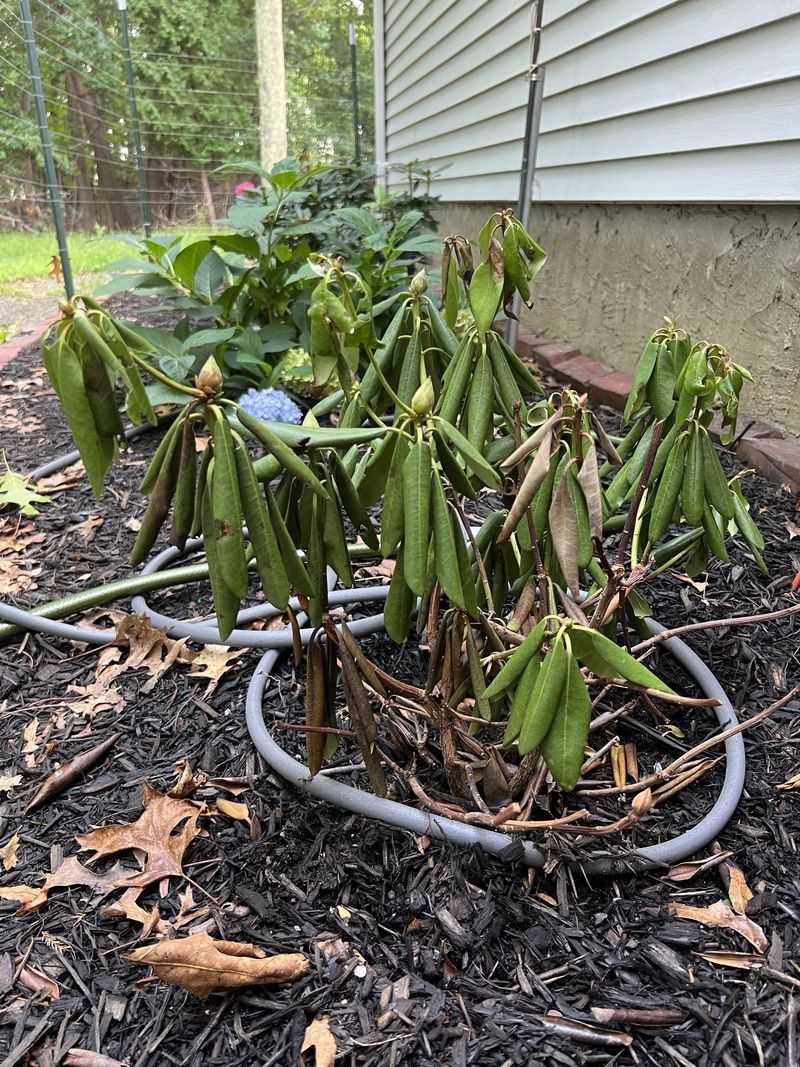
Soggy planting beds are one of the most common root rot risk factors in Pennsylvania landscapes, and the problem often comes down to soil type and bed preparation rather than how much it rains.
Pennsylvania has a lot of clay-heavy soil in many regions, and clay holds water much longer than the loose, well-draining, slightly acidic soil that rhododendrons genuinely prefer.
When rhododendrons are planted in dense, compacted ground without enough organic matter worked in, the roots sit in waterlogged conditions for extended periods after every rain.
You can get a quick sense of your soil drainage by digging a hole about twelve inches deep near the shrub and filling it with water. If the water is still sitting there an hour later, drainage is likely a problem in that spot.
Rhododendrons planted in beds like this are at a higher risk of developing root rot, especially during Pennsylvania’s wet spring months when rainfall is frequent and the ground may already be saturated from snowmelt.
Improving drainage can involve adding coarse organic matter like pine bark or aged compost to the planting area, or raising the bed slightly so the root zone sits above the surrounding grade.
Simple grading adjustments that redirect water away from the bed entirely can also make a meaningful difference in how long moisture lingers near the roots.
If the soil drainage issue is severe, replanting the shrub in a more suitable location with better natural drainage may be worth considering as a longer-term solution for the plant’s overall health.
7. Low Spots, Downspouts, Or Runoff Areas Nearby
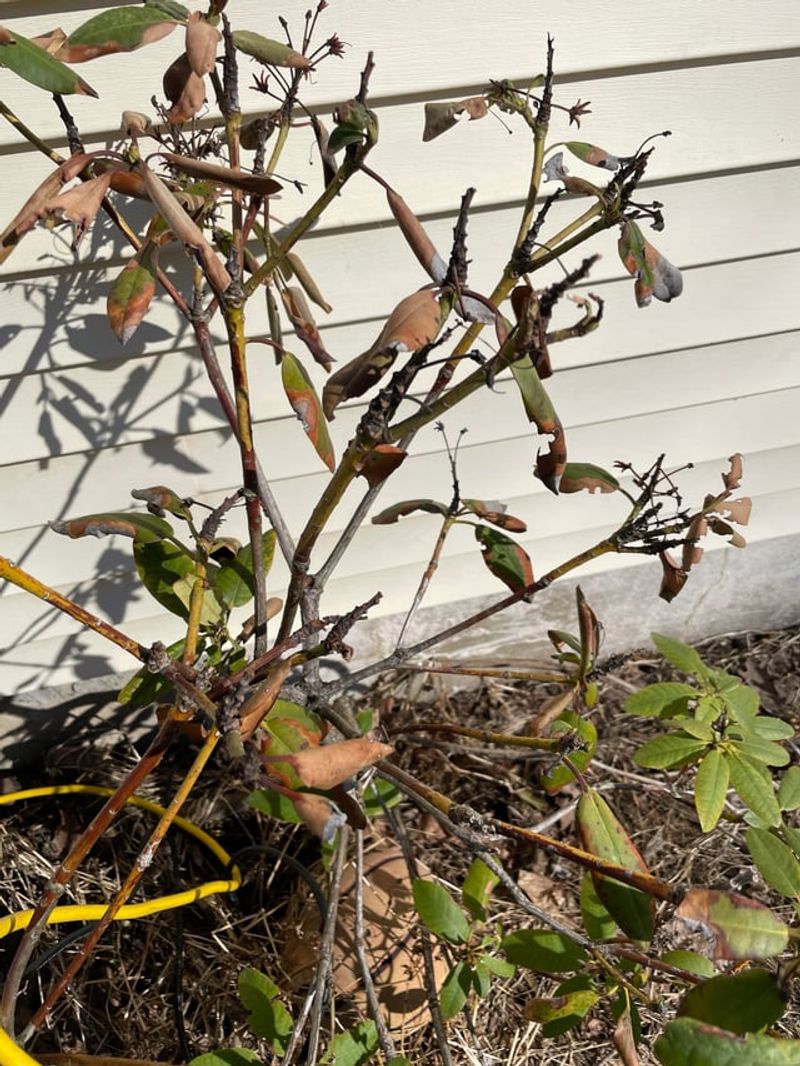
Runoff from roof downspouts is a surprisingly common reason why rhododendrons planted near Pennsylvania homes end up sitting in far more water than they should.
When a downspout empties close to a foundation planting bed, that concentrated flow of water can saturate the soil around nearby shrubs repeatedly throughout the rainy season, creating conditions that are almost ideal for Phytophthora root rot to develop and spread.
Low spots in the yard work the same way.
Water naturally flows toward the lowest point in a landscape, and if a rhododendron happens to be planted in or near one of those depressions, it may be collecting runoff from a much larger area than just the immediate bed.
After a heavy spring rain in Pennsylvania, walk your yard and take note of where water pools or where the ground stays wet the longest. Rhododendrons sitting in those zones are worth monitoring closely for early root rot symptoms.
Redirecting downspout flow away from planting beds is one of the more straightforward fixes available to homeowners.
Downspout extenders are inexpensive and easy to attach, and they can move water discharge several feet away from the foundation and the shrubs planted alongside it.
For persistent low spots, simple regrading or the addition of a dry creek bed or French drain can help move water away from vulnerable plantings.
Catching and correcting these drainage patterns before root rot sets in is much easier than trying to manage the problem after the shrub is already showing symptoms.
8. Confirm The Problem Before Treating
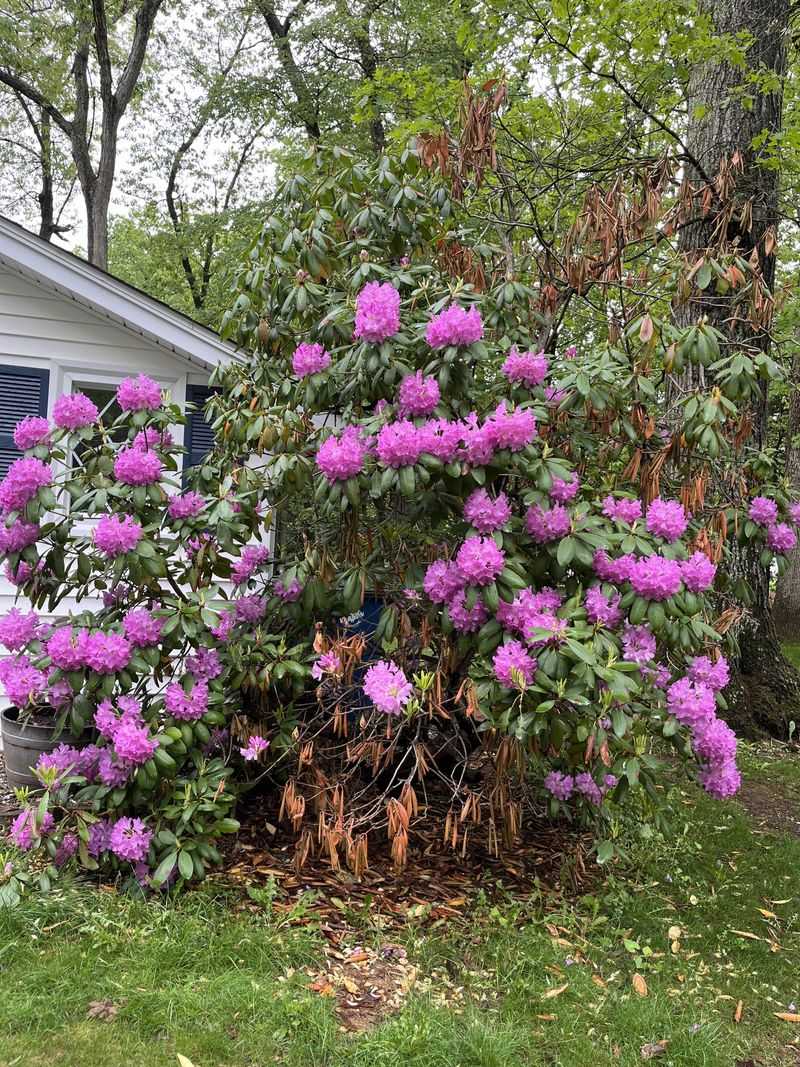
Before reaching for a fungicide or making major changes to a planting bed, it is worth taking the time to confirm that root rot is actually what you are dealing with.
Several common rhododendron problems, including drought stress, iron deficiency, improper soil pH, and even winter damage, can produce symptoms that look similar to root rot at first glance.
Treating for the wrong problem not only wastes time and money but can sometimes add stress to a plant that is already struggling.
Start by reviewing the combination of symptoms you are seeing.
Wilting despite moist soil, yellowing leaves, stunted growth, sparse or brown feeder roots, and red-brown discoloration near the soil line together paint a much clearer picture than any single symptom alone.
If most of those signs are present and the planting location has known drainage challenges, root rot becomes a more likely explanation worth acting on.
For gardeners who want a more definitive answer, Pennsylvania’s cooperative extension system offers plant diagnostic lab services where samples can be submitted for testing.
This can be especially helpful when a valuable or established shrub is involved and you want to be more certain before making significant changes to the landscape.
Once root rot is confirmed or strongly suspected, focus on correcting the drainage problem and removing heavily affected roots if they are accessible.
From there, giving the shrub the best possible conditions to recover is the most practical path forward, though outcomes will vary depending on how far the damage has progressed.