One Wrong Cut Can Cost A Florida Vine Its Entire Bloom Season, Here Is How To Avoid It
You plant something. It blooms. You love it. Then it stops blooming and you are standing there with pruning shears wondering if you should use them and when and how much.
Cut at the wrong moment and you remove the exact stems carrying next season’s flowers. Cut too little and the vine decides your fence, your roof, and your neighbor’s pergola are all fair territory.
The frustrating part is that every flowering vine operates on its own schedule. What works for bougainvillea actively harms Carolina jessamine. The timing that keeps passionflower productive will set flame vine back for months.
So, which Florida vines bloom on old wood and which one bloom on new growth? That single piece of information changes everything about when you pick up the pruners.
Florida’s heat pushes vines to grow fast and recover quickly, which means the right cut at the right moment produces dramatic results. The wrong cut at the wrong moment produces a wall of leaves and no flowers.
Eight vines, eight different rhythms. All of them manageable once the logic clicks.
1. Prune Bougainvillea After Each Bloom Flush
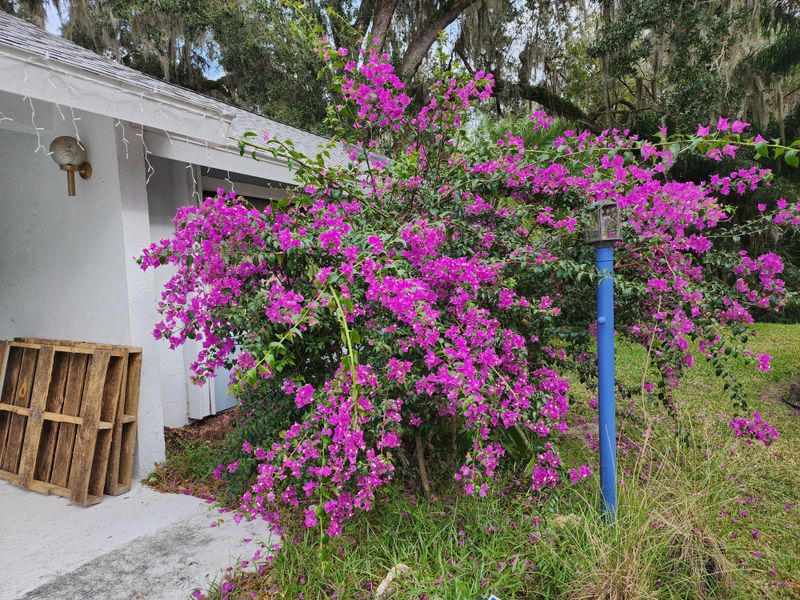
Bougainvillea gets mismanaged in two specific ways in Florida. Some gardeners never prune it at all and end up with a sprawling mass that eventually stops producing at any useful scale.
Others cut it back hard at the wrong moment and spend months watching it recover instead of watching it bloom.
The logic behind bougainvillea is straightforward once you know it. This vine blooms on new growth and cycles through flushes rather than producing continuously.
After each flush of color fades, that is the exact moment to act. Light pruning right after a bloom cycle sends the plant a clear signal to push out fresh stems. Those fresh stems become the next round of flowering shoots.
The cut does not need to be aggressive. Snipping back branch tips by about one-third is usually enough. Remove stems that are crossing, crowding, or heading toward surfaces you do not want covered.
A little shaping now prevents a much more difficult session later in the season.
Bougainvillea bounces back quickly in Florida’s heat. The goal is keeping it tidy without removing so much that production stalls.
Avoid cutting into thick, woody canes unless something specific requires it. Older canes take considerably longer to recover and return to flowering than younger growth.
One detail worth knowing: bougainvillea actually performs better with a little stress. Slightly dry soil before a flush tends to intensify color.
Combine that with your post-bloom trim and the vine stays productive across much of Florida’s growing calendar.
2. Shape Passionflower Before It Takes Over
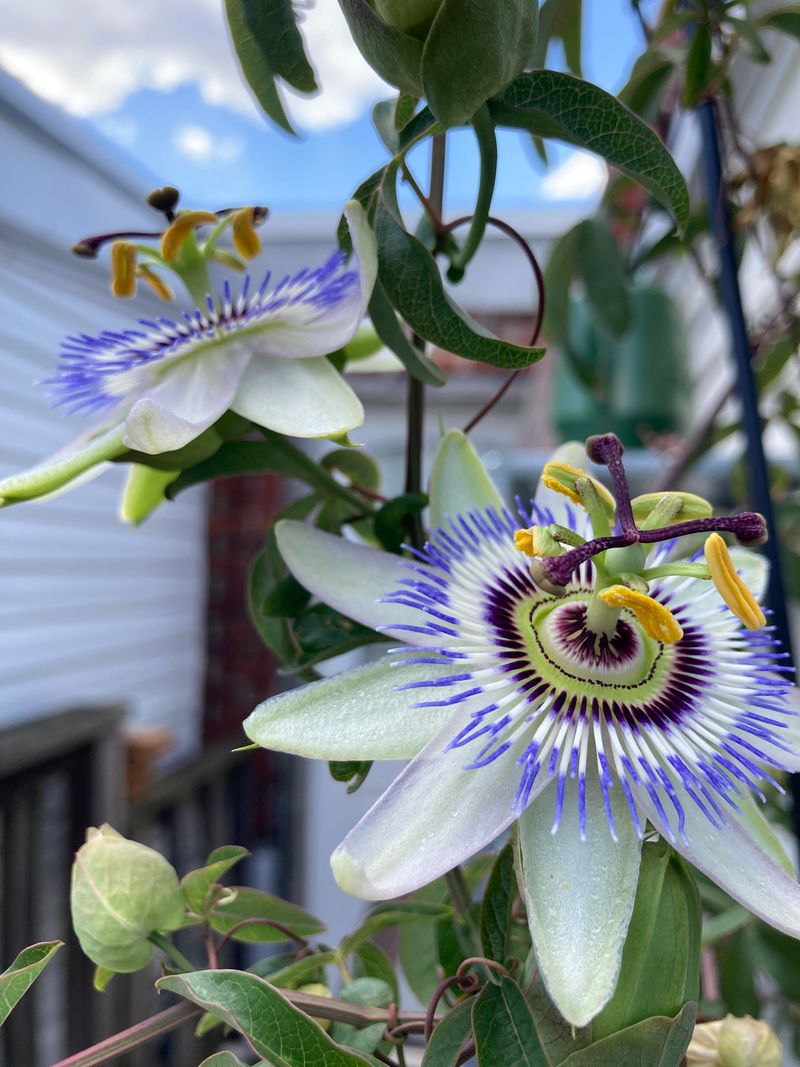
Passionflower looks manageable when it first goes in the ground. Give it a Florida summer and that impression changes quickly.
This vine grows with genuine ambition in warm humid conditions. It threads through shrubs, climbs fences, reaches for gutters, and shows up in places you did not plan for if training and trimming are not part of the routine from the start.
Your Florida Garden Changes Every Week. Your Plan Should Too.
Gardening in Florida changes quickly throughout the season. Every Friday you’ll receive a simple weekly plan showing exactly what to plant, prune, fertilize, harvest, and protect so you never miss the right timing.
Starting early makes everything easier. Guide new stems toward their intended support with soft garden ties as soon as growth begins.
Early direction reduces the need for more disruptive cuts later because the vine goes where you want rather than establishing itself somewhere inconvenient.
During the main blooming period, which in Florida runs roughly from late spring through fall, avoid removing large amounts of growth at once.
Passionflower blooms on new growth, so significant cuts during peak production delay the next round of flowers.
Snip back stems that have grown beyond their boundary, remove shoots tangling into adjacent plants, and redirect anything heading somewhere problematic.
The more thorough work happens in late fall or early winter when the main bloom season slows.
At that point, thinning the crowded interior of the vine improves airflow through Florida’s wetter months and reduces fungal pressure on the foliage.
Worth noting: passionflower serves as a host plant for gulf fritillary butterflies. Leaving intact stems benefits the local wildlife population considerably.
A vine that feeds butterflies while covering your fence is one of Florida’s better arrangements.
3. Trim Queen’s Wreath After Its Big Show
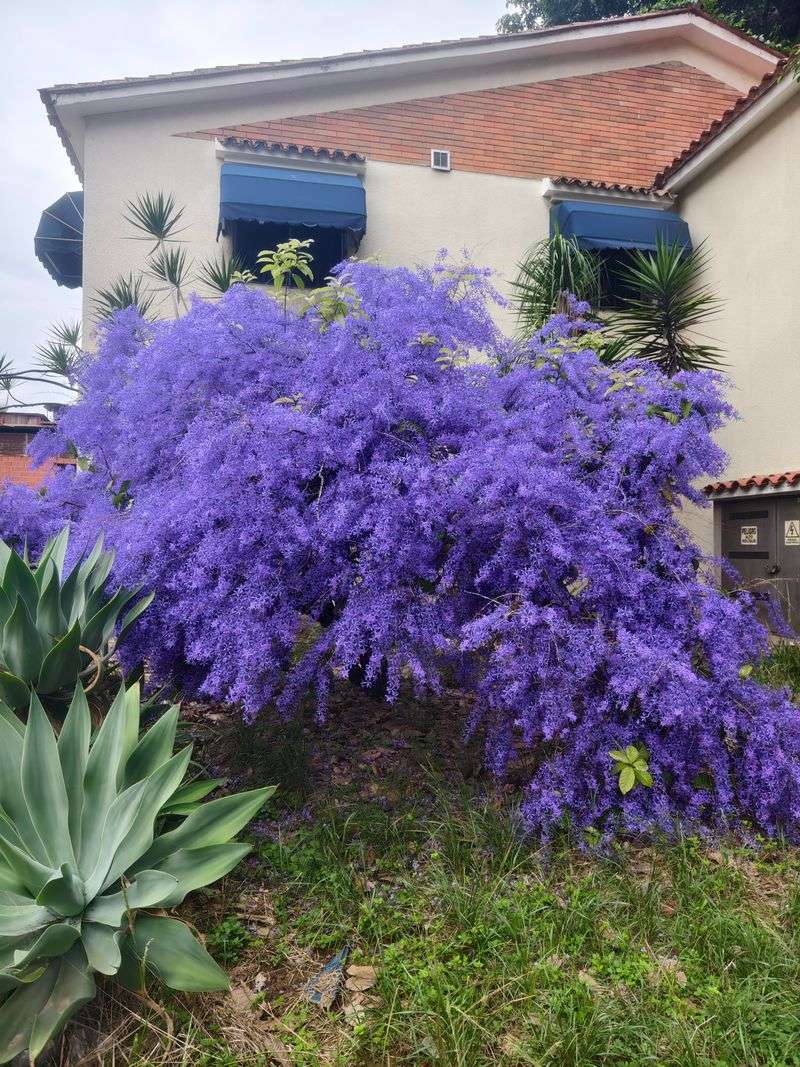
The moment Queen’s Wreath reaches its peak, with those sweeping lavender-purple clusters draping over a pergola like something out of a garden magazine, the instinct is to grab the pruners immediately.
That instinct is working against the flowers.
Petrea volubilis blooms on old wood and produces its dramatic display once a year, typically in spring or early summer in Florida.
The stems carrying those flowers developed during the previous season. Pruning before or during the bloom removes the very branches responsible for the show.
Wait until the last flower cluster has faded completely before making any cuts.
Once the display is finished, a good post-bloom trim shapes the vine and manages its size without the cost of lost flowers.
Remove stems that have wandered into unwanted territory. Thin out crowded branches from the interior to improve light penetration and airflow. This helps the vine channel energy into the fresh growth that will carry next year’s flowers.
Keep individual cuts moderate. Removing more than about a quarter of the overall vine in a single session stresses the plant and slows the development of new flowering stems.
Queen’s Wreath can grow quite large over time and behaves as semi-evergreen in South Florida. In Central Florida, leaf drop in winter actually makes the vine’s structure easier to read before cutting.
The main framework stays. The wandering side shoots go. Next spring, the curtain comes back down.
4. Cut Carolina Jessamine After Spring Blooms
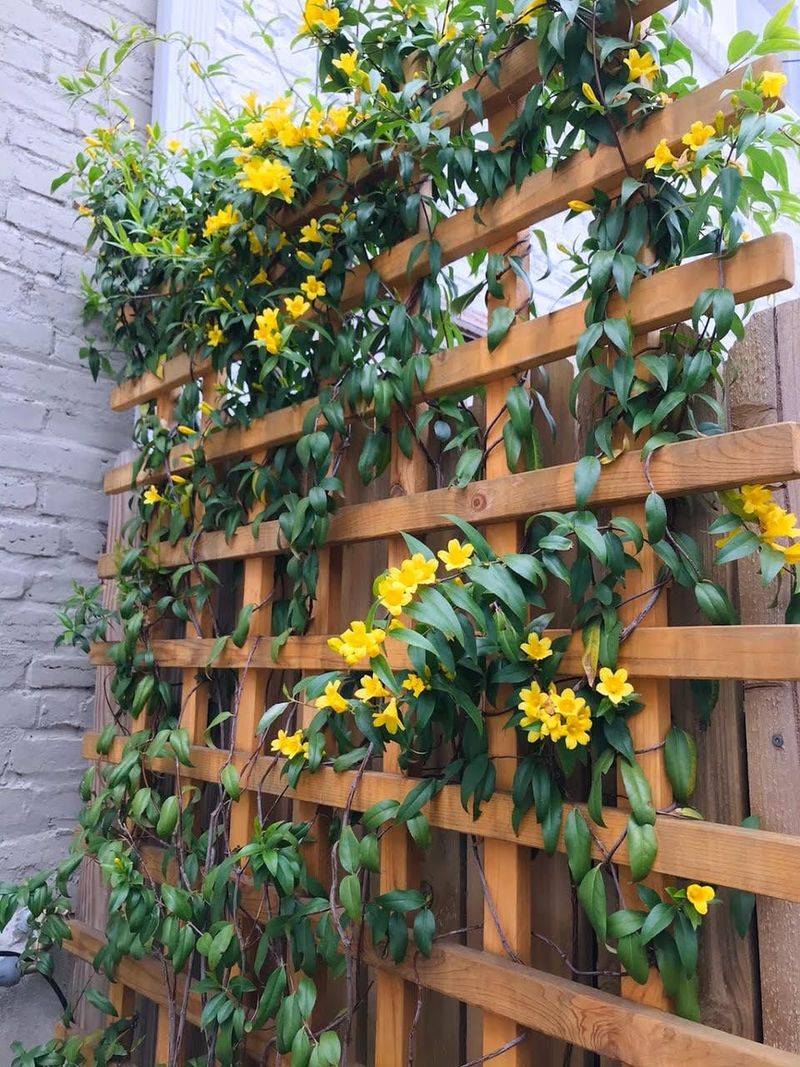
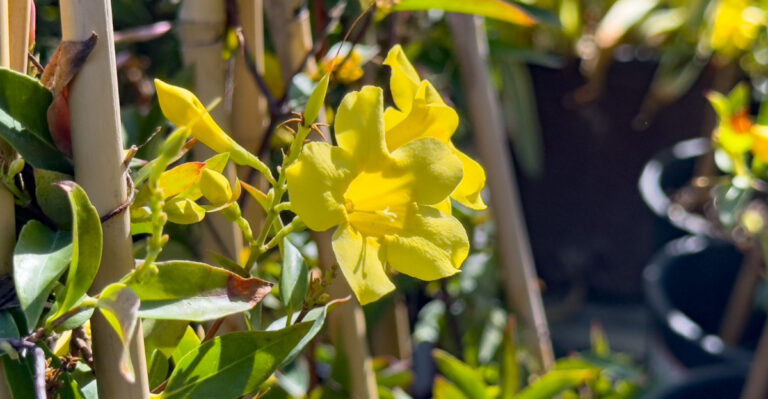
Those bright yellow trumpet flowers glowing across a fence in early spring represent months of bud development on stems that grew the previous summer and fall.
That is the detail many gardeners miss, and missing it is what leads to the frustrating situation of pruning in late summer and then waiting through an entire spring with almost no color to show for it.
Gelsemium sempervirens sets its flower buds on growth from the previous season. By the time winter arrives, those summer and fall stems are already loaded with buds. Any cut made before flowering removes next spring’s display before it opens.
The correct window is right after the spring bloom ends, usually by late March or early April across most of Florida.
At that point the flowers are finished and the vine is ready to push new growth that will carry the following year’s blooms. Pruning here resets the vine and gives it the full growing season to develop productive stems.
Keep cuts light to moderate. Carolina jessamine does not need aggressive pruning to stay healthy and well-shaped.
Focus on thinning the densest sections for better airflow, shortening stems that have grown past their support, and removing any weak or damaged growth.
This is also a genuinely important pollinator plant. Early flowers provide nectar when very few other sources are available.
Healthy blooms on this vine contribute to the whole garden ecosystem, not just the view from the back porch.
5. Keep Flame Vine From Climbing Too Far
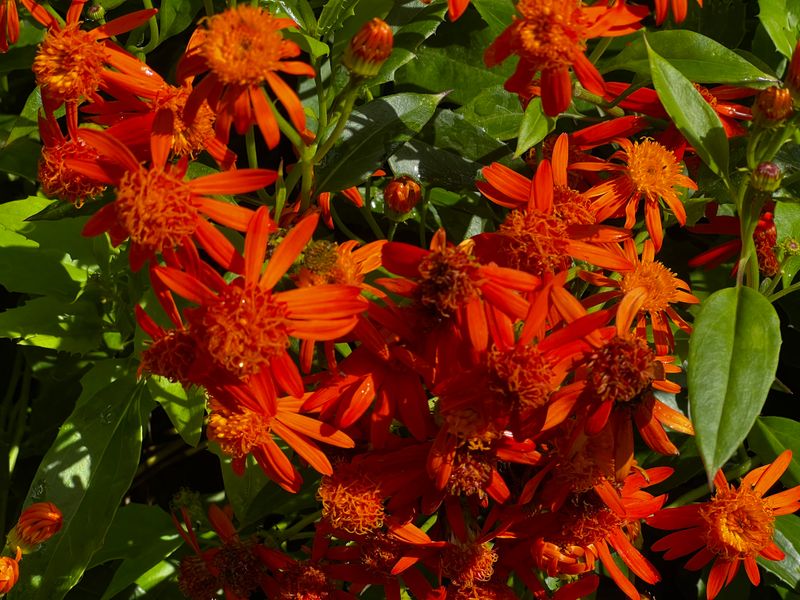
In the middle of a Florida winter, when the rest of the garden is waiting for warmer weather, flame vine is doing the opposite of waiting.
That wall of blazing orange across a fence in January is one of the most dramatic sights in Florida gardening.
It is also a vine that will take over a fence, climb onto a roof, and reach into adjacent trees if left to its own planning.
Pyrostegia venusta blooms on old wood, which means all those spectacular flowers are appearing on stems from the previous season.
Pruning before or during the bloom removes those stems and removes the show with them. The window to hold back is winter.
The window to act is immediately after flowering ends, typically by late February or early March.
After blooming finishes, cut back the long wandering stems aggressively. Flame vine is vigorous enough to handle a firm trim and will recover without a long adjustment period.
Shorten stems that have climbed onto structures worth protecting. Remove growth pressing against wood, shingles, or gutters.
Pull the vine away from surfaces gently rather than tearing it, which protects both the plant and whatever it is attached to.
Through the rest of the year, redirect new growth that heads in the wrong direction before it becomes established.
A strong trellis or heavy fence gives the vine a proper address and reduces how often it looks for a new one.
6. Clip Railroad Vine To Stay In Bounds
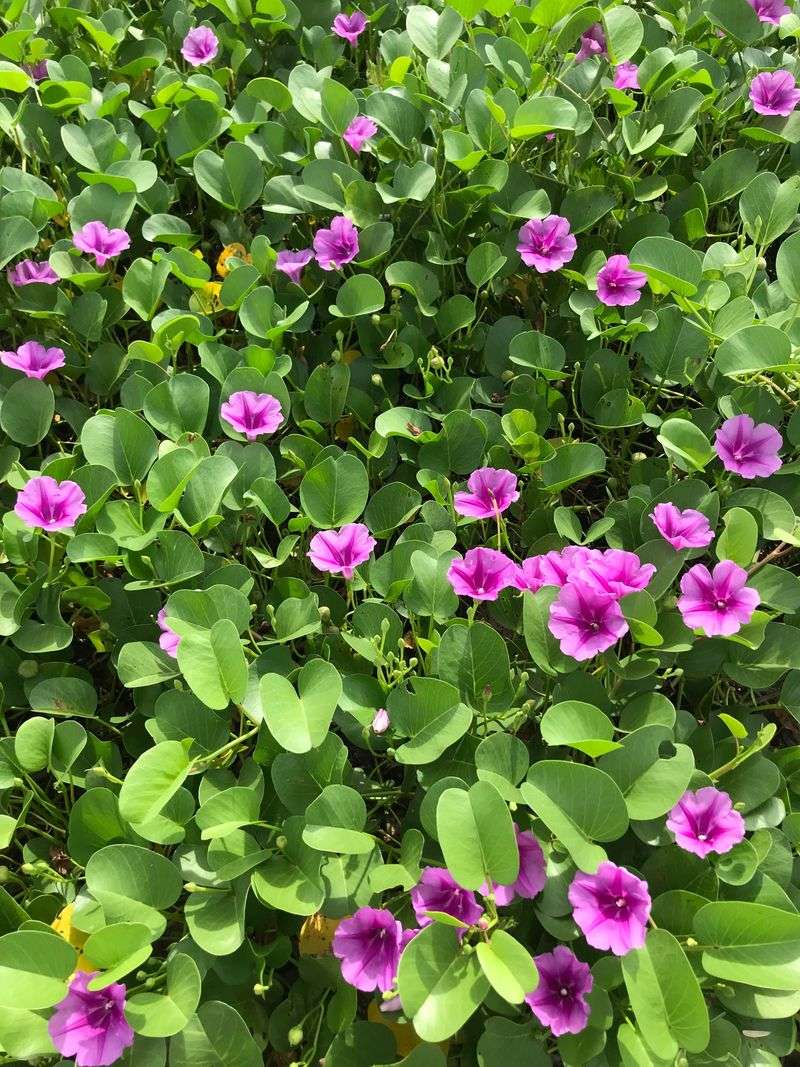
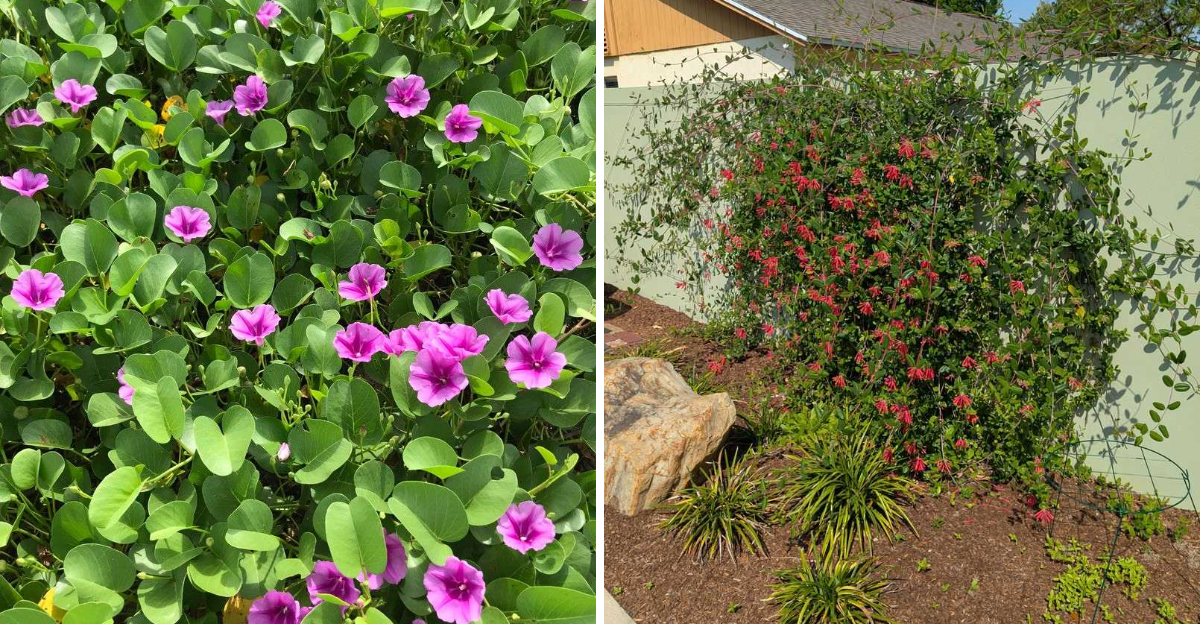
Railroad vine looks after itself remarkably well. It stabilizes sandy coastal soil, handles salt air without visible complaint, and produces cheerful pink flowers that bloom along its entire length rather than concentrating at the tips.
For large beachside areas, that spreading habit is exactly right. In a smaller yard, it becomes a different conversation.
Ipomoea pes-caprae can extend dozens of feet in a single warm Florida season. Without occasional edge management, it crosses into lawn areas, covers low plantings, and spills across paths and driveways in ways that accumulate faster than expected.
Light trimming a few times a year handles most of the management. Use hand shears or loppers to clip back the leading stems that have grown past the intended boundary.
Avoid pulling or ripping sections loose. Railroad vine roots as it spreads, and rough pulling disturbs the established sections that are doing their job well.
Because this vine flowers along its full length rather than primarily at the growing tips, trimming the edges does not significantly reduce bloom production. New growth pushes out quickly in Florida’s warm season and carries fresh flowers with it.
Occasional thinning of the center prevents a thick, tangled mat from developing over time. Dense mats trap moisture and create conditions that weaken the vine’s overall health more than any pruning would.
The goal is a tidy edge with a healthy, productive center.
Railroad vine is low maintenance. It just occasionally needs a reminder about property lines.
7. Train Vines Before You Start Cutting
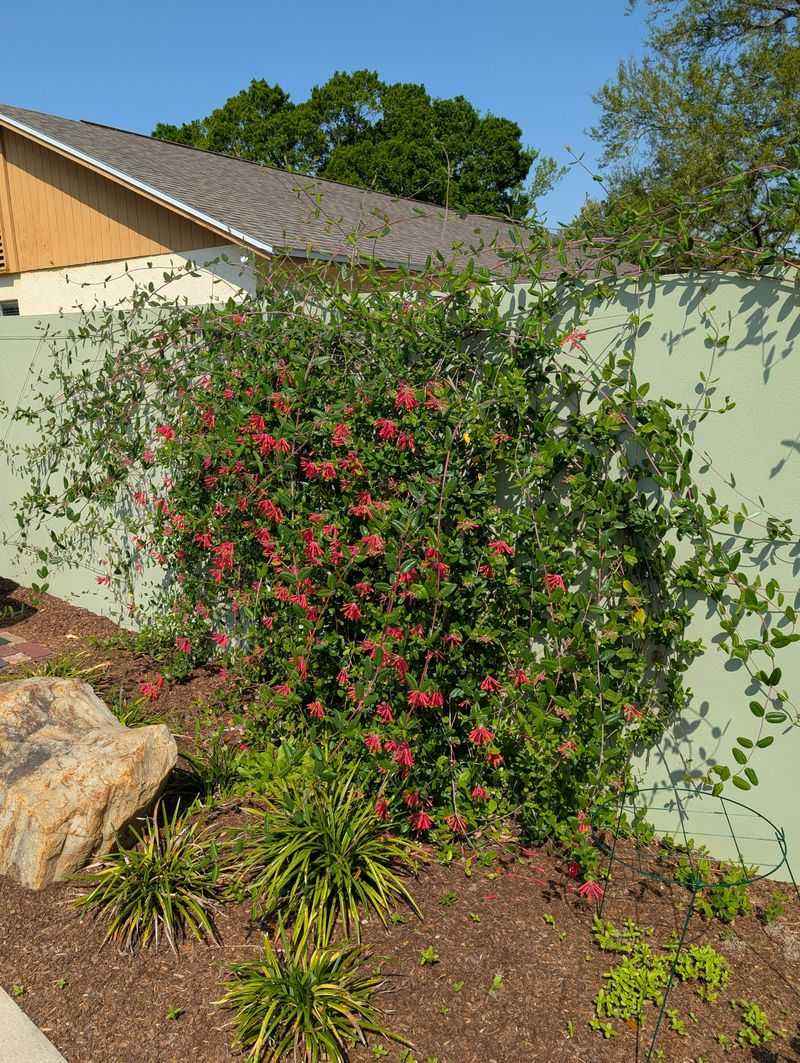
The best pruning session is the one that never needs to happen, right?
Gardeners who train their vines well from the beginning spend significantly less time cutting back out-of-control growth later.
Early direction shapes the plant’s habits before they become problems, and a well-trained vine needs only light seasonal maintenance to stay attractive and productive.
The support structure matters considerably more than most people account for at planting time. A sagging or undersized trellis forces the vine to find alternatives quickly.
It starts flopping into adjacent plants or grabbing onto nearby structures, and redirecting it later requires cuts that set back flowering. A sturdy support built before the vine needs it gives the plant a clear framework to fill naturally.
Guide new stems toward the intended support as they emerge. Soft garden ties work well. Wire and standard twist ties cut into stems as they thicken, which creates problems worth avoiding. Check and loosen ties every few weeks as growth expands.
The habit of redirecting rather than cutting is what changes the long-term relationship with any flowering vine. A stem pointed in the right direction at six inches does not need to be cut at six feet.
When training is consistent, seasonal pruning becomes a light shaping session rather than a reclamation project.
The vine fills its support, produces flowers on the schedule it was always going to follow, and stays where it was planted.
That is the arrangement every Florida gardener is actually looking for when they plant a vine.
8. Skip Heavy Shearing On Flowering Shoots
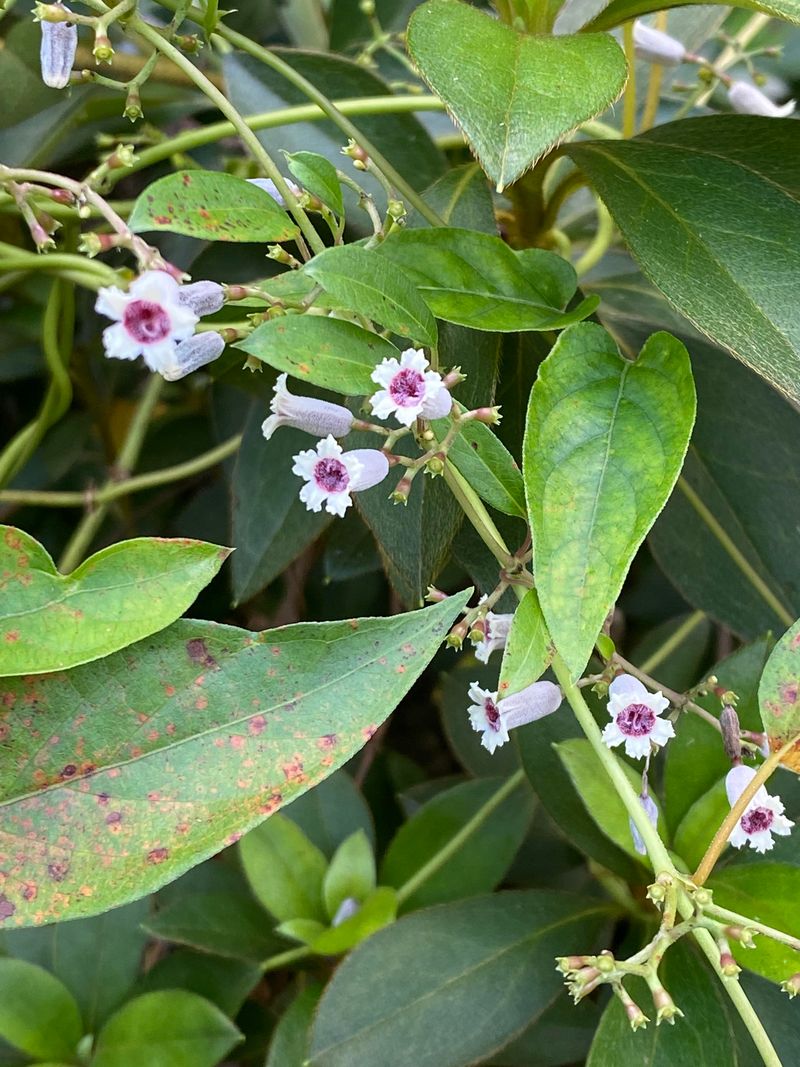
The electric hedge trimmer produces a satisfying result in about ninety seconds. Neat edges, tidy shape, a sense of order restored.
Two weeks later the vine has pushed out a dense wall of leafy growth with almost no flowers in it, and the satisfaction has largely evaporated.
Heavy shearing removes the tips of every stem at once. On most flowering vines, those tips are precisely where flower buds form, particularly on varieties that bloom on new growth.
The plant responds to the mass removal by pushing out numerous vegetative shoots from just below each cut. The result is thick, fast regrowth that looks full and produces very little color.
Selective pruning works with the vine’s biology instead of against it. Rather than cutting everything at the same height, remove individual stems that have grown too long, are crossing others, or are heading somewhere problematic.
Thinning cuts, which remove a stem all the way back to a main branch or the base, are more flower-friendly than heading cuts that just shorten everything uniformly. Thinning opens the interior of the vine without triggering that burst of purely vegetative response.
Florida’s year-round growing season means vines recover from selective pruning quickly. A little patience with individual cuts produces continuous blooms across the season.
The hedge trimmer is excellent for many things in a Florida yard. Flowering vines are not on that list.