The One Reason Weed Fabric Fails In Florida And What Works Instead
Weed fabric and Florida have a complicated relationship that most garden centers prefer not to discuss.
You install it correctly. You use the good brand. You pin every edge and cover it with fresh mulch. Six months later, weeds are back and somehow more confident than before.
Florida gardeners have been having this experience for decades and drawing the wrong conclusion each time. The fabric was not defective. The installation was not sloppy.
The problem is something more fundamental than either of those things, and it has been happening in every Florida yard regardless of what product goes down.
The fix is not a better roll of fabric.
Have you ever watched a low-growing plant cover bare soil so completely that nothing else gets a foothold?
That is the approach Florida actually responds to. Plants that crowd weeds out before they start. Native and adapted groundcovers that treat Florida’s heat, humidity, and rainfall as fuel rather than challenges.
These plants do the job that weed fabric promised and never quite delivered.
1. Blame The Soil Layer On Top
The fabric goes down in January and the yard looks organized and under control. By July, something has quietly changed.
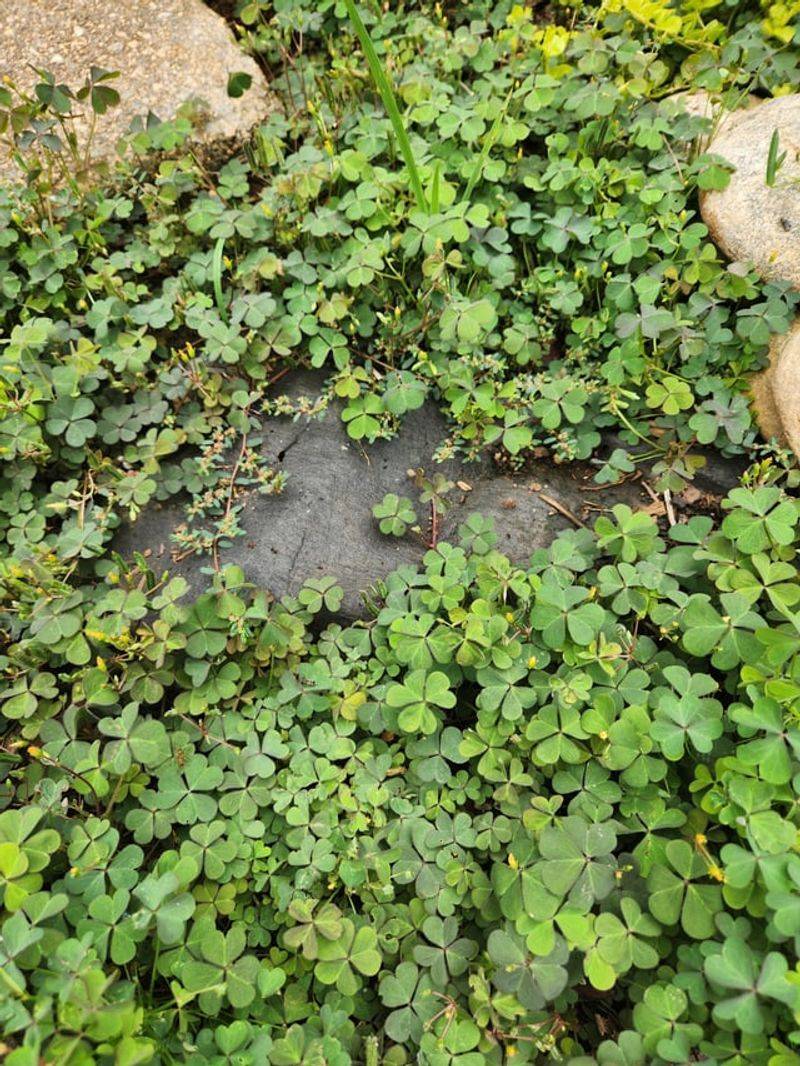
A thin layer of mulch, fallen leaves, pine needles, and wind-blown debris has settled on top of the fabric. That layer does not look like much from a standing position.
To a weed seed drifting across the yard, it looks like exactly what it needs to germinate.
This is the actual reason weed fabric stops working in Florida. The failure happens on top of the fabric, not underneath it.
Organic debris breaks down quickly in Florida’s heat and humidity, creating a shallow but fully functional seedbed right on the surface.
Weed seeds land there, capture moisture from Florida’s frequent rains, and germinate without ever needing to penetrate the fabric at all.
Once roots establish in that surface layer, they push through the weave below and anchor into the soil. Now the weed is in both layers simultaneously.
If you ever tried to pull a weed from fabric and watched the weave tear instead of releasing the root, that is what year two and three look like with most fabric installations.
The fabric becomes a root-tangled, shredded barrier that is harder to clean up than the original weed problem.
Florida’s biology is simply faster than any fabric on the market. The plants in the rest of this article understand that. They do not fight the soil. They cover it.
2. Plant Sunshine Mimosa As Living Mulch
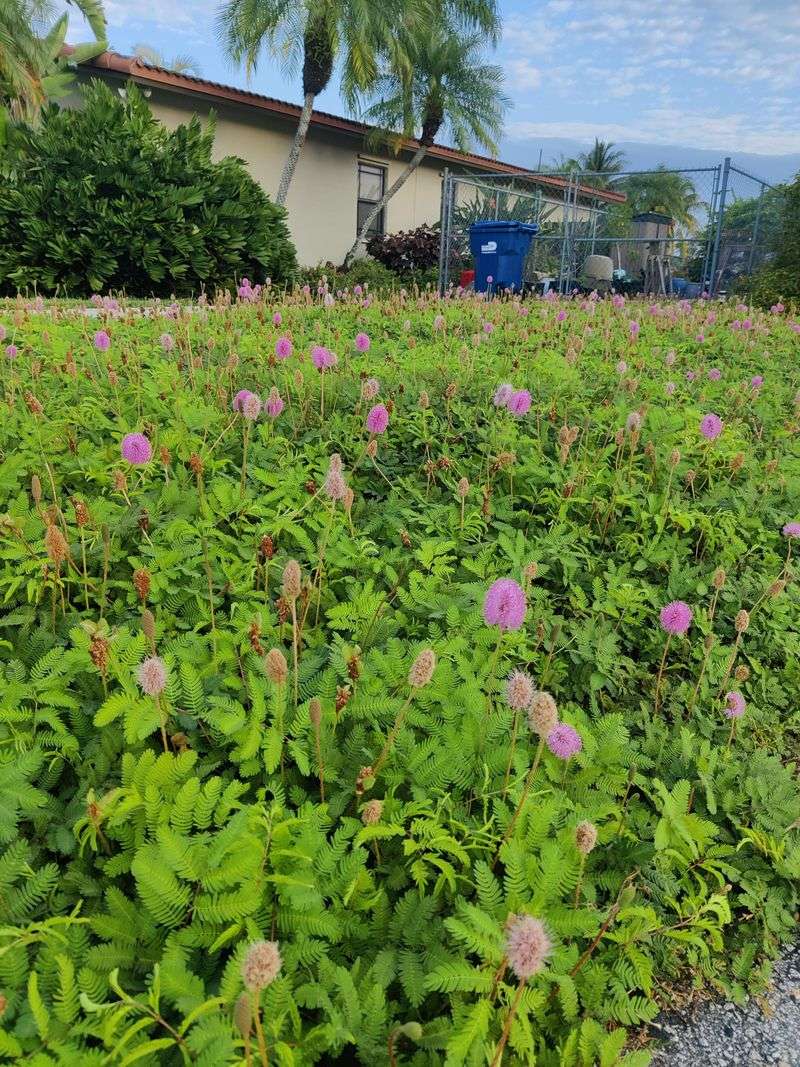
Forget the fabric aisle entirely. Florida has a native plant that actively wants to cover your soil and does it more effectively than anything that comes on a roll.
Sunshine mimosa, Mimosa strigillosa, is a low-growing perennial native to Florida that spreads by stolons and forms a dense, weed-suppressing mat just a few inches tall.
The coverage it creates is the real story here. A fully established patch leaves almost no open soil for weed seeds to land on, access moisture, or find enough light to germinate.
Your Florida Garden Changes Every Week. Your Plan Should Too.
Gardening in Florida changes quickly throughout the season. Every Friday you’ll receive a simple weekly plan showing exactly what to plant, prune, fertilize, harvest, and protect so you never miss the right timing.
That is the strategy that actually works in Florida. Dense, continuous ground coverage that weeds have nowhere to penetrate.
The bonus features are genuinely impressive. Sunshine mimosa handles light foot traffic without complaint and bounces back after being walked on.
The leaves fold when touched, which produces the kind of reaction that makes people stop and interact with the plant multiple times during a single garden visit.
The pink puffball flowers that appear through spring and summer attract native bees and butterflies consistently.
Have you ever had a groundcover that visitors ask about and then look up on their phone before they leave?
Plant plugs about twelve to eighteen inches apart and give it one full growing season to fill in. After that, sunshine mimosa largely takes care of the weed problem and itself simultaneously.
That is a reasonable trade for a roll of fabric that was going to fail anyway.
3. Use Perennial Peanut For Sunny Beds
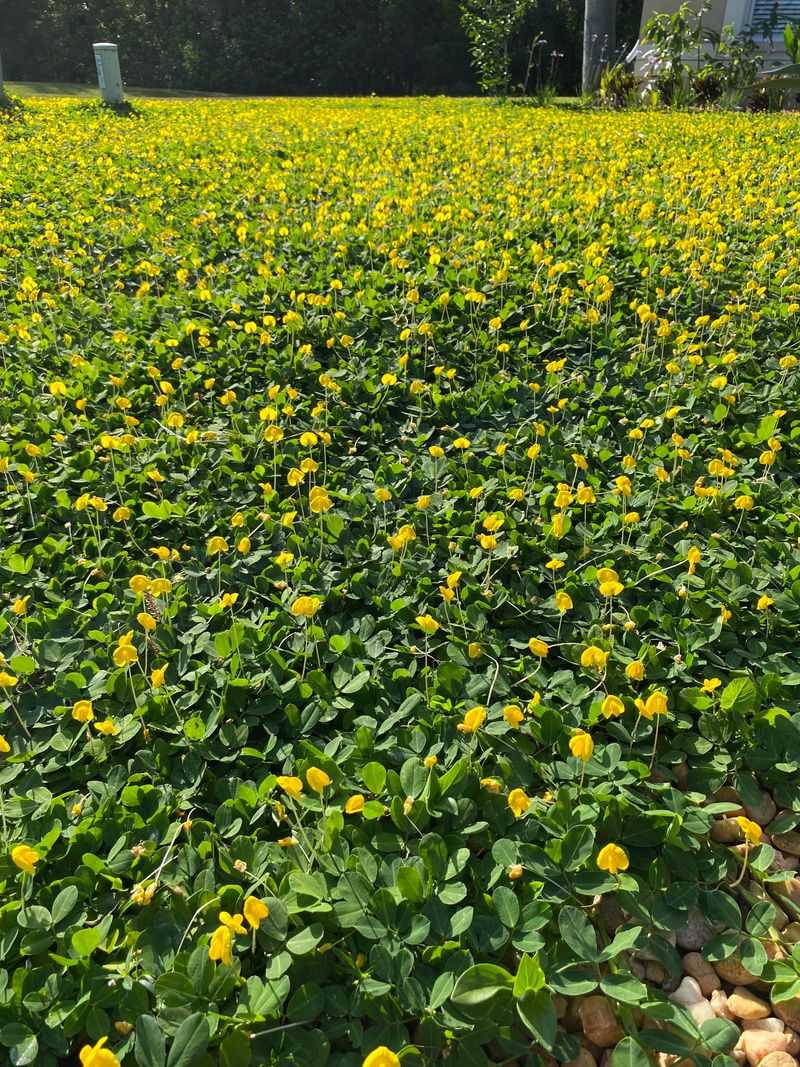
Some groundcovers sit where they are planted and wait politely for weeds to arrive. Perennial peanut does something more useful. It moves through the soil and claims territory before the competition gets there.
Arachis glabrata spreads through rhizomes, filling bare soil patches continuously and crowding out weeds by denying them light and space at the surface.
The plant stays just a few inches tall and produces small yellow flowers through the warmer months. In Florida, that means most of the year.
The underground behavior is what separates it from passive groundcovers. Perennial peanut does not wait for gaps to appear. It closes them before they fully form.
If you are growing it in a south-facing bed or an open slope that bakes through summer, that is one of the best placements available.
Perennial peanut handles full sun and heat exceptionally well and performs poorly in shade, so matching it to the right location matters considerably.
Because it fixes its own nitrogen, fertilizer is rarely needed once establishment is complete. That combination of low input and aggressive soil coverage makes it one of the most practical long-term weed management plants available in Florida.
Plant sprigs or plugs and water consistently for the first few months. After that, the rhizomes handle expansion on their own schedule.
One planting and the ground is largely covered. That is considerably better math than replacing fabric every two seasons.
4. Try Frogfruit For Native Coverage
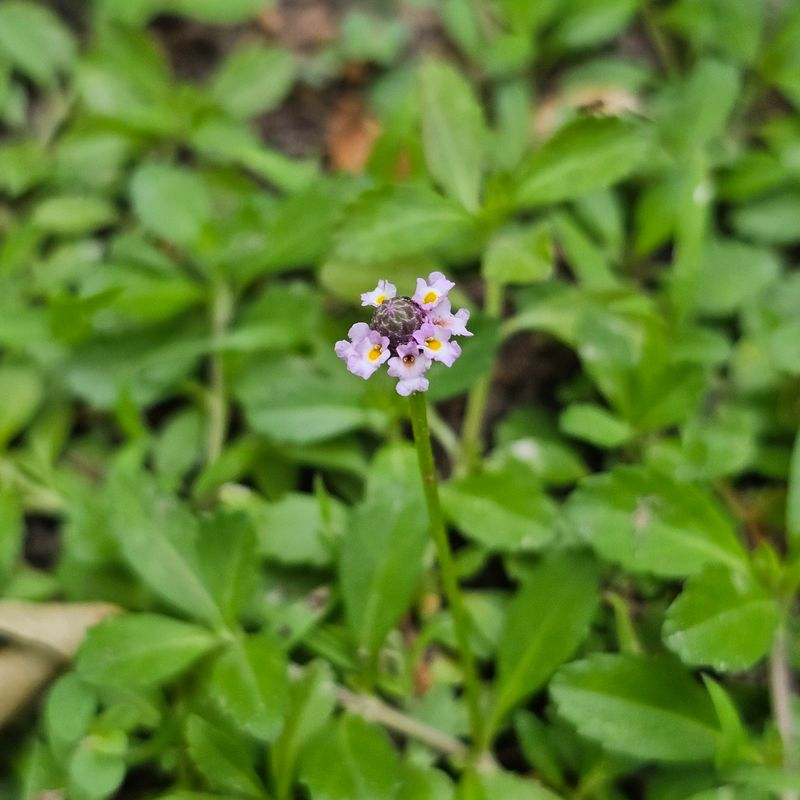
Many gardeners walk past frogfruit at the native plant nursery without stopping. That is an oversight worth correcting before the next shopping trip.
Phyla nodiflora, commonly called frogfruit, is one of Florida’s most underrated native groundcovers and one of the most effective weed-suppressing plants available for beds that receive variable light conditions.
It grows low and spreads quickly, forming a dense mat that covers soil in both full sun and partly shaded spots.
That light flexibility makes it genuinely useful in a way that many groundcovers are not.
The transition zone between a sunny open bed and the dappled shade under a tree is one of the harder areas to cover consistently. Frogfruit handles that transition without missing a beat.
The ecological contribution is worth mentioning because it happens automatically alongside the weed suppression.
Frogfruit serves as a larval host plant for several butterfly species including the white peacock and phaon crescent.
The tiny white and lavender flowers attract native bees, skippers, and pollinators consistently throughout the warm season.
Plant plugs about twelve inches apart and water regularly for the first few weeks. Once the mat knits together, open soil disappears along with most of the weeding schedule.
A groundcover that manages weeds, hosts butterflies, and feeds pollinators simultaneously deserves considerably more shelf space than it gets at most Florida nurseries.
5. Plant Asiatic Jasmine In Tough Spots
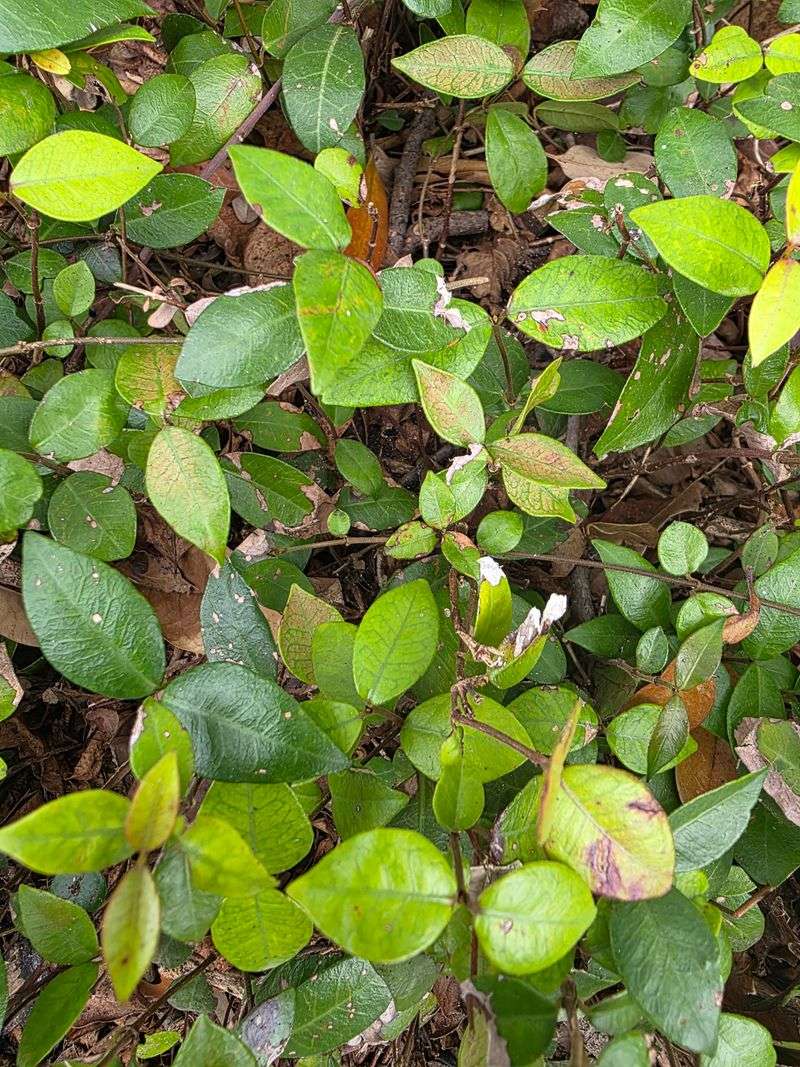
Almost every Florida yard has at least one spot that seems to reject every plant attempt.
Deep shade under a live oak. A dry strip between a sidewalk and a wall. A slope that catches reflected heat from a nearby fence all afternoon.
Asiatic jasmine was built for exactly those situations.
This evergreen groundcover grows six to twelve inches tall and spreads into a thick, carpet-like mat that blocks light from the soil surface almost completely.
Once it fills in, weed pressure drops substantially because seeds have neither the exposed soil nor the light they need to establish.
The light range it tolerates makes it particularly useful. Asiatic jasmine handles both shade and moderate sun with minimal adjustment, which means it works in the problem spots that light-specific groundcovers cannot reach.
It is not a Florida native, but it has performed reliably in Florida landscapes for decades and handles the climate without complaint. Drought tolerance develops quickly after establishment. Fertilizing is rarely needed to maintain density.
Plant rooted cuttings or containers about twelve to eighteen inches apart and expect full coverage within two growing seasons. Trim edges once or twice annually to keep the planting from reaching areas you want clear.
Asiatic jasmine stays evergreen, stays dense, and stays where it is put. That last quality alone puts it ahead of most groundcover options for difficult Florida beds.
6. Add Beach Sunflower For Hot Edges
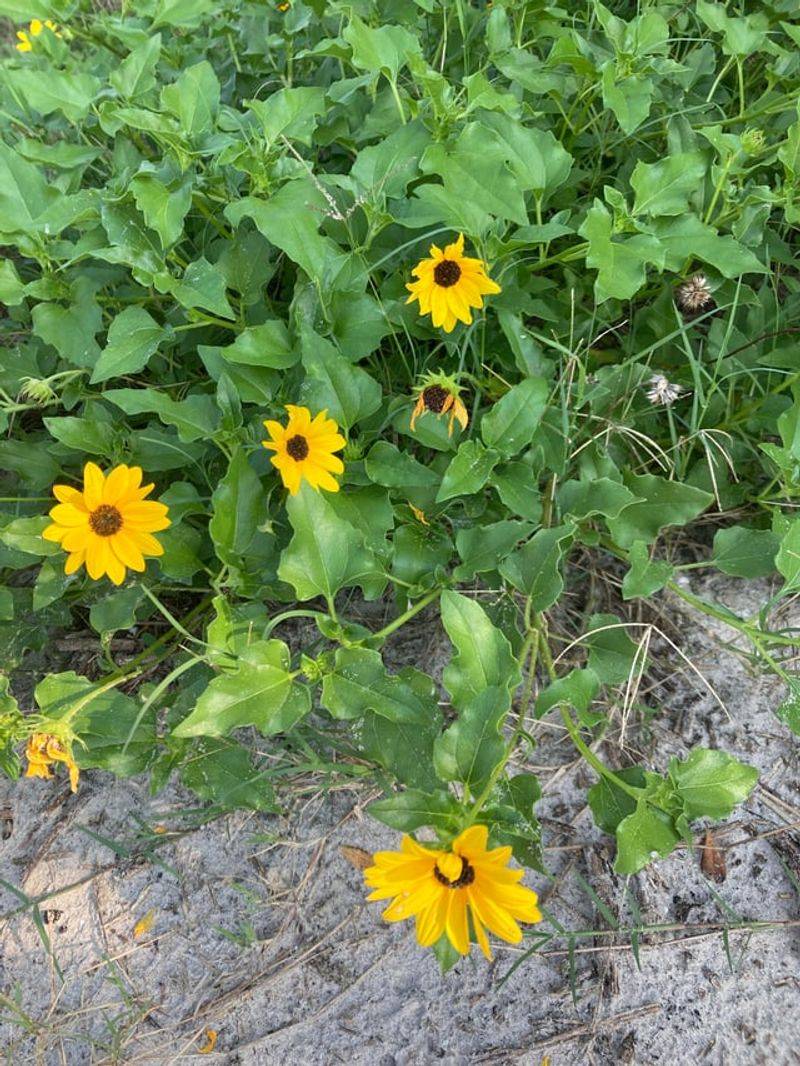
That strip of bare soil along the driveway edge or the open margin of a sunny bed where nothing seems to take hold has a natural match.
Beach sunflower, Helianthus debilis, is a Florida native built for exactly the hot, sandy, dry conditions that stress most other plants before they establish.
The stems sprawl outward from the base and root at nodes as they travel, covering exposed soil at a pace that surprises most gardeners who plant it for the first time.
Large open areas along walkways, slopes facing full sun, and sandy edges that bake through summer are the locations where beach sunflower performs at its most impressive.
The coverage it provides is not as tight as some other groundcovers, but the rapid spread and consistent reseeding habit mean bare patches refill on their own. The plant replenishes itself through the season without requiring intervention.
Bright yellow daisy-like flowers bloom almost continuously through warm weather in Florida, which means most of the year. Native bees, butterflies, and seed-feeding birds visit regularly.
Plant transplants or sow seeds directly into prepared sandy soil in a sunny spot, water to establish, and then largely leave it alone. Beach sunflower tends to perform better in lean conditions than in rich, amended soil.
It covers the ground faster, costs almost nothing to maintain, and looks considerably better than fabric ever did at peak summer.
7. Use Coontie For Shrubby Groundcover
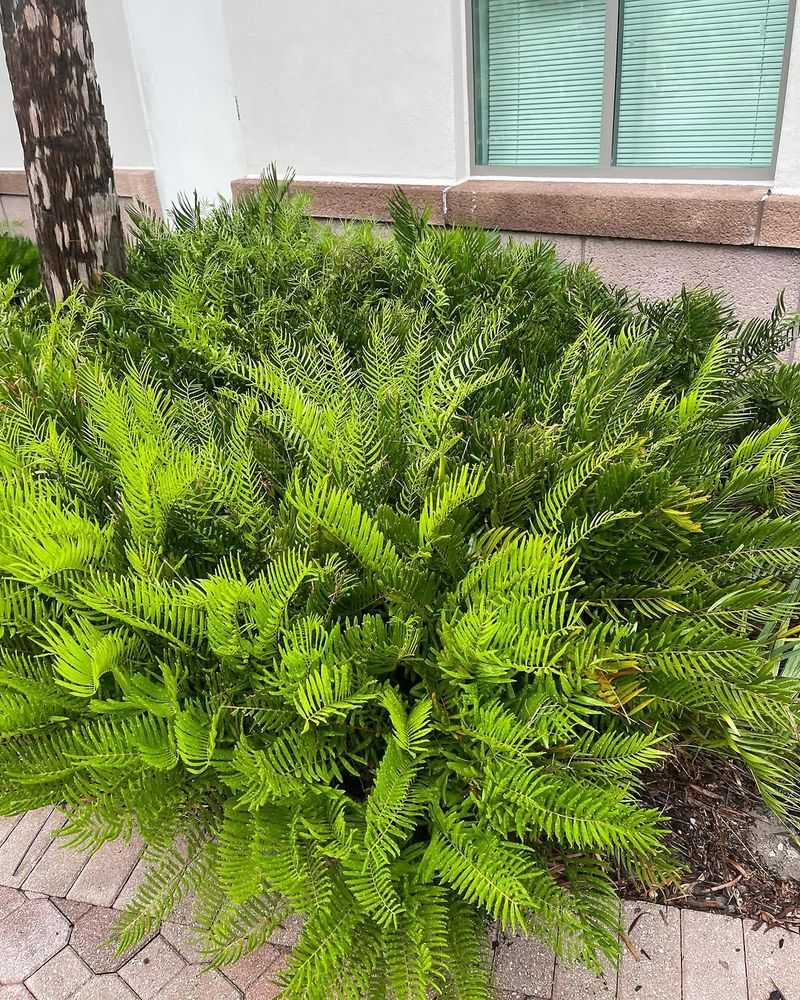
Some situations call for something with more presence than a mat-forming groundcover. A bed that needs structure alongside weed suppression.
A shaded area under palms or oaks where something with visible form would read better than a low carpet. Coontie, Zamia integrifolia, fills that specific need in a way nothing else in Florida’s native plant palette quite matches.
This is Florida’s only native cycad, and it grows into a mounded, shrubby form about two to three feet tall and wide.
The dark green arching fronds give it a distinctive look that holds through drought, salt air, and temperature swings without visible decline. It stays evergreen, maintains its form without pruning, and asks very little once it establishes.
Group several plants together and the foliage creates enough canopy overlap to shade the soil beneath significantly, reducing open weed space in the bed without requiring dense mat coverage to do it.
Coontie is the exclusive larval host plant for the atala butterfly, a species that has been recovering across Florida largely because of intentional plantings in home gardens and parks. Every coontie planted contributes to that recovery directly.
Space plants about three feet apart for eventual full coverage. Growth is slow, steady, and reliable.
A plant that supports a recovering butterfly species while quietly managing your weed problem is an arrangement worth every inch of bed space it occupies.
8. Try Railroad Vine Near Sandy Areas
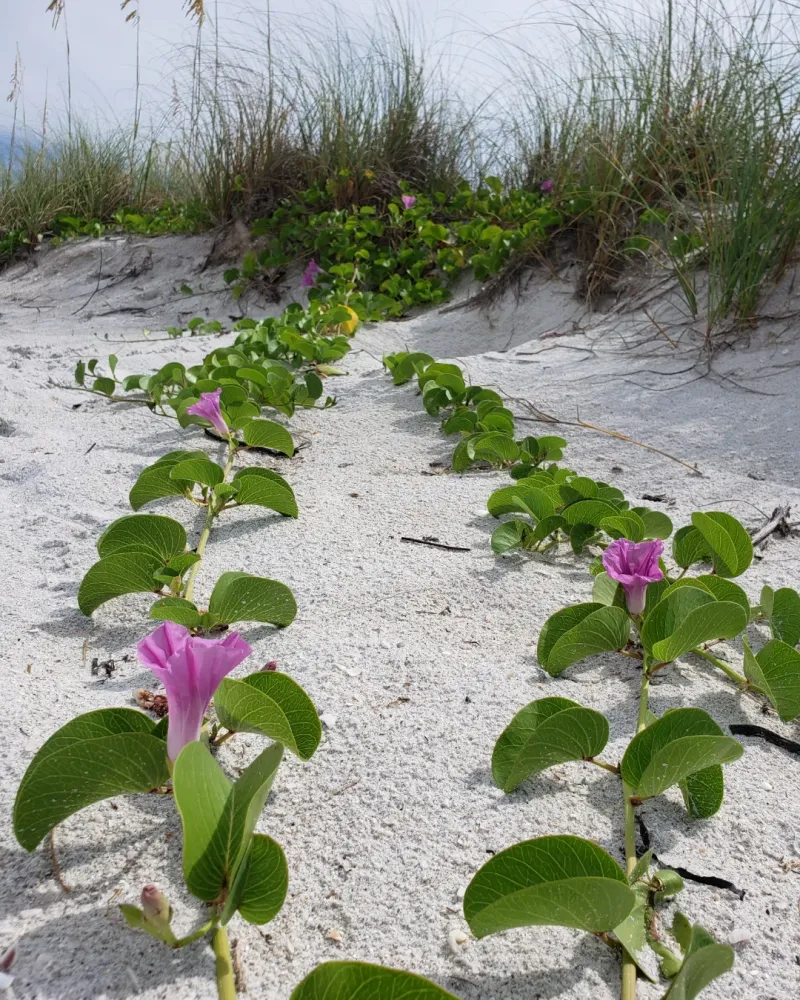
Sandy soil, full sun exposure, almost no available moisture, and a large area that needs coverage before weeds claim it entirely.
Most plants encounter that combination and make immediate excuses. Railroad vine, Ipomoea pes-caprae, considers it a reasonable Tuesday.
This tough native vine spreads across open sand at a pace that catches first-time growers off guard. Stems run fifty feet or more from a single plant, traveling across exposed soil and rooting at nodes as they go.
Large open sandy areas, coastal transition zones, and slopes that face full afternoon sun are all locations where railroad vine fills in faster than any other groundcover option. However, it is not the right fit for small beds or tight suburban borders.
The foliage that results from that spreading habit creates a dense, weed-suppressing layer that covers and holds soil simultaneously.
Erosion pressure drops. Weed establishment becomes difficult. The open sandy surface that previously invited everything unwanted gets covered continuously as the plant runs.
Large purple morning-glory-style blooms open each morning and close by afternoon throughout the warm season. Against pale sand and green foliage, the display has a relaxed coastal character that feels entirely at home in Florida.
Does your yard have a large sunny sandy area that has been losing the weed battle for years? If yes, plant it, water it through establishment, and then watch what happens over the next growing season.
Railroad vine does not negotiate with weeds. It simply runs them out of available real estate and keeps going. The weed fabric on that same area would have been failing already.