Michigan Gardeners Are Rethinking Norway Spruce And Planting These For Privacy Instead
Norway spruce made a lot of promises to Michigan homeowners over the years.
Fast growth. Year-round green. A solid privacy screen that would handle Michigan winters without complaint.
Some of those promises held up. Others arrived about fifteen years later in the form of a sixty-foot tree scraping the gutters, blocking the driveway sightlines, and still leaving gaps along the property line where the screening was needed most.
Michigan gardeners are paying closer attention to this situation now.
The Norway spruce that looked perfect in the nursery lot does not always age gracefully in a typical suburban yard, and the replacement options available have gotten considerably more interesting in recent years.
Some are native. Some are narrow enough for tight lots. One is a flowering shrub that pulls more visual weight than most trees twice its size.
If you have been defaulting to Norway spruce out of habit, these eight better options are worth knowing before the next tree goes in the ground.
1. Replace Spruce When Space Becomes A Problem
The Norway spruce looked like the obvious choice fifteen years ago. Fast growth. Dense foliage. Green all winter. The nursery photo was persuasive and the price was reasonable.
Then it kept growing.
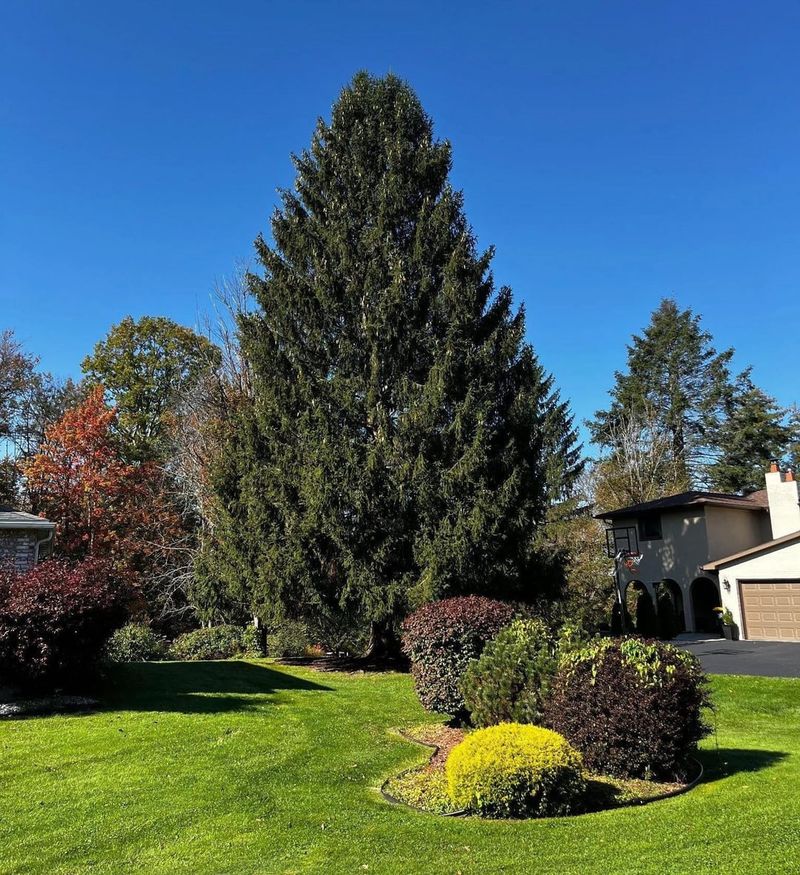
Norway spruce reaches 40 to 60 feet tall with a spread of 25 to 30 feet at full maturity. On a typical suburban Michigan lot, that is simply more tree than the space can absorb without consequences.
It scrapes gutters. It blocks driveway sightlines. It shades out everything planted nearby.
However, the privacy problem is the part that surprises most homeowners most.
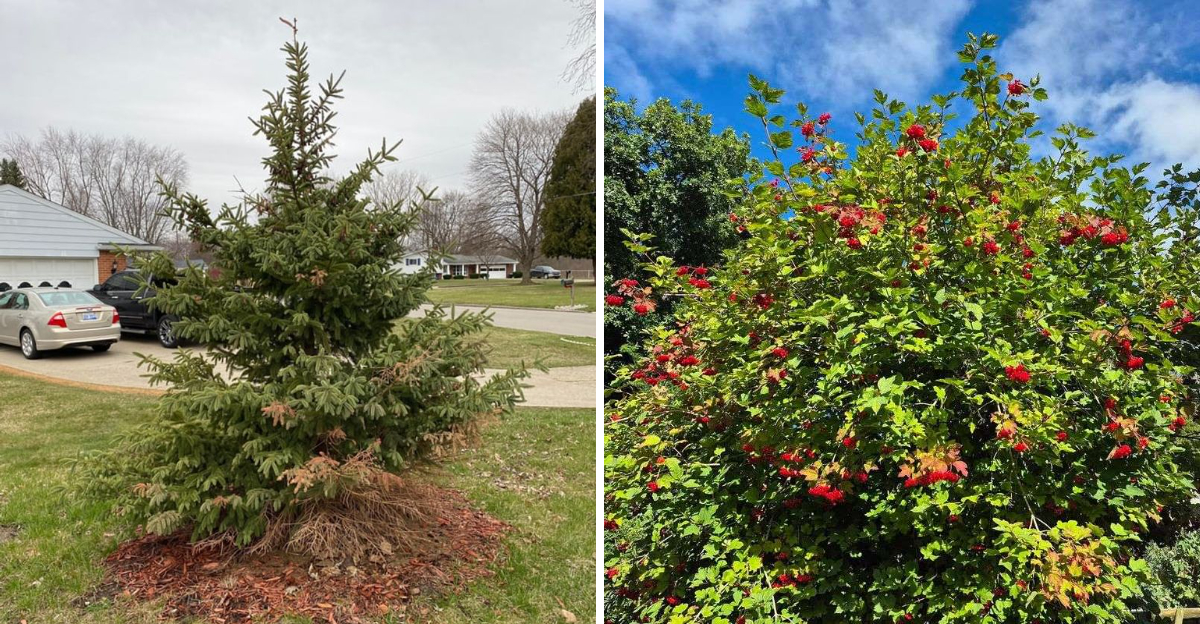
As Norway spruce ages, the lower branches thin out and eventually drop entirely. The base opens up. The dense green wall becomes a tall canopy on bare trunks, which is essentially the opposite of ground-level screening.
Cytospora canker is a real concern in Michigan as well. This fungal disease targets stressed trees and causes branch dieback that progresses from the bottom upward.
Trees planted in compacted soil or dry south-facing sites are most vulnerable, and once the disease is established, the damage is difficult to reverse.
Norway spruce prefers moist, well-drained soil and full sun. Michigan yards frequently offer something different.
When the site conditions do not match what the tree actually needs, the long-term performance never catches up to the early growth rate.
The alternatives available now fit Michigan conditions, Michigan lot sizes, and the actual privacy goals that Norway spruce kept almost delivering.
2. Plant Eastern Arborvitae For Dense Screens
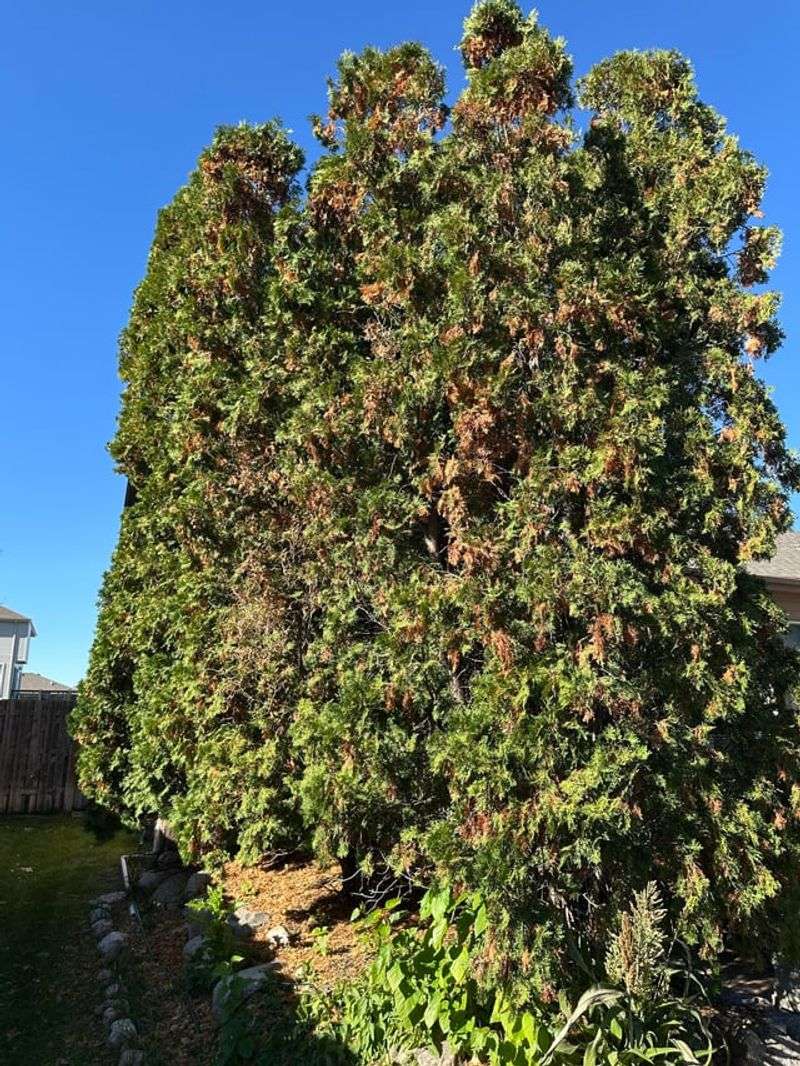
Walk through almost any Michigan neighborhood and the pattern becomes familiar. Tight columns of dark green foliage standing shoulder to shoulder along property lines, doing exactly the job they were planted for season after season.
Eastern arborvitae, Thuja occidentalis, is a Michigan native that handles the state’s cold winters without visible stress.
The characteristic that separates it from most other privacy options is the density it maintains from top to bottom throughout its life. A ground-level gap in a privacy screen is not a minor inconvenience. Arborvitae does not produce that gap.
Your Michigan Garden Changes Every Week. Your Plan Should Too.
Gardening in Michigan changes quickly throughout the season. Every Friday you’ll receive a simple weekly plan showing exactly what to plant, prune, fertilize, harvest, and protect so you never miss the right timing.
Cultivars matter for screening purposes. Emerald Green holds its shape with minimal intervention and stays narrower than the species form, making it a practical choice for tighter lots.
Techny is broader and more vigorous, suited to properties where a fuller presence is the goal. Spacing Emerald Green about three to four feet apart on center builds a solid screen. Techny performs better at five to six feet between plants.
Moist, well-drained soil and full sun to partial shade are the conditions arborvitae performs best in. Dry sites with poor soil produce stressed plants that never achieve the density the screening goal requires.
The honest caveat is deer. Arborvitae is genuinely appealing to deer, and in neighborhoods with significant deer pressure, young plants need protection through the first few winters.
Burlap wrapping or repellent spray handles the problem until the plants grow above comfortable browse height.
After that, arborvitae largely takes care of the property line situation on its own.
3. Use Eastern Red Cedar For Sunny Dry Sites
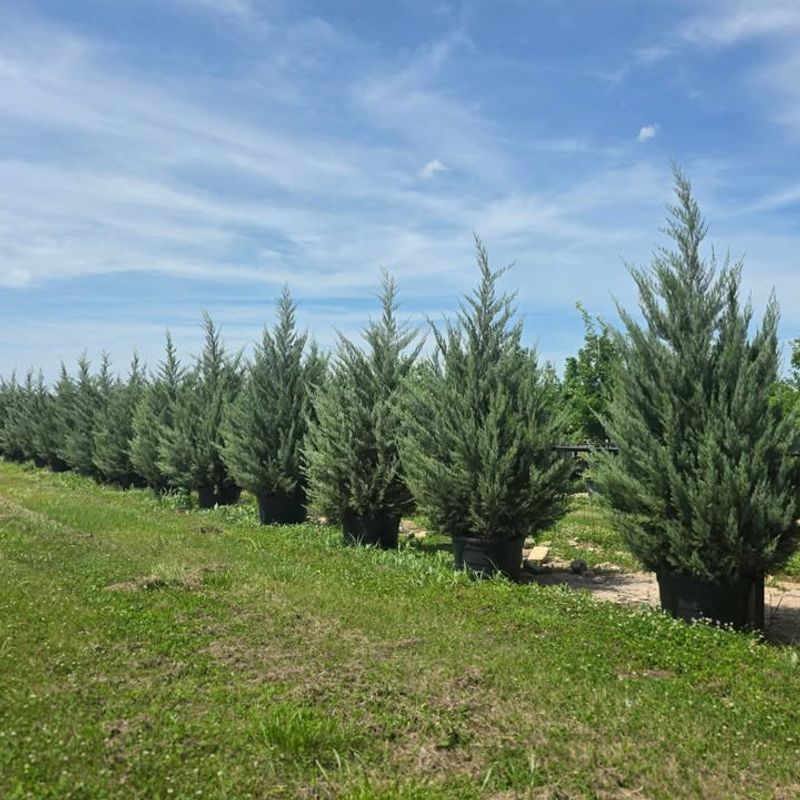
Most privacy tree shopping happens at full-service nurseries where the options all come with similar requirements. Moist soil. Full sun. Regular watering during establishment. Good drainage.
Eastern red cedar ignores most of those requirements and performs anyway.
Juniperus virginiana is one of the most drought-tolerant evergreens available for Michigan landscapes. It establishes in clay soils, sandy soils, exposed windy sites, and rocky ground where other screening trees struggle to survive the first summer.
Once established, it needs almost no supplemental watering and handles open, sun-baked exposures with no visible decline.
The wildlife value attached to this tree is substantial. Cedar waxwings, bluebirds, robins, and more than 50 other bird species feed on the small blue berries that female trees produce each fall.
The dense branching provides nesting cover and winter shelter that few other trees in a Michigan landscape match at the same scale.
Eastern red cedar grows 40 to 50 feet tall in a pyramidal to columnar form that suits property lines and windbreaks naturally.
Growth rate runs moderate at 12 to 18 inches per year under decent conditions. Selective pruning keeps height manageable for properties where full mature size is a concern.
One planting consideration worth noting: Eastern red cedar is an alternate host for cedar-apple rust, a fungal disease that cycles between junipers and members of the apple family.
Avoiding placement near apple or crabapple trees prevents that disease from moving between the two species.
A privacy tree that attracts 50 bird species while handling your worst planting site deserves more attention than it typically receives.
4. Choose White Pine For Larger Privacy
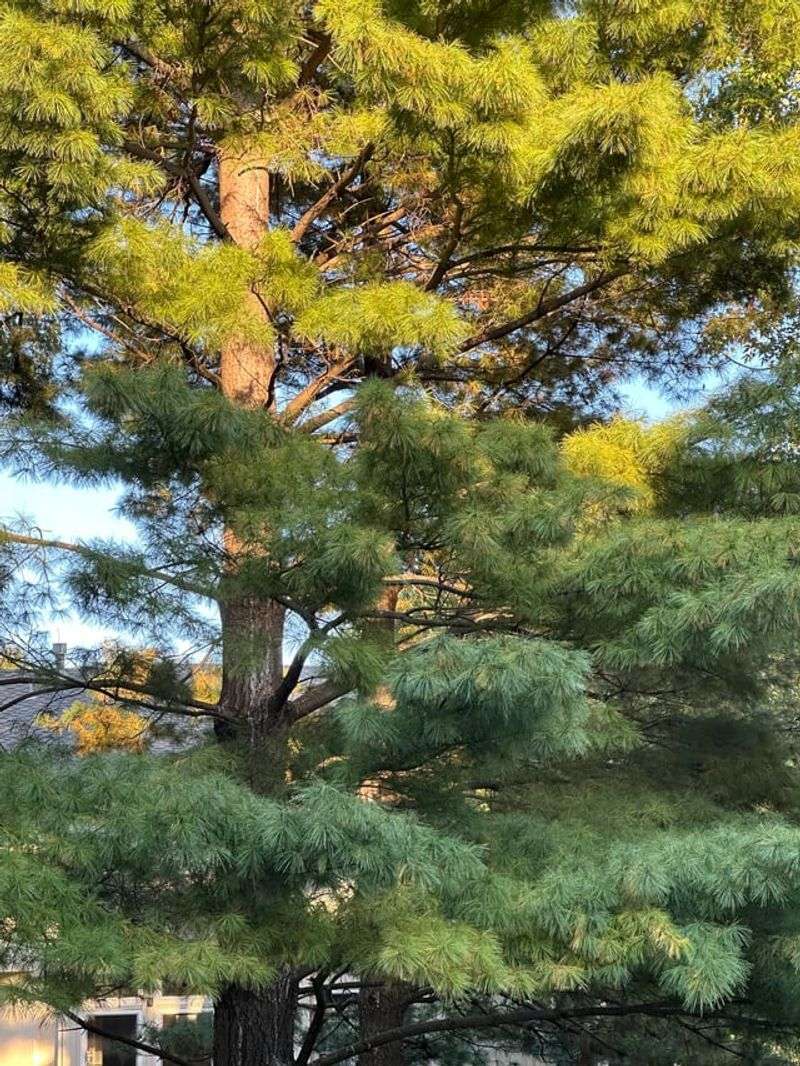
Some yards simply have space, and for Michigan homeowners with room to spare, eastern white pine delivers fast privacy screening with a visual quality that most other options cannot match at the same scale.
White pine, Pinus strobus, is Michigan’s state tree. It grows quickly, typically putting on two to three feet per year under good conditions, and it builds a soft, feathery wall of blue-green foliage that holds its character year-round.
The texture is lighter and more graceful than most conifers typically used for screening, which gives the property line a different kind of visual presence.
Adaptability is one of this tree’s practical strengths. Eastern white pine grows in a wide range of Michigan soils from sandy loam to moist lowland edges, and it performs in full sun through light shade.
Spacing for privacy screening runs about ten to fifteen feet apart. Planted tighter than that, trees compete for light and thin out from the interior quickly.
Given adequate spacing, they fill in beautifully and provide year-round coverage across large property edges and rural lot borders.
White pine blister rust and pine wilt are concerns worth being aware of in Michigan. Proper site selection and healthy planting practices reduce the risk considerably. Wet, poorly drained planting sites invite the root stress that makes disease pressure worse.
Chickadees, nuthatches, and crossbills all rely on white pine heavily for food and winter shelter, which adds ecological return to the screening investment.
5. Try Concolor Fir For Softer Texture
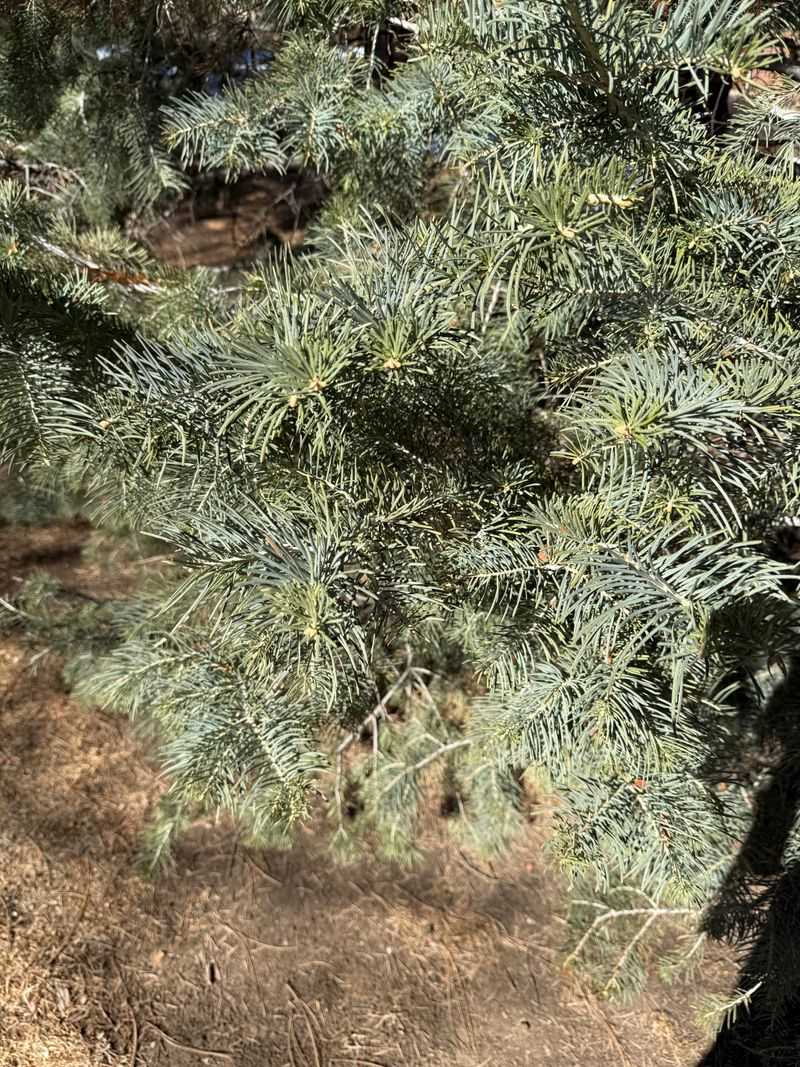
Run a hand along a concolor fir branch and the tree makes its case immediately. The long, soft needles curve gently upward.
The color sits somewhere between blue and gray in a way that reads as almost painted against the sky. Among the conifers commonly available for Michigan planting, concolor fir looks like nothing else on the list.
Abies concolor grows in a neat pyramidal form and reaches 30 to 50 feet at maturity. Growth rate runs 12 to 18 inches per year once established, which is slower than white pine but still produces meaningful progress across a season.
That steady pace suits medium to large yards where a long-term screen is the goal rather than the fastest possible coverage.
Good drainage is the primary site requirement. Concolor fir does not perform well in wet or compacted soil, and planting in a low spot that collects water after rain sets the tree up for root stress regardless of how well other conditions match.
A slightly elevated site or a raised planting area addresses drainage concerns before they become established problems.
Urban tolerance is a genuine advantage in Michigan suburban settings. Concolor fir handles air pollution, heat reflected from pavement, and dry summer stretches better than most other fir species.
That resilience makes it a practical choice for yards that are not perfectly situated for sensitive conifers.
Deer tend to leave concolor fir alone compared to arborvitae. In Michigan neighborhoods with significant deer pressure, that preference alone justifies a serious look at this tree.
6. Use White Spruce For Tough Screening
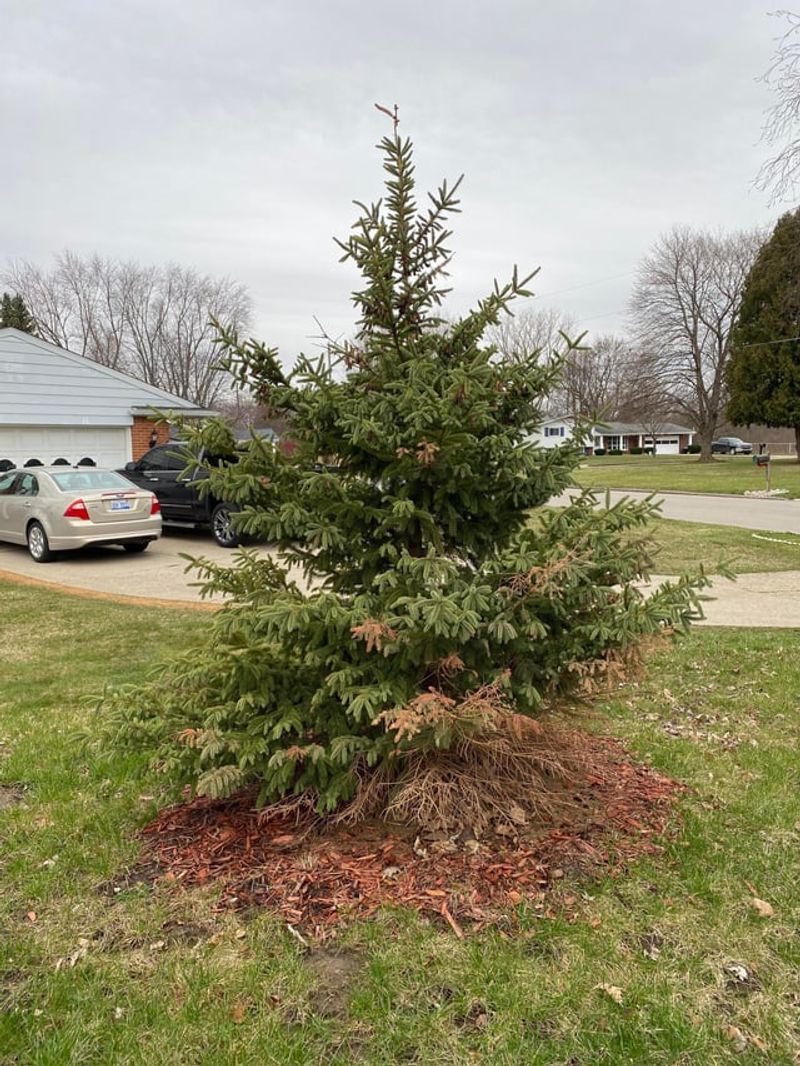
Flat, open, wind-swept Michigan property in a region where winter arrives early and stays late is a specific challenge that eliminates most privacy tree options quickly. White spruce was built for exactly that situation.
Picea glauca is native to northern Michigan and across the Great Lakes region. Cold temperatures, strong prevailing winds, and variable soil conditions are the environment it evolved in rather than conditions it merely tolerates.
That distinction shows in how consistently it performs on the kinds of sites that compromise other screening trees within a few years of planting.
White spruce grows 40 to 60 feet tall with a dense pyramidal crown. Growth rate runs moderate at 12 to 24 inches per year depending on soil moisture and site conditions.
The blue-green foliage holds color well through Michigan winters, and the tree maintains density from the ground up when given adequate sunlight.
For rural and semi-rural properties, white spruce is one of the most practical windbreak and privacy screen choices available in Michigan. It earns that reputation on performance rather than on nursery aesthetics.
One characteristic worth knowing before planting a dense row near a seating area: the foliage carries a slightly pungent smell when crushed or disturbed.
The response varies from person to person. Some barely register it. Others find it strong. It has no effect on the tree’s screening performance, but proximity to a patio or outdoor living space is worth considering during placement.
Compact cultivars like Densata, commonly called Black Hills spruce, grow more slowly and tightly, which suits properties where a shorter, denser screen is the goal over maximum height.
7. Add American Cranberrybush Viburnum For Mixed Screens
Not every privacy screen needs to be a wall of identical evergreens standing at attention along the property line.
The most effective screening plantings often work in layers, mixing heights, textures, and seasons of interest to create something that looks intentional and performs reliably.
American cranberrybush viburnum earns its place in that kind of layered design more convincingly than almost any other shrub available for Michigan landscapes.
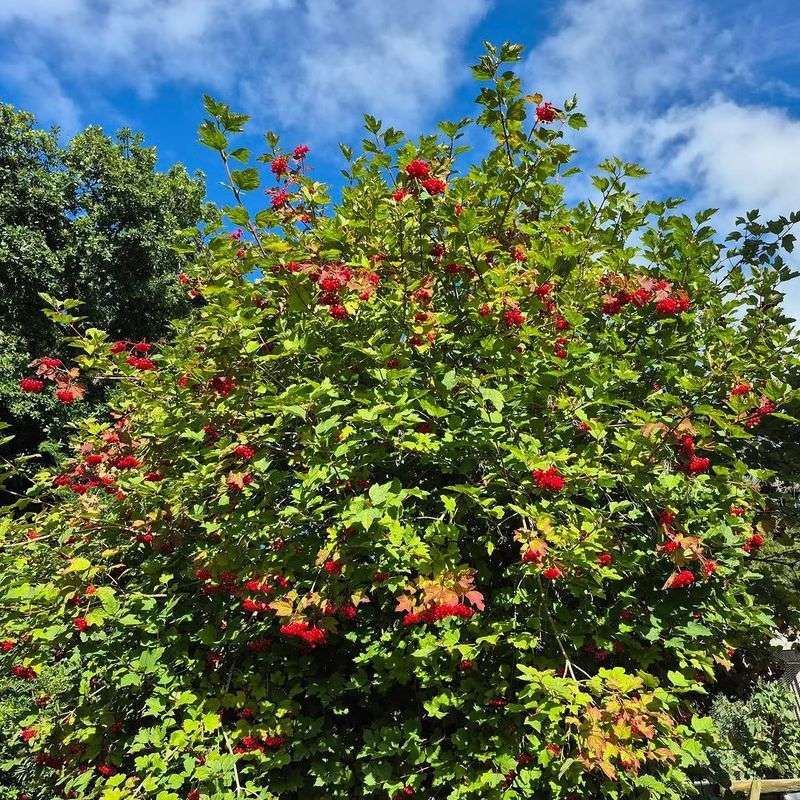
Viburnum trilobum is a Michigan native that grows eight to twelve feet tall and equally wide.
It leafs out early in spring, holds its large maple-shaped leaves through summer and fall, and produces flat-topped clusters of white flowers in late spring that attract pollinators in numbers that a purely evergreen planting cannot match.
By fall, those flowers become clusters of bright red berries that persist into winter and draw cedar waxwings, robins, and other fruit-eating birds reliably each season.
The practical layering approach pairs this viburnum in front of taller evergreens like white spruce or Eastern arborvitae.
The evergreens handle the year-round backdrop and winter screening. The viburnum fills the lower visual layer from spring through fall with color, texture, and wildlife activity that a monoculture evergreen planting simply does not produce.
American cranberrybush viburnum prefers moist, well-drained soil and grows well in full sun to partial shade. It is cold-hardy throughout Michigan and needs minimal intervention once established in decent soil.
A privacy screen that feeds birds through winter and produces white flowers in May is making more than one contribution to the yard.
The Norway spruce was never going to do any of that.