The Fig Tree Pruning Mistake Georgia Homeowners Make That Costs Them Half Their Summer Harvest
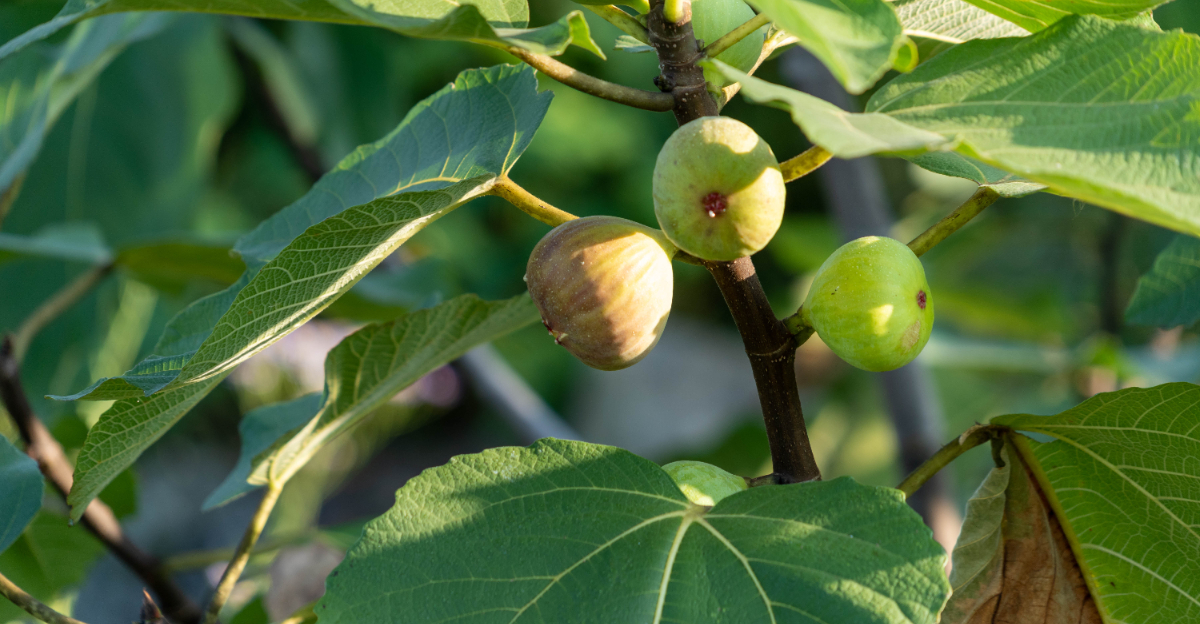
Nothing builds anticipation quite like a fig tree loaded with small green fruit. Weeks go by, the tree looks healthy, and everything seems to be moving in the right direction.
That is why it can be so disappointing when harvest season arrives and the crop is much smaller than expected. At first, it is easy to blame the weather, a late cold snap, or something else outside your control.
The reality is that some harvest problems begin much earlier. A tree can look perfectly healthy while quietly losing its potential to produce as much fruit as it should.
Small decisions made at the wrong time can have consequences that do not become obvious until months later.
That is exactly why the same pruning mistake continues to catch Georgia homeowners off guard. The tree may keep growing, putting out leaves and showing no obvious signs of trouble.
By the time the impact becomes clear, a significant portion of the season’s harvest may already be gone.
1. Heavy June Pruning Can Remove Developing Figs
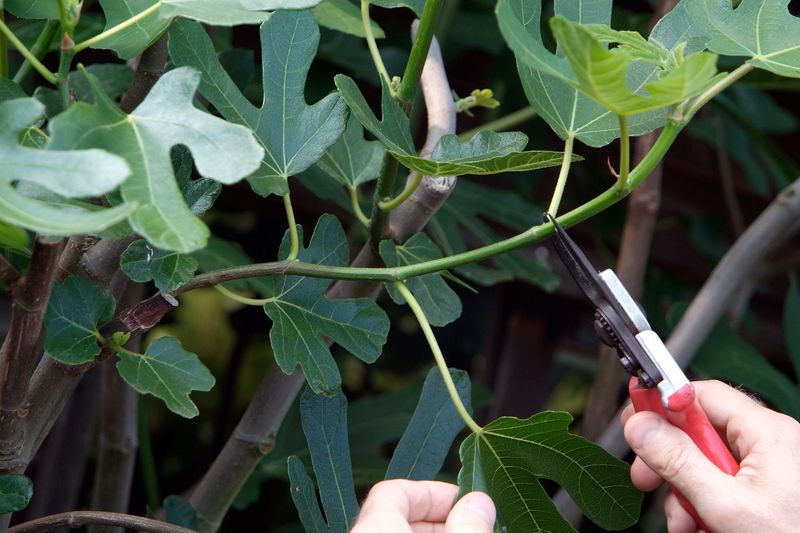
Picking up pruning shears in June feels productive, but timing here is everything. By early June, most fig trees have already set their first crop.
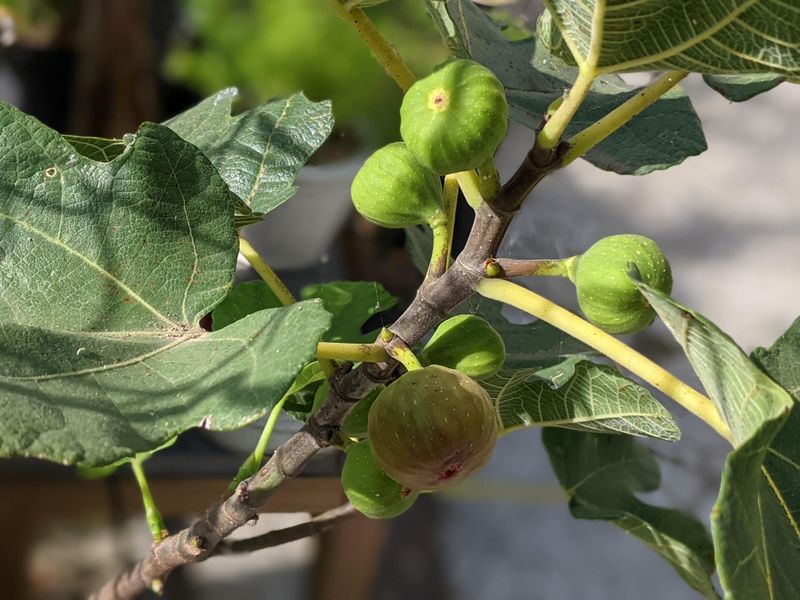
Those small, firm, green figs clinging to the branches are not just buds. They are actual developing fruit.
Cutting back long shoots at this stage removes figs that were weeks away from ripening. Homeowners often mistake new growth for unproductive wood.
That assumption leads to real harvest loss every single summer.
A fig does not need heavy cutting during active fruit development. Pruning at this stage stresses the tree right when it needs to focus energy on swelling fruit.
That energy shift can slow ripening or stop it entirely on affected branches.
Late winter, typically between January and March in warmer Southern climates, is the safest window for any significant pruning work. At that point, the tree is dormant and not carrying developing fruit.
You can shape, thin, and remove damaged wood without touching a single fig.
If you notice a branch that truly needs attention in June, limit yourself to removing only damaged or clearly broken wood. Leave everything else alone.
A few extra weeks of patience protects weeks of fruit development already underway.
Backyard fig growers who shift their heavy pruning to late winter consistently report better summer harvests. Fruit that was allowed to develop undisturbed ripens more evenly and in greater quantity.
Timing matters far more than technique when it comes to fig pruning.
2. Many Trees Already Carry This Year’s Crop
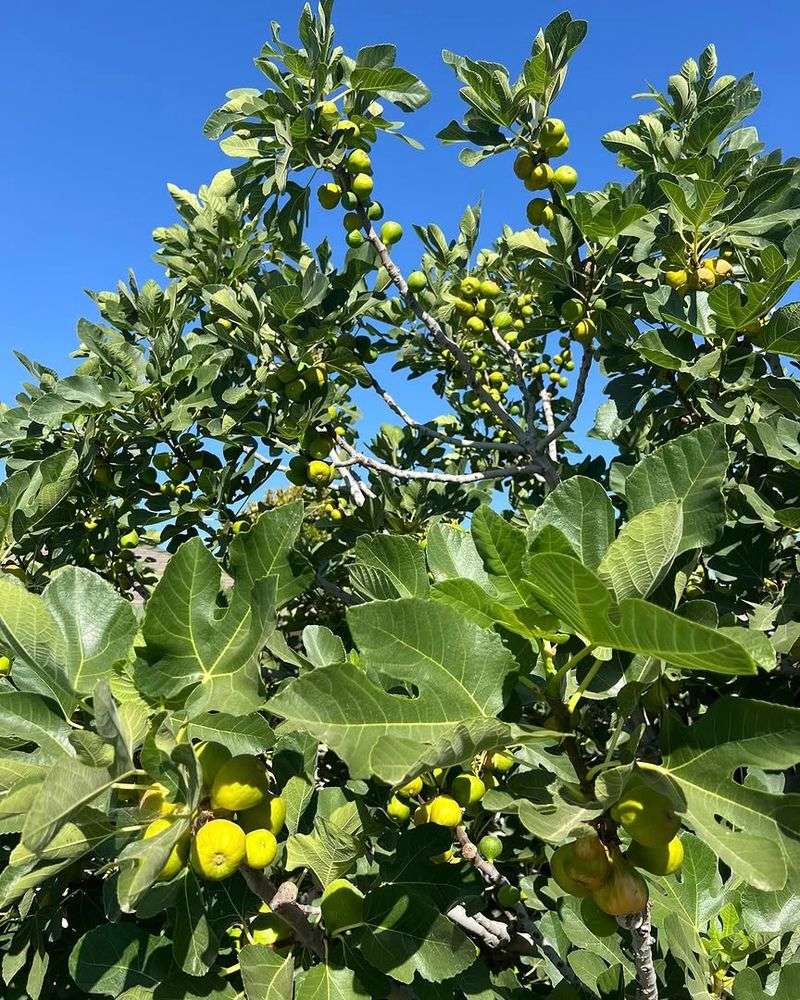
Walk up to your fig tree in late May or early June and look closely at the branches. Chances are good you will spot dozens of small green figs already forming.
Most people walk right past them without noticing.
Fig trees begin setting fruit before the season feels fully underway. Breba figs, the first crop of the season, develop on last year’s wood.
If that wood gets removed, those figs go with it. No wood, no fruit.
Your Georgia Garden Changes Every Week. Your Plan Should Too.
Gardening in Georgia changes quickly throughout the season. Every Friday you’ll receive a simple weekly plan showing exactly what to plant, prune, fertilize, harvest, and protect so you never miss the right timing.
Recognizing what is already on the tree before you prune is a habit worth building. Spend two minutes walking the tree and checking for tiny figs.
That simple step prevents a lot of accidental harvest loss.
Some fig varieties produce a heavier breba crop than others. Brown Turkey figs, which grow well in Georgia and across the South, are known for a decent breba flush.
Celeste figs tend to skip the breba crop and focus on the main crop later in summer.
Knowing your variety helps you make smarter pruning decisions. If your tree produces on old wood, protecting that wood is critical.
Cutting it back in spring or early summer removes the very structure the fruit depends on.
A quick photo of your tree each spring creates a useful reference over time. You start to see patterns in where fruit forms and which branches carry the heaviest loads.
That knowledge makes every future pruning decision more confident and better informed.
3. Large Cuts Can Reduce Summer Production
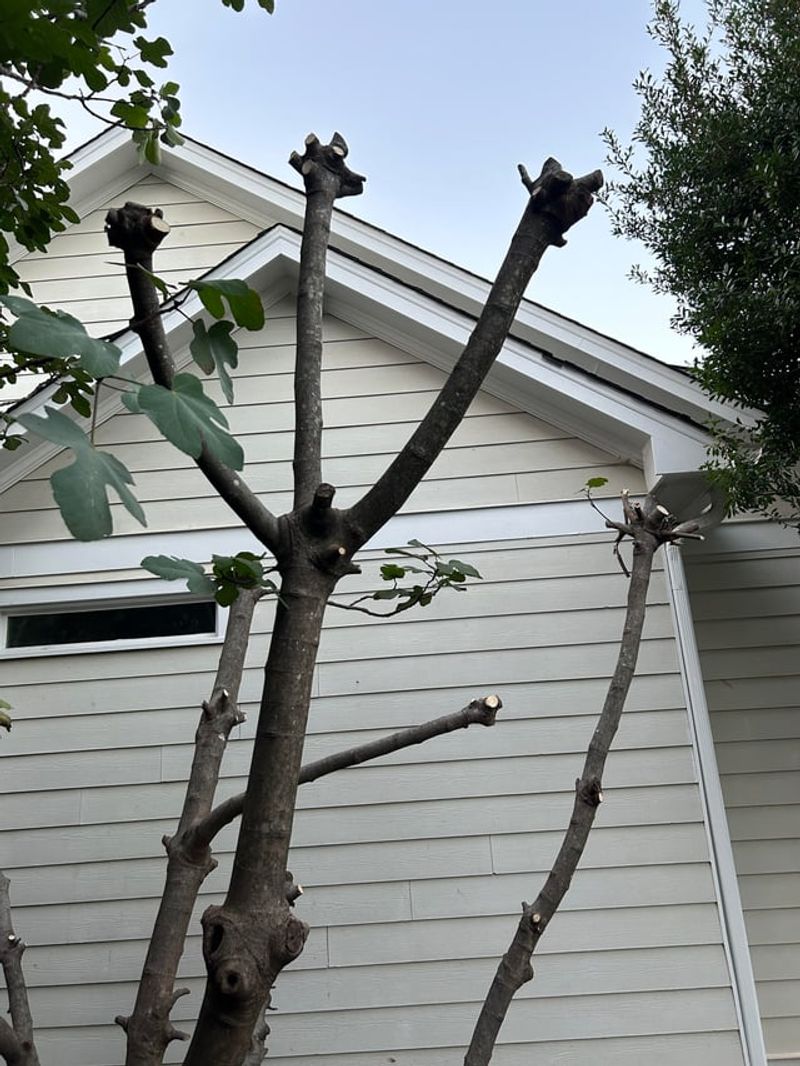
Big cuts feel satisfying in the moment. Removing a thick, overgrown limb gives the tree a cleaner look almost immediately.
But large cuts on a fig tree carry consequences that show up weeks later at harvest time.
When a major limb is removed, the tree responds by pushing a surge of new vegetative growth. Lots of leafy shoots appear fast.
That growth is impressive to look at, but it does not carry fruit in the same season it grows.
All that new shoot energy comes at a cost. The tree pulls resources away from existing fruit development to push those new shoots.
Figs that were sizing up can stall or drop prematurely as a result.
Large cuts also create bigger wounds that take longer to seal. An open wound on a fig tree in summer is an entry point for disease and pests.
The tree spends energy managing that wound instead of finishing its fruit.
Keeping cuts small and selective is a better strategy. Remove only what is clearly damaged, crossing, or causing a structural problem.
Avoid removing more than about a quarter of the canopy in any single pruning session.
Spreading significant pruning work across two or three seasons reduces shock and keeps production steady. Fruit trees respond well to gradual reshaping.
Patience during pruning translates directly into more figs in the basket at the end of summer.
4. Removing Fruiting Wood Can Reduce The Harvest
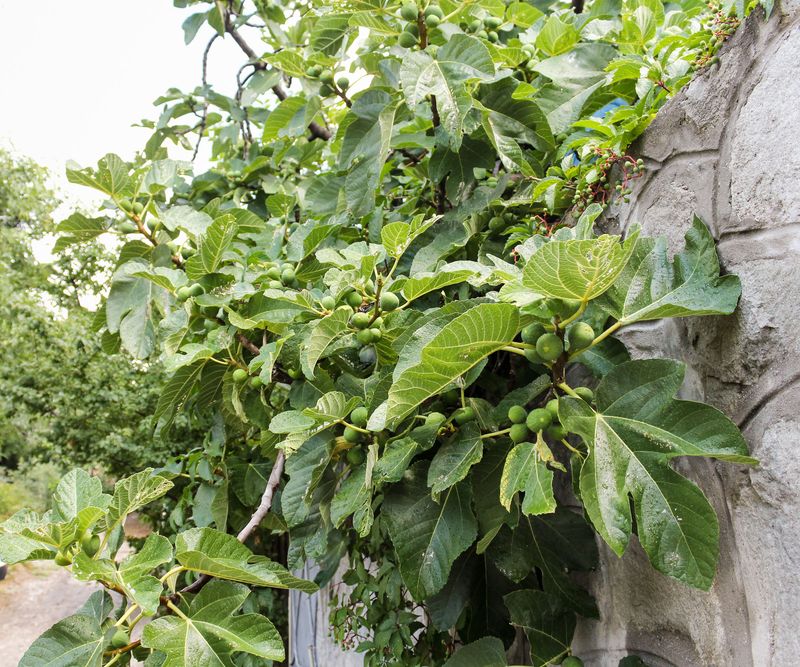
Not all wood on a fig tree works the same way. Some branches are purely structural.
Others are actively producing fruit. Cutting the wrong ones is where most harvest losses actually begin.
Before making any cuts, take a close look at the branches. Productive branches often already have small fig buds or developing fruit visible along their length.
Removing those branches in the name of tidying up the tree is a common and costly mistake.
If a branch is already carrying developing figs, cutting it back removes part of the harvest along with it. Taking a few extra moments to identify productive branches can prevent a surprising amount of fruit loss later in the season.
Learning to identify fruiting wood before you cut is one of the most practical skills a fig grower can develop. Take time to examine branches before the shears come out.
Look for the small, rounded fig buds that signal productive wood worth keeping.
If a branch is healthy, positioned well, and showing signs of fruit development, leave it alone. Even if it looks a little wild or extends farther than you would like, fruit on that branch is worth more than a tidy silhouette.
Across the South, experienced fig growers often say the best pruning tool is patience. Cutting less, observing more, and letting productive wood do its job results in a noticeably better harvest season after season.
5. Excess Growth Does Not Mean More Figs
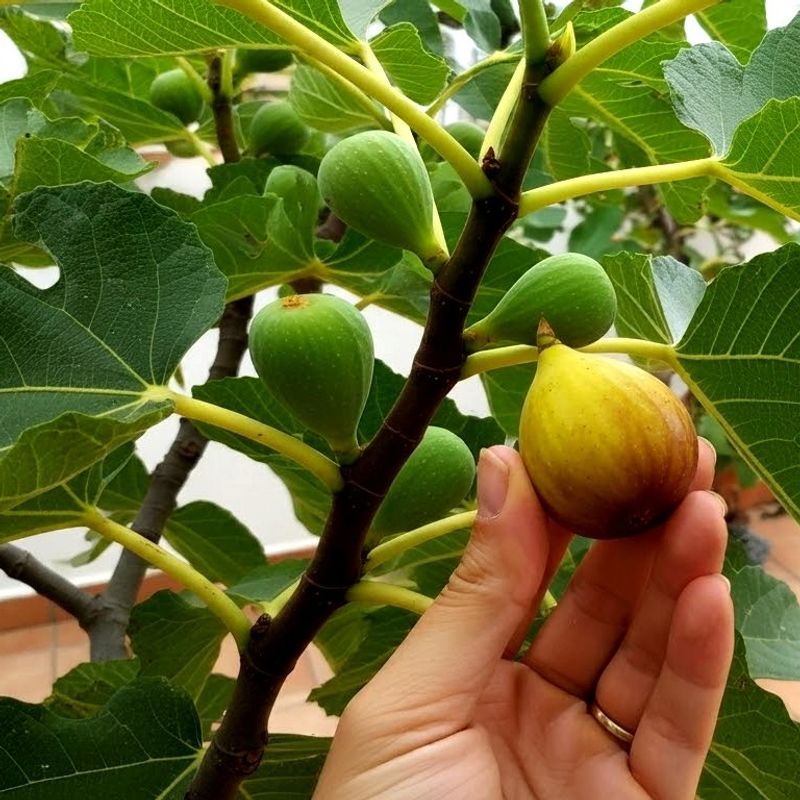
A fig tree exploding with leafy growth can look like a sign of great health. All that green is easy to interpret as the tree performing at its best.
But heavy vegetative growth and heavy fruit production are not the same thing.
When a fig tree pushes a lot of new shoots, it is often responding to over-pruning or excessive fertilizer. Both conditions encourage the tree to grow wood and leaves instead of channeling energy into developing fruit.
Nitrogen-heavy fertilizers are a frequent culprit. Applying too much in spring triggers a burst of leafy growth that looks impressive but crowds out fruiting.
Figs generally prefer leaner soil conditions compared to many other backyard trees.
A tree loaded with soft, lush shoots and minimal fruit is telling you something. It has more than enough resources for growth but is not directing those resources toward production.
Adjusting inputs and easing off pruning often corrects the imbalance over one or two seasons.
Shade is another factor. Dense canopies block sunlight from reaching interior branches.
Without adequate light penetration, inner fruiting wood becomes less productive over time. Thinning the canopy lightly improves airflow and light without triggering aggressive regrowth.
Fruit production on a fig tree is about balance. Steady, moderate growth with good light exposure and restrained fertilizing usually produces the most reliable harvests.
Chasing lush growth often works against the harvest rather than supporting it.
6. Overgrown Trees Do Not Always Need Hard Pruning
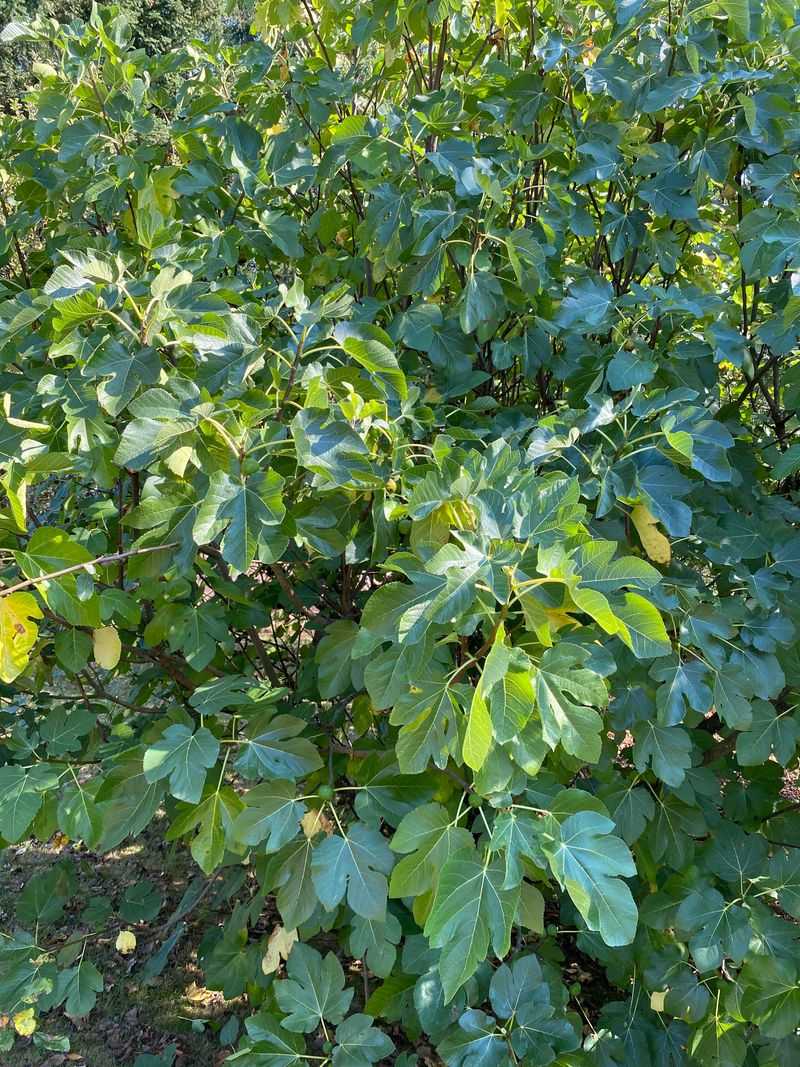
An overgrown fig tree can look intimidating. Branches spread wide, the canopy feels chaotic, and the natural instinct is to cut it back hard and start fresh.
But hard pruning an established fig tree almost always delays the next harvest.
Mature fig trees have years of productive wood built up. That wood carries the muscle memory of fruit production.
Cutting it back severely resets the tree to a juvenile state where it focuses on rebuilding structure rather than producing fruit.
A better approach with an overgrown tree is gradual renovation. Identify the three or four worst-placed branches.
Remove only those in late winter. Let the tree respond and observe how it performs through the following season before making more cuts.
Spreading renovation across two or three years keeps the tree producing while you slowly improve its shape. Fruit production may dip slightly in the first year but rarely crashes the way it does after a single hard pruning session.
Height is a common concern with large fig trees. Reaching fruit near the top becomes difficult.
Lowering the canopy gradually over a few seasons is far less disruptive than cutting the whole tree down to a stump at once.
Experienced growers across the South regularly manage large, established fig trees with light annual pruning rather than periodic hard resets. Consistency and restraint keep the tree productive.
Patience with overgrown trees pays off in steady, reliable harvests year after year.
7. Light Cleanup Is Safer Than Heavy Cutting
Grabbing the loppers and going big is tempting when a fig tree looks messy. Restraint, though, is the skill that actually protects the harvest.
Light cleanup removes problem wood without disturbing the productive structure of the tree.
A good light cleanup focuses on three specific targets. Remove damaged or dry wood first.
It serves no purpose and can harbor insects or disease. Next, remove any branches that are rubbing or crossing in ways that cause damage.
Finally, take out any shoots growing straight down or directly into the center of the canopy.
That is typically all a healthy, established fig tree needs in most seasons. Completing that work in late winter leaves the tree ready to push its energy into fruit production as temperatures rise in spring.
Resist the urge to shape the tree aggressively during cleanup. Figs do not need to look like ornamental shrubs.
A slightly irregular canopy with good light exposure outperforms a tightly shaped tree that has lost its productive wood.
Hand pruners handle most cleanup tasks cleanly. Sharp blades make smooth cuts that heal faster than ragged ones.
Keeping tools clean and sharp is a small habit that makes a real difference in how quickly wounds close.
Across Georgia and neighboring Southern states, fig growers who practice light annual cleanup consistently outperform those who prune heavily every few years.
Steady, minimal intervention keeps trees healthy, productive, and far less stressful to manage season after season.