This Is What Georgia Gardeners Keep Getting Wrong With Crape Myrtles And How To Fix It
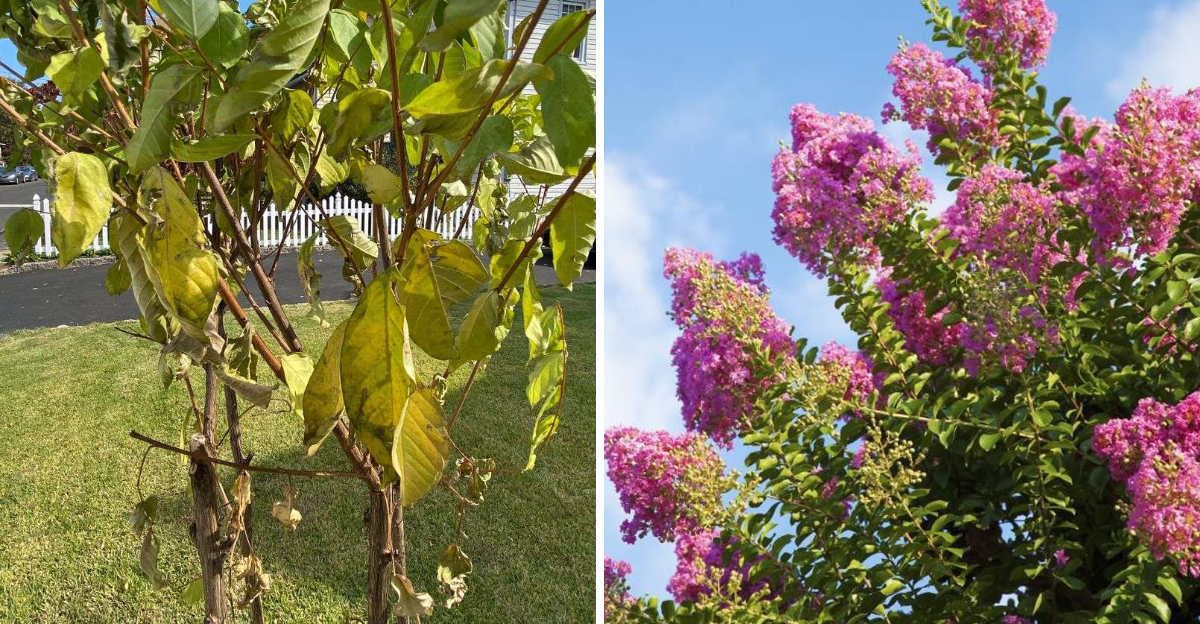
A crape myrtle can spend years growing in the wrong direction without anyone realizing something is off.
The blooms still appear, the tree keeps getting bigger, and everything seems fine from a distance. Then one day it becomes impossible to ignore.
The shape looks awkward, flowering is not as impressive as expected, or the entire tree seems harder to manage than it should be.
In Georgia, crape myrtles are so common that certain maintenance habits get repeated year after year. The surprising part is that some of the most widespread practices are also the ones most likely to create problems later.
That is what makes this tree so interesting. It is tough, adaptable, and capable of putting on an incredible display, yet a few simple mistakes can hold it back for years.
Once those mistakes are recognized, the difference can be surprisingly noticeable during the growing season.
1. Topping Branches Ruins The Tree’s Natural Shape
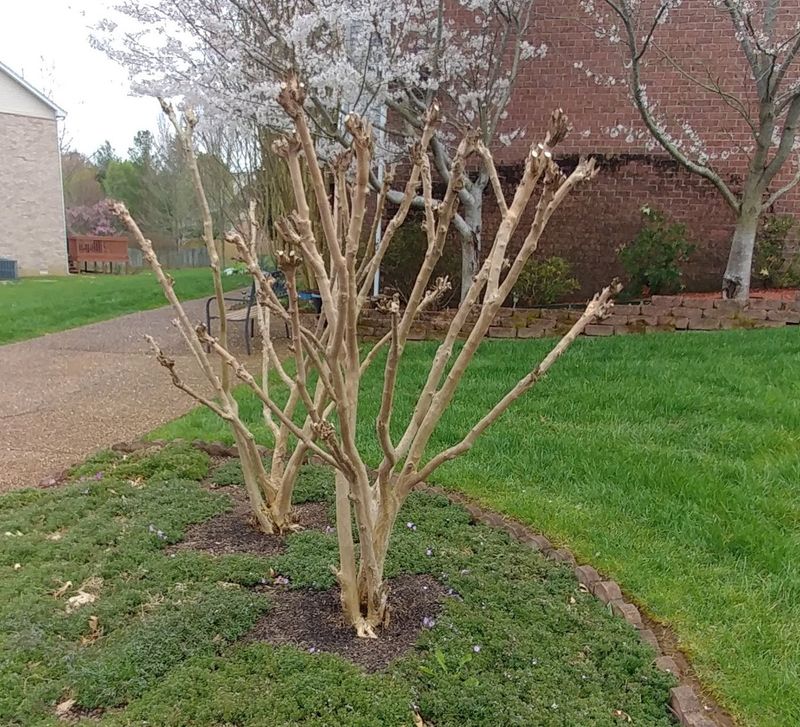
Crape murder is real, and it’s happening in neighborhoods all across the South every single winter. Topping a crape myrtle, meaning cutting the main branches back to blunt stubs, is one of the most damaging things you can do to these trees.
It destroys the natural branching structure that makes crape myrtles so visually stunning.
When you top a tree, it responds by pushing out a burst of weak, fast-growing shoots from those cut points. Those new shoots are thin and floppy.
They can’t support the weight of blooms properly, and the tree ends up looking worse than before the pruning.
Beyond the look, repeated topping creates swollen knobs at the ends of branches over time. Those knobs are permanent.
No amount of future pruning will restore the tree’s original graceful form once it’s been topped multiple times.
The fix is simple: stop topping. Crape myrtles don’t need aggressive pruning to bloom.
They bloom on new growth each season regardless. If you want to prune, remove only crossing branches, dried wood, or suckers at the base.
2. Pruning During Summer Removes Future Blooms
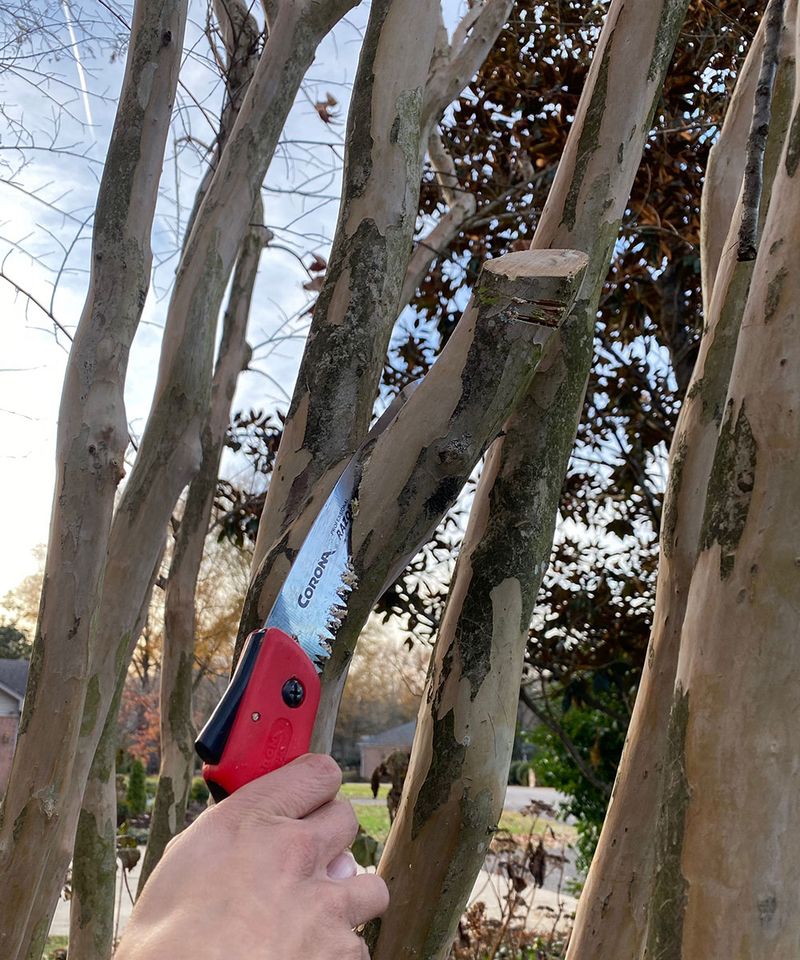
Timing matters more than most gardeners realize when it comes to pruning crape myrtles. Cut into the canopy during summer and you’re likely removing the very branch tips that were set to produce blooms.
That’s a frustrating mistake that costs you an entire season of color.
Crape myrtles bloom on new growth produced earlier in the season. By mid-summer, flower buds are already developing on those branch tips.
Heavy pruning at that point interrupts the process and delays or eliminates blooming for the rest of that year.
Late winter or very early spring is the ideal window for any meaningful pruning. At that point, the tree is still dormant or just beginning to wake up.
You can shape it cleanly without interfering with the blooming cycle.
Light deadheading after the first bloom flush can actually encourage a second round of flowers. Snipping off spent flower clusters before they go to seed redirects the tree’s energy into producing new blooms.
Your Georgia Garden Changes Every Week. Your Plan Should Too.
Gardening in Georgia changes quickly throughout the season. Every Friday you’ll receive a simple weekly plan showing exactly what to plant, prune, fertilize, harvest, and protect so you never miss the right timing.
That’s a different action from structural pruning and carries far less risk.
Watch the calendar carefully. Any significant cutting after late spring pushes into risky territory for bloom loss.
If a branch is damaged or diseased, removing it mid-season is still fine. But save aesthetic shaping for the dormant period.
3. Planting Too Close Creates Problems Later
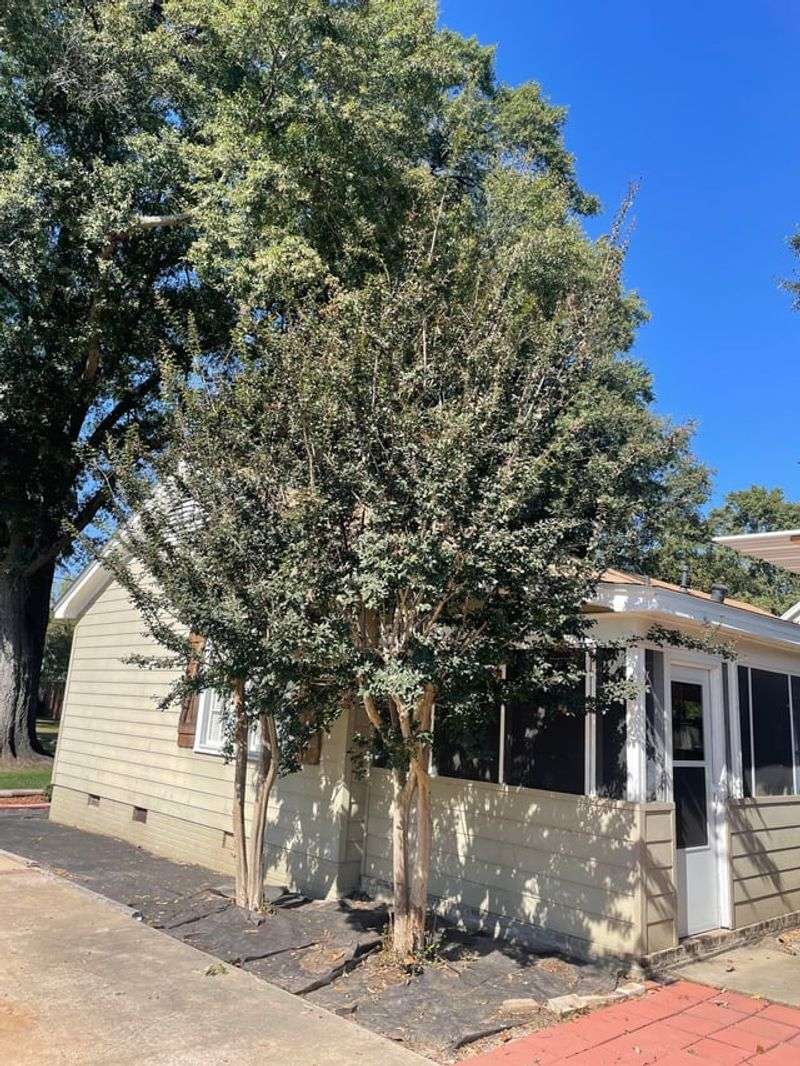
A small crape myrtle at the nursery looks perfectly manageable. Plant it two feet from the fence or right under a power line, and within five years you’ve created a problem that won’t go away on its own.
Spacing is one of the most underestimated parts of planting these trees correctly.
Crape myrtles come in a wide range of mature sizes. Dwarf varieties stay under four feet, while standard types can easily reach 20 to 30 feet tall and wide.
Planting without knowing the mature size almost always leads to overcrowding.
Overcrowded trees compete for light, water, and nutrients. Their canopies overlap and restrict airflow, which creates the kind of humid, stagnant environment that encourages powdery mildew and other fungal issues.
Blooming also suffers when trees are shaded by their neighbors.
Before planting, check the mature dimensions listed on the plant tag or from the nursery staff. Give each tree enough room to reach its full spread without touching structures, utility lines, or other plants.
As a general rule, plant standard varieties at least 10 to 15 feet away from buildings and other large trees. Smaller varieties need proportionally less space, but still need breathing room to develop properly.
4. Too Much Fertilizer Leads To Excessive Leaf Growth
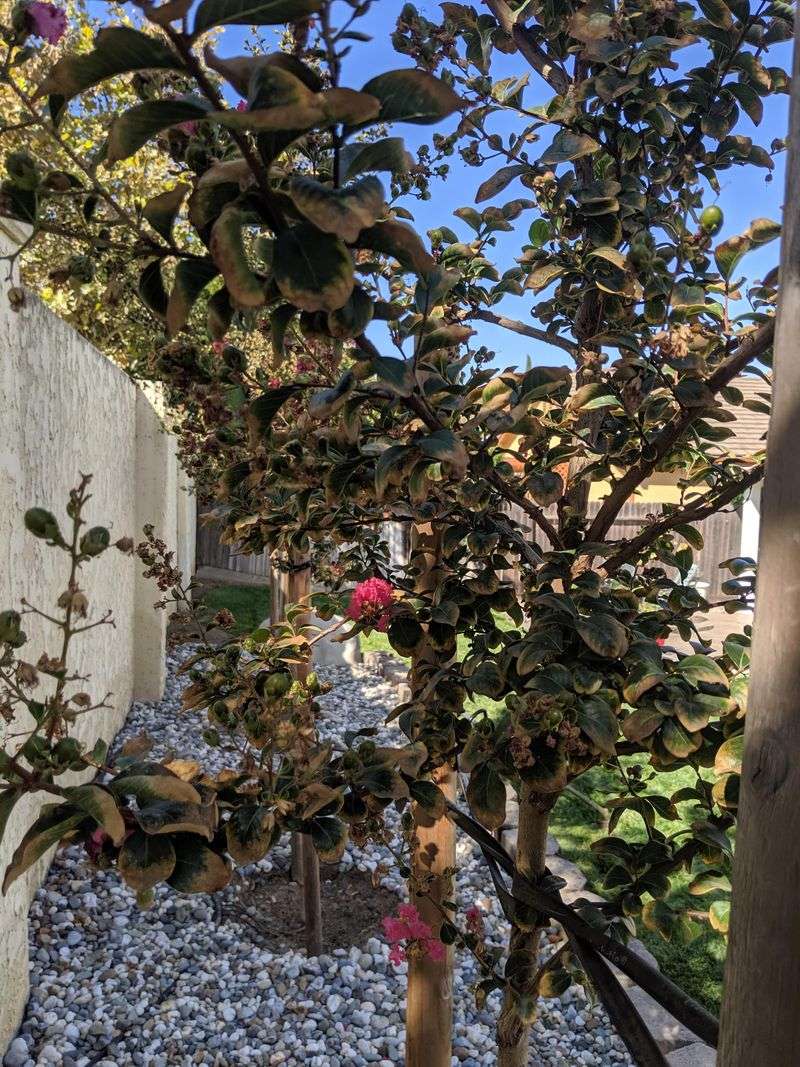
Grab a bag of high-nitrogen fertilizer and apply it generously, and your crape myrtle will reward you with a thick flush of deep green leaves and almost no flowers. That’s not a coincidence.
Excess nitrogen pushes vegetative growth at the expense of blooming, and it’s a trap many well-meaning gardeners fall into.
Crape myrtles are naturally adapted to lean, well-drained soils. They don’t need heavy feeding to perform well.
In fact, they often do better with less fertilizer than most gardeners assume is necessary.
If your tree is producing plenty of lush foliage but blooming is weak or sparse, over-fertilization is worth investigating. A soil test can confirm whether nutrients are already at adequate levels before you add anything at all.
When fertilization is genuinely needed, use a balanced slow-release formula in early spring. Something in the range of 8-8-8 or 10-10-10 applied once at the start of the growing season is usually enough.
Skip the high-nitrogen lawn fertilizers near your crape myrtles entirely.
Avoid fertilizing after midsummer. Late-season feeding can push tender new growth that won’t harden off properly before cooler temperatures arrive.
That soft growth is more vulnerable to cold injury during winter months.
5. Ignoring Suckers Makes Maintenance More Difficult
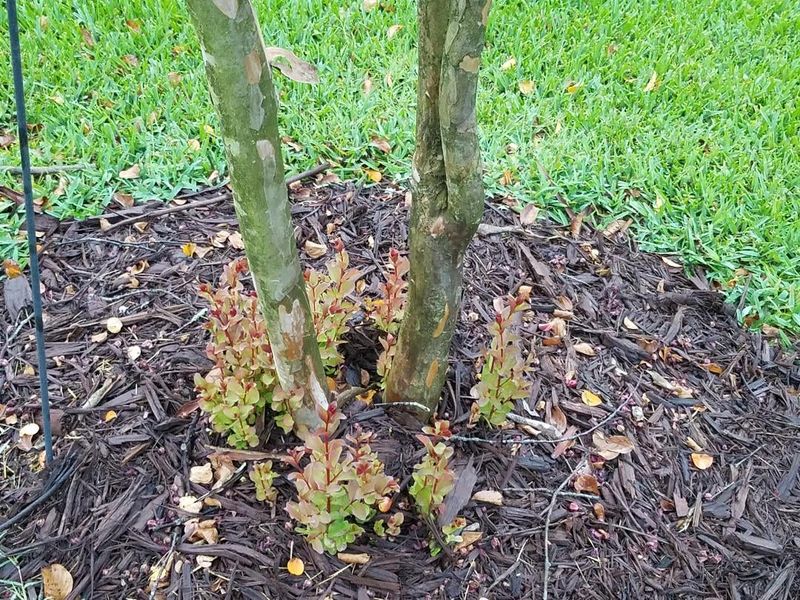
Check the base of almost any neglected crape myrtle and you’ll find a tangle of thin, fast-growing shoots sprouting from the roots or lower trunk.
Those are suckers, and ignoring them is a slow-building problem that makes the tree harder to manage every single season.
Suckers pull energy away from the main trunk and canopy. Left unchecked, they create a cluttered, multi-stemmed thicket that looks messy and competes with the primary structure of the tree.
Over time, the original tree form can become completely obscured.
Removing suckers is straightforward. Pull them off by hand when they’re young and small, or cut them flush with the trunk or soil line using clean pruning shears.
The key is doing it early, before they harden into woody stems that are harder to remove cleanly.
Check for sucker growth throughout the growing season, not just once a year. In warm climates, suckers can emerge rapidly and reach significant size in just a few weeks if left alone.
A quick monthly check keeps the situation manageable.
Never tear suckers off roughly or leave ragged stubs behind. Clean cuts reduce the chance of regrowth from the same spot and keep the bark intact.
Damaged bark creates entry points for pests and disease.
6. Watering Established Trees Too Frequently Causes Stress
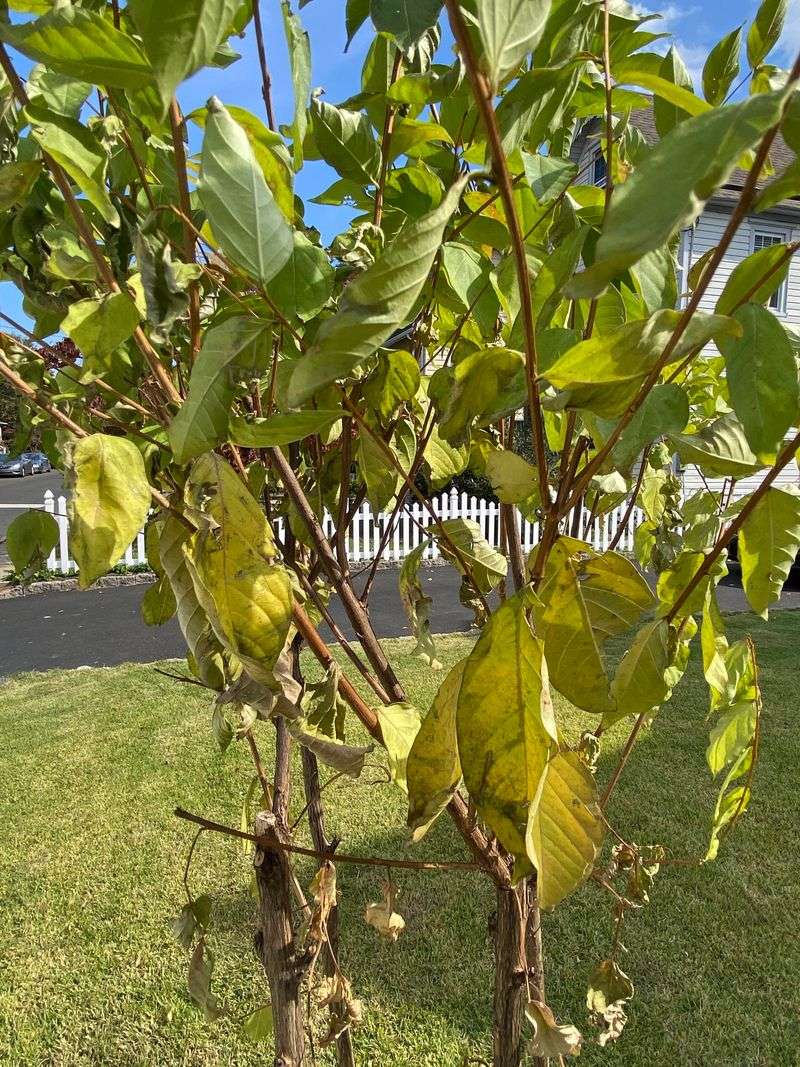
Overwatering is a surprisingly common problem with crape myrtles, especially in landscapes where irrigation systems run on fixed schedules regardless of rainfall. Established crape myrtles are genuinely drought-tolerant trees.
They don’t want or need constant moisture once their root systems are well developed.
Roots sitting in consistently wet soil struggle to get the oxygen they need. That leads to root stress, yellowing foliage, reduced blooming, and susceptibility to fungal root diseases.
Ironically, a tree that looks like it needs water might actually be suffering from too much of it.
During the first year after planting, regular watering is important to help roots establish. Water deeply once or twice a week during dry periods, allowing the soil to partially dry out between sessions.
Deep, infrequent watering encourages roots to grow downward rather than staying shallow.
Once a crape myrtle is established, which typically takes one to two full growing seasons, it can handle extended dry periods with minimal supplemental watering. In most years across the Southeast, natural rainfall is sufficient for mature trees.
If your irrigation system covers crape myrtles, consider putting those zones on a separate schedule or turning them off entirely during wet stretches. Adjust based on actual conditions rather than running a fixed routine year-round.
7. Choosing The Wrong Variety For The Space Creates Ongoing Issues

Walk through any older neighborhood in the South and you’ll spot it immediately: a giant crape myrtle crammed under a window, pressed against a roofline, or blocking an entire front walkway. Wrong variety, wrong spot.
It’s one of the most preventable problems in crape myrtle care.
Nurseries sell crape myrtles in sizes ranging from compact two-foot shrubs to towering 30-foot trees. Without checking the mature size before buying, it’s easy to plant a large-growing variety in a space that can only support a small one.
Variety selection should start with the space, not the flower color. Measure the available height and width before visiting the nursery.
Know whether you need a shrub form, a small multi-trunk tree, or a large specimen tree. Then choose accordingly.
Popular compact varieties like Pocomoke and Chickasaw stay under four feet and work well in tight spaces or as border plants. Mid-sized varieties like Acoma or Hopi top out around 10 feet and suit most residential settings.
Natchez and Muskogee are beautiful but can reach 20 feet or taller, so they need room to grow freely.