Desert Privacy Hedges Arizona Landscapers Recommend Over Leyland Cypress
Some yards look complete at first glance, but over time the structure that once made them feel private starts to weaken. Plants that once formed a solid screen begin to thin out in certain spots, and familiar boundaries do not feel as consistent as they used to.
The change is usually gradual, which is why it often goes unnoticed until it becomes more obvious.
Fast-growing privacy trees are often chosen for quick results. Early on, they can create a strong sense of coverage and separation.
As time passes, however, some of these same plants begin to show limitations. Growth can become uneven, maintenance increases, and density is not always maintained the way homeowners expected.
In Arizona, landscapers are increasingly focusing on desert-adapted hedges that maintain structure through extreme heat.
These options offer more consistent coverage over time and are becoming a more reliable choice for long-term privacy planning in challenging conditions.
1. Texas Sage Handles Desert Conditions Naturally
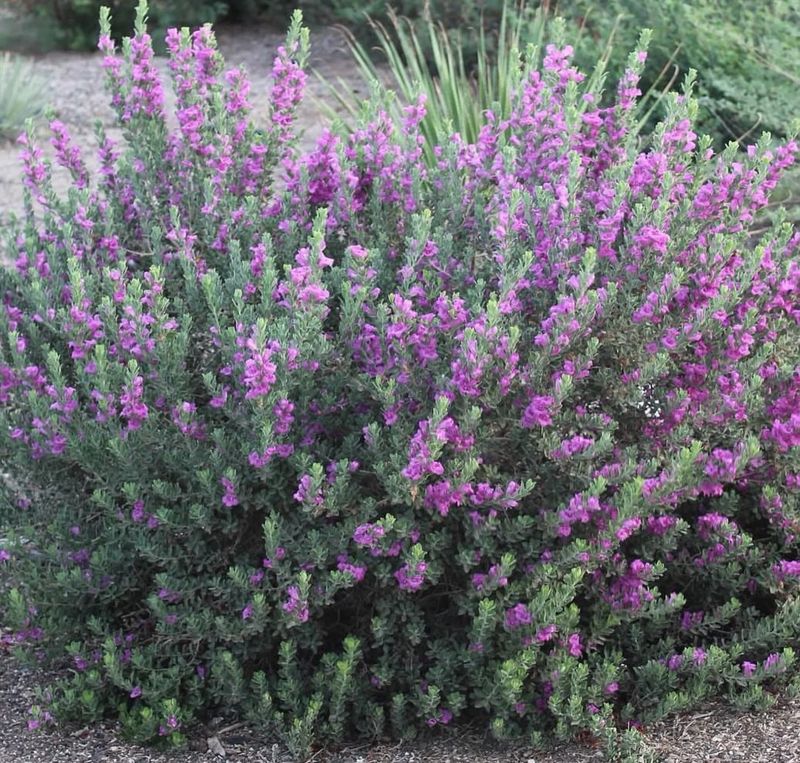
Few plants put on a show quite like Texas Sage right after a monsoon rolls through. Almost overnight, it erupts in purple blooms across its silvery foliage.
Landscapers love it because it basically tells you when rain is coming.
Known as the barometer bush, Texas Sage blooms in response to humidity spikes. No irrigation schedule required.
It reads the weather better than most apps.
Mature plants reach six to eight feet tall and nearly as wide. That spread makes it a solid screen along fence lines, property edges, or entryways.
Plant them three to four feet apart for a tight hedge.
Soil quality matters less here than with most shrubs. Caliche, sandy fill, rocky ground?
Texas Sage handles it without complaint. Avoid heavy clay or spots with poor drainage.
Watering needs drop dramatically once roots are established, usually within one full growing season. After that, supplemental water during the hottest stretch of summer is enough.
Overwatering is actually a bigger risk than drought stress.
Pruning keeps the shape tidy, but hard shearing removes the flower buds. Light selective trimming after bloom cycles works better.
Let it keep its natural rounded form for the most visual impact.
Deer tend to leave it alone, which is a real bonus in suburban desert neighborhoods. Birds visit the blooms regularly.
It earns its spot in almost any low-water landscape design.
2. Hopbush Creates Fast Privacy Screening
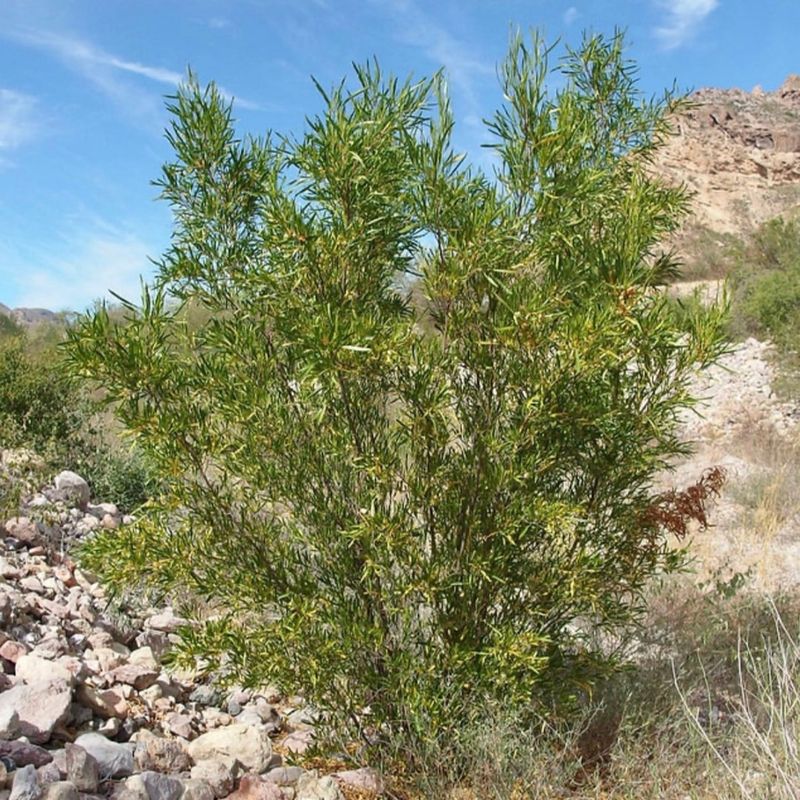
Speed matters when you want privacy fast. Hopbush delivers it without demanding much in return.
Under decent conditions, it can push three feet of new growth in a single season.
Native to warm desert regions, Hopbush handles full sun and reflected heat without flinching. It works especially well near block walls, south-facing fences, or anywhere heat radiates hard in summer.
That tolerance is rare among fast-growing shrubs.
Mature height typically lands between eight and fifteen feet depending on water and soil. Width can reach ten feet or more.
Spacing plants six feet apart usually produces a solid, dense screen within two to three years.
Foliage stays green year-round in frost-free zones. Light freezes may cause some leaf drop, but plants bounce back quickly once temperatures climb.
Your Arizona Garden Changes Every Week. Your Plan Should Too.
Gardening in Arizona changes quickly throughout the season. Every Friday you’ll receive a simple weekly plan showing exactly what to plant, prune, fertilize, harvest, and protect so you never miss the right timing.
Hard freezes below twenty degrees can cause significant damage.
Water needs are low after the first year. Deep, infrequent irrigation every two to three weeks during summer keeps growth steady.
Cutting back on water in fall helps harden the plant before cooler months arrive.
Hopbush produces papery seed pods that add visual texture and attract birds. The pods turn reddish-pink on female plants, which adds seasonal color without any extra effort.
Not every nursery stocks male and female plants separately, so ask before buying.
Pruning is optional but helps maintain a cleaner hedge shape. Trim lightly after the main growing season ends.
Heavy pruning slows the growth rate noticeably.
3. Arizona Rosewood Maintains A Dense Appearance
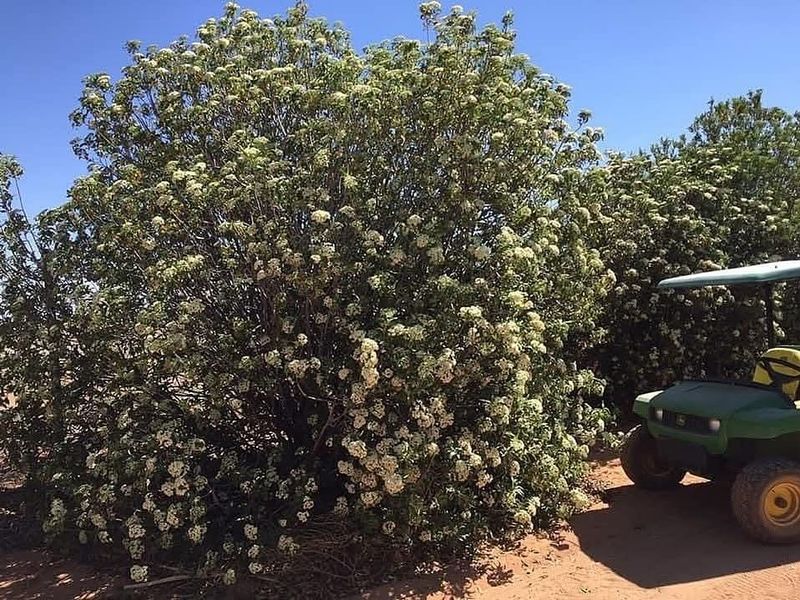
Arizona Rosewood is one of those plants that looks expensive without costing extra effort. Its dark, glossy leaves hold color all year and give any hedge line a polished, finished look.
Landscapers reach for it when clients want something refined without high maintenance.
Native to the Sonoran Desert, it evolved exactly for these conditions. Rocky slopes, thin soil, intense sun, and minimal rainfall are where it naturally grows.
Bring it into a maintained landscape and it tends to outperform expectations.
Height ranges from six to twelve feet at maturity. Width stays proportional, usually six to eight feet across.
That size makes it ideal for screening along walls, driveways, or side yards where a controlled, upright form is preferred.
Small white flowers appear in spring and occasionally again in fall. They are fragrant up close and attract pollinators without making a mess.
Seed pods follow but drop cleanly without creating a litter problem.
Water needs are genuinely low once established. Monthly deep watering through summer is usually sufficient.
Younger plants need more frequent irrigation during the first two summers to build a strong root system.
Growth rate is moderate, not as fast as Hopbush, but the trade-off is a denser, more uniform canopy. Branches fill in tightly without aggressive pruning.
That natural density is what makes it such a reliable privacy screen in desert settings.
Deer browsing is minimal, and pest pressure stays low under normal conditions.
4. Sugar Bush Adapts Well To Low-Water Landscapes
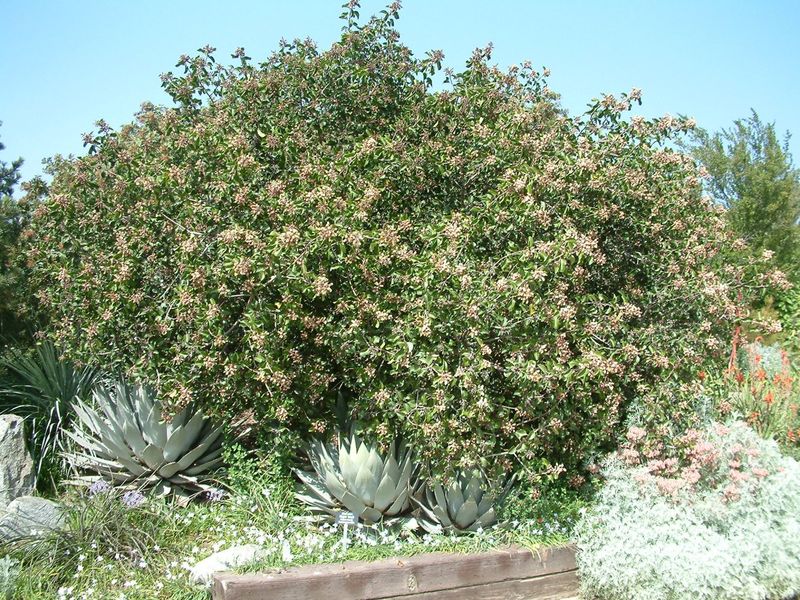
Surviving on almost no supplemental water sounds like a stretch, but Sugar Bush actually pulls it off. Once established, it can go weeks without irrigation and still hold its dense, leafy appearance.
That kind of resilience is hard to find in a hedge plant.
Sugar Bush belongs to the Rhus genus and grows naturally across dry chaparral and desert foothill regions. Its leathery leaves evolved to resist moisture loss.
Even on the hottest days, foliage stays firm and green rather than wilting or scorching.
Expect mature plants to reach six to ten feet tall with a similar spread. Growth is steady but not aggressive.
A row planted five feet apart fills in within three to four years into a solid, thick screen.
Spring brings small clusters of white to pink flowers. Sticky red berries follow, which birds eat enthusiastically.
Early California settlers used the berries to make a tart drink, which is where the common name comes from.
Soil adaptability is one of its strongest traits. Decomposed granite, sandy loam, rocky fill, and even some clay work reasonably well.
Avoid spots where water pools after rain, as root rot becomes a real concern in standing water.
Pruning is rarely needed for shape. Light trimming once a year keeps the hedge line tidy without disrupting the natural canopy.
Heavy shearing is not recommended and tends to cause sparse regrowth at the cuts.
Cold hardiness extends down to about fifteen degrees, covering most low-desert zones reliably.
5. Jojoba Forms A Durable Living Screen
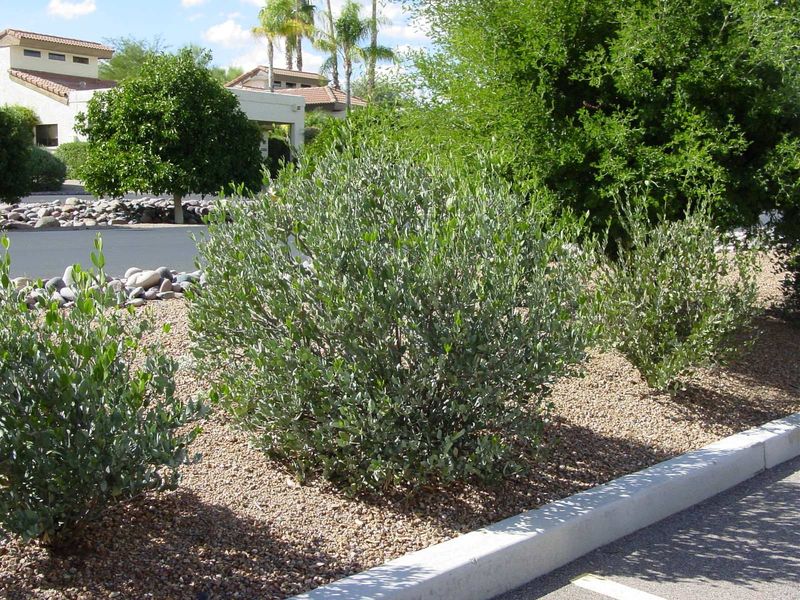
Jojoba has been growing in North American deserts for thousands of years, long before anyone thought to use it as a landscape plant. Wild stands still grow across the Sonoran and Mojave without any help at all.
That track record says everything about its toughness.
As a privacy hedge, Jojoba earns high marks for consistency. Leaves are thick, leathery, and blue-green, staying dense through summer heat and mild winter cold alike.
Wind does not thin it out the way it does with softer-leaved shrubs.
Mature height typically reaches six to ten feet, sometimes taller with supplemental irrigation. Width matches height fairly closely.
A row spaced four to five feet apart creates a tight, nearly impenetrable screen over time.
Water needs after establishment are minimal. Twice-monthly deep watering during summer is plenty.
Cutting irrigation back in fall and winter is actually beneficial, as it mimics natural rainfall patterns and keeps the plant healthy.
Male and female plants exist separately. Only female plants produce the waxy seeds, which are commercially harvested for oil.
For a hedge, a mix of both works fine. Either way, seed production does not affect the screening quality.
Root systems go deep, which helps anchor the plant in sandy or rocky soil. That deep rooting also means Jojoba competes well in dry years when shallow-rooted plants struggle.
Pest issues are rare under normal desert conditions.
Pruning is optional. Left alone, it forms a dense, slightly irregular mound that works well as a natural barrier.
6. Privet Senna Forms A Dense Desert Hedge
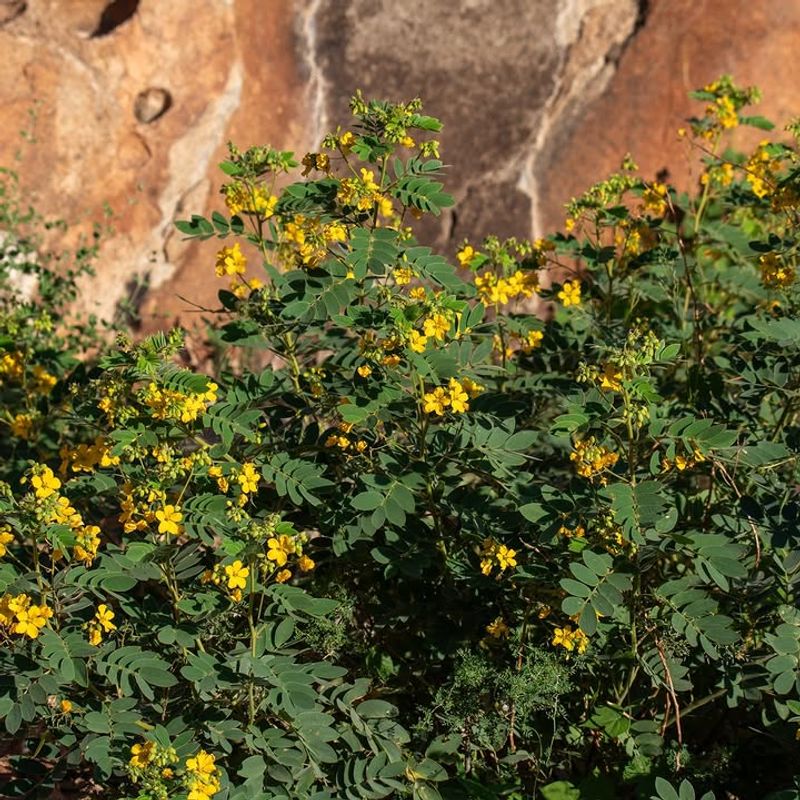
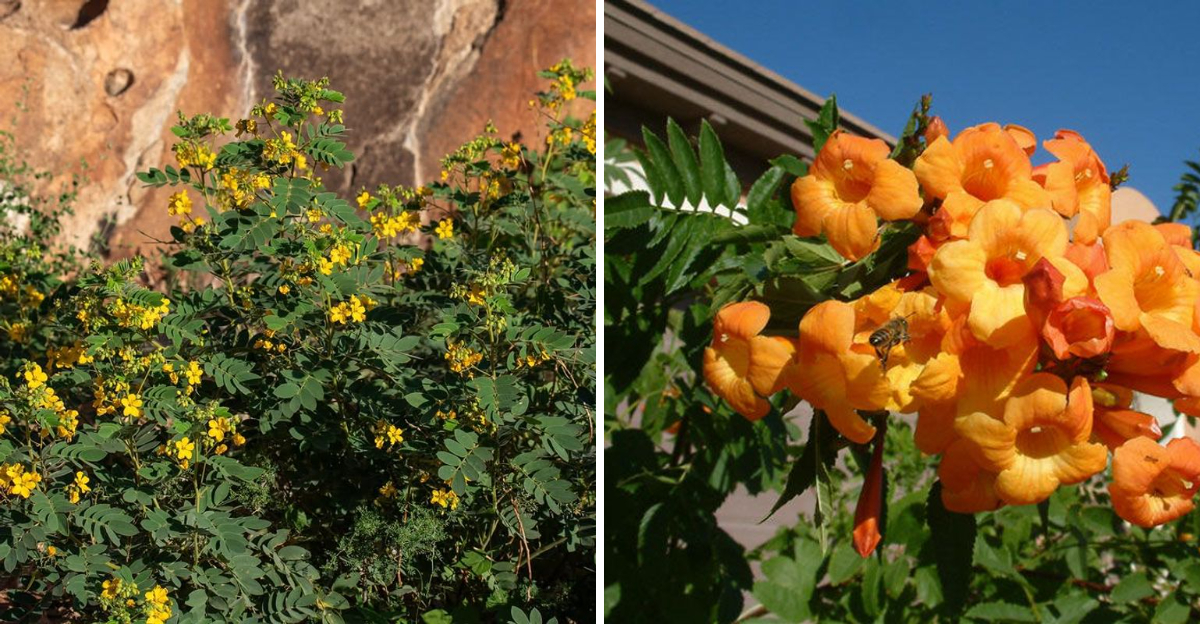
Bright yellow flowers on a privacy hedge? Privet Senna makes that happen every spring without missing a beat.
Most screening plants are all foliage and no flair. Senna breaks that rule in the best possible way.
Native to the Sonoran Desert, Privet Senna grows naturally along washes and rocky slopes where water drains fast and sun hits hard all day. Transplant it into a maintained yard and it responds well to even basic care.
Neglect it slightly and it still performs.
Height at maturity lands around five to eight feet. Spread can reach six feet or more.
Planted in a row with four-foot spacing, it closes into a continuous screen within two growing seasons under typical conditions.
Flowering peaks in late winter through spring. Clusters of golden-yellow blooms cover the plant heavily.
Pollinators show up in large numbers during bloom, which makes it a dual-purpose plant for anyone interested in supporting local wildlife.
Water needs are low once roots are established. Biweekly deep irrigation during summer maintains healthy growth.
Reducing water in fall signals the plant to slow growth and prepare for cooler temperatures.
Frost sensitivity is moderate. Light freezes cause tip damage but rarely harm the main structure.
Hard freezes can cut plants back significantly, though regrowth from the base is usually vigorous once warm weather returns.
Pruning after the bloom cycle keeps the hedge shape tidy. Avoid cutting before flowering, or the spring display gets removed before it starts.
Light shaping is all it really needs.
7. Littleleaf Cordia Builds A Thick Screen
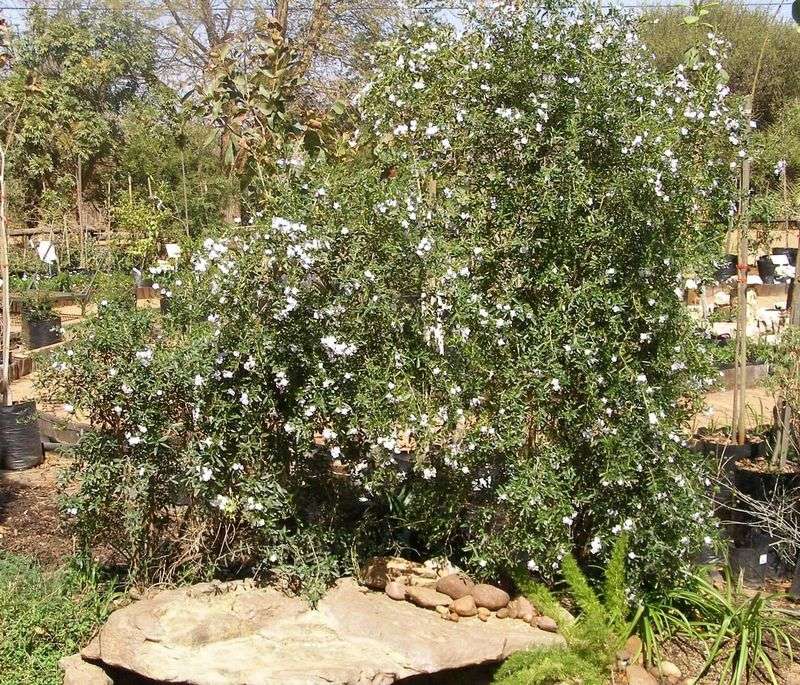
Rough, textured leaves on a plant that never seems to need anything extra. Littleleaf Cordia has that kind of no-fuss quality that experienced desert gardeners genuinely appreciate.
It looks good without asking for much attention.
Small, dark green leaves cover the branches densely, creating a solid visual barrier even without pruning. Clusters of small white flowers appear in spring and again after monsoon rains.
The blooms are modest but consistent, and pollinators visit them regularly.
Mature plants reach six to ten feet tall with a spread of four to eight feet. Growth rate is moderate.
Spacing plants four feet apart usually produces a connected hedge within two to three growing seasons.
Heat tolerance is exceptional. Reflected heat from walls, concrete, and pavers does not seem to bother it.
That makes Littleleaf Cordia a strong candidate for tight urban yards where heat radiates from multiple surfaces all day.
Established plants need very little supplemental water. Deep watering every two to three weeks during summer is adequate.
Overwatering causes more problems than drought stress in this species.
Cold hardiness extends to around twenty-two degrees, which covers most low-desert zones through typical winters. Unusual cold snaps may cause leaf drop, but recovery is fast once temperatures stabilize above freezing.
Pruning is straightforward. Light shaping after flowering keeps the hedge line clean.
Hard shearing is not necessary and tends to reduce flowering in the following season. A light hand produces better long-term results.
8. Orange Jubilee Creates A Tall Living Screen
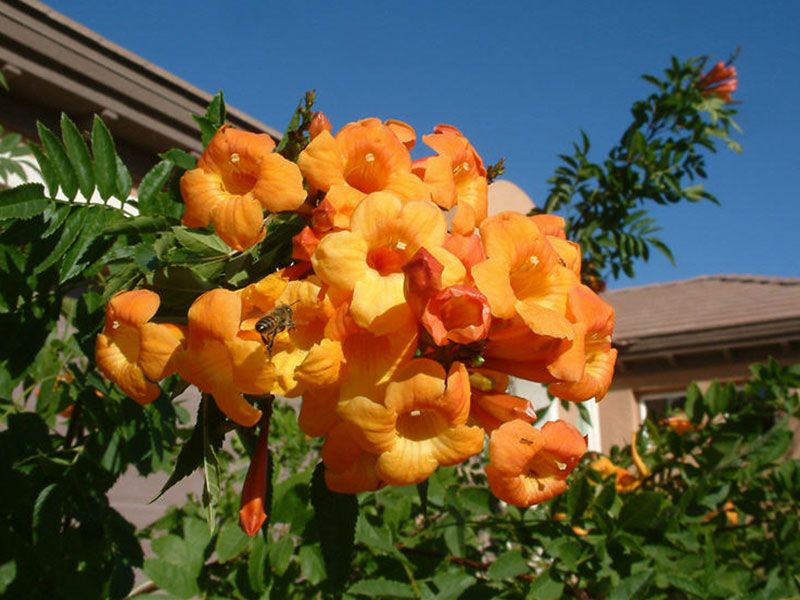
Nothing in a desert hedge lineup grabs attention quite like Orange Jubilee in full bloom. Clusters of bright orange trumpet flowers cover it from late spring through fall, sometimes nearly hiding the foliage underneath.
It is a privacy screen that doubles as a statement piece.
Orange Jubilee is a hybrid Tecoma, bred for both flower production and upright growth. Left unpruned, it pushes eight to twelve feet tall easily.
That height gives it a clear advantage over shorter shrubs when a tall screen is the goal.
Growth rate is fast compared to most desert hedge options. Under regular irrigation and full sun, plants can gain three to four feet per season during the warm months.
That speed fills gaps in a hedge line quickly.
Hummingbirds visit the flowers constantly throughout the blooming season. If attracting wildlife is part of the landscape plan, Orange Jubilee delivers that bonus without any extra planting.
Bees and butterflies show up regularly too.
Water needs are moderate compared to other plants on this list. Deep watering once or twice per week during summer keeps growth and flowering strong.
Cutting back to biweekly irrigation in fall reduces winter frost sensitivity slightly.
Frost is the main limitation. Hard freezes below twenty-five degrees can damage or cut back the top growth significantly.
Roots usually survive and resprout vigorously in spring. In colder desert zones above three thousand feet elevation, results vary more unpredictably.