These Are The Native Ohio Shrubs That Work Better Than Burning Bush For Fall Color (And Won’t Spread Into Your Neighbor’s Yard)
Burning bush delivers on fall color, nobody is disputing that. That electric red stops people in their tracks every October and has sold more shrubs than any other single quality a plant can offer.
But burning bush has a problem that the garden center display never mentions, and Ohio’s natural areas have been dealing with the consequences for years. It spreads.
Beyond your yard, beyond your fence line, into woodlands and natural areas where it has no business being and does real damage once it gets established.
Ohio’s native shrub palette has alternatives that bring genuine fall color without that ecological baggage.
Some go toe to toe with burning bush on the color front. A few surpass it.
All of them belong in this landscape in a way burning bush never did. Fall color should not come with a side effect your neighbors and the surrounding ecosystem end up paying for.
1. Replace Burning Bush With Black Chokeberry For Fiery Fall Color
A shrub can look perfect in a nursery pot and still become the wrong choice once birds carry its seeds past the fence. Black chokeberry, Aronia melanocarpa, does not carry that same risk the way burning bush does.
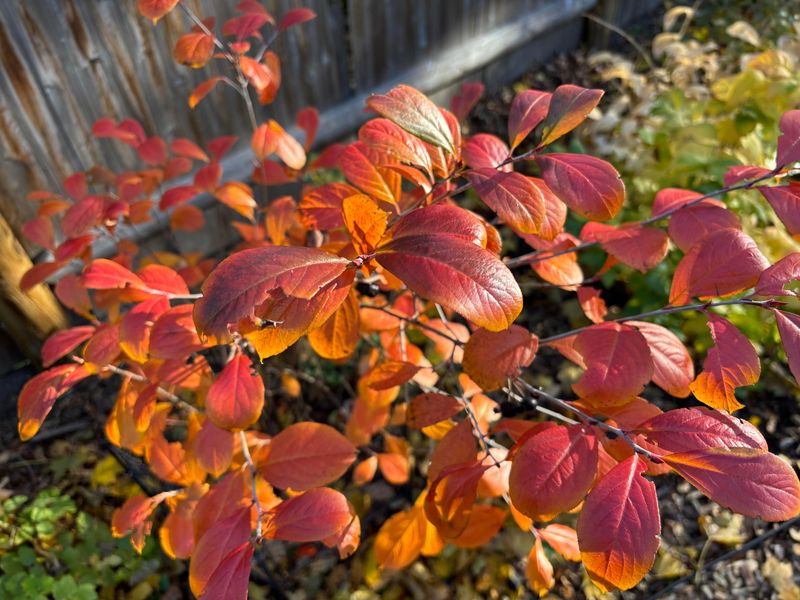
Its fall foliage shifts from glossy green to deep red and burgundy, rivaling anything in the non-native shrub section.
Spring brings clusters of small white flowers that pollinators visit reliably. By late summer, dark purple-black fruit appears and holds well into fall, giving birds a food source when they need it most.
The fruit is edible for people too, though it is quite tart on its own.
Mature plants typically reach four to six feet tall and wide in average to moist soil. Full sun brings out the best fall color, though it tolerates part shade.
Black chokeberry can spread by suckering, forming a loose colony over time. That behavior is worth knowing before you place it right against a walkway or foundation.
Where a natural shrub mass is welcome, this plant fills the role beautifully. It handles wet spots, rain garden edges, and naturalized borders without complaint.
OSU Extension lists it as a reliable native shrub for regional gardens. Its four-season presence makes it one of the most productive swaps you can make for burning bush.
2. Choose Red Chokeberry For Red Leaves And Bright Fruit
Not every shrub earns its keep in two seasons, but red chokeberry manages to show off in spring, summer, and fall without trying too hard. Aronia arbutifolia opens the year with white flower clusters that attract early pollinators.
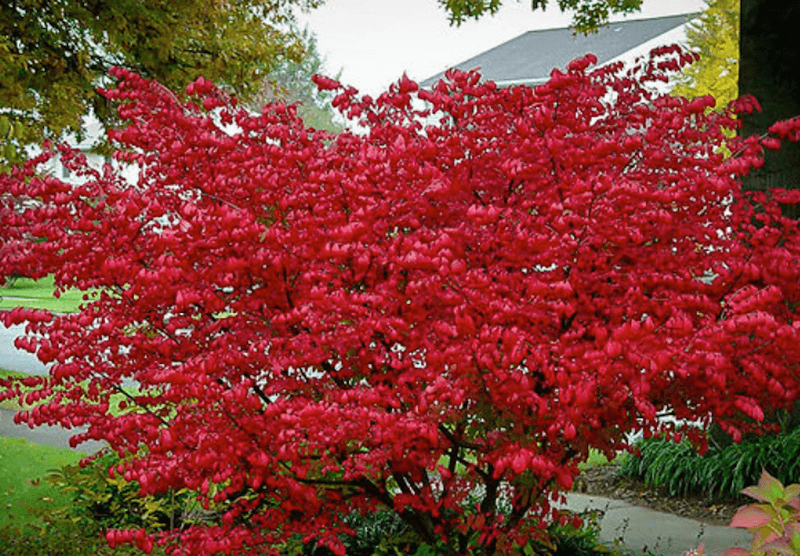
By October, the foliage turns a clean, saturated red that holds its color longer than many other native shrubs.
The bright red fruit clusters are part of what makes this plant stand out. They persist well into winter, giving birds a reliable food source during lean months.
The contrast between red berries and red leaves in early fall is genuinely striking in a home landscape.
Red chokeberry tends to grow taller than its black cousin, often reaching six to ten feet at maturity. It prefers moist, well-drained soil and does well along stream edges, wet borders, or rain garden margins.
Your Ohio Garden Changes Every Week. Your Plan Should Too.
Gardening in Ohio changes quickly throughout the season. Every Friday you’ll receive a simple weekly plan showing exactly what to plant, prune, fertilize, harvest, and protect so you never miss the right timing.
It can form thickets in favorable sites, spreading slowly by suckering. That spreading habit makes it a good fit for naturalized areas, not tight foundation beds.
Compared to burning bush, this shrub stays closer to where you planted it in most yard settings. It does not produce seeds that birds scatter widely into woodlands.
For gardeners wanting bold fall color with real wildlife value and a lower ecological footprint, red chokeberry is a practical and honest choice worth planting.
3. Plant Virginia Sweetspire For A Native Fall Color Show
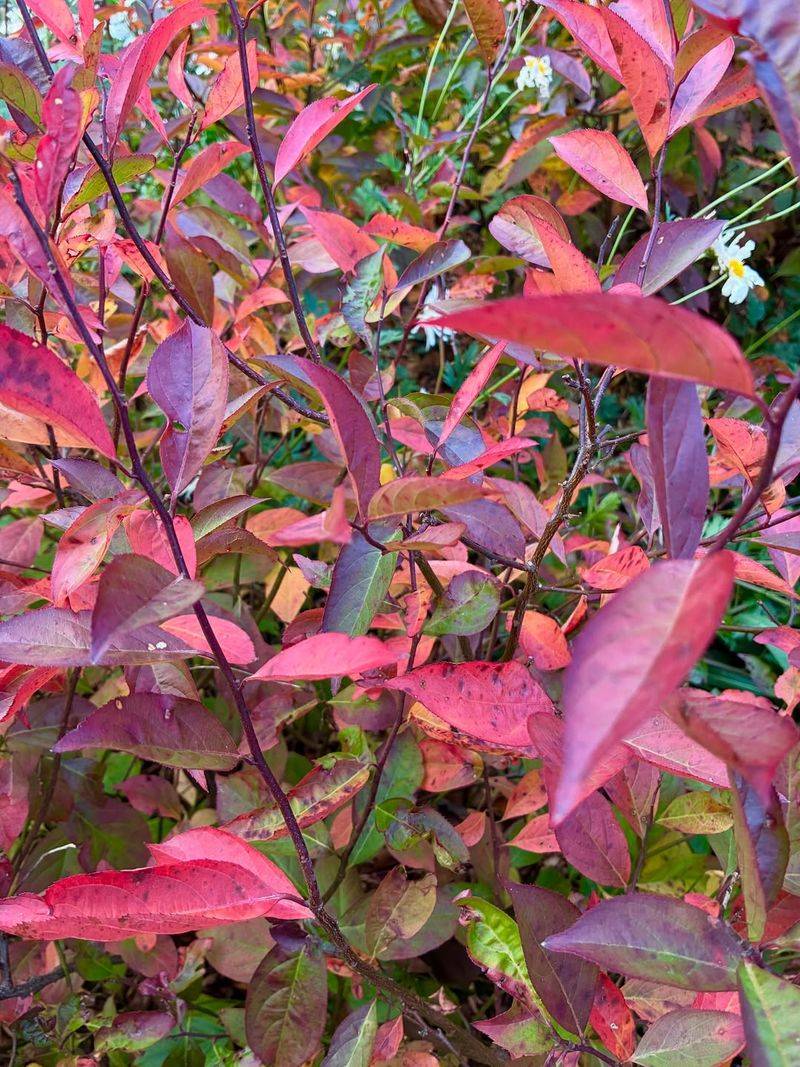
Some shrubs earn their reputation quietly, without flashy marketing or oversize nursery tags. Virginia sweetspire, Itea virginica, is exactly that kind of plant.
Its arching branches and fine-textured foliage look tidy through spring and summer, then shift to a warm mix of red, orange, and burgundy as temperatures drop in fall.
In late spring or early summer, long white flower racemes hang from the branch tips. They are fragrant up close and attract pollinators well.
The flowers are not as showy as some garden favorites, but they add real seasonal interest before the fall display takes over.
Virginia sweetspire handles moist to average soil and tolerates part shade, making it useful in spots where other shrubs struggle. It works along stream banks, in low areas, or under the filtered light of taller trees.
Mature size typically ranges from three to five feet tall and slightly wider, though it can spread by suckers over time.
That suckering habit is worth knowing. In a formal bed with clean edges, it may require occasional attention.
In a naturalized border or along a woodland edge, the spreading colony looks intentional and full. Unlike burning bush, it does not produce seeds that birds carry into wild areas.
OSU Ohioline and regional native plant sources consistently recommend it as a reliable, lower-risk native shrub for home landscapes across this state.
4. Use Arrowwood Viburnum Where Burning Bush Feels Too Risky
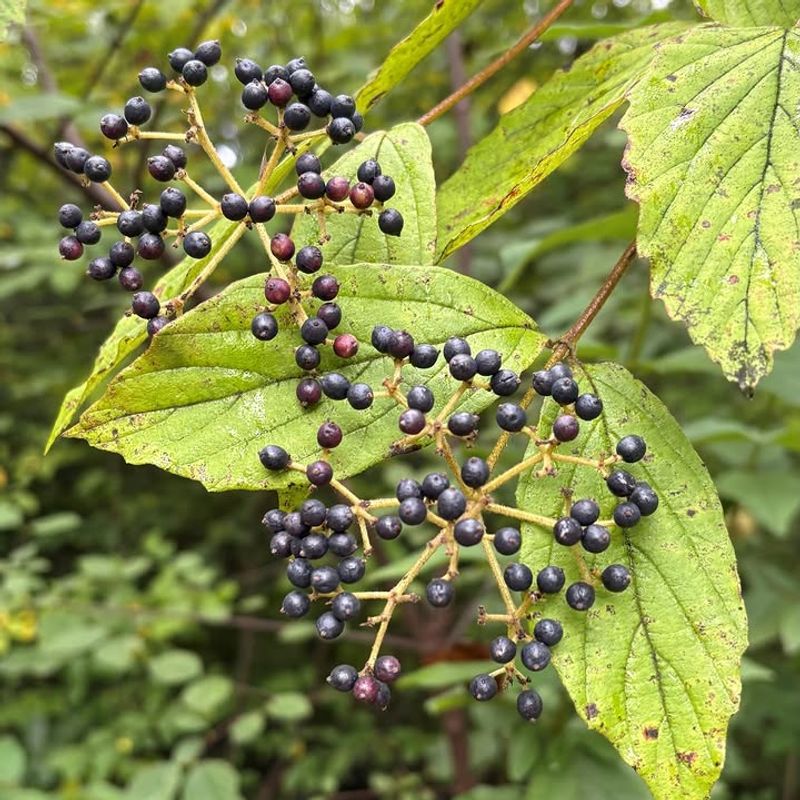
A lot of gardeners reach for burning bush because it fills a mid-sized shrub spot with color and confidence. Arrowwood viburnum, Viburnum dentatum, fills that same spot without the invasive risk and adds more seasonal variety across the year.
Spring brings flat-topped clusters of small white flowers. Summer foliage is dark, glossy, and dense enough to provide real screening.
Fall color ranges from dull red to reddish-purple depending on the site, light exposure, and individual plant variation. It is not always the blazing red of burning bush, but it is consistent and attractive in a mixed border.
Blue-black fruit clusters often appear in late summer and draw birds through fall.
Fruiting can improve when compatible cultivars are planted nearby for cross-pollination. A single plant may produce some fruit, but a pair or small grouping usually performs better.
That is a practical detail worth knowing before you plant just one along a fence line.
Mature size varies by cultivar but typically runs six to ten feet tall and wide. That is larger than many gardeners expect, so spacing matters.
Do not tuck it into a tight corner expecting a compact mound. Given room to grow, arrowwood viburnum is a sturdy, multi-season native shrub that supports local wildlife.
It holds its place in the landscape without spreading aggressively beyond where you planted it.
5. Grow Fragrant Sumac For Low Spreading Autumn Color
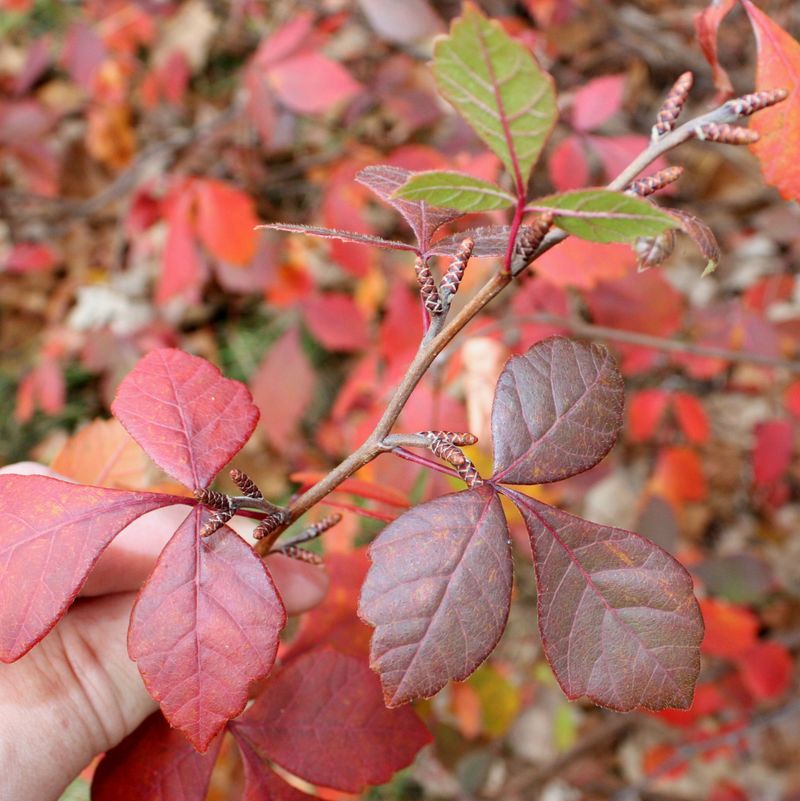
Slopes, dry banks, and sunny edges are some of the hardest spots to plant well. Fragrant sumac, Rhus aromatica, was practically made for them.
This low, spreading native shrub handles dry, poor soil where other plants struggle. It rewards that tough placement with some of the most vivid orange and red fall color you will find in a native palette.
The leaves are small, glossy, and aromatic when crushed. Small yellow flowers open in early spring before the leaves fully emerge, giving early pollinators something to work with.
Small red fruit follows and attracts birds through late summer. The whole plant smells faintly of citrus when the foliage is brushed, which is a pleasant surprise in a dry border.
Mature height typically runs two to six feet depending on the cultivar, with a spread that can reach eight feet or more over time. The cultivar Gro-Low is a popular selection that stays closer to two feet tall and spreads wider.
That makes it useful for erosion control on banks or as a groundcover on sunny slopes.
Fragrant sumac does spread by suckering, and it will form a colony if conditions suit it. That is part of its value on a steep bank or naturalized edge.
For a formal foundation planting where sharp edges are expected, a different shrub may serve you better. Used in the right spot, though, this plant handles fall color and slope stabilization at the same time.
6. Add Oakleaf Hydrangea For Burgundy Leaves And Bold Texture
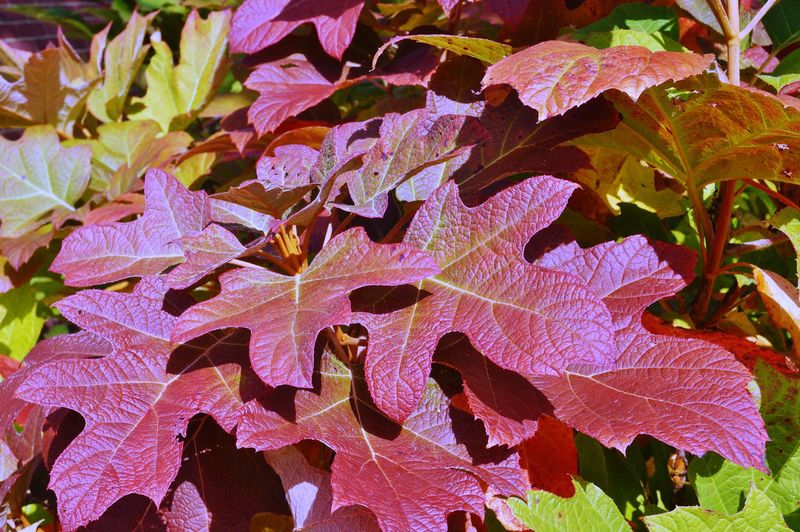
Most Ohio hydrangeas are grown for their flowers and then quietly ignored once the blooms fade. Oakleaf hydrangea, Hydrangea quercifolia, refuses to be ignored.
Its deeply lobed leaves are large, bold, and interesting from the moment they unfurl in spring. By fall, they shift to burgundy, red-purple, and bronze tones that hold longer than most shrubs in the yard.
The flower panicles are showy and large, opening white in early summer and fading to parchment as they dry. Those dried flower heads persist into winter and add structure to a bare-looking border.
Peeling, cinnamon-colored bark on older stems adds another layer of winter interest that most shrubs simply do not offer.
Oakleaf hydrangea is native to the southeastern United States, not specifically to this state. However, it grows well across most of our region and is widely recommended by extension horticulturists for home landscapes here.
It performs best in part shade with well-drained, organic-rich soil. Full sun is possible with consistent moisture, but dry sites in full sun tend to stress the plant in summer heat.
Mature size typically reaches six to eight feet tall and wide, sometimes larger in ideal conditions. Give it room.
It can sucker slowly at the base over time, but it is not considered aggressive. For gardeners wanting bold leaf texture, multi-season interest, and fall color beyond ordinary red, this shrub delivers.
It does so without the ecological baggage of burning bush.
7. Choose Spicebush For Golden Fall Color In Part Shade
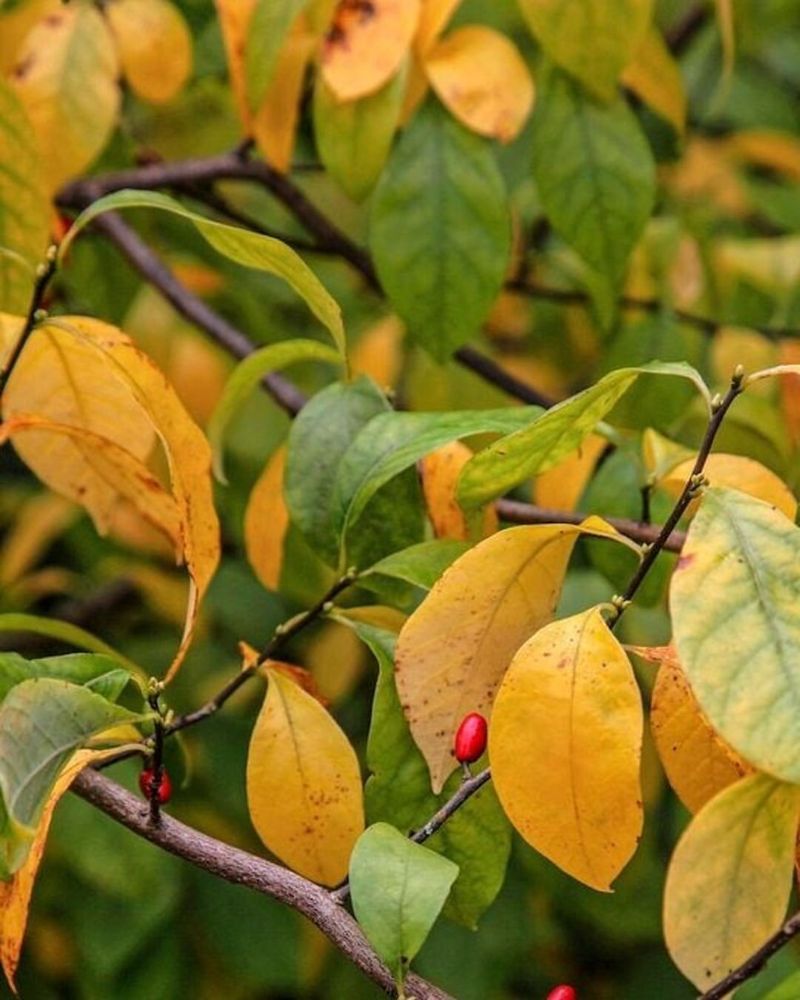
Finding a shrub that performs well under tree canopy is harder than most gardening books admit. Spicebush, Lindera benzoin, is one of the few natives that genuinely earns its spot in part shade.
Its fall color is a clear, warm yellow that lights up a woodland edge or shaded border when most other plants have already gone dull and brown.
Early spring is when spicebush first catches your attention. Tiny yellow flowers open along bare stems before the leaves emerge, creating a soft golden haze in late winter or early March.
It is one of the earliest native shrubs to bloom in regional gardens. That makes it valuable for early pollinators, including spicebush swallowtail butterfly larvae that feed on the foliage.
Female plants produce small red fruit in late summer and early fall. Those berries are an important food source for migrating birds, including wood thrushes and veeries.
To get fruit, you typically need both a male and a female plant nearby. A single plant will still offer good foliage and spring flowers, but the berry display requires that pairing.
Mature size runs six to twelve feet tall in suitable conditions, with a loose, multi-stemmed habit. Spicebush prefers moist, well-drained soil with organic matter.
It does not spread aggressively and generally stays where you put it. For Ohio shaded spots where burning bush would never thrive anyway, spicebush fills the fall color gap with genuine native character.
8. Plant Ninebark For Native Structure Beyond Fall Color
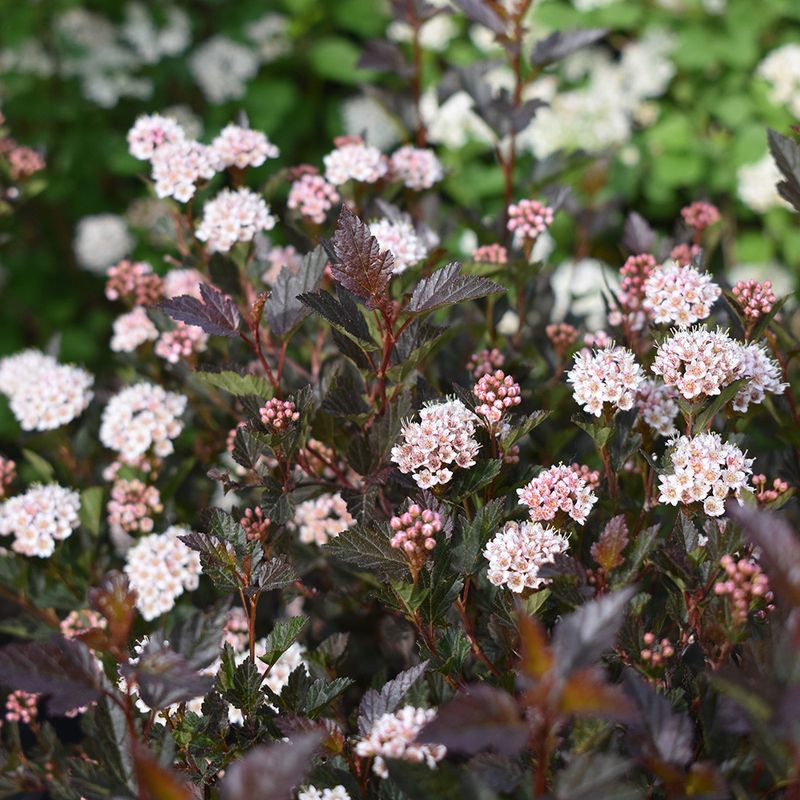
Fall color is only one reason to plant a shrub, and ninebark, Physocarpus opulifolius, makes that point clearly. The peeling, layered bark on mature stems is a genuine four-season feature that keeps the plant interesting long after October ends.
In winter, those cinnamon and tan strips catch the low light in a way that few other native shrubs can match.
Spring brings clusters of small white or pale pink flowers that pollinators visit consistently. Summer foliage varies by cultivar, ranging from green to deep burgundy-purple depending on the selection.
Fall color is typically orange-red to reddish-brown, not as electric as burning bush, but honest and warm in a mixed border.
Ninebark is a tough, adaptable native shrub that handles a wide range of soil types, including clay. It tolerates wet periods better than many shrubs and recovers from hard pruning if it gets overgrown.
Mature size varies significantly by cultivar. Standard species plants can reach eight to ten feet tall and wide.
Compact selections like Tiny Wine or Little Devil stay much smaller, so reading the tag before you buy matters here.
Unlike burning bush, ninebark does not produce seeds that spread readily into natural areas. Its value in the landscape goes well beyond a single fall moment.
For gardeners who want a structurally interesting, wildlife-supporting native shrub, ninebark earns its space year-round. It is one of the most versatile options available in regional nurseries right now.