How To Keep Basil Alive Through A Florida Summer Without Watching It Bolt
Basil and Florida summers have a tense relationship. The heat that makes Florida feel tropical is exactly what pushes basil toward bolt.
Once that happens, the flavor drops, the plant shifts energy away from leaves, and the lush herb you were counting on becomes something you are constantly cutting back. Most gardeners lose this battle because they are fighting it too late.
By the time basil is visibly bolting, the window for easy intervention has already closed. Keeping basil productive through a Florida summer is possible.
It requires a different approach than what works in cooler climates, and a few adjustments that run counter to standard herb garden advice. The goal is not just survival.
A basil plant that makes it through July and August in our state, still leafy and flavorful, is genuinely achievable with the right setup from the start.
1. Pick Heat-Tolerant Basil Before Summer Starts
Standing in a Florida garden center in late spring, you might grab the first sweet basil you see without thinking twice. That choice matters more than most gardeners realize once July arrives.
Sweet basil (Ocimum basilicum) is the classic kitchen favorite, but it bolts quickly under long, hot days and can struggle with humidity-related disease in this state.
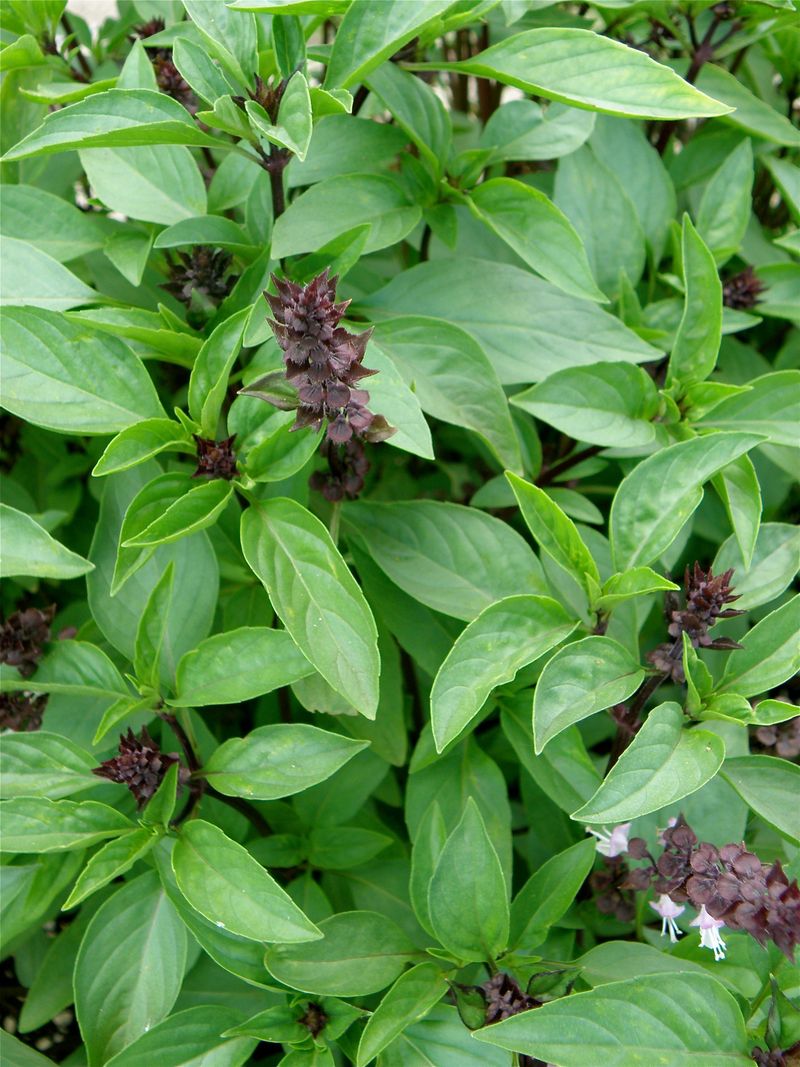
Thai basil handles heat better than many sweet basil types and produces smaller, anise-flavored leaves on sturdy stems. African blue basil is a hybrid that grows vigorously in warm weather and blooms heavily.
That means it attracts pollinators but requires consistent pinching if leaf harvest is your priority. Holy basil, also called tulsi, tolerates heat and humidity well and has a spicier, clove-like flavor that works in Southeast Asian cooking.
Lemon basil offers citrusy flavor and reasonable heat tolerance, though it still bolts in peak summer. No basil type is bolt-proof or guaranteed to perform flawlessly all season.
Flavor, leaf size, culinary use, and availability differ by variety. Picking a mix of types gives you more flexibility and a better chance of having something harvestable even when one variety slows down.
2. Give Basil Morning Sun And Afternoon Relief
A July patio in this state can feel like standing next to an open oven, and a basil pot sitting in full western sun all afternoon feels every bit of that heat. Basil needs bright light to grow well.
However, harsh afternoon sun in peak summer can scorch leaves, dry containers rapidly, and push plants toward stress-triggered bolting faster than normal. Morning sun is the sweet spot.
A spot that gets direct light from sunrise until around noon gives basil the energy it needs without the brutal intensity of mid-afternoon rays. East-facing patios, balconies, and covered porches with morning exposure work well.
West-facing walls and pool decks reflect extra heat onto nearby pots, so watch plants in those spots carefully.
Filtered afternoon shade from a shade cloth, a tree canopy, or a pergola can help without putting basil in deep shade. Deep shade weakens stems, reduces leaf production, and makes plants leggy.
Your Florida Garden Changes Every Week. Your Plan Should Too.
Gardening in Florida changes quickly throughout the season. Every Friday you’ll receive a simple weekly plan showing exactly what to plant, prune, fertilize, harvest, and protect so you never miss the right timing.
The goal is relief from peak-hour intensity, not darkness. Moving containers a few feet can make a real difference.
Check where your hardest sun hits between noon and four in the afternoon, then adjust pot placement before the plant shows stress signs like wilting or leaf curl.
3. Keep Soil Moist Without Drowning The Roots
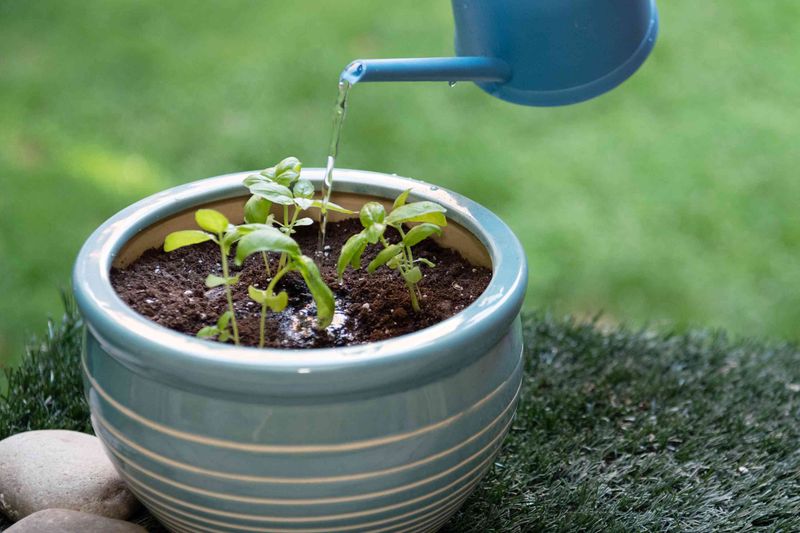
Basil wants steady moisture, not a swamp. Roots sitting in soggy soil lose access to oxygen, and that leads to root rot faster than dry soil would.
This state’s rainy season complicates things because a heavy afternoon storm can drench a container that was already moist. If drainage is poor, roots may stay waterlogged for hours.
Always use pots with drainage holes and never let saucers hold standing water for long. Container mix dries out faster than garden beds, but it also drains better than heavy clay.
Sandy soil in raised beds or in-ground plantings drains quickly, so basil there may need more frequent watering during dry spells between storms. Check moisture by pressing a finger an inch below the surface rather than watering on a fixed calendar schedule.
Water deeply when the soil feels dry at that depth, then let excess drain fully. Shallow, frequent watering encourages shallow roots that stress faster in heat.
During the rainy season, check containers after heavy storms and empty saucers if water pools. Wilting in the morning often signals dry roots, but wilting only in afternoon heat can be temporary and may not require extra water.
Learn to read your specific pots and beds rather than following a rigid routine.
4. Harvest Often Before Flower Stems Take Over
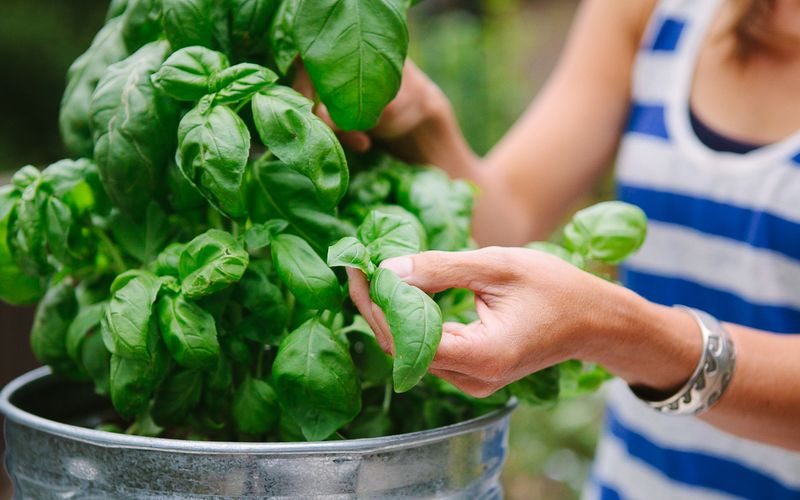
Clipping just a few leaves here and there feels like you are being careful, but it actually does less for the plant than a proper harvest. Basil responds to regular, generous cutting by pushing out more branching stems and more leaves.
That bushy growth delays the plant’s natural push toward flowering because the plant stays focused on vegetative production.
Cut stems back to just above a leaf node, which is the point where two leaves meet the stem. Removing the top third of each stem encourages two new shoots to grow from that node.
Harvesting full stems rather than plucking individual leaves gives you more usable basil and keeps the plant compact. Try to harvest every one to two weeks during active growth periods in early summer before heat stress peaks.
Basil quality can decline as heat intensifies, so using leaves before the plant reaches peak stress makes sense. Flavor can become stronger or slightly bitter once flower spikes appear.
Regular harvesting slows the shift toward bolting, but it does not stop the plant’s natural life cycle. A mature basil plant will eventually flower regardless of how often you harvest.
Knowing that helps you harvest confidently instead of treating every clip like a risky decision.
5. Pinch Buds Early To Slow The Bolt
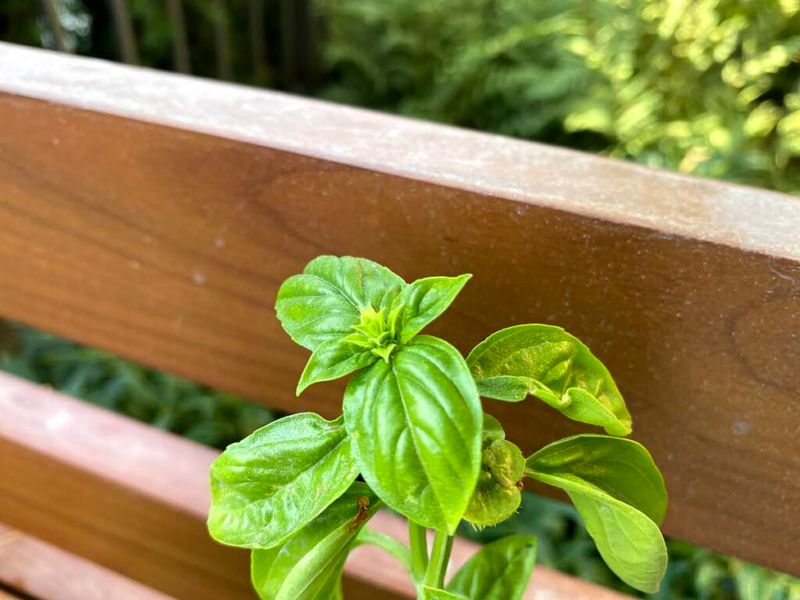
Spotting those first tiny flower buds at the top of your basil stems is a signal worth acting on quickly. Once basil shifts energy toward blooming and seed production, leaf quality and yield drop noticeably.
Pinching buds early redirects that energy back into leaf growth and buys you more harvestable weeks before the plant fully commits to flowering.
Check plants every few days during hot weather because buds can appear and develop fast when temperatures stay high. Use your fingers or small scissors to remove the entire flower spike, cutting or pinching just below the bud cluster and above a strong set of leaves.
The tender growth just below the flower spike is often the most flavorful part of the stem, so harvest it along with the bud removal rather than discarding it.
Once a plant flowers heavily and most stems carry open blooms, flavor in the remaining leaves often declines. The plant may also become less productive no matter how often you pinch.
At that point, starting a replacement plant is usually a more practical path than trying to revive a heavily bolted one. Pinching works best as a regular habit in the early and middle parts of summer, not as a last-minute rescue after full flowering begins.
6. Use Mulch To Keep Basil Roots Cooler
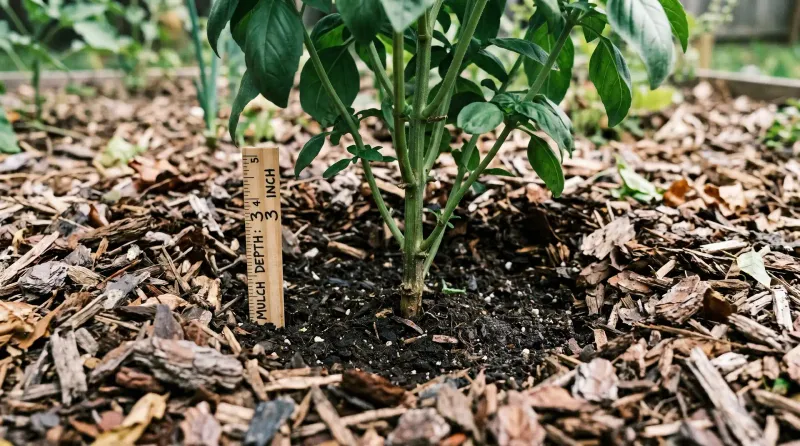
Bare soil in a summer herb bed absorbs heat quickly and loses moisture just as fast. A light layer of mulch around basil plants can help moderate soil temperature and slow moisture loss between waterings.
It can also reduce the splash of soil onto lower leaves during heavy rains. Soil splash during storms can carry fungal spores that cause leaf spot and other diseases common in humid summers.
Apply mulch two to three inches deep but keep it pulled back from the basil stems. Mulch piled against stems traps moisture against the plant and can encourage rot at the base, especially in the humid conditions common here.
Straw, pine bark, or shredded leaves work reasonably well around basil in beds. For large containers, a thin layer of mulch on top of the potting mix can help, but make sure it does not block drainage or trap excess moisture.
Mulch is a useful part of summer basil care, not a cure for bolting. If the plant is already stressed by heat, age, or long days, mulch alone will not stop it from flowering.
Think of mulch as one layer of protection that works alongside smart watering, good placement, and regular harvesting. Combined with those other habits, it helps the root zone stay more stable through the season’s most intense weeks.
7. Grow Backup Pots Before July Stress Hits
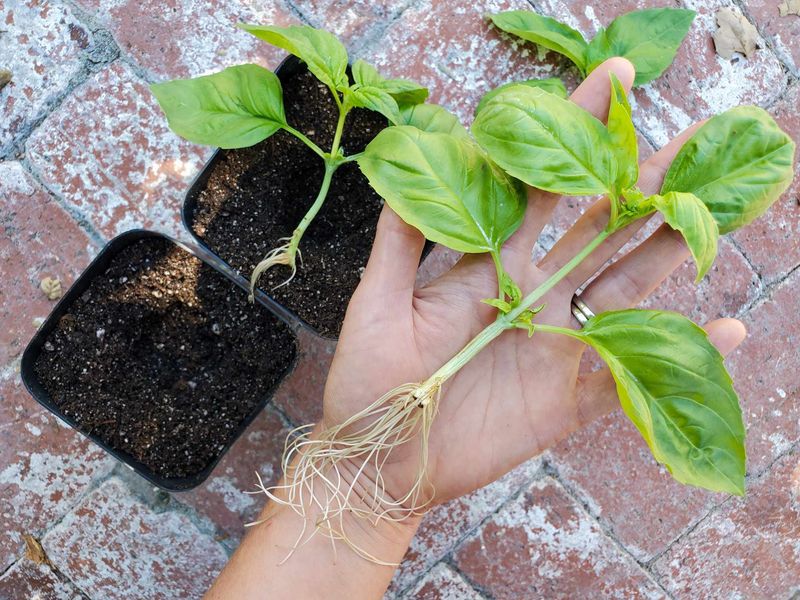
Waiting until your main basil plant collapses in July before thinking about a replacement puts you behind by several weeks. Starting backup pots in late spring or early summer means you have young, vigorous plants ready to step in when older ones slow down or bolt.
Young basil handles summer stress better than mature plants that have already gone through weeks of heat and heavy harvesting.
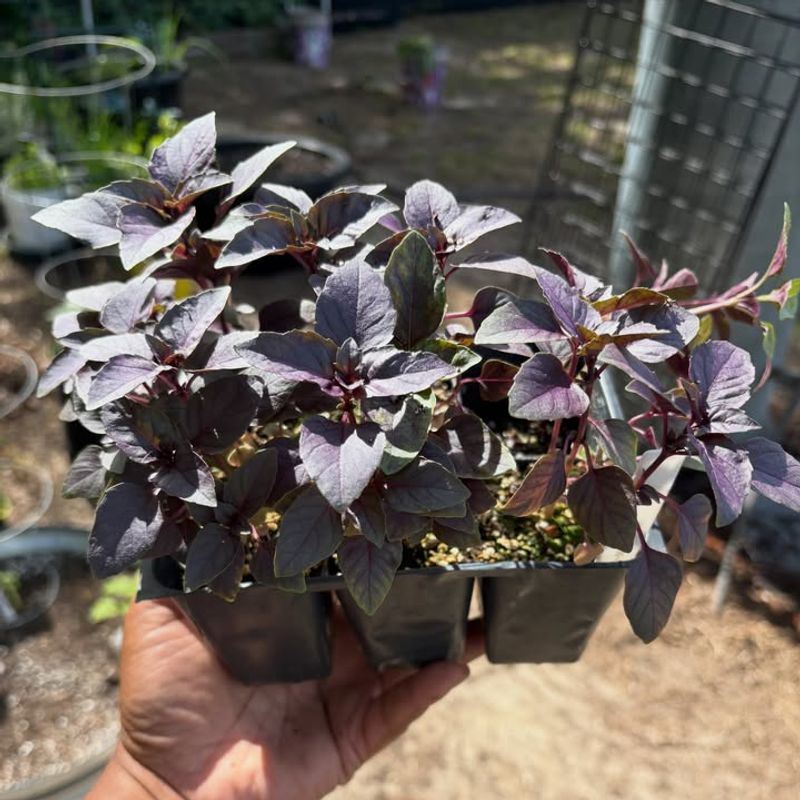
Basil grows easily from seed in small pots or trays. It can also be rooted from cuttings by placing fresh stem tips in a glass of water until roots develop, then transplanting to a container with well-draining potting mix.
Keep backup plants in bright morning sun and protect them from harsh afternoon heat while they establish. Avoid overcrowding multiple seedlings in a single small pot, since poor air circulation encourages fungal problems in humid summer air.
Staggering plantings every three to four weeks through spring and early summer gives you a rolling supply of fresh plants. Replacing an exhausted basil plant is not a failure.
It is just good planning. Some Florida gardeners keep a small seedling tray going all season so there is always something at a productive stage.
That habit alone can keep fresh basil on the table from spring through early fall without a single gap.
8. Switch To Better Summer Basil Types When Needed
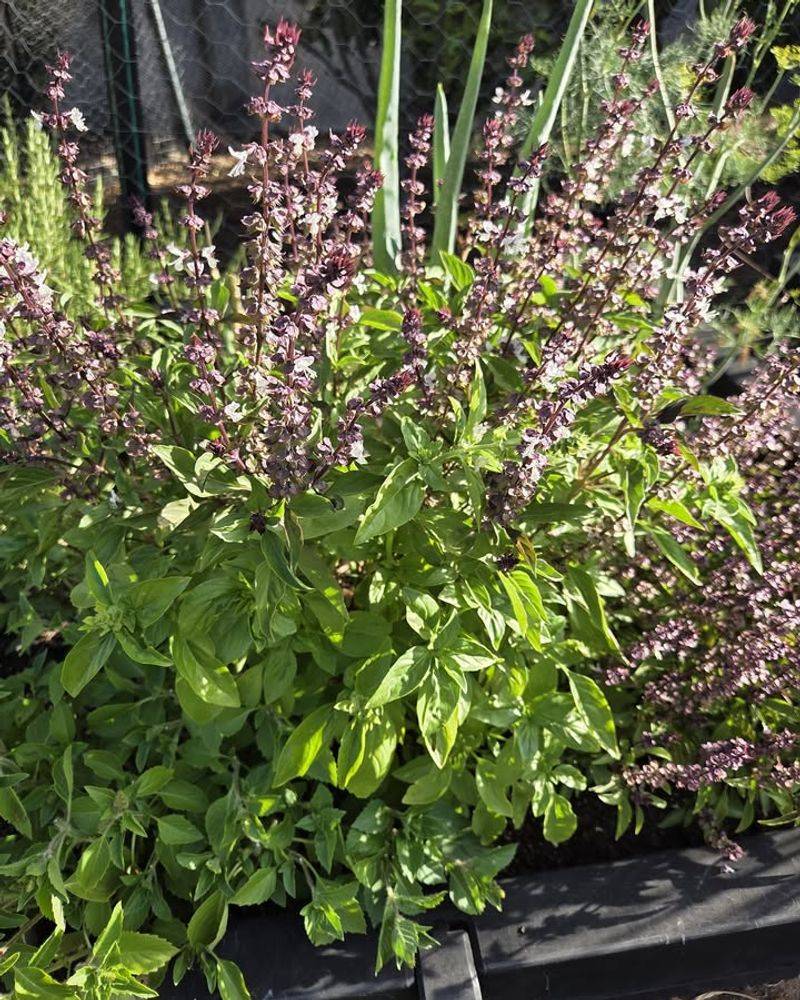
Sometimes sweet basil just does not cooperate with a particular summer, and that is worth accepting honestly. If your sweet basil bolts within weeks of planting, develops fungal spots repeatedly, or turns bitter and unpleasant to eat, it may be time to shift strategy.
Replanting the same type in the same conditions will likely keep producing the same problem.
Thai basil (Ocimum basilicum var. thyrsiflora) handles heat and humidity with more resilience than many sweet basil types. Its anise-forward flavor works well in stir-fries, noodle dishes, and Southeast Asian recipes, though it is not a direct swap for classic Italian pesto.
African blue basil is a vigorous warm-weather grower that blooms freely, making it more useful as a pollinator plant or garnish than a heavy culinary producer.
Holy basil has a spicy, peppery bite that suits Thai cooking and medicinal herbal use, but its flavor is distinct from sweet basil.
Lemon basil offers a citrusy alternative and holds up reasonably well through early summer. None of these types are identical to sweet basil in flavor or culinary use, so being clear about that before switching helps avoid disappointment.
Choosing a type that genuinely thrives in your Florida garden conditions through the hottest months is smarter. It beats forcing a struggling plant to perform in weather it was never built for.