How To Keep Bougainvillea Blooming Through The Hottest Months In Arizona
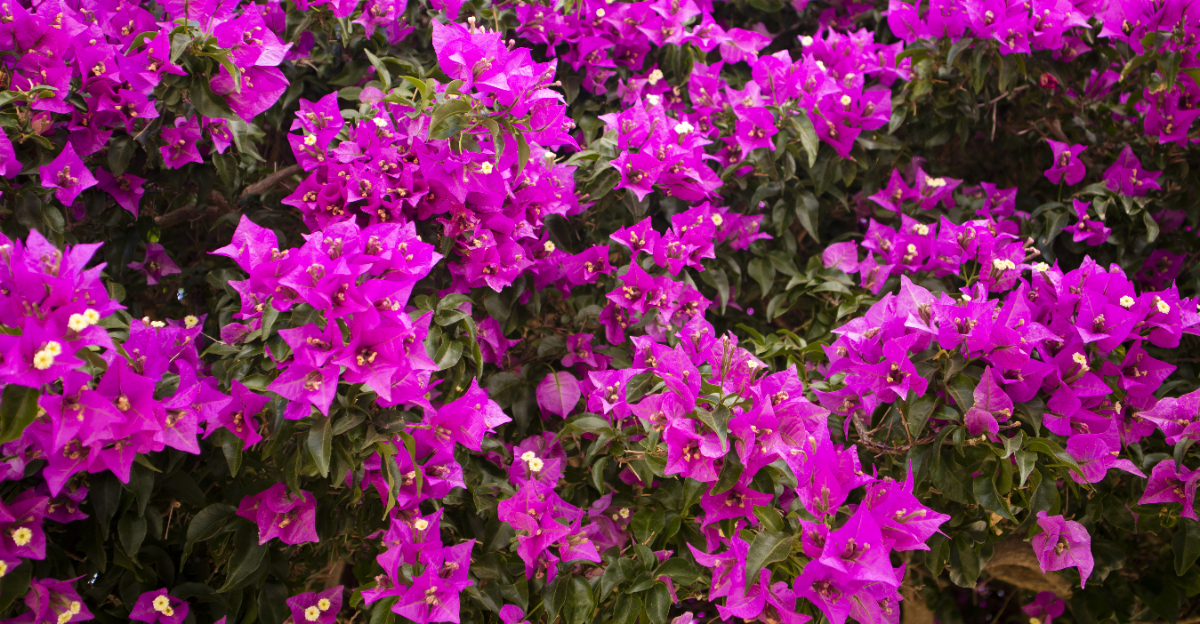
Bright bougainvillea flowers can completely change the look of a property. A plain wall suddenly stands out.
A fence becomes more colorful. Even a small corner of the landscape feels more alive when those blooms are putting on a show.
Many homeowners plant bougainvillea expecting color all summer long. Then something changes.
The plant keeps growing, but the display is not quite as impressive as it was a few weeks earlier. That can leave people wondering whether the intense summer weather is simply too much.
Bougainvillea has a reputation for handling tough conditions, which is one reason it remains so popular. Arizona landscapes are filled with it for good reason.
Keeping those blooms coming is not always about giving the plant more attention. Sometimes a few small adjustments make a bigger difference than expected.
Knowing what encourages flowering can help keep the color going through the hottest part of the season.
1. Full Sun Is Still Essential For Heavy Blooming
Shade is the enemy of bougainvillea blooms. Even in the brutal summer heat, these plants need at least six hours of direct sun daily to push out heavy color.
Pull them back from shade, and flowering slows fast.
Bougainvillea evolved in tropical and subtropical climates where sun is relentless. Full exposure signals the plant to produce those vivid bracts.
Less light means the plant shifts energy toward leafy growth instead of flowers.
In Phoenix and Tucson, south and west-facing walls are prime real estate for bougainvillea. Reflected heat from stucco or block walls actually boosts bloom production rather than hurting it.
Avoid placing plants where afternoon shade from a tree or structure blocks more than an hour of sun. Even partial shading can noticeably reduce the number of blooms produced over a season.
If your plant looks green and lush but lacks color, check its sun exposure first. Too many leaves and too few blooms almost always point to insufficient light rather than a nutrient problem.
Repositioning a container plant to a sunnier spot often triggers a fresh bloom flush within two to three weeks. Patience matters here.
Give the plant time to respond before making other changes.
2. Deep Watering Supports Flowers During Extreme Heat
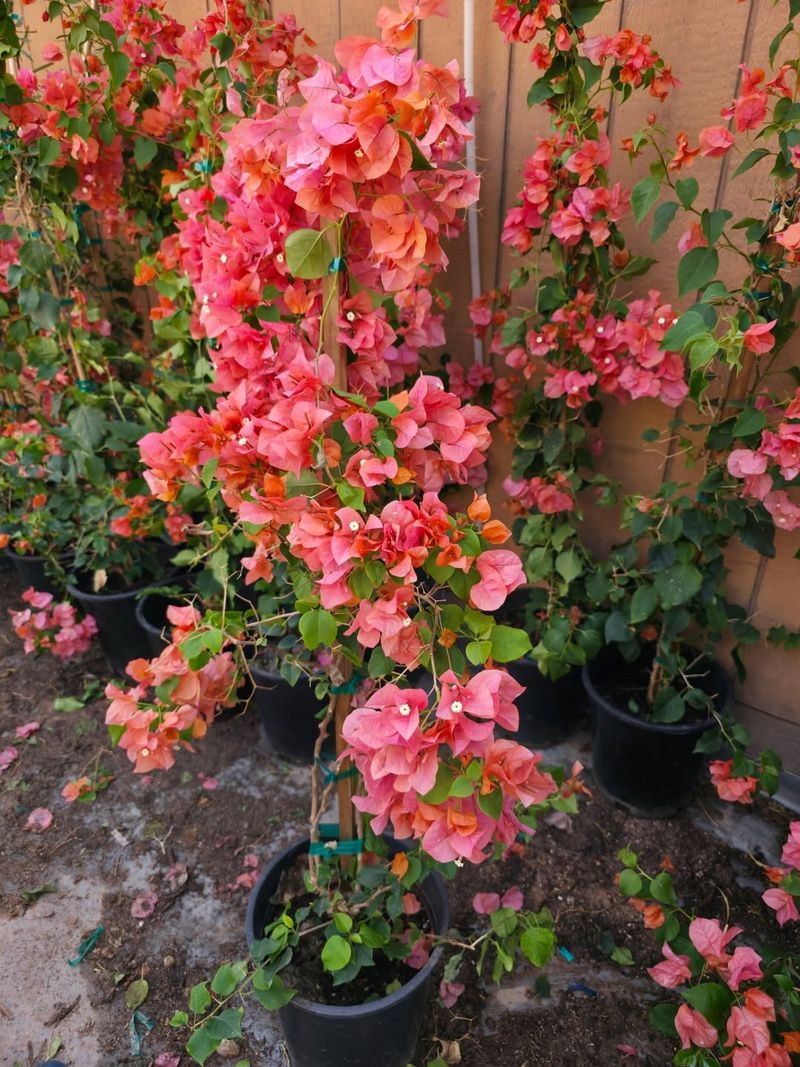
Watering bougainvillea wrong is one of the fastest ways to shut down bloom production. Frequent shallow watering keeps the root zone wet, which actually stresses these plants and encourages leaf growth over flowers.
Deep, infrequent watering is the right approach. Soak the soil thoroughly, then allow it to dry out almost completely before watering again.
That dry period between waterings is what pushes the plant to bloom.
During peak summer, established bougainvillea in the ground may need watering every five to seven days depending on soil type. Sandy desert soils drain fast, so you may need to water slightly more often than gardeners in other regions.
Check moisture levels by pushing a finger or a wooden dowel about three inches into the soil. If it comes out damp, hold off.
If it comes out dry and dusty, water deeply right away.
Your Arizona Garden Changes Every Week. Your Plan Should Too.
Gardening in Arizona changes quickly throughout the season. Every Friday you’ll receive a simple weekly plan showing exactly what to plant, prune, fertilize, harvest, and protect so you never miss the right timing.
Drip irrigation works well for these plants when set up correctly. Run drip emitters long enough to saturate the root zone, not just the surface.
A quick ten-minute drip cycle is rarely enough during extreme heat.
Wilting midday is normal when temperatures spike. Check for wilting early in the morning instead.
Morning wilt is a reliable sign the plant genuinely needs water rather than just reacting to midday heat stress.
3. Too Much Fertilizer Can Reduce Bloom Production
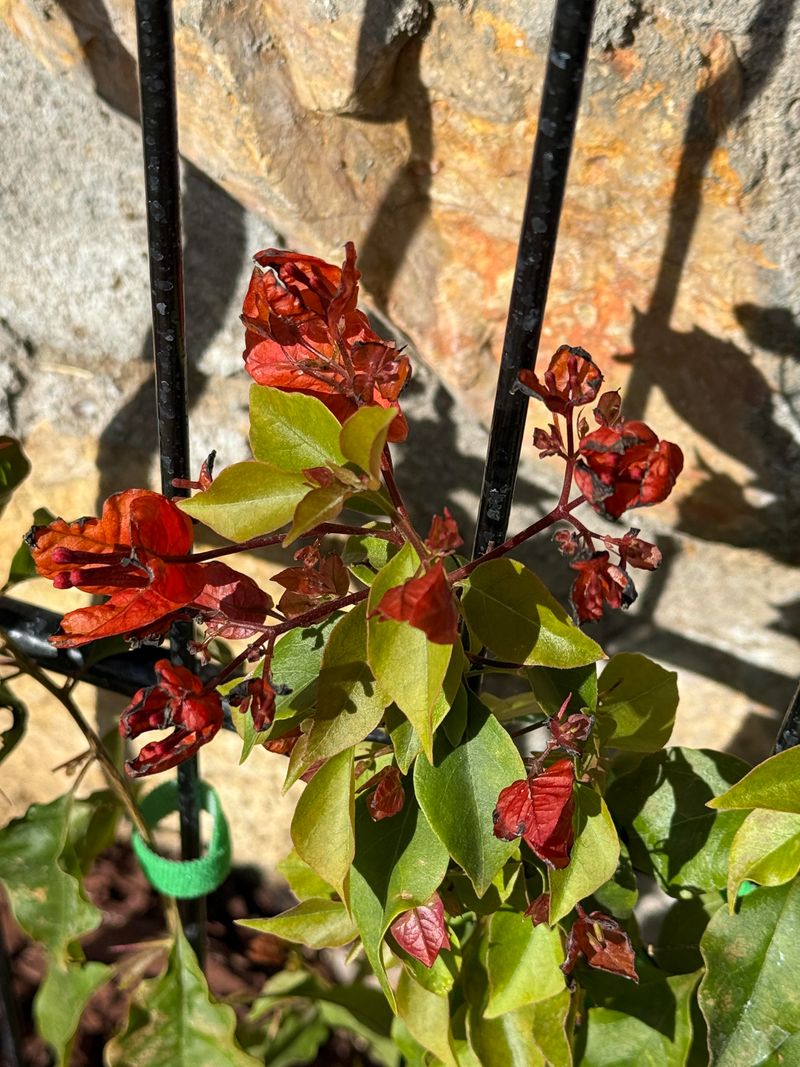
Overfertilizing bougainvillea is a surprisingly common mistake. More fertilizer does not mean more blooms.
With these plants, too much nitrogen pushes lush green foliage at the direct expense of flower production.
Nitrogen encourages vegetative growth. If your bougainvillea is putting out lots of new leaves but few or no colorful bracts, excess nitrogen is often the cause.
Cutting back on feeding can actually bring the blooms back.
Use a low-nitrogen, high-phosphorus fertilizer formulated for flowering plants. Products labeled for bougainvillea or for tropical blooming plants typically have the right nutrient ratio to support flower production without overloading the plant with nitrogen.
During summer, fertilize no more than once every four to six weeks. Feeding too frequently keeps the plant in a constant growth mode rather than allowing the mild stress that triggers heavy blooming.
Slow-release granular fertilizers are a practical option because they reduce the risk of over-application. Liquid fertilizers work faster but require more careful measurement to avoid pushing too much nitrogen at once.
Skip fertilizing entirely during the absolute peak of summer heat, typically mid-July through mid-August in the low desert. Roots under heat stress do not absorb nutrients efficiently, and excess fertilizer salts can build up in the soil and cause additional problems.
4. Light Pruning Encourages Fresh Flushes Of Color
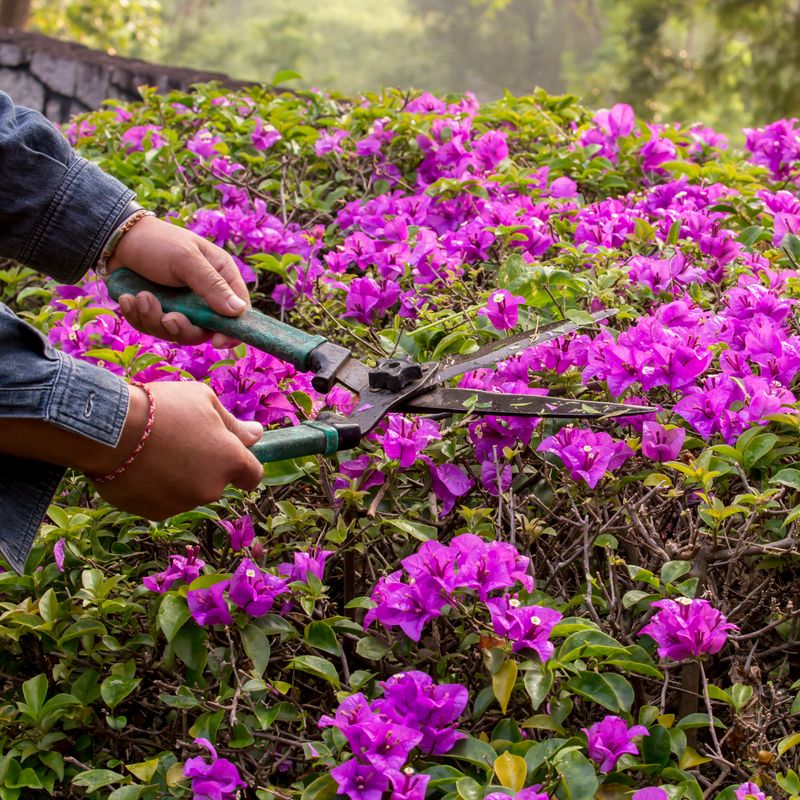
A fresh flush of blooms does not happen by accident. Light pruning is one of the most reliable ways to encourage bougainvillea to rebloom throughout the hot season rather than putting out one big show and stopping.
Bougainvillea blooms on new growth. Trimming back spent flower tips signals the plant to push out fresh lateral shoots, and those new shoots carry the next round of colorful bracts.
Without pruning, the plant can stall.
Keep cuts light during summer. Remove only the tips of branches where blooming has finished, taking no more than a few inches at a time.
Heavy cutting in peak heat can set the plant back significantly.
Use clean, sharp pruning shears to make smooth cuts just above a leaf node. Ragged cuts invite disease and slow healing.
Wipe blades with rubbing alcohol between plants if you are working with multiple bougainvilleas in your yard.
Expect a two to three week lag between pruning and the next bloom flush. New growth needs time to develop before flowering begins.
Resist the urge to prune again before that cycle completes.
Save heavier shaping cuts for late winter or early spring when temperatures are mild and the plant can recover quickly.
5. Good Drainage Helps Prevent Heat Related Stress
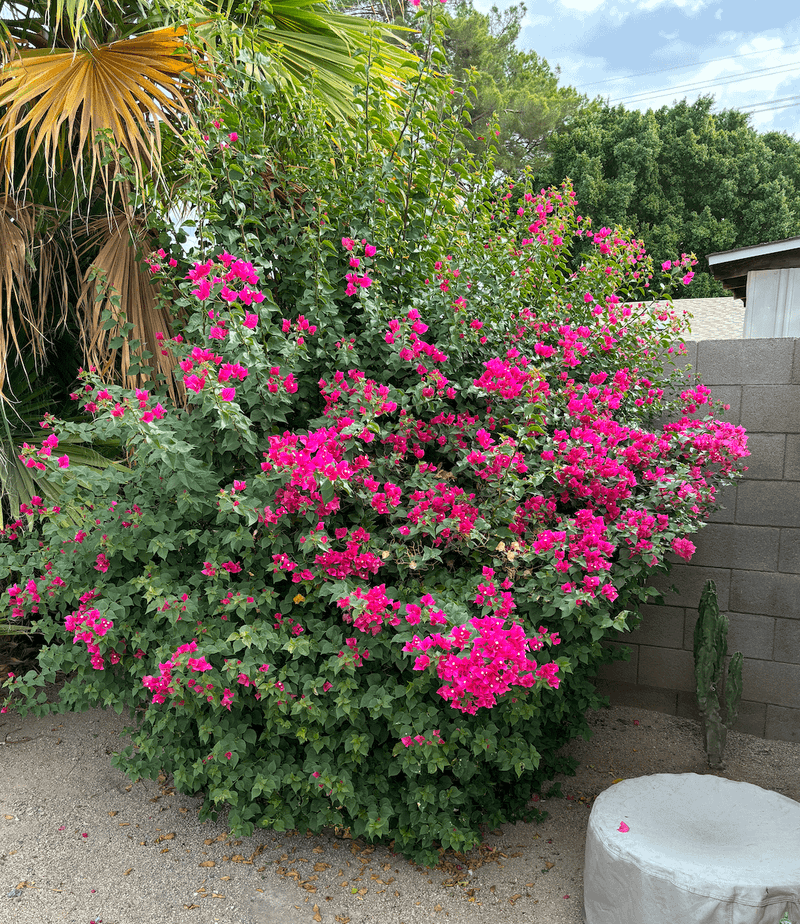
Standing water around bougainvillea roots is trouble, especially in summer heat. Waterlogged soil cuts off oxygen to the roots and creates conditions where root stress can develop rapidly, even in plants that look healthy above ground.
Bougainvillea needs soil that drains quickly after watering. Native desert soils in many parts of the Southwest are naturally sandy and drain well.
Clay-heavy soils or caliche layers can trap moisture and cause root problems.
If your soil holds water for more than an hour after irrigation, consider amending it with coarse sand or perlite. Breaking up a caliche layer with a pick or auger before planting is also worth the effort for long-term plant health.
Raised planting mounds work well in areas with poor drainage. Mounding the soil six to ten inches above the surrounding grade creates a naturally draining environment that bougainvillea thrives in during monsoon season when unexpected heavy rain arrives.
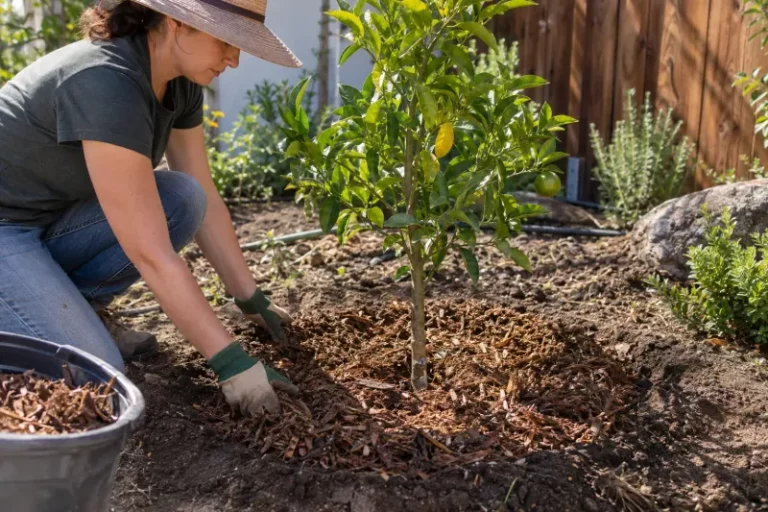
Mulch helps regulate soil temperature and reduces moisture evaporation without trapping water. Apply a two to three inch layer of coarse mulch around the base, keeping it pulled back a few inches from the main stem to allow airflow.
6. Container Plants Need More Frequent Attention
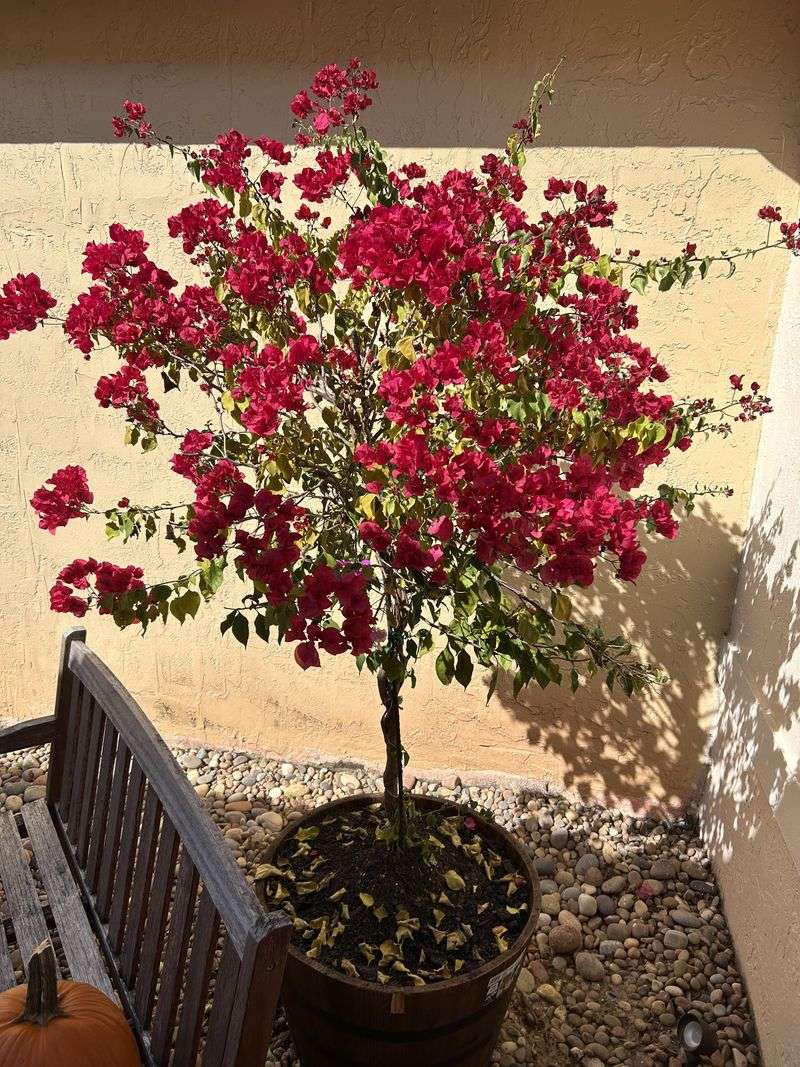
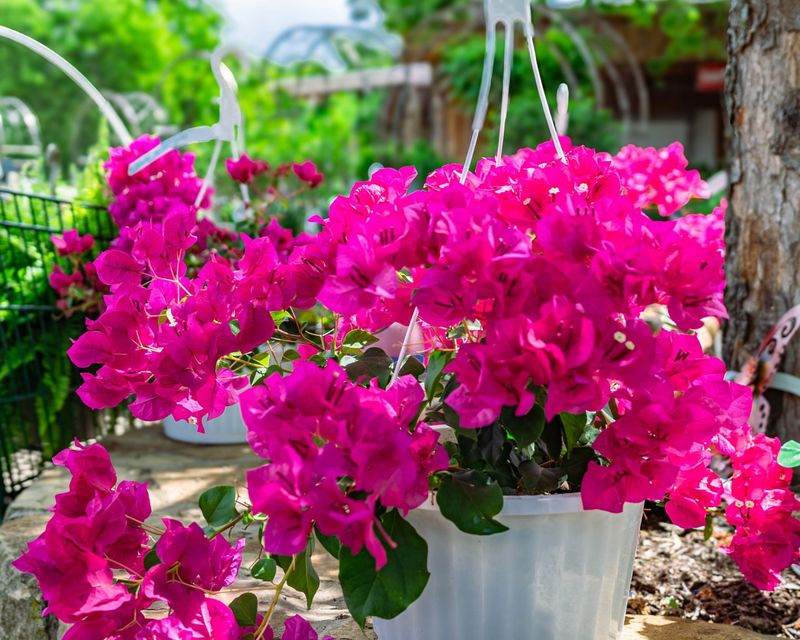
Container bougainvillea plays by different rules than in-ground plants. Pots heat up fast in direct sun, soil dries out quicker, and nutrients get flushed out with every watering cycle.
All of that means more consistent attention is required.
Water container plants more frequently than those in the ground. During peak summer, some pots may need watering every two to three days.
Stick a finger into the soil daily and water when the top two inches feel dry and crumbly.
Choose large containers with multiple drainage holes. Bigger pots hold more soil volume, which buffers temperature swings and holds moisture slightly longer between waterings.
Small pots dry out so fast they can stress the plant before you realize it.
Light-colored pots reflect heat better than dark ones. Black or dark brown containers absorb heat aggressively and can superheat the root zone in full desert sun, which limits nutrient uptake and stresses the plant even when watering is consistent.
Fertilize container bougainvillea slightly more often than in-ground plants, roughly every three to four weeks during the growing season. Frequent watering leaches nutrients from the soil faster in pots than in open ground.
Move containers to a spot that gets morning sun and light afternoon shade during the most brutal weeks of summer.
7. Healthy Growth Supports Continued Summer Blooms
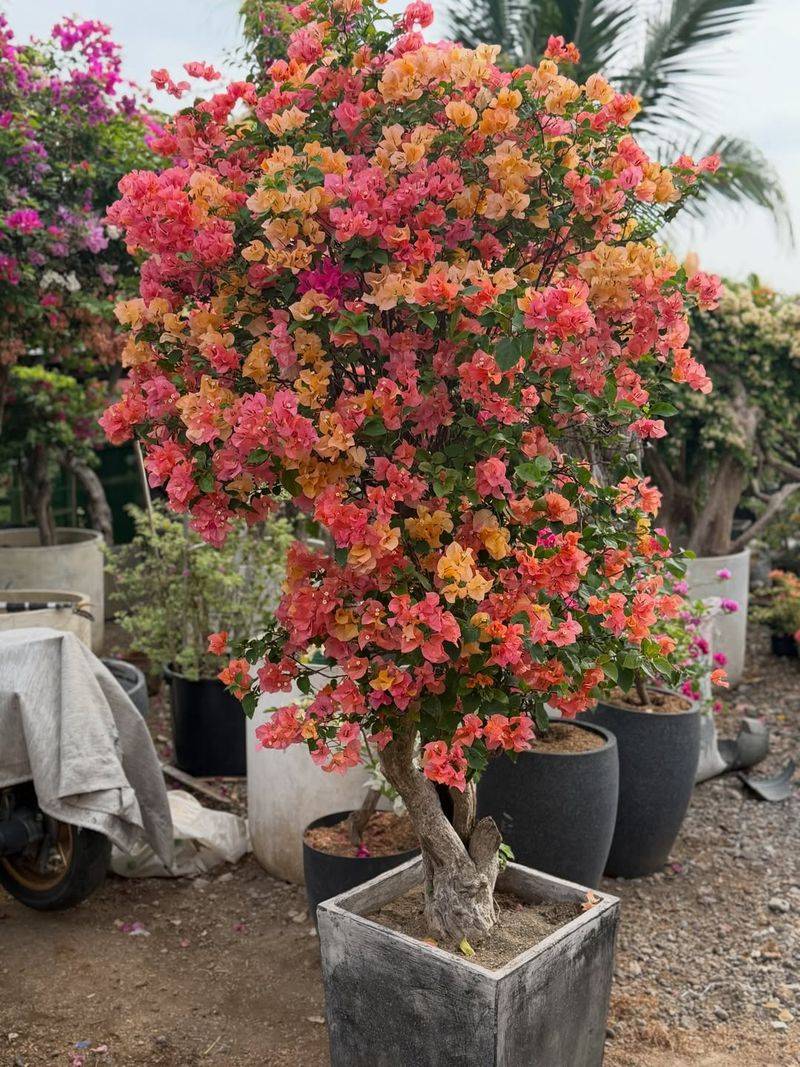
Strong, healthy bougainvillea plants bloom more consistently than stressed ones. Overall plant health is the foundation that makes every other care tip actually work.
Without it, even perfect watering and sun exposure fall short.
Watch for signs of pest activity. Spider mites and aphids can show up during hot, dry stretches and weaken the plant by feeding on new growth.
A strong blast of water from a hose knocks most pest populations back without needing chemicals.
Inspect leaves regularly. Yellow leaves with green veins can indicate an iron deficiency, which is common in alkaline desert soils.
A chelated iron supplement applied according to package directions usually corrects this within a few weeks.
Avoid disturbing the root system unnecessarily. Bougainvillea roots are sensitive, and digging around the base can set back growth and delay blooming.
Keep soil disturbance minimal once the plant is established in its location.
Good air circulation around the plant matters more than most gardeners realize. Overcrowding bougainvillea with other dense plants can trap humidity during monsoon season and create conditions where fungal issues develop on foliage and stems.
A plant that is consistently well-watered, properly fed, and free from pest pressure will push through summer heat with far more blooms than one that is neglected.