Ohio Gardeners Cutting This Plant The Wrong Way May Lose The Next Bloom Flush
One snip in the wrong place. That is all it takes.
Your salvia looks fine afterward, tidy even, and you walk away feeling productive. Then two weeks pass. Then three.
The garden stays quiet where it should be exploding with color, and you cannot figure out what went wrong.
Ohio gardeners lose entire bloom flushes this way every single summer, not from neglect, not from bad soil or wrong sun exposure, but from one small cutting mistake that nobody warned them about.
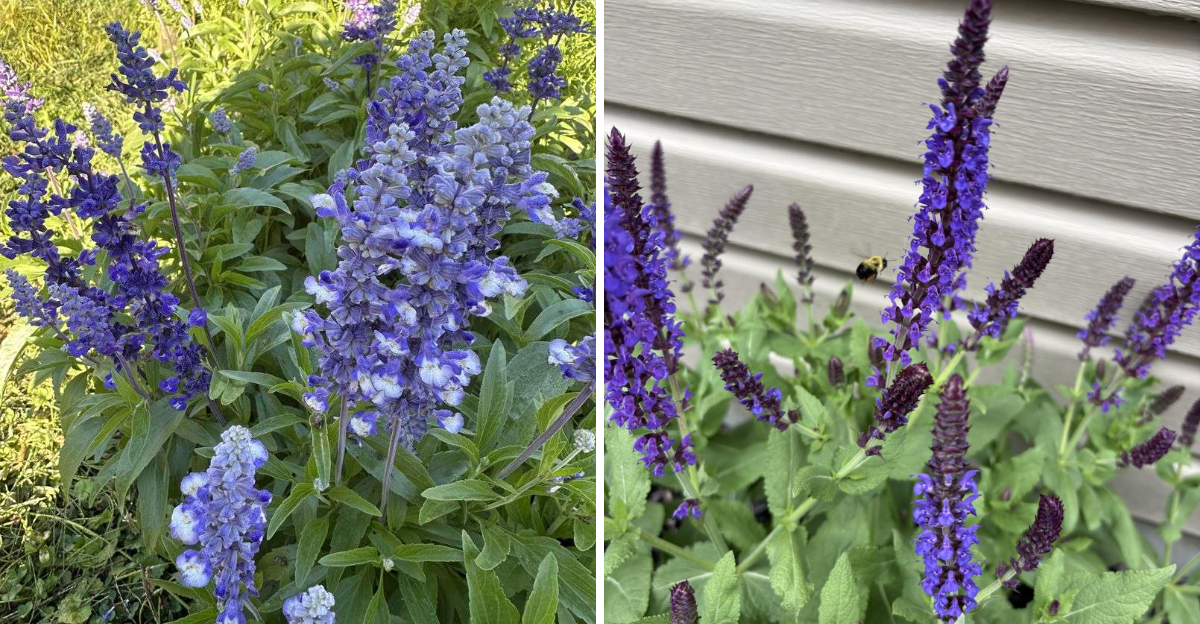
Salvia is one of the most generous plants you can grow in an Ohio yard. It wants to bloom again. It is already preparing to bloom again the moment the first flush fades.
But there is a right way and a wrong way to help it along, and many gardeners are guessing.
The difference between a salvia that blooms from June to frost and one that peaks in July and goes quiet comes down to where you make your cuts. So before you grab those pruners, you should know this.
1. Start With Garden Salvia
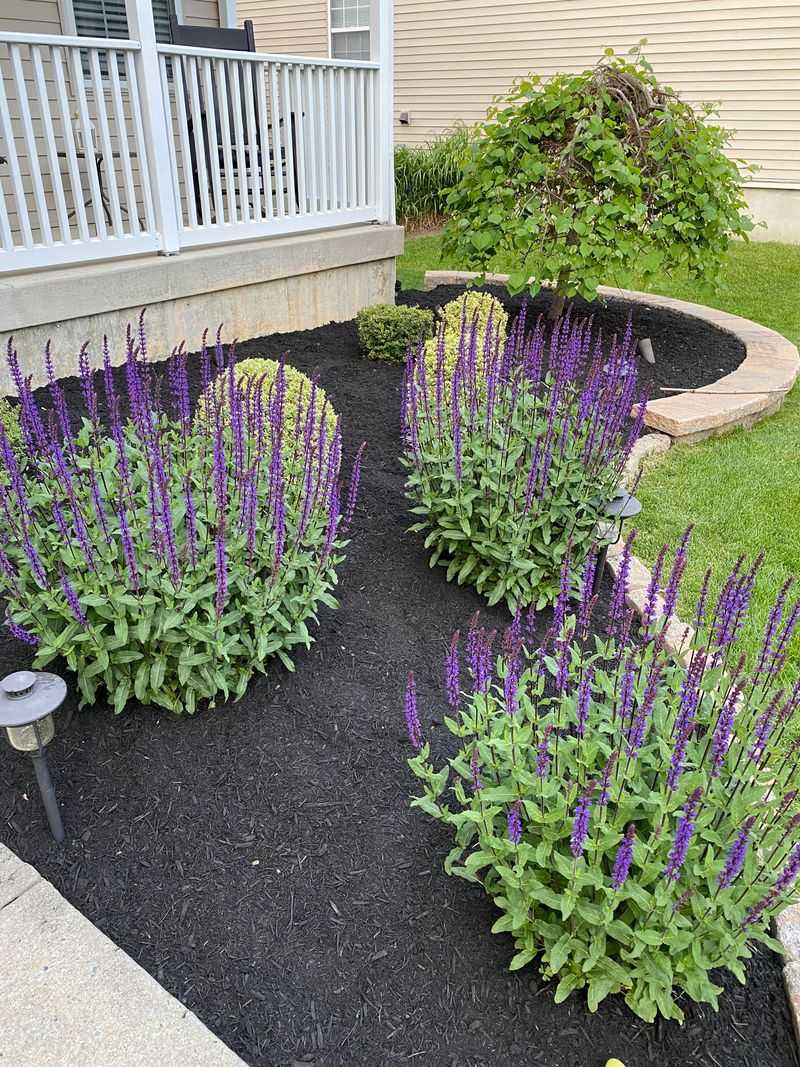
Garden salvia is one of the hardest-working plants you can grow in an Ohio yard. It blooms in waves, handles heat with ease, and bounces back quickly when you treat it right.
Many gardeners pick it up at the nursery for its color, but they rarely learn how it actually grows before they start cutting. That gap costs them blooms.
Salvia nemorosa, the most common garden salvia in Ohio, pushes up tall flower spikes covered in small blooms.
When those spikes fade, the plant does not simply stop. It starts building new growth at the base of old stems and along the sides of branches.
That new growth is where the next round of flowers comes from, and it is already forming while the current flush is still finishing.
Understanding this basic growth pattern changes everything about how you approach trimming. Salvia is not a shrub you can hack back and forget.
It rewards careful, targeted cuts that work with the plant’s natural rhythm rather than against it.
The plant actually tells you where to cut if you slow down and look closely. New side shoots, tiny bud clusters, fresh green growth pressing outward from the main stem.
All of that is visible before you make a single cut. Spend a few minutes studying your salvia before picking up the scissors and you will already be ahead of most gardeners on the block.
Honestly, this is one of those cases where doing less, but doing it right, pays off more than working twice as hard in the wrong direction.
2. Cut Spent Spikes Above New Growth
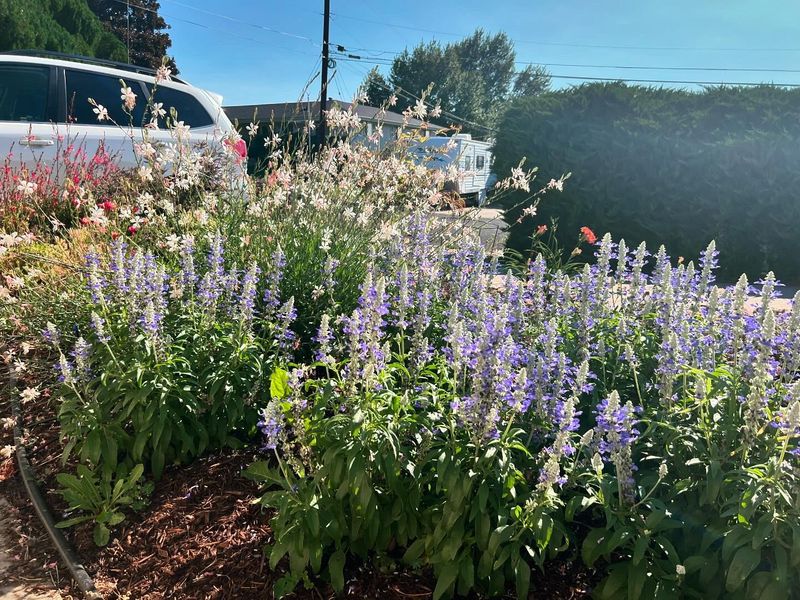
A faded flower spike is a clear signal that it is time to act, but the location of your cut matters more than most people realize.
Cutting too low removes the small green shoots already forming beneath the spent bloom. Those shoots are not decoration. They are the plant’s plan for its next round of flowers.
Your Ohio Garden Changes Every Week. Your Plan Should Too.
Gardening in Ohio changes quickly throughout the season. Every Friday you’ll receive a simple weekly plan showing exactly what to plant, prune, fertilize, harvest, and protect so you never miss the right timing.
The correct move is to trace the old spike downward until you spot a cluster of fresh green leaves or a small side shoot branching off the stem.
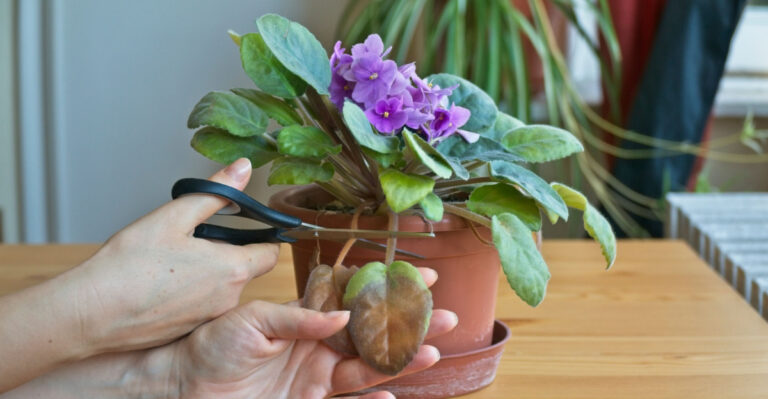
Make your cut just above that point, leaving the new growth completely intact. Sharp, clean bypass pruners work best here. Dull blades crush stems instead of cutting cleanly, which slows recovery and leaves the plant more vulnerable.
Many Ohio gardeners cut straight to the base out of habit, convinced that a clean slate is the best approach.
That single habit removes weeks of developing growth in one snip, and the plant has to start rebuilding from scratch rather than picking up where it left off.
The difference in bloom production between these two methods becomes obvious by midsummer. One plant is pushing up fresh spikes in two weeks. The other is still recovering.
Your salvia will look tidier after a precise cut, and within a short recovery window, those preserved side shoots will be pushing up fresh flower spikes ready to fill the garden with color all over again.
One extra minute of observation before each cut is genuinely one of the highest-return habits in perennial gardening.
3. Avoid Shearing The Whole Clump
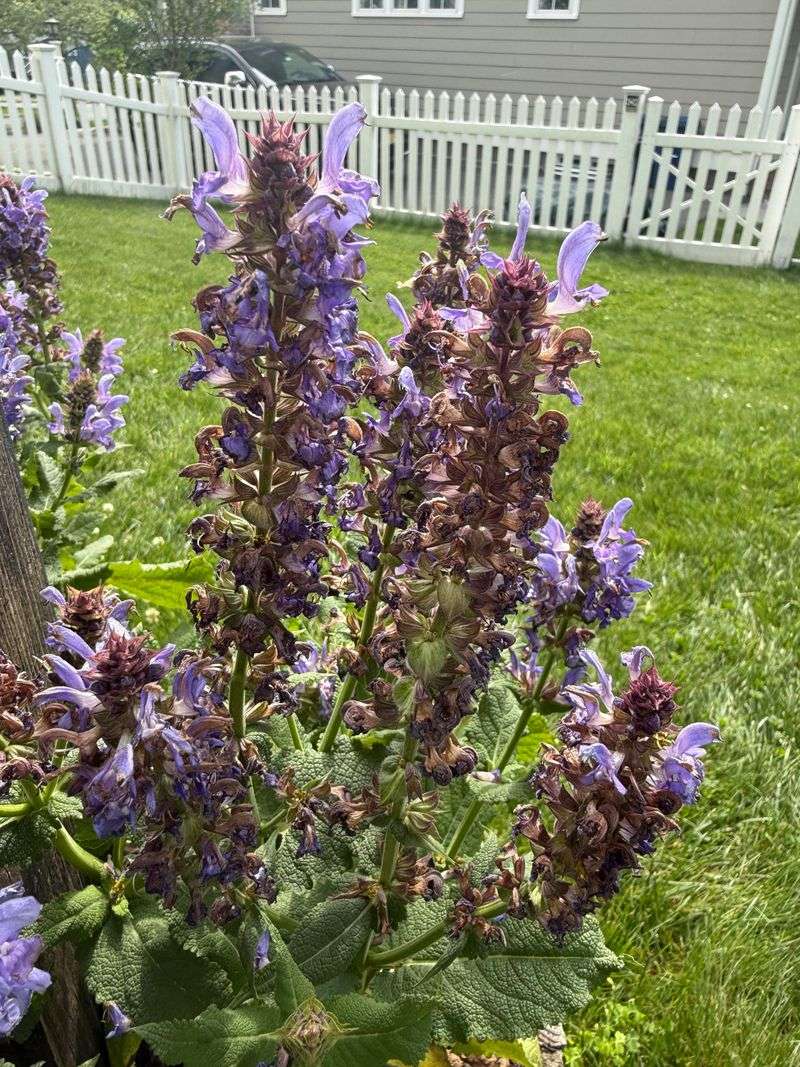
Grab a pair of hedge clippers, run them across the top of a salvia clump, and it looks satisfying for about ten seconds. Then the reality sets in.
Shearing removes everything at one uniform height, which sounds efficient until you realize that developing bloom stems hiding inside the plant just got cut off along with the spent ones.
Salvia does not grow in a uniform layer. New stems emerge at different heights and different times throughout the season.
When you shear the whole clump at once, you are essentially guessing at what is spent and what is ready to bloom. More often than not, the guess costs you two to three weeks of potential color that was already in development.
Selective hand-trimming takes a little longer, but it protects the stems still building toward their next flush. Work through the plant section by section, removing only the clearly faded spikes.
Leave anything that looks green, firm, and upright alone.
Some gardeners treat shearing as a shortcut, but with salvia it often creates more work in the long run because the plant takes considerably longer to recover and rebloom.
Ohio perennial gardeners who switch from shearing to selective trimming tend to report noticeably fuller bloom cycles by late summer.
The extra five minutes per plant pays off in weeks of additional color through August and September. At some point the shortcut just stops being short, and salvia is very good at making that point clear.
4. Watch For Side Buds First
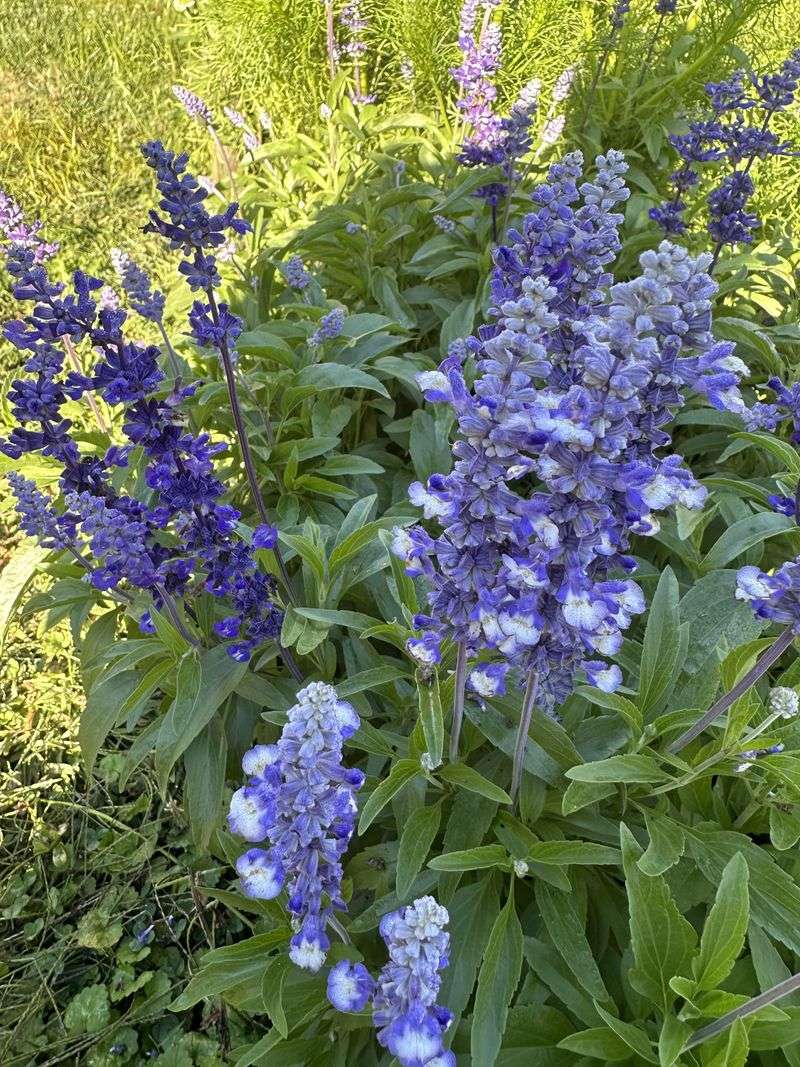
Before you reach for any cutting tool, take thirty seconds to look at the plant from the side. Side buds are small, easy to miss, and absolutely critical to your next bloom flush.
They form along the main stem just below spent flower spikes, and they are the clearest sign that your salvia is already preparing its next performance.
These small buds look like tight green knobs or miniature leaf clusters pressed close to the stem. Once you know what to look for, they are surprisingly easy to spot.
Experienced perennial growers check for them before every trim, almost like a quick treasure hunt before the real work begins.
Cutting above these buds preserves them. Cutting below them removes them entirely, setting the plant back by several weeks.
Some stems carry side buds on both sides, which means one careful cut can protect multiple future bloom points at the same time.
This is the detail that separates gardeners who get two or three bloom flushes from those who struggle to get a reliable second one at all.
The side buds are the plant’s next chapter, already written and waiting. All they need is for you to leave them alone.
Once you start noticing them, you will never look at a salvia plant the same way again, and your midsummer garden will be noticeably more colorful for it. It is a small habit with a surprisingly large return on investment.
5. Skip Cutting Fresh Bloom Stems
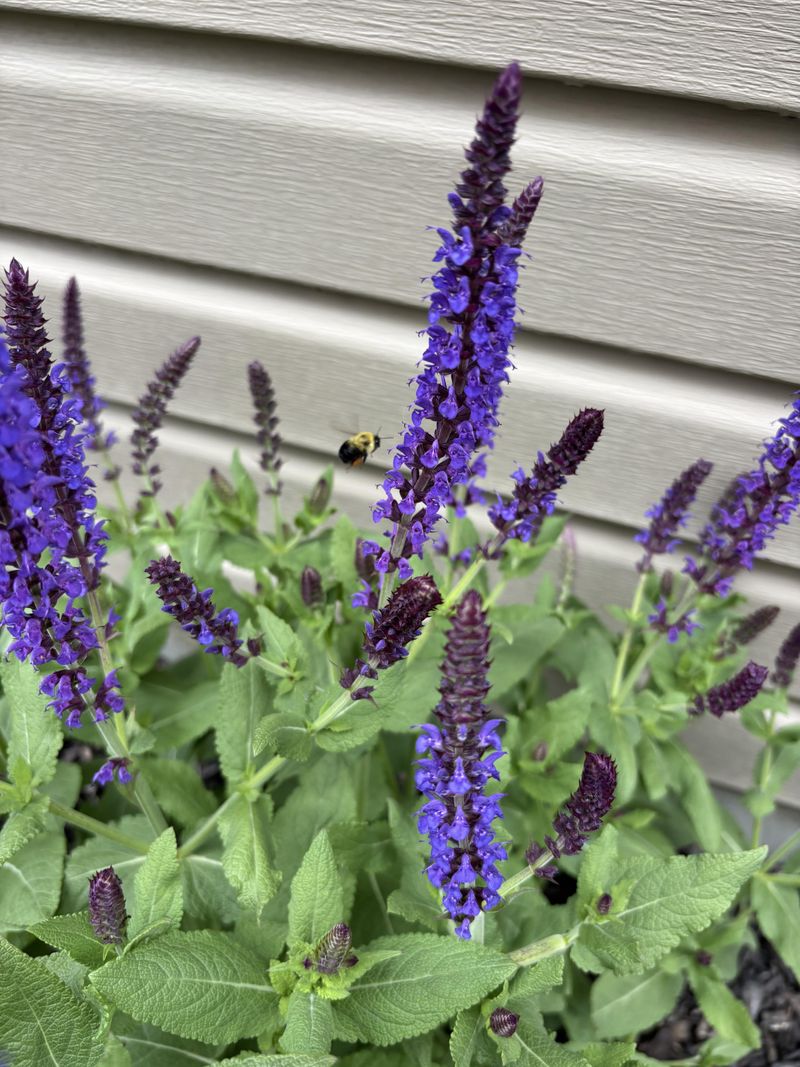
Not every stem in a salvia plant is at the same stage at the same time.
While some spikes are clearly spent and browning at the tips, others nearby might be fully green with tight buds just starting to show color.
Removing those fresh stems by mistake is one of the most common and costly trimming errors Ohio gardeners make.
It happens easily when gardeners work too fast or do not look closely at each stem before cutting. A developing bloom spike and a spent one can look deceptively similar from a distance.
Up close, the difference is obvious. A spent spike has faded, papery florets that crumble when touched. A fresh spike has firm, waxy buds that feel solid and look saturated with color.
Training yourself to check each stem individually before cutting adds maybe one extra minute to the whole process.
That minute protects weeks of flower development that are already well underway. Each fresh stem is a bloom you have already grown. Cutting it now means starting that branch over from scratch.
Ohio gardeners who take a stem-by-stem approach to trimming consistently report more even, sustained color through the summer months.
Slow down, trust your eyes, and let the plant show you which stems are ready to go and which ones deserve a little more time.
The salvia knows what it is doing. Your job is mostly just to stay out of its way until the moment is actually right.
6. Trim After The First Flush
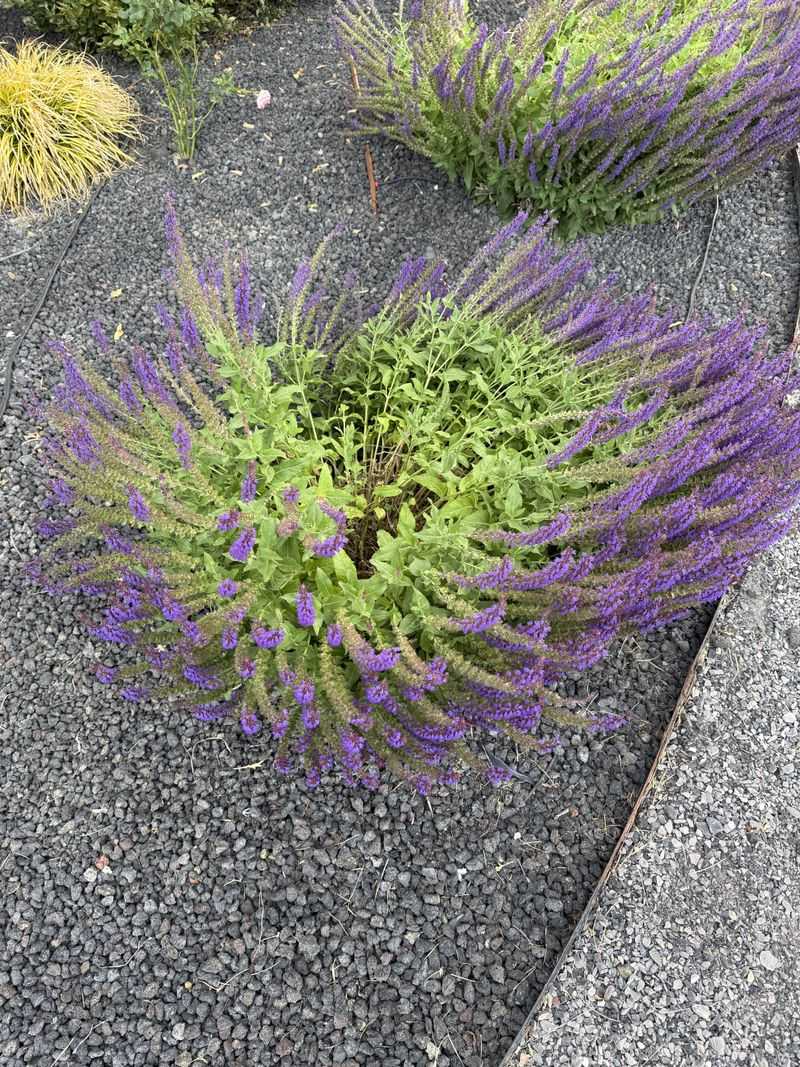
Timing is everything with salvia, and the window right after the first big bloom cycle is the most important moment of the whole season.
When the majority of flower spikes have faded and the show looks clearly over, that is your cue. Waiting too long lets the plant redirect energy toward seed production instead of new blooms.
Most Ohio gardens see the first salvia flush peak in late June or early July. By mid-July, those spikes are spent and the plant looks a little tired.
That tired look is actually a good sign. It means the plant gave everything it had to that first round of flowers and is now ready to recharge if you help it along.
A well-timed trim right after the first flush removes the spent material, signals the plant to shift energy toward new growth, and sets up a second flush that can be just as strong as the first.
Waiting until August to make this cut often means missing the second flush entirely because the Ohio growing season starts winding down by then.
Mark your calendar if you need a reminder. A timely trim in mid-July can be the difference between one good bloom season and two excellent ones.
The plant is already waiting for you to make that move. Keeping it waiting too long is the gardening equivalent of leaving money on the table, and salvia is not particularly patient about it.
7. Keep Leaves Working For The Plant
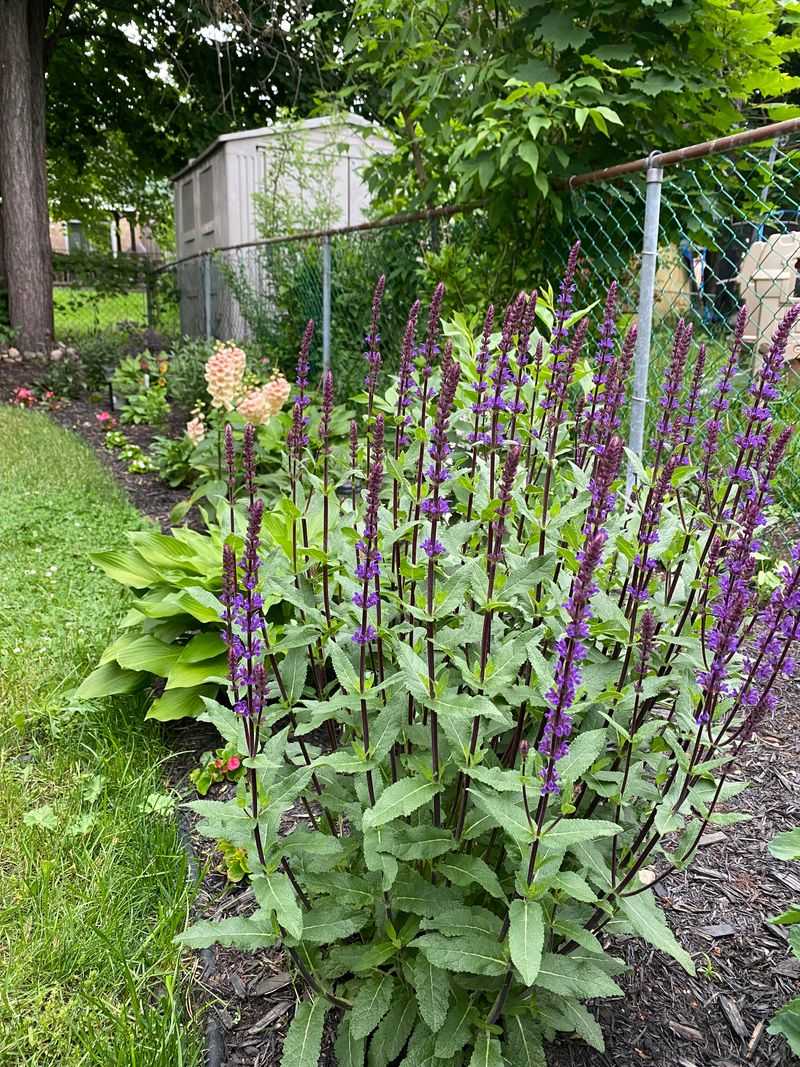
Leaves are the engine room of any plant, and salvia is no exception.
Every green leaf is actively capturing sunlight and converting it into the energy needed to push out new roots, stems, and eventually flowers.
Remove too much foliage during a trim and you cut the plant off from its own fuel supply at exactly the moment it needs it most.
Some gardeners get a little overzealous when tidying up their salvia. They remove not just the spent flower spikes but also the surrounding leaves, convinced the plant will look cleaner and recover faster.
The opposite tends to happen. A plant stripped of too much foliage struggles to generate the energy for a strong recovery, and the next bloom flush arrives later and weaker than it should.
A practical guideline most perennial growers follow is to never remove more than one-third of the plant’s total foliage in a single trimming session.
Basal leaves, the ones growing low and close to the ground, deserve special protection. They stay active even when upper stems are being cut back and help the plant maintain steady energy production throughout the recovery window.
Those low leaves are the plant’s backup power source, keeping things running while the upper portion rebuilds. Protecting them is one of the simplest and most overlooked steps in salvia care.
It costs you nothing, takes no extra time, and pays off in faster regrowth and noticeably stronger second blooms.
Sometimes the best gardening advice is just to leave something alone, and this is one of those times.