7 Florida Vines That Bring Big Blooms Without The Wisteria Headache
Wisteria sounds dreamy until it swallows your fence, cracks your pergola, and starts showing up in places you definitely did not plant it.
Florida gardeners have been through this story enough times to know how it ends. But here is what most vine lists never tell you: Florida has its own lineup of flowering vines that deliver everything wisteria promises and none of what it threatens.
We are talking jaw-dropping blooms, hummingbirds, butterflies, and plants that actually know where their boundaries are.
Some of these vines are natives that have been growing in Florida ecosystems for centuries. Some solve problems many gardeners did not even know they had.
One of them saves its entire show for fall, which is practically a superpower in this state. So before wisteria tempts you again at the nursery, read this first.
1. Grow Coral Honeysuckle For Hummingbirds
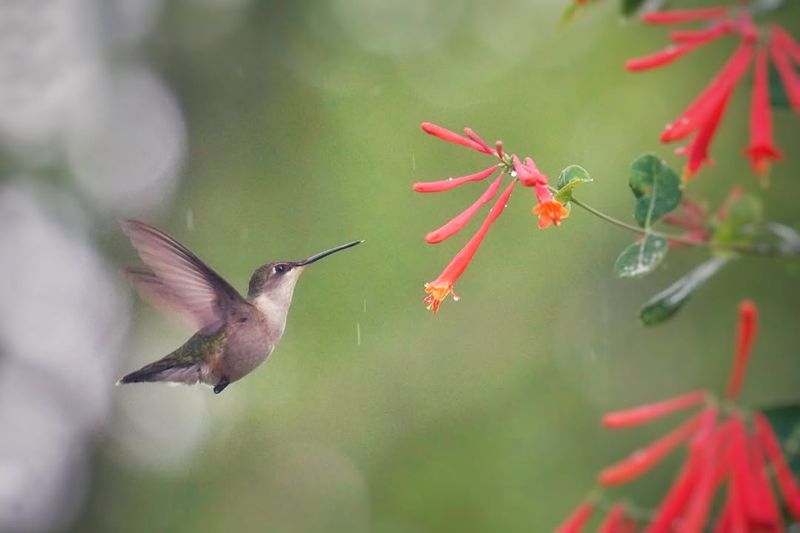
A hummingbird showing up at your fence is one of those moments that makes all the gardening effort feel completely worth it.
Coral honeysuckle, Lonicera sempervirens, is one of the most reliable ways to make that moment happen repeatedly throughout the year.
This native vine produces clusters of slender, tubular flowers in shades of red and orange that hummingbirds simply cannot resist.
Unlike its invasive cousin Japanese honeysuckle, coral honeysuckle stays well-behaved on a trellis or fence.
It twines rather than grabs, so it will not strangle nearby shrubs or sneak into places you did not invite it. It grows vigorously enough to give you good coverage but not so aggressively that it becomes a neighborhood problem.
Coral honeysuckle blooms heavily in spring and then continues to produce scattered flowers through summer and into fall.
After blooming, it sets small red berries that songbirds enjoy just as much as hummingbirds enjoy the flowers.
Plant it in full sun to partial shade and give it a sturdy support to climb. It handles Florida heat and humidity without complaint.
Training it early on a fence or arbor keeps it tidy and looking intentional rather than accidental.
This vine earns its spot in any Florida yard that wants consistent wildlife action from a plant that genuinely knows how to behave itself. Which, honestly, is a lower bar than you would expect from something this pretty.
2. Use Carolina Jessamine For Spring Color
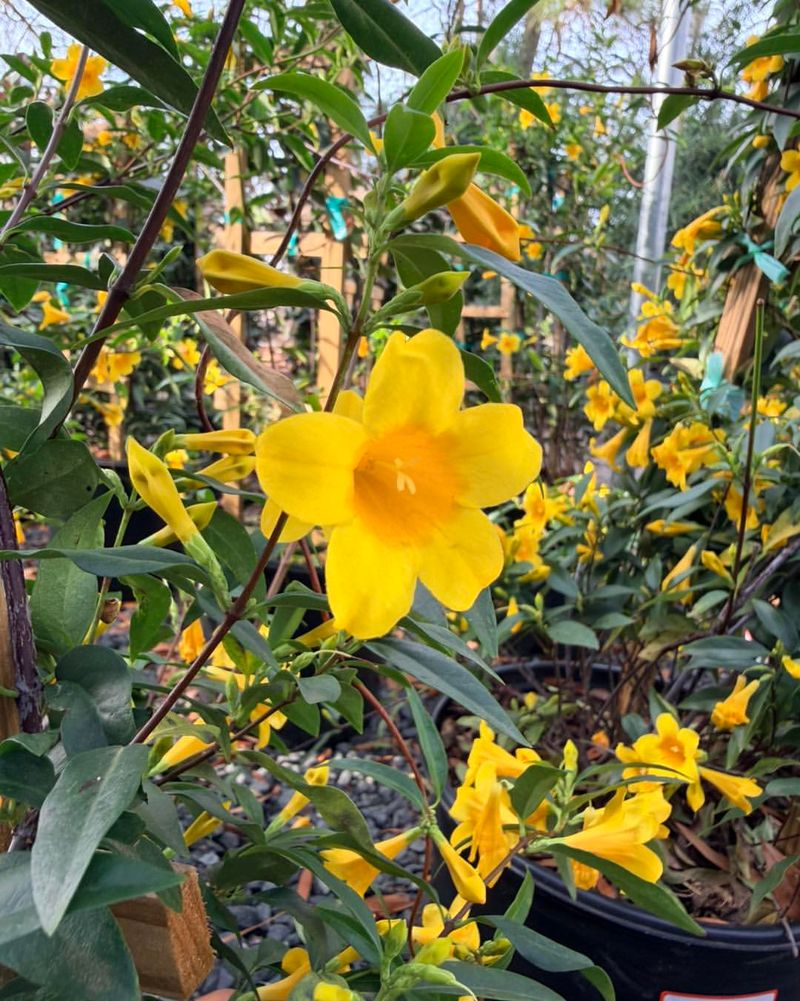
Few things signal the arrival of spring in a Florida garden quite like a fence exploding with bright yellow tubular flowers.
Carolina jessamine, Gelsemium sempervirens, does exactly that reliably every year without turning into a monster.
This native vine is one of the earliest bloomers in the Florida landscape, often flowering from late winter through spring when the rest of the garden is still deciding whether to wake up.
It climbs by twining, which means it wraps itself around supports without damaging them. A sturdy trellis, a mailbox post, or a wooden fence all work beautifully.
The fragrance is a bonus that many gardeners do not expect the first time it blooms. You will smell it before you see it on a warm morning, and that combination of scent and color makes it genuinely special in the yard.
Your Florida Garden Changes Every Week. Your Plan Should Too.
Gardening in Florida changes quickly throughout the season. Every Friday you’ll receive a simple weekly plan showing exactly what to plant, prune, fertilize, harvest, and protect so you never miss the right timing.
Carolina jessamine grows in full sun to partial shade and tolerates a range of Florida soils as long as drainage is reasonable.
It is moderately drought-tolerant once established, which matters a lot during Florida dry seasons. One important note worth passing along: all parts of the plant are toxic if eaten, so plant it away from areas where small children or pets regularly play unsupervised.
Pruning right after the spring bloom keeps it shapely and encourages strong new growth for the following season.
For a vine that delivers big spring color without the aggressive spreading habit of wisteria, Carolina jessamine is a smart, beautiful choice that almost never causes regret. Almost.
3. Plant Maypop Passionvine For Butterflies
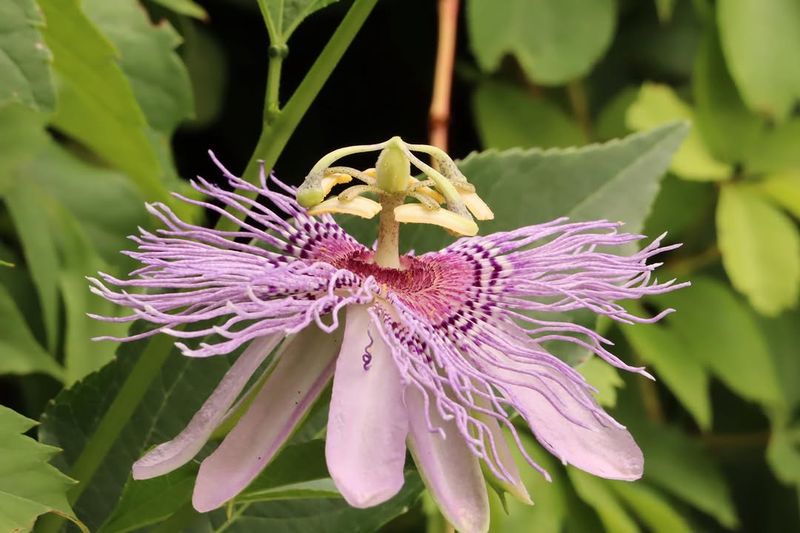
Spotting a zebra longwing butterfly laying eggs on a vine in your own backyard feels like winning a small lottery.
Maypop passionvine, Passiflora incarnata, is the plant that makes that happen.
It is the primary larval host plant for several Florida butterfly species including the zebra longwing, Florida’s state butterfly, and the gulf fritillary, a gorgeous orange-and-silver species that is genuinely hard to miss once you know what to look for.
The flowers are absolutely stunning. Each bloom looks like something from a tropical design catalog, with intricate purple and white fringed petals surrounding a complex central structure.
They open in summer and continue blooming through early fall. After the flowers fade, the vine produces egg-shaped fruits called maypops that are edible with a sweet, tropical flavor.
Maypop is a fast grower that uses tendrils to climb fences, trellises, and arbors.
It spreads by underground runners, so planting it inside a raised bed or using a root barrier helps keep it where you actually intended it to go. It thrives in full sun and tolerates sandy, well-drained Florida soils with ease.
The vine goes dormant in winter and comes roaring back in spring, sometimes popping up in new spots nearby. Embrace that energy by training new shoots onto your support structure early in the season.
For butterfly gardeners, no other vine on this list delivers this much wildlife action per square foot of fence space.
4. Try Crossvine For Trumpet Blooms
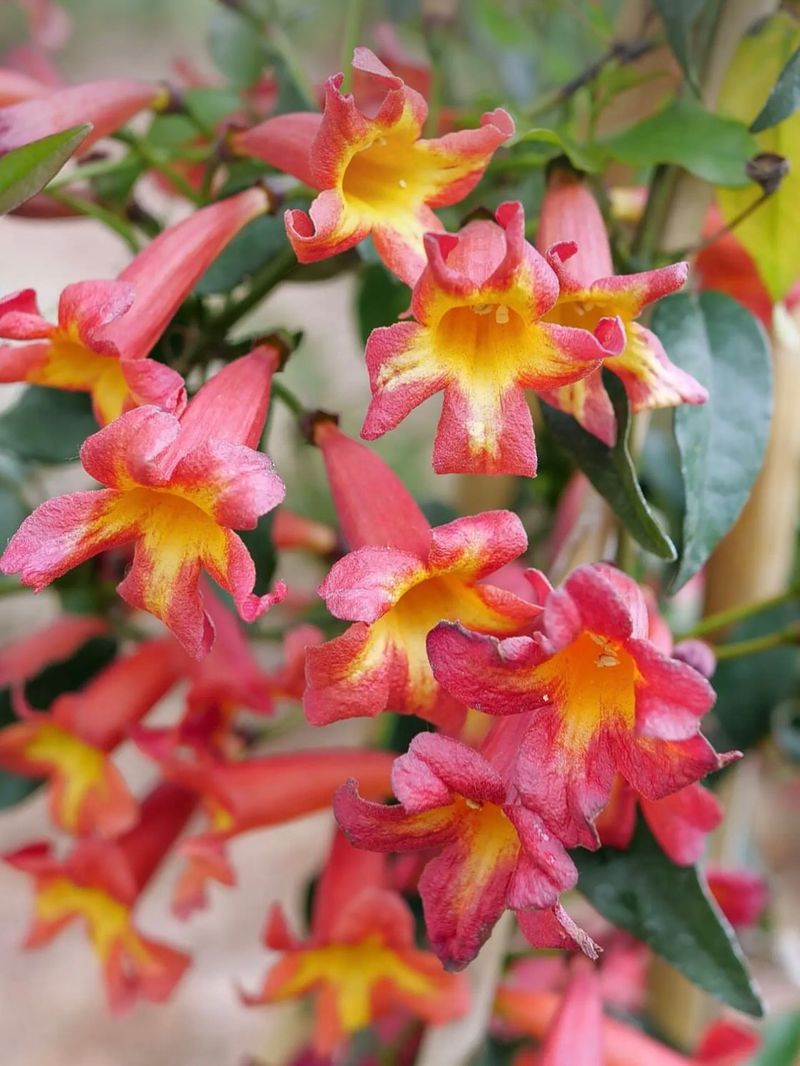
When a vine produces flowers so large and so boldly colored that neighbors stop to ask what it is, you know you have found something worth planting.
Crossvine, Bignonia capreolata, delivers exactly that kind of showstopping spring display. The trumpet-shaped flowers come in combinations of orange, yellow, and red that look almost painted on.
They arrive in such abundance that the vine can appear completely covered in blooms at peak season.
The name crossvine comes from the cross-shaped pattern visible in the stem when cut, which is a fun detail to share with anyone who asks.
This native southeastern vine climbs using adhesive discs, which means it can scale brick walls, wooden fences, and sturdy trellises without any additional help.
That gripping ability is impressive, but it also means thinking carefully about what surface you attach it to, since removing it from painted wood or delicate siding later can be genuinely difficult.
Crossvine blooms in spring and may produce a lighter second flush in fall under the right conditions. It grows in full sun to partial shade and handles a range of Florida soil types.
The flowers attract hummingbirds and long-tongued bees, adding wildlife value well beyond the visual drama. It is semi-evergreen in North and Central Florida, holding its leaves through mild winters.
Regular pruning after the main bloom keeps the vine tidy and prevents it from becoming too heavy for its support. For gardeners who want wisteria-level drama without wisteria-level chaos, crossvine is a genuinely satisfying trade.
5. Use Corky Stem Passionflower In Shade
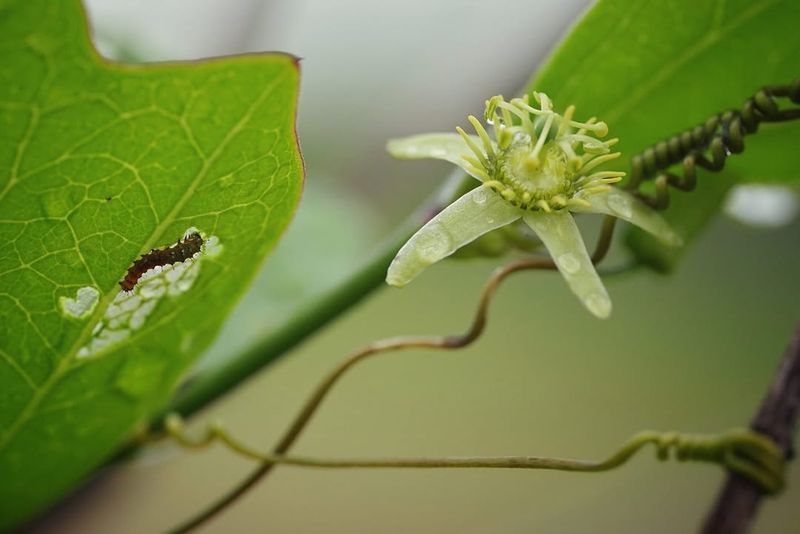
Most flowering vines want full sun, which makes shady spots in a Florida yard feel like a design problem without a solution.
Corky stem passionflower, Passiflora suberosa, breaks that rule in a very useful way.
This native Florida vine tolerates shade better than nearly any other flowering vine on this list, making it a practical solution for dim corners under oak trees or on north-facing fences where most plants simply give up.
The flowers are small and cream-colored with a subtle purple center, nothing as flashy as Maypop, but still genuinely pretty up close and worth a second look.
What this vine lacks in flower size it more than makes up for in butterfly hosting power. It serves as a larval host plant for zebra longwing, gulf fritillary, and Julia heliconian butterflies, three of the most recognizable and beloved species in Florida.
Corky stem passionflower gets its name from the corky ridges that develop on its mature stems, giving it an interesting textural look even when it is not in bloom.
It climbs using tendrils and can work its way up wire fencing, chain link, or wooden lattice without much encouragement. Growth is vigorous but manageable compared to some of the more aggressive passionvines.
Plant it in well-drained soil and water regularly while it gets established. Once rooted in, it handles Florida conditions with minimal fuss and rewards you with constant butterfly activity throughout the warm months.
Bringing butterflies into your shadiest corner feels a little like cheating, and it absolutely is.
6. Grow Railroad Vine Near The Coast
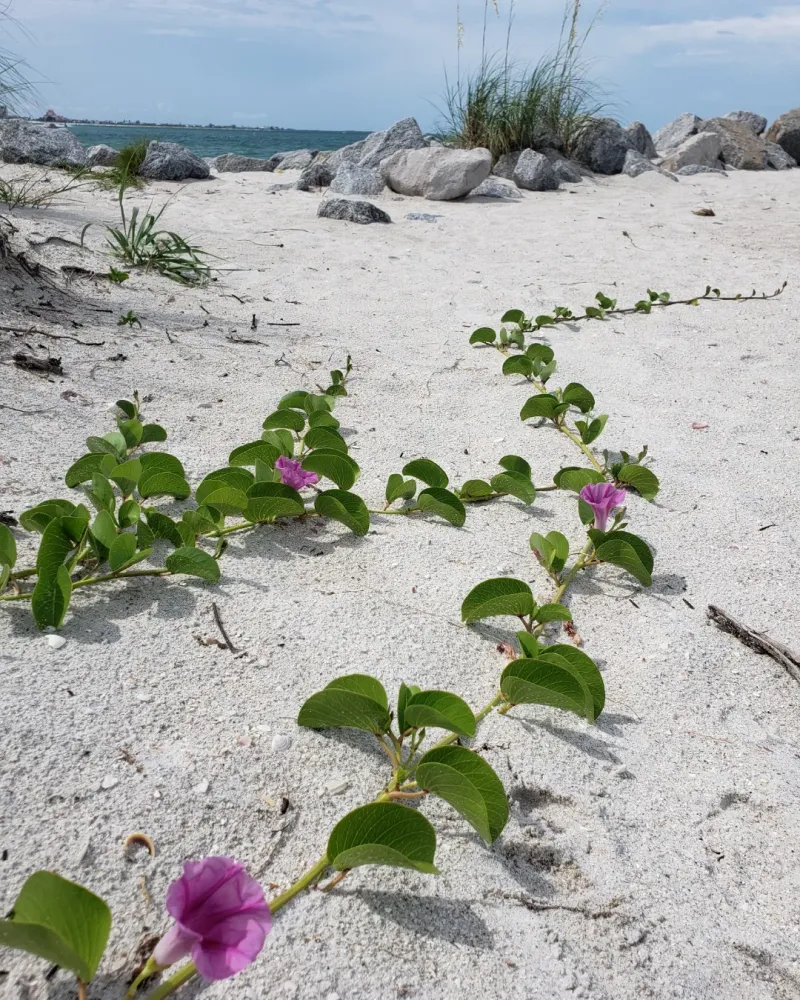
Sandy soil, salt wind, and blazing sun are conditions that send most flowering vines into a rapid decline.
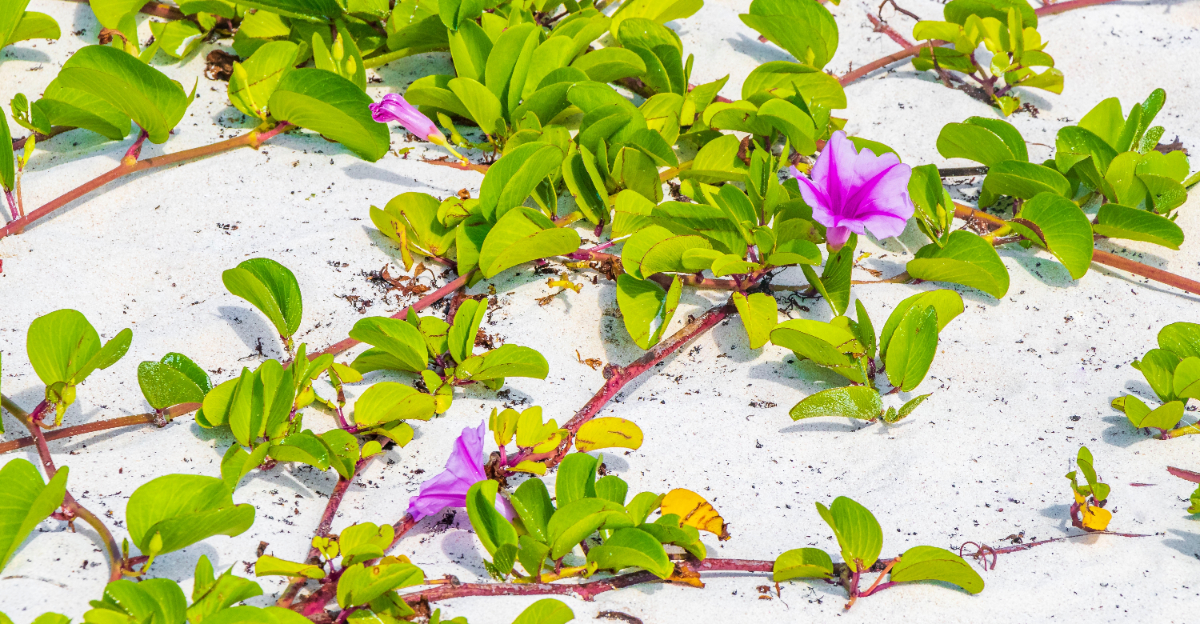
Railroad vine, Ipomoea pes-caprae, was practically built for exactly those conditions. This coastal native sprawls across Florida dunes and sandy shorelines with impressive energy, producing large, funnel-shaped flowers in shades of pink and purple.
The common name comes from the long, straight runners the vine sends out across open ground, resembling train tracks stretching toward the horizon.
A single plant can spread dozens of feet in a season, covering bare sand and stabilizing it against erosion in the process.
That ground-hugging growth habit makes it more of a sprawler than a climber, so it works best as a flowering groundcover for coastal and sandy sites rather than a trellis vine.
Railroad vine blooms from spring through fall and handles salt spray, heat, and drought with a toughness that most ornamental plants cannot match.
It thrives in full sun and absolutely requires well-drained, sandy soil. Poorly drained spots will cause it to struggle noticeably.
The flowers attract bees and butterflies, and the dense mat of foliage provides cover for small coastal wildlife.
For homeowners with beachfront or coastal lots who want color and ground stabilization without irrigation demands, railroad vine is one of the most practical and beautiful native plants available in Florida.
It earns every inch of space it covers, which in a good growing season is quite a lot of inches.
7. Choose Climbing Aster For Late Nectar
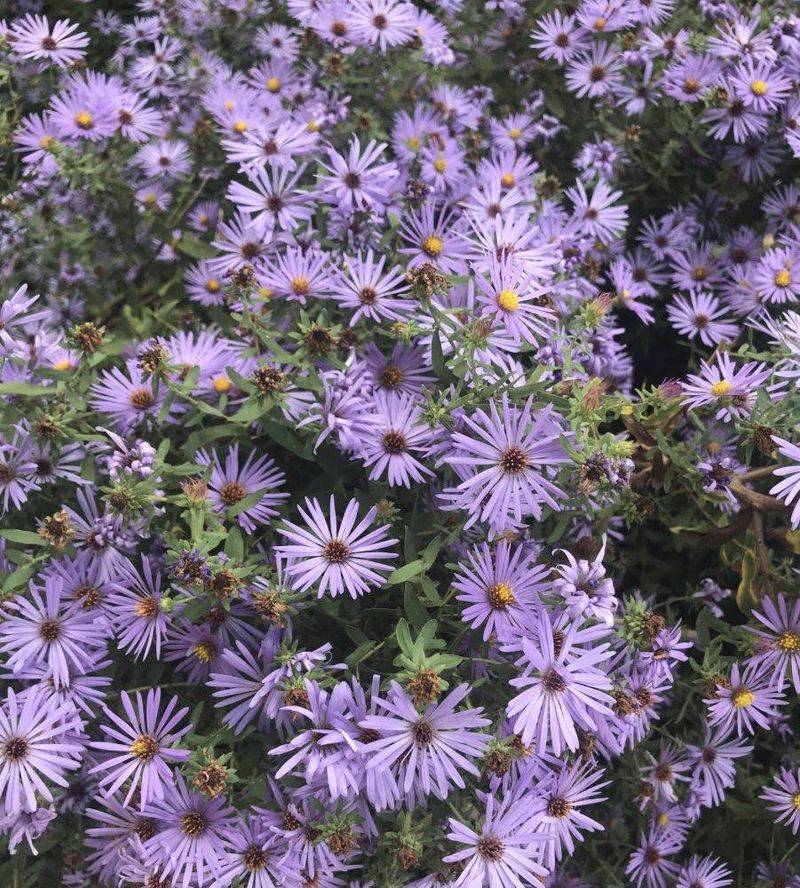
By October in a Florida garden, most flowering vines have already taken their bow for the season.
Climbing aster, Symphyotrichum carolinianum, waits until that exact moment to put on its show, which makes it one of the most strategically valuable plants you can add to a wildlife garden.
When migrating monarchs and other late-season pollinators are searching for nectar sources, this vine delivers in a way that very few plants in Florida can match at that time of year.
The flowers are small, daisy-like, and pale lavender to white with yellow centers. Individually, they are modest.
Collectively, when the vine is covered in hundreds of them simultaneously, the effect is genuinely beautiful. Bees, butterflies, and other pollinators swarm it during peak bloom, making the vine feel almost alive with movement on a warm fall afternoon.
Climbing aster is a Florida native that grows in moist to moderately dry soils and prefers full sun to light shade.
It can reach heights of fifteen feet or more when given a sturdy support, so a strong trellis or fence is a good investment before planting. It blooms from fall into early winter, stretching the garden season further than most vines can manage.
Pruning it back hard after flowering encourages fresh, vigorous growth the following year.
For gardeners who want to support migrating pollinators and extend their bloom season well past summer, climbing aster fills a gap that almost nothing else in the Florida vine world can cover.
It is the encore act your garden did not know it needed.