This Is The Invasive Insect Florida Oak Trees Are Being Watched For
Florida’s oak trees may look strong enough to handle anything, but one tiny intruder has experts paying close attention. It is not the kind of pest most homeowners notice right away, and that is exactly what makes it so concerning.
By the time damage shows up, leaves can look chewed, branches can appear stressed, and a healthy shade tree can suddenly seem under attack.
This invasive insect has already caused trouble in other regions, and Florida officials do not want it settling into the state’s oak canopy.
The biggest warning sign comes from its appetite. Its young can feed heavily on oak leaves, which puts prized yard trees, neighborhood streets, and wooded areas at risk.
For anyone with oaks nearby, this is one pest worth knowing before it becomes a bigger problem.
1. Flighted Spongy Moth Is The Oak Threat Experts Watch Closely
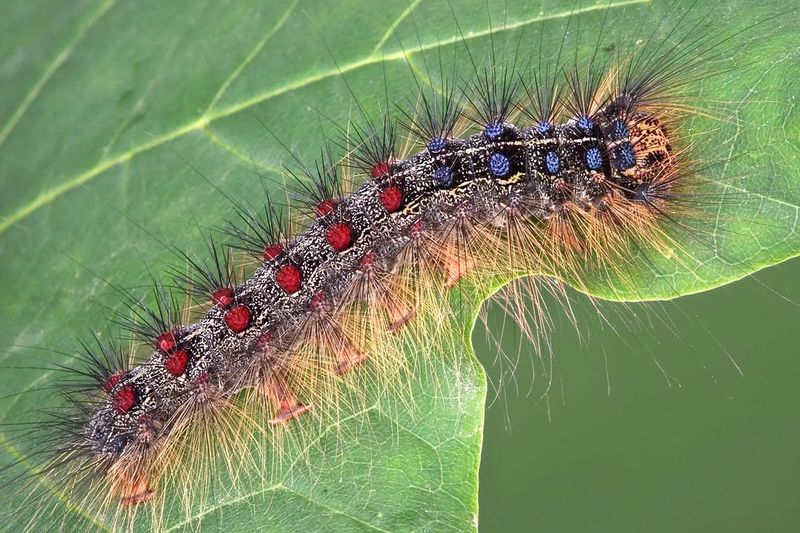
Not every invasive pest makes headlines before it causes serious harm. The flighted spongy moth (Lymantria dispar asiatica) is one species that Florida pest managers are tracking carefully.
This moth belongs to a group of spongy moths known for their ability to defoliate large areas of hardwood forest. Experts monitor it because early detection is far more effective than responding after a population has had time to grow.
Oaks are among the host trees that concern specialists most. Live oaks, water oaks, and laurel oaks are all common across wooded yards, parks, and shaded neighborhoods in this state.
If this moth were introduced and allowed to establish, the feeding damage from its caterpillar stage could put significant stress on those trees over time.
Right now, monitoring does not mean every oak in the region is under attack. Pest agencies use traps, surveys, and reporting networks to catch signs of this moth before populations can build.
Knowing the insect exists and understanding why it matters are useful first steps. Supporting detection efforts also helps tree-conscious homeowners protect the oaks around them.
2. Oak Leaves Are The Part This Caterpillar Can Strip
Picture a healthy oak in mid-spring, full of fresh green leaves, and then imagine sections of that canopy going bare.
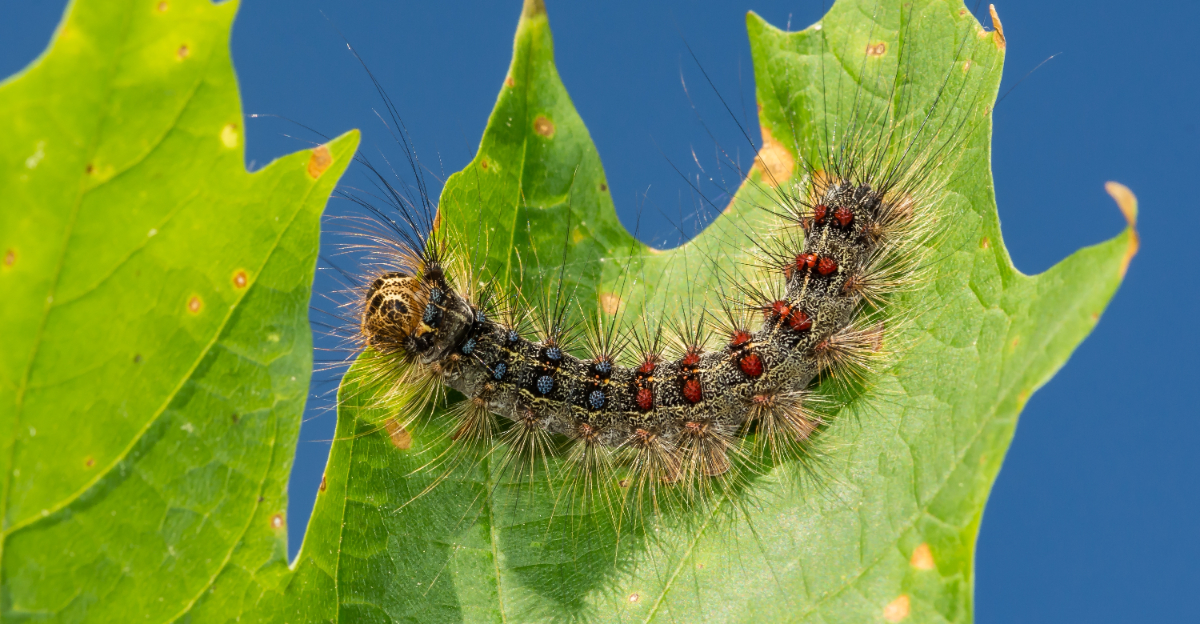
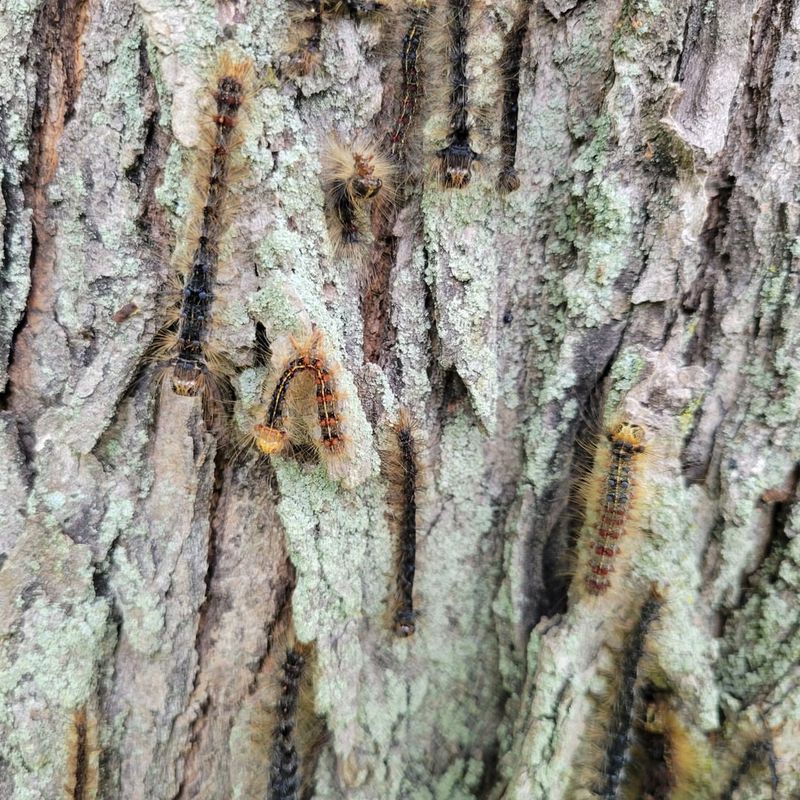
That is the kind of feeding damage the caterpillar stage of the flighted spongy moth (Lymantria dispar asiatica) can cause when populations are large enough.
Caterpillars chew through leaf tissue, sometimes leaving only the tougher veins behind, a process called defoliation.
Oaks are among the preferred host trees for this species. A single caterpillar does not cause much damage on its own.
A large group feeding together can remove significant amounts of foliage from branches and whole sections of canopy. Young caterpillars tend to feed on softer leaf tissue first, while older caterpillars can consume entire leaves.
One defoliation event does not automatically spell the end for a mature oak. Healthy, well-established trees can sometimes push out a second flush of leaves after light or moderate feeding.
Repeated or heavy defoliation is a different story, since it drains the tree’s energy reserves and makes recovery harder each time.
Your Florida Garden Changes Every Week. Your Plan Should Too.
Gardening in Florida changes quickly throughout the season. Every Friday you’ll receive a simple weekly plan showing exactly what to plant, prune, fertilize, harvest, and protect so you never miss the right timing.
Knowing what normal leaf loss looks like versus caterpillar feeding is a useful first step for any oak owner paying attention to their trees.
3. Defoliation Can Stress Trees Without Looking Dramatic At First
A homeowner walking past their oak on a Tuesday morning might notice the leaves look a little ragged around the edges. A few branches seem thinner than usual.
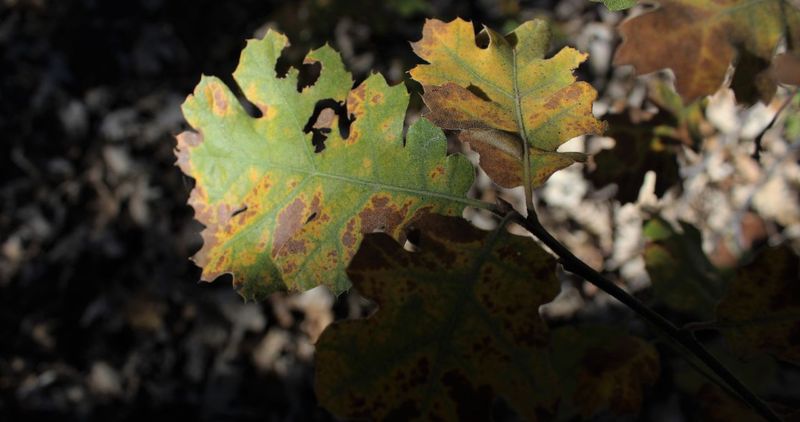
Some sections of the canopy look patchy. These early signs can be easy to brush off, but they sometimes point to feeding damage that has been building quietly for a while.
Early defoliation from caterpillar feeding can look like chewed leaf margins, thinning patches in the upper canopy, or scattered branches where foliage seems sparse.
The damage may not look alarming right away, especially if the rest of the tree still appears green and full.
Tree stress can build gradually before the yard shows obvious warning signs.
Chewed leaves on an oak have many possible explanations. Drought stress, native insects, fungal disease, seasonal leaf drop, storm damage, or soil problems can all cause leaf loss or ragged foliage.
No single symptom points clearly to one pest or problem. A certified arborist or local Extension office can help sort out what is actually going on when a tree looks off.
Jumping to conclusions based on chewed leaves alone can lead to missed diagnoses and unnecessary treatments.
4. Repeated Feeding Makes Other Oak Problems Harder To Handle
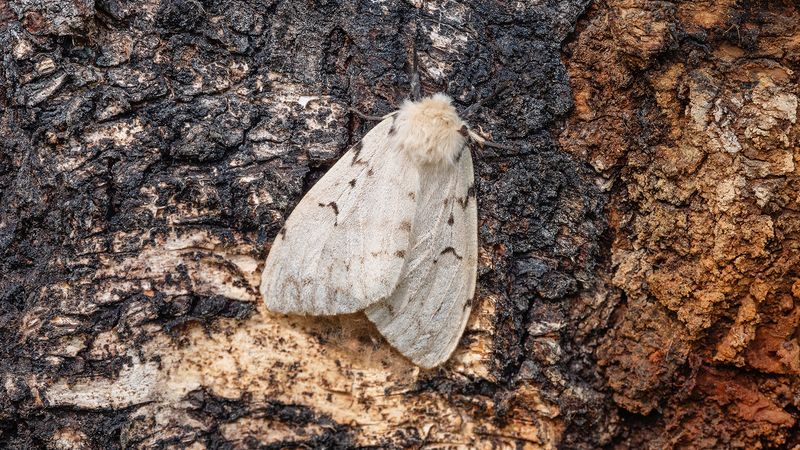
A large oak tree is not just a single plant. It is a living system with deep roots, a wide canopy, stored energy reserves, and relationships with the soil and surrounding environment.
When caterpillar feeding removes a significant portion of its leaves, the tree has to pull from those reserves to grow new foliage.
One season of heavy feeding can be manageable for a healthy tree, but repeated defoliation across multiple seasons changes the picture.
An oak already dealing with drought stress, compacted soil, root damage from construction, or disease has fewer reserves to draw from. Repeated leaf loss on top of those existing pressures can push a struggling tree further into decline.
The combination of stressors, not any single one alone, is often what leads to serious long-term problems.
Flighted spongy moth would not be the cause of every oak health issue seen across the landscape. Native pests, soil conditions, poor drainage, and other factors cause plenty of oak stress on their own.
Still, understanding that defoliation adds to the burden a tree is already carrying helps explain why experts take this moth seriously as a potential threat.
Keeping oaks healthy in the first place gives them a stronger foundation to handle any challenge that comes their way.
5. Egg Masses Can Hitchhike On Outdoor Items
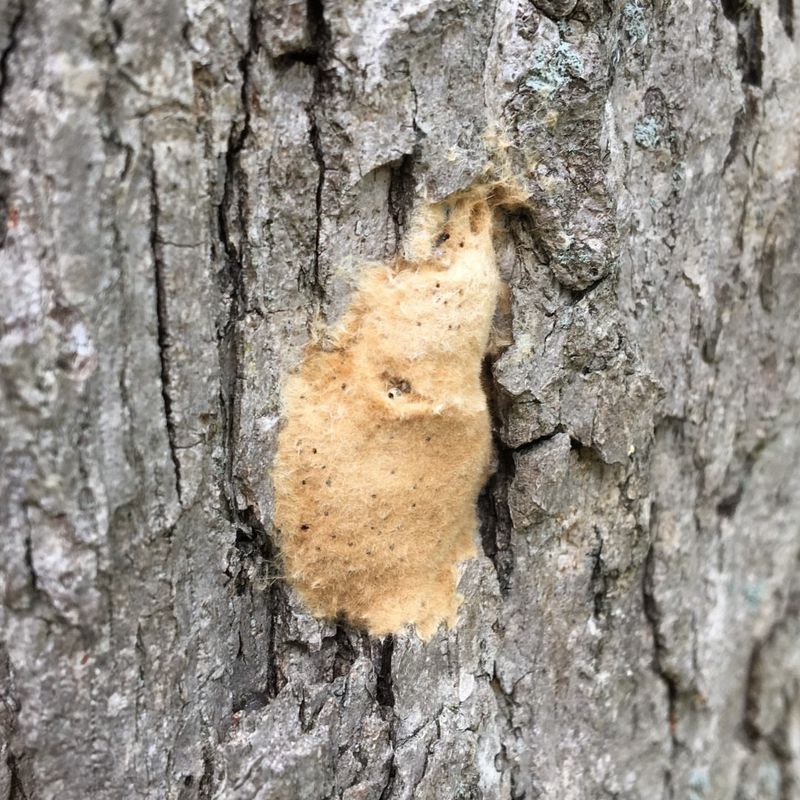
One tricky thing about invasive moths like the flighted spongy moth (Lymantria dispar asiatica) is how they spread. They do not always move by flying from tree to tree on their own.
Egg masses can be laid on a wide variety of outdoor surfaces. Those surfaces sometimes move from one place to another before anyone realizes what is attached to them.
Vehicles, trailers, outdoor furniture, boats, camping gear, and nursery stock are among the types of items that can carry egg masses without the owner noticing.
Egg masses are typically tan or buff-colored, slightly fuzzy in texture, and can be small enough to overlook on a rough surface.
They tend to be laid in sheltered spots, like underneath ledges, in equipment crevices, or on the underside of objects.
Checking outdoor gear and equipment before moving it from one area to another is a simple habit that can make a real difference. If you spot something that looks like it could be an egg mass, do not scrape it off and discard it on your own.
Take clear photos, note where you found it, and report it to your local Extension office or the Florida Department of Agriculture and Consumer Services. Moving or disturbing suspect material without guidance can create more problems than it solves.
6. Moving Firewood Can Spread Tree Pests Into New Areas
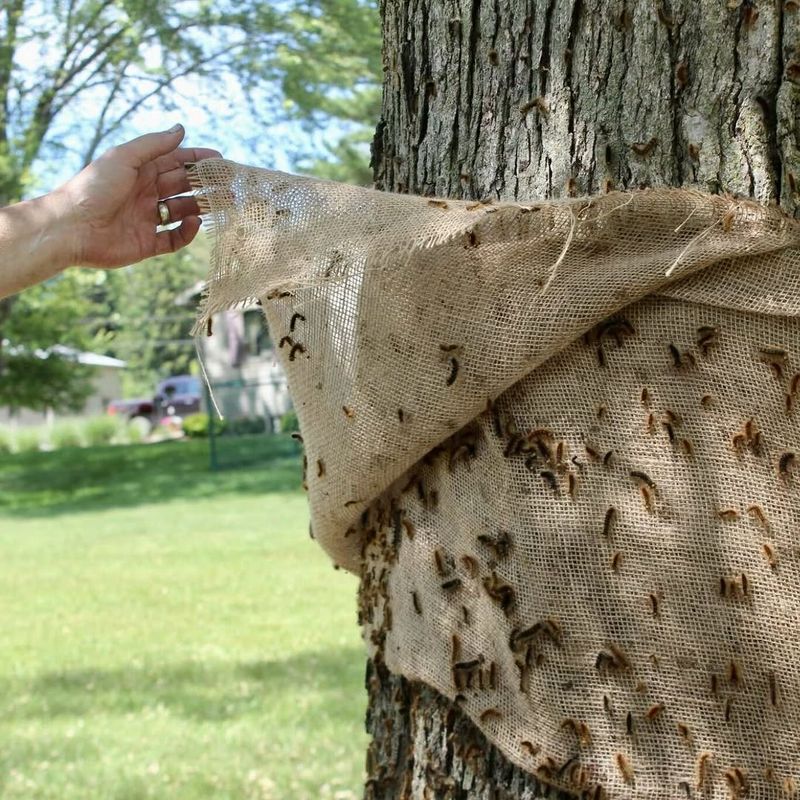
A stack of firewood sitting by the driveway looks harmless enough. But firewood is one of the most well-documented ways that tree pests travel into new areas, and that includes a range of invasive insects beyond just spongy moths.
Eggs, larvae, or pupae can be tucked into bark or hidden in wood grain. They can also attach to the outer surface in ways that are nearly impossible to spot without close inspection.
The advice to buy firewood where you plan to burn it has been promoted by forestry and pest management agencies for years.
Moving firewood from one region to another, even across a few counties, can introduce pests to forests and wooded yards that have no natural defenses against them.
For oak-heavy neighborhoods and wooded properties, that risk is worth taking seriously.
Firewood is not the only way the flighted spongy moth could potentially spread. It fits into a broader pattern of invasive pests moving through human activity rather than just natural flight.
Preventing spread is always more practical than managing an established population after the fact. Sourcing local firewood and inspecting what you bring onto your property are reasonable steps for any homeowner.
Being aware of where your wood comes from also helps without spending a dollar on treatments.
7. Suspicious Caterpillars Should Be Reported Before Anyone Sprays
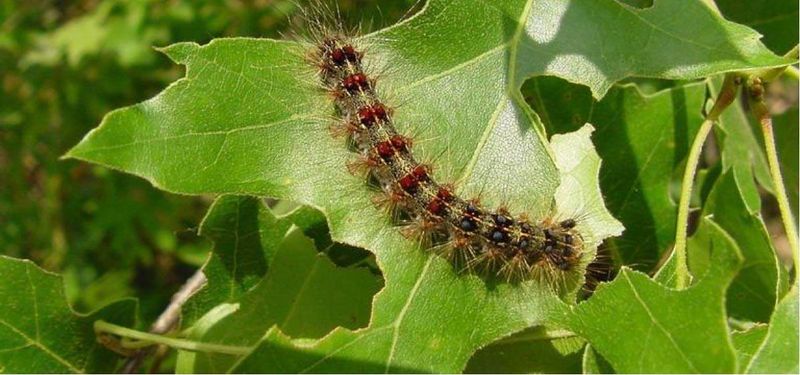
Finding a large, unfamiliar caterpillar on an oak trunk can feel alarming, especially if it looks different from the ones you usually see in the yard. The natural instinct might be to reach for a spray can or knock it off the tree.
Before taking any action, the most useful thing to do is slow down, get your phone out, and take a few clear photos from different angles.
Reporting a suspicious caterpillar, moth, or egg mass to the right authority gives pest experts a chance to confirm the species. It also helps them decide whether a formal response is needed.
In this state, that means contacting your county Extension office or the Florida Department of Agriculture and Consumer Services. You can also use an official invasive species reporting channel.
Accurate identification is the foundation of any responsible pest response.
Spraying trees, yard areas, or shrubs without a confirmed identification can harm beneficial insects, disrupt pollinators, and miss the actual problem entirely. Many caterpillar species found on oaks are native, harmless, or even helpful parts of the local food web.
Wrong identification leads to unnecessary pesticide use and means the real pest goes unreported. Let the experts confirm what you are looking at before any treatment decision is made.
8. The Real Message Is Early Detection, Not Backyard Panic
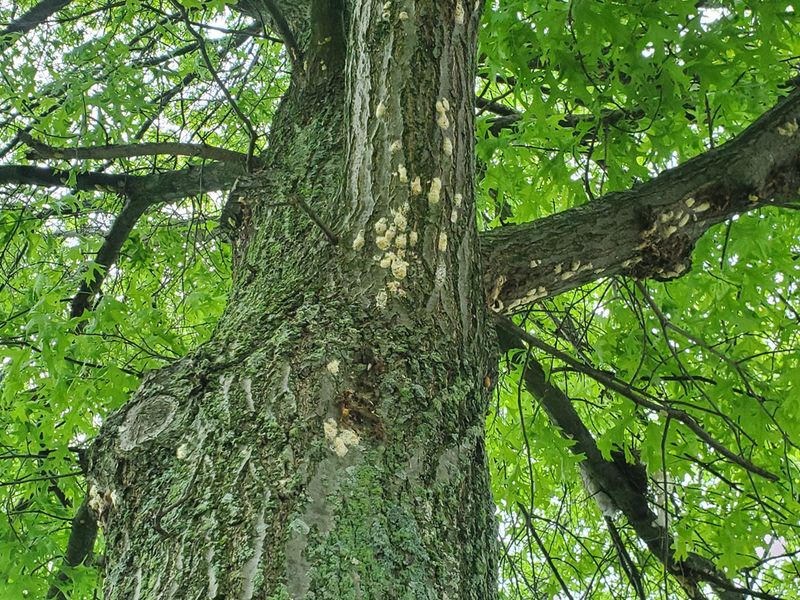
Pest experts do not watch for invasive species like the flighted spongy moth (Lymantria dispar asiatica) because they expect the worst to happen overnight.
They monitor because catching a new pest early, before it has a chance to establish and spread, gives communities a real window to respond.
Early detection has helped limit the impact of several invasive pests in other parts of the country, and the same approach applies here.
For most homeowners, the practical response is straightforward. Learn what healthy oak foliage looks like, so you notice when something seems off.
Keep your trees as healthy as possible through proper watering, avoiding soil compaction, and not over-pruning. Avoid moving firewood, soil, or plants from unfamiliar sources onto your property.
Check outdoor equipment before hauling it between locations.
If you find something suspicious on your oak, document it carefully and report it through the right channels. Skip the spray and skip the panic.
A calm, informed homeowner who can recognize a potential problem and report it accurately does more for oak protection. That helps more than a yard full of pesticide treatments aimed at the wrong target.
Awareness, good tree care, and smart reporting are the real tools that make a difference when it comes to keeping invasive pests from gaining a foothold.