What It Means When A Great Blue Heron Visits Your Iowa Garden
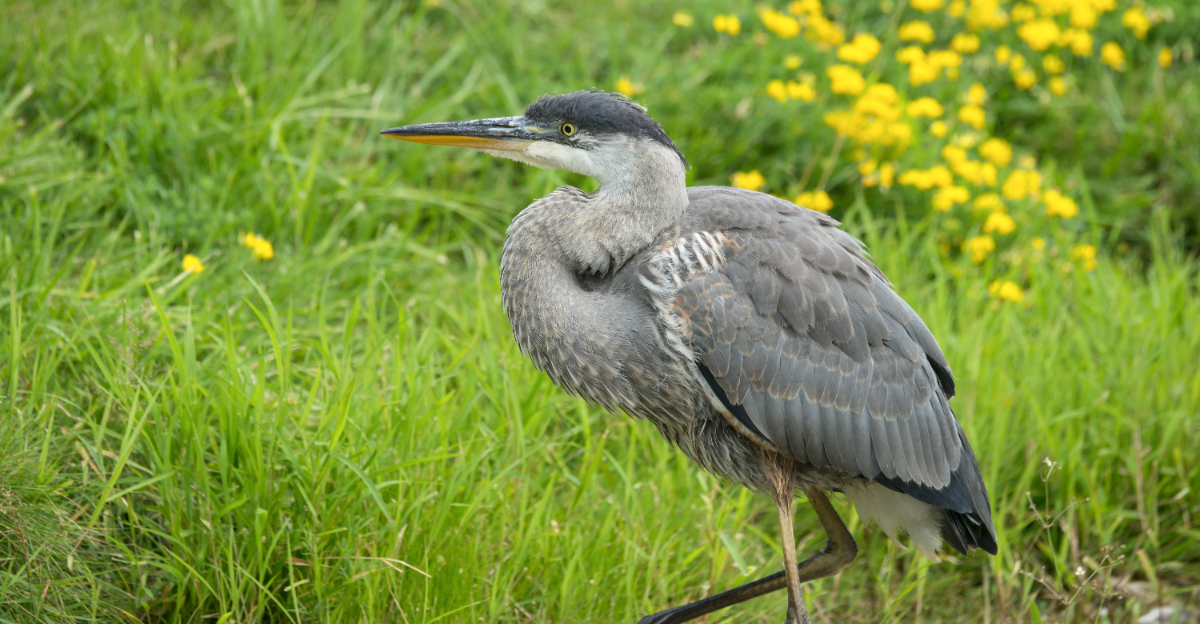
A great blue heron in your Iowa garden is not a coincidence. These birds are deliberate, patient hunters, and if one has shown up near your pond or water feature, it has already sized up your yard and decided it’s worth the visit.
It doesn’t flinch when you open the back door. It doesn’t startle when your dog trots past. It just stands there, still as a fence post, waiting for your goldfish to make one wrong move.
Great blue herons are common across Iowa, but nothing quite prepares you for finding one in your own backyard.
These birds look like something that wandered out of the Cretaceous period and never got the memo that dinosaurs were finished. They are stunning, a little unsettling, and surprisingly strategic about where they show up.
Here’s what that bird is really telling you about your yard, and what to do about it.
A Great Blue Heron Near Your Garden Is Looking For Food, Not A Sign
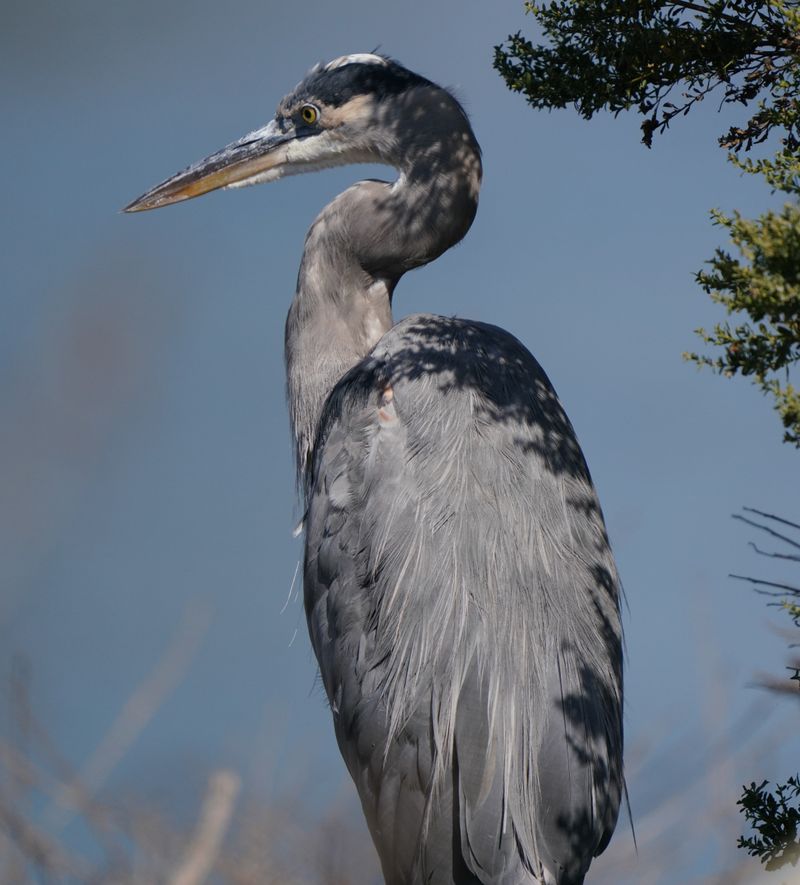
Spot a great blue heron in your yard and your first instinct might be to Google what it means spiritually. Spoiler alert: that bird is not delivering a cosmic message.
Great blue herons are supremely practical creatures. They are wading birds that hunt fish, frogs, and small rodents with laser-sharp focus.
Your garden pond just looked like a free buffet from fifty feet up. The heron circled, spotted movement in the water, and landed without hesitation.
These birds have been refining this exact routine for thousands of years. They are not rare visitors from another dimension; they are highly efficient hunters following their instincts.
In Iowa, great blue herons are year-round residents in many areas. They follow waterways, wetlands, and yes, backyard water features with total commitment.
Your koi pond or garden stream is essentially a neon sign that reads “Free Lunch” in heron language. The bird is not lost, confused, or symbolic; it is hungry.
Understanding this simple truth actually helps you respond smarter. If you want to protect your fish, you need practical solutions, not spiritual interpretations.
And if you have no fish to protect, you can relax and enjoy one of North America’s most striking birds up close. Either way, knowing the real reason behind the visit puts you in control of the situation.
Why Iowa Gardens Attract Great Blue Herons
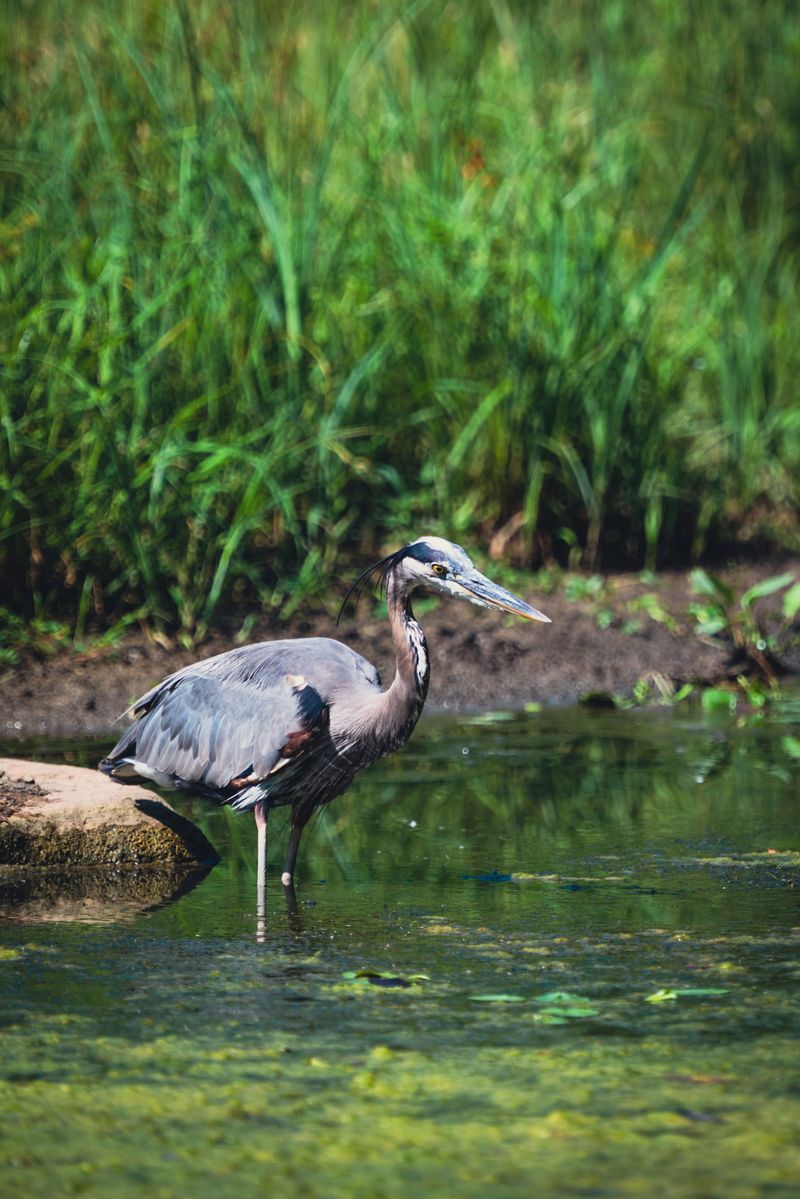
Iowa sits within the Mississippi Flyway, one of North America’s busiest bird migration corridors. Add in hundreds of rivers, lakes, and wetlands, and you have prime heron habitat everywhere you look.
Your garden did not attract this bird by accident. Backyard water features are a major draw, and even a small pond that holds goldfish or tadpoles sends out a signal herons can detect from surprisingly far away.
Gardens near natural waterways have an even higher chance of heron visits. Birds hunting along a creek will naturally explore adjacent yards when the creek looks picked over.
Dense garden plantings also help by harboring frogs, voles, and large insects. Herons are opportunistic; they will eat whatever is slow enough to catch.
Your Iowa Garden Changes Every Week. Your Plan Should Too.
Gardening in Iowa changes quickly throughout the season. Every Friday you’ll receive a simple weekly plan showing exactly what to plant, prune, fertilize, harvest, and protect so you never miss the right timing.
Tall trees nearby are another attractant. Great blue herons nest in large colonies called rookeries, often in cottonwoods or sycamores near water.
If mature trees border your property, a nesting colony might be closer than you think. Herons from that colony will fan out daily to find feeding grounds.
Water depth matters less than you might expect. A heron can work a pond as shallow as a few inches, which means even modest garden water features are firmly on their radar.
Iowa’s mix of farmland, forest edges, and suburban green spaces makes a heron visit almost inevitable if conditions are right.
What A Heron’s Visit Tells You About Your Yard
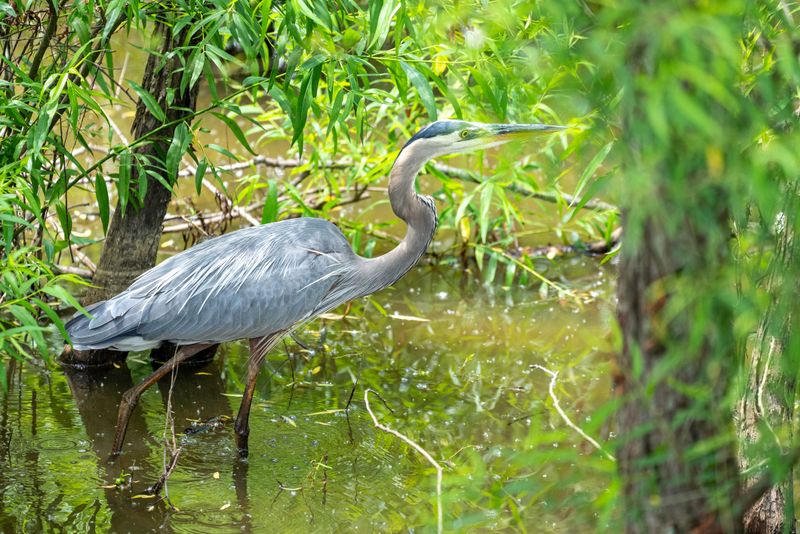
Think of a heron visit as a free ecological report card. When one shows up, your yard is passing with flying colors in at least a few key categories.
First, you have accessible water. Herons need shallow areas where they can wade and strike at prey. Your pond or water feature qualifies.
Second, your water quality is decent. Herons do not waste time at stagnant, lifeless ponds. If one is hunting there, something alive is swimming around in that water.
Third, your garden likely supports a healthy food web. Frogs need clean water and native plants. Small fish need oxygenated ponds. Herons show up when both are thriving.
A heron visit can also hint that your yard is relatively undisturbed. These birds are cautious around heavy human activity and loud neighborhoods.
If one chose your garden, you have probably created a calm, low-stress environment. That is something worth feeling genuinely proud about as a gardener.
On the flip side, repeat heron visits might signal that your pond is too easy to access.
Use this information constructively. Add water plants for fish cover, consider a deeper pond zone, or install a simple deterrent.
Your yard is clearly doing a lot right; just fine-tune the details to protect what you have built.
How Great Blue Herons Behave Up Close
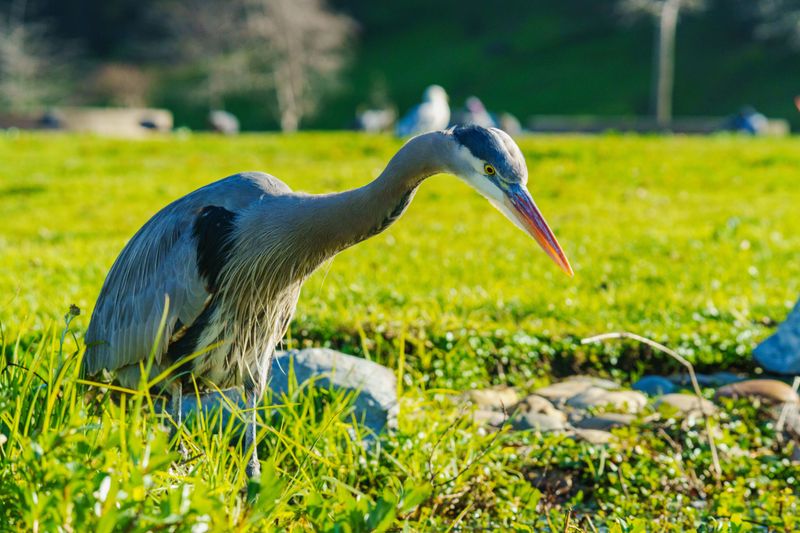
Watching a great blue heron hunt is like watching a statue come to life. The bird stands absolutely motionless for minutes at a time, neck pulled back in an S-curve.
That coiled neck is not resting; it is loaded like a spring. When a fish gets close enough, the neck uncoils in a fraction of a second.
The strike is shockingly fast. The strike happens so fast it reads as little more than a blur, and then a fish in the beak.
After catching prey, the heron tilts its head back and swallows whole. Great blue herons are also surprisingly vocal up close. They produce a loud, prehistoric-sounding squawk when startled or taking flight.
That call is unforgettable once you hear it. It sounds less like a bird and more like something from a dinosaur documentary.
These birds are also highly aware of their surroundings despite appearing zoned out. They track movement with one eye while appearing to stare at the water.
Approach too quickly and the heron will freeze harder, crouch slightly, then launch into the air with massive wingbeats. A great blue heron in flight is genuinely impressive, with a wingspan that can reach up to six feet across a clear Iowa sky.
How To Watch A Great Blue Heron Without Disturbing It
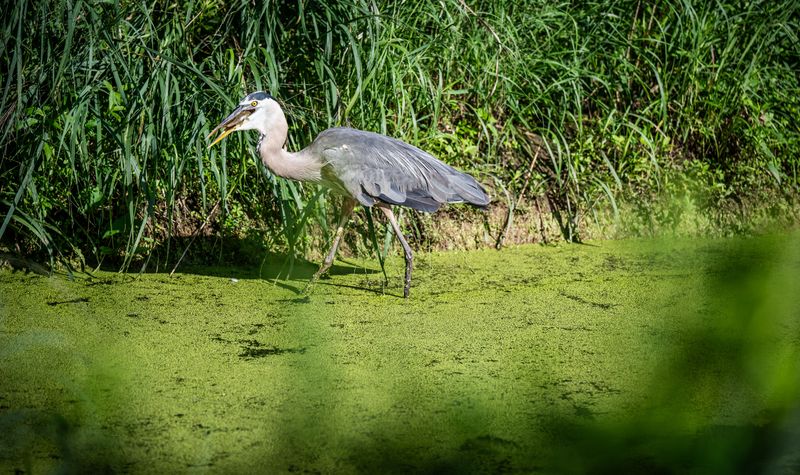
Getting a front-row seat to heron hunting requires patience and a few smart moves. The number one rule is to slow down the moment you spot the bird.
Move in slow motion toward a window or garden wall. Sudden movements trigger a flight response faster than anything else.
Stay low if you are outdoors. Herons key in on silhouettes, and a human standing upright at full height reads as a threat almost immediately.
Use garden structures as natural blinds. A fence, a tall shrub, or even a garden shed corner gives you cover without building anything new.
Binoculars make a huge difference. You can stay thirty or forty feet back and still see every feather detail without crowding the bird at all.
Keep pets inside while watching. Dogs and cats trigger instant departures, and the heron may not return for days after a scare like that.
Avoid making noise, including talking. Even quiet conversation can alert a heron once it is already on edge from sensing your presence nearby.
Morning visits are the easiest to observe. Set up near your window, move slowly, and you might get twenty solid minutes of one of the most fascinating hunting displays in your own backyard.
What To Do If A Heron Keeps Coming Back
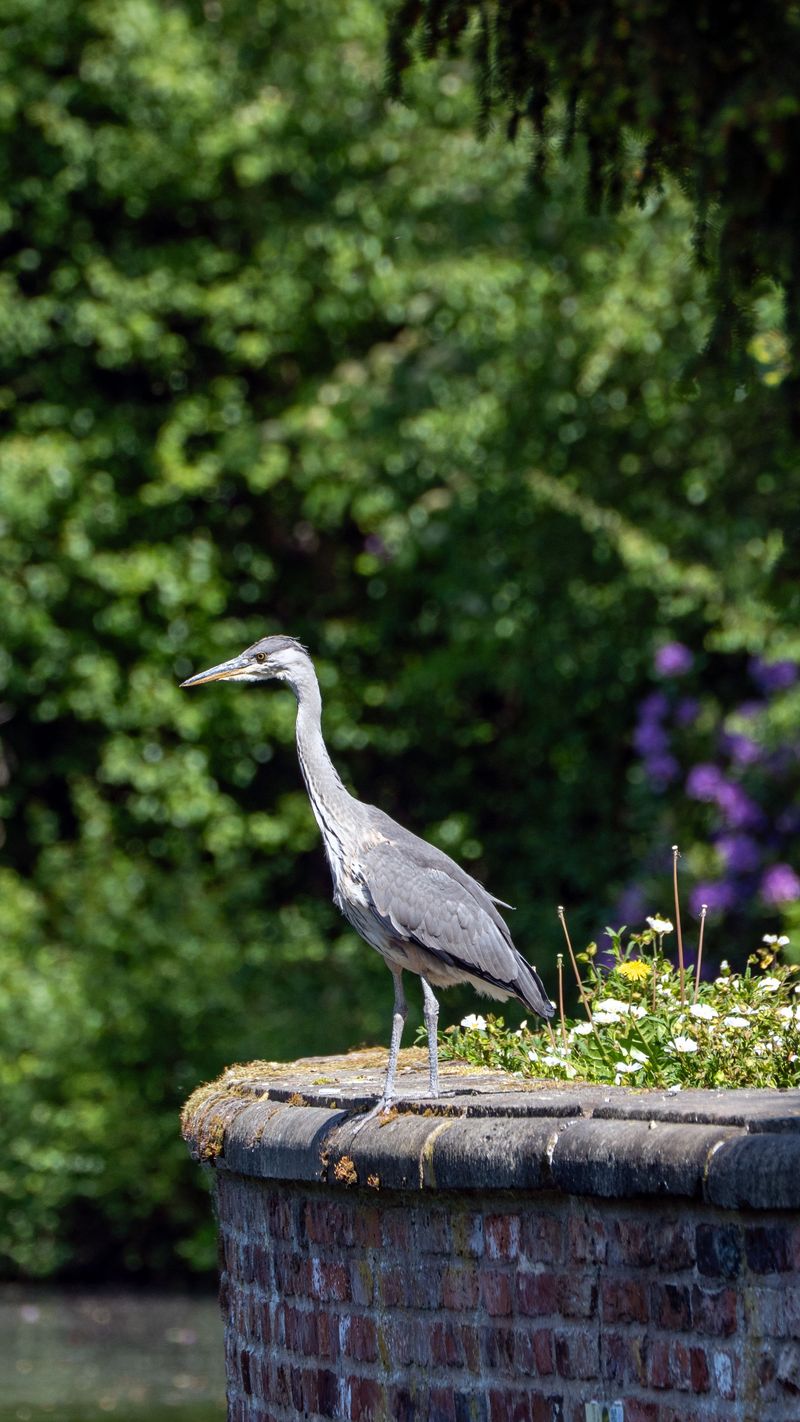
A repeat heron visitor is either a wonderful gift or a genuine problem, depending entirely on whether you have fish. Let’s sort out both scenarios clearly.
If you have no fish or frogs to protect, a returning heron is a bonus. You have accidentally created a reliable feeding spot for a spectacular wild bird.
Keep a journal of visit times. Herons are creatures of habit and often arrive at the same hour each morning, making them surprisingly easy to plan around.
If you do have fish you want to protect, a few low-effort strategies work well. Pond netting stretched over the water surface is one of the most effective options available.
A motion-activated sprinkler is another solid choice. It startles the heron without causing any harm and tends to discourage return visits fairly quickly.
Placing a realistic heron decoy near the pond can also help. Great blue herons are territorial at feeding sites and usually avoid spots where another heron appears to be present.
Move the decoy every few days so the bird does not figure out it is fake. A stationary decoy loses effectiveness within a week or two.
Adding deeper zones to your pond gives fish a place to hide that a wading heron simply cannot reach. A great blue heron visiting your Iowa garden does not have to mean losing your fish; smart planning lets both you and the bird coexist peacefully.