8 Florida Plants That Help Wildlife Without Making The Garden Look Wild
Somewhere along the way, native gardening picked up a reputation it does not deserve.
Overgrown. Messy. The yard that makes the neighbors wonder. Florida gardeners who actually know their natives will tell you that reputation is completely backwards.
The right Florida natives look intentional, polished, and designed. They just happen to also run a hummingbird operation, host butterfly nurseries, and feed migrating songbirds on a schedule that requires nothing from you.
That combination of beauty and ecological output is genuinely hard to find in non-native ornamentals, no matter how much you spend on them.
Every plant on this list earns two paychecks: one for looking sharp in your garden and one for doing something meaningful for the wildlife around you.
None of them require you to sacrifice the tidy, well-composed look you worked for. Some will make your neighbors ask who your landscape designer is. Others will make the hummingbirds ask if they can move in permanently.
Ready to see what both can look like at the same time?
1. Plant Firebush For Polished Color
Firebush is the plant that makes people stop mid-sidewalk to ask what it is.
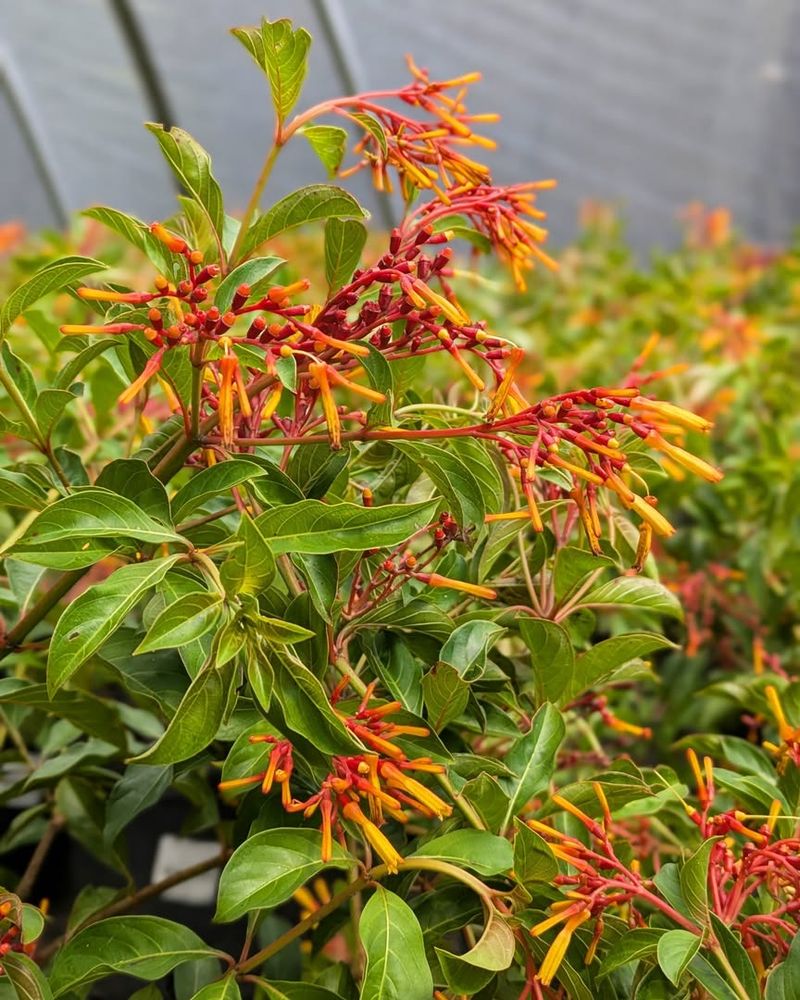
The clusters of tubular orange-red flowers are almost impossibly vivid, and they keep coming from spring straight through fall without the plant ever looking sloppy or overgrown.
It is bold, it is sustained, and it is doing significant ecological work at the same time, which is a combination that most purely ornamental shrubs simply cannot match.
Hummingbirds adore the long tubular blooms and return to the plant repeatedly throughout the season.
Zebra longwing butterflies, Florida’s state butterfly, are frequent visitors, along with gulf fritillaries and a steady rotation of native bees.
After flowering, small dark berries form and give songbirds yet another reason to linger. One plant, multiple wildlife functions, all running simultaneously without any coordination from you.
From a design standpoint, firebush is genuinely easy to work with.
It grows into a full, rounded shrub reaching six to eight feet if left unpruned, but it responds well to shaping and can be kept compact in smaller beds.
Full sun produces the best flowering and deepest color. It handles Florida heat and humidity without complaint and needs very little supplemental water once established.
Pair it with Simpson’s stopper or muhly grass for a layered, polished look that feels lush and intentional. Both combinations work well in front yard beds and backyard borders, and neither requires ongoing fuss to maintain the effect.
Firebush looks like it belongs in a designer bed while quietly running one of the best pollinator programs in the neighborhood.
The hummingbirds are not being subtle about which yard they prefer. Neither should you be about planting this one.
2. Use Simpson’s Stopper For Evergreen Structure
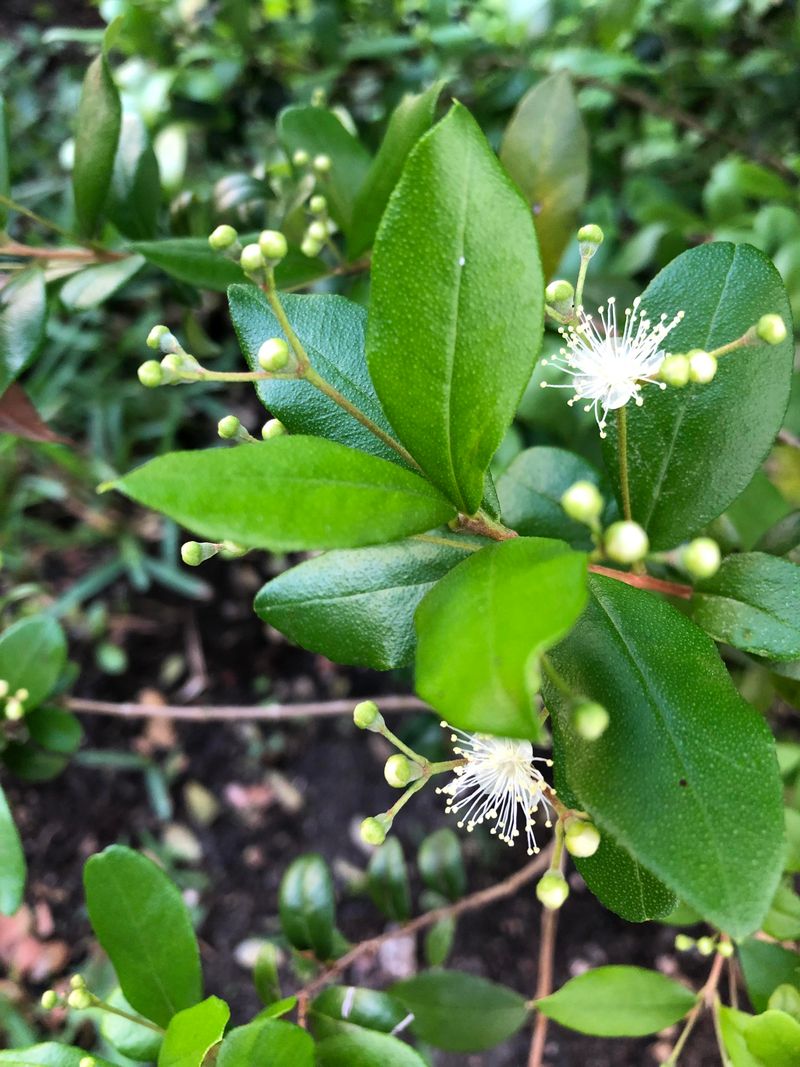
Some plants earn their place by being reliable in every season, and Simpson’s stopper is exactly that kind of plant.
The evergreen foliage stays full, dense, and glossy through Florida’s hottest summers and mildest winters without asking for much in return.
Your Florida Garden Changes Every Week. Your Plan Should Too.
Gardening in Florida changes quickly throughout the season. Every Friday you’ll receive a simple weekly plan showing exactly what to plant, prune, fertilize, harvest, and protect so you never miss the right timing.
It is the plant that makes everything around it look more composed just by holding its ground year-round.
In spring and summer, clusters of small white flowers appear and carry a faint, pleasant fragrance that drifts across the garden on warm mornings.
Native bees and other pollinators work these blooms consistently.
By fall, small orange-red berries ripen and bring in American robins, cedar waxwings, and mockingbirds in numbers that make the yard feel genuinely alive at a time when other plants are winding down.
For structure and form, Simpson’s stopper is nearly unmatched among Florida natives at its size.
It can be trained as a hedge, used as a specimen plant, or tucked into a mixed shrub border where its evergreen density fills in gaps and provides screening without looking impenetrable.
It tolerates light shade and grows well across a range of Florida soils.
Pruning is easy and the plant holds its shape without constant attention. Homeowners who want a neat, formal-looking garden edge with genuine wildlife value will find this plant checks every box.
It looks like it came straight from a professional landscape plan.
The birds treat Simpson’s stopper like a five-star resort in fall. The neighbors treat it like evidence that you know what you are doing out there. Both responses are entirely justified.
3. Add Coontie For Clean Native Form
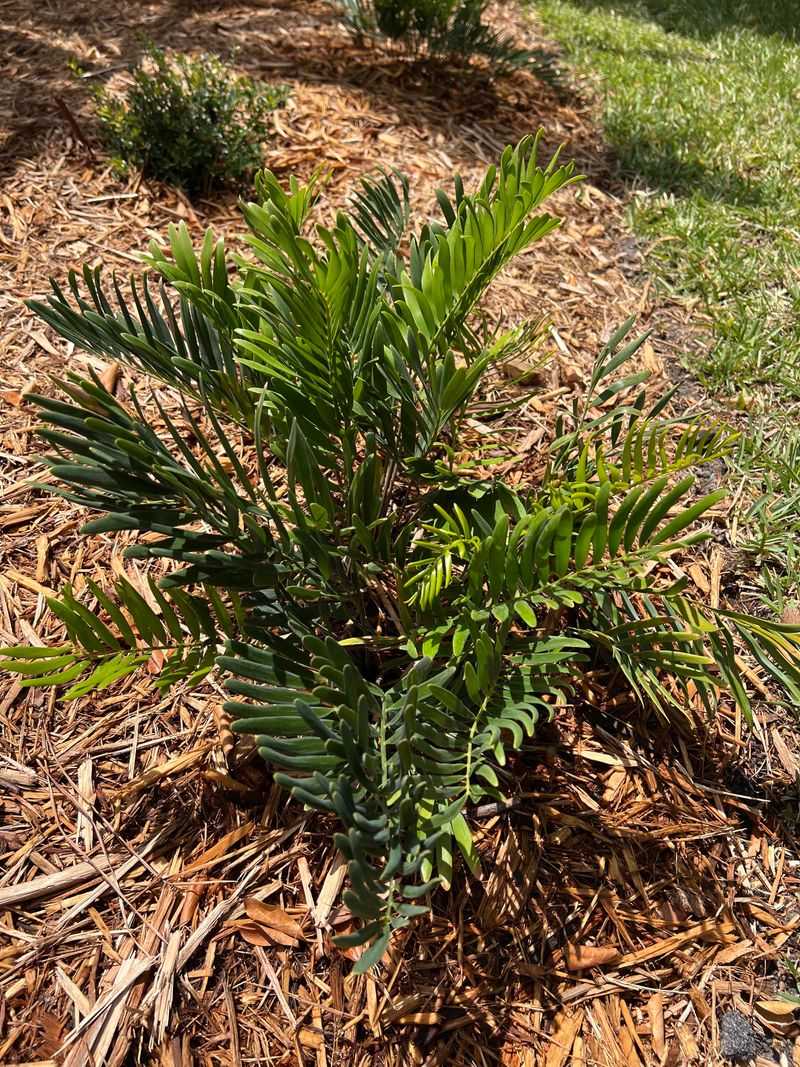
Coontie has been growing in Florida for thousands of years and still looks like it was chosen by a landscape designer last week.
That combination of ancient credentials and contemporary polish is genuinely rare, and it is exactly why this plant keeps appearing in well-designed Florida gardens at every price point.
The only cycad native to North America, it brings a sculptural, architectural quality to garden beds that is hard to replicate with anything else at a comparable size.
It grows low and slow, typically reaching one to three feet tall. That makes it perfect for borders, foundation plantings, and spots where you need something tidy that will not outgrow its space by next season.
Full sun to partial shade, high drought tolerance, almost no maintenance once established. On the practical side, coontie checks every box a busy Florida gardener needs checked.
The wildlife connection is specific and remarkable. Coontie is the sole host plant for the atala butterfly, a striking species with iridescent blue wings and bright red markings that was once rarely seen in Florida.
As coontie plantings have expanded across the state, atala populations have rebounded visibly, making this plant a genuine conservation success story you can participate in from your own front yard.
The caterpillars feed on the foliage and their orange eggs are often visible on the leaves, turning the garden into an active nature scene.
That kind of specific, traceable ecological impact is what separates a native plant from a plant that merely tolerates Florida.
Clean lines, serious ecological purpose, and a butterfly comeback story attached to it. Coontie has been in Florida since long before anyone was landscaping here, and it is still one of the smartest choices on the list.
4. Grow Beautyberry For Bird Traffic
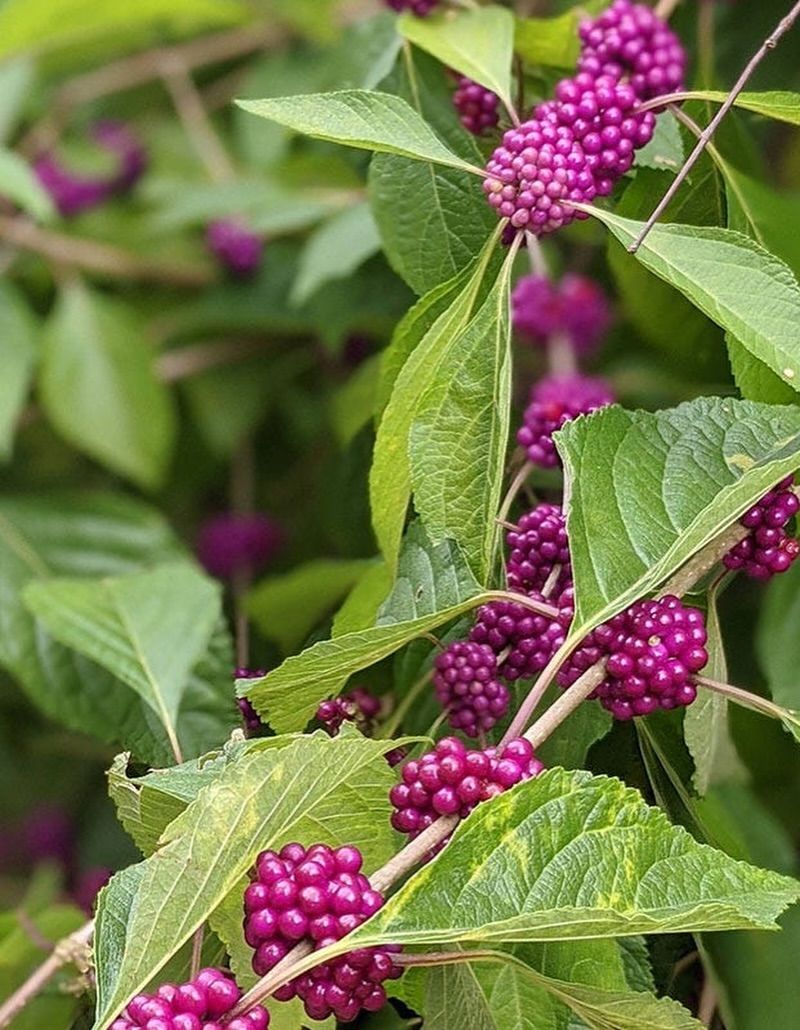
Almost every fall, beautyberry does something that stops people mid-stride.
The long arching stems become loaded with clusters of shockingly bright purple berries, packed so tightly along every branch that the plant looks almost artificially colored.
It is the kind of visual impact that makes drivers slow down, and birds respond to it with exactly the same urgency.
Mockingbirds, brown thrashers, catbirds, and migrating species descend on beautyberry the moment those berries ripen.
A single established shrub can attract dozens of individual birds over the course of a few fall weeks, turning the yard into a critical refueling stop for wildlife moving through Florida during migration.
That ecological contribution is hard to match with almost any other plant at this price point.
Beautyberry grows with some energy, but it is easy to manage with a good pruning routine. Cut it back hard in late winter and it bounces back quickly and full.
In a planned bed, it pairs well with taller shrubs like firebush or Simpson’s stopper, which frame its loose arching form and make the overall planting look more intentional from the street.
The white-berried variety, Callicarpa americana var. lactea, offers a softer palette while keeping all the bird appeal.
Plant it in partial shade to full sun in well-drained soil. Both the standard purple and the white form earn their space with months of genuine visual impact.
Beautyberry is stunning for months and genuinely useful to wildlife all at once, which is a rare combination in any plant.
The birds figured that out a long time ago. The neighbors are just now catching up.
5. Train Coral Honeysuckle With Purpose
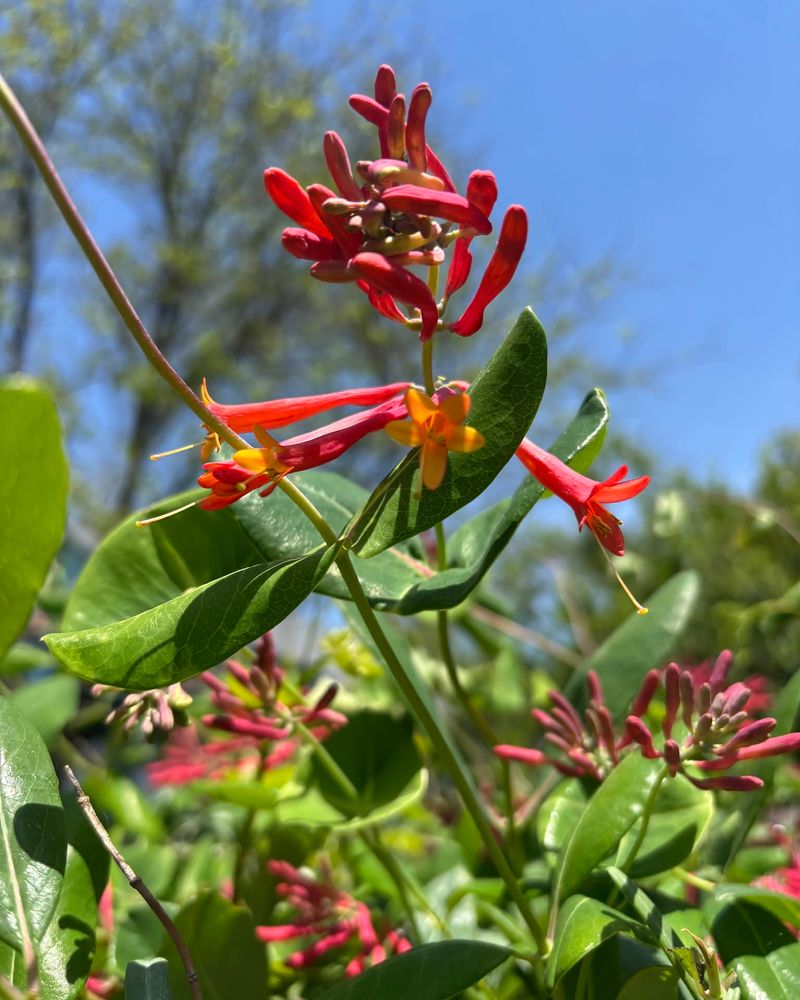
A hummingbird hovering inches from your face while it sips from a bright red flower is one of those garden moments that stays with you.
Coral honeysuckle makes that moment happen, and it does it without any of the invasive tendencies that give other honeysuckle species such a poor reputation in Florida.
This native vine plays by the rules and still delivers one of the most satisfying wildlife shows available in a home garden.
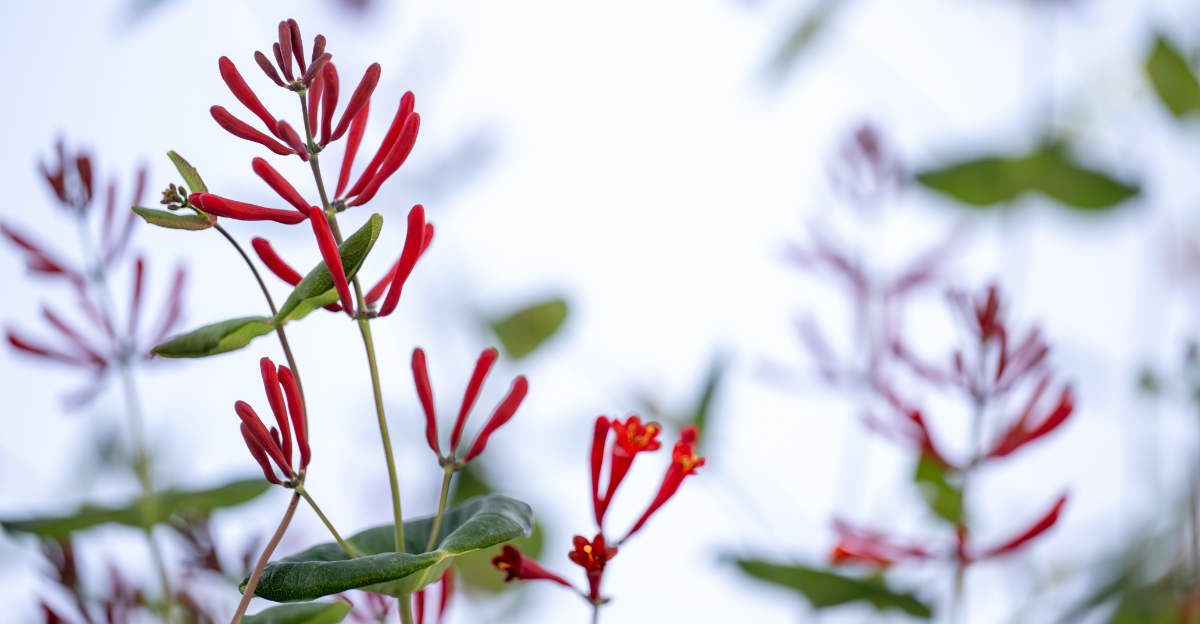
The tubular flowers are rich coral-red on the outside and soft yellow within, appearing in clusters from late winter through fall.
Ruby-throated hummingbirds treat them like a personal diner, returning repeatedly throughout the season. Zebra longwing butterflies visit the blooms, and the red berries that follow attract songbirds in smaller numbers.
The plant earns its wildlife credentials across multiple seasons and multiple species simultaneously.
The key to keeping coral honeysuckle looking tidy is giving it something intentional to climb. A sturdy trellis, a fence section, an arbor, or a mailbox post all work as support structures.
Train new stems as they grow by guiding them gently in the direction you want, and do light pruning after flowering to keep the plant compact and encourage new growth.
Coral honeysuckle is not a rampant grower, so it stays manageable with minimal effort. It tolerates a range of soil types and light conditions, though it blooms most heavily in full sun.
As a vertical element in a planned bed, it adds seasonal color and hummingbird activity that no other Florida native vine quite replicates.
Give it a fence and a little guidance and it rewards you with a hummingbird show that runs from late winter through fall.
That is an exceptionally long performance for a plant that costs under fifteen dollars and asks for almost nothing in return.
6. Use Muhly Grass For Soft Movement
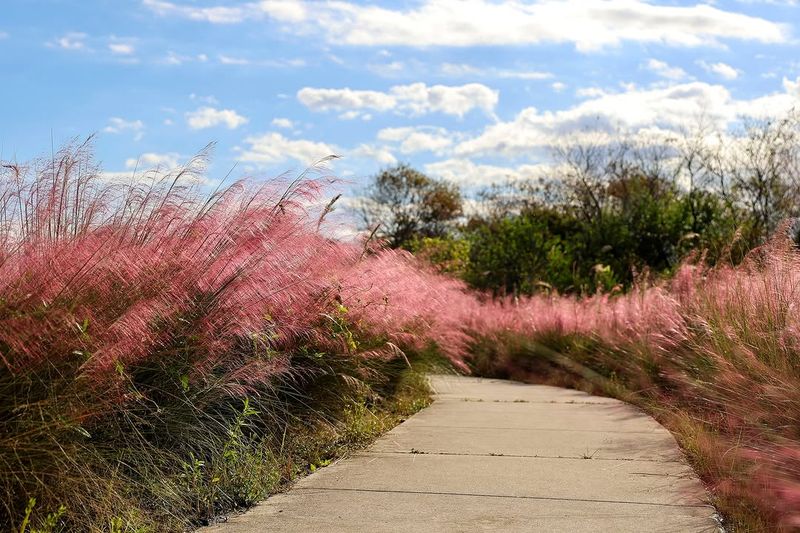
There is a specific moment in mid-fall when pink muhly grass does something that stops garden visitors mid-conversation.
The airy pink plumes rise above the fine green blades like a soft cloud, catching afternoon light in a way that makes the entire planting glow.
It is one of the most photographed native plants in Florida, and once you see it in person, the photographs start to make sense.
The slender green blades stay tidy and low through most of the year. That makes muhly grass an excellent edging plant or mid-border accent that earns its space even when the dramatic fall bloom is months away.
When the plumes arrive, the fine texture creates a soft, natural movement in the slightest breeze, adding life to the landscape without ever looking messy or unkempt.
From a wildlife perspective, muhly grass provides seeds that small birds and ground-foraging sparrows use, and the dense clumping growth offers shelter and nesting material for several species.
Skippers and small butterflies use it as a landing platform throughout the season. The plant grows best in full sun with well-drained soil and is highly drought-tolerant once established.
Mass plantings along driveways, walkways, or mixed perennial borders create the most visual impact. A single specimen looks nice.
A row of five or seven plants in fall looks like the entire garden was planned around that moment, even when it was not.
Muhly grass is genuinely elegant, genuinely wildlife-friendly, and genuinely low effort.
It peaks in October when most of the garden is winding down, which is possibly the best timing decision in all of Florida native gardening. The plumes are not being modest about it.
7. Plant Wild Coffee In Shady Corners
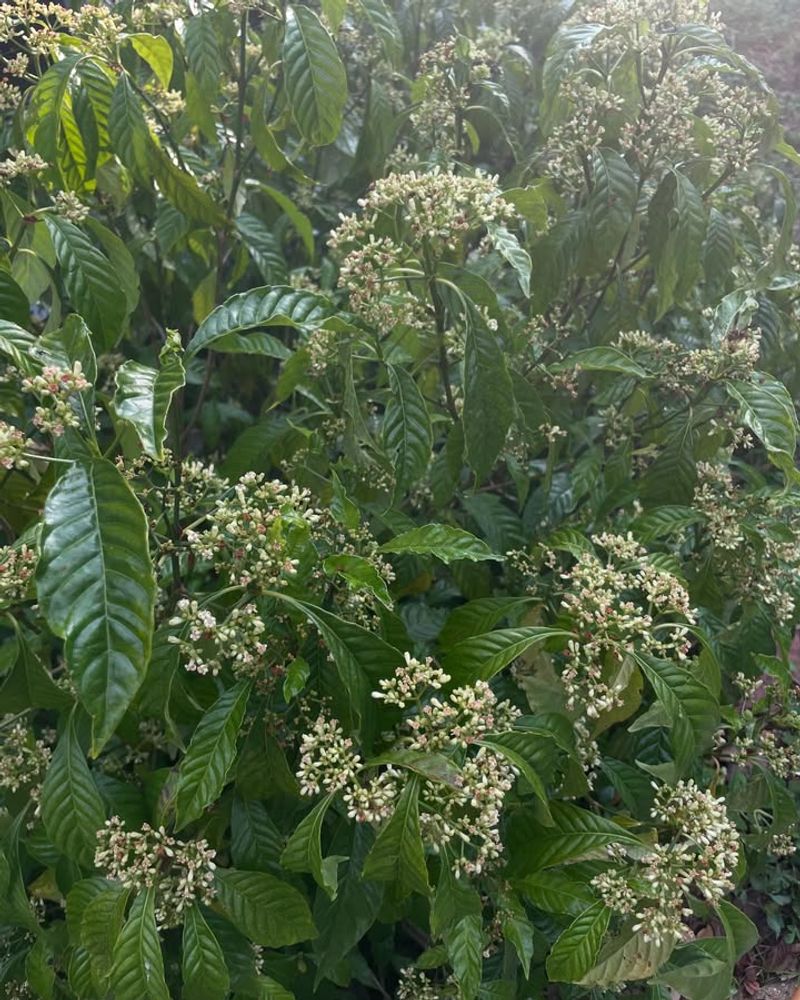
Most wildlife-friendly plants demand full sun, which can leave shaded corners feeling like an afterthought. Wild coffee solves that problem in a way that looks deliberate rather than compromised.
This shade-loving native shrub thrives under the canopy of oaks and other large trees, filling in dim spots with glossy, deeply veined foliage that reads as lush and intentional rather than desperate and sparse.
The leaves are the first thing most people notice: deep green, heavily textured, with prominent veins running in neat parallel lines across each surface.
In summer, clusters of small white flowers attract native bees and other understory pollinators.
By fall and winter, those flowers become small bright red berries that hermit thrushes, red-eyed vireos, and migrating warblers seek out consistently.
The plant feeds wildlife across multiple seasons from a spot that most other plants would struggle to survive in.
As a landscape plant, wild coffee is well-behaved in the way that matters most for a designed garden. It grows slowly to about four to six feet tall and wide, forming a rounded, full shrub that never looks out of place in a planned planting.
It pairs naturally with coontie at its base and native trees overhead, creating a layered understory that mimics Florida’s hammock environment without requiring any ecological credentials to put together.
Once established, it needs little supplemental water and no fertilizer.
For shaded corners that have resisted every previous planting attempt, wild coffee offers structure, seasonal color, bird traffic, and year-round foliage that looks genuinely polished rather than merely surviving.
The shaded corner that used to be a problem is now the most ecologically active part of the garden.
Wild coffee did that quietly, without drama, and while looking very good about it the entire time.
8. Add Yaupon Holly For Tidy Berries
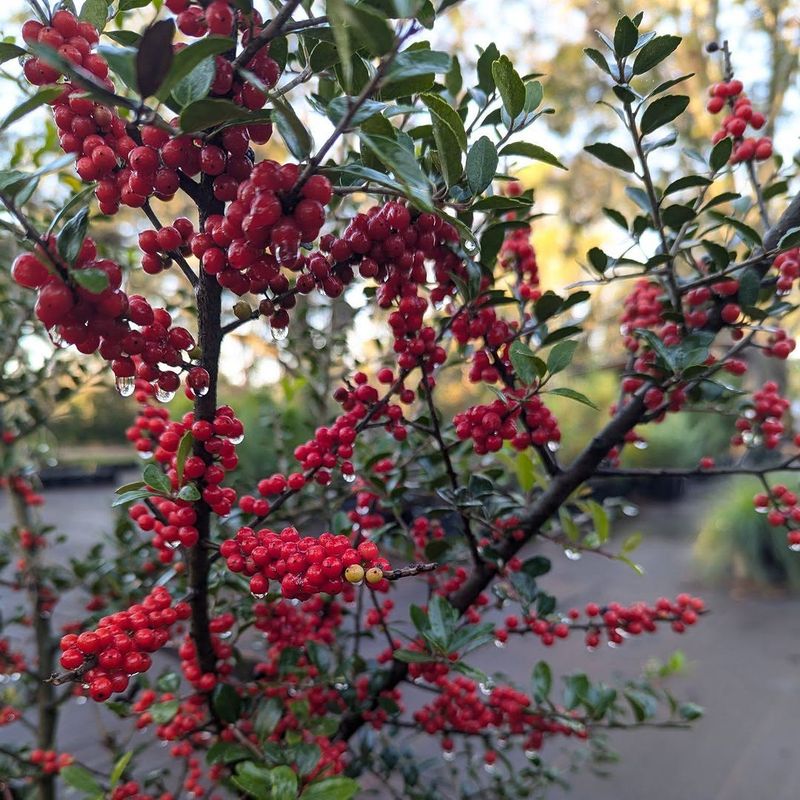
Bright red berries against deep green leaves in December sounds like something from a holiday card. In Florida, that is just yaupon holly doing what it does every winter without any special occasion required.
One of the most adaptable, versatile, and wildlife-friendly native plants available to Florida gardeners, it earns its place in formal and casual landscape designs with equal confidence.
Yaupon holly is naturally dense and evergreen, with small, slightly scalloped leaves that hold their color and form year-round.
It takes pruning extremely well, which means it can be shaped into a formal hedge, kept as a tightly clipped specimen, or allowed to grow in a relaxed natural form depending on the look of the surrounding garden.
That flexibility makes it useful in almost any yard style from modern minimalist to cottage and casual.
On the wildlife side, few plants deliver as consistently across seasons. The red berries on female plants are a critical food source for birds during winter when other options are genuinely scarce.
Cedar waxwings, bluebirds, mockingbirds, and yellow-rumped warblers all feed on the fruit. The dense branching also provides nesting and roosting cover that smaller songbirds actively seek out during cold nights.
Plant one male for every few females to ensure reliable berry production. Yaupon holly grows in full sun to partial shade and handles wet or dry soil conditions without complaint.
It is remarkably low-maintenance once established and requires nothing special to deliver its full seasonal performance.
Every season in a Florida garden feels more complete with yaupon holly holding a corner of it together.
The birds know exactly when the berries are ready and show up accordingly. The only real question is whether you have enough female plants to keep everyone satisfied. Probably plant one more.