The Most Underrated Michigan Perennial That Repels Deer, Ticks, And Rabbits Naturally
Dealing with deer, ticks, and rabbits individually is already frustrating enough. Having all three problems active in the same yard at the same time turns routine garden maintenance into a constant defensive exercise that never fully resolves.
Most solutions address one of these pressures without doing anything meaningful about the other two, which means the overall problem stays intact even when one part of it improves temporarily.
One Michigan perennial works against all three simultaneously through a combination of scent, texture, and plant chemistry that each of these animals finds genuinely off-putting.
It is not a perfect barrier in extreme pressure situations, but as part of a thoughtful planting strategy it reduces activity from all three problem species in a way that no single-purpose repellent plant comes close to matching.
1. Virginia Mountain Mint
Not every great garden plant gets the spotlight it deserves, and Virginia mountain mint is proof of that.
Known by its scientific name Pycnanthemum virginianum, this native Michigan perennial has been quietly growing along meadow edges and stream banks for centuries.
Yet most home gardeners still overlook it completely at the nursery.
What makes it stand out is the combination of qualities it brings to one plant. It is strongly aromatic, which makes deer and rabbits far less interested in browsing it.
It blooms with clusters of small white flowers that draw in an impressive range of beneficial insects. It handles average Michigan soils without much fuss, and it comes back reliably year after year.
For gardeners who want a border that works smarter, Virginia mountain mint fits the title of this article perfectly. It is native to the state, which means it is already adapted to local rainfall, temperatures, and soil conditions.
It helps create a cleaner, sunnier, more open yard edge that is less welcoming to ticks. It does all of this while staying low-maintenance and looking great from midsummer through early fall.
One important note: this plant adds a helpful layer to your yard design, but it does not replace regular tick safety habits like checks, protective clothing, and approved repellents.
2. A True Michigan Native That Earns Its Place In Your Garden
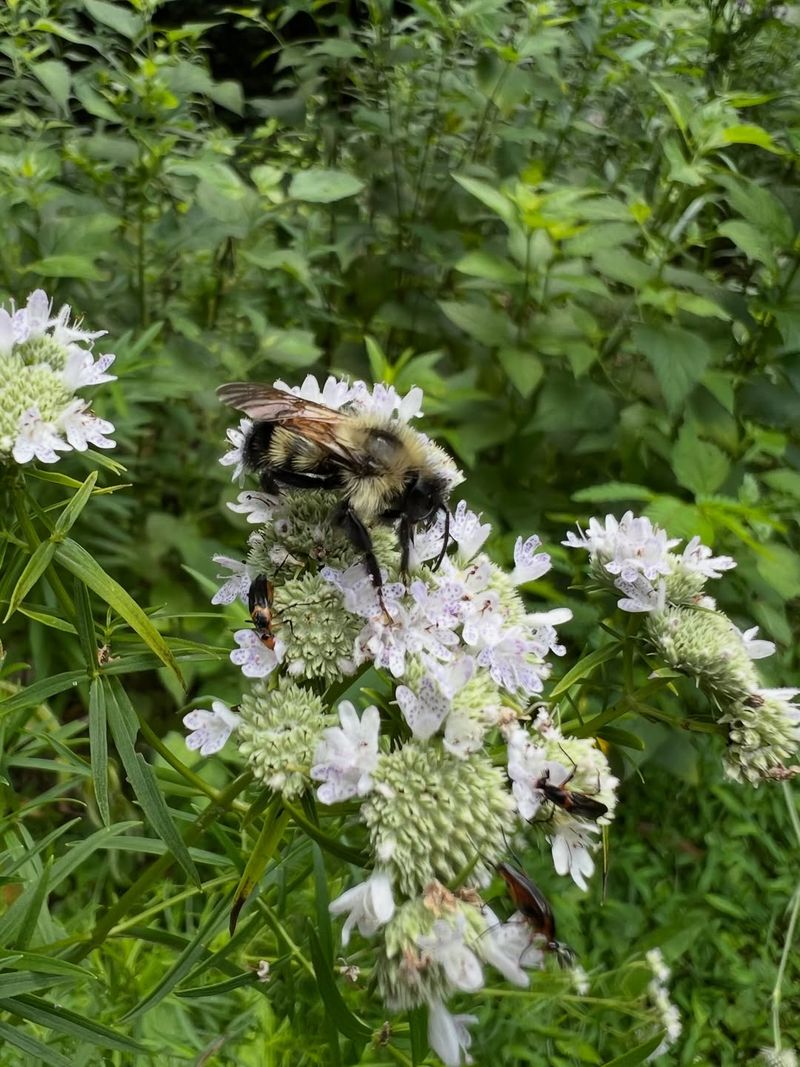
Michigan State University documents Virginia mountain mint as a genuine native perennial of the Great Lakes region. That status matters more than most gardeners realize.
Native plants are already tuned to local conditions, meaning they do not need extra watering, soil amendments, or winter protection once they settle in.
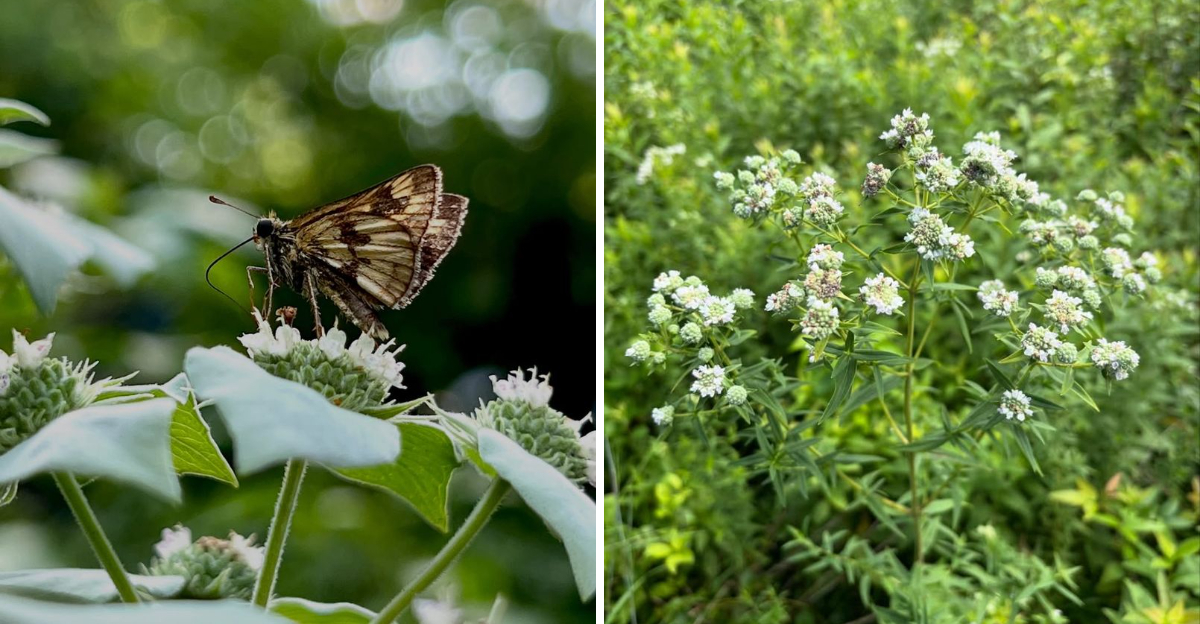
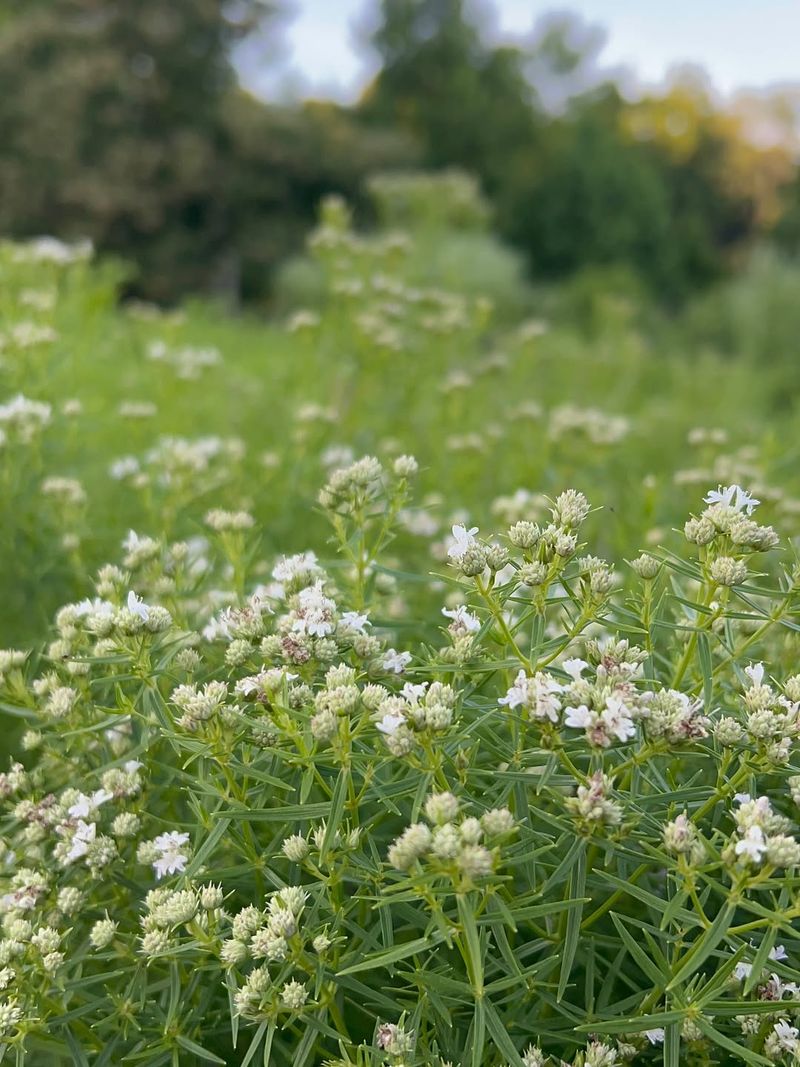
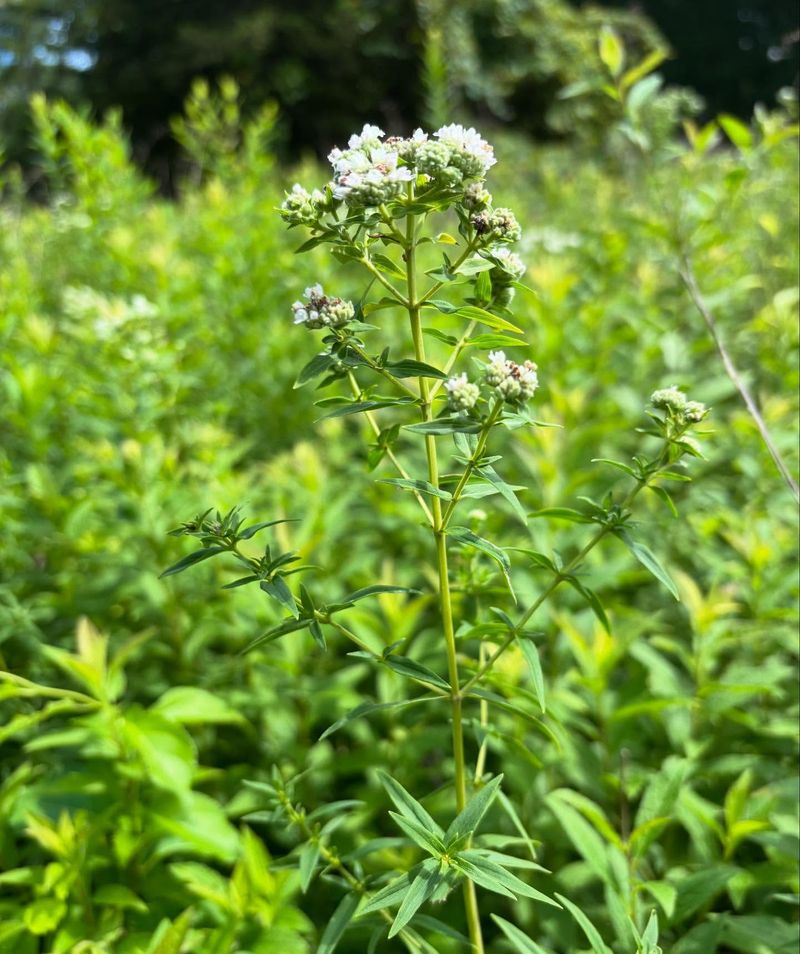
Virginia mountain mint grows between one and three feet tall, forming upright clumps with narrow, slightly silvery leaves.
The white flower clusters open in July and keep going into early September, which fills a valuable blooming window when many other perennials have already finished. That long bloom time is a real asset in any Michigan garden plan.
Because it is native, it fits naturally into pollinator gardens, meadow-style borders, and rain garden edges where you want plants that support local ecosystems.
It also works beautifully along sunny woodland transitions, where the open light suits it and the naturalistic setting matches its character.
Your Michigan Garden Changes Every Week. Your Plan Should Too.
Gardening in Michigan changes quickly throughout the season. Every Friday you’ll receive a simple weekly plan showing exactly what to plant, prune, fertilize, harvest, and protect so you never miss the right timing.
Gardeners who are building a native border from scratch will find that Virginia mountain mint acts as a great structural plant, providing height, texture, fragrance, and flower power all at once.
Pairing it with other Michigan natives like wild bergamot, black-eyed Susan, and prairie dropseed creates a border that looks intentional, supports wildlife, and stays manageable season after season without requiring constant attention or replanting.
3. Its Minty Scent Sends Deer Looking Elsewhere
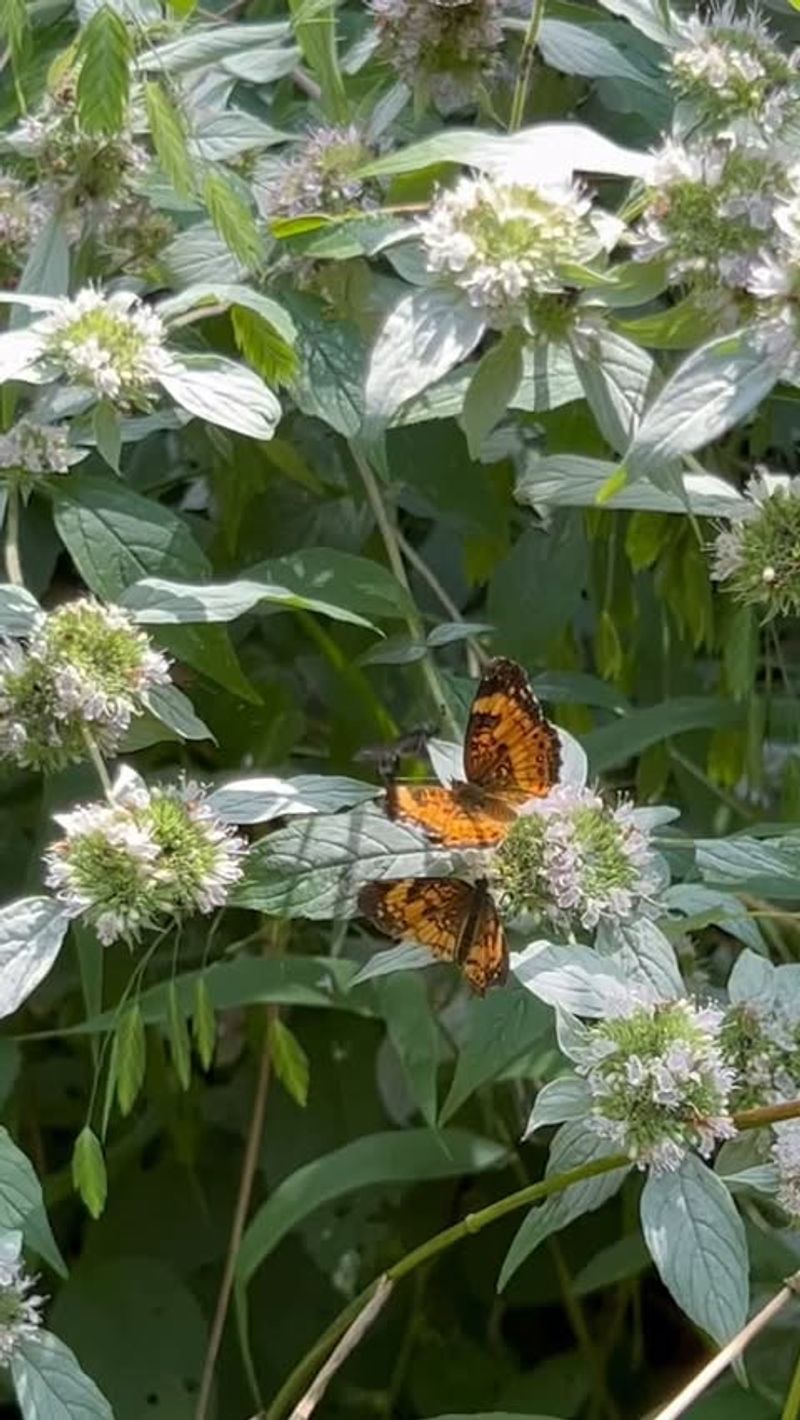
Deer are browsers by habit, and they tend to follow the path of least resistance. When a plant smells strongly of mint oil, most deer decide their next meal is somewhere else.
Virginia mountain mint produces intensely fragrant foliage from the moment you brush against it, and that scent is one of its best natural defenses in a Michigan yard.
Hostas, daylilies, and young arborvitae are some of the most heavily browsed plants in Michigan landscapes. They are soft, lush, and basically odorless from a deer’s perspective, which makes them easy targets.
Virginia mountain mint is the opposite. The aromatic oils in its leaves and stems signal to deer that this is not worth the effort, especially when easier options are nearby.
No plant in the world is completely deer-proof. Hungry deer in late winter or early spring may sample almost anything.
But Virginia mountain mint consistently ranks as one of the smarter choices for gardeners dealing with regular deer pressure. Planting it along borders, pathways, and garden edges creates a fragrant barrier that most deer would rather avoid.
Over time, building a border with multiple aromatic native plants, including mountain mint, wild bergamot, and catmint, gives deer even fewer reasons to linger.
The goal is not perfection but making your yard a less appealing destination than your neighbor’s unprotected garden.
4. Rabbits Usually Pass Right By This Aromatic Plant
Rabbits can be relentless in a Michigan garden, especially in spring when tender new growth is everywhere. Young perennials, vegetable seedlings, and soft groundcovers are all fair game.
Virginia mountain mint, however, tends to stay off the menu thanks to its strong mint-family fragrance and flavor.
The same essential oils that make this plant smell wonderful to humans make it far less appealing to rabbits.
Rabbits rely heavily on smell when choosing what to eat, and plants that carry potent aromatic compounds usually get skipped in favor of blander options nearby.
Virginia mountain mint fits that profile well, which is why gardeners with rabbit pressure often report that it comes through spring with minimal browsing damage.
That said, young plants right after transplanting are more vulnerable than established ones. A rabbit that is truly hungry may nibble a newly planted mountain mint before it has time to fill out and release its full scent.
Protecting young transplants with a simple wire cage or fencing for the first season is a smart move, especially in gardens where rabbits are a constant presence.
Once the plant is established and producing full-sized aromatic foliage, it becomes much less interesting to rabbits.
Pairing Virginia mountain mint with other rabbit-resistant natives like wild ginger, lanceleaf coreopsis, and prairie blazing star creates a border that naturally discourages browsing without the need for constant replanting or repellent sprays.
5. How It Helps Make Tick Edges Less Inviting
Ticks do not appear randomly across a yard. They are most commonly found in specific environments: tall grass, dense brush, shaded moist edges, and piles of leaf litter.
Understanding where ticks like to wait is the first step toward designing a yard that gives them fewer places to hang out.
Virginia mountain mint does not repel ticks the way a spray repellent works on skin. What it does is help replace the kind of messy, overgrown border growth that ticks prefer.
When you swap out a tangled, weedy, shaded edge for a clean, sunny, well-managed planting of native mountain mint, you are removing the exact conditions that make tick zones so attractive.
Sunlight, airflow, and drier soil are all unfavorable for tick survival. Think of Virginia mountain mint as one useful piece of a smarter yard design rather than a complete solution.
Mowing pathways along garden edges, clearing out brush piles, managing leaf litter, and keeping borders open and sunny all work together to reduce tick habitat.
Mountain mint fits into that plan naturally because it grows upright, stays relatively tidy, and thrives in the open sunny spots where you want to replace messy growth.
Paired with good yard maintenance habits, it becomes a genuinely useful part of a tick-smart border strategy for Michigan homeowners who spend time outdoors.
6. The Aromatic Oils Are Real, But Garden Planting Is Not A Personal Repellent
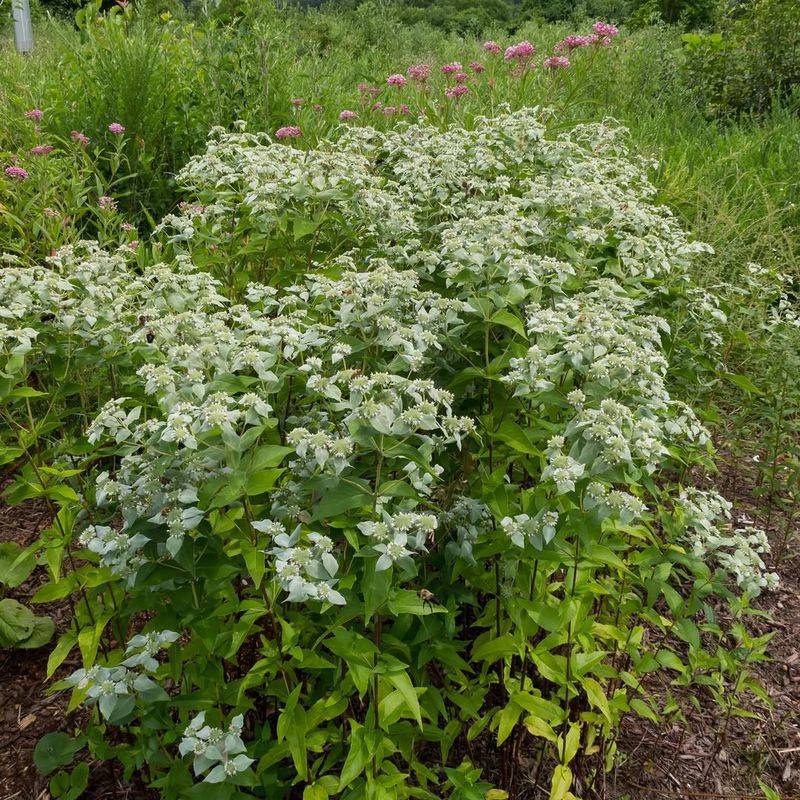
Mountain mints have a well-earned reputation for strong aromatic oils, and that reputation is backed by real chemistry.
The leaves and stems of Pycnanthemum virginianum contain compounds like pulegone and other volatile oils that give the plant its sharp, clean mint scent.
Herbalists and naturalists have long noted these properties, and some traditional uses involved rubbing the foliage on clothing or skin as a rough insect deterrent.
Some research on mountain mint relatives does point to insect-repellent activity in the plant’s essential oils, which is genuinely interesting.
However, rubbing a few leaves on your shirt is not the same as applying a tested, EPA-registered repellent.
The concentration of oils in fresh foliage is not consistent, and there is no standardized way to apply it as a reliable personal protection method.
Growing Virginia mountain mint in your garden border is a smart landscaping choice, not a substitute for proven tick protection.
When you head into wooded areas, tall grass, or known tick habitats, use an approved repellent, wear light-colored protective clothing, and do a full body tick check when you come back inside.
Virginia mountain mint earns its place in the garden for many reasons, and its aromatic character is genuinely valuable. Just keep expectations honest: it is a smart border plant with real fragrance, not a force field.
Use it alongside good personal protection habits, not instead of them.
7. Pollinators Love It Even When Deer And Rabbits Do Not
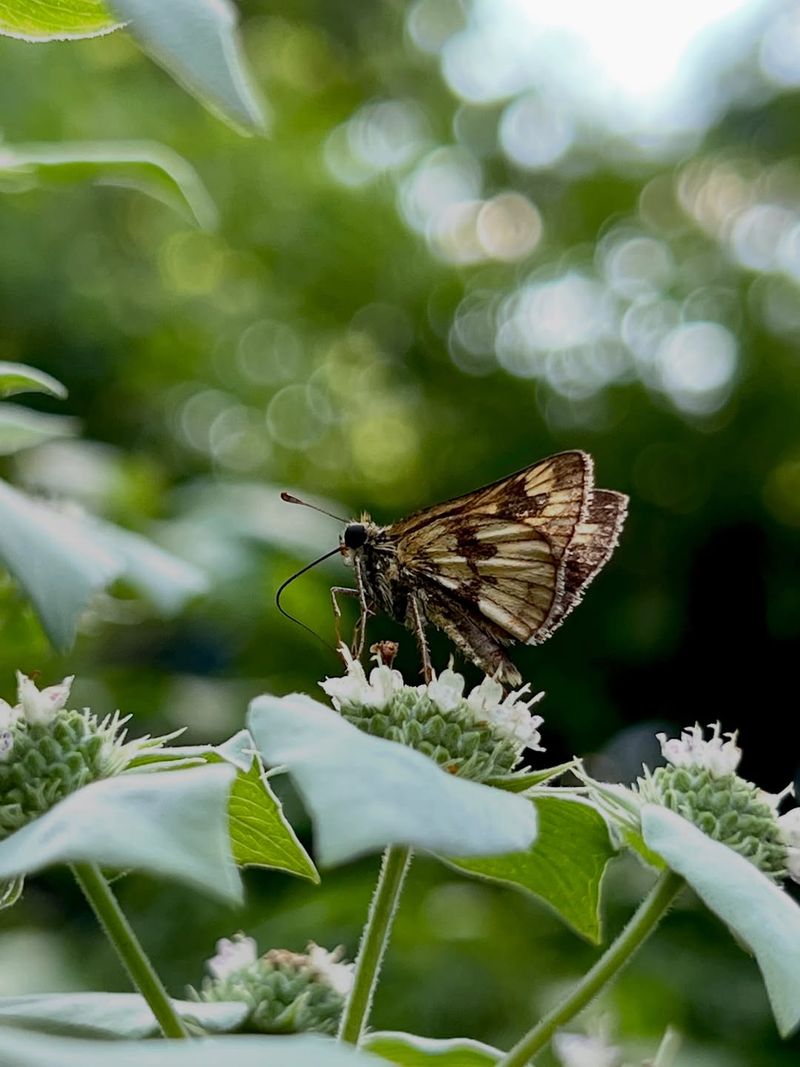
Here is what makes Virginia mountain mint truly special in a Michigan garden: the same strong fragrance that sends deer and rabbits looking elsewhere is absolutely magnetic to beneficial insects.
On a warm July afternoon, a blooming patch of mountain mint can be buzzing with activity from dozens of different insect species all at once.
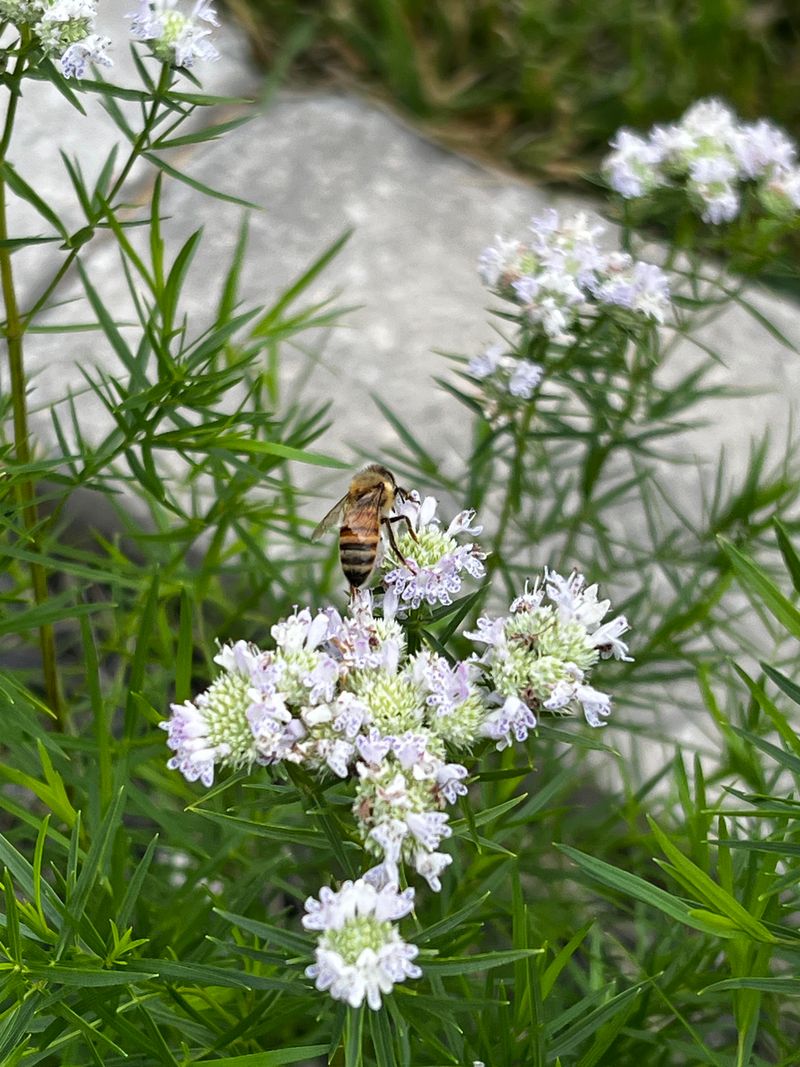
Bees of all sizes visit the flowers heavily, from large bumblebees to tiny sweat bees. Wasps, hoverflies, soldier beetles, small native butterflies, and many other flower visitors are drawn in by the nectar and pollen.
Researchers and naturalists who study pollinator habitat consistently rank mountain mints among the top native plants for supporting insect diversity in the Midwest. That is a meaningful distinction for a plant that also happens to be deer resistant.
Most gardeners assume they have to choose between plants that support wildlife and plants that resist browsing. Virginia mountain mint removes that tradeoff entirely.
You get a plant that pollinators genuinely love and that deer and rabbits largely ignore. For gardeners building a border that serves multiple purposes, that combination is hard to beat.
Planting it alongside other pollinator favorites like wild bergamot, purple coneflower, and goldenrod creates a continuous sequence of blooms from early summer through fall.
This reliable food source keeps beneficial insects fed, supporting the health and beauty of your broader garden ecosystem.
8. Full Sun And Open Air Are Where It Truly Thrives
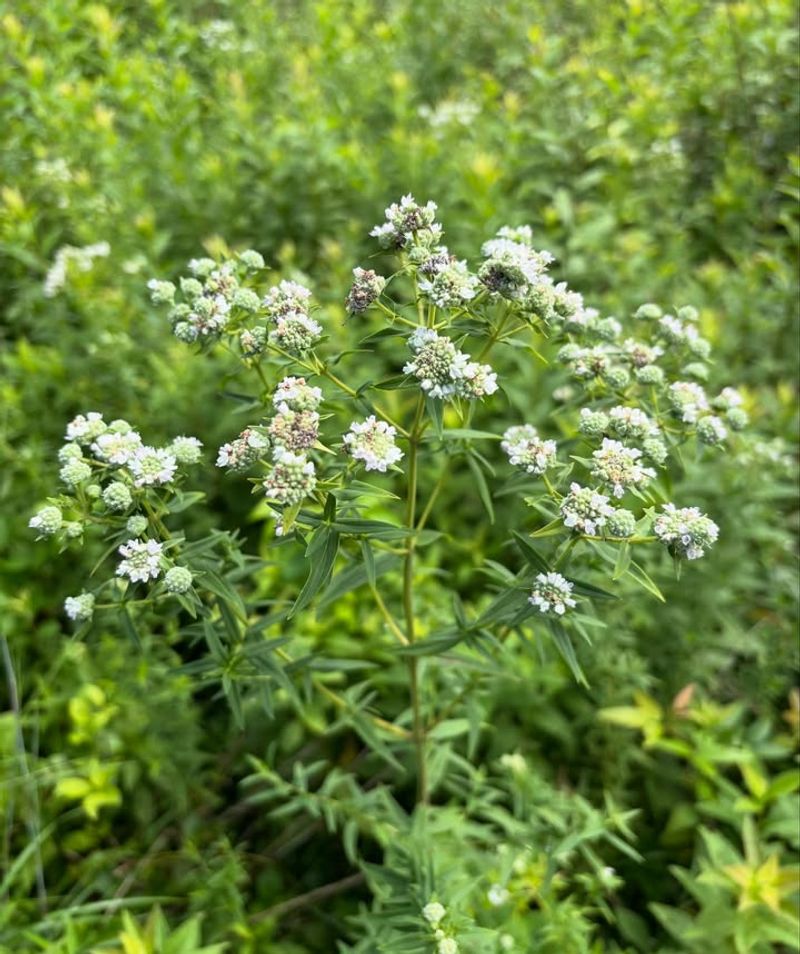
Choosing the right spot for Virginia mountain mint is the difference between a plant that thrives and one that struggles. Full sun is its sweet spot, and it will perform beautifully with at least six hours of direct sunlight per day.
It can handle light shade, especially in the afternoon during Michigan’s hottest summer weeks, but dense shade is where it loses steam.
Soil does not need to be fancy. Average to slightly moist, well-drained garden soil suits it well, and it actually prefers conditions that are not overly rich.
Overly fertile soil can push the plant toward floppy, weak growth rather than the upright, sturdy stems it develops in leaner conditions.
Good airflow around the planting also helps keep the foliage healthy and reduces any risk of fungal issues during humid summers.
The best locations for Virginia mountain mint in a Michigan yard include sunny woodland edges, open meadow-style borders, and rain garden perimeters.
Placing it along vegetable garden borders is also ideal, as its natural deer and rabbit resistance is especially welcome there.
It does not belong under a heavy canopy of mature shade trees, where it will stretch and thin out without ever flowering well.
Place it where the sun hits it fully, give it room to breathe, and it will reward you with months of fragrant foliage, long-lasting blooms, and a steady stream of pollinator visitors from midsummer into early fall.
9. It Spreads Gradually And That Can Work In Your Favor
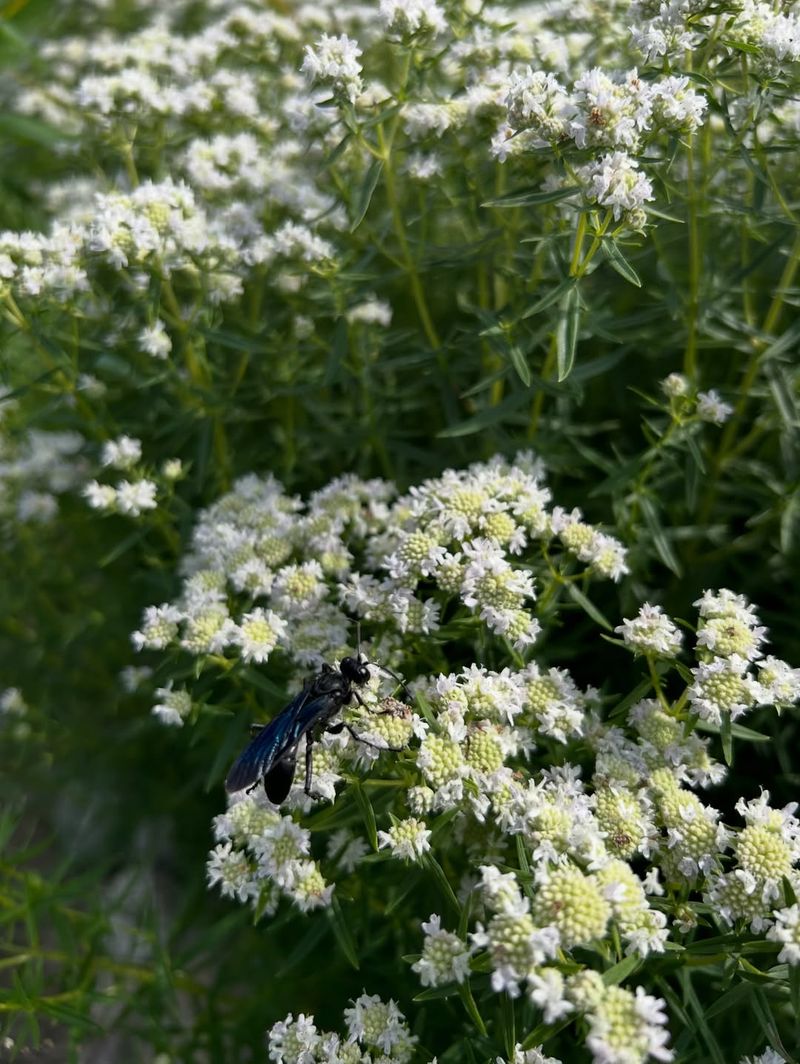
Virginia mountain mint spreads by underground rhizomes, which means it will slowly expand its footprint over time.
For gardeners who plant it in a tight formal bed expecting it to stay in a neat clump forever, that spreading habit can come as a surprise.
But for gardeners who understand it from the start, that same quality becomes one of the plant’s most useful features.
A colony of mountain mint filling a sunny border edge looks intentional and lush. It creates a dense, weed-suppressing mass that holds a space beautifully without requiring constant replanting.
The fragrant foliage and long bloom season mean that a spreading patch is actually working hard for your garden all summer long. Letting it naturalize along a meadow edge, a fence line, or a rain garden border is a perfectly smart strategy.
For gardeners who want to keep it more contained, the management is simple. Each spring, use a sharp spade to slice along the edges of the colony and remove any rhizomes that have crept beyond the intended boundary.
This takes about ten minutes and keeps the plant exactly where you want it year after year. The key is choosing the right location from the beginning.
A spot where a spreading colony is genuinely welcome, like a long sunny border or a naturalistic edge planting, will let Virginia mountain mint do what it does best without ever feeling like a problem that needs constant managing.
10. Pair It With A Clean Border Routine For The Best Results
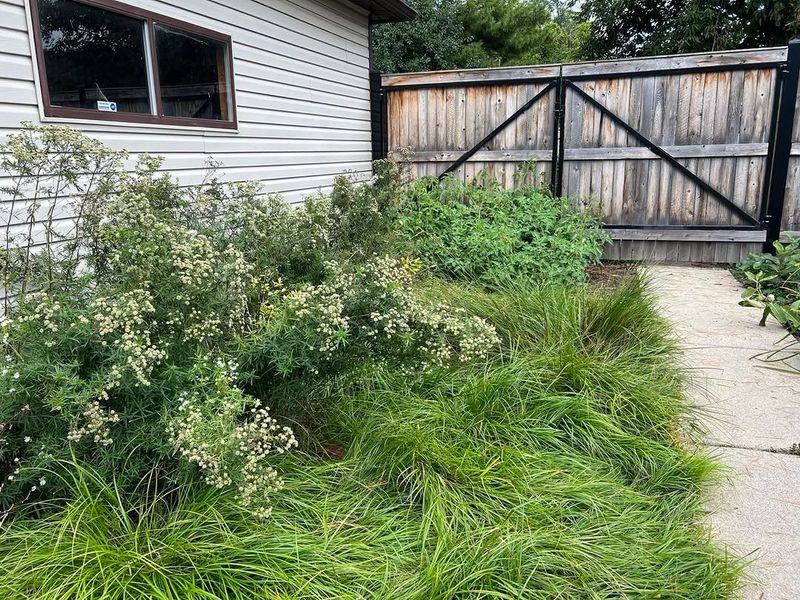
Virginia mountain mint earns its reputation honestly. It is native to Michigan, strongly aromatic, resistant to deer and rabbit browsing, beloved by pollinators, and genuinely useful in a tick-smart border design.
But like any plant, it works best when it is part of a thoughtful overall approach rather than treated as a single magic solution.
Pairing it with smart border maintenance makes a real difference. Mow or trim pathways along garden edges regularly to keep grass short and reduce tick habitat.
Rake out leaf litter in fall and early spring rather than letting it pile up along borders. Clear brush and woody debris from yard edges where ticks and other pests like to shelter.
Add wood chips or fine gravel along dry border edges to create a clean, dry transition zone between lawn and garden. These habits, combined with Virginia mountain mint’s natural qualities, create a yard that is genuinely more resilient.
Virginia mountain mint does not solve every pest challenge in a Michigan garden, and no single plant ever will. What it does do is fill a real role in a smarter, more native-focused border.
It brings fragrance, flower power, wildlife value, and browsing resistance all in one reliable perennial.
For gardeners who want a low-maintenance, high-performing plant that earns its space every season, Virginia mountain mint is not just a good choice.
It is one of the best choices you can make for a beautiful, practical, and naturally resilient outdoor space.