8 Easy Steps To Revive Heat-Damaged Bougainvillea Plants In Florida
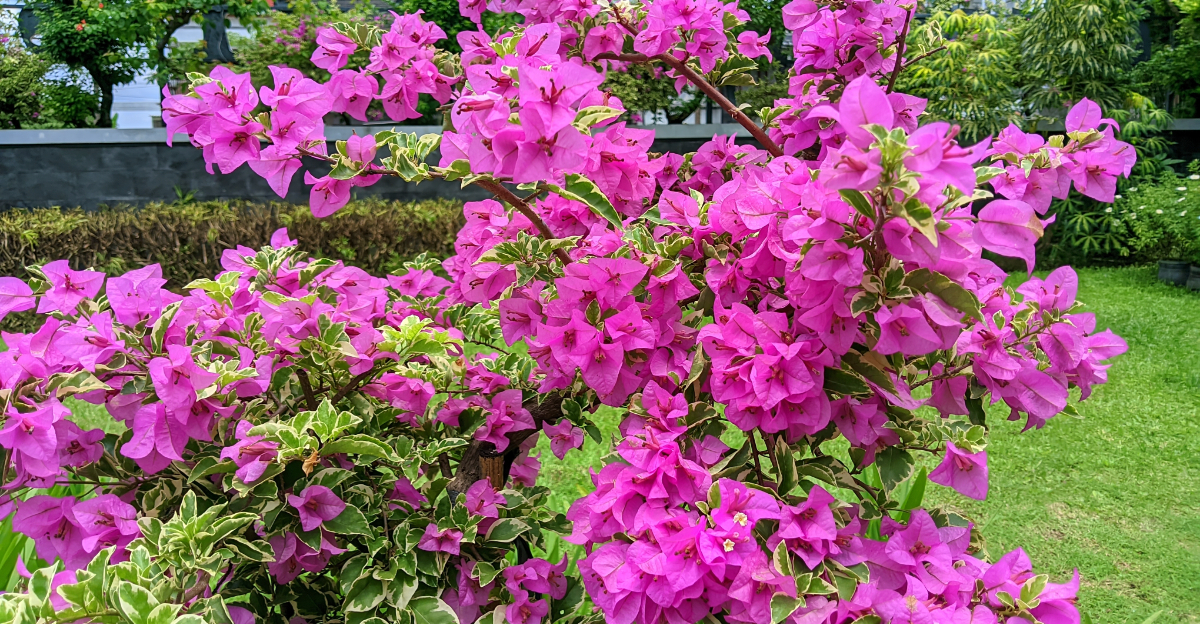
Bougainvillea is one of Florida’s most dramatic plants when it is performing. That explosion of color against a fence or wall turns heads every time.
Then a serious heat stretch moves through and everything changes. Leaves drop, tips brown, and the plant that looked unstoppable puts on a very different kind of display.
The frustrating part is that bougainvillea looks like it was built for Florida heat. Mostly that reputation holds.
But sustained extreme temperatures push even this plant past a threshold it cannot cross without some help on the other side. Heat damage on bougainvillea is not always as serious as it looks in the moment.
This is a tough plant with real recovery capacity when the response is right. Most Florida gardeners either panic and do too much or wait too long and do too little.
1. Check The Stems Before You Cut Anything Back
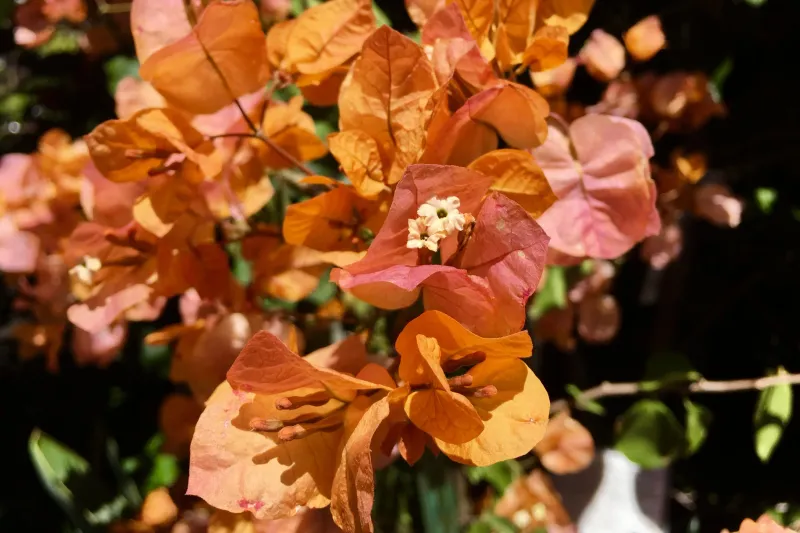
A bougainvillea with scorched leaves and crispy bracts can look far worse than it actually is. Before reaching for pruning shears, take a few minutes to check what is truly gone and what still has life in it.
Run your fingers along the stems. Healthy or recovering stems feel slightly flexible rather than snapping like a dry twig.
Use a fingernail or a small knife to scratch lightly into the outer layer of a stem. If you see green or pale white tissue underneath, that stem still has living cells worth protecting.
Brittle, hollow, or fully brown stems that snap cleanly with no moisture inside are the ones to remove. Avoid cutting back healthy green growth just because the leaves look tired or the bracts have faded.
Pruning hard during peak heat removes living material and adds stress to a plant already working to survive.
Work from the tips inward. Remove only what is clearly dry, damaged, or withered.
Mark any borderline stems with a small piece of ribbon and check them again in a week before deciding. Patience at this stage prevents unnecessary setbacks.
Leaf drop and bract loss are stress responses, not always a sign that the stem below is gone.
2. Move Potted Bougainvillea Out Of Reflected Heat
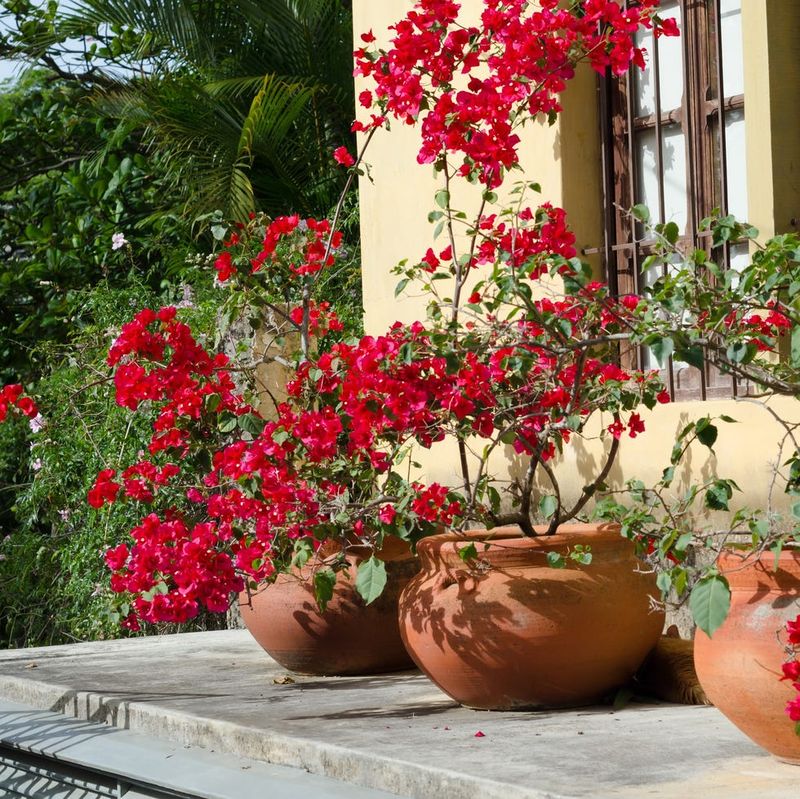
A hot Florida patio pot beside sun-baked pavers can reach temperatures that would surprise most gardeners. Container walls absorb and radiate heat.
Surfaces like pool decks, driveways, stucco walls, balconies, and west-facing fences can push temperatures well beyond what the air thermometer reads.
Potted bougainvillea sitting in those spots may show leaf scorch and wilting that does not recover after sunset. It may also suffer root stress from soil that overheats faster than it dries out naturally.
Moving the container to a location with less reflected afternoon heat can reduce that pressure quickly.
The goal is not shade. Bougainvillea needs strong light to bloom well, and placing it in a dim corner as a long-term fix will stop flowering and weaken the plant further.
Look for a spot that still gets morning sun and bright indirect or filtered light in the hottest afternoon hours. A location away from white walls, pale pavers, and metal surfaces makes a real difference.
Your Florida Garden Changes Every Week. Your Plan Should Too.
Gardening in Florida changes quickly throughout the season. Every Friday you’ll receive a simple weekly plan showing exactly what to plant, prune, fertilize, harvest, and protect so you never miss the right timing.
Lighter-colored containers and pot feet that lift the base off hot surfaces can also help. Once temperatures ease in the evening, the plant begins to recover more steadily.
Avoid moving it back to the same reflected-heat spot until conditions improve.
3. Water Deeply Only When The Soil Needs It
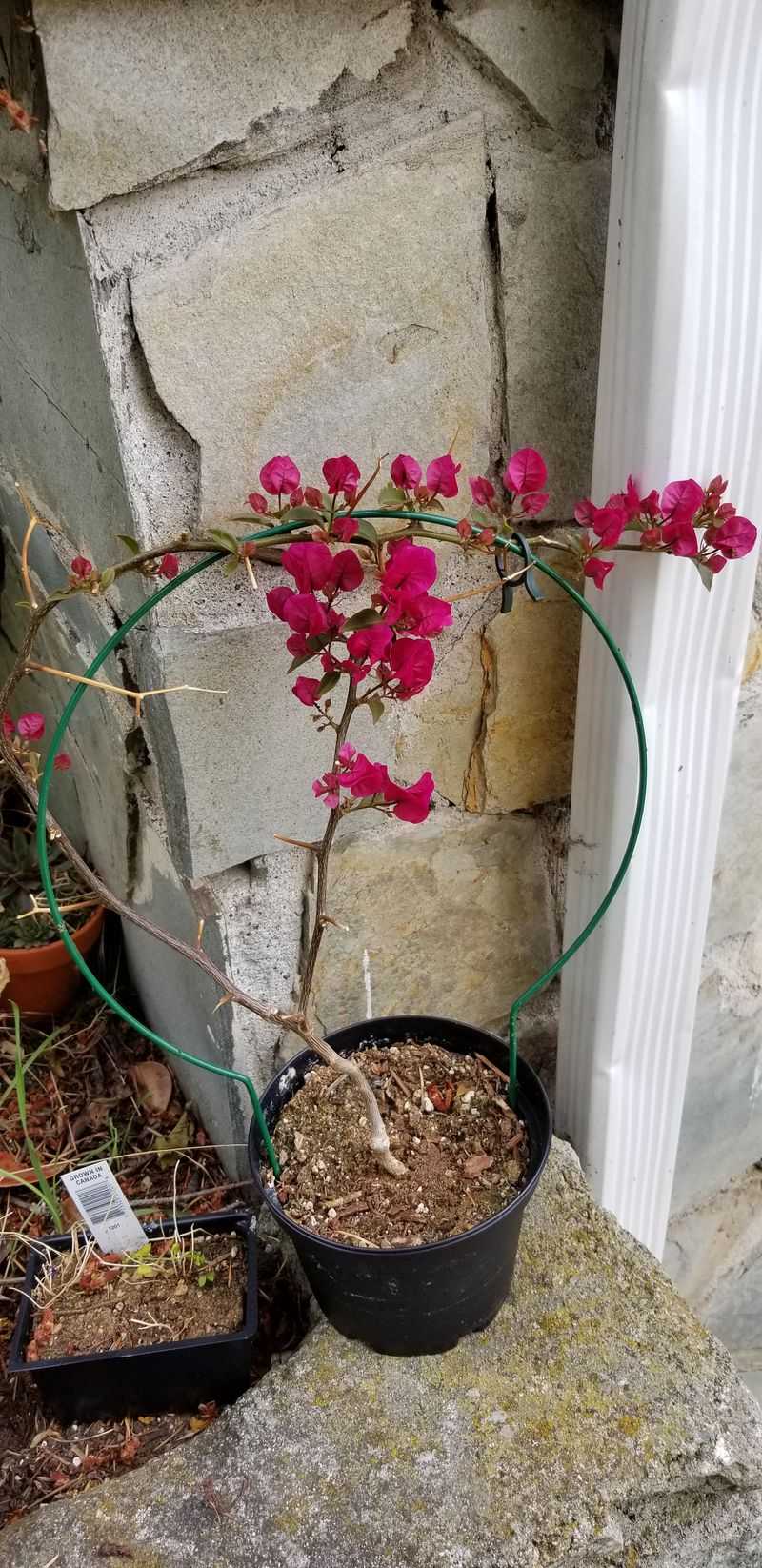
Reaching for the hose every time bougainvillea leaves look wilted is one of the most common mistakes during heat stress recovery.
Leaf droop and stress appearance can happen even when the soil still holds moisture below the surface, especially in dense or poorly draining mixes.
Bougainvillea prefers to dry out somewhat between waterings. It can resent soggy roots, and overwatering a stressed plant can cause root problems that make recovery harder.
Panic watering every day, especially in a pot with slow drainage, adds a different kind of stress on top of the heat damage.
Check moisture by pushing a finger two to three inches into the soil. If it still feels damp, wait.
If it feels dry at that depth, water slowly and deeply until water flows freely from the drainage holes. Then let it drain fully before checking again.
Never let the container sit in a pooled saucer of water.
In summer, rainfall may already be contributing moisture that the plant does not need more of. Track both your watering and any rain events before deciding the plant needs more.
Deep, well-timed watering supports root health far better than frequent shallow watering on a fixed schedule.
4. Keep Drainage Sharp During Rainy Season
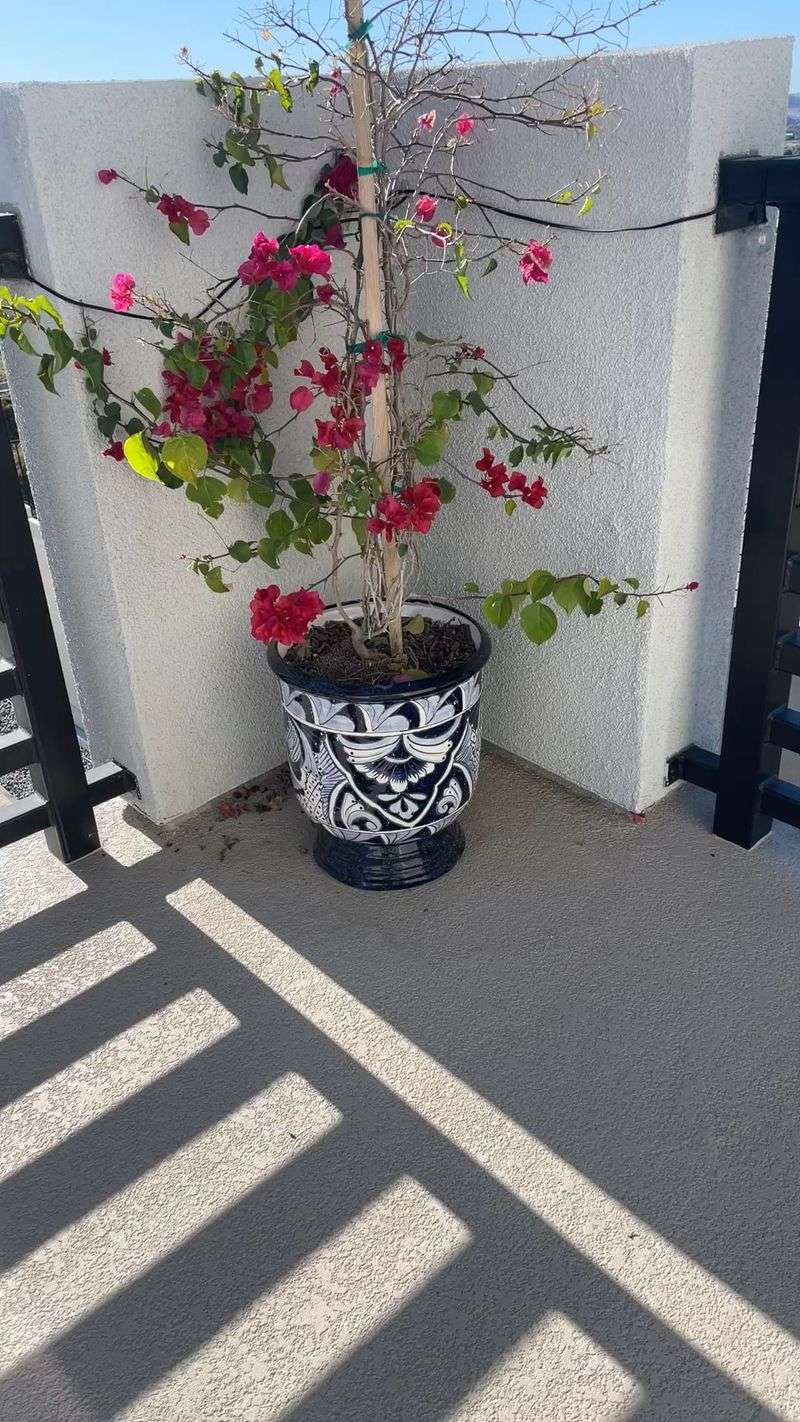
Summer storm patterns in Florida can drop several inches of rain in a single afternoon. A recovering bougainvillea sitting in poor drainage can go from heat-stressed to root-stressed within the same week.
Sharp drainage is not optional during rainy season.
Check that container drainage holes are open and unblocked. A single hole covered by compacted mix or debris can hold water in the root zone long after a storm passes.
Pot feet or small risers that lift the container base off a flat surface help water flow away rather than pool underneath.
Saucers and decorative cachepots are common culprits. They collect runoff and keep roots sitting in water without the gardener noticing.
Empty saucers after every heavy rain. If the plant is growing in a decorative outer pot with no drainage of its own, remove it during prolonged wet stretches.
In landscape beds, low spots that collect runoff can be just as problematic as a poorly drained container. A gritty, fast-draining soil mix helps container plants shed excess moisture quickly.
Bougainvillea roots that stay wet for too long during recovery are far more vulnerable to rot than roots that experience brief dry periods between rain events.
5. Remove Crispy Leaves Without Stripping The Plant
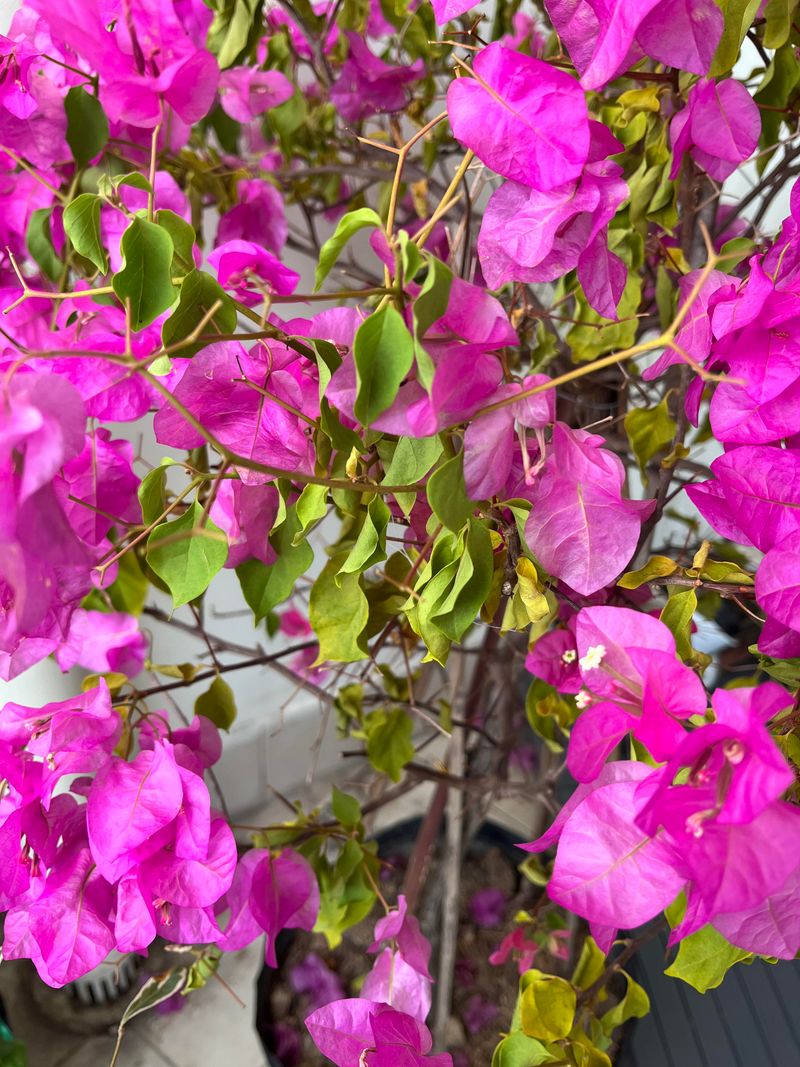
Crispy brown leaves clinging to stressed stems are not doing the plant any good, but stripping every imperfect leaf in the name of tidiness can actually slow recovery.
Partly green or yellowing leaves that still have some color are still contributing to the plant’s energy production, even if they look rough.
Focus cleanup on leaves that are fully dry, papery, and brown all the way through. Spent bracts that have faded completely can also be removed.
Use gloves for this task. Bougainvillea has sharp thorns along its stems, and they can catch skin or clothing without warning, especially when working around dense growth.
Long sleeves are a smart choice when doing any hands-on work around bougainvillea, particularly in tight spots or when reaching into the center of a large plant. Remove fallen leaves and debris from around the base of the container or from the soil surface in a landscape bed.
Decaying leaf litter can hold excess moisture and attract pests.
Avoid making the plant look bare just for visual reasons. A stripped plant under heat stress has fewer resources to draw on during recovery.
Clean up what is clearly done, leave what still has green in it, and let the plant direct its own recovery from there.
6. Pause Fertilizer Until Fresh Growth Returns
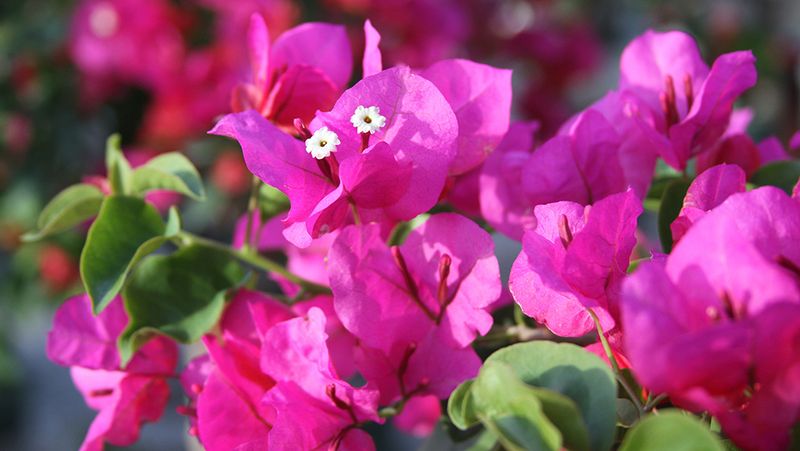
Reaching for fertilizer when a bougainvillea looks bad feels like a reasonable instinct. However, feeding a heat-stressed plant before it has stabilized can cause more harm than help.
Fertilizer pushes new growth, and tender new shoots on a plant that has not yet sorted out its water balance or root health are vulnerable to scorch and pest pressure.
Scorched leaves and faded bracts are not a nutrient deficiency. They are a stress response.
No amount of fertilizer repairs tissue that is already damaged. Applying fertilizer before watering, drainage, and placement are corrected adds salt load to roots that may already be struggling.
Wait until you see clear signs of new growth. Fresh shoots, small new leaves, or a general firming up of the stems are signals that the plant has stabilized enough to use nutrients productively.
At that point, a balanced fertilizer formulated for flowering shrubs and used according to label directions can support continued recovery.
UF/IFAS Extension guidance on bougainvillea notes that it responds well to appropriate feeding during active growth, but timing matters. Feeding during stress or dormancy does not produce the results gardeners hope for.
Patience here protects the plant and avoids wasted product.
7. Watch For Pests On Stressed New Shoots
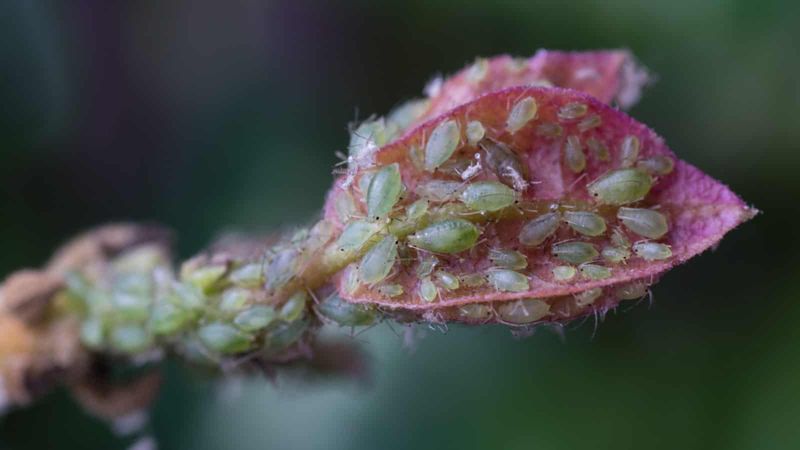
Pest pressure on new Florida bougainvillea shoots tends to increase when the plant is under stress. Tender new growth that pushes out during recovery is softer and more appealing to insects than established foliage.
That makes regular inspection a useful habit during this period.
Aphids, mealybugs, scale insects, and spider mites are among the pests that can appear on bougainvillea in warm regions. Caterpillars from certain moth species have also been documented feeding on bougainvillea foliage.
Before treating anything, take time to identify what you are actually seeing. Misidentifying a pest can lead to the wrong product being applied, which may harm beneficial insects or fail to address the real problem.
Check new shoots, the undersides of leaves, stem joints, and bract clusters. Look for sticky residue, distorted growth, fine webbing, or small clusters of insects.
A strong stream of water can dislodge soft-bodied insects like aphids from new growth without chemical intervention.
If a treatment is needed, choose one appropriate for the specific pest identified and follow label directions carefully. Broad pesticide applications without a confirmed target can do more harm than good on a plant already working to stabilize.
Early, targeted action is far more effective than reactive spraying after a population builds.
8. Give Bougainvillea Time To Push New Color
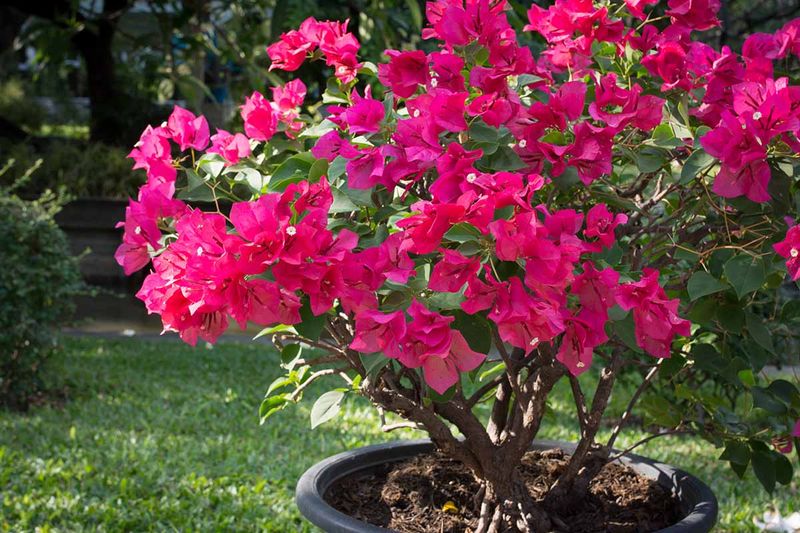
After heat stress, leaf drop, or a container move, bougainvillea does not snap back overnight. A plant that dropped most of its leaves or sat in a rough spot for weeks may need several weeks to push new foliage before bract color even begins to return.
Expecting fast results leads to overcorrecting, and overcorrecting is often what causes the most setbacks.
Signs of genuine recovery include firm green stems, new shoots from stem joints or near the base, and small fresh leaves with good color. Eventually, you may also see the early stages of bract formation at shoot tips.
Each of those signs tells you the root system is functional and the plant is moving forward.
Not every plant in this situation will recover fully. A bougainvillea with brittle stems all the way down or roots rotted from prolonged waterlogging may not recover.
Severe withering through the main structure may also prevent enough new growth from forming. Honest assessment at that point matters more than wishful care.
For plants that are showing positive signs, stay consistent. Keep drainage sharp, water only when the mix needs it, hold fertilizer until growth is active, and give the plant strong light.
Recovery is gradual, but steady progress is a good sign.