Why Your Florida Society Garlic Looks Messy In Spring And How To Clean It Up
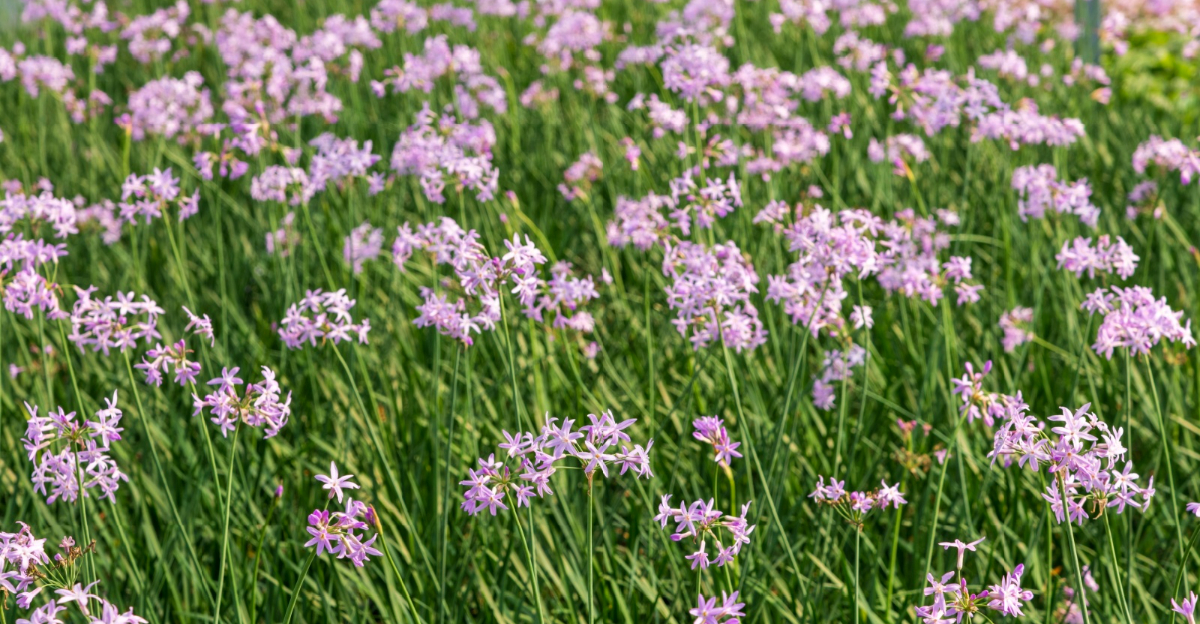
Society garlic is one of those Florida perennials that earns genuine appreciation precisely because it is so unfussy. It thrives in sunny beds, foundation plantings, and containers, and it does the job without constant attention.
That said, spring has a way of revealing what a mild Florida winter quietly left behind.
Crowded clumps, old foliage, and spent flower stalks can make even the most reliable plants look a little worn out heading into the warmer months.
Fortunately, society garlic responds really well to a straightforward spring cleanup.
The key is working with the plant’s natural growth habit rather than against it, keeping its light needs and watering rhythm in mind, and avoiding the temptation to overdo it.
A little goes a long way with this one, and the results show up fast.
1. Old Leaves Need A Gentle Spring Cleanup
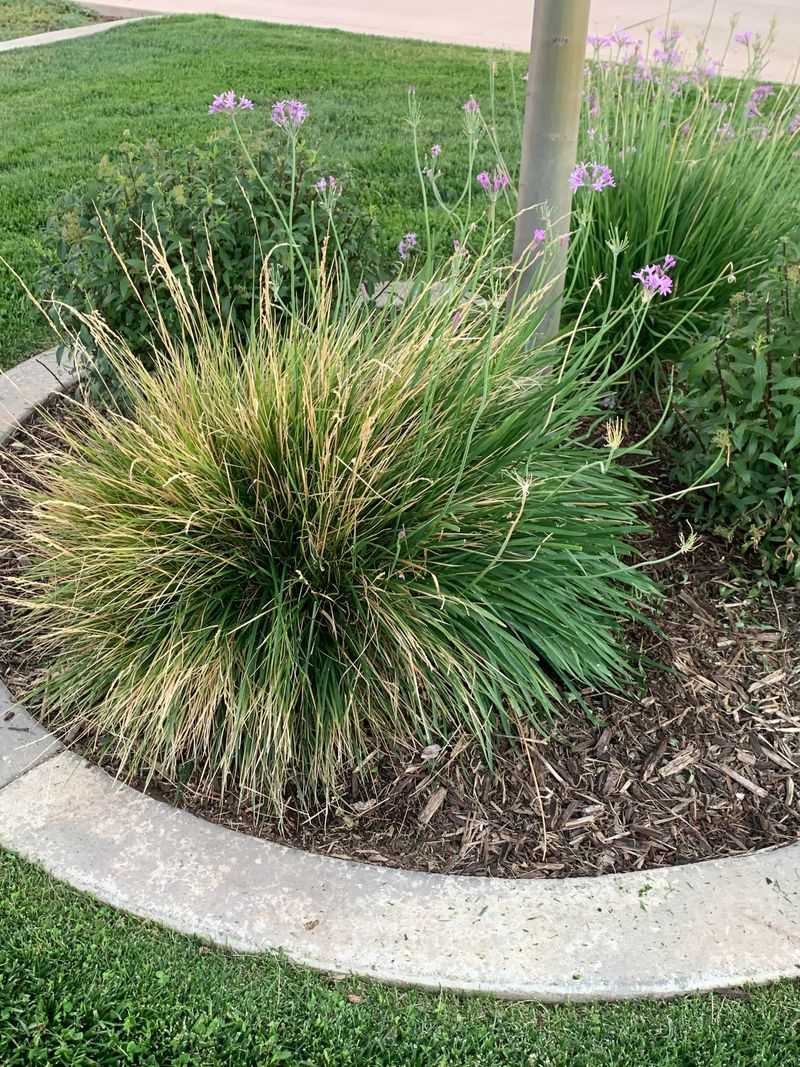
Pulling out old, damaged leaves from a society garlic clump is one of the simplest ways to improve how a Florida perennial bed looks in spring.
The process does not require heavy tools or a big time commitment, and it can make a surprising difference in how the planting reads from across the yard.
A pair of garden gloves and some patience are really all you need.
Work from the outside edges of the clump inward, gently tugging on brown or yellowed leaves at their base. Many will come away cleanly without any cutting.
Avoid yanking hard at the center of the clump, since new growth often begins emerging from that area and pulling too aggressively could disturb young shoots.
If some leaves resist, a small pair of scissors or handheld pruners can help you snip them close to the base without cutting into healthy tissue.
One thing worth keeping in mind is that not every discolored leaf needs to go. Leaves that are still partially green may still be contributing to the plant while new growth catches up.
Focus the cleanup on foliage that is clearly brown, papery, or lying flat against the soil.
In Florida’s warm spring climate, new leaves tend to fill in relatively quickly once the old material is cleared away, and the clump will look noticeably tidier within a few weeks.
2. Spent Flower Stalks Make Beds Look Messy
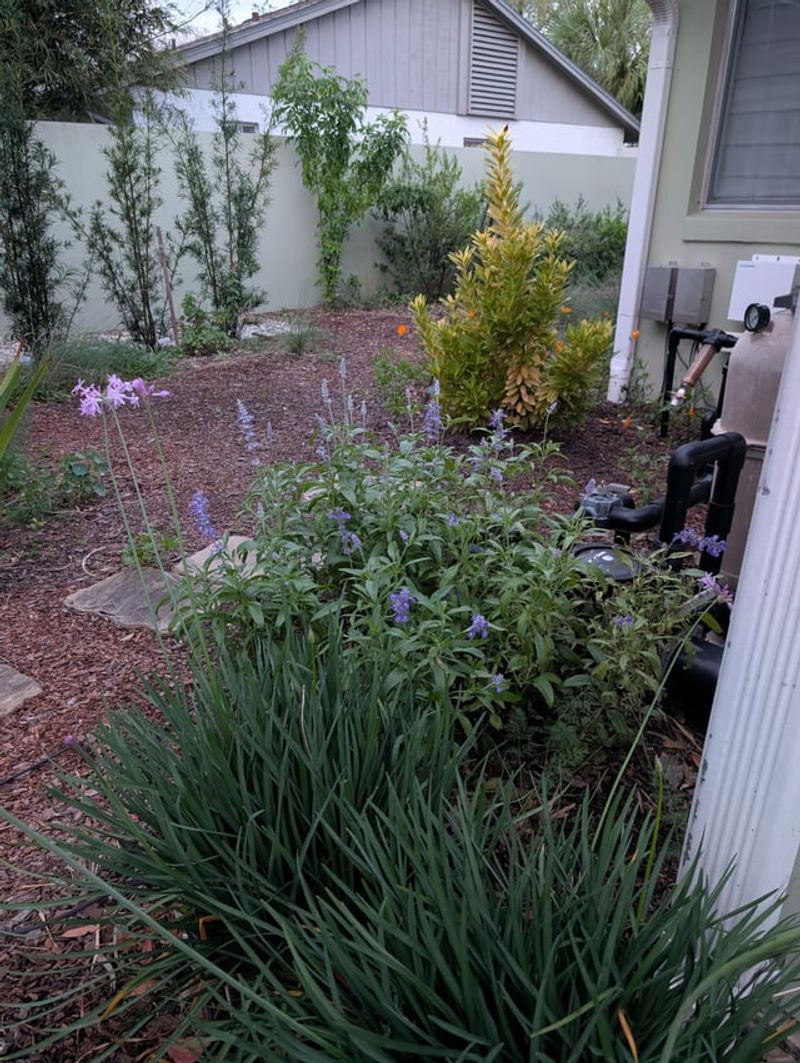
Few things make a perennial bed look more neglected than a collection of dry, leafless flower stalks standing stiffly above an otherwise low-growing planting.
Society garlic produces lavender flowers on tall stems during warm months, and those stalks are lovely when blooming.
Once the flowers fade and the stalks dry out, though, they can make the whole bed feel forgotten.
Removing spent flower stalks is a straightforward task that does not require any special timing beyond noticing they are there.
Using clean, sharp pruners, cut the stalk as close to the base of the clump as you comfortably can without digging into the surrounding leaves.
There is no need to leave a long stub, and a clean cut near the base looks much neater than a stubble of trimmed stems scattered through the planting.
Your Florida Garden Changes Every Week. Your Plan Should Too.
Gardening in Florida changes quickly throughout the season. Every Friday you’ll receive a simple weekly plan showing exactly what to plant, prune, fertilize, harvest, and protect so you never miss the right timing.
Some Florida gardeners wonder whether removing spent stalks will reduce future flowering.
Deadheading society garlic by removing old stalks is generally considered a tidying measure rather than something that triggers immediate reblooming on its own.
Flowering is more closely tied to temperature, sunlight, and the plant’s overall growing conditions than to whether old stalks are removed.
What removal does accomplish is giving the bed a cleaner, more intentional appearance and letting the fresh foliage and any new blooms stand out more clearly against the landscape.
3. Crowded Clumps May Need Division
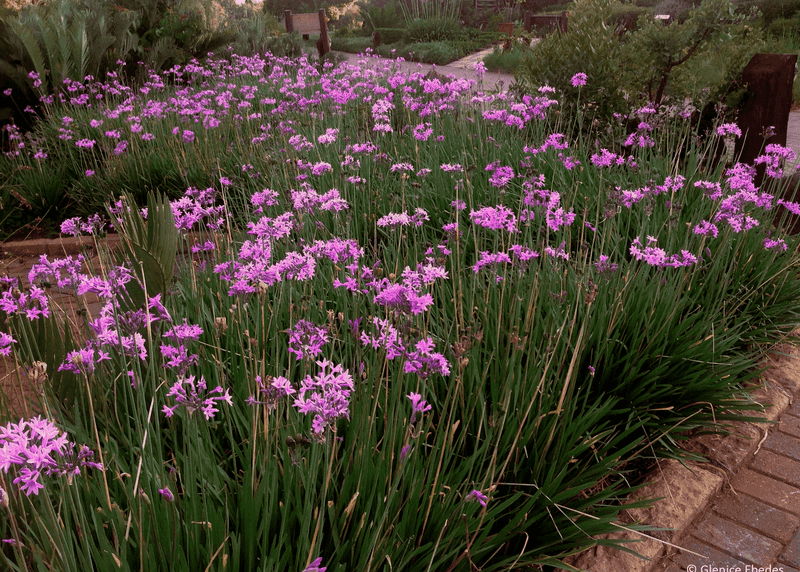
Over several growing seasons, society garlic spreads slowly through underground rhizomes and can form dense, crowded clumps that start to look more like a tangled mat than a tidy perennial planting.
When a clump reaches that point, division can help restore a cleaner shape and give each section more room to grow.
Not every clump needs dividing each spring, so it is worth assessing whether yours actually looks crowded before getting started.
Signs that a clump may benefit from division include a noticeably hollow or sparse center with growth pushing only to the outer edges, reduced flowering despite good sun and water, or a clump that has simply outgrown its space in the bed.
Division is best attempted while the plant is dormant or just beginning to show early spring growth, before the heat of a Florida summer sets in and stresses freshly divided sections.
To divide, use a sharp spade or garden fork to lift the clump from the soil, then gently separate it into smaller sections, each with some roots and foliage attached.
Replant divisions at the same depth they were growing before, water them in, and give them time to settle.
Sandy Florida soils drain quickly, so keeping divisions consistently moist during the first few weeks helps them establish without drying out too fast. Avoid dividing clumps that are still small or showing no signs of crowding.
4. Dormant Plants Wake Up Slowly In Spring
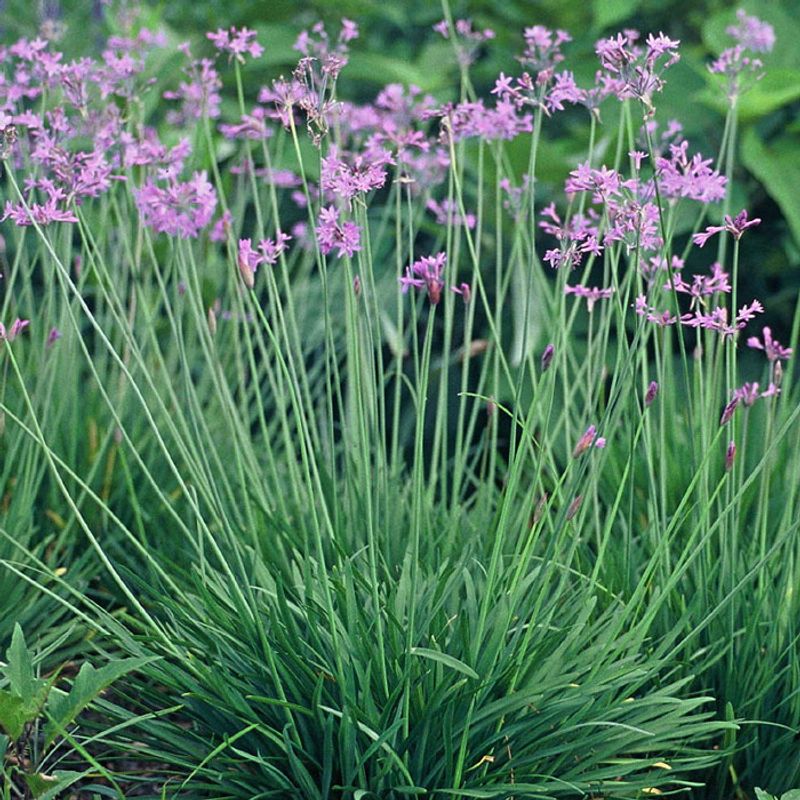
Walking out to check on perennial beds in late February or early March can be a little unsettling when society garlic clumps are still sitting quietly without much visible activity.
In Florida, society garlic can go partially dormant during cooler months, and the transition back into active growth does not always happen on a dramatic schedule.
Some clumps wake up quickly once temperatures rise, while others take a few more weeks to show clear signs of new leaves pushing through.
Resisting the urge to overwork a slow-waking clump is one of the more useful habits a gardener can develop. Cutting back aggressively or dividing a clump that is simply dormant rather than struggling can set it back unnecessarily.
A better approach is to gently clear away the most obvious damaged foliage, then wait and watch for new growth before deciding whether any further cleanup is needed.
Soil temperature plays a role in how quickly society garlic responds in spring. Florida’s sandy soils warm up relatively fast compared to heavier clay soils in other regions, which generally works in favor of an earlier spring response.
Mulch can help moderate soil temperature and moisture while the plant is transitioning.
Once you see fresh green leaves emerging from the base of the clump, that is a clear sign the plant is actively growing again and ready to respond well to light tidying and a gradual increase in watering.
5. Full Sun Helps Growth Look Cleaner
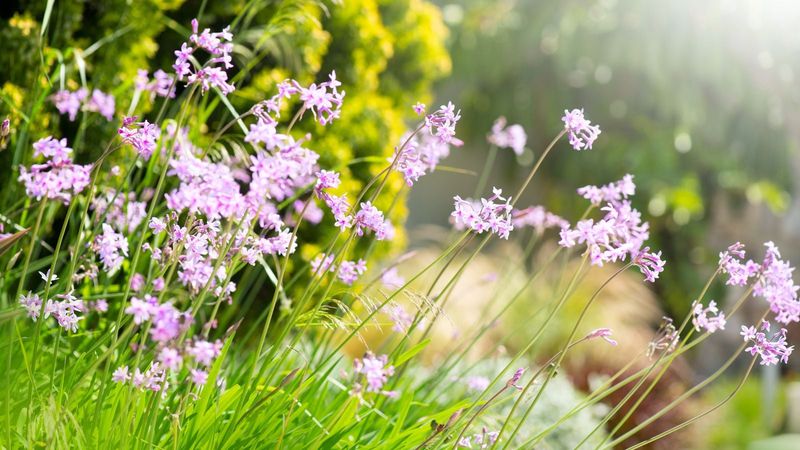
Sunlight is one of the biggest factors affecting how society garlic looks throughout the year, and spring is a good time to take an honest look at whether your planting is getting enough of it.
Society garlic performs best in full sun, meaning at least six hours of direct sunlight per day.
Plantings that receive less light than that may produce fewer flowers and thinner, less upright foliage that contributes to a messier overall appearance.
In Florida, shade patterns shift as trees leaf out in spring and summer, sometimes reducing light in beds that were sunny through winter.
If a society garlic clump sits near a tree, fence, or structure, the amount of direct sun it receives in spring may be noticeably less than what it got in fall or winter.
Observing your bed at different times of day can help you understand how much light it actually gets versus how much you assume it receives.
Clumps growing in adequate sun tend to hold their shape better, produce more upright foliage, and flower more reliably during the warm months.
Shaded clumps may still survive in Florida’s climate, but they often look sparse and less tidy than sun-grown plants.
If a bed has become shadier over time due to nearby plant growth, selectively trimming surrounding plants or relocating society garlic to a sunnier spot in the landscape are both reasonable options worth considering.
6. Spring Watering Should Match New Growth
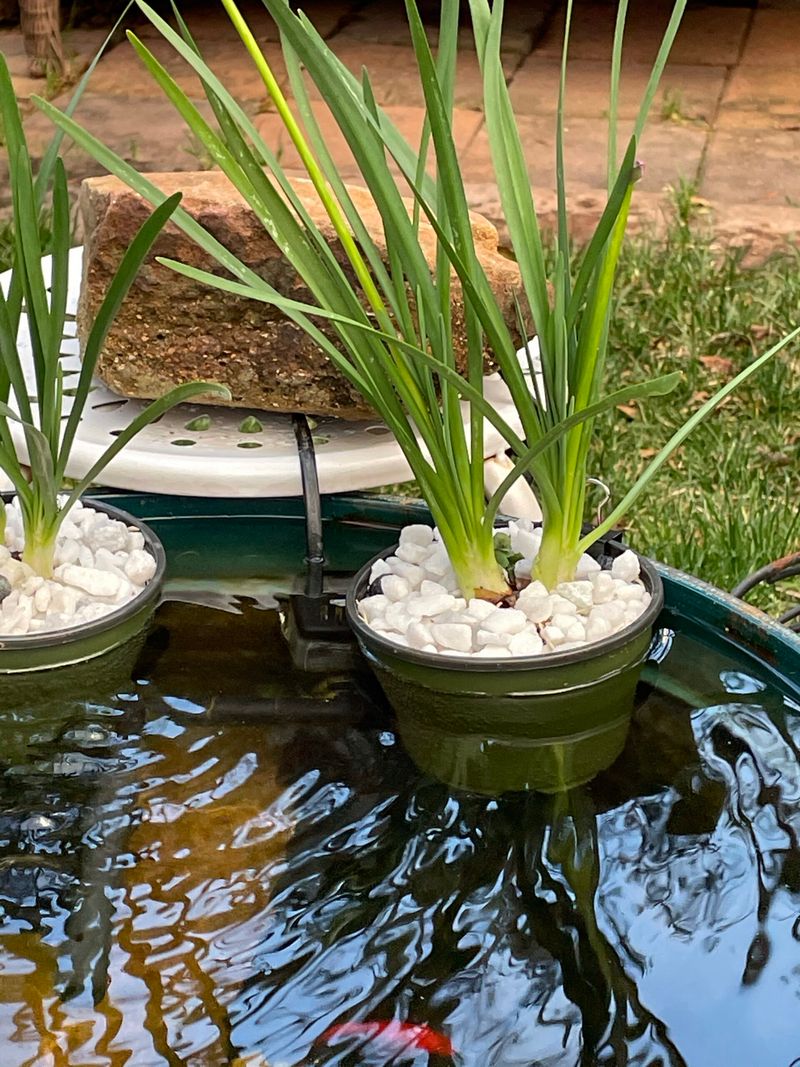
Watering habits that made sense during Florida’s cooler, slower winter months do not automatically translate well into spring once society garlic starts actively growing again.
During dormancy or slow winter growth, the plant’s water needs are reduced, and overwatering a clump that is not actively taking up moisture can lead to soggy soil conditions that are harder on the roots than helpful.
As temperatures rise and new growth becomes visible, gradually increasing how often and how deeply you water makes more sense than keeping a fixed winter schedule.
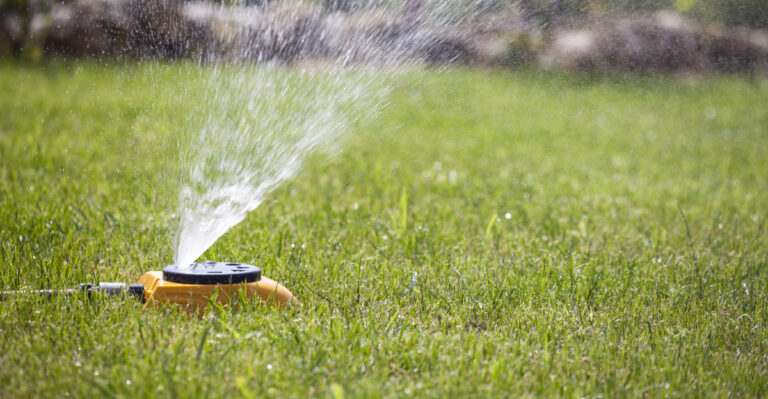
Society garlic grows well in Florida’s sandy soils, but sandy soils drain quickly, which means the plant may need more frequent watering during warm, dry spring stretches than you might expect.
Checking soil moisture a few inches below the surface before watering is a simple habit that helps avoid both underwatering and overwatering.
Established clumps in the ground tend to be more forgiving about irregular watering than newly planted or recently divided sections, which need more consistent moisture while they settle in.
Container-grown society garlic also dries out faster than in-ground plantings, so spring container care may call for more frequent checks.
The goal is to keep the soil consistently moist during active growth without letting it stay waterlogged, since good drainage paired with regular watering tends to support the healthiest and best-looking growth through Florida’s warm spring and summer months.
7. Containers Need Bright Light And Drainage
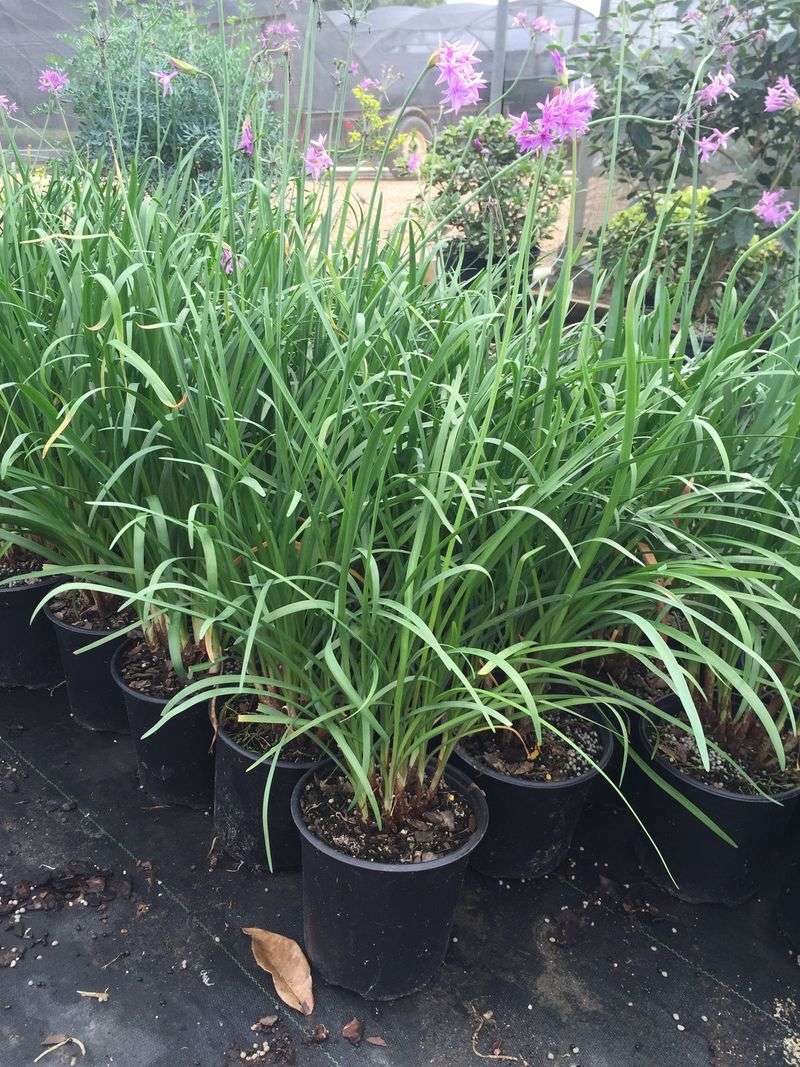
Growing society garlic in containers is a practical option for homeowners who want flexibility in their landscape or who are working with paved patios, small spaces, or areas where in-ground planting is not possible.
Containers can work well, but they come with a specific set of needs that become especially relevant in spring when the plant is transitioning back into active growth after a quieter winter.
Bright light is the most important factor for container-grown society garlic. A pot placed in a shaded corner or under a covered porch may not receive enough direct sun to support healthy, upright foliage and regular flowering.
In Florida, a south or west-facing patio spot that receives several hours of direct sun is often a better fit than a shaded entryway, even if the shaded spot seems more decorative.
Moving containers to sunnier positions in spring can noticeably improve how the plant looks and how well it grows.
Drainage matters just as much as light. Containers without adequate drainage holes or filled with dense, poorly draining potting mix can hold excess moisture that harms roots over time.
A well-draining potting mix paired with a container that has clear drainage is a straightforward combination that supports healthy growth.
Spring is also a good time to check whether a container-grown clump has become root-bound, since crowded roots in a small pot can limit growth and contribute to a sparse, untidy appearance through the season.