These Perennial Flowers Require Full Sun In Texas Gardens
Texas sun is no joke. For most plants, those long blazing summer days are pure torture. But for certain perennial flowers, all that sunshine is actually the secret ingredient they need to truly thrive. Give them a shady spot and they’ll sulk.
Give them full sun and they’ll absolutely explode with color. The trick is knowing which ones to pick.
Not all perennials are created equal. Some will fake it for a while and then slowly fade out once the Texas heat really kicks in.
But the right ones? They come back year after year, looking better each time, and they actually prefer those hot sunny spots that other plants avoid like the plague.
This is great news if you have a sunny garden bed, a south facing yard, or any spot where the sun just refuses to quit.
Instead of fighting your conditions, you can work with them and end up with a garden that looks stunning all season long. Here are the perennial flowers that were practically made for the Texas sun.
1. Purple Coneflower
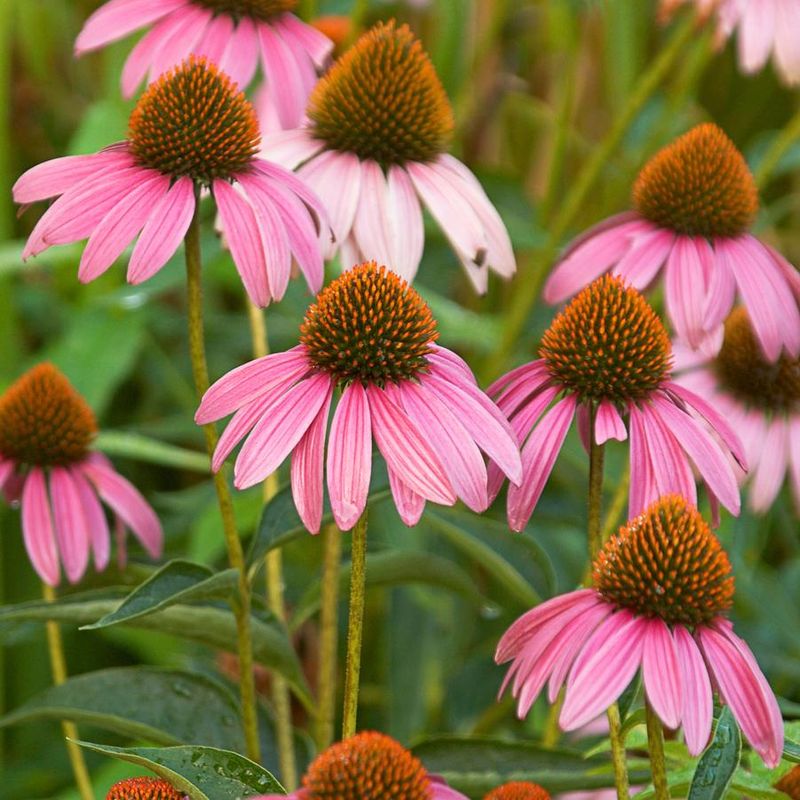
Few flowers hold their own in a Texas summer the way Purple Coneflower does. Also known as Echinacea purpurea, this bold beauty pushes out daisy-like blooms with drooping purple petals and a spiky orange-brown center that almost looks like a tiny hedgehog.
It is one of the most dependable perennials you can plant in a full-sun Texas garden. What makes Purple Coneflower so special is its toughness. It handles drought, intense heat, humidity, and even poor soil without much fuss.
Once it gets established, you barely need to water it. That is a huge win during those long, dry Texas summers when keeping plants alive feels like a full-time job.
Pollinators go absolutely wild for this flower. Bees, butterflies, and goldfinches are frequent visitors, making your garden feel alive with movement and color.
Plant it in clusters for the best visual impact. It looks amazing along borders, in wildflower-style beds, or mixed with ornamental grasses.
Purple Coneflower blooms from early summer into fall, giving you months of color. After the blooms fade, leave the seed heads standing.
Birds will thank you for the free meal, and the dried heads add interesting winter texture to the garden.
This plant grows about two to four feet tall and spreads slowly over time. Divide the clumps every few years to keep them healthy and vigorous.
It is easy to grow from transplants or seeds, making it a budget-friendly choice for gardeners who want to fill large spaces with minimal effort.
2. Black-Eyed Susan
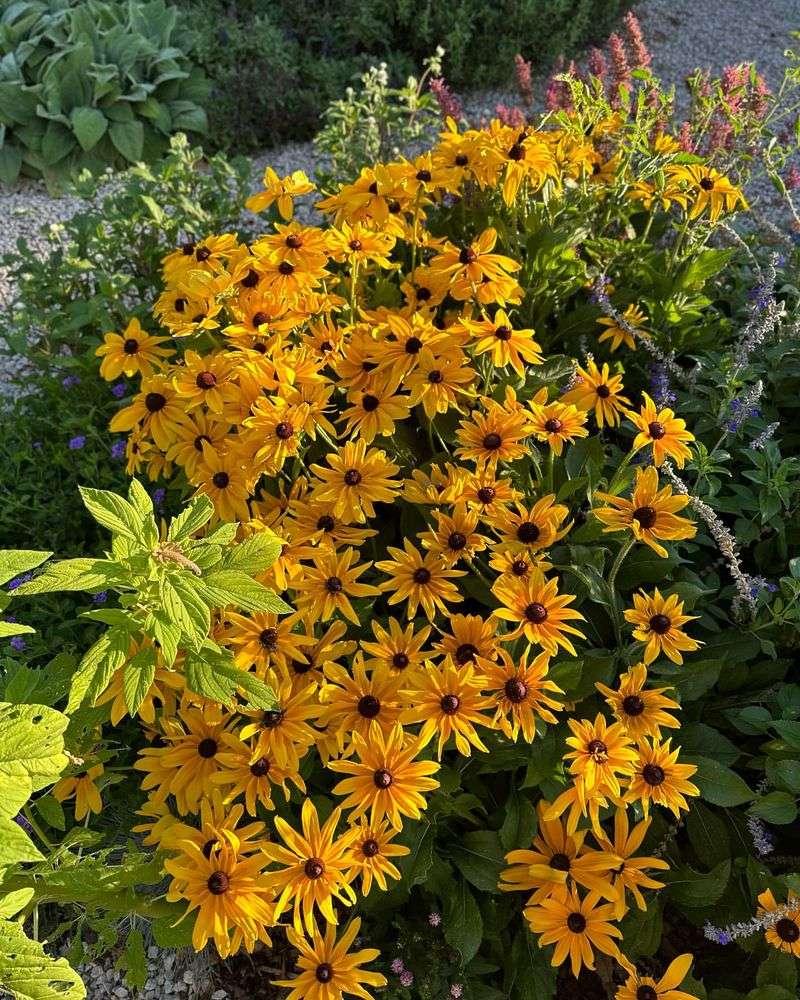
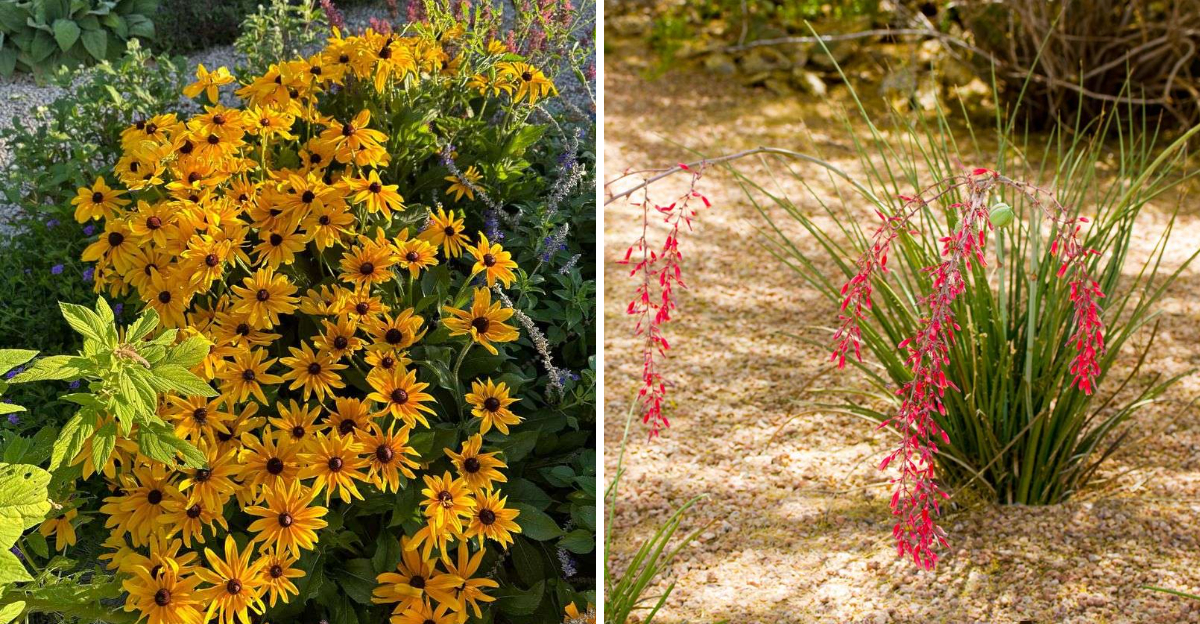
Sunny, cheerful, and practically unstoppable, Black-Eyed Susan is the kind of flower that makes a garden feel warm and welcoming.
The golden-yellow petals surrounding that rich dark center are instantly recognizable, and they light up a garden bed like little bursts of sunshine.
Rudbeckia species are built for hot, bright conditions, which makes them a natural fit for Texas.
These flowers thrive in full sun and actually perform better when the temperatures climb. They are not picky about soil either.
Your Texas Garden Changes Every Week. Your Plan Should Too.
Gardening in Texas changes quickly throughout the season. Every Friday you’ll receive a simple weekly plan showing exactly what to plant, prune, fertilize, harvest, and protect so you never miss the right timing.
Plant them in average, well-drained ground and they will reward you with blooms from midsummer all the way through fall. That long blooming season is one of the biggest reasons gardeners in Texas keep coming back to this plant year after year.
Black-Eyed Susan is a pollinator magnet. Bees and butterflies flock to the open, flat flower heads, making it a fantastic choice if you want to support local wildlife.
The seed heads that form after blooming also attract birds like finches, who pick them clean during the cooler months.
Did you know that Black-Eyed Susan is actually the state flower of Maryland? Despite its northern fame, it handles Texas heat surprisingly well, especially when planted in a spot with good air circulation and well-drained soil.
Plants typically grow one to three feet tall and spread into tidy clumps over time. Deadheading spent blooms encourages more flowers, but you can also let them go to seed for a more natural, wildflower-inspired look.
Either way, this bright perennial earns its place in any sunny Texas garden.
3. Autumn Sage
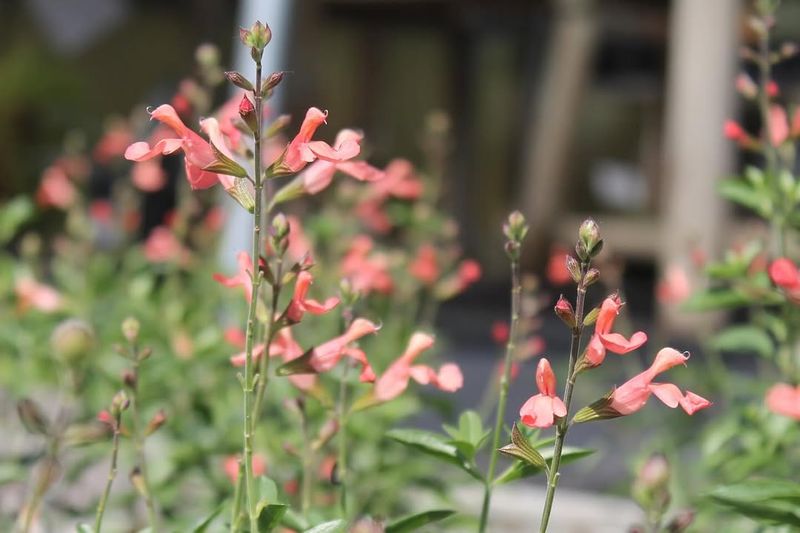
Walk through any Texas Hill Country neighborhood in late summer, and chances are you will spot Autumn Sage spilling over rock walls and garden borders in shades of red, pink, and white.
Salvia greggii is a Texas native that has been winning over gardeners for generations, and it is easy to see why. It blooms heavily in spring and fall, with lighter flowering even during the hottest summer months.
Autumn Sage is a semi-woody shrub that acts like a perennial in most of Texas. It loves full sun and thrives in well-drained soil, especially the rocky or sandy types that other plants struggle with.
Low water needs make it ideal for xeriscaping or any water-wise garden design. Once established, it is remarkably self-sufficient.
The tubular flowers are perfectly shaped for hummingbirds, which dart from bloom to bloom with impressive speed. Butterflies and bees are regular visitors too.
If you want a garden that buzzes and flickers with life, Autumn Sage is a must-have plant in your lineup.
It grows about two to three feet tall and wide, making it great for low borders, slopes, and mass plantings. Pruning it back by about one-third after each heavy bloom cycle encourages fresh growth and more flowers.
Avoid heavy pruning in late fall, since the woody stems help protect the plant during winter cold snaps.
Color options have expanded beyond the classic red. You can now find Autumn Sage in salmon, coral, lavender, and bicolor varieties.
Mixing several shades together creates a vibrant, cottage-garden effect that looks stunning against Texas limestone or cedar fencing.
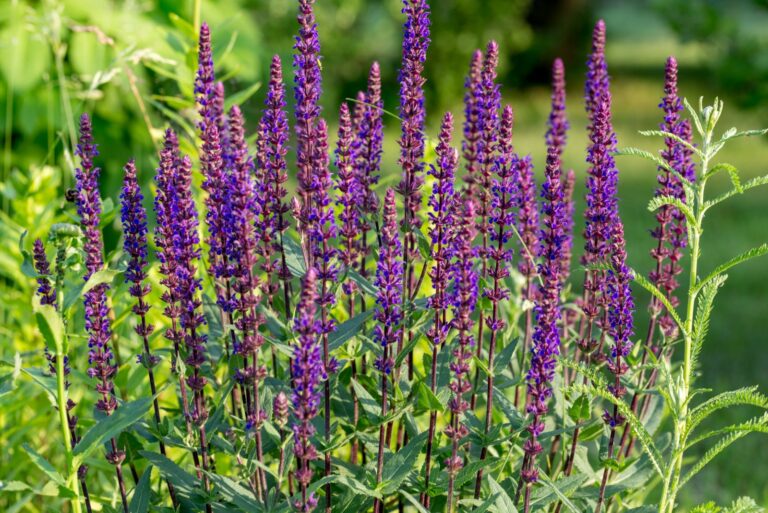
4. Henry Duelberg Salvia
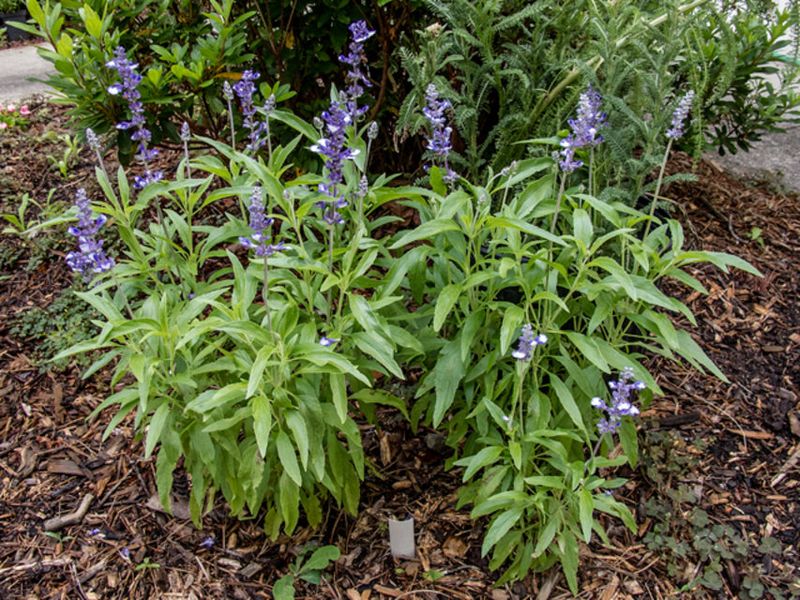
Named after a Texas nurseryman who discovered it growing wild along a roadside, Henry Duelberg Salvia has a story as charming as its flowers.
This variety of Salvia farinacea earned the coveted Texas Superstar designation, which means it has been rigorously tested and proven to perform beautifully across the state. The tall spikes of blue-violet flowers are eye-catching from a distance and up close alike.
Full sun is where this plant truly shines. It pushes out flower spikes continuously from spring through the first frost, offering an incredibly long season of color.
Heat does not slow it down one bit. In fact, the hotter it gets, the more reliable this salvia tends to be compared to other flowering perennials that sulk in summer.
Pollinators are absolutely devoted to Henry Duelberg Salvia. Bumblebees, honeybees, and various butterfly species visit it constantly throughout the growing season.
Planting it near vegetable gardens or fruit trees can actually boost pollination and improve your harvest. That is a bonus most gardeners appreciate.
Maintenance is refreshingly simple. The plant is drought-tolerant once established, and it does not require frequent fertilizing.
Cut it back by about half in midsummer if it starts to look leggy, and it will bounce back quickly with fresh growth and more blooms. Well-drained soil is important, as soggy roots are its one real weakness.
Growing two to three feet tall, it works well as a mid-border plant or as a companion to yellow or orange flowers.
The contrast between the cool blue spikes and warm-toned blooms creates a visually striking combination that photographs beautifully in any Texas garden setting.
5. Lantana
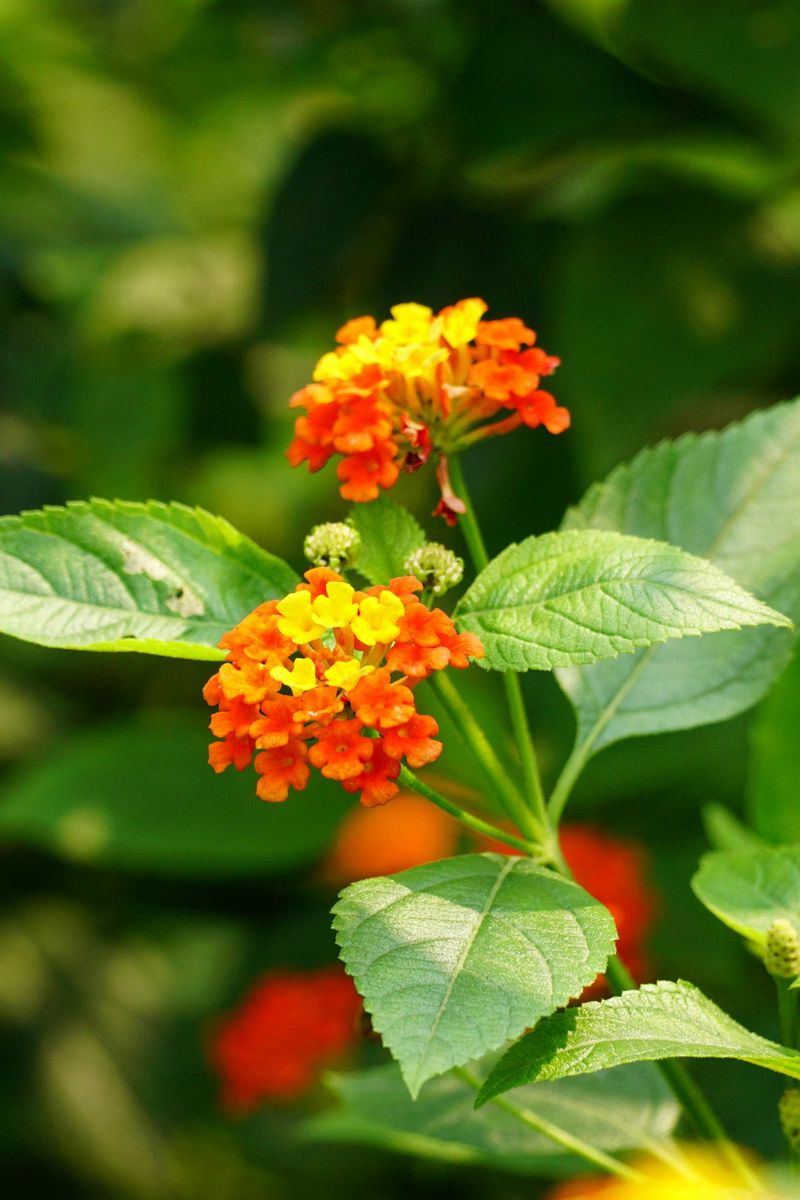
If there is one plant that acts like it was custom-built for Texas summers, it is Lantana. The clusters of tiny, multicolored flowers keep coming from spring all the way to the first frost, and the heat only seems to push it harder.
Lantana camara varieties come in a dazzling range of colors including orange, yellow, pink, red, white, and bicolor combinations that shift in shade as the flowers age.
Lantana earned its Texas Superstar status honestly. It tolerates extreme heat, extended drought, and poor soils without skipping a beat.
Full sun is non-negotiable for peak performance. Shade causes the plant to stretch, produce fewer blooms, and lose its compact shape. Give it a hot, sunny spot with decent drainage, and it will practically take care of itself.
Butterflies absolutely love Lantana. On a warm afternoon, you might count a dozen different species visiting a single plant.
Hummingbirds are fans too. The rough-textured leaves have a distinctive herbal scent that most deer find unappealing, which is a welcome bonus for gardeners in rural or suburban areas where deer pressure is high.
Lantana can grow as an annual in colder parts of Texas, but in South and Central Texas it often returns each spring from the roots. Cutting it back hard in late winter encourages vigorous new growth and a fuller, more attractive plant through the season.
Spreading varieties work well as ground covers on slopes or in large beds. Upright types suit borders and container plantings.
Either way, few plants deliver this much color with this little effort under the relentless Texas sun.
6. Red Yucca
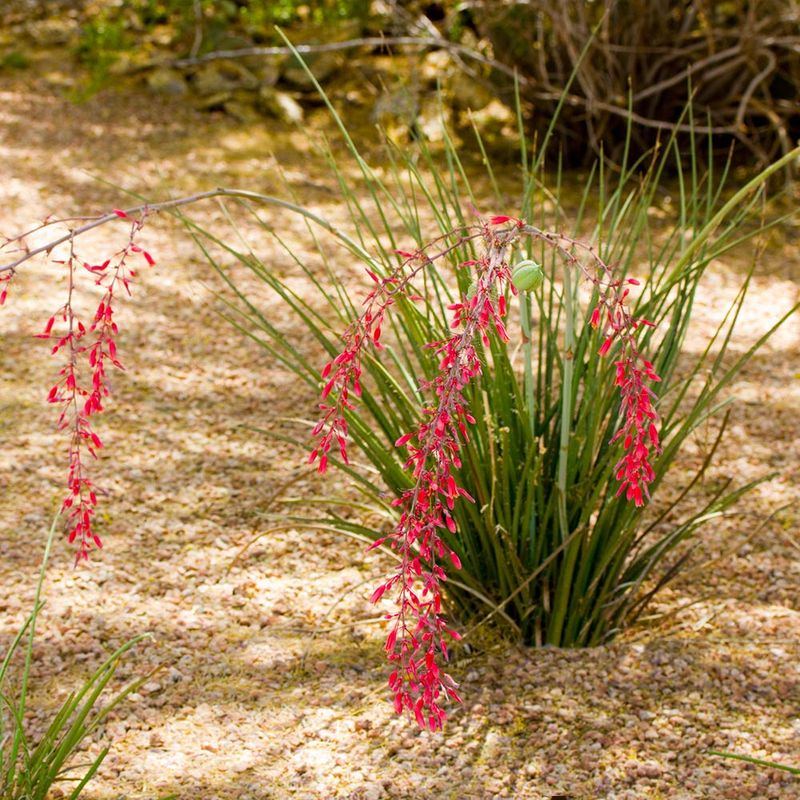
Red Yucca is not actually a yucca at all, but the nickname stuck because of its similar grass-like, strappy leaves. Hesperaloe parviflora is a Texas native that produces some of the most dramatic flower spikes you will ever see in a perennial garden.
The tall, arching stems rise three to five feet above the foliage, loaded with coral-red or pink tubular flowers that hummingbirds find completely irresistible.
Full sun and excellent drainage are the two things Red Yucca needs most. It is one of the most drought-tolerant flowering plants available to Texas gardeners, making it a star of xeriscape designs and water-wise landscapes.
Once planted and established, it can go weeks without supplemental water and still look fantastic. Rocky, sandy, or clay-heavy soils are all acceptable as long as water does not pool around the roots.
Blooming typically begins in late spring and continues through summer, with some plants pushing out flower spikes into fall. After the flowers fade, seed pods form and add visual interest well into winter.
The evergreen foliage stays attractive year-round, providing structure and texture even when nothing else in the garden is blooming.
This plant grows slowly but lives for a very long time, often lasting decades with almost no care. It rarely needs pruning, fertilizing, or dividing.
Simply remove spent flower stalks at the base once they are fully done to keep the plant tidy.
Red Yucca pairs beautifully with other drought-tolerant Texas natives like Autumn Sage and ornamental grasses.
The combination of bold flower spikes, fine-textured foliage, and year-round interest makes it one of the most versatile and rewarding plants in the Texas perennial toolkit.
7. Flame Acanthus
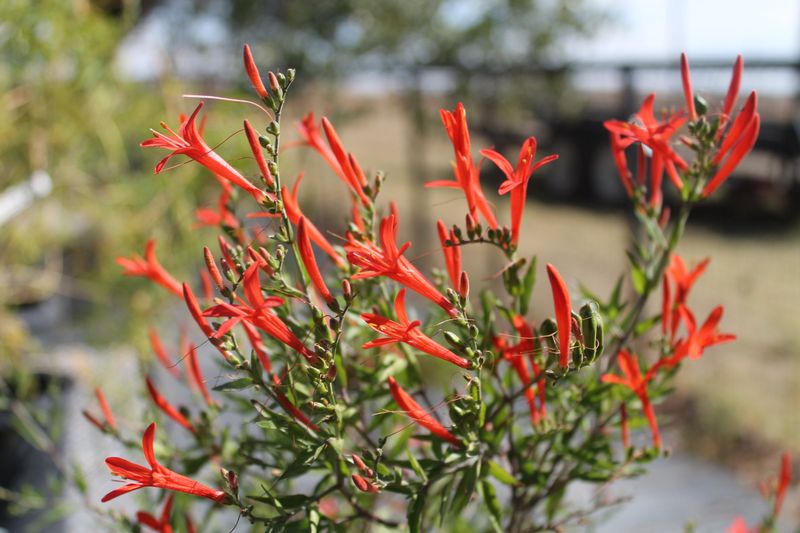
Gardeners who have watched a hummingbird hover inches from a Flame Acanthus plant know exactly why this Texas native earned the nickname Hummingbird Bush.
The bright orange-red tubular flowers are like a neon sign to hummingbirds, and during peak bloom, you might have multiple birds visiting at the same time. It is one of the most wildlife-friendly plants you can add to a sunny Texas garden.
Anisacanthus quadrifidus var. wrightii is native to the rocky hills and canyons of West Texas and the Hill Country. It is built for tough conditions, handling drought, intense sun, and even cold snaps that would stress less-adapted plants.
Full sun brings out the best flowering, though it tolerates light afternoon shade without much complaint.
Blooming starts in mid to late summer, which is exactly when many other garden plants are looking tired from the heat. That timing makes Flame Acanthus incredibly valuable as a late-season color source.
Butterflies, bees, and orioles join the hummingbirds in visiting the flowers, turning the plant into a lively wildlife hub each afternoon.
This shrubby perennial grows three to five feet tall and wide, forming an open, arching mound of slender stems and small leaves. Cut it back to about six to twelve inches in late winter before new growth begins.
That hard pruning encourages dense, healthy regrowth and an impressive flush of summer flowers.
Flame Acanthus works well in naturalistic plantings, wildlife gardens, and mixed borders. Pair it with Purple Coneflower or Red Yucca for a low-water, high-interest combination that celebrates the unique beauty of Texas native plants at their absolute best.