What It Really Means When Carpenter Bees Start Showing Up Around Your Florida Porch
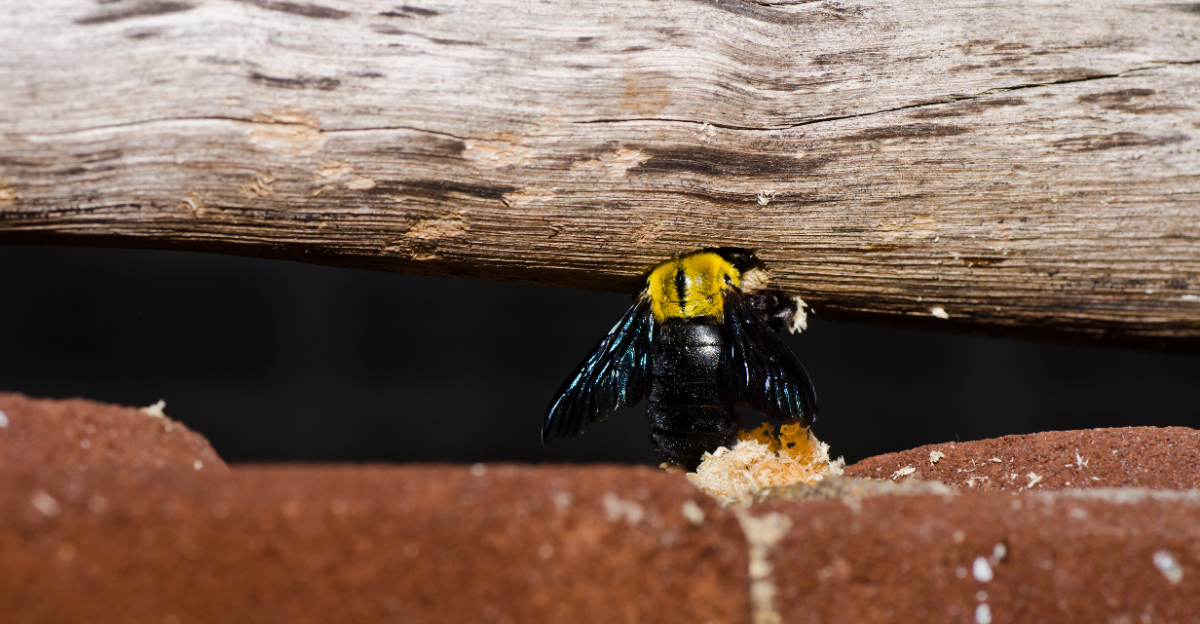
Carpenter bees hovering around a Florida porch have a way of making homeowners nervous fast. That loud, low buzz, the purposeful circling, the occasional dive that feels more aggressive than it probably is.
Most people’s first response is to find something to spray and figure out the rest later. Before reaching for anything, it is worth understanding what carpenter bees are actually doing around your porch and why they chose that particular spot.
Their presence is not random and it is not personal. It is a response to specific conditions your porch and yard are currently providing.
Florida’s warm climate keeps carpenter bees active through a longer stretch of the year than most homeowners realize. What draws them close to the house and what they are looking for says plenty.
Their behavior is also signaling more about the property than most people stop to consider. The full picture is more interesting than a pest problem.
1. Carpenter Bees Are Looking For Bare Wood, Not Trouble
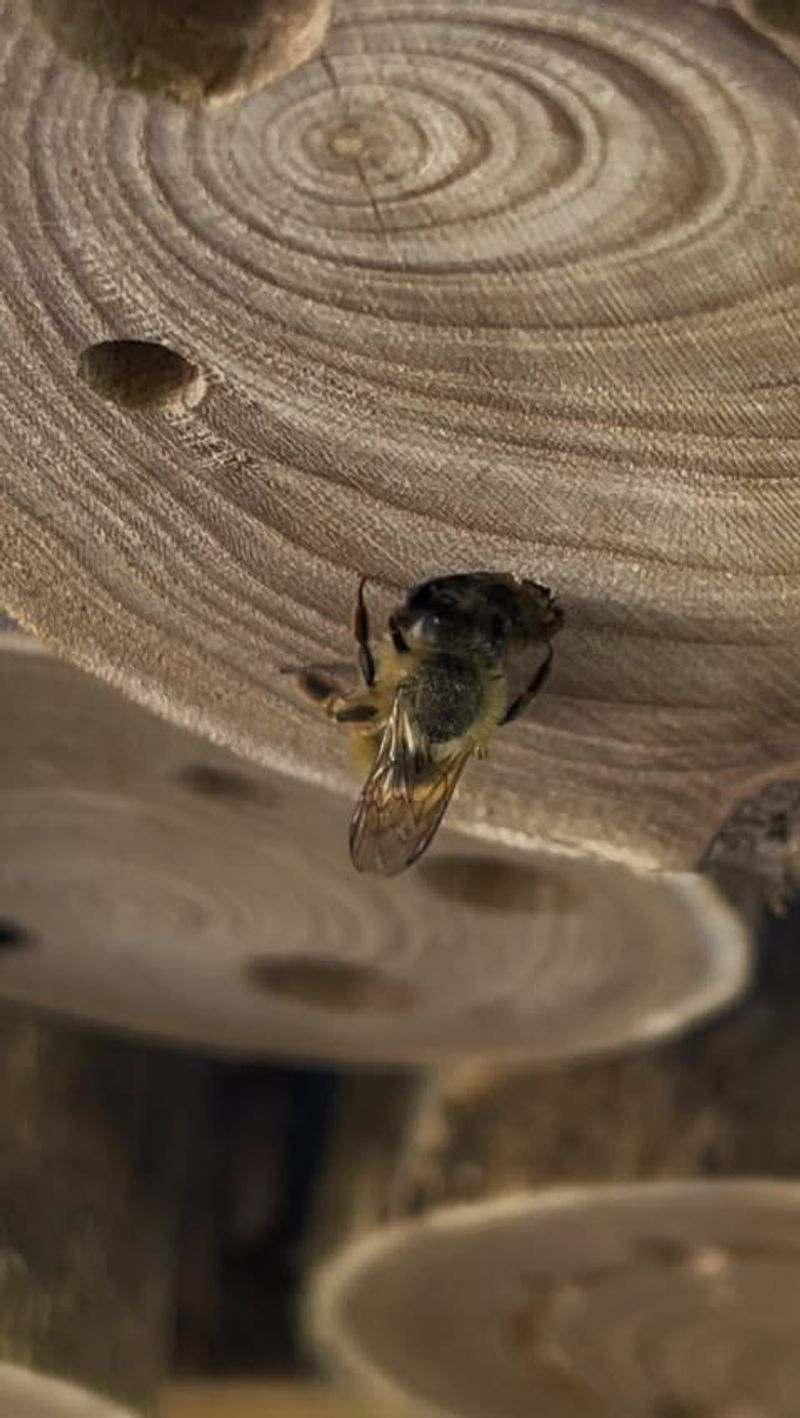
A carpenter bee circling your Florida porch is not patrolling for trouble. It is looking for the right piece of wood to tunnel into for nesting.
Carpenter bees bore into wood to create galleries where they lay eggs and store food. They are not eating the wood like termites do.
They are excavating space for nesting purposes.
Bare, weathered, unfinished, or softer wood tends to attract them most. Porch railings, fascia boards, eaves, exposed beams, trim pieces, pergola wood, and outdoor furniture can all become targets.
Wood that has lost its paint or sealant, or that has never been finished at all, sends an easy signal to a bee searching for a nesting site.
Spotting a carpenter bee near your porch is actually useful information. It is a clue to go inspect your exposed wood before a nest gets started or deepens.
Look for soft spots, cracked surfaces, and any areas where the finish has worn away. Catching the attraction early gives you a chance to address the wood before the bee does.
Staying calm and observant puts you ahead of the situation rather than reacting after the fact.
2. Round Holes Mean A Nest Site May Already Be Started
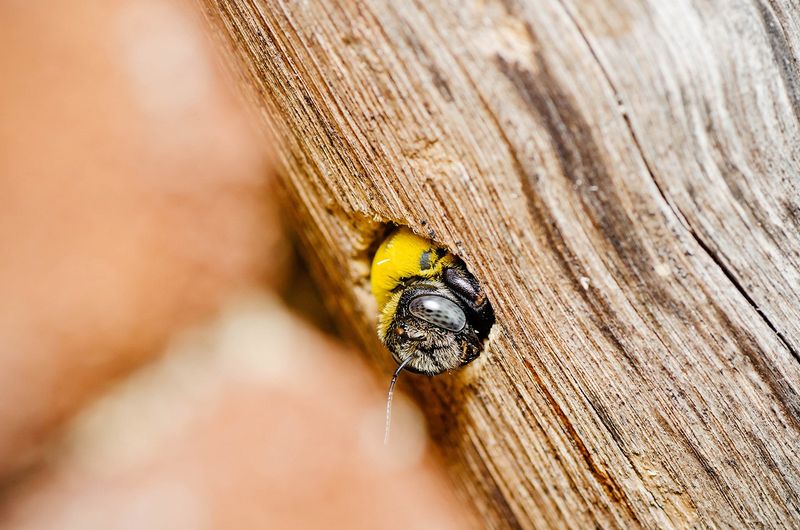
Sawdust on the porch floor is easy to overlook. A small pile of coarse, granular debris near a railing or under a fascia board can be a sign that a carpenter bee has already started boring.
Entrance holes are typically round and roughly the diameter of a finger. They can appear surprisingly neat for something made without tools.
One hole can lead to a gallery that runs several inches inside the board, sometimes turning at an angle. A single entrance may serve more than one tunnel branching inward.
Staining around the hole opening, caused by waste material, can also appear near active sites. Look carefully at undersides of railings, sheltered corners, fascia edges, and any area that stays shaded and dry.
Avoid poking fingers or bare hands into any hole you find. You cannot always tell if a nest is active just by looking at the entrance.
Your Florida Garden Changes Every Week. Your Plan Should Too.
Gardening in Florida changes quickly throughout the season. Every Friday you’ll receive a simple weekly plan showing exactly what to plant, prune, fertilize, harvest, and protect so you never miss the right timing.
Not every hole you see is newly made either. Old galleries from previous seasons can look similar to fresh ones.
Before assuming a hole is inactive, watch the area during warm daylight hours when carpenter bees are most likely to be flying and returning to active nests.
3. Porch Railings And Fascia Boards Offer Easy Entry Points
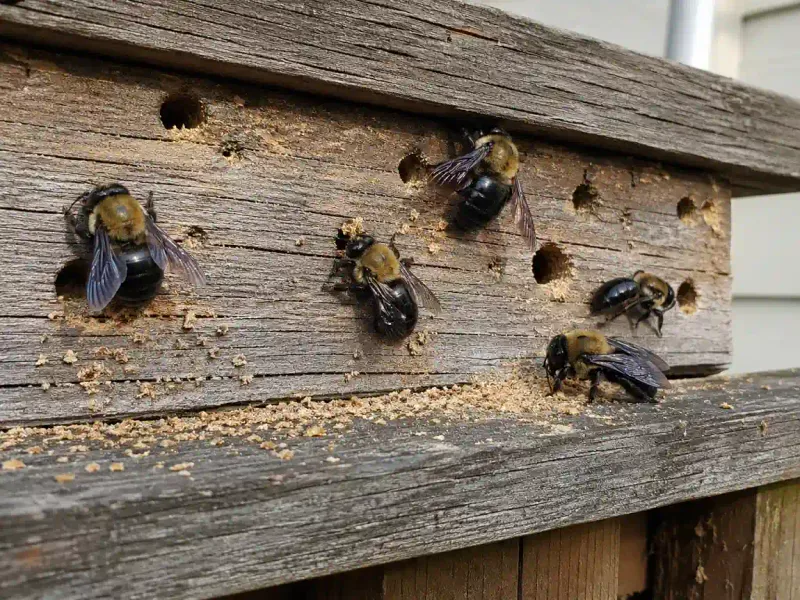
Weathered wood does not just look tired. To a carpenter bee, it looks like opportunity.
Sun exposure, humidity cycles, and years without fresh paint or sealant can soften wood fibers and open small cracks that make boring easier. Railings are especially vulnerable because they are often left unfinished on the undersides and end grain.
Fascia boards, soffit edges, exposed joists, pergola beams, and outdoor furniture with unfinished surfaces are all common targets in warm, humid regions. Old holes from previous seasons can also attract new activity.
A bee investigating your porch may find an existing gallery and choose to reuse or extend it rather than starting fresh.
Walk your porch before nesting season builds. Check the undersides of railings, the edges of fascia boards, any exposed end grain on beams or steps, and the corners where trim meets structural wood.
Look for cracks, soft spots, peeling paint, or bare surfaces that have gone unprotected. Replacing boards that are already soft or heavily damaged and sealing open cracks can help.
Keeping fresh paint or exterior-grade sealant on exposed wood also makes your porch less inviting for nesting. Small maintenance steps taken early go a long way.
4. Buzzing Males Act Tough But Usually Cannot Sting
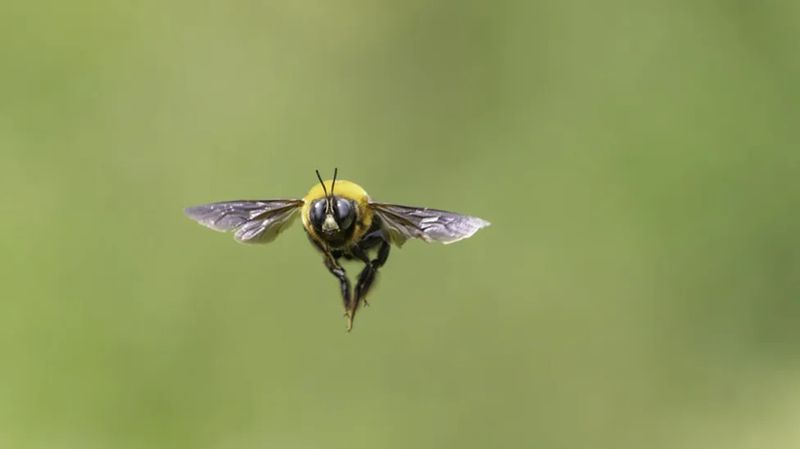
Few things are more startling than a large bee hovering right at face level while you are trying to enjoy your porch. Male carpenter bees are known for this kind of territorial hovering near nesting sites.
They may dart toward people or other insects that come too close. It can feel genuinely threatening.
Here is the reassuring part: male carpenter bees do not have a stinger. Their bold behavior is a bluff.
They guard territory and investigate movement, but they cannot back up the display with a sting. Female carpenter bees can sting, but they are generally much less confrontational.
A female is more focused on her nesting work than on defending space. She is unlikely to sting unless she is directly handled, grabbed, or trapped against skin.
When you see a hovering male, the best response is to stay calm and move slowly. Avoid swatting, waving your arms, or trying to grab the bee.
Rapid movement tends to escalate the bee’s response. Observe from a reasonable distance and let the bee move on its own.
Children and pets near active nesting areas deserve extra attention, since quick movements or accidental contact with a female could result in a sting. Stay aware, but there is no reason for alarm.
5. Repeated Nesting Can Weaken The Same Wood Over Time
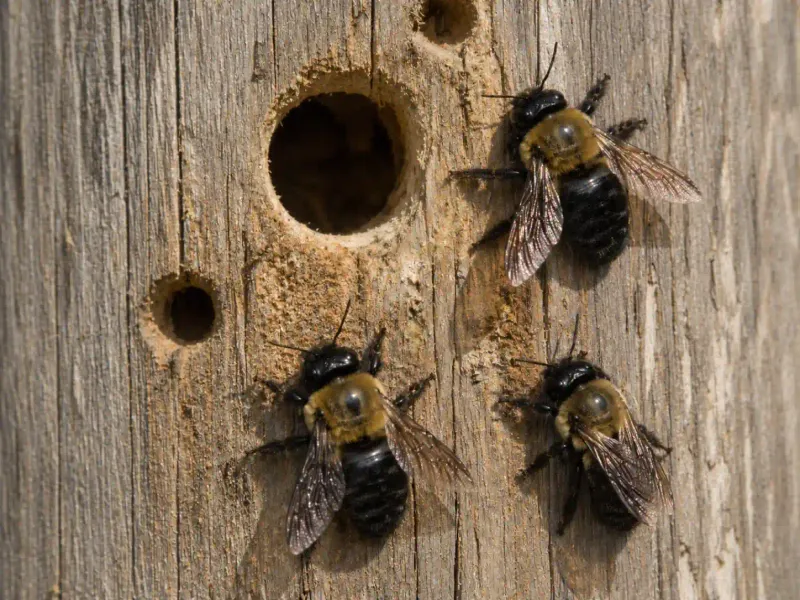
One or two fresh tunnels in a thick beam might not cause immediate structural concern. Over several seasons, though, the same boards can accumulate galleries that branch, extend, and overlap.
Wood that has been repeatedly bored becomes progressively weaker. Load-bearing boards and structural connections deserve the most attention when repeated nesting is involved.
Old galleries can be reused and extended by returning bees. A board that looks solid from the outside may have significant internal excavation.
That damage may not be visible until the wood is inspected more closely or begins to crack under pressure. Porch steps, support posts, and railings that carry regular weight are worth monitoring more carefully than purely decorative trim.
Minor surface damage in non-structural wood is a different situation from widespread tunneling in boards that bear load or connect your porch frame. If you notice many holes, soft or spongy wood, or boards that flex more than expected, take it seriously.
Call a licensed pest-management professional, carpenter, or qualified home-repair professional for a proper evaluation. Do not climb unsafely to inspect overhead areas.
Getting a professional set of eyes on serious or widespread damage is the right move before attempting any repairs yourself.
6. Painted Or Sealed Wood Makes Porches Less Inviting
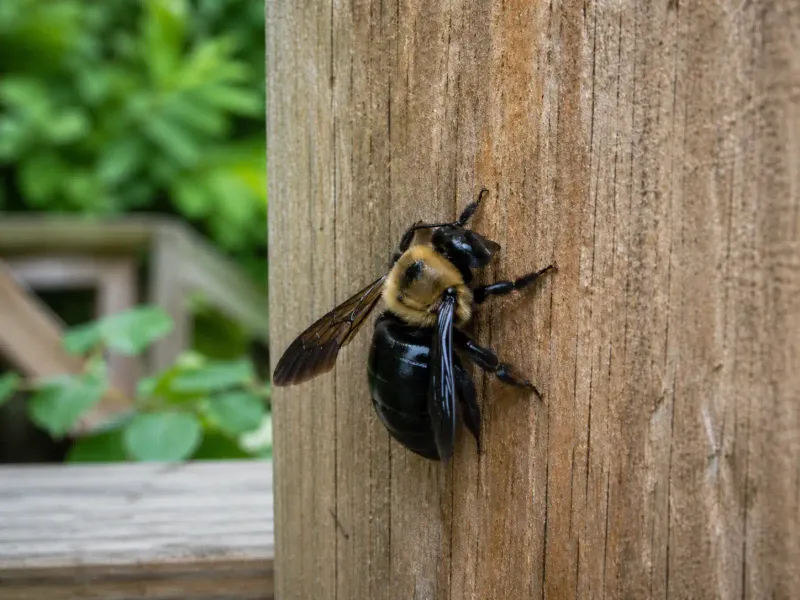
A fresh coat of paint is not just about curb appeal. Carpenter bees tend to favor bare, weathered, or unfinished surfaces over wood that has been properly sealed or painted.
Keeping exterior wood well-maintained can reduce the easy nesting cues that draw bees in the first place. End grain is especially worth protecting, since it absorbs moisture and softens faster than face grain.
Filling old holes is another part of the process, but timing matters. Holes should only be filled after bees are confirmed to be no longer active inside.
Sealing bees inside a gallery can create other problems. If you are unsure whether a hole is still active, watch it during warm daylight hours before deciding to fill it.
A pest-management professional can help you determine the right timing if you are not certain.
Repairing cracks in wood and replacing boards that are already soft or heavily bored can reduce nesting pressure. Refreshing exterior finishes every few years helps too.
Exterior-grade paint, stain, or sealant applied to all surfaces, including undersides and end cuts, gives wood the best protection.
Surface treatment does not mean bees will never investigate again, but it removes the easy invitation that bare or cracking wood provides.
Consistent upkeep is the most practical long-term approach.
7. Pollinator Value Does Not Mean Ignoring Wood Damage
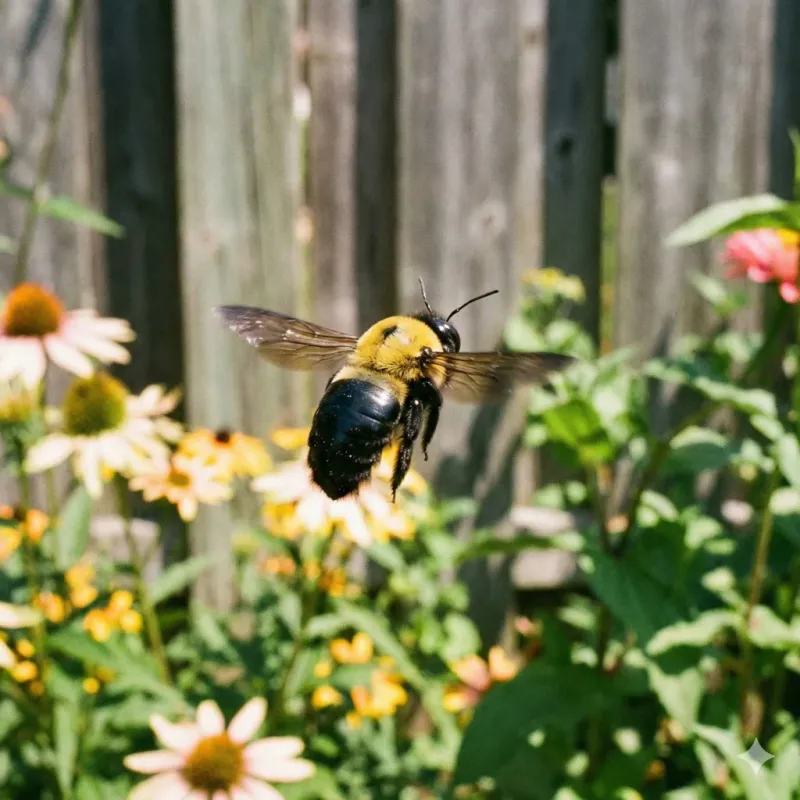
Carpenter bees are genuine pollinators. They visit flowers and contribute to plant reproduction in home landscapes and natural areas.
Their ecological role is real and worth respecting. At the same time, a wooden porch is not the same as a snag in a forest or a wild patch of old logs.
Structures built for human use need a different kind of consideration.
Supporting pollinators and protecting your porch are not opposing goals. Planting flowers, native Florida plants, and pollinator-friendly beds away from the porch gives carpenter bees better foraging options.
Those options do not require them to hover near your railings or eaves. Habitat away from vulnerable wood serves both the bees and the homeowner.
Being pollinator-aware does not mean accepting active nesting damage in high-use structural areas. A railing being bored into season after season is a maintenance issue.
So is a fascia board accumulating multiple galleries, regardless of the bee’s broader ecological value. Homeowners can make thoughtful choices that support native pollinators while still maintaining the structural integrity of their porch.
Flowers in one corner of the yard and sealed, well-painted railings on the porch are a reasonable balance that works for both sides of the equation.
8. A Calm Porch Check Beats Panic Spraying
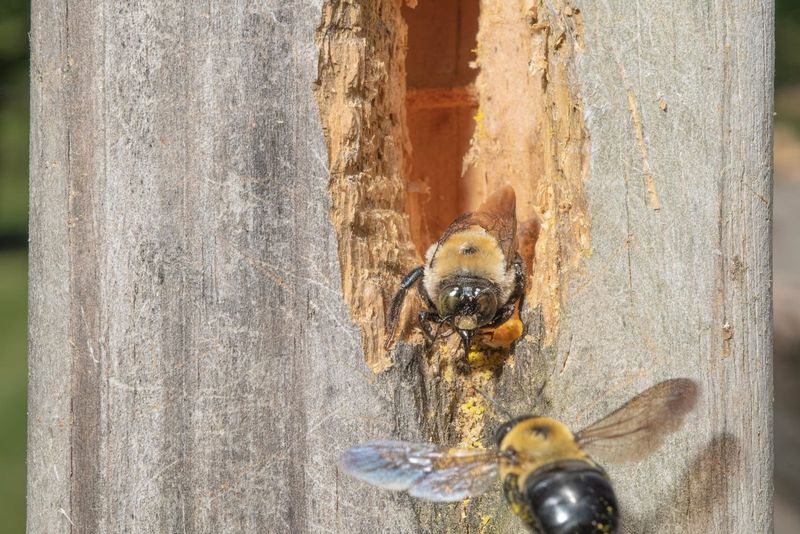
Reaching for a spray can the moment you see a carpenter bee is a common reaction, but broad outdoor spraying is rarely the right first step. It can affect other insects, including beneficial ones, and may not address the actual nesting site at all.
A calm inspection of your porch wood gives you far more useful information than a reactive spray ever could.
Walk the porch during daylight and look for round holes, sawdust, staining near wood surfaces, and soft or cracked boards. Note which areas show activity and which seem undamaged.
Keep children and pets away from active nesting areas while you assess. If you have allergy concerns related to bee stings, consult a professional rather than handling the situation alone.
If insecticide use is genuinely needed, it should be targeted, applied according to the product label, and timed appropriately.
Products should only be used after correctly identifying the insect and following all label directions, which are legally required guidelines.
For serious nesting, widespread damage, or areas that are hard to safely reach, do not guess. Contact a licensed pest-management professional or your local UF/IFAS Extension office for guidance.
The most effective porch response combines inspection, targeted maintenance, and prevention. That approach protects your wood and keeps the situation manageable over time.