These Florida Plants Don’t Slow Down In July No Matter What The Weather Does
July in Florida sorts plants into two groups fast. The ones that slow down, drop leaves, stop blooming, and wait for conditions to ease.
And the ones that do not seem to notice the heat at all. Most yards are full of the first group by midsummer.
Beds that looked full and promising in spring start showing their limits once Florida July arrives without apology. The garden goes quiet at exactly the wrong time.
A specific group of plants skips that pattern entirely. They do not slow down in July.
They do not need a recovery period after a heat stretch. Rain or shine, brutal humidity or dry spell, they keep performing with a consistency that makes every other bed in the yard look unreliable by comparison.
Florida has a real lineup of these plants. The gardeners who have built their yards around them spend July actually enjoying the garden instead of waiting on it.
1. Firebush Turns July Heat Into Hummingbird Color
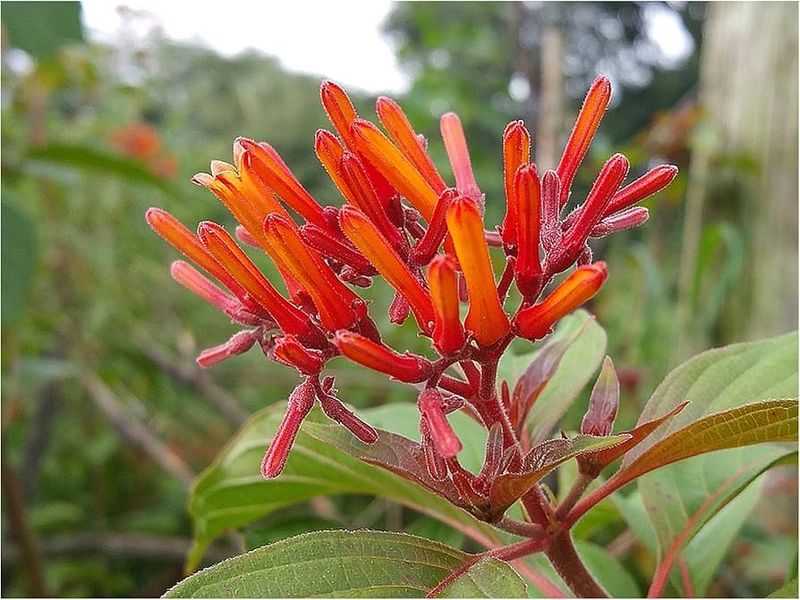
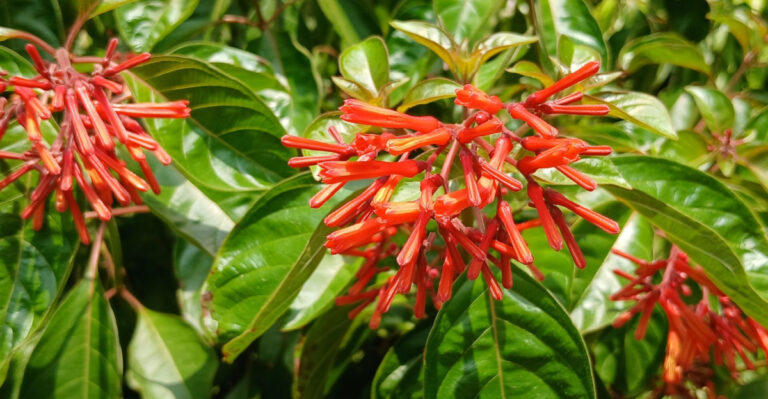
A hummingbird hovering over a hot sunny border in July is one of summer’s best garden moments, and firebush (Hamelia patens) is often the reason it shows up. This fast-growing shrub produces clusters of tubular orange-red flowers through the warmest months.
It offers steady nectar when many other plants have faded or gone dormant. Butterflies visit regularly too, making it a reliable hub of activity in rainy-season beds.
Native firebush is found naturally in southern and some central regions of this state. It handles heat, humidity, and summer rain well when planted in full sun to light shade with reasonable drainage.
In northern regions, it may behave more like a perennial, cutting back after cold and resprouting from the roots each spring. The ornamental form sold at many nurseries is not the same as the true native, so ask before buying if native status matters to you.
Firebush can get large, often reaching six to ten feet tall and wide when left unpruned in warm regions. It responds well to pruning, which also encourages fresh flowering growth.
Sandy, well-drained soil suits it, though it tolerates average garden soil with good drainage. Overly wet or compacted spots can slow it down.
Placed in a sunny border with room to spread, firebush keeps color and wildlife activity moving through July without much fuss.
2. Scarlet Hibiscus Keeps Blooming Where Summer Stays Wet
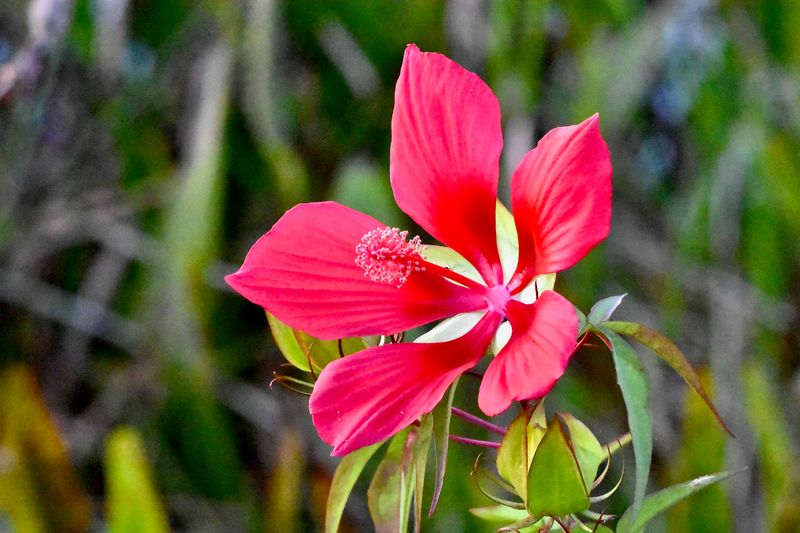
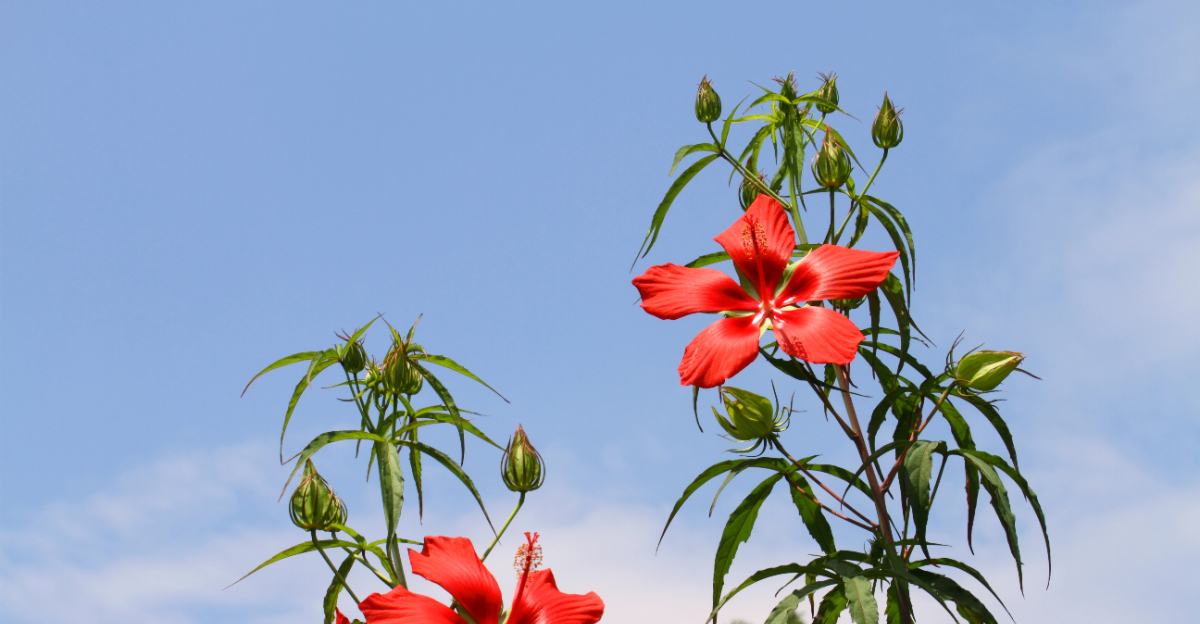
After a string of July thunderstorms, many garden beds look waterlogged and worn out. Scarlet hibiscus (Hibiscus coccineus) tends to look better for it.
This native perennial thrives at wet edges, pond margins, rain gardens, and moist sunny spots where standing water after storms is common.
Its bold red flowers are hard to miss, often reaching five to six inches across on stems that can climb six to eight feet tall by midsummer.
Unlike tropical hibiscus sold at garden centers, scarlet hibiscus is a true Florida native found in marshes, swamps, and wet ditches across much of the state. It is not a dry-sand plant and will not perform well in raised beds with sharp drainage.
Your Florida Garden Changes Every Week. Your Plan Should Too.
Gardening in Florida changes quickly throughout the season. Every Friday you’ll receive a simple weekly plan showing exactly what to plant, prune, fertilize, harvest, and protect so you never miss the right timing.
Wet or consistently moist soil in full sun is where it shines. Pollinators, including large bees and hummingbirds, visit the flowers regularly through the blooming season.
Expect it to look seasonal. Scarlet hibiscus typically goes dormant in winter, especially in northern and central regions, and re-emerges in spring as temperatures rise.
July is often when it hits its stride, with tall stems fully leafed out and flowers opening daily. Give it space, keep it moist, and avoid planting it in spots that dry out between storms.
In the right wet-site location, it delivers real summer drama without much intervention.
3. Seaside Goldenrod Holds Strong In Hot Coastal Beds
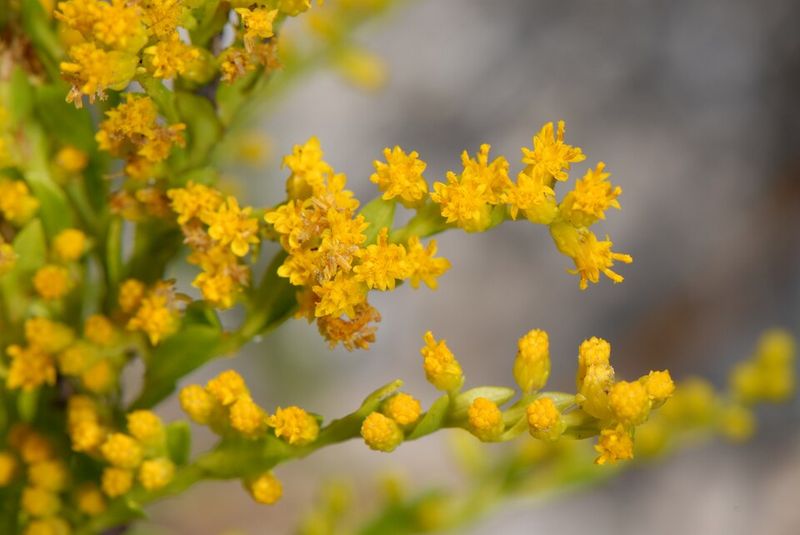
Sandy coastal beds in full sun can be brutal in July. Salt spray, intense heat, low soil fertility, and irregular moisture make most ornamentals look ragged by mid-month.
Seaside goldenrod (Solidago sempervirens) is built for exactly those conditions. This native perennial grows naturally along coastal areas, dunes, and salt marsh edges throughout this state.
It handles sun, heat, and salt exposure better than most plants its size.
Upright and bold in texture, seaside goldenrod can reach four to six feet tall in favorable conditions. Its bright yellow flower plumes typically appear in late summer through fall, but the plant holds strong green structure through July even before bloom.
Pollinators respond enthusiastically when flowering begins. That makes it valuable in native and pollinator-focused beds near the coast or in exposed inland sites with sandy, well-drained soil.
Goldenrod does not cause seasonal allergies the way many people assume. Its pollen is heavy and carried by insects, not wind.
Ragweed, which blooms around the same time, is the more likely culprit. That said, seaside goldenrod is not a tidy compact plant.
It gets tall, can lean a bit in loose sandy soil, and looks best in naturalistic or native plantings where height is welcome. It is not a neat border edger.
Place it in a broad, open, well-drained bed with full sun and room to grow upright through the summer heat.
4. Tropical Sage Keeps Sending Up Color Through Storms
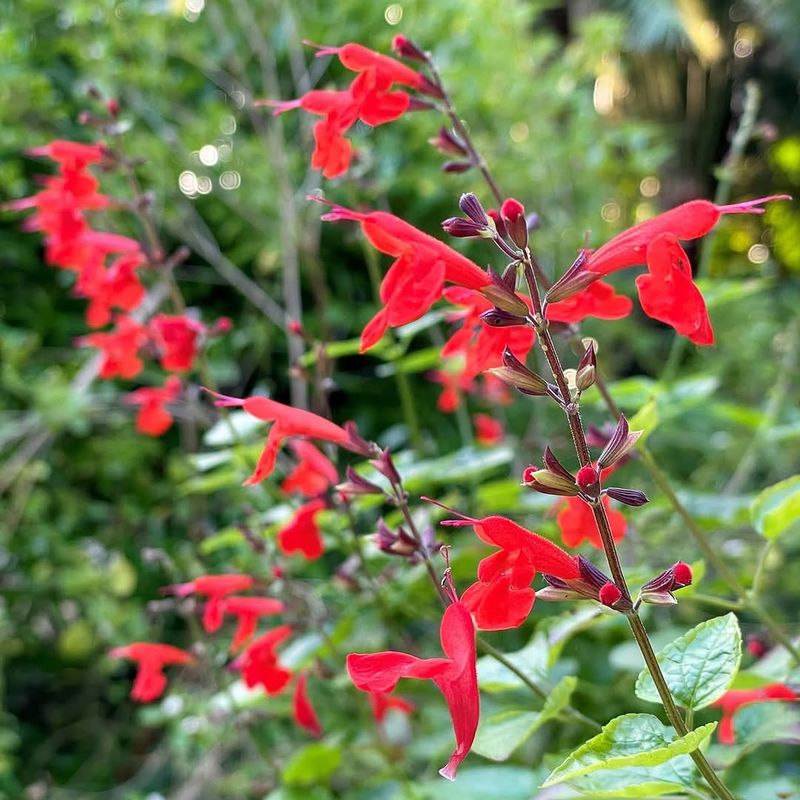
Rainy-season storms roll through almost every afternoon in July, and most flowering annuals take a beating. Tropical sage (Salvia coccinea) tends to shake it off and keep blooming.
This native or regionally native wildflower produces slender upright stems topped with tubular flowers in red, pink, or white through warm, humid months.
It fits naturally into sunny to partly shaded native beds, wildflower patches, and informal borders where a loose, relaxed look is welcome.
Hummingbirds and butterflies visit regularly, and the plant earns its place in pollinator gardens across much of this state. It grows quickly in warm weather, typically reaching two to three feet tall.
One of its most useful traits is its tendency to reseed. A single plant can produce seedlings nearby, gradually filling a bed with minimal effort.
That reseeding habit also means it can spread beyond where you planted it, so give it space or edit seedlings near formal paths or tidy entry beds.
Tropical sage is not fussy about soil as long as drainage is reasonable. It handles both sunny and partly shaded spots, which makes it more flexible than many summer wildflowers.
Trimming is not required, but light trimming can encourage fresh flushes of blooms. In the right informal setting, it keeps color moving through July’s heat and humidity with very little attention.
Just be ready to manage seedlings if it finds a spot it really likes.
5. Fakahatchee Grass Looks Bolder As Summer Growth Builds
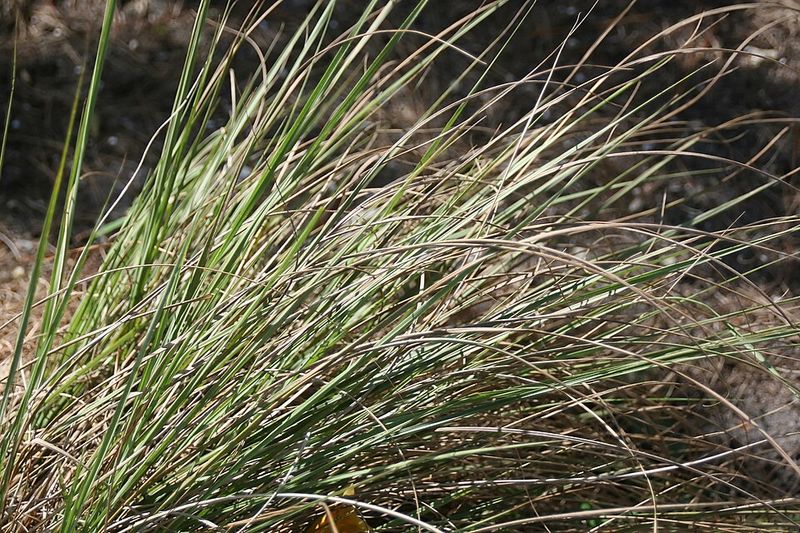
By mid-July, a big clump of Fakahatchee grass (Tripsacum dactyloides) can look genuinely impressive. Warm-season growth fills in fast.
The wide, arching leaves create a bold tropical texture that stands out in large beds, pond edges, swales, and broad naturalistic borders. This native grass is one of the most structurally striking options for wet or moist sites in this state’s summer landscape.
Fakahatchee grass handles moisture well, making it a strong fit for low spots, seasonal wet areas, and edges where water collects after storms. It also tolerates full sun and the kind of summer heat that wilts more delicate plants.
Wildlife benefit from its dense clumps, which provide cover and habitat. The plant produces seed heads that add additional texture through the season and into fall.
Size is the one thing to plan for carefully. Mature clumps can reach five to seven feet tall and spread just as wide.
That scale makes it a poor choice for narrow foundation strips, tight walkways, or small garden beds where it will quickly overwhelm the space. Fakahatchee grass belongs in large, open areas where its bold form has room to develop.
It is not a small ornamental grass. Plant it with intention, give it a wet or moist site in full sun, and step back as summer warmth pushes it into its stride.
It rewards the right placement with real presence.
6. Railroad Vine Keeps Moving Across Hot Sandy Ground
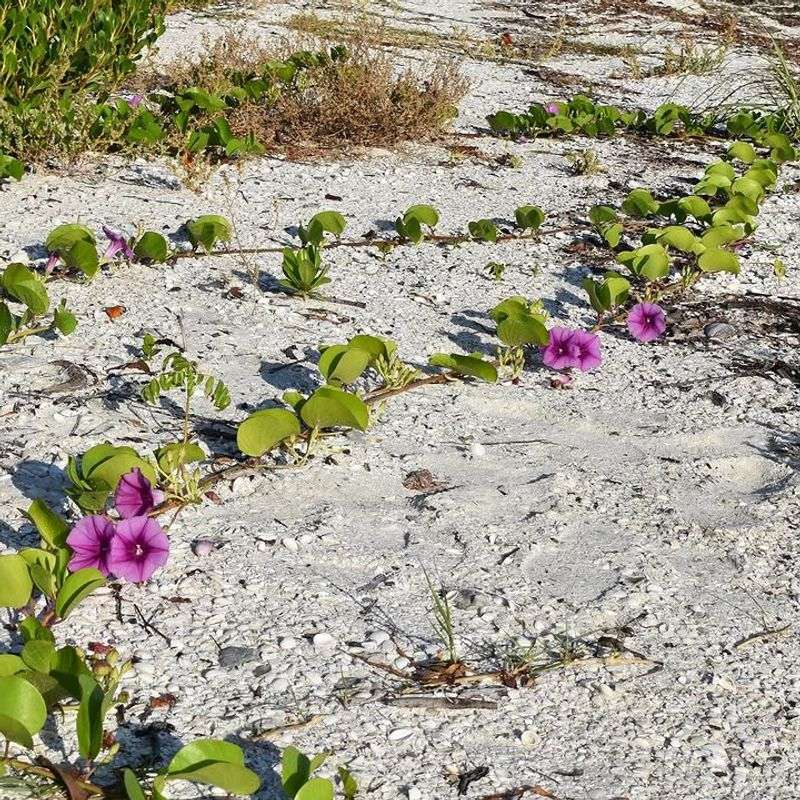
Few plants can match the railroad vine (Ipomoea pes-caprae) when it comes to covering hot, open, sandy ground along the coast.
This native ground cover spreads aggressively across dunes, beachside yards, and coastal edges where most plants simply cannot get established.
In July, it keeps moving, sending out long trailing stems across bare sandy surfaces while producing purple, morning-glory-like flowers that open in the morning light.
Salt tolerance is one of its strongest traits. Railroad vine handles salt spray, wind, and the kind of intense reflected heat that coastal sandy sites generate in midsummer.
Its trailing stems root at nodes as they spread, helping stabilize loose sand and reduce erosion along dune edges and open coastal areas. That spreading habit is part of its value in those settings.
This is a coastal specialist, not a general-purpose ground cover for inland yards or average garden beds. It needs full sun, well-drained sandy soil, and room to run, often spreading many feet in a single season.
Trying to keep it in a small, tidy spot is frustrating and largely unsuccessful. Railroad vine belongs at the coast, in open sandy areas where its aggressive spread is an asset rather than a problem.
If your yard fits that description, it can cover ground through July heat with minimal water. Once established in the right sandy, sunny, coastal site, it needs very little attention.
7. Tickseed Sunflower Brightens Damp Edges In Peak Heat
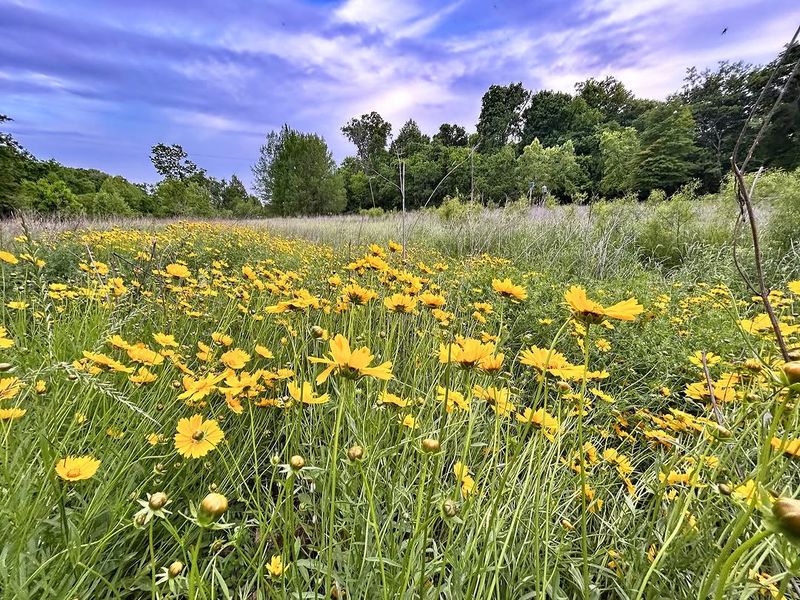
A wet ditch edge or pond margin in July can look surprisingly bright when tickseed sunflower (Bidens laevis) is in the mix. This native wildflower produces cheerful yellow, daisy-like blooms on stems that thrive in moist to wet, sunny conditions.
Rain gardens, pond margins, seasonally flooded low spots, and damp roadside edges are where it tends to look its best through the warm months.
Pollinators visit the flowers consistently, and the plant earns solid marks for wildlife value in wet-site native plantings. It grows at a moderate height, typically two to four feet, and fits naturally into informal, naturalistic borders near water.
Blooming can begin in late summer and extend well into fall, but the plant builds strong structure and foliage through July even before peak bloom.
Site fit matters enormously with this one. Tickseed sunflower is not suited to dry, sandy, well-drained beds.
Trying to grow it in a raised or droughty spot usually results in a weak, stressed plant that underperforms. In a genuinely moist or wet, sunny location, though, it can spread and naturalize with minimal help.
That spreading tendency means it may look a bit wild where it is happy. This suits naturalistic designs well but can feel out of place near formal entries or tidy borders.
Match it to a wet, open, sunny edge and it will reward you with reliable warm-season color through summer’s hottest stretch.
8. Florida Rosemary Stays Polished In Dry Scrub-Style Beds
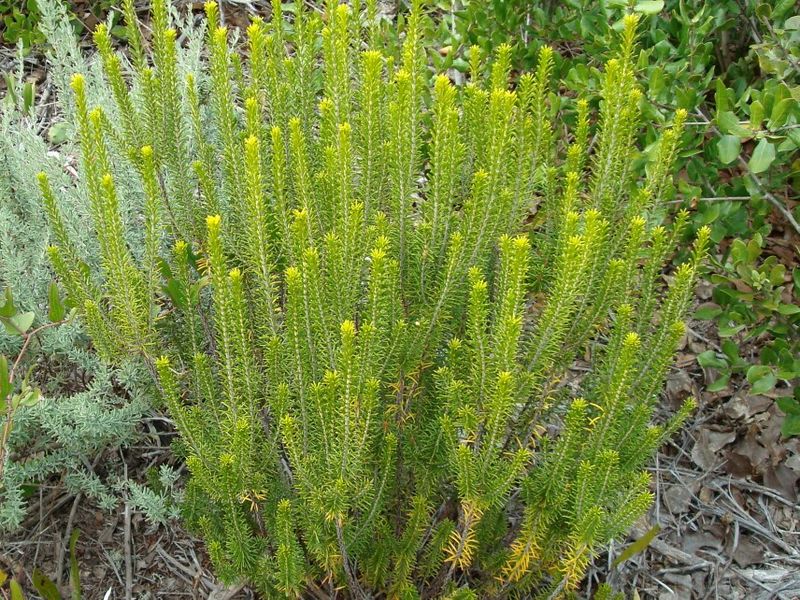
A dry scrub-style bed in full sun and pure white sand is one of the most challenging spots in any yard. Most shrubs struggle there in July.
Florida rosemary (Ceratiola ericoides) looks right at home. This native shrub holds a refined, silvery-green appearance through summer heat that would stress most landscape plants.
Its fine, needle-like foliage gives it a soft, textured look that contrasts well with open sandy ground and low scrub companions.
Before going further, one important clarification: Florida rosemary is not culinary rosemary and is not the same plant as Salvia rosmarinus. It is not edible and should not be used as a cooking herb.
The name similarity causes confusion, but these are entirely different plants with different uses, different families, and different growing needs.
True Florida rosemary is a scrub specialist. It requires full sun, very well-drained sandy soil with low fertility, and excellent air circulation.
It does not belong in wet beds, clay-heavy soil, or irrigated turf borders. Overwatering and poor drainage are the most common reasons it fails in home landscapes.
Once established in the right dry, sandy, open site, it needs very little water and holds its structure through summer heat and dry spells between storms. It grows slowly, reaching three to eight feet tall over time depending on conditions.
For scrub-style, xeriscape, or native dry-habitat plantings, it brings quiet, lasting presence through July and well beyond.