The Mulch Mistake That Can Make Florida Beds More Dangerous During Wildfire Season
Most Florida gardeners think mulch is mulch. Dump it, spread it, forget it.
It’s one of those garden tasks that feels so routine, so low-stakes, that nobody stops to question it.
But in a state where wildfire season is a very real conversation, the type of mulch you choose and the way you apply it can quietly turn your garden beds into a problem you never saw coming.
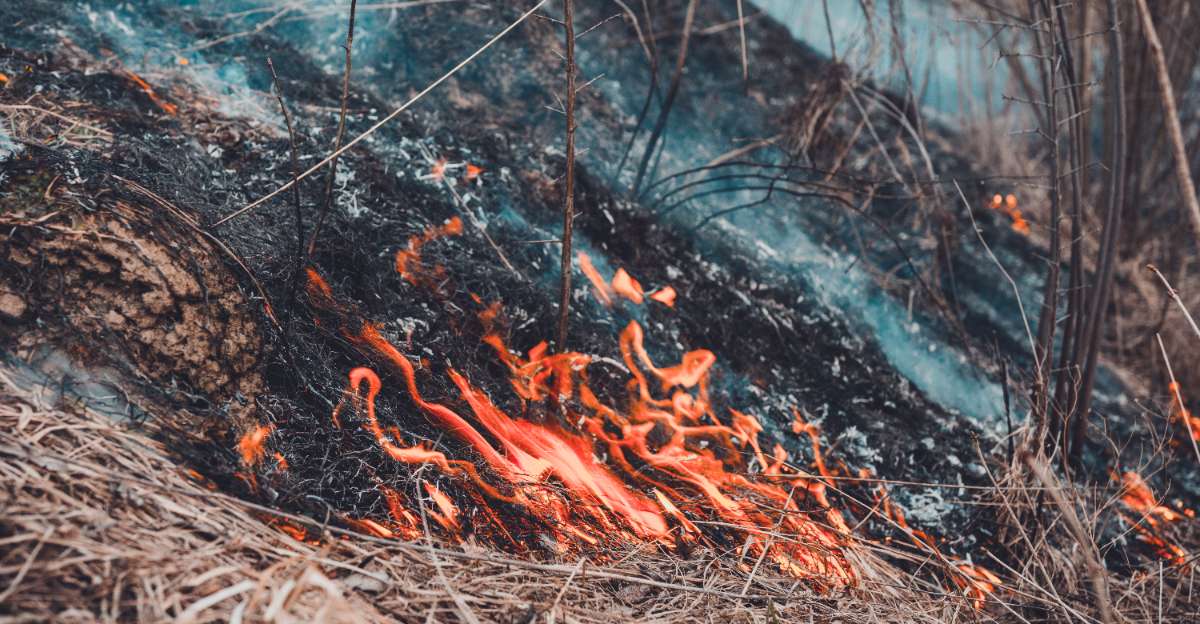
Dry conditions hit fast in Florida. Winds pick up. And certain mulch types catch and carry fire in ways that would genuinely shock most homeowners.
The frustrating part? A lot of the most popular mulch options at garden centers are the exact ones experts flag as risky. Nobody prints that on the bag.
We’re pulling back the curtain on the mulch mistake Florida gardeners make every single season, why it matters more than most people realize, and what to use instead to keep your beds looking great without the risk.
1. Keep Bark Mulch Away From The House
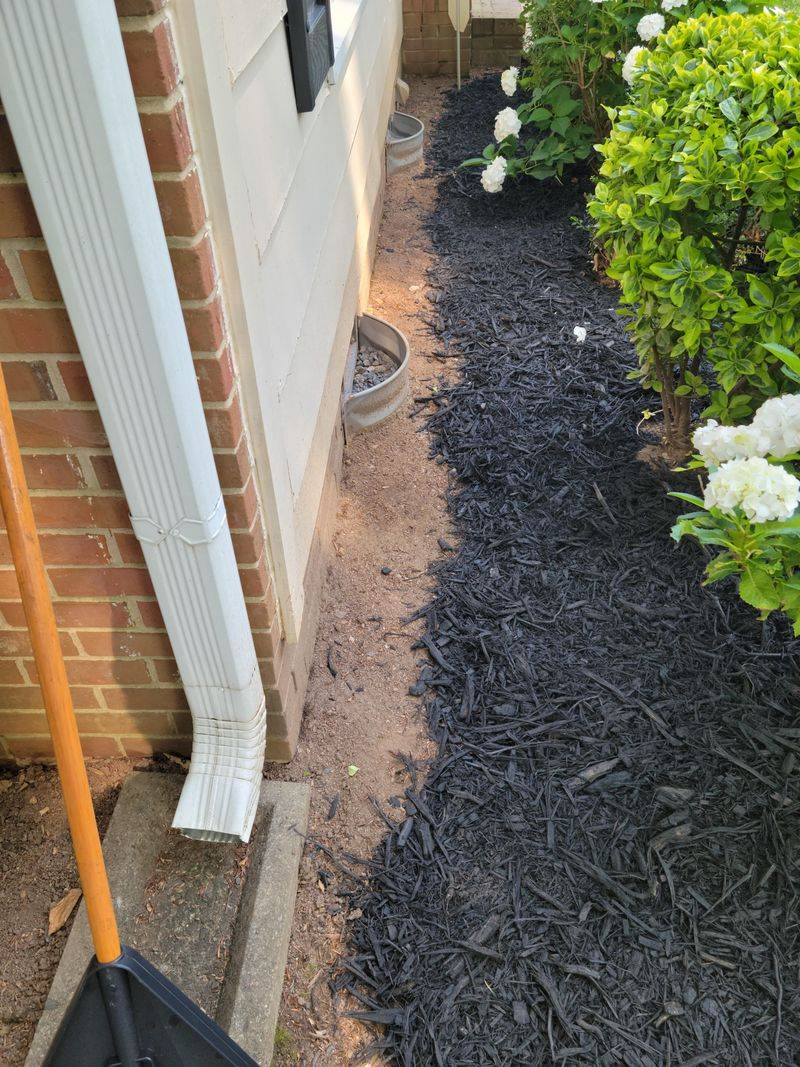
Bark mulch piled against a wall is one of the most common landscaping habits in Florida, and it is also one of the most overlooked exposure points during dry, windy stretches.
Wood-based mulch, including shredded hardwood, cypress, and bark chips, dries out fast in Florida’s heat.
Once dry, it becomes a material that holds and transfers heat well, especially when embers land on it during a nearby brush event.
The concern is not about mulch used in the middle of a bed far from the house. The problem starts in the zone right next to your walls, siding, foundation vents, and garage doors.
UF/IFAS and Firewise USA both recommend keeping combustible materials at least three to five feet away from any structure. That gap matters because embers blown by wind can travel far ahead of an active flame front and land in dry mulch sitting right at your wall.
Foundation plants tucked into bark mulch beds directly against the house add another layer of fuel. If the plants are woody or have dry foliage, the combination of mulch, stems, and leaves creates a compact fuel pocket.
Swap out combustible mulch in this near-home zone for gravel, shell, or pavers. Save the bark mulch for beds that sit well away from the structure, where it can still do its job without creating unnecessary exposure.
2. Replace Pine Straw Near Structures
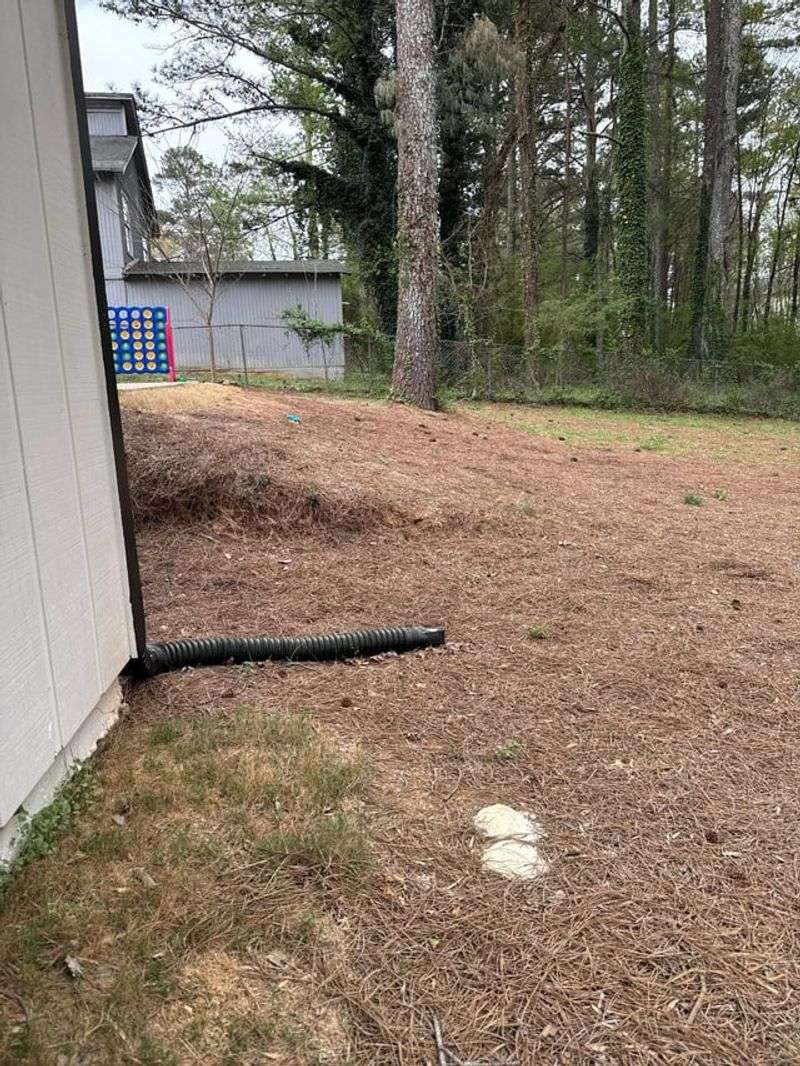
Pine straw is everywhere in Florida landscapes, and it makes sense why. It is affordable, easy to spread, breaks down slowly, and looks natural under pine trees and shrubs.
But pine straw behaves very differently from bark mulch when conditions get hot and dry. It dries out faster, weighs almost nothing, and has a fine, airy structure that allows air to move through it freely.
That structure is exactly what makes it catch so easily.
When pine straw sits close to a wall, deck edge, or shed, it also acts like a collection net. Windblown leaves, additional pine needles, and small twigs settle into it and build up a thicker, denser fuel layer over time.
Your Florida Garden Changes Every Week. Your Plan Should Too.
Gardening in Florida changes quickly throughout the season. Every Friday you’ll receive a simple weekly plan showing exactly what to plant, prune, fertilize, harvest, and protect so you never miss the right timing.
Florida wildfire guidance consistently recommends noncombustible materials close to structures instead of flammable organic mulches such as bark, wood chips, or pine straw.
During spring dry spells in North Florida or dry-season wind events farther south, even a small ignition source can move through a pine straw bed quickly.
Replacing pine straw within the first three to five feet around any structure is a practical step that does not require a full landscape overhaul. Use river rock, crushed shell, or decomposed granite in that near-home band.
Pine straw can remain in beds farther out in the yard where it serves its purpose without sitting right against a vulnerable surface. The swap is simple and the difference in exposure is significant.
3. Watch Dry Mulch Closely In North Florida
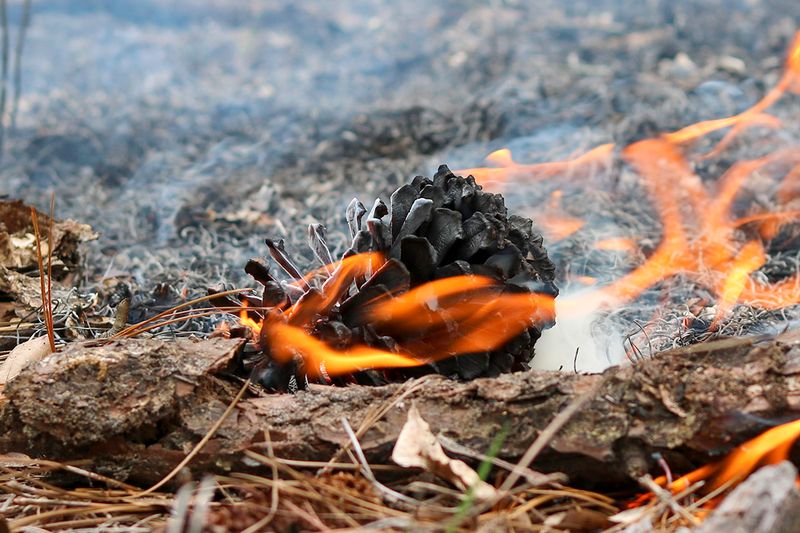
North Florida has a wildfire profile that many Central and South Florida residents do not deal with in the same way.
Pine flatwoods, large rural lots, and properties that back up to forested land create a setting where ground-level fuel buildup happens naturally and steadily.
Leaf drop from oaks and other deciduous trees in late fall and winter adds a layer of dry material that settles into mulch beds and stays there through spring, which is historically the driest and windiest period in the region.
Florida’s wildfire activity often intensifies during late winter, spring, and early summer, when dry spells, wind, and low humidity can line up before the rainy season settles in.
Mulch beds near structures in this region can quietly accumulate pine needles, oak leaves, and small twigs between maintenance visits.
That accumulated debris raises the fuel load in beds that might have started the season in reasonable shape.
Homeowners in North Florida should plan to inspect mulch beds near structures more frequently from February through May. After any significant wind event, take a few minutes to check what has blown into beds close to the house.
Raking or blowing debris away from the first five feet around walls, vents, and foundation plants is a low-effort habit that makes a measurable difference. Keeping a clear record of when beds were last cleaned out helps stay ahead of buildup during the driest weeks.
4. Plan For Drought And Wind In Central And South Florida

Central and South Florida may seem less associated with wildland events than the piney north, but preserve-adjacent neighborhoods, sandy soils, and seasonal drought create real exposure in these regions too.
Many communities in Osceola, Polk, Highlands, and Charlotte counties sit at the edge of scrub, flatwoods, or prairie.
During Florida’s dry season, which typically runs from October through May in the south, mulch near structures can dry out completely even when the rest of the yard looks green from irrigation.
Sandy soils drain fast, meaning moisture does not linger in mulch beds the way it might in heavier soils elsewhere. Wind exposure is also significant, especially in coastal and inland areas where afternoon gusts push embers and debris across open ground.
A continuous organic mulch path that runs from a planted bed along a fence and up to a porch or wall creates a connected fuel line that does not require a large flame to become a problem.
Homeowners near preserves, scrub edges, or open-land buffers in Central and South Florida should treat the near-structure zone with the same care as homeowners in North Florida.
Avoid extending bark mulch or pine straw in an unbroken line from the outer yard to the house.
Break up those paths with stone, pavers, or bare ground. Check beds during dry, windy stretches even if the lawn is still receiving irrigation, because mulch dries faster than grass and holds that dryness longer.
5. Break Up Long Mulch Beds Before They Carry Fire
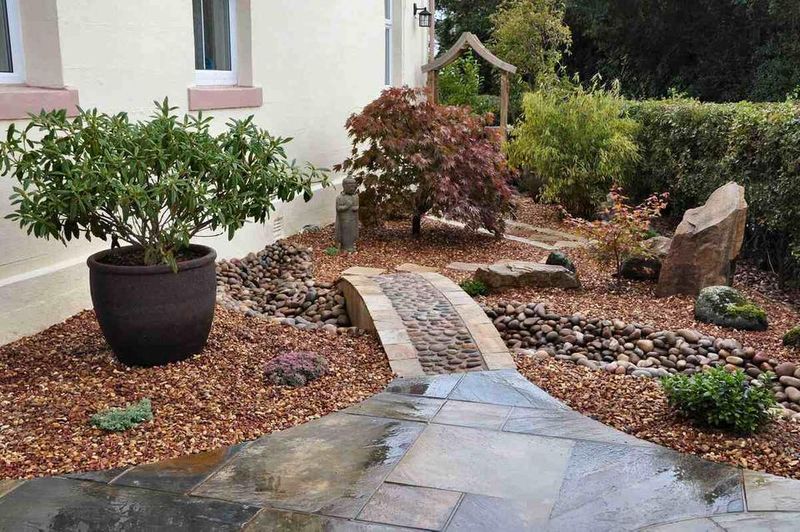
Picture a mulch bed that starts near the back fence, runs along the side of the yard under a row of shrubs, continues along the house foundation, and ends at the front porch steps.
That layout is common in Florida neighborhoods, and it creates something that wildfire professionals call a continuous fuel path.
When dry organic material forms an unbroken line from open ground to a structure, flames or embers do not need to jump gaps. They can travel along the surface.
UF/IFAS and Firewise USA both highlight continuous fuel paths as a key layout problem in residential landscapes. The concern is not just direct flame contact.
Radiant heat from burning mulch a few feet away can also stress or ignite nearby materials, especially wood siding, lattice, or deck boards. Long mulch runs beneath windows or along the base of fences are particularly worth addressing before the driest months.
Breaking up a continuous mulch bed is a straightforward fix. Insert sections of gravel, stepping stones, pavers, or bare mineral soil where the bed approaches structures, fences, decks, porches, or other combustible features.
At minimum, create a noncombustible break in the last five feet before any wall, vent, or structural edge. You do not need to remove all the mulch.
Interrupting the path is enough to prevent a surface-level flame from traveling straight to the structure without a break.
6. Clear Leaves And Pine Needles From Mulch
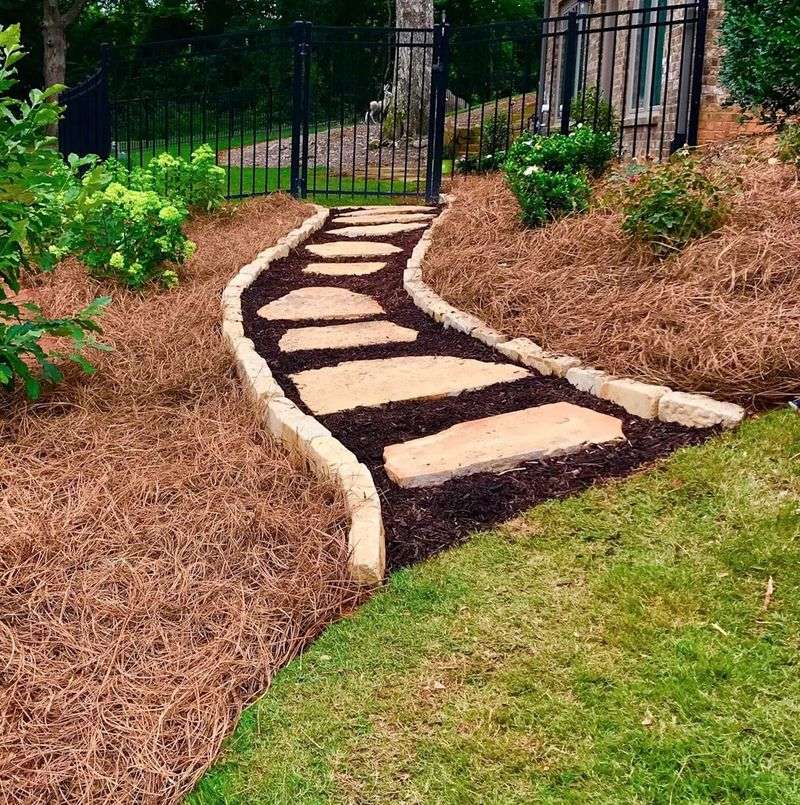
Even a well-placed mulch bed can become a problem if debris is allowed to pile up on top of it. Florida yards shed a remarkable amount of organic material throughout the year.
Live oaks drop leaves in late winter and early spring just as dry season peaks. Longleaf and slash pines shed needles steadily.
Sabal palms drop fronds and seed clusters. After any wind event, all of this material ends up in mulch beds, and it does not take long for a thin layer of bark mulch to become buried under a thick mat of dry debris.
That debris layer changes the character of the bed. Fine, dry leaves and pine needles mixed into existing mulch create a material that catches more easily and burns with more intensity than the mulch alone.
The Florida Forest Service notes that maintaining clean, debris-free zones around structures is one of the most accessible and effective steps homeowners can take to reduce exposure during active conditions.
Set a routine to rake or blow debris away from the first three to five feet around your house, garage, and outbuildings at least every two weeks during dry season. After storms, check beds the following day.
Collecting debris in bags rather than blowing it back into the yard or against a fence keeps the material from resettling near the structure.
This kind of regular upkeep takes less than fifteen minutes and directly reduces the fuel load in the most critical zone around your home.
7. Use Gravel Or Stone In The First Five Feet

Gravel does not catch. Stone does not smolder.
Crushed shell, decomposed granite, lava rock, and pavers are all materials that can handle heat and ember exposure without contributing to a surface-level flame path.
That is exactly why wildfire safety guidance, including recommendations from Firewise USA and the National Fire Protection Association, consistently points to noncombustible ground cover as the preferred choice in the zone directly around a structure.
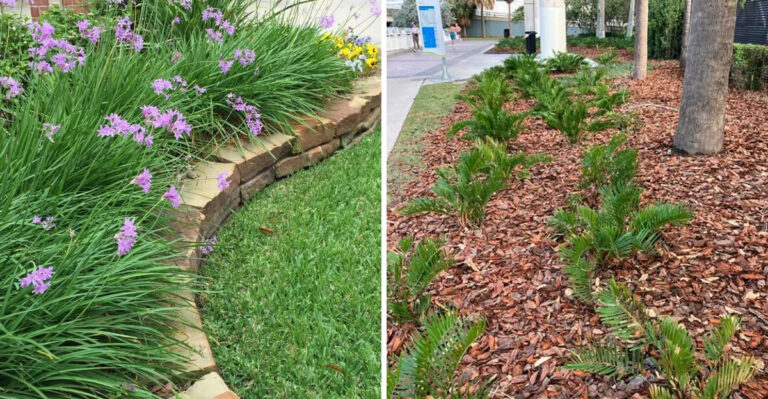
For Florida homeowners, this advice is practical and achievable. A band of river rock, pea gravel, or crushed shell from the wall outward five feet does not have to look industrial or neglected.
Edged neatly and paired with sparse, well-spaced plants outside the immediate wall line, a gravel zone can look intentional and attractive. It can also reduce the amount of organic material and routine watering needed right against the foundation.
Pay special attention to spots around AC condenser units, crawlspace vents, dryer exhaust openings, and low deck edges. These are points where embers can enter or where heat can transfer into the structure.
Keeping gravel or stone around these features rather than bark mulch or pine straw removes one of the easier ignition pathways.
Local Florida extension offices and UF/IFAS landscape guides both support the use of noncombustible ground cover as a first-line strategy in the near-home zone, and the installation cost is often lower than a full mulch replacement cycle over several years.
8. Keep Mulch Away From Decks And Fences
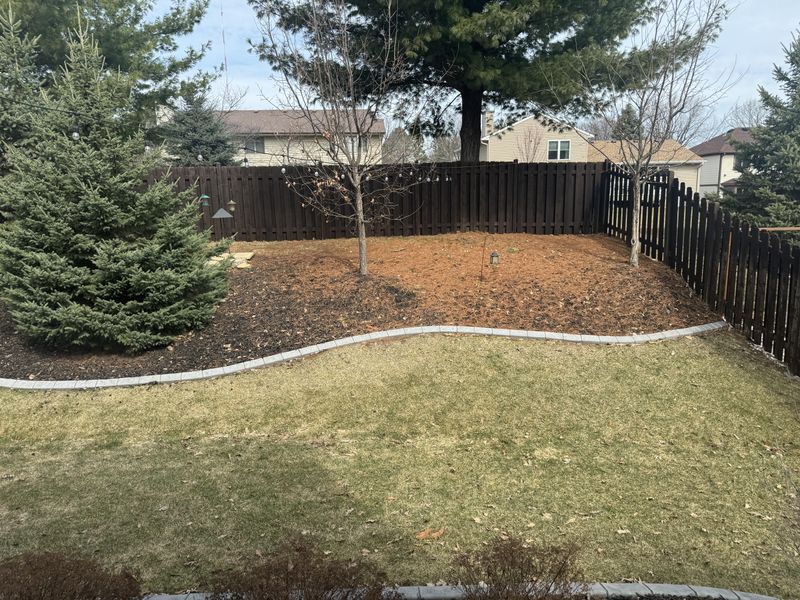
Wood decks, lattice panels, fences, and detached sheds often get overlooked when homeowners think about reducing exposure around their property. Most attention goes to the main house walls, but these secondary structures carry real vulnerability too.
A wood deck with bark mulch or pine straw pushed up against its edge has the same basic problem as mulch against a wall. Dry organic material in contact with or very close to a combustible surface creates a starting point that does not require much to get going.
Fences are a particularly underappreciated concern. A wooden fence lined with organic mulch on both sides can act as a channel that moves surface-level flame from the outer yard toward the house.
If the fence connects a back gate or side yard to the main structure, that path matters.
Firewise USA guidance notes that attached and nearby structures, including fences and sheds, should be treated as extensions of the home when planning the near-structure zone.
Check the edges of decks, the base of fence posts, the sides of detached garages, and the perimeter of garden sheds. Clear mulch away from these surfaces and replace it with gravel, pavers, or bare mineral soil within three to five feet.
Wooden steps leading off a deck are another spot worth checking, since mulch or leaf litter that collects beneath steps can smolder without being easily noticed. Small adjustments in these overlooked spots add up to meaningful protection across the whole property.