The Invasive Tree Spreading Spotted Lanternfly Through Texas Yards
Most people know spotted lanternfly as the invasive pest that has been causing serious damage across the eastern United States. If you’ve been following the news around this insect, you already know how destructive it can be to crops, trees, and entire ecosystems.
But here’s something that a lot of Texas homeowners don’t realize. There’s a tree already growing in many Texas yards that is essentially rolling out the welcome mat for this devastating pest.
And there’s a good chance you have it on your property right now. This invasive tree is the spotted lanternfly’s favorite host plant.
It’s where they feed, where they lay their eggs, and where populations grow before spreading to other plants and trees nearby. Without this tree, spotted lanternfly struggles to get established.
With it, the insect has everything it needs to thrive and spread. The frustrating part is that this tree has been around for so long that many people assume it belongs here.
It doesn’t. It’s invasive itself, and it’s been quietly causing problems in Texas landscapes long before spotted lanternfly entered the picture.
Meet Tree Of Heaven
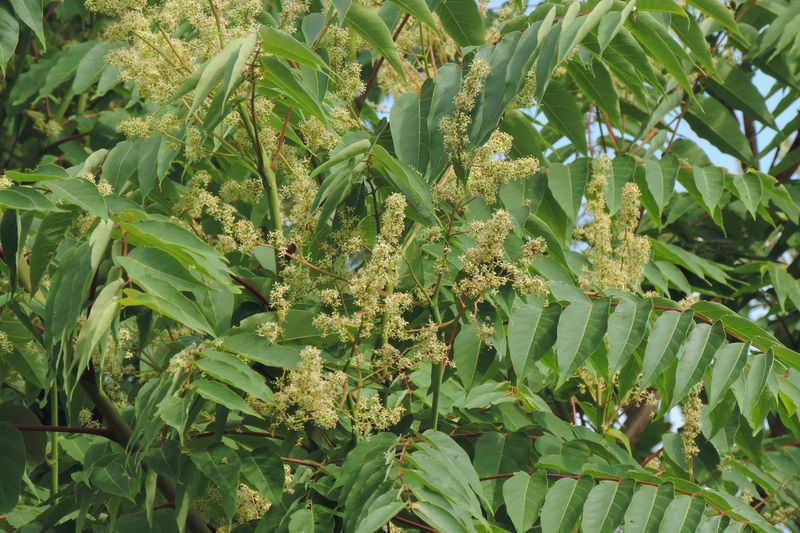
You might have seen it growing along fences, sidewalks, or empty lots without knowing its name. Ailanthus altissima, commonly called Tree of Heaven, is one of the most aggressive invasive trees in North America.
Originally from China, it was brought to the United States in the 1700s as an ornamental plant. Since then, it has spread to nearly every state, including Texas.
What makes this tree so tough is its ability to grow almost anywhere. It thrives in poor soil, polluted air, and dry conditions.
It can sprout through cracks in pavement and push up against building foundations. Few plants can compete with it, which means it often takes over spaces where native plants once grew.
Tree of Heaven grows incredibly fast, sometimes adding six feet or more in a single year. Its roots spread wide and deep, making it hard to remove once it gets established.
Even when cut down, it sends up new sprouts from the roots, almost like it refuses to give up.
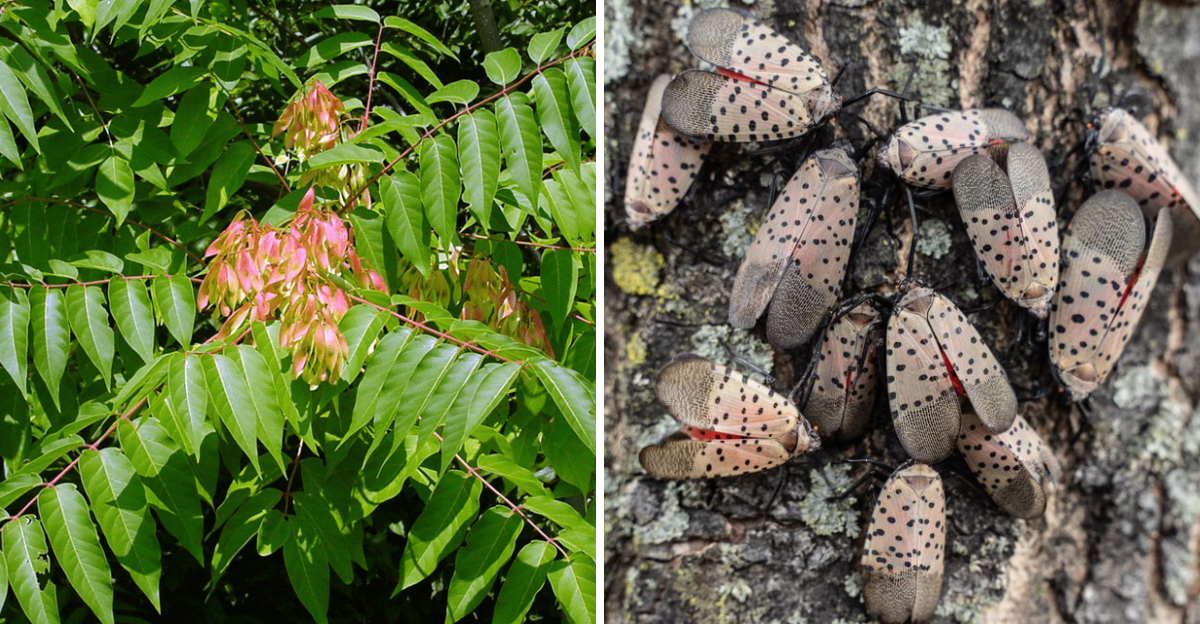
Its large, feather-like leaves can reach up to four feet long, giving it a tropical look that some people find appealing. But do not let its appearance fool you.
The tree releases a foul smell when its leaves or bark are crushed, which is one reason many gardeners dislike it.
Knowing how to identify Tree of Heaven is the first important step in protecting your Texas yard from both the tree itself and the dangerous pest it supports.
Preferred Host For Spotted Lanternfly
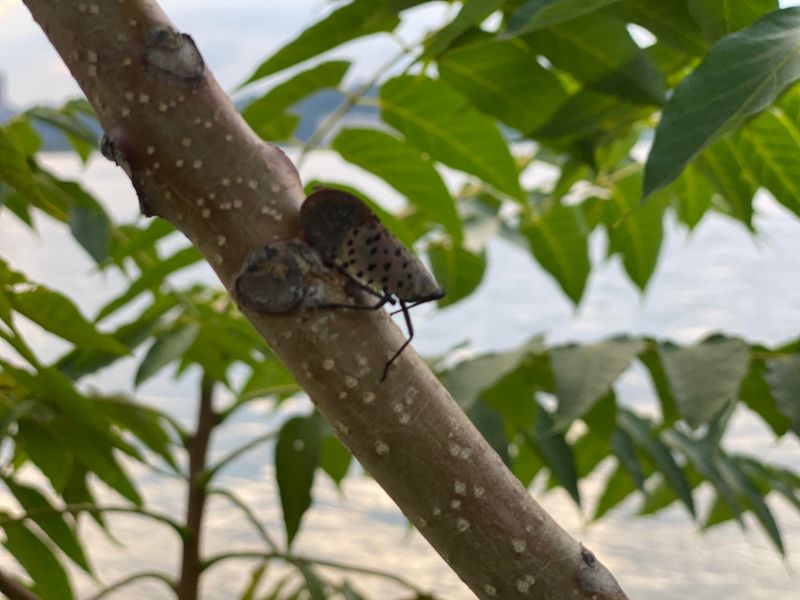
If Spotted Lanternflies had a favorite restaurant, it would be the Tree of Heaven. Scientists have found that this invasive tree is the number one preferred host plant for Spotted Lanternflies.
The insects feed on its sap, lay their eggs on its bark, and spend much of their life cycle right on its branches and leaves.
Your Texas Garden Changes Every Week. Your Plan Should Too.
Gardening in Texas changes quickly throughout the season. Every Friday you’ll receive a simple weekly plan showing exactly what to plant, prune, fertilize, harvest, and protect so you never miss the right timing.
Spotted Lanternflies go through several life stages, starting as tiny black nymphs with white spots, then becoming red nymphs, and finally developing into adults with striking red and black wings.
At every stage, Tree of Heaven plays a key role in supporting their survival. Egg masses look like patches of dried mud and are often found stuck to the tree’s bark in the fall and winter months.
Adult Spotted Lanternflies pierce the tree’s bark to suck out the sugary sap inside. While feeding, they release a sticky liquid called honeydew.
This honeydew coats nearby surfaces and encourages a black, sooty mold to grow. The mold can spread to surrounding plants, making conditions worse for your entire garden.
Because Tree of Heaven is so widespread in urban and suburban areas, it creates easy pathways for Spotted Lanternflies to move from one neighborhood to another.
A single infested tree can serve as a launchpad for hundreds of insects spreading to nearby gardens, orchards, and parks.
Removing or managing Tree of Heaven in your yard directly reduces the chances of Spotted Lanternfly populations building up and moving into your community.
Rapid Growth And Spread
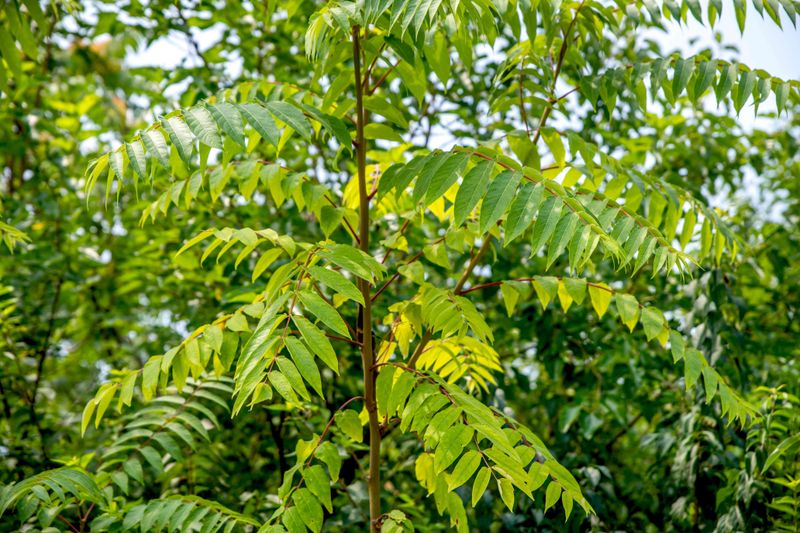
Few trees can match the reproductive power of Tree of Heaven. A single mature tree can produce up to 350,000 seeds per year.
Those seeds are lightweight and winged, meaning the wind can carry them far from the parent tree. Once they land in a new spot, they sprout quickly and start competing with everything around them.
But seeds are only part of the story. Tree of Heaven also spreads through its root system in a process called vegetative reproduction.
When a tree is cut or damaged, its roots send up dozens of new sprouts called suckers. These suckers grow fast and can quickly turn one tree into a dense thicket.
This is why simple cutting is rarely enough to stop it from coming back. The connection between rapid tree growth and Spotted Lanternfly spread is direct. More Tree of Heaven means more habitat for the pest.
As the tree colonizes new areas, Spotted Lanternflies follow close behind. In states where the pest is already established, researchers found that areas with heavy Tree of Heaven growth had significantly higher lanternfly populations.
Texas has large stretches of disturbed land, roadsides, and urban edges where Tree of Heaven thrives. As the tree continues to spread across the state, it lays the groundwork for a potential Spotted Lanternfly explosion.
Acting early, before populations grow out of control, gives homeowners and communities the best chance of keeping both the tree and the pest from taking over valuable green spaces and natural areas.
Impact On Gardens And Property
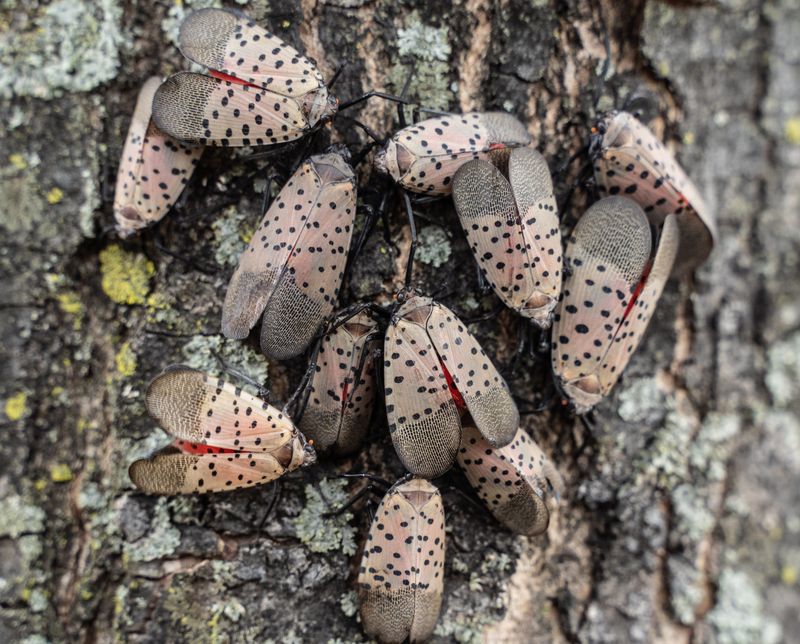
Spotted Lanternflies are not just a nuisance. They cause real, measurable damage to gardens, orchards, and landscapes.
These insects feed on over 70 different plant species, but they are especially harmful to grapevines, apple trees, peach trees, hops, and ornamental plants. For Texas homeowners with fruit trees or garden beds, an infestation can be devastating.
When large numbers of Spotted Lanternflies feed on a plant at the same time, they drain a lot of sap. This weakens the plant, reduces fruit production, and can cause branches to wilt and decline.
Younger plants are especially vulnerable because they have less energy stored to recover from this kind of stress.
The honeydew produced during feeding creates another layer of problems. It drips onto leaves, outdoor furniture, decks, and driveways.
This sticky coating becomes a breeding ground for sooty mold, a black fungus that blocks sunlight from reaching leaves. When leaves cannot absorb sunlight properly, the plant struggles to produce food through photosynthesis.
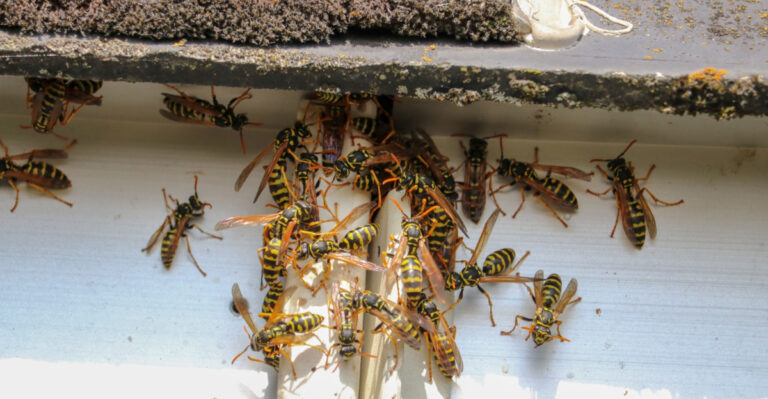
Property owners may also notice a sharp increase in other insects like wasps, ants, and bees that are attracted to the sweet honeydew. This can make spending time outdoors uncomfortable and may even create safety concerns for people with allergies.
The economic impact is real too. In states where Spotted Lanternfly is already established, agricultural losses have reached into the millions of dollars.
Texas growers and gardeners have good reason to take this threat seriously and act before the pest becomes a permanent fixture in local landscapes.
Management And Control
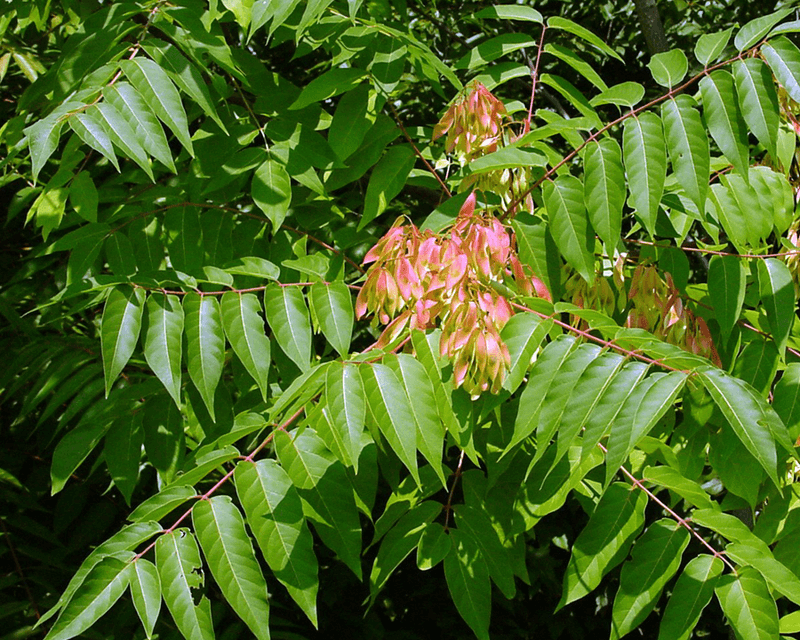
Getting rid of Tree of Heaven is one of the most effective ways to reduce Spotted Lanternfly pressure in your yard.
Without their preferred host plant nearby, lanternflies have fewer places to feed, reproduce, and shelter. But removing this stubborn tree takes patience and a smart approach.
For small saplings, hand pulling works well when the soil is moist and the roots come out cleanly. Wearing gloves is a good idea since the tree’s sap and crushed leaves can irritate skin.
Removing the entire root system matters because any piece left in the ground can send up new growth. Check the area regularly and pull new sprouts as soon as they appear.
Larger trees require a different strategy. Cutting alone will not solve the problem because the roots will sprout aggressively afterward.
A method called hack and squirt involves cutting notches into the trunk and applying herbicide directly into the cuts. This targets the root system and reduces the chances of regrowth.
Always follow label instructions when using any herbicide, and consider consulting a licensed arborist for large removals.
Root barriers are another useful tool. Installing physical barriers around the perimeter of a removal site can slow the spread of root suckers into neighboring areas.
Combining manual removal, herbicide treatment, and root management gives the best results over time. Consistency is key.
Revisiting treated areas every few weeks during the growing season helps catch new growth before it gets out of hand.
A steady, committed approach to Tree of Heaven management goes a long way in keeping Spotted Lanternfly populations low in your neighborhood.
Native Alternatives For Safe Landscaping
Replacing Tree of Heaven with native Texas trees is one of the smartest moves a homeowner can make.
Native trees have evolved alongside local wildlife, providing food and shelter for birds, pollinators, and other beneficial creatures. Best of all, they do not support Spotted Lanternfly populations the way invasive species do.
Texas Redbud is a wonderful choice for smaller yards. It bursts into vibrant pink blooms in early spring before its leaves even open, making it a real showstopper.
Redbud trees grow at a moderate pace, stay manageable in size, and attract pollinators like native bees and butterflies. They are also drought-tolerant once established, which suits the Texas climate well.
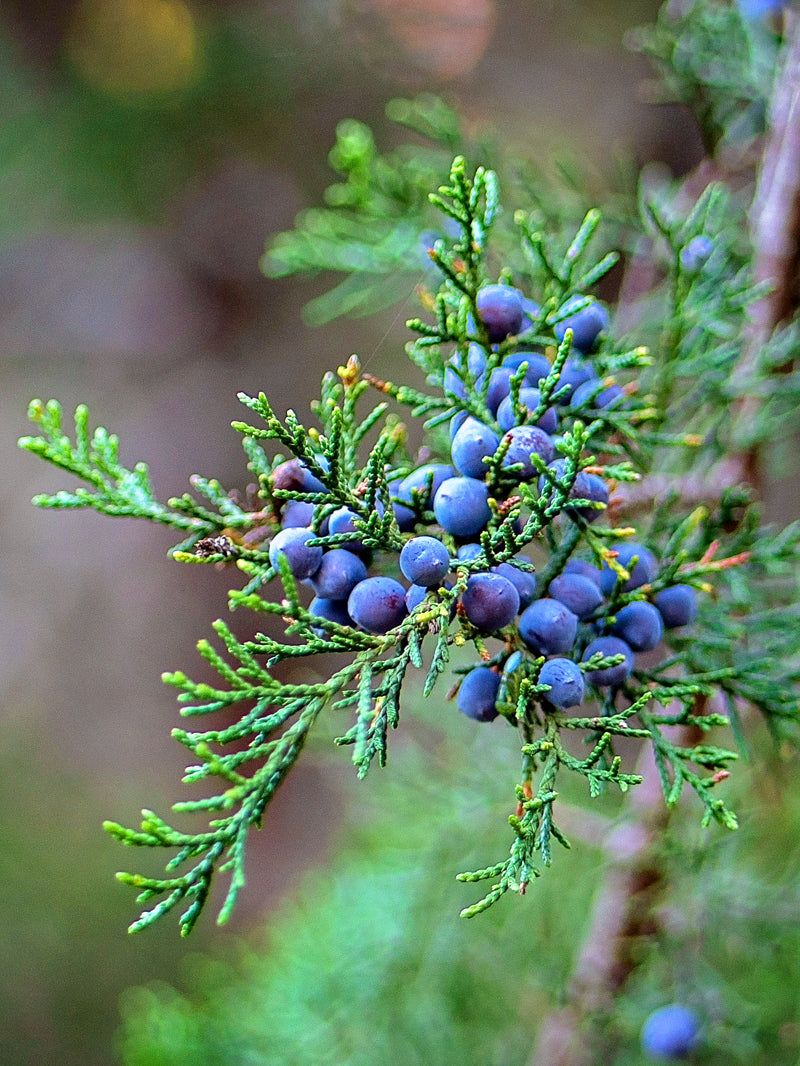
Eastern Red Cedar is another excellent option, especially for larger properties. It provides year-round greenery, dense cover for nesting birds, and its berries are a favorite food source for cedar waxwings and other wildlife.
It handles heat, drought, and poor soil like a champion, making it a low-maintenance addition to any Texas landscape.
Live Oak is perhaps the most iconic Texas tree of all. Its broad canopy provides generous shade, and it supports hundreds of species of insects, birds, and mammals.
Live Oaks are long-lived and deeply rooted in Texas culture and ecology. Planting one is an investment that benefits your yard for generations.
Choosing native trees means less watering, fewer pest problems, and a healthier yard overall.
Swapping out invasive trees for these native alternatives creates a landscape that works with nature rather than against it, helping to protect Texas ecosystems one yard at a time.