Can Michigan Gardeners Get Bigger Potatoes By Cutting Blossoms? Here’s The Truth
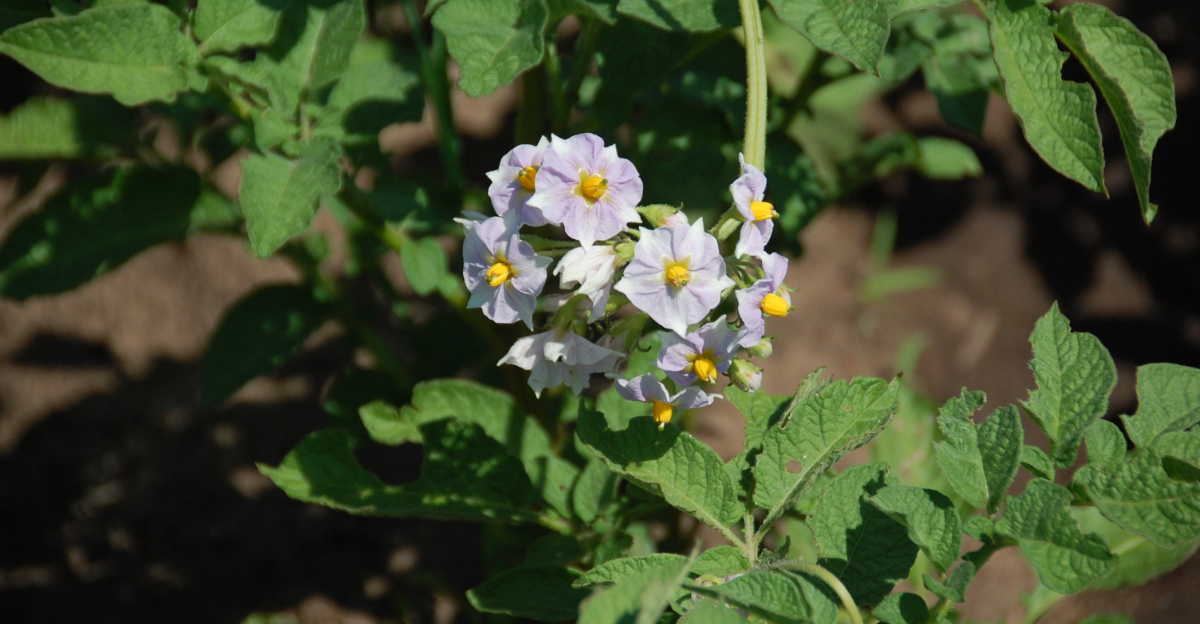
Potato plants that flower are doing something the underground crop does not benefit from.
The energy a plant directs into bloom production and seed development is energy pulled directly away from tuber sizing, and in Michigan’s compressed growing season that trade-off has real consequences for harvest weight and quality.
Removing blossoms as they appear redirects the plant’s resources back into the potatoes developing below the surface.
It is a simple practice that takes almost no time, requires no tools or products, and produces a consistently noticeable difference in tuber size by harvest.
Most beginner gardeners in Michigan have never heard this tip, and most experienced ones consider it one of the easiest high-return habits in the entire vegetable garden.
1. Blossom Picking Is Optional
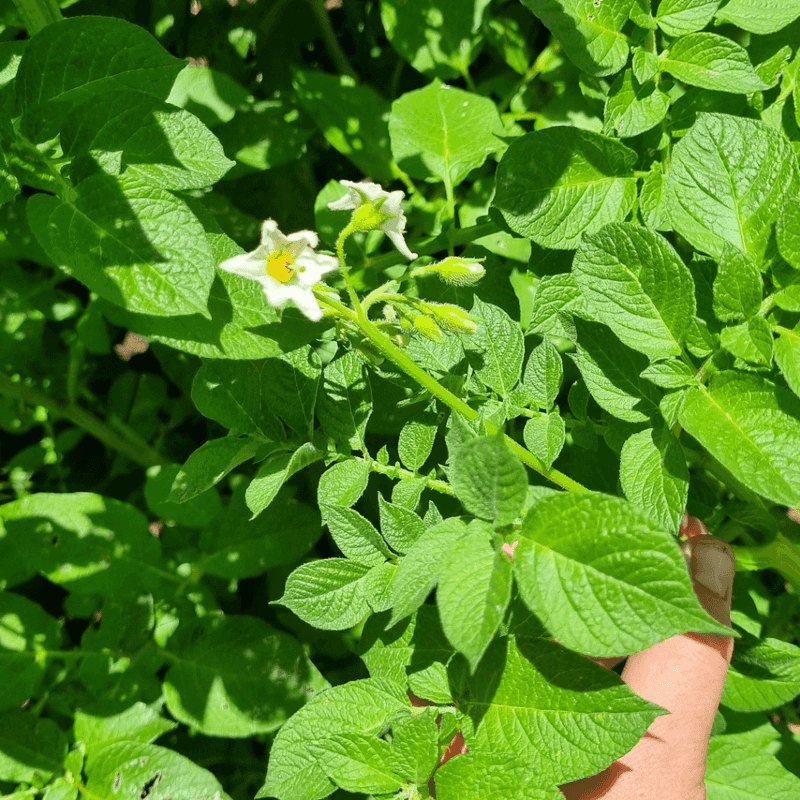
Plenty of Michigan gardeners swear by removing potato blossoms, but the honest truth is that it is not a guaranteed path to giant potatoes.
The practice is based on a reasonable idea: when a plant puts energy into flowering, that energy is not going toward the tubers underground.
Removing blossoms may redirect some of that effort, but the effect is often modest.
Potato plants are tough and resourceful. They manage energy across roots, leaves, stems, and tubers all at once.
Pulling off a few flowers does not suddenly flood the underground tubers with a surge of growing power. The plant simply does not work that way.
That said, blossom picking is not a bad idea either. For heavily flowering varieties, removing the blooms early in the season can make a small but real difference.
Think of it as one small tool in a bigger toolbox, not the whole strategy. Michigan gardeners who focus only on blossom removal and ignore watering, soil quality, and hilling often end up disappointed.
Approach blossom picking with realistic expectations and combine it with solid growing practices, and you will be much better positioned for a strong harvest come fall.
2. Potato Flowers Are Not The Harvest
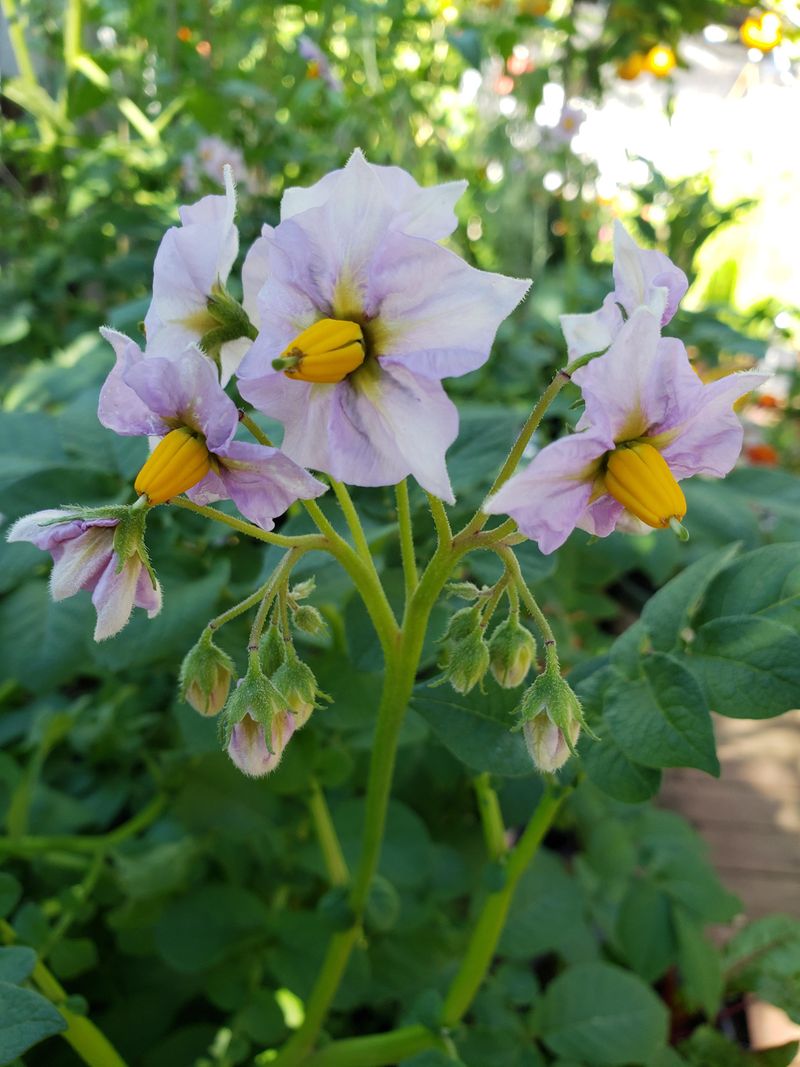
Potato plants are a bit of a two-story operation. The part most people want, the actual potato, grows underground as a tuber attached to the roots.
The flowers that appear above ground are just the plant going through its normal reproductive cycle, and they have nothing to do with what ends up on your dinner plate.
Flowers on a potato plant are not a sign that something is wrong. They bloom naturally as part of the plant’s life cycle, usually appearing several weeks after planting.
Some varieties flower more heavily than others, and a few barely flower at all. Either way, the presence or absence of flowers does not directly tell you how many potatoes are forming below the surface.
What gardeners sometimes confuse is the timing. Tubers often begin forming around the same period that flowers appear above ground.
This overlap makes it tempting to assume the two are connected, but the flowering is happening up top while the real action is happening in the soil.
Knowing this helps Michigan gardeners stay focused on what actually matters for a good harvest.
Your Michigan Garden Changes Every Week. Your Plan Should Too.
Gardening in Michigan changes quickly throughout the season. Every Friday you’ll receive a simple weekly plan showing exactly what to plant, prune, fertilize, harvest, and protect so you never miss the right timing.
The flowers are interesting to look at, but the real reward is always hiding a few inches underground, quietly sizing up while the season rolls along.
3. Flowers Use A Small Amount Of Plant Energy
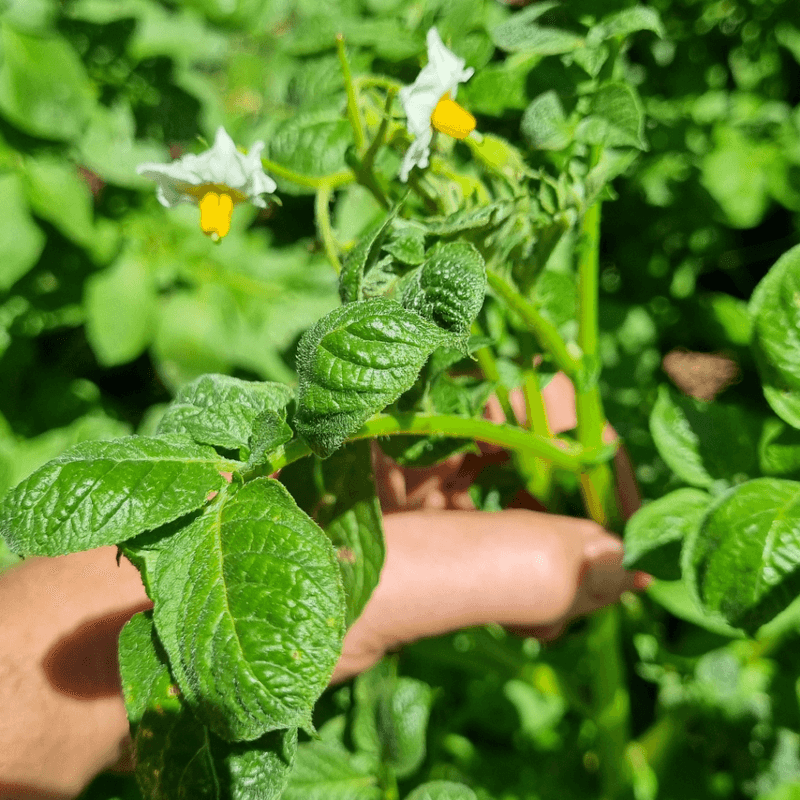
Here is something interesting about potato flowers: they do require energy from the plant to form and maintain.
Beyond the blossoms themselves, some potato plants also produce small green fruits that look like tiny tomatoes after the flowers fade.
These little fruits use even more of the plant’s resources than the blossoms alone.
Removing flowers before they develop into those green fruits can save the plant a bit of effort. For varieties that tend to flower heavily, this energy savings might be noticeable in how the tubers size up.
It is not a dramatic difference in most cases, but for a gardener who is already doing everything else right, every small advantage adds up over the course of a long growing season.
Still, the amount of energy flowers use is relatively small compared to what the leaves and stems consume. Photosynthesis happening in those big green leaves is what really powers tuber growth.
Removing blossoms while ignoring the health of the rest of the plant will not produce the results most gardeners are hoping for. Think of blossom removal as a finishing touch rather than a foundation.
It works best when your plants are already healthy, well-fed, properly watered, and growing in loose, rich soil that gives tubers room to expand and fill out.
4. The Benefit Depends On Variety And Conditions
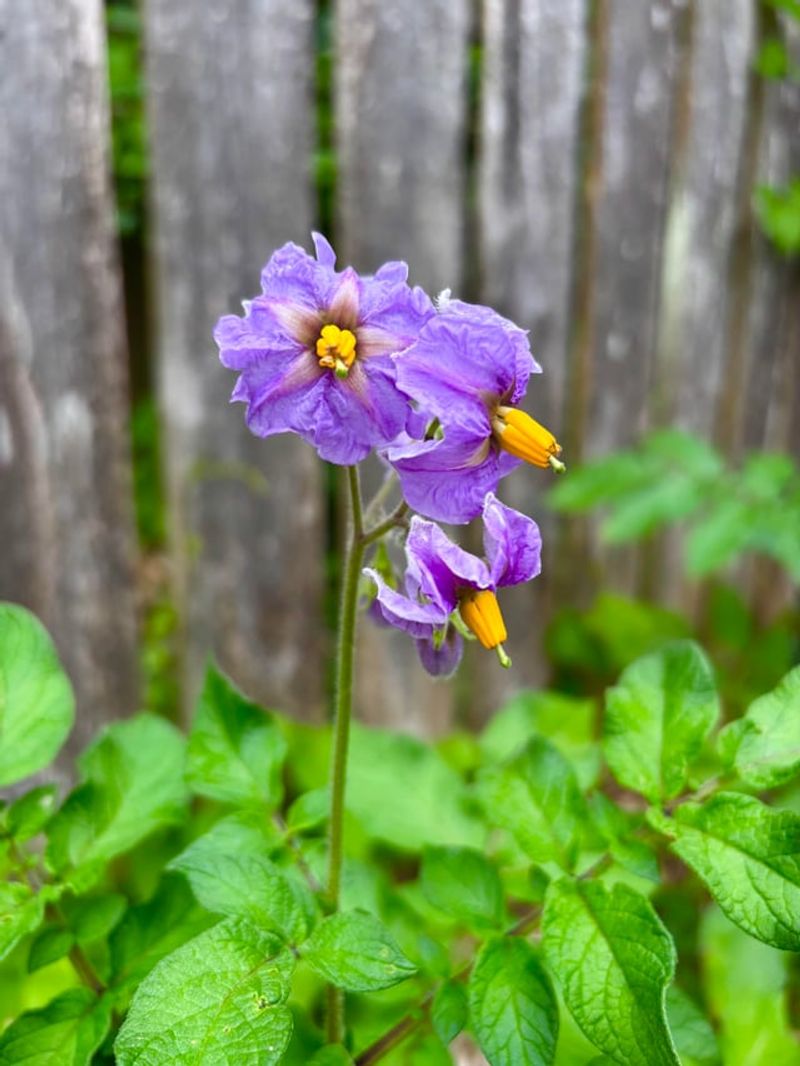
Not every potato plant responds the same way to blossom removal. Research on this topic has shown mixed results, and that is not surprising when you consider how many variables are involved.
Soil type, weather patterns, planting depth, and the specific variety all play a role in how a plant responds to having its flowers removed.
Some potato varieties are heavy bloomers by nature, and for those plants, removing blossoms early might free up a bit more energy for tuber development.
Other varieties barely flower at all, which means there is almost nothing to remove in the first place.
Michigan gardeners growing Russets, Yukon Golds, or Red Pontiacs will likely notice different responses depending on the season and the soil they are working with.
Michigan’s climate adds another layer of complexity. Cool springs, warm summers, and variable rainfall all affect how a potato plant manages its energy.
A plant stressed by drought or cold soil may not respond to blossom removal the same way a well-watered plant in ideal conditions would.
Rather than assuming the technique will work the same way every year, treat it as something worth observing season to season.
Keep notes on which varieties you tried it with and what the results looked like. That kind of real-world data from your own garden is far more useful than any general rule.
5. Remove Blossoms Early If You Want To Try It
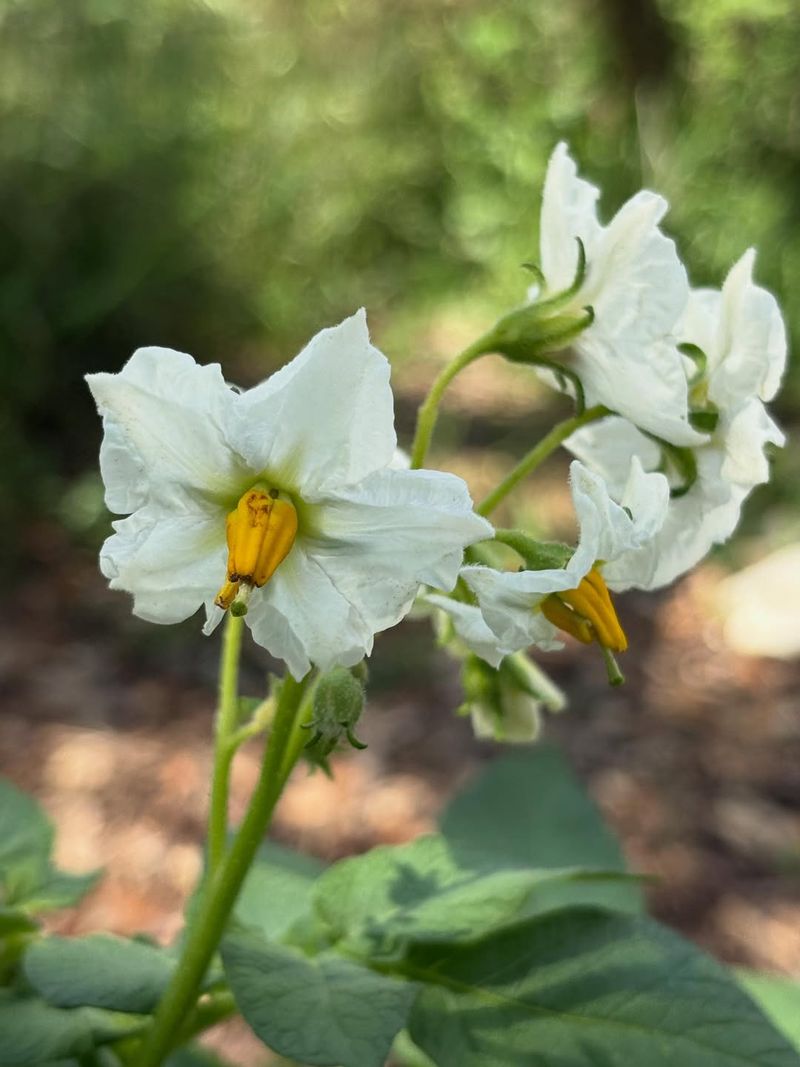
Timing matters a lot if you want to give blossom removal a fair shot. The best time to act is when the flower buds first appear, before they open and certainly before they develop into those small green fruits.
Catching them early means the plant spends less energy on the flowering process overall.
The technique is simple. Use your fingers to pinch off just the flower clusters, or use small garden scissors if you prefer a cleaner cut.
The key is to target only the flower head and leave everything else, including the leaves, stems, and side shoots, completely untouched.
Those green parts are still working hard to feed your developing potatoes through photosynthesis, and you do not want to interfere with that process.
Waiting too long reduces the benefit. Once the flowers have already opened and small green fruits are starting to form, removing the blossoms at that stage still helps a little, but the plant has already invested energy in those structures.
Early removal keeps things efficient. Check your plants every few days once they reach the flowering stage, because blooms can appear quickly.
If you miss a round, just remove whatever is there and stay on top of new growth. Consistency during this short window makes the most of the technique without adding much extra work to your routine.
6. Do Not Cut Back The Green Tops
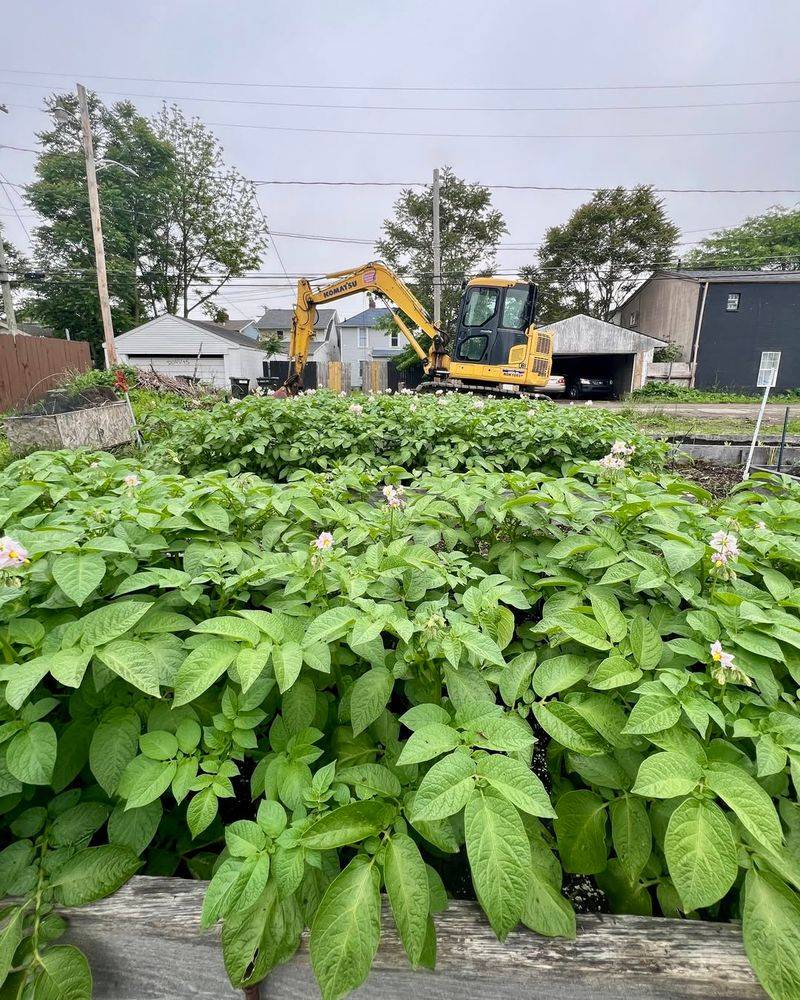
One of the most common mistakes gardeners make after learning about blossom removal is going too far.
Cutting back the green tops of a potato plant is a completely different thing from removing the flowers, and it can actually hurt your harvest instead of helping it.
Those large green leaves are solar panels for your potato plant. Through photosynthesis, they capture sunlight and convert it into the sugars and starches that feed the growing tubers underground.
Fewer leaves mean less photosynthesis, and less photosynthesis means slower, smaller tubers. It sounds simple because it is.
The green tops are not just decoration; they are the engine driving everything happening below the soil.
Michigan gardeners sometimes hear advice about cutting potato tops to toughen the skin before harvest, and that practice does exist, but it applies only at the very end of the season when the plant has already finished most of its growing.
Doing it too early shortchanges the plant during the most important period of tuber bulking.
If your plants look healthy and green, leave the foliage alone and focus your attention on blossom removal only.
Protect those leaves from pests and disease, keep the soil moist, and let the plant do what it does best: grow big, flavorful potatoes underground while the green canopy above does all the hard work.
7. Keep Hilling The Plants Instead
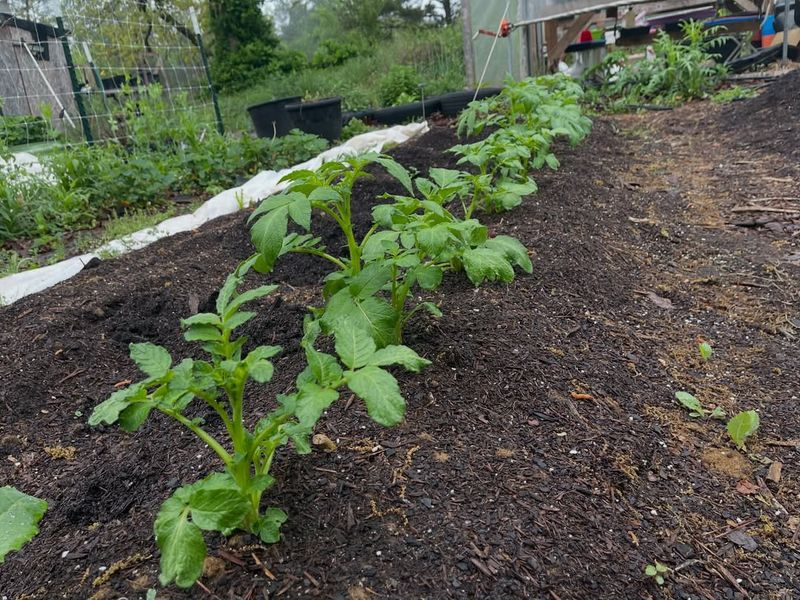
If there is one practice that consistently makes a bigger difference than blossom picking, it is hilling. Hilling means pulling soil or mulch up around the lower stems of your potato plants as they grow, creating a mounded ridge along each row.
It sounds simple, and it is, but the impact on your harvest can be significant.
Potato tubers form along the underground stems of the plant, not just at the roots. The more stem you bury, the more space the plant has to produce tubers.
Hilling also protects developing potatoes from sunlight exposure, which causes them to turn green and become bitter.
In Michigan, where summer sun can be intense, keeping tubers covered with a few inches of soil makes a real difference in both quality and quantity.
Start hilling when your plants reach about six to eight inches tall, and repeat the process every couple of weeks until the plants are too tall to hill comfortably. Each round of hilling creates a fresh zone for new tubers to form.
Gardeners who skip hilling and focus only on blossom removal are missing the bigger opportunity. Combine both practices together and you give your potatoes the best possible environment for sizing up.
Hilling costs nothing but a little time and effort, and the payoff in tuber yield is hard to argue with.
8. Watering Matters More Than Flowers
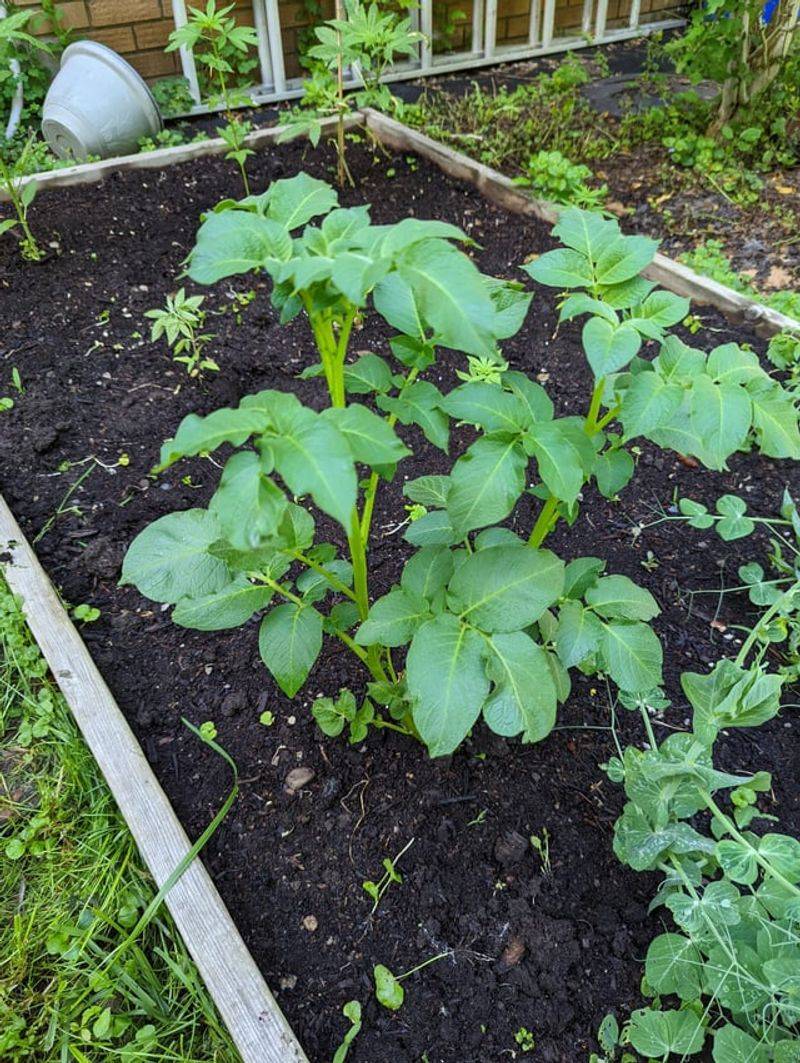
Ask any experienced Michigan potato grower what the single biggest factor in tuber size is, and most will point to water before they mention anything else.
Consistent soil moisture during the tuber formation and bulking stages is absolutely critical. Without it, even the healthiest plants will produce smaller, less uniform potatoes.
Potato plants need about one to two inches of water per week during the growing season. The most sensitive period is from the time tubers begin forming until a few weeks before harvest.
Dry spells during this window stress the plant and slow tuber development. Then, when heavy rain finally arrives, the sudden moisture surge can cause tubers to crack or develop hollow centers, which ruins the quality of the harvest.
Even watering is the goal. Drip irrigation or soaker hoses work beautifully for potato rows because they deliver moisture directly to the root zone without wetting the foliage, which can encourage fungal issues.
Mulching between rows also helps retain soil moisture between watering sessions, which is especially useful during Michigan’s occasional summer dry spells.
If you have been spending time picking blossoms but skipping regular watering, flip those priorities.
A well-watered potato plant with all its flowers intact will almost always outperform a drought-stressed plant that has been meticulously deadheaded. Water is the foundation everything else builds on.
9. Use Blossom Picking As A Small Experiment
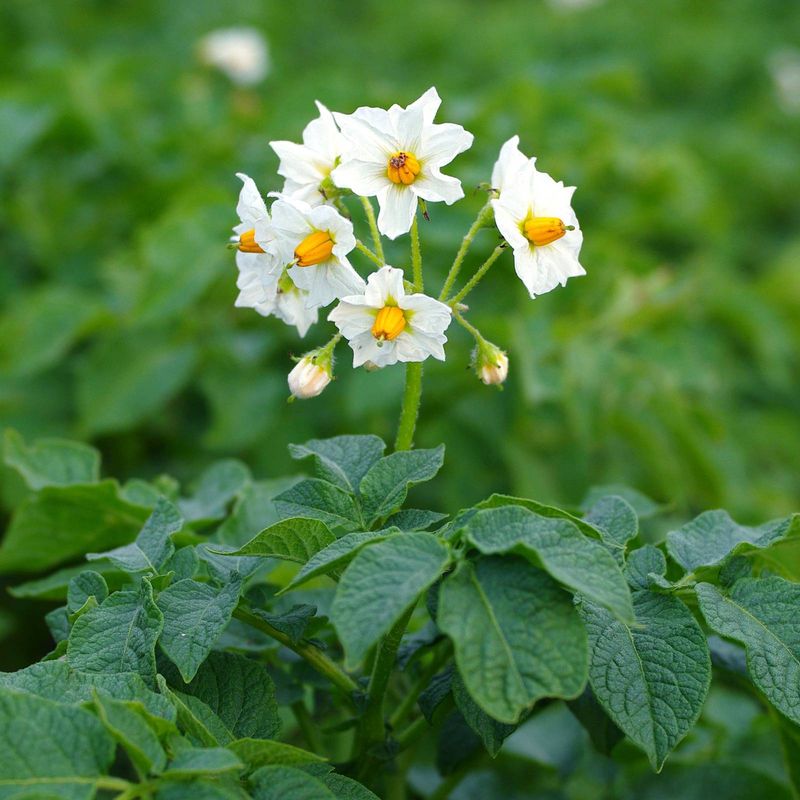
The smartest way to find out if blossom removal works for your specific garden is to run a small, low-stakes experiment. Pick the blossoms off a few plants and leave the flowers on a similar number of plants growing in the same conditions.
At harvest time, compare the size and weight of the tubers from each group. Your own garden will tell you more than any general gardening guide ever could.
Keep notes throughout the season. Write down when you removed the blossoms, what variety you were growing, how often you watered, and what the weather was like.
Those details will help you make sense of the results and give you something useful to build on the following year. Gardening rewards observation and patience more than any single trick or shortcut.
At the end of the day, the real recipe for bigger Michigan potatoes is not complicated.
Start with quality certified seed potatoes planted in loose, well-draining soil. From there, hill the plants regularly, water consistently, provide balanced nutrients, and allow the tubers time to fully mature before harvesting.
Blossom picking can be a small part of that plan, and it is worth trying, but it works best as one piece of a well-rounded growing strategy rather than a standalone solution.