The One Thing You Must Do To Ohio Joe Pye Weed For The Best Fall Display
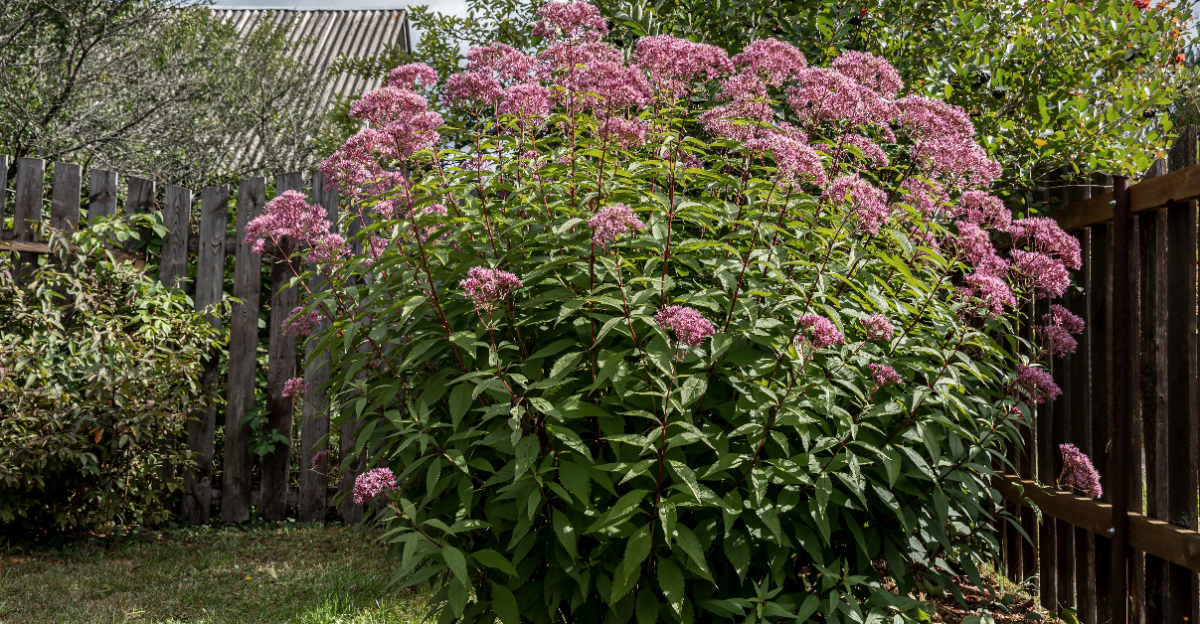
Joe Pye weed has a reputation for taking care of itself, and through most of the season that reputation holds. It grows tall, it fills space, and it attracts pollinators without requiring much in return.
Most Ohio gardeners plant it and step back, which is the right instinct for most of the year. August and September are a different story.
One specific task separates Joe Pye weed plants that deliver a genuinely impressive fall display from those that flop or split. It also prevents a bloom show that underwhelms given how much space the plant occupies.
It is not complicated and it does not take long. Most Joe Pye weed advice stops at planting depth and sun requirements.
The task that matters most for fall performance sits outside that conversation almost entirely. Your Joe Pye weed is capable of more than it is currently being set up to deliver.
1. Cut Joe-Pye Weed Back Before It Gets Too Tall
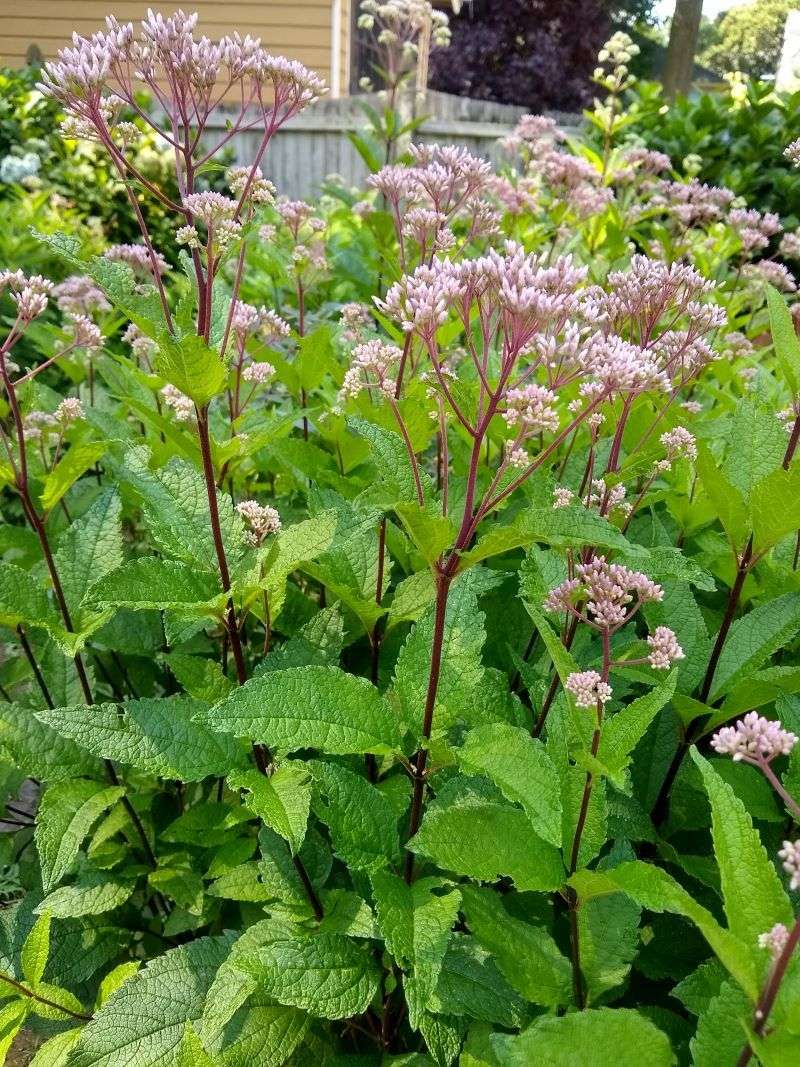
A plant that looks perfectly manageable in June can tower over the whole border by late August. Spotted Joe-Pye weed and hollow Joe-Pye weed can easily reach six to eight feet in a single season.
In a smaller bed or a tidy mixed border, that kind of height can overwhelm neighboring plants and block sightlines entirely.
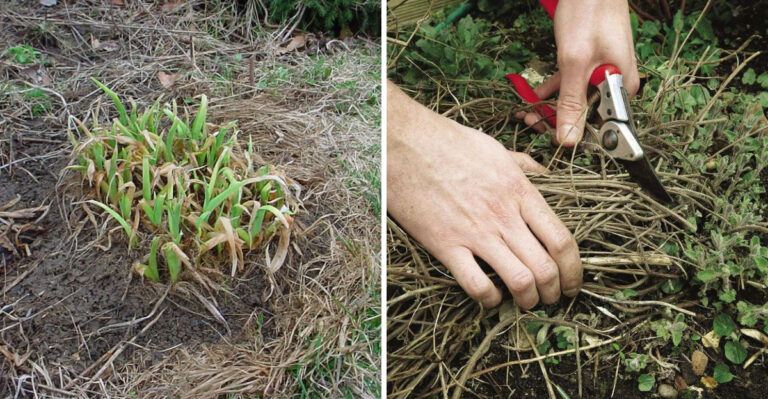
Cutting stems back by one-third to one-half in late May or early June gives the plant time to recover and branch before flower buds set. Most Ohio gardeners aim for this cut when stems are roughly eighteen to twenty-four inches tall.
At that stage the plant is still actively growing and will respond quickly with new side shoots.
The key word here is early. Once buds begin forming in mid to late summer, a hard cutback can reduce or delay the bloom significantly.
The goal is to shape the plant while it still has weeks of vegetative growth ahead. A well-timed cut results in a shorter, fuller clump with more flower clusters spread across a wider canopy.
That kind of display holds up better in a home border than a single tall spike leaning into the path.
2. Pinch Young Stems For A Fuller Fall Shape
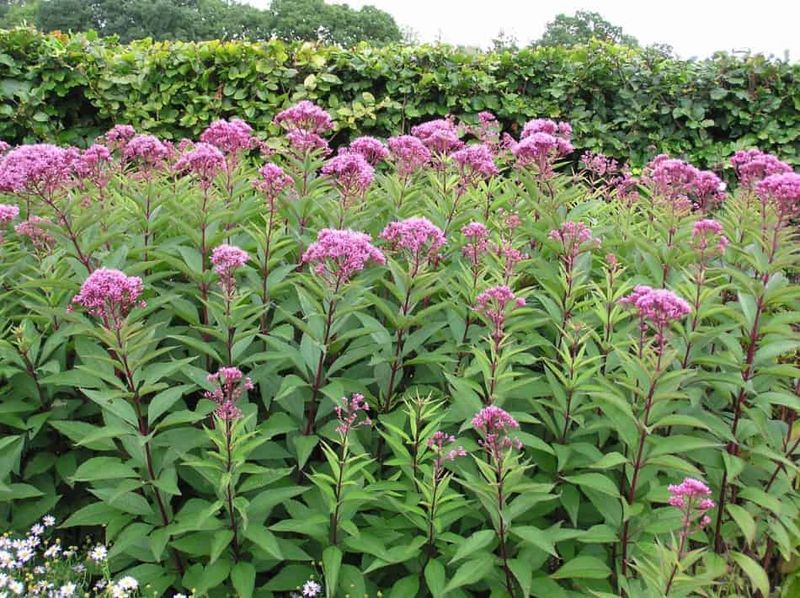
A pinched shoot might look like nothing happened at first. Within a week or two, that same stem will push out two or three side branches where there was only one before.
That branching is exactly what creates a fuller, more rounded plant by the time fall bloom arrives.
Pinching works best while stems are young and actively growing, usually in late May through mid-June for most local gardens. Simply use your fingers or small snips to remove the top two to four inches of each stem.
No special tools are needed, and the process takes only a few minutes on an established clump.
Beginners sometimes worry they are doing permanent harm by removing stem tips. The plant bounces back quickly.
Each pinched stem becomes two or more stems, which means more flower clusters by September. Hollow Joe-Pye weed and spotted Joe-Pye weed both respond well to this treatment.
Your Ohio Garden Changes Every Week. Your Plan Should Too.
Gardening in Ohio changes quickly throughout the season. Every Friday you’ll receive a simple weekly plan showing exactly what to plant, prune, fertilize, harvest, and protect so you never miss the right timing.
Sweet Joe-Pye weed, a shorter species, may need less intervention but still benefits from a light pinch in crowded plantings.
The result is a plant that fills horizontal space rather than shooting straight up, which suits most Ohio home garden borders far better than an unmanaged column of stems.
3. Give It Moist Soil Before Late-Summer Bloom
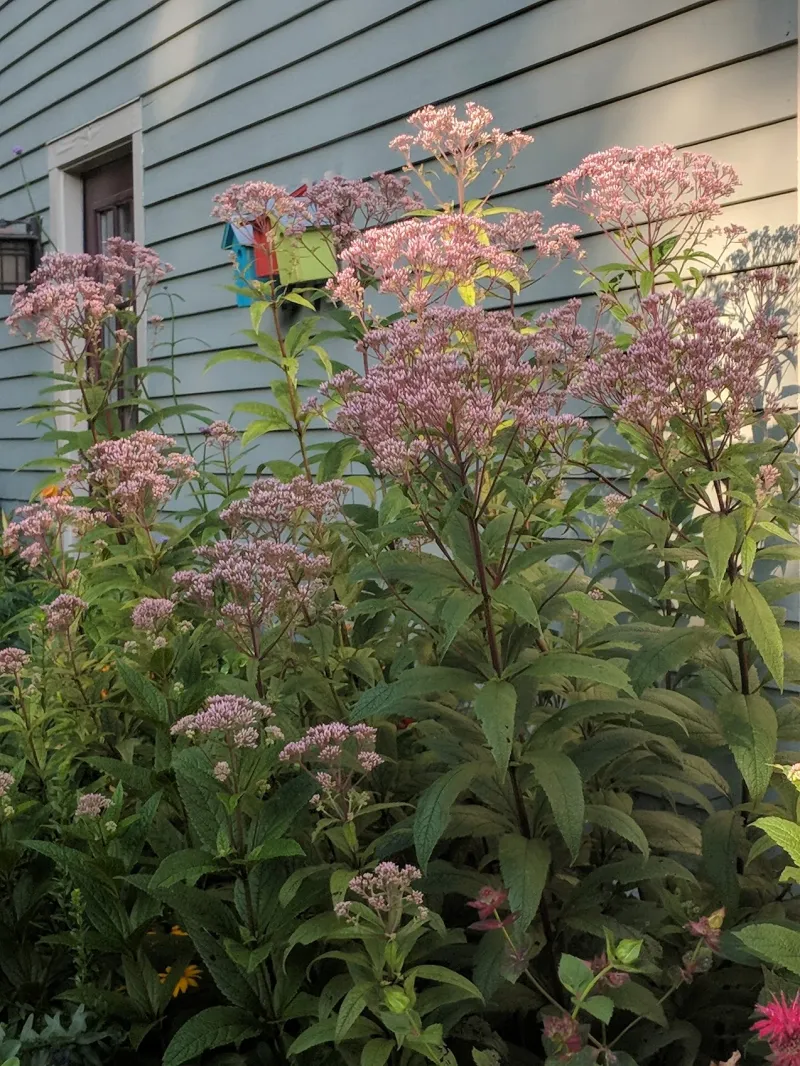
Moist soil is not just a preference for Joe-Pye weed. It is the foundation that holds the whole late-season display together.
Native Eutrochium species evolved along stream banks, wet meadows, and moist woodland edges across the eastern and midwestern states. That history shows up clearly in how the plant performs when moisture runs short.
Dry spells in July and early August hit Joe-Pye weed right before it sets buds for the fall bloom. Stressed plants may produce smaller flower clusters, shorter stems, or a noticeably thinner canopy.
Consistent watering during dry stretches helps the plant build robust flower heads. This matters especially in the six to eight weeks before bloom.
Mulching around the root zone helps hold moisture between rain events. A two to three inch layer of shredded wood mulch kept a few inches away from the base of the stems works well.
Well-drained but consistently moist soil is the sweet spot. Hollow Joe-Pye weed tolerates wetter conditions than most, making it a solid fit for low spots or Ohio rain garden edges.
Avoid placing any Joe-Pye weed species in bone-dry, compacted, or sandy sites where moisture drains away rapidly after rain.
4. Keep It In Sun For Stronger Flower Clusters
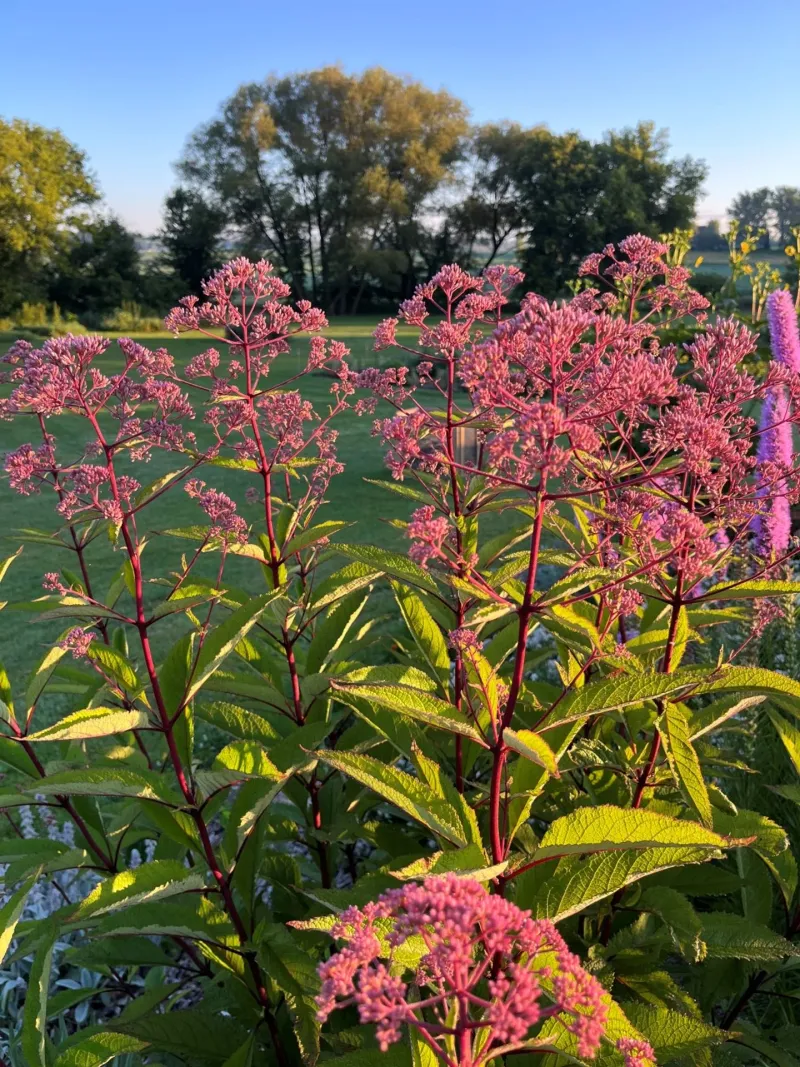
Sun-grown clumps of Joe-Pye weed stand up straighter and bloom more heavily. They also hold their shape through late-season storms far better than plants tucked into shadier corners.
Full sun to part sun, meaning at least four to six hours of direct light daily, gives the plant what it needs to build thick stems and dense flower clusters.
Too much shade changes the plant’s whole character. Stems stretch and reach toward available light, which makes them thinner and more prone to flopping.
Flower clusters in heavy shade tend to be looser and less impressive than those produced by plants growing in open, sunny spots. In a partly shaded site, positioning the plant where it catches morning sun and some afternoon light is a reasonable compromise.
Spotted Joe-Pye weed handles part shade better than some other Eutrochium species, but it still performs best with generous light. If an existing planting has started stretching or leaning toward one direction, low light is often the reason.
Relocating the plant to a sunnier spot in early spring, before new growth gets too far along, can make a noticeable difference by the following fall. Good light is one of the simplest ways to improve the overall display without any extra work.
5. Avoid Cutting Too Late And Losing The Display
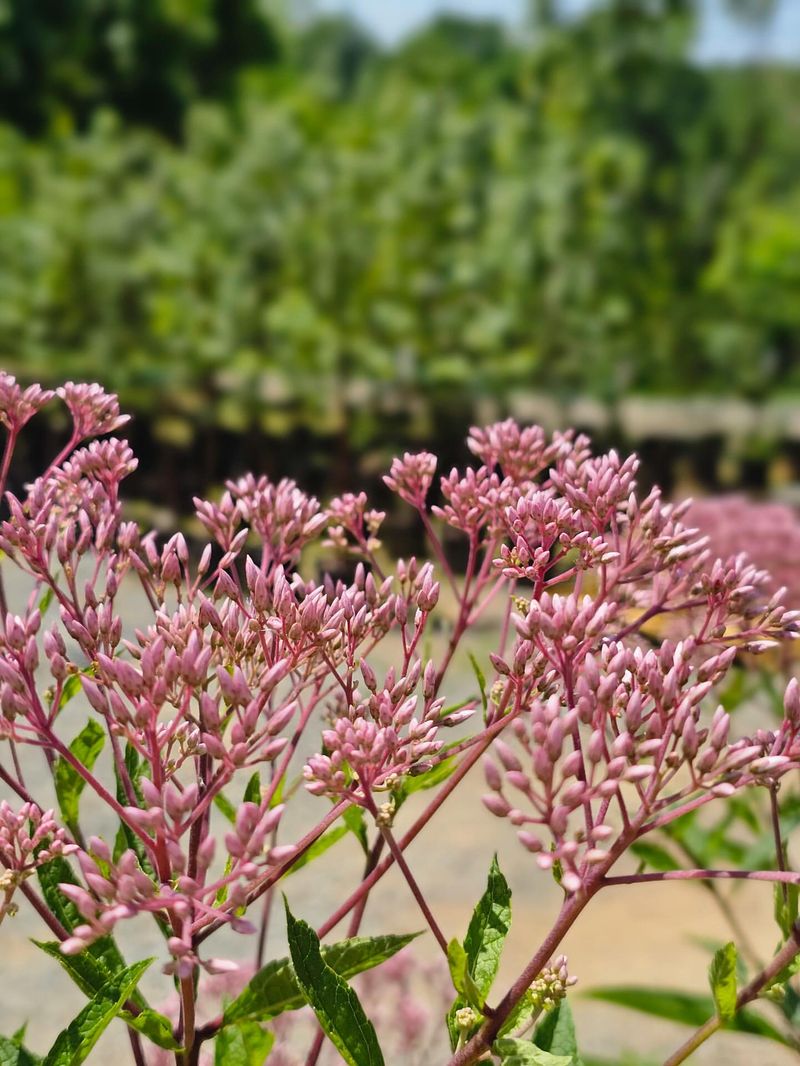
Timing is the whole secret with any cutback strategy on Joe-Pye weed. A late cut, one made after buds have already started forming, removes the very flower clusters the plant spent all summer building.
The result is a plant that either skips blooming for that season or pushes out weak, late flowers that never fully develop before frost arrives.
Most local gardeners should treat mid-July as the last reasonable window for any significant shortening of stems. By that point in a typical season, Eutrochium species are already moving toward bud formation.
A light pinch earlier than that is fine. A hard cutback after buds are visible is a mistake that costs the whole fall display.
Watch the plant rather than the calendar alone. Stems that are still soft, green, and actively elongating are ready for shaping.
Stems that have thickened, stiffened, or started showing tiny bud clusters at the tips should be left alone. If the season has been unusually warm, bud set may arrive earlier than expected.
Checking the plant weekly through June and early July helps Ohio gardeners catch the right window. Missing it by even two to three weeks can mean the difference between a spectacular September bloom and a disappointing one.
6. Stake Tall Plants Before Storms Bend The Stems
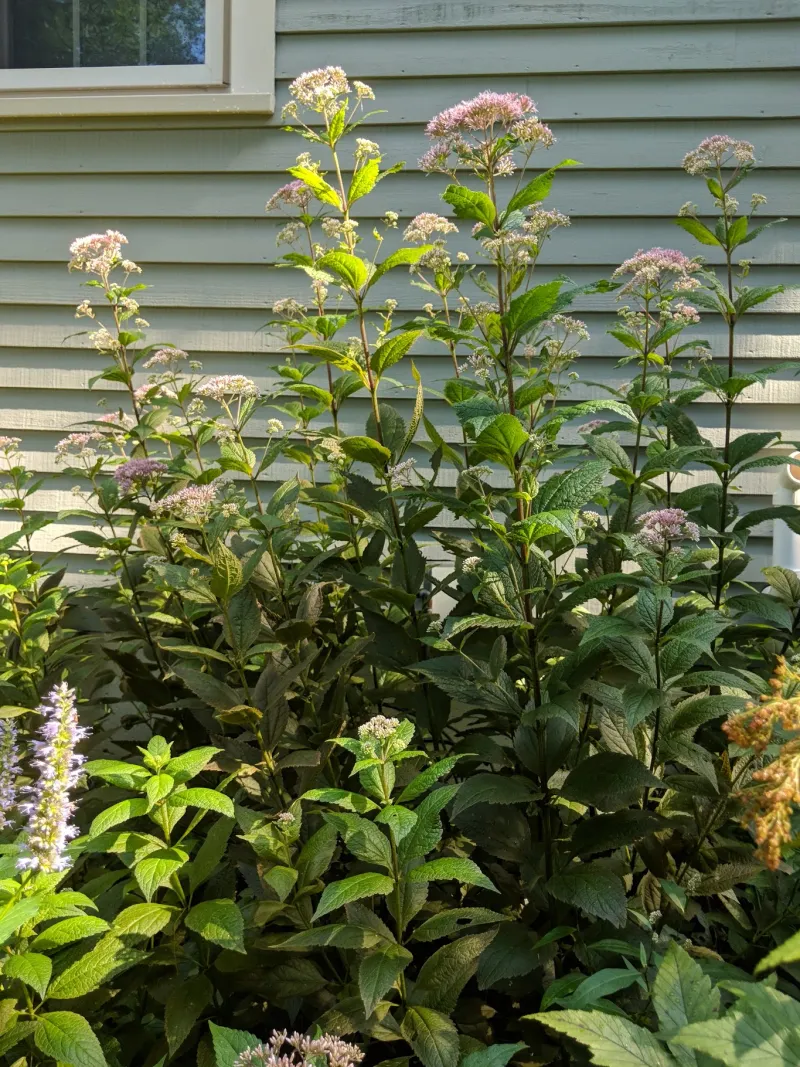
A storm-bent stem of Joe-Pye weed is a familiar sight in late August. The plant can reach six feet or more in rich, moist soil, and that height becomes a liability when a summer thunderstorm rolls through with strong wind and heavy rain.
Once a tall stem flops, it rarely straightens on its own.
Setting up support before the plant reaches its full height is far easier than trying to rescue bent stems after a storm. Grow-through plant rings or circular cage supports placed over the emerging clump in late spring allow stems to grow up through the support naturally.
By the time the plant is in full bloom, the support is nearly invisible from a few feet away.
Bamboo stakes and garden twine work well for individual stems that are already leaning. Tie loosely in a figure-eight pattern to avoid cutting into the stem.
Planting Joe-Pye weed near sturdy companions like tall grasses, ironweed, or cup plant also helps. Those neighbors act as a natural windbreak and lean-support at the same time.
In shadier spots or very rich soil, staking is almost always worth the effort. In full sun with leaner soil, the stems tend to be stockier and may need little or no support at all.
7. Leave Faded Flower Heads For Late-Season Texture
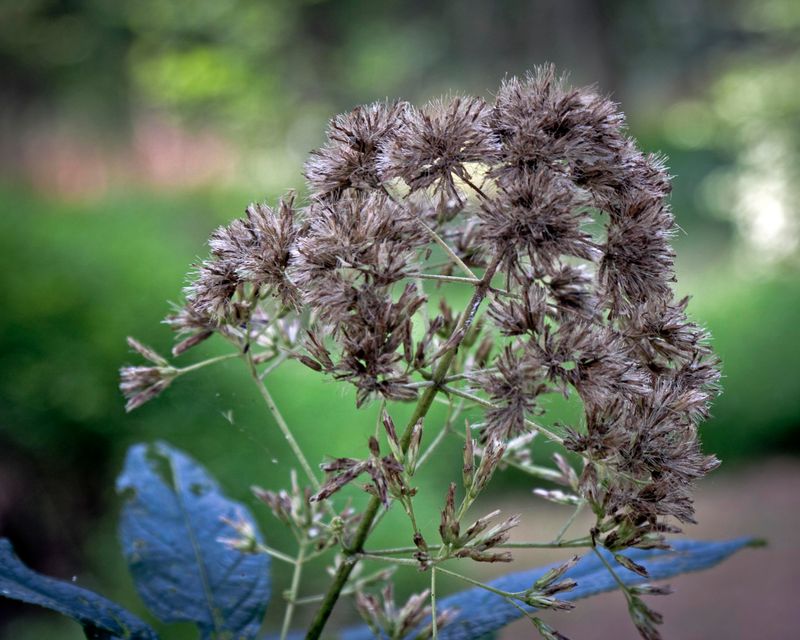
After the mauve-pink blooms fade in September, Joe-Pye weed flower heads shift into soft, silvery-tan clusters. They hold their shape well into fall and sometimes through early winter.
That dried structure adds texture and visual weight to a border that might otherwise look bare and finished by October.
Leaving faded flower heads standing also supports wildlife. Goldfinches and other seed-eating birds have been observed foraging on dried Eutrochium seed heads during fall migration.
The hollow stems of species like hollow Joe-Pye weed can also provide overwintering habitat for small native bees that nest in pithy plant stems. Cutting everything down immediately after bloom removes those resources before they can be used.
Gardeners who prefer a tidier look can remove the lower leaves as they yellow while leaving the upper stem and seed head structure intact. This approach keeps the planting looking intentional without eliminating the late-season benefits entirely.
In a meadow-style planting or a naturalistic border, leaving the full stem through winter is a reasonable and ecologically sound choice. Cut back to a few inches above the ground in late winter or very early spring.
Doing this just before new growth emerges is the most practical way to reset the planting for the coming season.
8. Let One Native Plant Anchor The Fall Border
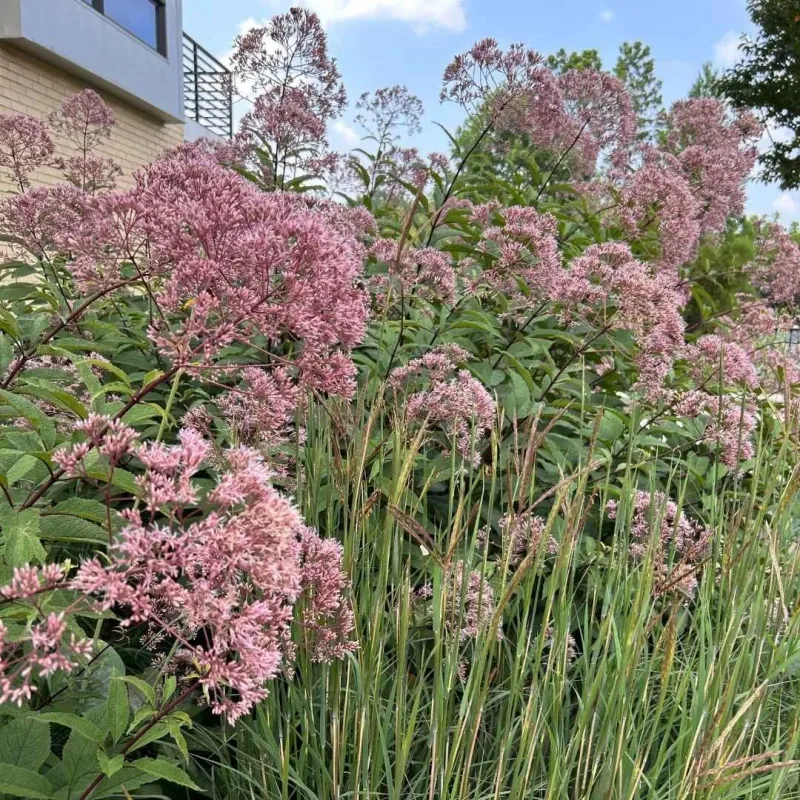
A fall border full of bees and late-season color does not happen by accident. It takes at least one plant bold enough to hold the whole composition together, and Joe-Pye weed fills that role better than almost anything else native to this region.
Its height, flower mass, and late bloom timing make it a natural anchor for the back of a mixed border.
Pairing it well matters. Goldenrod, ironweed, tall asters, and native grasses like switchgrass all bloom in a similar window and share similar moisture and light needs.
Together they create a layered, late-season display that supports dozens of pollinator species through September and into October. Joe-Pye weed brings the height and the broad flower canopy.
The companions fill in the middle and lower layers.
Getting the most from this plant comes down to a few consistent habits. Choose a moist, sunny spot, shape the stems early in summer, and leave enough room for the plant to spread naturally over time.
An established clump that has been in the ground for three or more years becomes genuinely impressive. It fills space, feeds wildlife, and signals the season better than most ornamentals ever could.
That kind of presence is worth planning for.