This Is The Kitchen Ingredient Michigan Gardeners Are Using To Protect Fruit Trees From Bacteria And Fungi
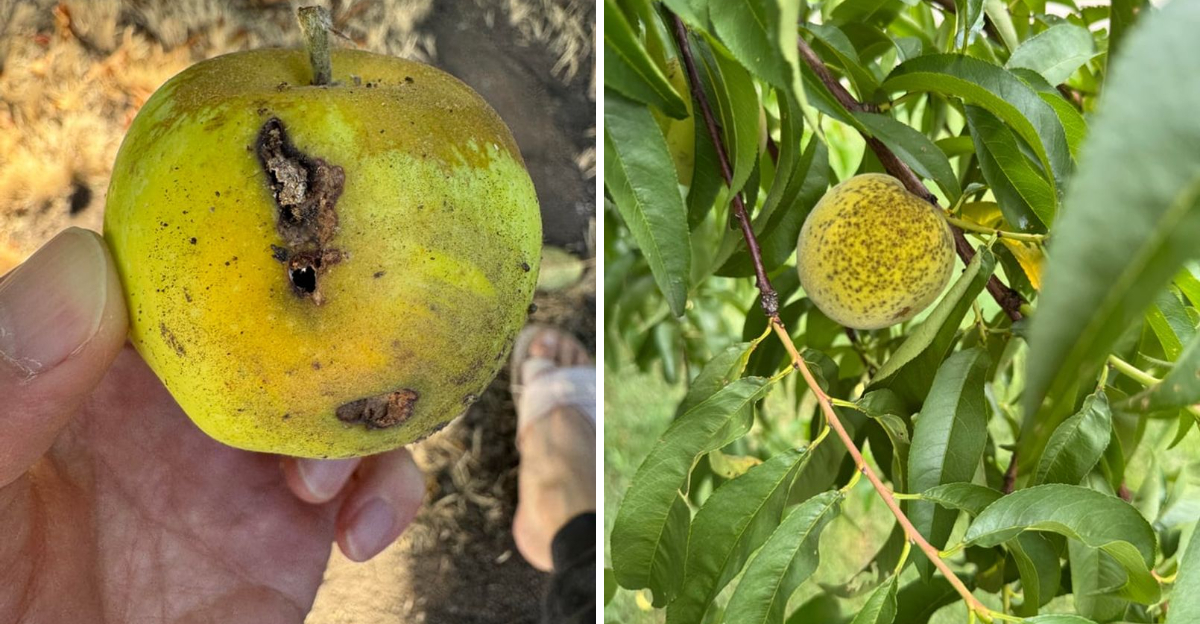
Something is showing up in Michigan backyard orchards, and it costs about two dollars at the grocery store.
White vinegar has been making the rounds in gardening circles for years, but most of the conversation around it has been either dismissive or wildly exaggerated.
The reality sits somewhere more useful in the middle.
Vinegar does have genuine applications for fruit tree care when used correctly, at the right dilution, at the right time, and for the right problems. The key word in all of that is correctly.
Michigan gardeners dealing with bacterial and fungal issues on apple, cherry, and peach trees have found real results with vinegar-based approaches when they understand what the ingredient actually does and what it cannot do on its own.
There are seven practical ways to work vinegar into your fruit tree care routine, including what dilutions work, when to apply, and how to pair it with the other habits that keep a backyard orchard genuinely healthy through Michigan’s challenging growing season.
Understand What Vinegar Actually Does
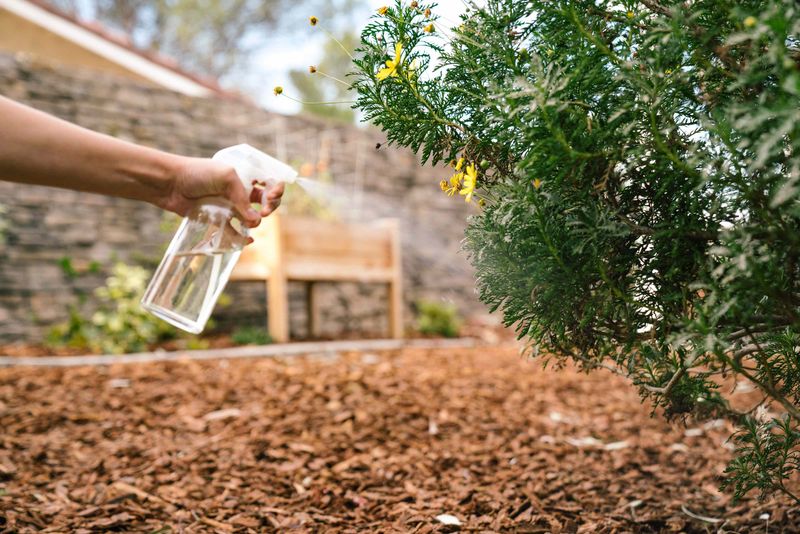
Vinegar’s active ingredient is acetic acid, and acetic acid has real antimicrobial properties.
It disrupts the cell membranes of bacteria and fungi by lowering pH at the point of contact, which interferes with their ability to reproduce and spread.
This is not a social media myth. It is basic chemistry that has been demonstrated in laboratory settings across multiple studies.
The nuance is in the application.
Vinegar works best as a preventive surface treatment rather than a cure for established infections. Applying it after a disease has taken hold deep in bark tissue or inside leaf cells will not reverse the damage already done.
Used consistently before and during wet periods when fungal spores are most active, it creates an inhospitable surface environment that reduces initial infection rates.
The concentration matters enormously.
Standard white vinegar from the grocery store runs around 5 percent acetic acid. That concentration is strong enough to be effective against surface pathogens but gentle enough to avoid serious leaf damage when properly diluted.
Most experienced fruit tree growers who use vinegar successfully work with dilutions between 1 and 3 percent acetic acid.
That means mixing roughly one part vinegar with two to four parts water depending on the sensitivity of the tree species being treated.
Getting this ratio right is the foundation of everything else.
Mix The Right Dilution For Fruit Trees
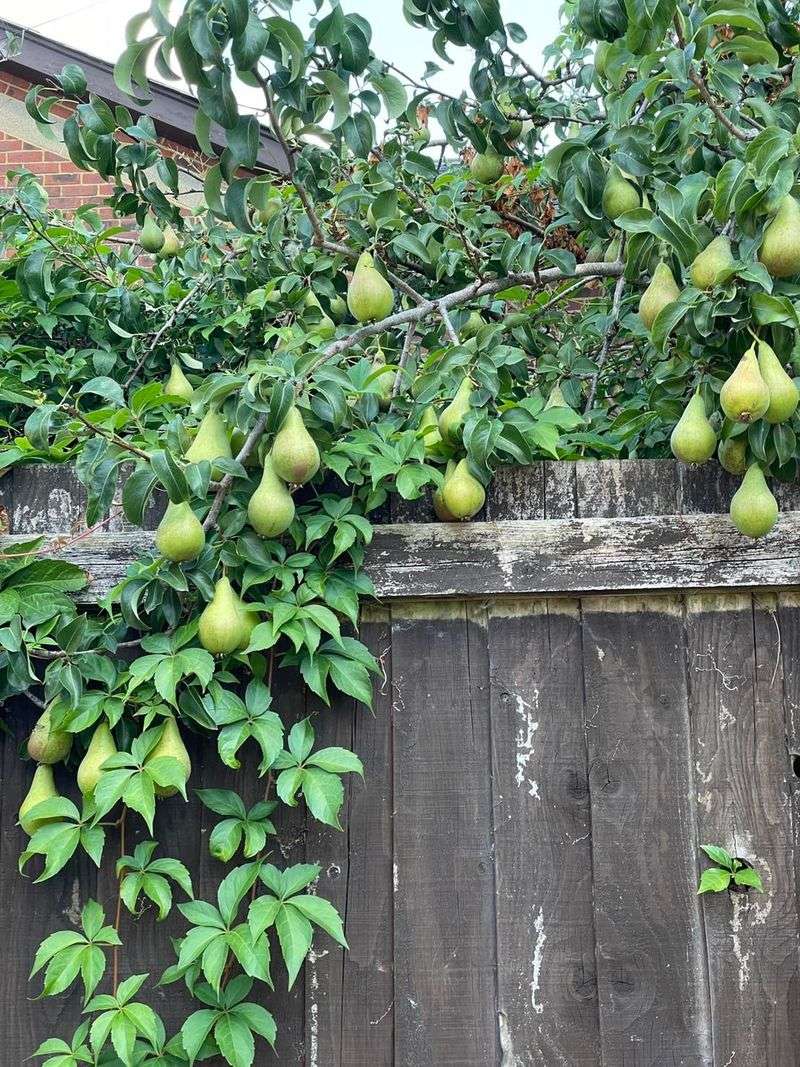
The difference between a helpful vinegar spray and a damaging one often comes down to how much water goes in the bottle.
Undiluted or minimally diluted vinegar at 5 percent acetic acid can burn tender leaf tissue, particularly on young growth in spring when leaves are still expanding and most vulnerable to chemical stress.
Cherry trees are especially sensitive and require the most conservative dilutions.
For cherry trees, a dilution of one part vinegar to four or five parts water keeps acetic acid concentration low enough to avoid leaf scorch while still delivering meaningful surface antimicrobial effect.
Apple and pear trees tolerate slightly stronger concentrations.
Your Michigan Garden Changes Every Week. Your Plan Should Too.
Gardening in Michigan changes quickly throughout the season. Every Friday you’ll receive a simple weekly plan showing exactly what to plant, prune, fertilize, harvest, and protect so you never miss the right timing.
A one-to-three dilution works well for established apple and pear trees during the active growing season. For dormant season applications when leaves are not present, slightly stronger dilutions can be used safely without risk of foliage damage.
Peach trees fall somewhere between cherries and apples in sensitivity.
Starting with a conservative one-to-four dilution and observing how the tree responds over two to three applications before adjusting gives you real information about that specific tree’s tolerance rather than guessing.
Always test a small area of foliage before applying any new dilution across the whole tree.
Spray a few leaves, wait 24 hours, and check for browning or curling at the edges. No response means the dilution is safe to use more broadly.
Apply During Wet Season Prevention Windows
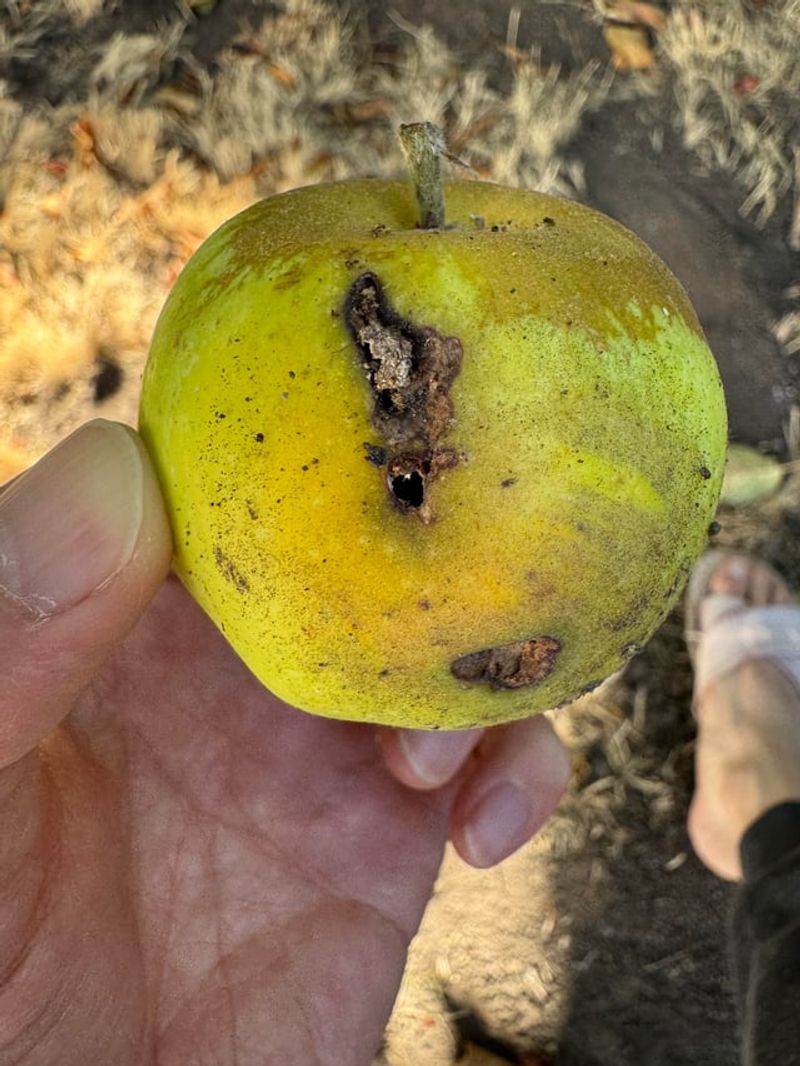
Timing vinegar applications around Michigan’s weather patterns is what separates effective use from wasted effort.
Fungal diseases like apple scab and brown rot are most likely to establish when leaves stay wet for extended periods, which in Michigan means the cool, rainy stretches of April, May, and early June that arrive almost every year.
Applying diluted vinegar spray to foliage and fruit surfaces before these wet periods creates a low-pH surface environment that fungal spores find difficult to germinate on.
The application needs to happen before the rain, not after.
Once spores have landed on wet foliage and begun the germination process, a surface spray applied afterward has little effect on infections already taking hold inside leaf tissue.
Check the extended forecast and apply two to three days before a predicted multi-day rain event for the best preventive effect.
Reapplication after heavy rain is necessary because rain washes the acetic acid off treated surfaces relatively quickly.
A practical schedule for Michigan growers is to apply every seven to ten days during the high-risk period from bud break through petal fall, then taper off as conditions dry out moving into summer.
Morning application works better than evening application because foliage dries faster during the day, reducing the prolonged leaf wetness that fungal diseases exploit.
Target Fire Blight Entry Points
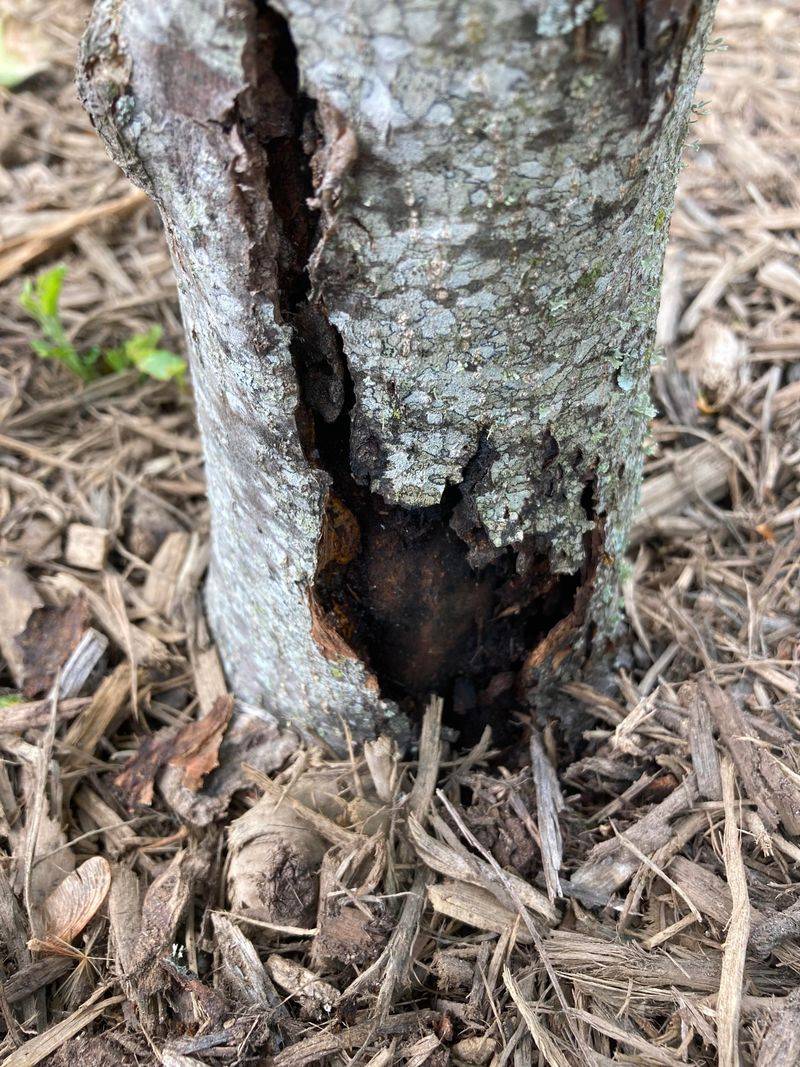
Fire blight is one of the most destructive bacterial diseases Michigan apple and pear growers face, and vinegar has a specific useful role in the management approach.
The bacterium that causes fire blight enters trees primarily through open blossoms during bloom, and secondarily through pruning wounds, hail damage, and other injuries that create openings in the bark.
Diluted vinegar spray applied to the canopy during bloom period lowers the surface pH on flower petals and the surrounding tissue, creating conditions less favorable for bacterial colonization at those entry points.
This is not a standalone cure for fire blight.
It works best as one layer in a broader management approach that also includes removing infected wood promptly, sterilizing pruning tools between cuts, and planting resistant varieties when possible.
The bloom window is narrow, typically lasting seven to ten days in Michigan depending on the variety and the spring weather.
Daily monitoring during bloom and application every three to four days through that window gives the vinegar treatment the best opportunity to reduce initial infection rates at the most vulnerable entry points.
For pruning wound protection, a light application of diluted vinegar directly to fresh cut surfaces immediately after pruning provides a temporary antimicrobial barrier while wound tissue begins the natural callusing process.
This is a simple, low-cost addition to an already necessary task that takes seconds per cut.
Combine Vinegar With Baking Soda For Fungal Issues
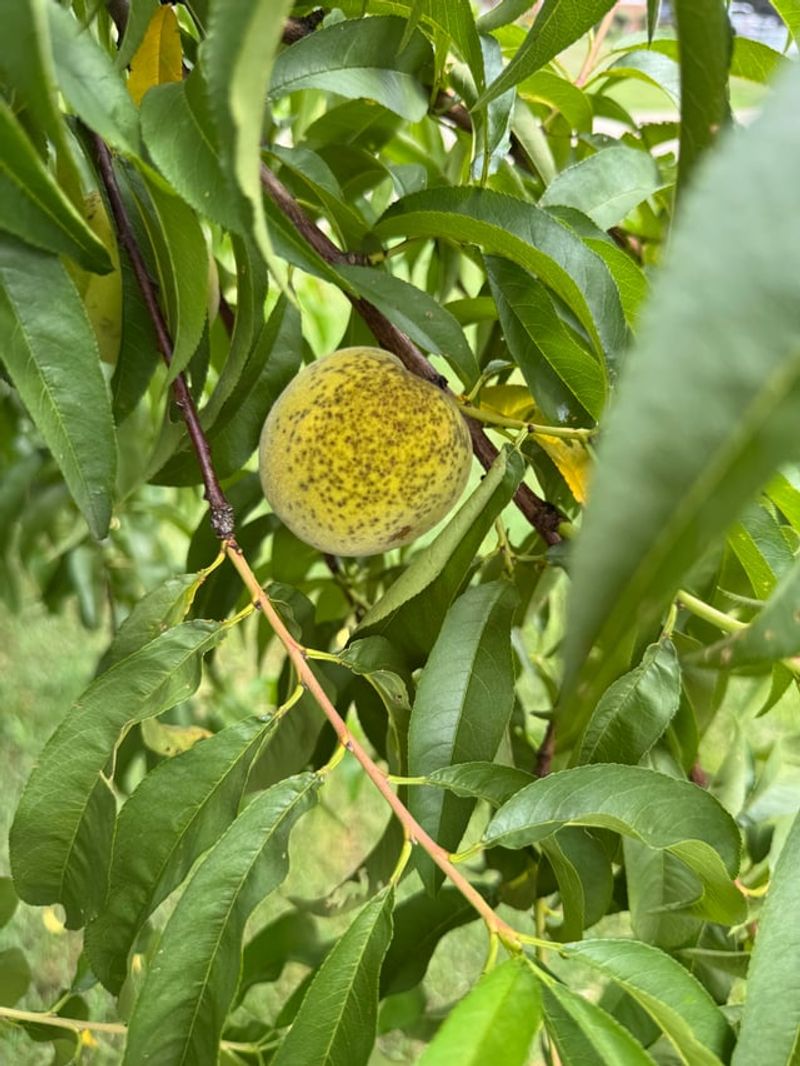
Vinegar and baking soda are often discussed as competing approaches, but used strategically in rotation they address fungal pressure from two different directions.
Vinegar creates an acidic surface environment that disrupts fungal cell function. Baking soda creates an alkaline surface environment that interferes with fungal spore germination through a completely different mechanism.
Alternating between the two prevents fungi from adapting to a single consistent pH environment, which is one of the ways repeated use of any single treatment can gradually lose effectiveness over time.
A practical rotation schedule is to apply diluted vinegar spray one week and a diluted baking soda solution the following week throughout the high-risk fungal period from bud break through early summer.
Never mix vinegar and baking soda together in the same spray bottle.
The acid-base reaction neutralizes both compounds immediately, leaving you with a slightly salty water solution that has no useful effect on fungal diseases.
Keep them separate, alternate their application, and each one maintains its full effectiveness.
Adding a very small amount of liquid dish soap helps both vinegar and baking soda solutions adhere to waxy leaf surfaces rather than beading up and rolling off before the active ingredient has time to work.
Use Vinegar In Sanitation Practices
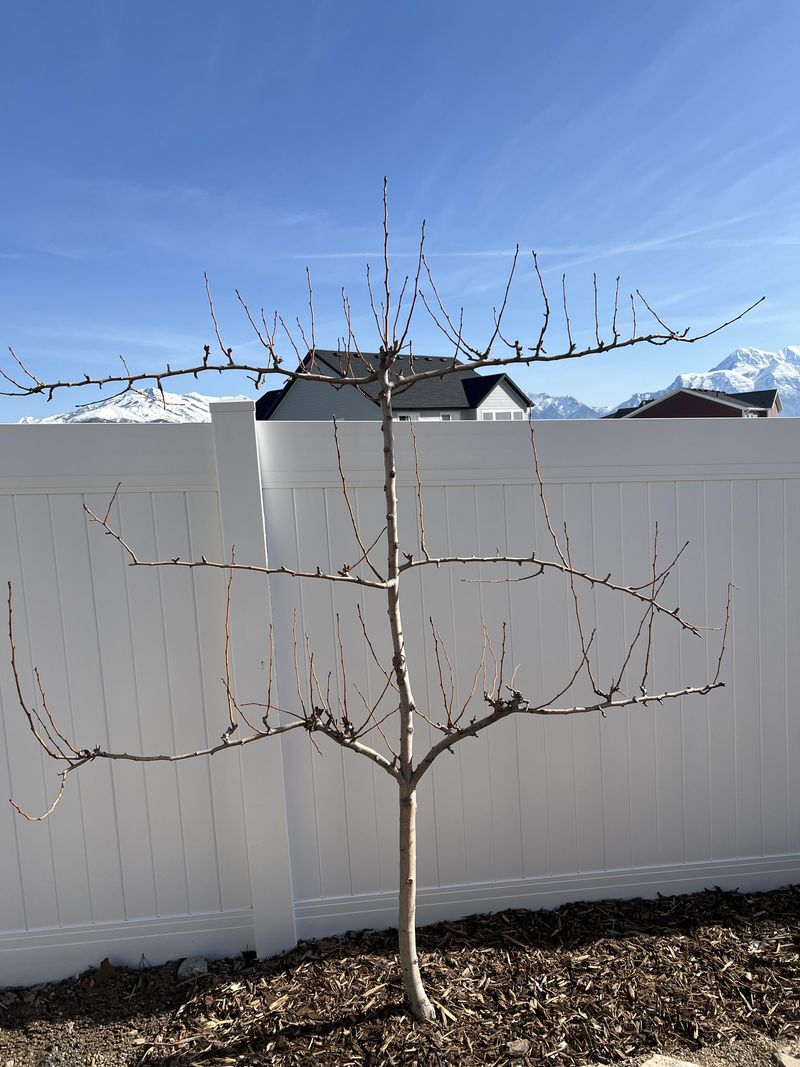
Disease management in a fruit tree orchard is not just about what you spray on the tree.
It is equally about what you clean up around it, and vinegar has genuinely useful applications in the sanitation practices that break the disease cycle between seasons.
Fallen leaves, dropped fruit, and pruning debris left on the ground harbor fungal spores and bacterial cells that overwinter and reinfect trees the following spring.
Spraying these materials with undiluted or minimally diluted vinegar before bagging and removing them from the orchard area disrupts pathogen survival in that debris.
Tool sterilization is another high-value application.
Pruning tools carry fire blight bacteria from infected cuts to healthy wood with devastating efficiency.
Soaking tools in a solution of one part vinegar to one part water between cuts during fire blight management work provides a practical sterilization option that is immediately available in any orchard settinh.
Refreshing this solution frequently during a pruning session maintains its effectiveness, as organic material from cuts can neutralize acetic acid quickly at full working strength.
Cleaning the base of the trunk and the soil surface around the drip line with diluted vinegar in early spring before bud break removes surface fungal spores from bark and soil that would otherwise splash up onto new growth during the first spring rains.
This ground-level sanitation step takes less than ten minutes per tree and addresses one of the most overlooked disease pressure points in a home orchard.
Know When Vinegar Needs Backup
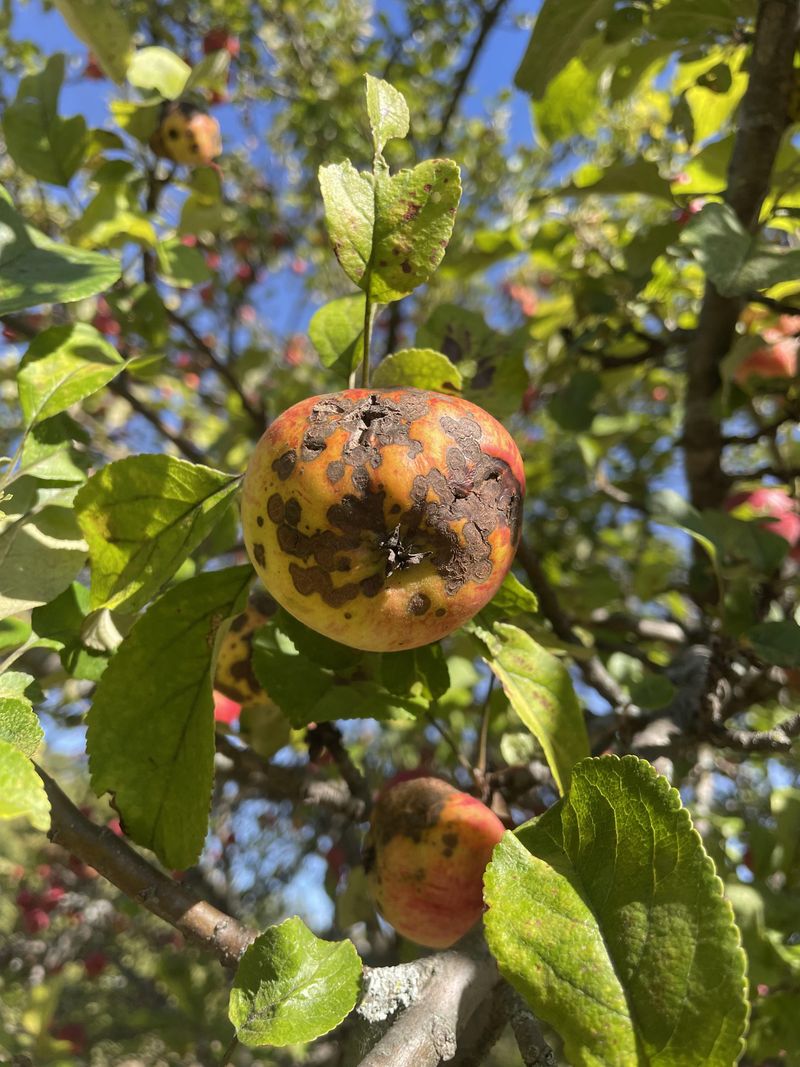
Vinegar works best as part of a complete orchard care system, not as a standalone solution for every problem a Michigan fruit tree faces.
Understanding its limits is just as important as understanding its applications, and knowing when to bring in additional tools prevents minor problems from becoming serious ones.
Established fire blight infections that have moved into the main scaffold branches require prompt removal of infected wood back to healthy tissue, with tool sterilization between each cut.
Vinegar surface applications cannot reverse an infection that has already traveled through the tree’s vascular system.
Severe apple scab pressure in unusually wet years may exceed what preventive vinegar applications can manage effectively on their own.
Copper-based fungicides and sulfur-based products provide stronger fungicidal activity for high-pressure situations while remaining compatible with the vinegar-based approach used during lower-risk periods.
The combination of preventive vinegar applications during the moderate-risk periods and stronger approved fungicides during peak pressure windows gives Michigan fruit tree growers the most cost-effective and environmentally responsible management approach available.
Diagnosis still matters even when vinegar is part of the toolkit.
Knowing specifically whether the problem is a fungus, a bacterium, an insect, or a nutrient deficiency determines which tools belong in the response.
Michigan State University Extension’s plant diagnostic lab accepts samples from homeowners and provides written reports.
Using that resource ensures the vinegar spray in your hand is solving the problem actually present in your orchard rather than the problem you assumed was there based on a quick glance from the back porch.