More Barn Swallows Near Your Ohio Home Means Fewer Mosquitoes (Here’s How To Attract Them)
Mosquitoes have a way of ruining an Ohio evening fast. You step outside to water plants, sit on the porch, or watch the kids play, and suddenly the yard feels like their territory.
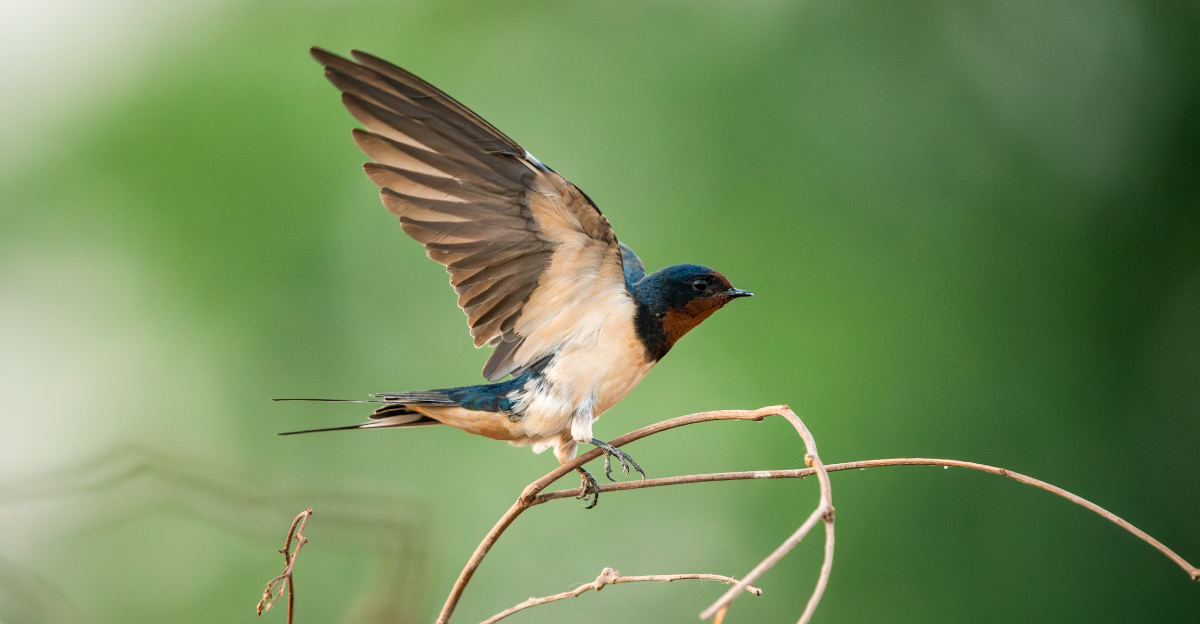
Barn swallows can shift that balance in your favor. These graceful birds spend much of their day sweeping through the air after flying insects.
That makes them a welcome sight around open yards, barns, sheds, fields, ponds, and garden edges. Attracting them is not about tossing seed or setting out scraps.
They need the right nesting spots, access to mud, open flight space, and a yard that does not work against them with heavy pesticide use. A few thoughtful changes can make your property more appealing to barn swallows and less comfortable for mosquitoes.
Their fast, looping flights are beautiful to watch, but their appetite is what really earns attention.
1. Keep Open Flying Space Where Barn Swallows Can Hunt
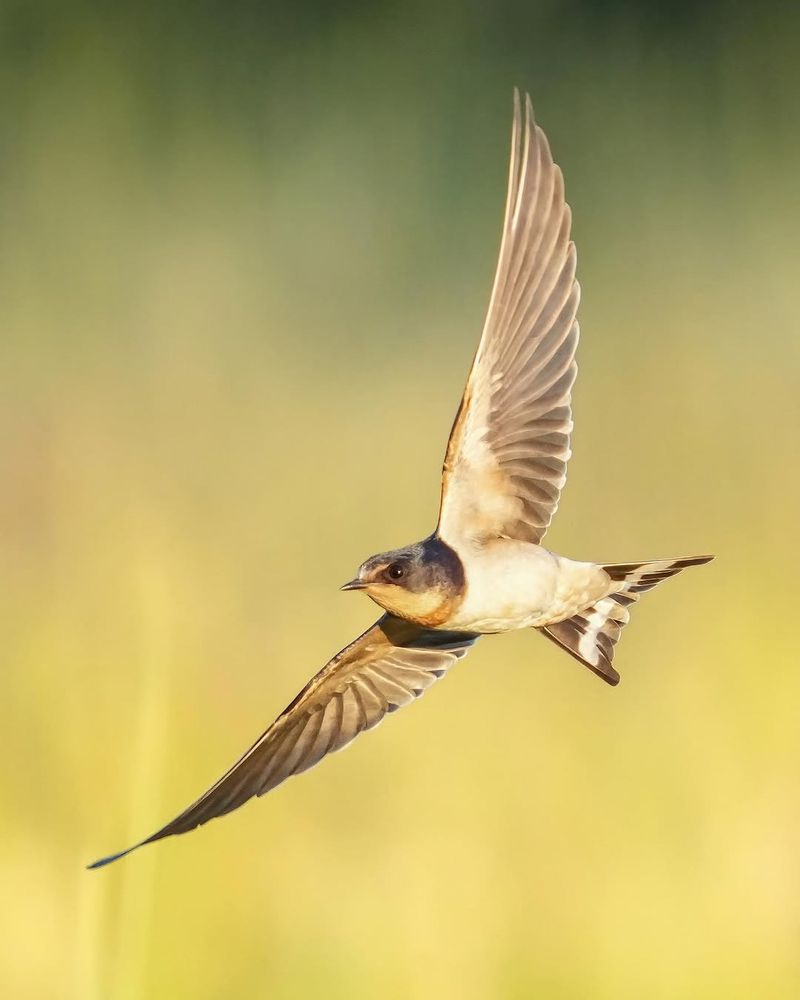
A swallow cutting low over a pasture is not sightseeing. It is working, and open airspace is the tool it needs most.
Barn swallows, Hirundo rustica, are built for fast, agile flight over open ground. They feed entirely on flying insects caught in the air, not at feeders or on the ground.
Fields, driveways, garden edges, ponds, and open Ohio lawns all give swallows room to hunt. Dense tree cover, thick shrubs, or cluttered yard structures can limit their ability to maneuver.
A yard that is even partially open near a barn or outbuilding can be enough to draw them in during summer.
Swallows tend to hunt low to the ground when insects are flying close to the surface. On cooler mornings or before rain, you may see them skimming just a few feet up.
That is normal feeding behavior, not distress.
Flying insects they commonly catch include gnats, houseflies, horseflies, beetles, and midges. Mosquitoes can be part of the mix, but swallows are not targeting mosquitoes specifically.
They are opportunistic hunters catching whatever is in the air during their passes.
If your property has open space near a structure they can nest on, that combination is your strongest draw. No single feature guarantees a nesting pair, but open airspace is the starting point for any swallow-friendly yard.
2. Leave Safe Nesting Spots On Outbuildings And Porches
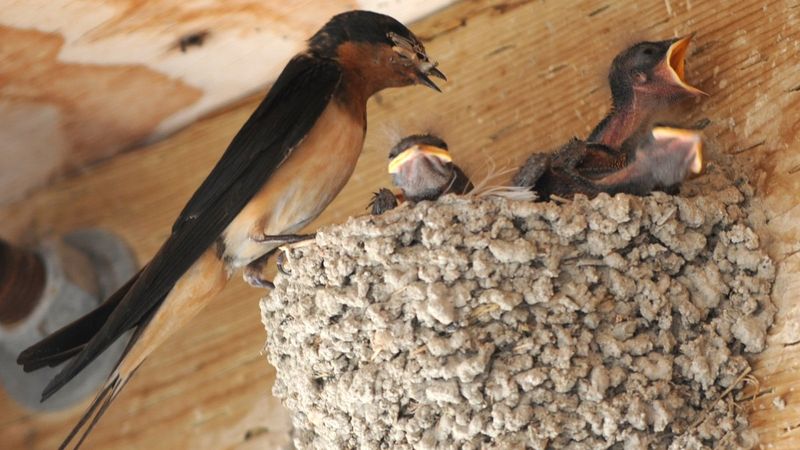
Under a porch eave or barn rafter, a small cup of dried mud and grass is one of the most productive wildlife structures on any rural property. Barn swallows almost always nest on human-made structures.
Barns, sheds, garages, open porches, bridges, and covered outdoor spaces are their preferred sites in this region.
They look for spots with overhead protection, a rough surface to anchor the nest, and a clear flight path in and out. A smooth painted surface may not hold a nest well.
Rough wood, concrete block, or an unpainted beam gives the mud something to grip.
Leaving an outbuilding door or window cracked during nesting season, roughly April through August, gives swallows access to sheltered interior spaces. Many pairs nest inside barns right on the rafters.
Your Ohio Garden Changes Every Week. Your Plan Should Too.
Gardening in Ohio changes quickly throughout the season. Every Friday you’ll receive a simple weekly plan showing exactly what to plant, prune, fertilize, harvest, and protect so you never miss the right timing.
A small wooden ledge mounted under an eave can also provide a starting platform for a new nest.
If a nest goes up in a high-traffic spot near a door, it can create some mess from droppings. A simple board or shelf placed below the nest can catch droppings and reduce conflict without disturbing the birds.
Active nests with eggs or chicks are federally protected under the Migratory Bird Treaty Act. Do not remove or block an active nest.
If conflicts arise, contact your local wildlife office for current guidance before taking any action.
3. Provide Mud Nearby During Nest Building Season
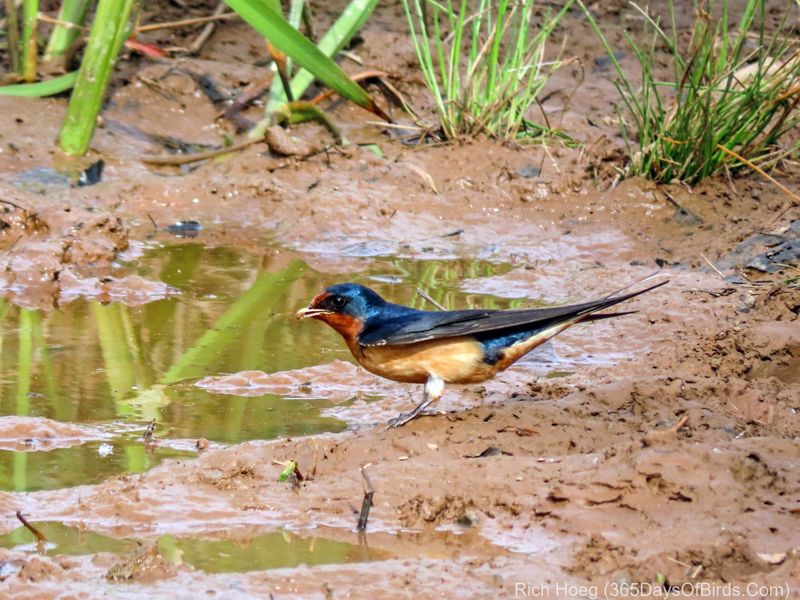
Mud is not just a building material for barn swallows. It is the whole structure.
A barn swallow nest is made almost entirely from pellets of wet mud mixed with grass stems, then lined with feathers. Without a reliable mud source nearby, a pair may abandon a promising nesting site and move on.
Nest building usually begins in late April or May in this state. During that window, swallows make dozens of trips to a mud source, carrying small loads back to the nest site one pellet at a time.
A muddy pond edge, a damp garden bed, or a low spot near a barn can all serve as gathering sites.
If your property is very dry or has no natural mud source, you can create a small damp patch. Fill a shallow container or dig a low spot in a shaded area, then keep it moist with a slow trickle of water.
Keep it away from areas of standing water that could collect and breed mosquitoes.
Avoid adding clay-heavy soil that dries into a hard crust. A mix of regular garden soil kept consistently damp works better.
The spot does not need to be large. A patch the size of a welcome mat is enough for a nesting pair to gather what they need.
Check local mosquito-prevention guidance and make sure any damp area drains or dries between uses to avoid becoming a breeding site.
4. Avoid Sprays That Reduce Flying Insects
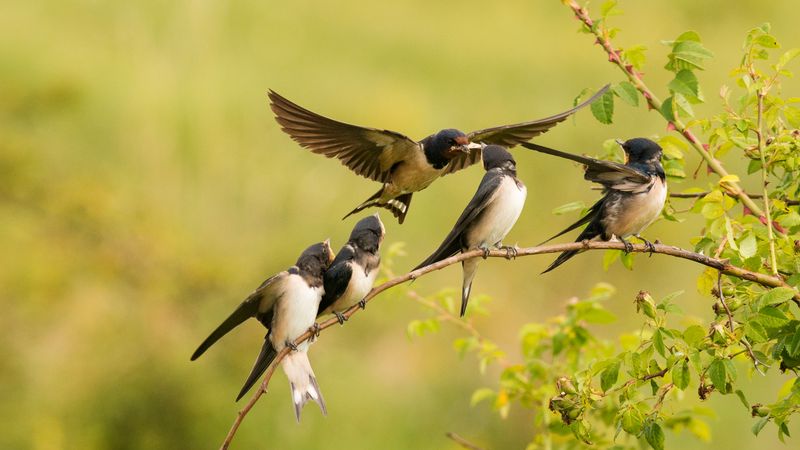
A freshly sprayed lawn edge may look tidy, but for a barn swallow family raising three to five chicks, it can mean a serious drop in available food. Barn swallows feed their nestlings a steady stream of flying insects caught throughout the day.
Adults may make hundreds of feeding trips between sunrise and dusk.
Broad-spectrum insecticides applied across yards, fields, or garden edges reduce the overall flying insect population in an area. That includes the gnats, midges, small flies, and other soft-bodied insects that swallows rely on most.
Fewer insects in the air means harder work for nesting adults and slower growth for chicks.
This does not mean every yard must go spray-free entirely. Targeted treatments for specific pest problems are a different situation.
They should be applied carefully and away from known nesting areas, unlike blanket spraying across open hunting grounds.
Ohio State University Extension and similar land-grant resources have long encouraged integrated pest management. That means using the least disruptive treatment for a specific problem rather than routine broad applications.
That approach also tends to support birds that feed on insects.
Mosquito fogging services that treat wide areas repeatedly can be especially disruptive to the flying insect food web. If mosquito pressure is high, combine targeted treatments with standing-water removal and personal protection.
That is a more balanced approach than area-wide spraying near active swallow habitat.
5. Add Native Plants That Support A Healthy Insect Supply
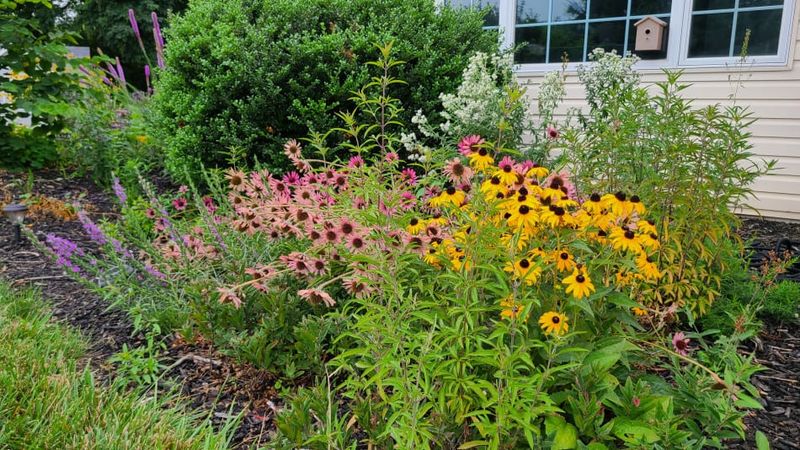
Native plants do not feed barn swallows directly. Swallows do not eat seeds or berries.
But native plants support the insects that swallows hunt, and that connection matters more than most people expect when building swallow-friendly habitat.
Plants like wild bergamot, black-eyed Susan, native coneflowers, switchgrass, and goldenrod support a wide range of native insects across their life cycles.
Those insects, in various flying stages, become part of the aerial food web that aerial hunters like barn swallows tap into throughout the summer.
Layered habitat helps most. A mix of low flowering plants, medium shrubs, and taller native grasses near open areas creates more insect diversity.
That diversity is greater than what a monoculture lawn or a single bed of ornamentals can support. The variety of plant structures supports insects at different heights and seasons.
You do not need to replant an entire yard. Adding a native plant border along a fence line, around a garden bed, or near an outbuilding can start shifting the local insect community over time.
Results build slowly across seasons, not overnight.
The Ohio Native Plant Society and OSU Extension both offer regionally appropriate plant lists for different yard conditions. Choosing plants suited to your soil, light, and moisture level gives them the best chance to establish and support insect life.
A swallow hunting overhead is the long-term payoff for that patient planting work.
6. Keep Cats Away From Nesting And Feeding Areas
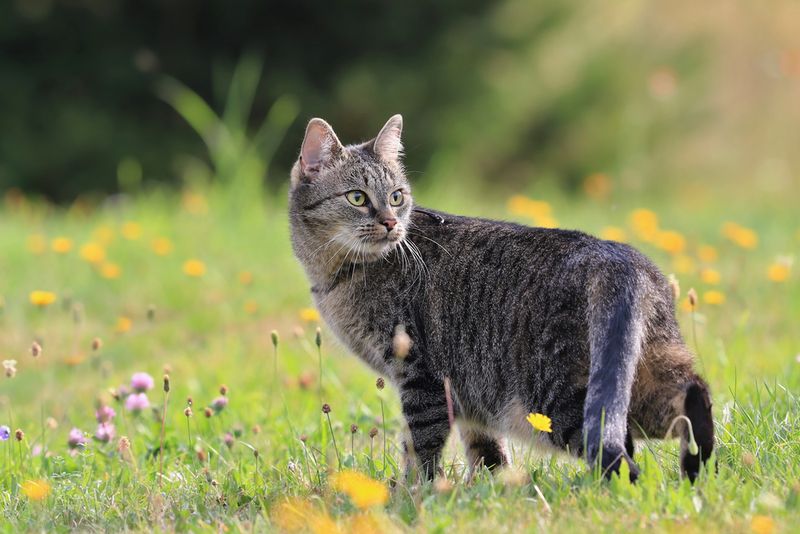
A cat watching from a porch railing may look harmless, but to nesting swallows, a nearby predator changes everything about how safe a site feels.
Outdoor and free-roaming cats are one of the leading human-linked threats to wild birds in North America, according to multiple wildlife research organizations.
Barn swallows nest low enough on porches and eave edges that cats can occasionally reach young birds or create enough stress to cause adults to abandon a nest.
Even a cat that never catches a bird can disrupt feeding behavior if it regularly patrols near a nest site.
Keeping cats indoors during the nesting season, roughly April through August, is the most straightforward solution. Indoor cats live longer, healthier lives on average and have no impact on local wildlife.
If full indoor living is not practical, a catio or a supervised outdoor space with clear boundaries can reduce the conflict.
Bell collars reduce hunting success somewhat but do not eliminate the risk. Swallows and other ground-nesting or low-nesting birds can still be startled and stressed even without a direct catch.
This is not about blaming cat owners. It is about making a practical choice during a specific, time-limited season.
A few months of adjusted outdoor access for a pet can make a real difference for a nesting pair of swallows raising their young just under your eave. Both the birds and the cat benefit from that boundary.
7. Skip Fake Calls And Let Habitat Do The Work
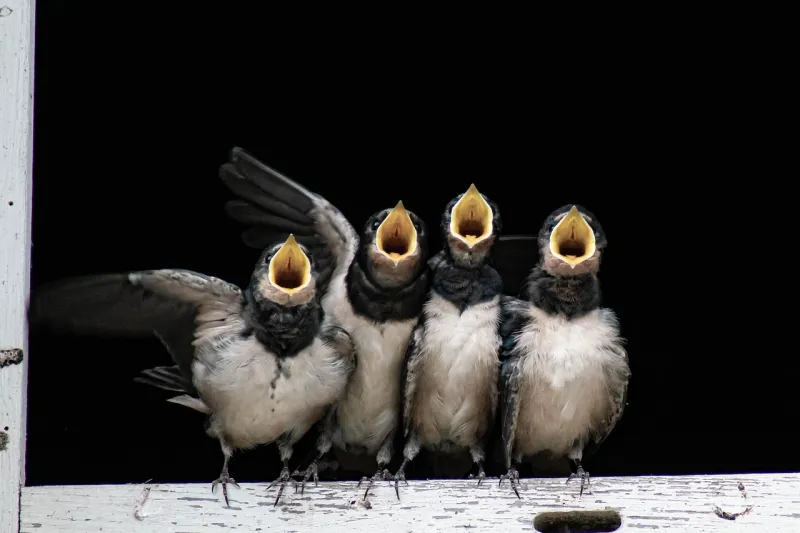
Playing recorded bird calls on a speaker to attract swallows might seem like a shortcut, but it does not work the way people hope. Barn swallows do not respond to audio lures the way some other species might respond to playback in specific research settings.
More importantly, repeated or aggressive playback of bird calls near nesting areas can stress resident birds and disrupt normal behavior.
The Cornell Lab of Ornithology and Audubon both caution against the casual use of bird call playback near nesting habitat.
The stress caused by repeated calls can pull birds away from feeding or alert them to a threat that does not exist, wasting energy they need for raising young.
Barn swallows are scouts. A pair that finds good habitat, open airspace, a safe nesting surface, nearby mud, and a healthy insect supply will return to the same site year after year.
They are strongly site-loyal and often bring offspring back to nest near where they were raised.
The most reliable way to attract them is simply to make your property worth visiting. Fix the eave, leave the barn door cracked, keep the field edge open, and reduce broad spraying.
That combination works slowly but genuinely.
Patience is part of this. A pair may scout your property for a season before committing to nest.
Once they do, that relationship can last for years with very little extra effort on your part.
8. Treat Barn Swallows As Helpers, Not Mosquito Control
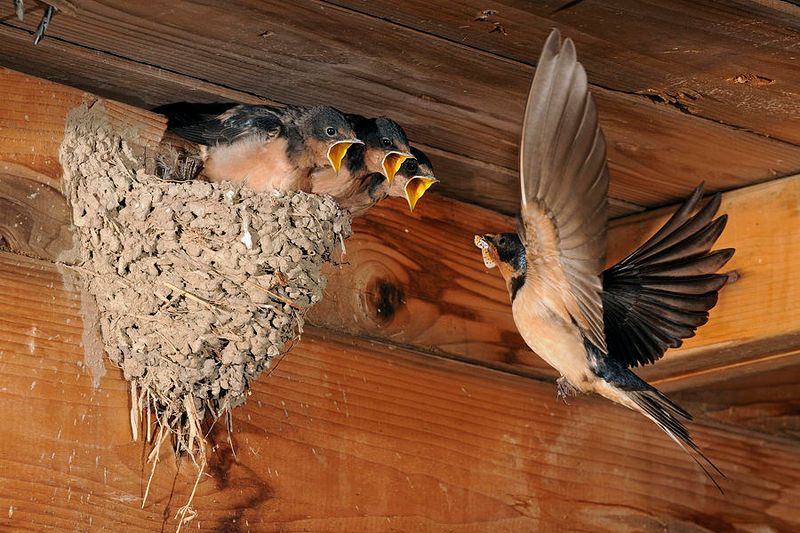
Swallows are real, practical helpers around an Ohio property. A pair raising two broods per summer can consume thousands of flying insects across a season.
Some of those insects will be mosquitoes. But the honest framing matters here, barn swallows hunt what is available in the air, and mosquitoes are just one small part of a much broader flying insect diet.
No wildlife source, university extension, or public health agency recommends barn swallows as a primary mosquito-control strategy.
The species that mosquitoes belong to often rest low in vegetation during daylight hours, which is not where swallows hunt most actively.
Swallows are most useful for reducing the broader insect pressure around a yard, not for targeting one specific pest.
Responsible mosquito prevention still means dumping or draining standing water in containers, gutters, birdbaths, and low spots at least once a week.
It means using window and door screens, wearing EPA-registered repellent when needed, and following local public health advisories during high-activity seasons.
Barn swallows fit into a healthy yard ecosystem as one helpful piece, not the whole solution. A yard with open airspace, native plants, reduced broad spraying, and a safe nesting spot is doing multiple things right at once.
The swallows that show up are a sign that the habitat is working.
That is worth more than any single mosquito-control claim. Welcome them for what they are, fast, graceful, genuinely useful birds that make summer feel more alive.