Native Ohio Plants To Grow Instead Of Hostas In Shady June Beds
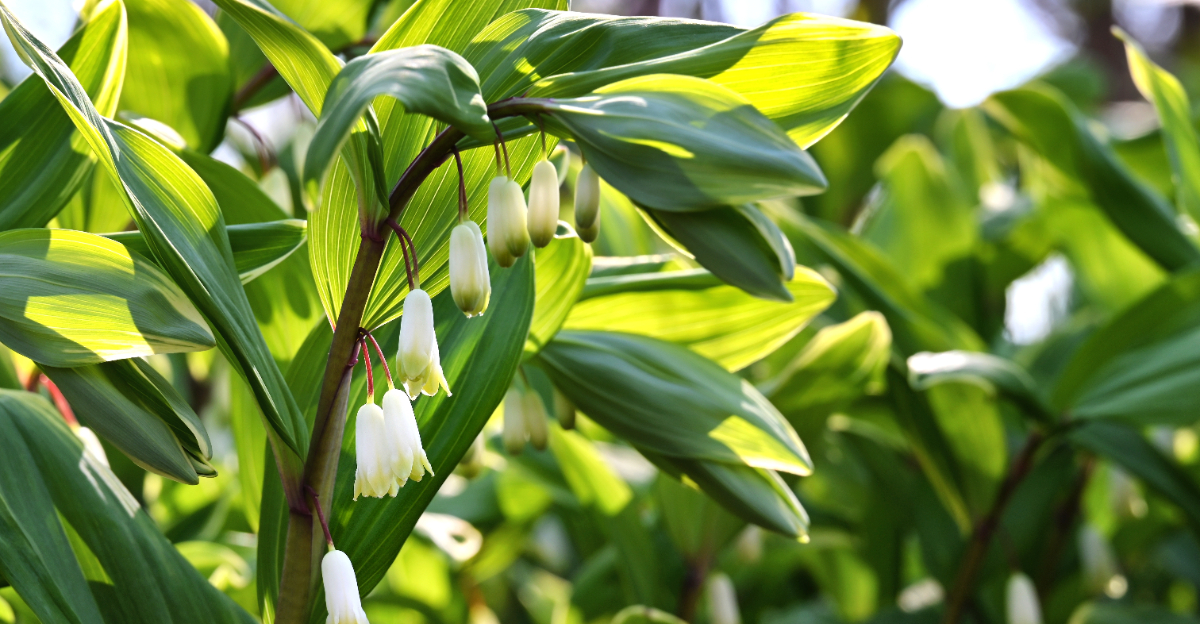
Hostas are everywhere in Ohio shade gardens, and honestly, it is not hard to understand why. They are reliable, easy to find, and fill a difficult spot without much fuss.
But reliable and exciting are two very different things, and a lot of gardeners are starting to feel like their shady beds deserve better. June is actually the perfect month to reconsider what is growing in those spots.
Native Ohio plants that thrive in shade bring something hostas simply cannot offer. They add wildlife value, seasonal interest, and a connection to this landscape that a plant from Asia never quite delivers.
Some of these natives are just as low maintenance as hostas. A few are even more forgiving.
And several of them put on a show in June specifically, right when shady beds need the most help looking alive and intentional. Your shade garden has more options than you think.
1. Maidenhair Fern Softens Shade With Delicate Native Texture
A shady bed can feel heavy fast when every plant has broad, rounded leaves. That is exactly where maidenhair fern earns its place.
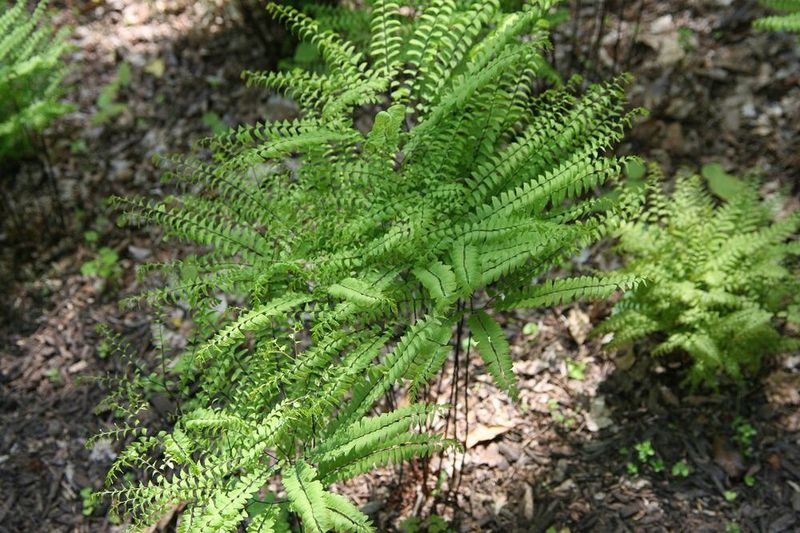
Adiantum pedatum is a native Ohio fern found in rich woodland areas across this state. Its fine, fan-shaped fronds create a texture unlike anything else in the shade garden.
The delicate leaflets catch the faintest breeze and tremble slightly, giving the planting a sense of movement and lightness that heavier foliage simply cannot deliver.
In June, maidenhair fern is fully unfurled and looking its best. The fronds are held horizontally on thin, dark stems that arch gracefully outward from the center of the plant.
The overall effect is soft and layered, almost like a living piece of lacework tucked into the shade. Next to the bold, paddle-shaped leaves of a hosta, the contrast is striking.
Maidenhair fern makes surrounding plants look bolder just by being nearby.
This fern prefers moist, rich, well-drained soil with consistent organic matter. It grows best in part shade to full shade and does not handle dry spells well.
During hot, dry stretches in summer, the fronds can crisp at the edges if the soil dries out completely. Mulching around the base helps hold moisture and keeps the root zone cool.
A two to three inch layer of shredded leaf mulch works well and mimics the natural forest floor conditions this plant prefers.
Maidenhair fern spreads slowly by rhizomes and eventually forms a soft, spreading clump. Planting it in groups of three or five creates a fuller, more naturalistic look.
It pairs well with Solomon’s seal and wild ginger for a layered woodland planting that reads as genuinely native.
2. Solomon’s Seal Gives Shady Beds Graceful Green Arches
Few native plants move through a shady bed with as much elegance as Solomon’s seal. Polygonatum biflorum is the true native species for regional gardens.
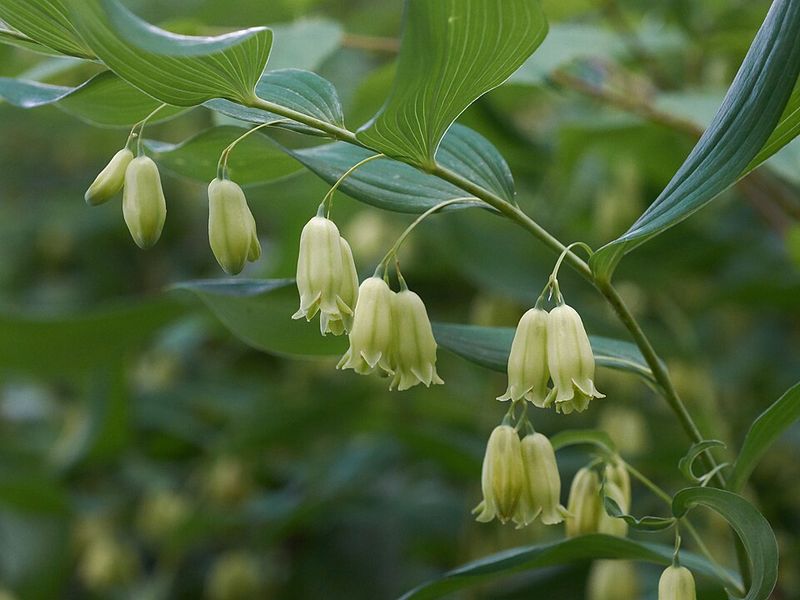
It should not be confused with the fragrant Solomon’s seal, Polygonatum odoratum, which is a non-native cultivar often sold at garden centers. The native version has long, arching stems lined with paired, smooth leaves that bow outward in a gentle, sweeping curve.
Your Ohio Garden Changes Every Week. Your Plan Should Too.
Gardening in Ohio changes quickly throughout the season. Every Friday you’ll receive a simple weekly plan showing exactly what to plant, prune, fertilize, harvest, and protect so you never miss the right timing.
It adds height without bulk and creates a sense of flow that flat-leaved plants rarely achieve.
The small, cream-colored, bell-shaped flowers hang in pairs beneath the stems in spring. By June, the flowers have finished, but the foliage remains handsome and architectural.
The arching stems hold their shape through the heat of summer and continue to look structured well into fall, when the leaves turn a warm golden yellow.
That long season of interest makes Solomon’s seal a reliable backbone plant for shaded beds that need consistent presence without constant attention.
Rich, moist, well-drained woodland soil suits this plant best. It handles part shade to full shade comfortably and fits naturally under the canopy of deciduous trees.
One of the best qualities of Solomon’s seal is its patience. It spreads slowly by rhizomes, gradually forming wider clumps over several years.
Resist the urge to divide it too early. Letting it expand on its own schedule produces a more natural, settled look.
For a layered planting, combine Solomon’s seal with maidenhair fern at the front and black cohosh at the back. The varying heights and textures create a woodland scene that feels curated but not forced.
This is a plant that rewards a little planning and a lot of patience.
3. Jack In The Pulpit Adds Woodland Drama Under Trees
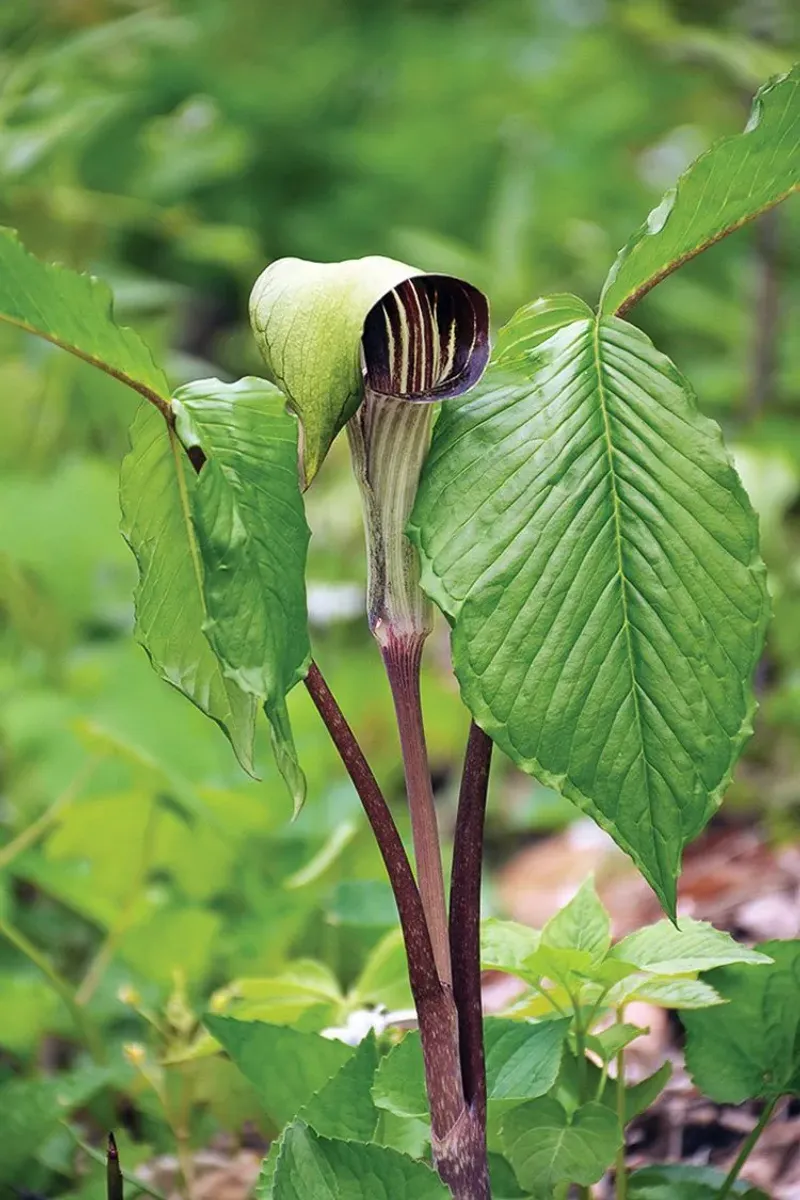
Some plants stop visitors in their tracks, and Jack in the Pulpit is one of them. Arisaema triphyllum has one of the most unusual and recognizable forms in the native woodland plant world.
The hooded spathe, which wraps around a central spadix like a tiny preacher standing in an old-fashioned pulpit, is striped in green and deep purple. It rises above bold, three-part leaves that are large enough to hold their own in any shady planting.
There is nothing else in the native plant palette quite like it.
This plant grows best in moist, rich, shaded soil. It thrives under the canopy of large deciduous trees where leaf litter builds up over time and keeps the soil consistently fertile and moisture-retentive.
In June, the spathe has typically finished its display, but the bold foliage remains upright and dramatic through the summer months.
The three-lobed leaves are large and tropical-looking, which creates a strong contrast with finer-textured plants like maidenhair fern or Pennsylvania sedge nearby.
Jack in the Pulpit spreads slowly from corms and self-seeds modestly in the right conditions. It works best in groups of three or more, tucked into the middle layer of a shaded bed where its unusual form can be appreciated up close.
Placement near a path or garden entrance gives visitors a chance to notice the intricate structure of the spathe without having to search for it.
This is a native plant for gardeners who want something genuinely interesting, not just green filler. It carries real woodland character and sparks conversation in a way that few other shade perennials can match.
Plant it where it will be seen and appreciated.
4. Pennsylvania Sedge Turns Bare Shade Into A Living Carpet
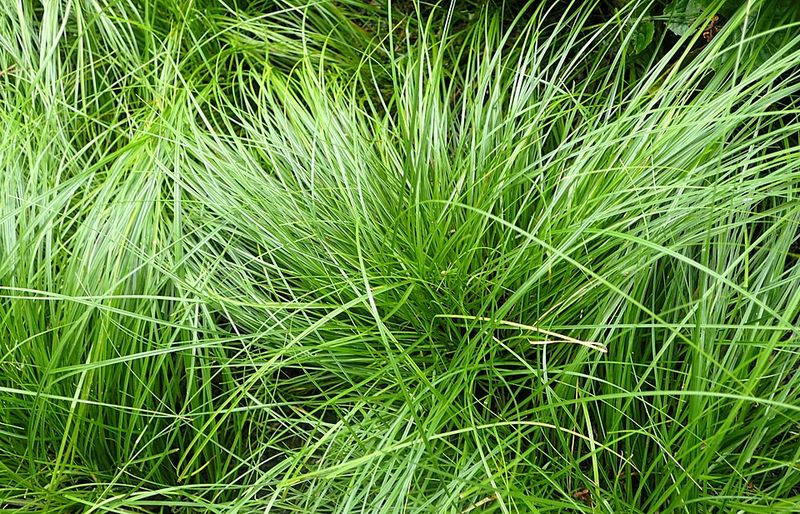
Bare soil under a large tree is one of the most frustrating problems in a shade garden. Roots compete for moisture, light is limited, and most plants struggle to establish.
Pennsylvania sedge, Carex pensylvanica, is one of the most reliable native solutions for exactly this situation. This low-growing, fine-textured sedge forms a soft, grassy layer that spreads gradually by rhizomes to cover ground that other plants leave bare.
It handles dry shade under trees better than most lush woodland perennials, which makes it genuinely useful rather than just ornamental.
In June, Pennsylvania sedge is a rich, medium green and sits at a comfortable four to eight inches tall. It does not look like a lawn, but it does create a carpet-like effect that reads as natural and settled.
Along bed edges, it softens the transition between garden and lawn. Between taller native perennials, it fills the ground layer without competing aggressively.
It is a team player in the best sense, holding space without overwhelming neighbors.
This sedge spreads at a moderate pace and fills in gradually over two to three seasons. Planting in groups of at least five to seven plants spaced about a foot apart speeds up coverage.
It does not need regular mowing, though a light trim in late winter or early spring refreshes the look before new growth emerges. Avoid cutting it back during the growing season, as the foliage is the main feature.
Pennsylvania sedge works well paired with taller natives like Solomon’s seal or Jack in the Pulpit. The sedge handles the ground layer while those plants add height and structure above.
Together, they build a planting that looks genuinely connected to the local woodland landscape rather than assembled from a catalog.
5. Bottlebrush Grass Brings Movement To Dry Shade
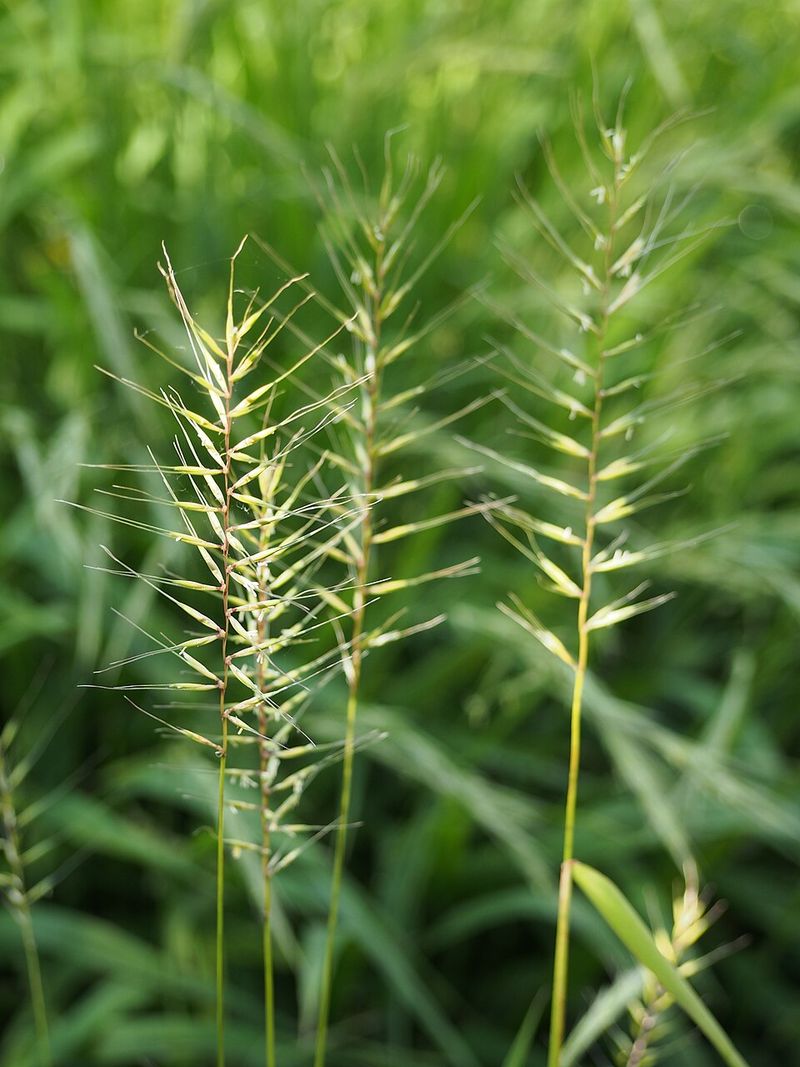
Dry shade is one of the hardest conditions to plant well. Most shade-loving natives want moisture, and most grasses want sun.
Bottlebrush grass, Elymus hystrix, sits in the useful middle ground between those two worlds. This native Ohio grass handles part shade and drier woodland soil conditions better than nearly any other ornamental grass in the regional palette.
It grows upright to about two to four feet tall and produces seed heads that look exactly like their name suggests. They are bristly, elongated, and architectural in a way that catches the eye from a distance.
By June, bottlebrush grass is well established and beginning to develop its distinctive seed heads. The movement it brings to a shady bed is genuinely different from what broad-leaved perennials offer.
When a breeze passes through, the stems sway slightly and the seed heads catch the light. In a bed that might otherwise feel static and flat, that kind of movement adds life without adding maintenance.
This grass works best as an accent plant or naturalistic layer rather than a dense groundcover. Planting it in loose clusters of three to five allows it to create rhythm through a larger bed without crowding out neighbors.
It self-seeds modestly, so pulling a few seedlings each spring keeps it from spreading beyond its intended area. That is a small trade-off for a plant that solves the dry shade problem so effectively.
Bottlebrush grass pairs well with Pennsylvania sedge at its feet and black cohosh behind it. The combination of low carpet, mid-height movement, and tall vertical spires creates a layered woodland planting with genuine depth.
For gardeners tired of fighting dry shade with plants that never fully settle in, this native grass is a practical and visually rewarding solution.
6. Black Cohosh Sends Tall White Spires Through Summer Shade
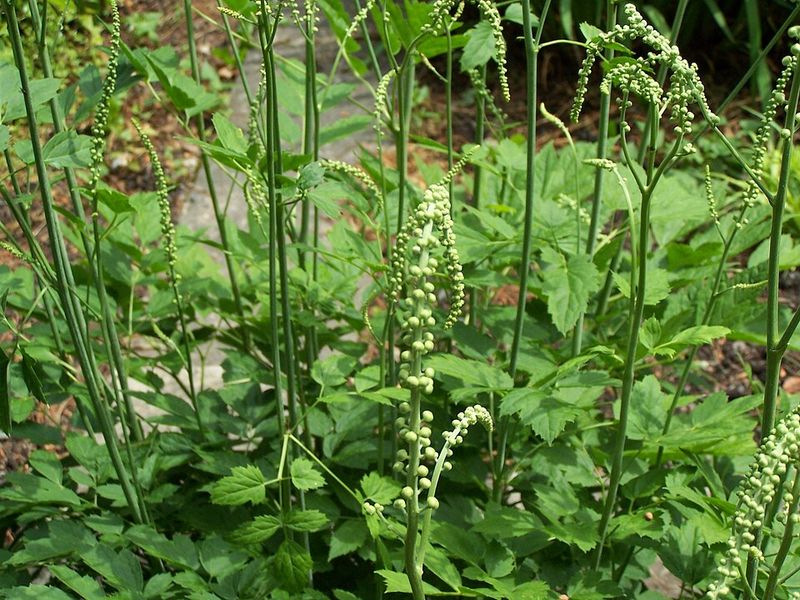
When a shady bed needs drama, black cohosh delivers it in a way that few other native perennials can match. Actaea racemosa sends up tall, slender spires of white flowers that can reach four to six feet or more above a base of bold, deeply cut foliage.
The flowers have a soft, feathery appearance and a faint fragrance that carries on warm summer evenings. In June, the foliage is fully developed and lush, with the flower spikes beginning to emerge from larger, more established clumps.
The leaves themselves are worth growing this plant for. They are large, compound, and deeply lobed, with a rich dark green color that contrasts beautifully with finer-textured plants around them.
The overall effect in a shady bed is one of confident, layered presence. This is not a plant for tight spaces or small edging situations.
It needs room to develop properly and works best in the middle to back of a larger shade bed. It also fits along a woodland edge where its height reads as a natural feature rather than an overgrown accident.
Black cohosh prefers rich, moist, well-drained woodland soil and part shade. It is slow to establish but long-lived once settled in.
Patience is essential with this plant. The first season or two may look underwhelming, but by the third or fourth year, a well-placed clump becomes a genuine focal point.
One important note for sourcing: always buy nursery-propagated plants from reputable native plant nurseries.
Wild populations of black cohosh have been impacted by over-collection in some areas, so purchasing nursery-grown stock is the responsible choice.
Avoid medicinal claims and focus on what this plant truly offers, which is striking ornamental value in a shaded setting.
7. Spicebush Gives Shady Corners Native Shrub Power
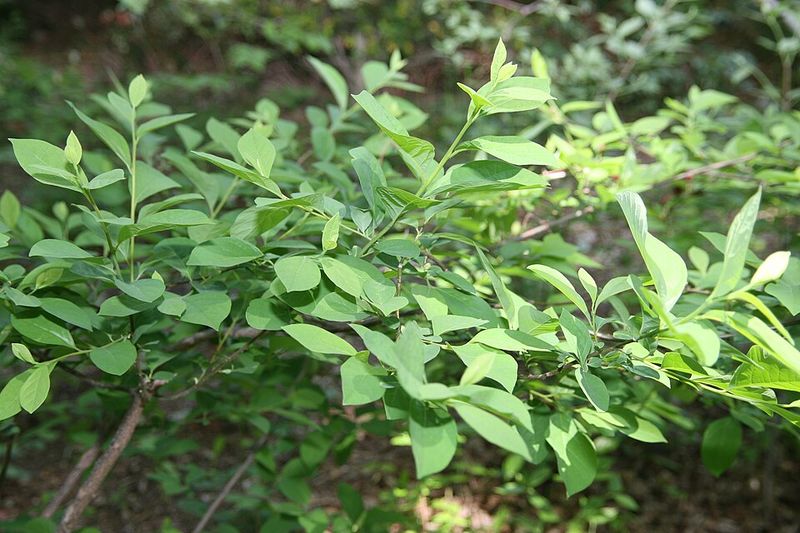
Not every shady corner needs another perennial. Sometimes what a bed really needs is a native shrub that can anchor a larger space, define a boundary, and provide multi-season interest without constant intervention.
Lindera benzoin, commonly called spicebush, fills that role with quiet authority. It is a native shrub found naturally in moist woodland edges and stream-side areas across this state.
It brings a sense of established, layered structure that no perennial can replicate.
In early spring, before the leaves emerge, spicebush covers its bare stems with clusters of tiny, bright yellow flowers. The display is modest compared to a forsythia, but it arrives early enough to feel like a genuine announcement that the season has changed.
By June, the shrub is fully leafed out in clean, bright green foliage that holds its color well through the heat of summer.
The leaves are elliptical and smooth, with a fresh, spicy fragrance when crushed, which is one of the most distinctive sensory details any shade plant can offer.
Spicebush prefers moist, well-drained soil and part shade, though it tolerates a range of conditions once established. It grows six to twelve feet tall over time, so it belongs at the back of a bed, along a fence line, or in a larger woodland corner.
In those spots, its eventual size is an asset rather than a problem. Plan for its mature size before planting.
Wildlife value is one of the strongest reasons to include spicebush in a native planting. It serves as a host plant for the spicebush swallowtail butterfly and provides food for birds.
Female plants produce red berries in fall, but only when a male plant is nearby for pollination. For the best fruiting display, plant at least one of each.