Why Connecticut Conservation Groups Are Targeting Common Buckthorn This Summer
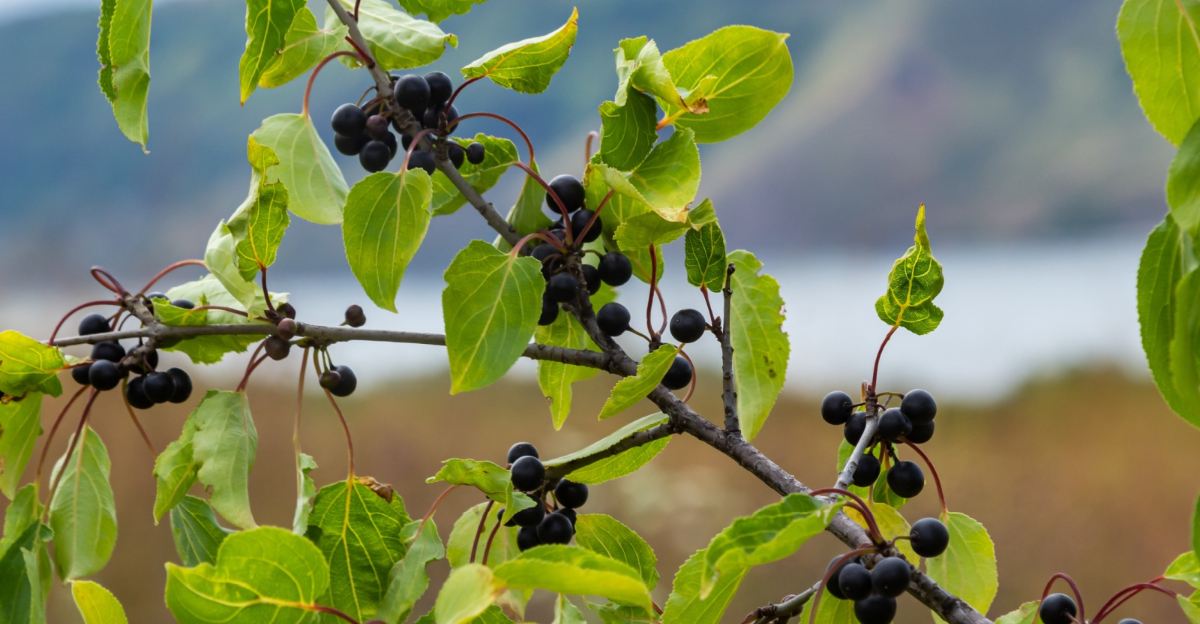
There’s a quiet invasion happening across Connecticut, and most homeowners walk right past it without a second glance.
Common buckthorn, a thorny shrub once prized for its hardy growth and dense form, has slipped out of old hedgerows and into the wild.
It now crowds forest understories, pushes out native wildflowers, and feeds its spread through birds that scatter its berries far and wide.
Land managers across Connecticut have spent years cutting it back, only to watch it creep right back in.
What makes this plant so frustrating isn’t just its thorns. It’s how easily it blends in, looking almost ordinary until you realize it’s taking over everything beneath it.
If you’ve ever spotted a dense, dark-leaved bush thriving in a shady patch of woods, you’ve probably already crossed paths with one. It’s one of the state’s most stubborn invaders.
1. Buckthorn Outcompetes Native Plants For Sunlight And Nutrients
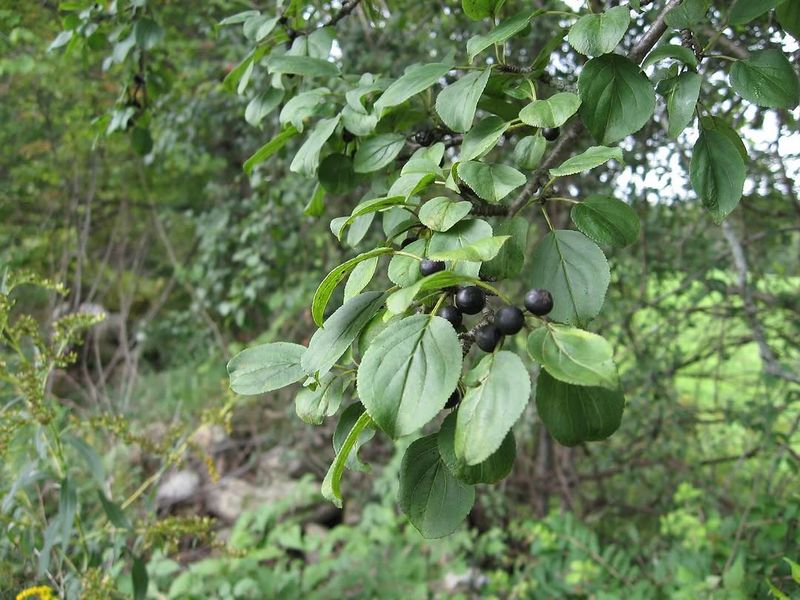
Imagine walking into a quiet woodland. Something feels oddly empty here. That emptiness has a name: buckthorn. It steals sunlight before natives even wake up.
This shrub leafs out weeks ahead of schedule. While oaks and maples rest, buckthorn gets busy.
Its branches spread into thick, leafy canopies fast. Sunlight gets trapped before reaching the ground.
Underneath, native wildflowers wait in vain. Their seeds need light that simply never comes.
Spring beauties, trilliums, and young tree seedlings all suffer. Each one struggles quietly in the shade.
Nutrients disappear just as fast as sunlight. Buckthorn roots pull resources aggressively from surrounding soil.
Native plants, adapted to slower competition, can’t keep pace. They’re left scrambling for whatever remains.
Even fallen buckthorn leaves cause chemical disruption underground. Soil microbes shift, altering nutrient cycles further. This isn’t fair competition between equals. It’s a sustained pressure on biodiversity.
Forests that once held layered, diverse plant life become eerily uniform. Buckthorn dominates every available niche.
Birds and insects depending on native plants lose food sources too. The damage spreads beyond just plants.
Walk through an infested area and notice the silence. Fewer flowers mean fewer pollinators buzzing around.
The ripple effects touch entire ecosystems, not just individual species. Sunlight and nutrients become the limiting resources in this competition.
Buckthorn consumes a disproportionate share of both resources. Native plants simply cannot compete on these terms.
Left unchecked, this imbalance only deepens with time. Removing buckthorn early gives natives a fighting chance again.
2. Disrupts Local Ecosystems By Forming Dense Monocultures
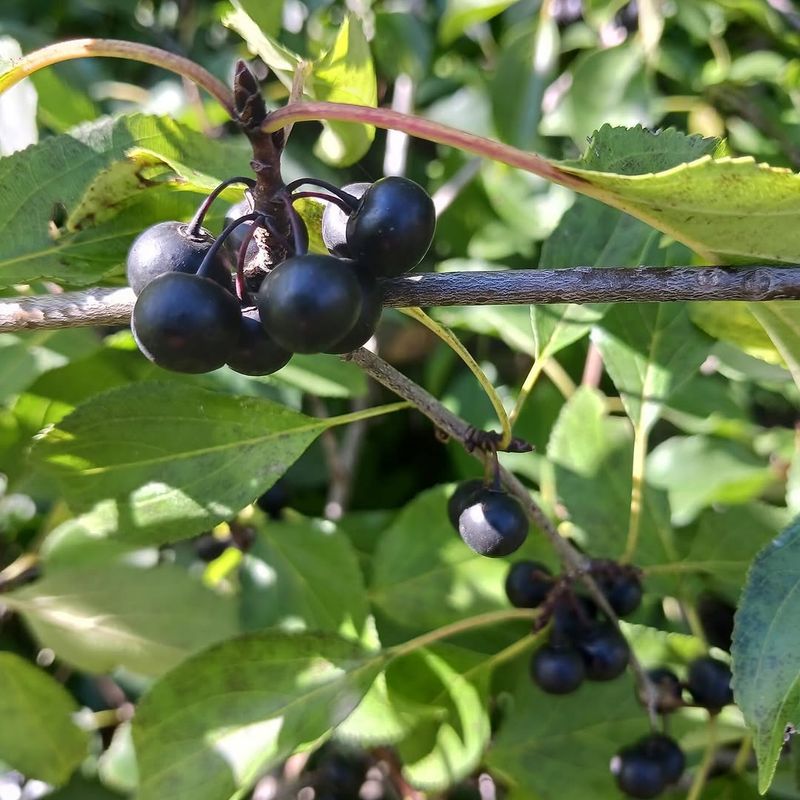
Picture a forest that used to hum with life. Now it’s eerily silent and still. Buckthorn did this, one patient season at a time. It spreads until nothing else survives nearby.
Where ferns and wildflowers once thrived, only buckthorn remains. The understory becomes a single, lifeless wall of green. This isn’t accidental. Buckthorn actively crowds out every competing species around it.
Its seeds spread fast through bird droppings everywhere. Birds eat the berries, then scatter buckthorn far and wide.
Within a few years, dense thickets cover entire hillsides. Diversity declines sharply, leaving one dominant invasive species.
Your Connecticut Garden Changes Every Week. Your Plan Should Too.
Gardening in Connecticut changes quickly throughout the season. Every Friday you’ll receive a simple weekly plan showing exactly what to plant, prune, fertilize, harvest, and protect so you never miss the right timing.
Monocultures might look uniform, even tidy. But they’re areas of significantly reduced ecological function.
Insects that depend on specific native plants disappear first. Without insects, birds and small mammals lose food sources too.
The food web becomes disrupted over time. Soon, an entire ecosystem shows reduced signs of life.
Soil health suffers as well under buckthorn’s reign. Its leaf litter changes microbial activity below ground.
Native seed banks become buried and forgotten. Even removing buckthorn later doesn’t guarantee quick recovery.
Wetlands and woodlands alike fall victim to this pattern. Buckthorn doesn’t care about habitat type or location.
It simply takes over wherever conditions allow. The result is always the same flattening of biodiversity.
Walk through a buckthorn monoculture and feel the difference. Fewer birds singing, fewer wildflowers blooming, fewer signs of life.
Restoring balance means removing buckthorn before monocultures fully form. The longer we wait, the harder recovery becomes.
3. Releases Chemicals Into Soil That Harm Other Plants
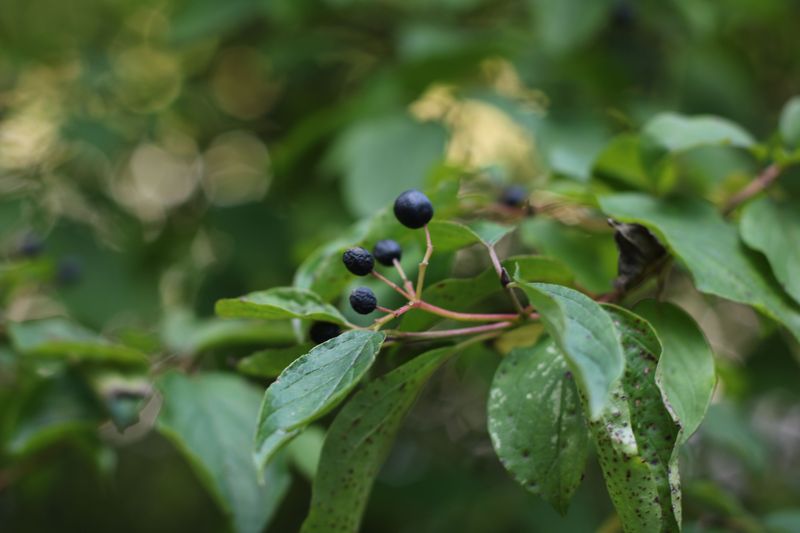
Some plants fight with branches and leaves. Buckthorn fights with chemistry instead. Its roots and leaf litter release compounds called allelochemicals. These substances seep quietly into surrounding soil.
This process is known as allelopathy among scientists. This is essentially a chemical competition strategy.
The chemicals interfere with seed germination nearby. Native plant seeds struggle to sprout at all.
Even established roots can suffer from exposure. Nutrient absorption becomes harder for neighboring vegetation.
Buckthorn alters the shared soil conditions to its own advantage. Other species pay the price for its survival.
Soil microorganisms feel the impact too. Fungi and bacteria that support healthy plant growth get disrupted.
These microbes normally help roots absorb nutrients efficiently. Without them, native plants weaken even further.
This creates a vicious, self-reinforcing cycle. Weakened natives can’t compete, so buckthorn spreads more.
More buckthorn means more chemical release into soil. The damage compounds with every passing season.
Research suggests altered soil chemistry under buckthorn stands, with possible shifts in pH levels and nitrogen cycling.
These changes can persist even after buckthorn removal. Restoration efforts sometimes take years to show results.
Understanding this chemical interference changes how we fight back. It’s not just blocking sunlight or stealing nutrients outright.
It’s actively reshaping the soil to favor itself. Few invasive species are this thorough in their approach. Soil remediation must become part of any removal plan.
4. Provides Poor Nutrition For Native Birds Despite Berry Abundance
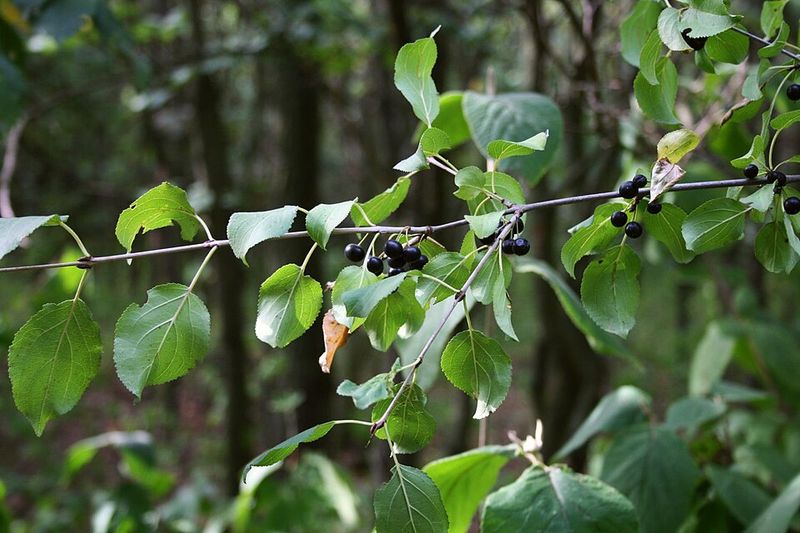
Berries everywhere look like a feast. For birds, buckthorn is closer to junk food. Its branches sag under heavy clusters each fall. The sight seems like nature’s generosity at work.
But these berries lack proper fat content. Native berries offer far richer nutritional value instead.
Birds need high-fat fuel before winter migration begins. Buckthorn berries simply don’t deliver that energy.
Worse, the berries act as a laxative. Birds that eat too many experience rapid digestion.
This means seeds pass through quickly, unprocessed properly. The birds gain little real nutrition from the meal.
Meanwhile, energy reserves needed for flight stay depleted. Some birds arrive at migration weakened and underprepared.
Compare this to native shrubs like dogwood or viburnum. Their berries offer richer fat content instead.
Birds eating those build proper energy reserves. Buckthorn offers volume without any real substance.
It’s a mismatch between berry abundance and nutritional value. Birds are drawn in by sheer berry quantity. This abundance backfires for the broader ecosystem too.
Birds spread buckthorn seeds across new territories rapidly. Each dropping becomes a potential new invasion site.
The poor nutrition cycle directly fuels further spread. Even fruit-eating insects avoid these berries when possible.
That absence further limits food options for insectivores. The illusion of plenty hides a serious problem. Quantity without quality still leaves wildlife struggling.
Recognizing this gap matters for conservation planning. Birds need native plants, not empty-calorie substitutes everywhere.
5. Hosts Soybean Aphid And Other Agricultural Pests
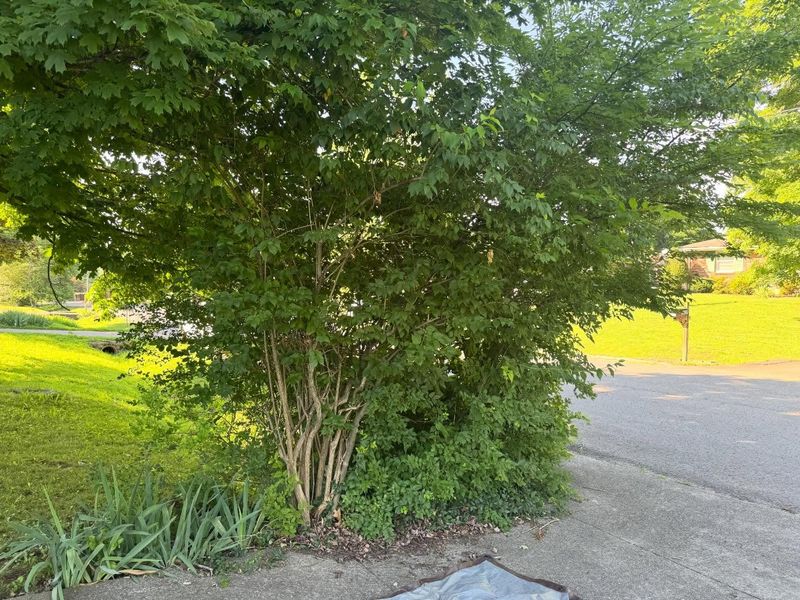
Farmers have their own buckthorn problem too. It’s not just a forest issue anymore. Buckthorn serves as a winter host for soybean aphids.
These tiny pests cause major crop damage. Aphids lay eggs on buckthorn each autumn. The eggs survive cold months safely there.
Come spring, aphids hatch and multiply rapidly. They then migrate straight into nearby soybean fields.
This relationship makes buckthorn a launching pad. Without it, aphid populations would struggle more.
Soybean aphids drain plant sap from crops directly. Heavy infestations reduce yields significantly across affected fields.
Farmers near buckthorn-infested areas often see worse outbreaks. The connection isn’t coincidental or rare.
Research suggests a link between buckthorn presence and aphid severity, and removing nearby buckthorn may help reduce pest pressure.
Soybean aphids aren’t buckthorn’s only agricultural connection. Other pests and plant diseases use buckthorn similarly.
It acts as a reservoir for various pathogens. These threats then spread into surrounding farmland.
This turns an ecological problem into an economic one. Crop losses translate directly into real financial damage.
Farmers now factor buckthorn removal into pest management plans. It’s no longer just a conservation concern.
This pest connection adds urgency to control. The threat isn’t just to wildflowers and woodlands.
It’s to dinner tables and farm economies too. Buckthorn’s web of damage stretches further than most realize.
6. Spreads Rapidly Through Bird-Dispersed Seeds
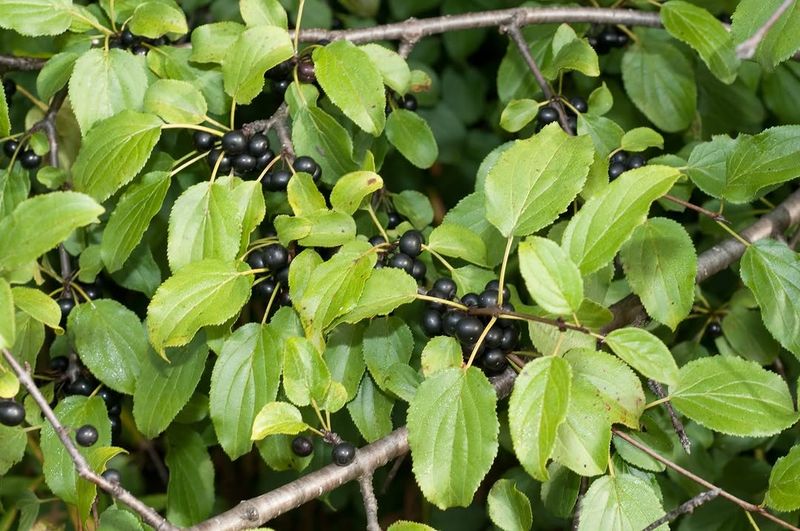
One bird, one berry, one new invasion. That’s all it takes to start. Buckthorn produces berries in massive, eye-catching quantities. Birds can’t resist the easy meal.
After eating, birds fly off to new locations. Seeds travel inside them across long distances. Digestion doesn’t destroy buckthorn seeds at all. In fact, it often helps them germinate faster.
This means birds become unwitting accomplices in spread. Every dropping carries potential for new growth.
A single bird might visit dozens of spots daily. Each stop becomes a possible buckthorn nursery.
This dispersal method explains buckthorn’s rapid expansion. It doesn’t need human help to travel far.
Forests, fence lines, and roadsides all become targets. Birds don’t recognize property lines or ecosystems.
Seeds dropped in fertile soil sprout within weeks. Buckthorn seedlings establish themselves remarkably fast.
Once rooted, they grow aggressively from the start. Few native seedlings can match that early speed.
This creates a self-reinforcing cycle. More buckthorn means more berries, then more birds. More birds mean more seeds scattered further still. Conditions favor continued buckthorn spread.
Stopping this cycle requires removing seed sources directly. Waiting only allows the spread to accelerate.
Every uncut buckthorn shrub represents thousands of future seeds. The window for control keeps narrowing daily.
7. Degrades Wildlife Habitat By Crowding Out Native Shrubs
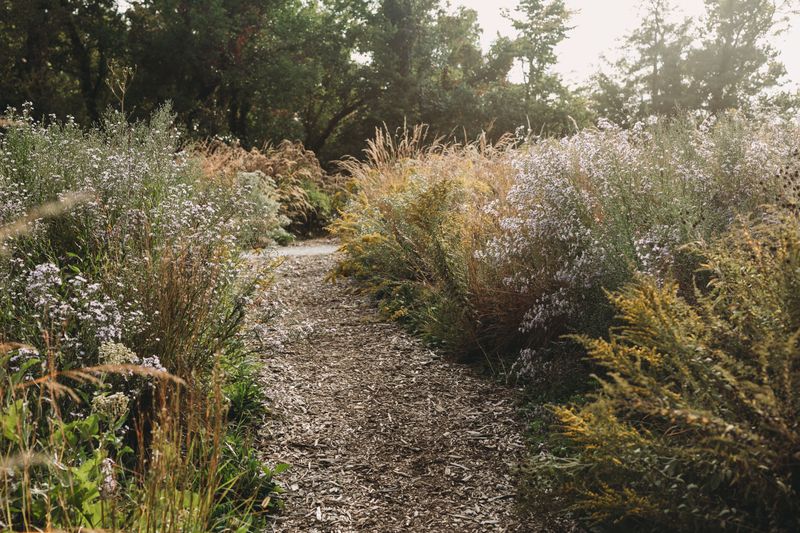
A healthy shrub layer means more than greenery. It means shelter, food, and survival for wildlife. Buckthorn doesn’t share that space well. It crowds out native shrubs almost completely.
Dogwood, hazelnut, and viburnum once filled these spaces. Now buckthorn dominates where they used to grow.
This shift matters more than people realize. Different shrubs serve very different ecological roles.
Native shrubs provide nesting sites for songbirds. Buckthorn’s branch structure offers far less protection.
Some research indicates nests in buckthorn may face higher predation rates, since the dense branches can expose nests more easily.
Small mammals also lose critical food sources. Native shrub nuts and berries disappear from the landscape.
Without diverse shrubs, habitat structure becomes flat and simplified. Wildlife needs layers, not just one dominant species.
Insects suffer too under this homogenized canopy. Many depend on specific native plants to complete life cycles.
When those plants vanish, insect populations decline locally. This ripple effect touches every level above them.
Deer, rabbits, and other browsers see impacts as well. Their preferred food plants become harder to find.
Some animals adapt by leaving the area entirely. Others simply decline in number over time. The visual change might seem subtle at first glance. Green is still green to a passing glance.
But underneath that uniform color lies real ecological loss. Restoring native shrubs remains essential for true habitat recovery.
8. Threatens Forest Regeneration By Shading Out Tree Seedlings
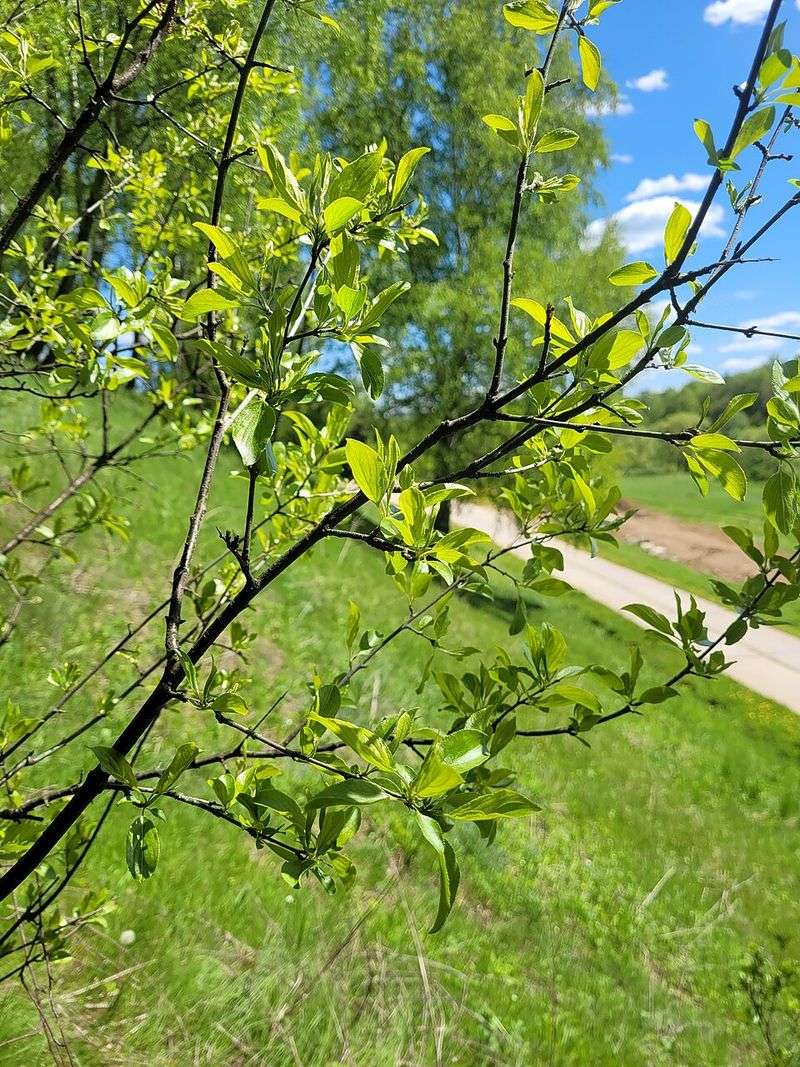
Forest regeneration depends on conditions at ground level, which buckthorn disrupts. Tree seedlings need sunlight to survive their first years.
Buckthorn blocks that sunlight almost entirely. Its dense canopy forms low and thick. Light barely penetrates down to the forest floor.
Oak, maple, and hickory seedlings struggle without proper light. Many simply die before reaching maturity.
This creates a troubling gap in forest succession. Old trees eventually fall, but nothing replaces them.
Without young trees coming up, forests start aging unevenly. Eventually, the canopy itself begins thinning out.
Forest studies have observed this pattern in heavily infested areas, with notably fewer young trees regenerating nearby.
Some research has found limited oak regeneration in heavily infested areas. The seedlings simply couldn’t compete for light.
This isn’t a short-term problem either. Forest regeneration happens over decades, not seasons.
Every year buckthorn persists, the regeneration gap widens further. Future forests may look different as a result.
Fewer oak and hickory trees mean less mast production. Wildlife depending on acorns and nuts will be affected too.
The forest’s entire structure shifts toward instability. Without intervention, recovery becomes increasingly difficult.
This threat extends far beyond a single growing season. It raises questions about whether forests can sustain themselves long-term.
Removing buckthorn early gives seedlings a real chance. Waiting too long may close that window for good.