Signs Your Blueberry Bushes Are Struggling With Georgia Summer Heat
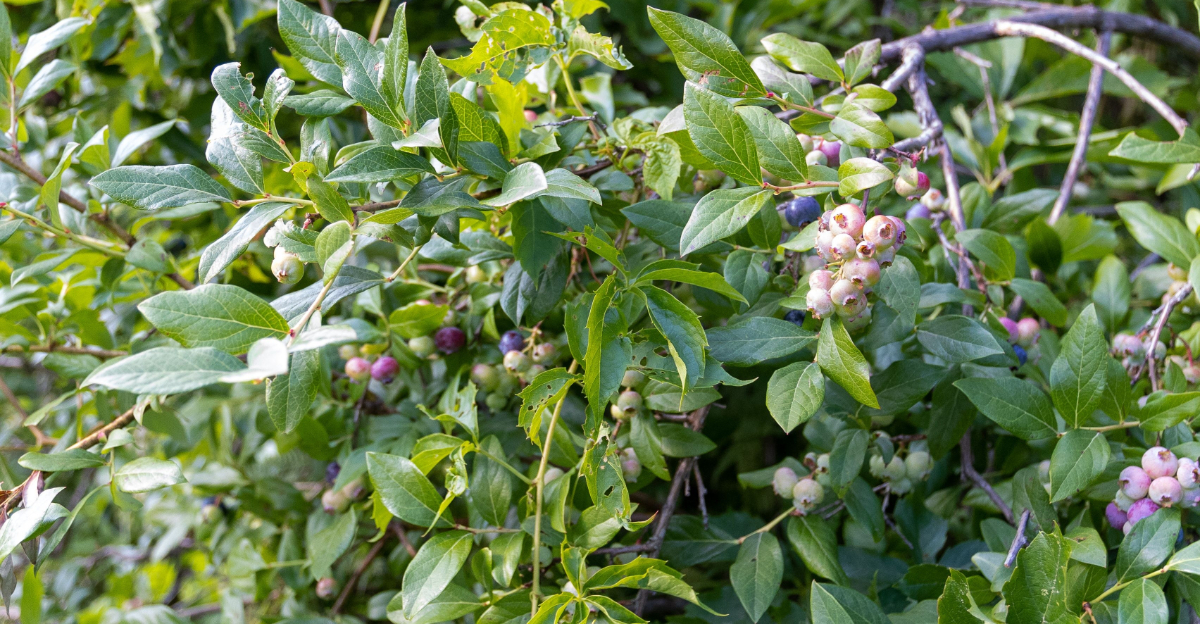
Blueberry bushes rarely stop thriving all at once. The changes usually begin with small details that are easy to dismiss.
A few leaves may look different, growth may slow down, or the plant simply loses the healthy appearance it had earlier in the season. Those early clues are easy to miss when everything else in the garden is growing.
Summer can be demanding, even for well established plants. Long stretches of high temperatures place extra pressure on blueberry bushes, and they often respond before gardeners realize what is happening.
Waiting too long to pay attention can make recovery much more difficult.
In Georgia, hot summer weather can leave clear signs that a blueberry bush is under stress.
Spotting those changes early gives you a much better chance to help the plant recover and keep it in good shape for the rest of the growing season.
1. Leaf Edges Turning Brown Or Crispy
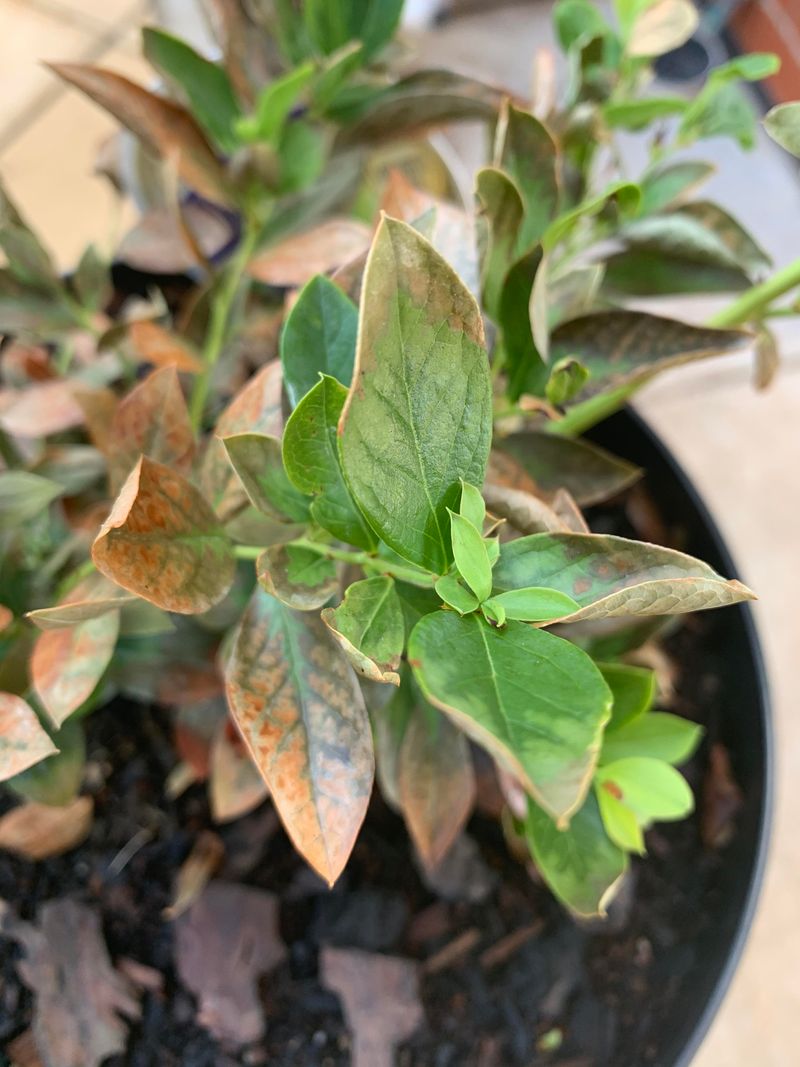
Crispy leaf edges are one of the earliest signs that your blueberry bush is in trouble. When temperatures spike and soil moisture drops, the plant cannot pull enough water to keep its leaf tips hydrated.
Edges turn brown, dry out, and curl inward.
Gardeners sometimes mistake this for a disease or pest problem. It is usually neither.
Heat scorch happens when water loss through the leaves outpaces water uptake through the roots. Sandy or fast-draining soils make this worse because moisture disappears quickly.
Mulching heavily around the base of your bush helps a lot. A four-inch layer of pine bark or wood chips keeps soil cooler and holds moisture longer between waterings.
Pine straw works well too and is easy to find across the region.
Check your watering schedule before assuming anything else is wrong. Blueberry bushes need consistent moisture during summer, especially during fruiting.
Deep watering two to three times per week is usually better than light daily watering.
If browning only appears on one side of the plant, consider whether that side faces direct afternoon sun. Afternoon shade from a nearby structure or taller plant can reduce scorch significantly.
Repositioning a portable shade cloth is a simple and affordable fix worth trying.
2. Berries Shriveling Before They Ripen
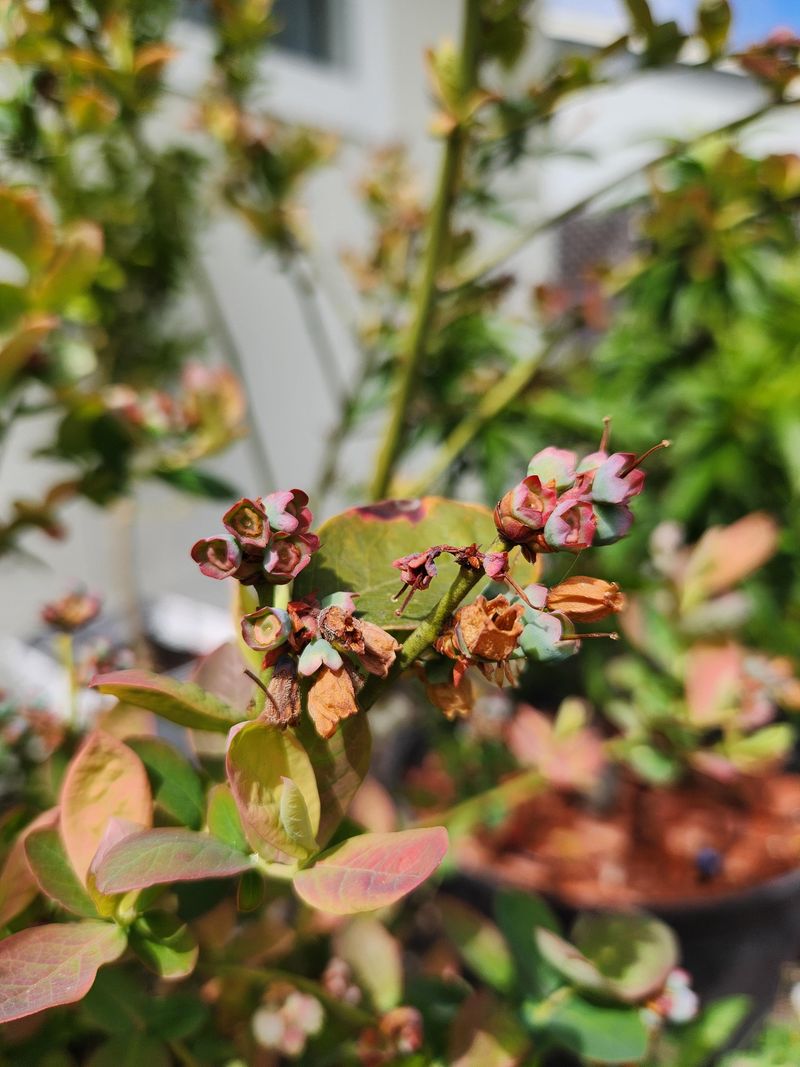
Shriveled berries still on the bush are a frustrating sight, especially when you have been waiting weeks for a full harvest. Heat causes moisture inside developing fruit to evaporate faster than the plant can replace it.
Berries shrink, wrinkle, and sometimes harden before turning fully blue.
Inconsistent watering makes this worse. If your bush goes through wet-dry cycles, berries may crack or shrivel as water availability swings.
Steady, even soil moisture is critical during the fruit development stage.
Raised beds and containers dry out faster than in-ground plantings, so they need more frequent monitoring. Stick your finger two inches into the soil.
If it feels dry at that depth, water immediately and do not wait for the next scheduled day.
Hot afternoon sun directly hitting ripening clusters can also cause shriveling even when soil moisture is fine. Providing light shade during the hottest hours, roughly between 1 p.m. and 4 p.m., can protect berries without reducing overall plant health.
Your Georgia Garden Changes Every Week. Your Plan Should Too.
Gardening in Georgia changes quickly throughout the season. Every Friday you’ll receive a simple weekly plan showing exactly what to plant, prune, fertilize, harvest, and protect so you never miss the right timing.
Rabbiteye varieties tend to handle heat better than southern highbush types, but no variety is completely immune to extreme conditions.
If shriveling happens every summer, consider whether your current variety is the best match for your specific microclimate and soil type.
Switching varieties is a long-term fix worth considering.
3. Leaves Wilting Even After Watering
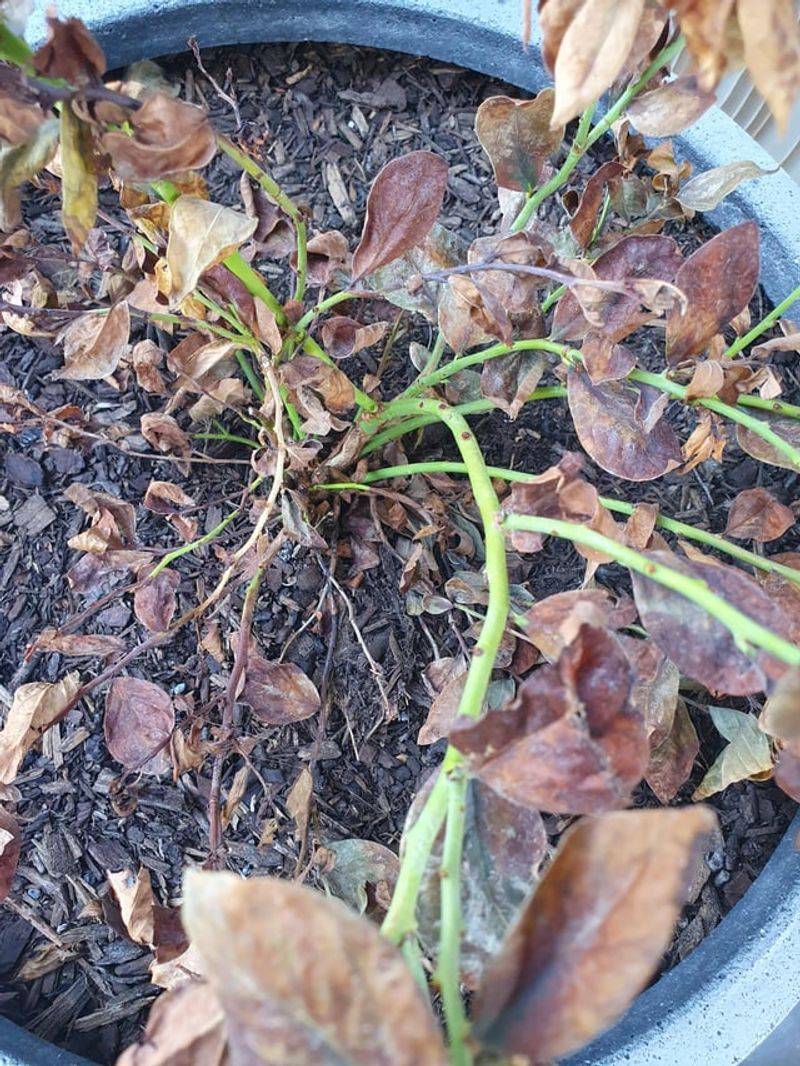
Watering your bush and still seeing droopy, limp leaves is confusing and concerning. Post-watering wilt is a real phenomenon, and heat is usually the reason behind it.
When air temperatures are extreme, plants lose water through their leaves faster than roots can absorb it, even in moist soil.
Check the soil first to rule out underwatering. If the soil feels damp but leaves still droop, the problem is likely heat load rather than drought.
Roots in very hot soil, above 85 degrees Fahrenheit, also become less efficient at water uptake.
Mulch is your best tool here. Thick mulch insulates the root zone and keeps soil temperatures significantly cooler than bare ground.
It also reduces evaporation, which means moisture stays available longer after each watering session.
Wilting that recovers by morning is usually heat-related and not a sign of permanent damage. Wilting that persists overnight could indicate root rot, especially if the soil has been waterlogged.
Overwatering in heavy clay soils creates oxygen-poor conditions that harm roots.
Afternoon shade from a temporary shade cloth, fence, or nearby shrub can reduce wilting dramatically. Even two to three hours of blocked afternoon sun makes a measurable difference in plant stress.
4. Fruit Dropping Before Harvest
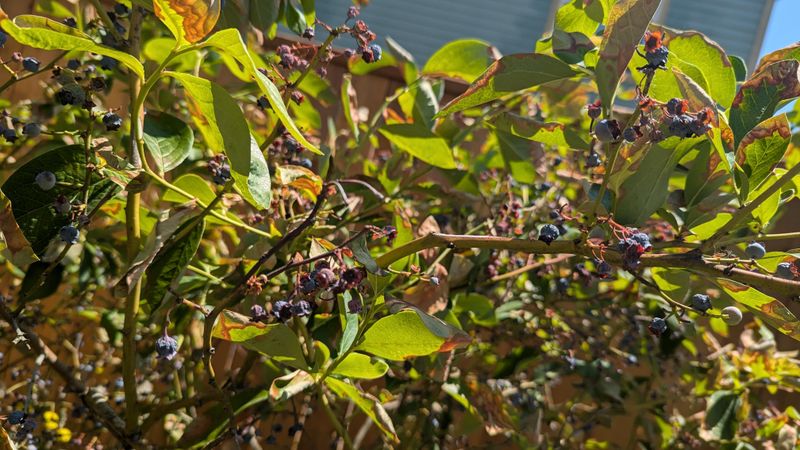
Finding unripe berries scattered on the ground beneath your bush is a clear distress signal. Premature fruit drop is the plant’s way of reducing its workload when stress becomes too great.
Heat, drought, or both push the plant to shed fruit it cannot support.
Blueberry bushes are practical in a tough way. When resources get tight, they prioritize survival over fruit production.
Dropping immature berries reduces water demand and allows the plant to focus energy on keeping its core structure healthy.
Watering deeply and consistently during the fruit-set and development stages reduces this risk. Irregular moisture is a common trigger.
If rain has been scarce and you have not compensated with supplemental irrigation, fruit drop is a predictable outcome.
Excess nitrogen fertilizer during summer can also contribute. Heavy feeding encourages lush leaf growth, which increases water demand and can trigger stress-related drop.
Hold off on any fertilizer applications once summer heat peaks.
Check for pest activity too, since certain insects damage fruit stems and cause early drop that looks similar to heat stress. A quick visual inspection of stems and nearby soil can help you rule that out.
If no pests are visible and soil moisture is adequate, heat stress is almost certainly the cause.
Consistent care through the hottest weeks gives your bush the best chance of holding onto its remaining crop.
5. New Growth Looking Weak Or Stunted
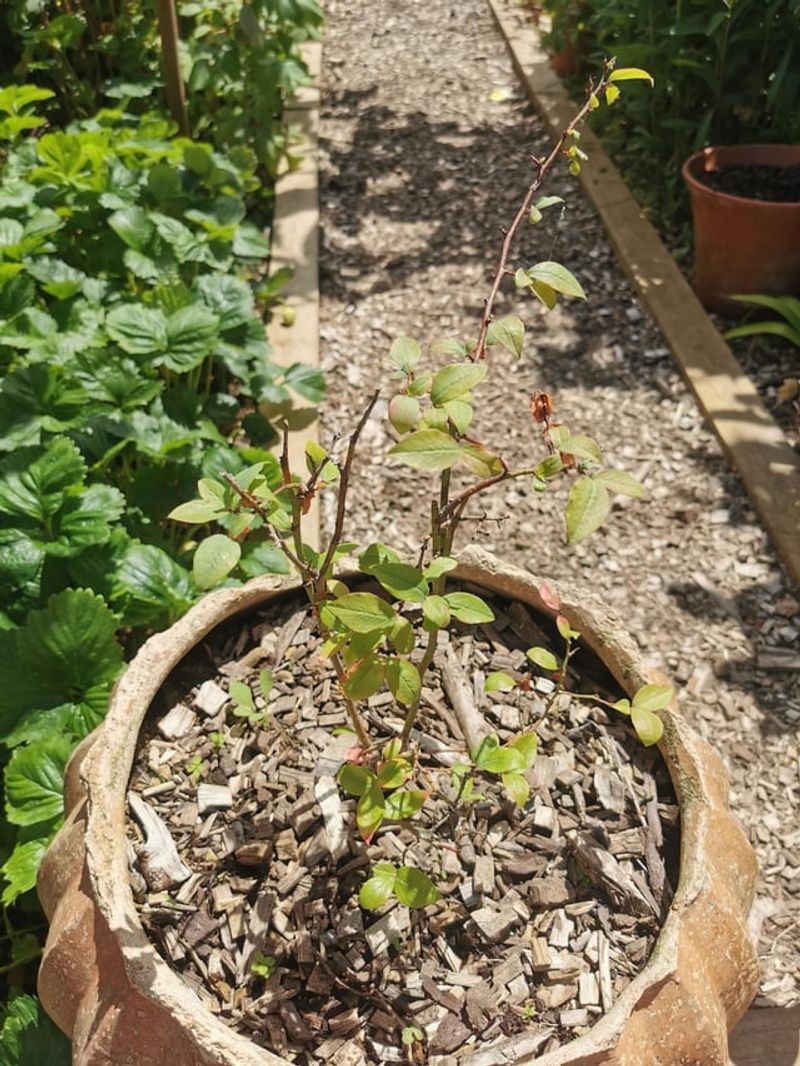
Healthy blueberry bushes push out vigorous new shoots during the growing season. Weak, short, or pale new growth during summer is a sign that something is limiting the plant’s ability to develop properly.
Heat stress is a top suspect when conditions have been extreme.
New growth is the most sensitive part of any woody plant. Young shoots have not yet developed the protective structures that older wood has.
Intense sun and heat can damage tender tissue before it fully matures, leaving growth looking bleached, curled, or stunted.
Soil pH plays a role too, though it is not always heat-related. Blueberries need acidic soil, ideally between 4.5 and 5.5.
If pH drifts higher, nutrient uptake suffers and new growth weakens even when water and temperature are managed well. Test your soil if you suspect this.
Root health directly affects shoot vigor. Compacted soil, shallow roots, or waterlogged conditions all limit what the plant can push upward.
Loosening soil around the drip line and improving drainage can make a visible difference over a few weeks.
Avoid pruning stressed plants during peak heat. Pruning stimulates new growth, and forcing new shoots during extreme conditions adds unnecessary stress.
Wait until temperatures cool in early fall before doing any significant trimming.
6. Sunscald Damage On Leaves And Stems
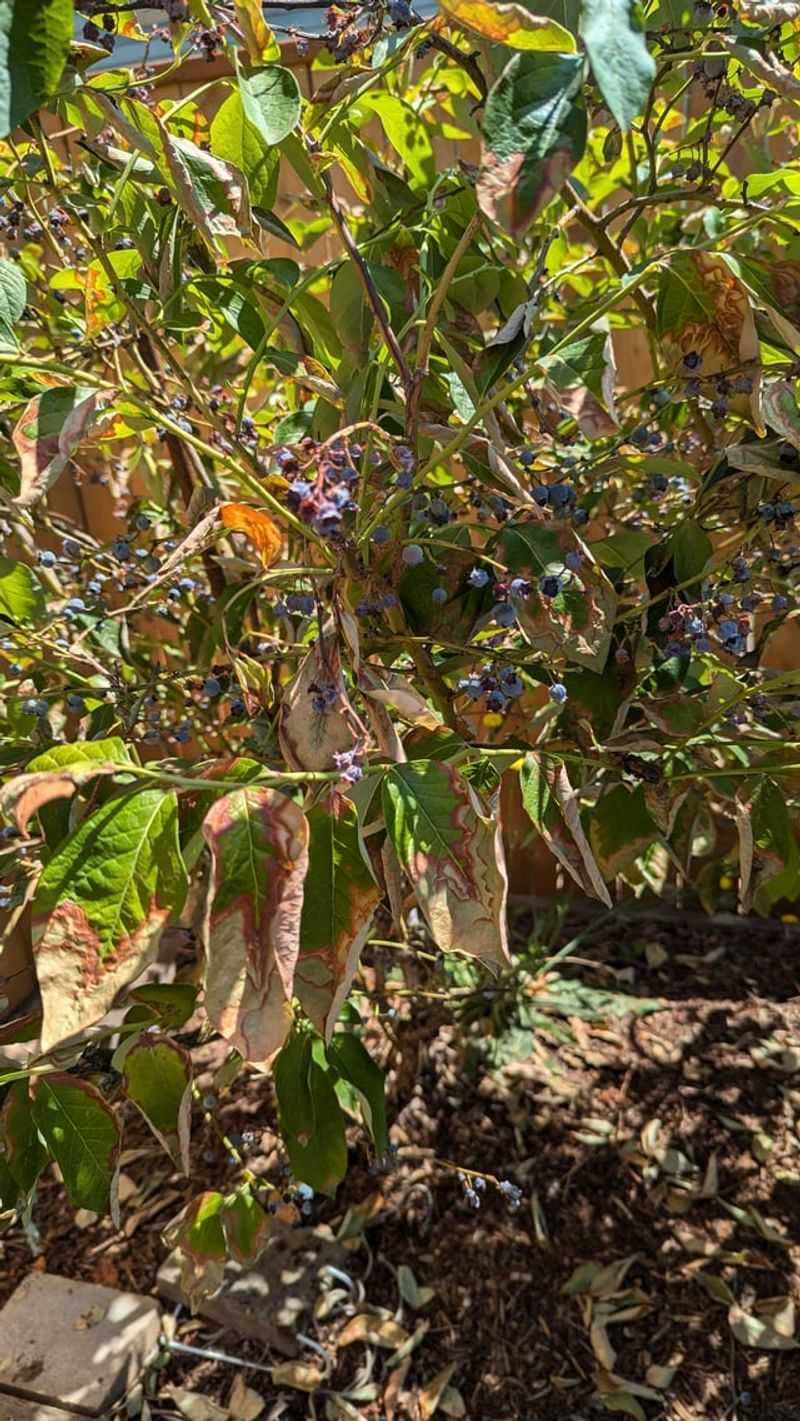
Sunscald does not look like typical wilting or browning. Instead, you notice pale, tan, or bleached patches directly on the surface of leaves and sometimes on young stems.
Those patches are essentially sunburned tissue, damaged by intense, direct radiation during the hottest part of the day.
Young stems are especially vulnerable. When the protective outer layer of a stem gets scorched, it can crack or peel.
That damage creates entry points for fungal issues and weakens the structural integrity of the branch over time.
Reflective surfaces nearby can make sunscald worse. Light bouncing off white fences, concrete, or metal structures can concentrate heat on specific parts of your bush.
Repositioning the plant or adding a barrier between the reflective surface and the bush sometimes helps more than watering adjustments.
Shade cloth rated at 30 to 40 percent light reduction provides meaningful protection without cutting off too much sunlight for fruit production. Attach it on the south and west sides of your bush where afternoon sun hits hardest.
It does not need to cover the entire plant.
Recovery from mild sunscald is possible once temperatures drop. Damaged leaves may fall naturally, and new growth will replace them in cooler weather.
Severely scorched stems may need to be removed later in the season. Keep the plant well-watered and avoid any fertilizing while it is under active heat stress.
7. Premature Leaf Yellowing During Summer
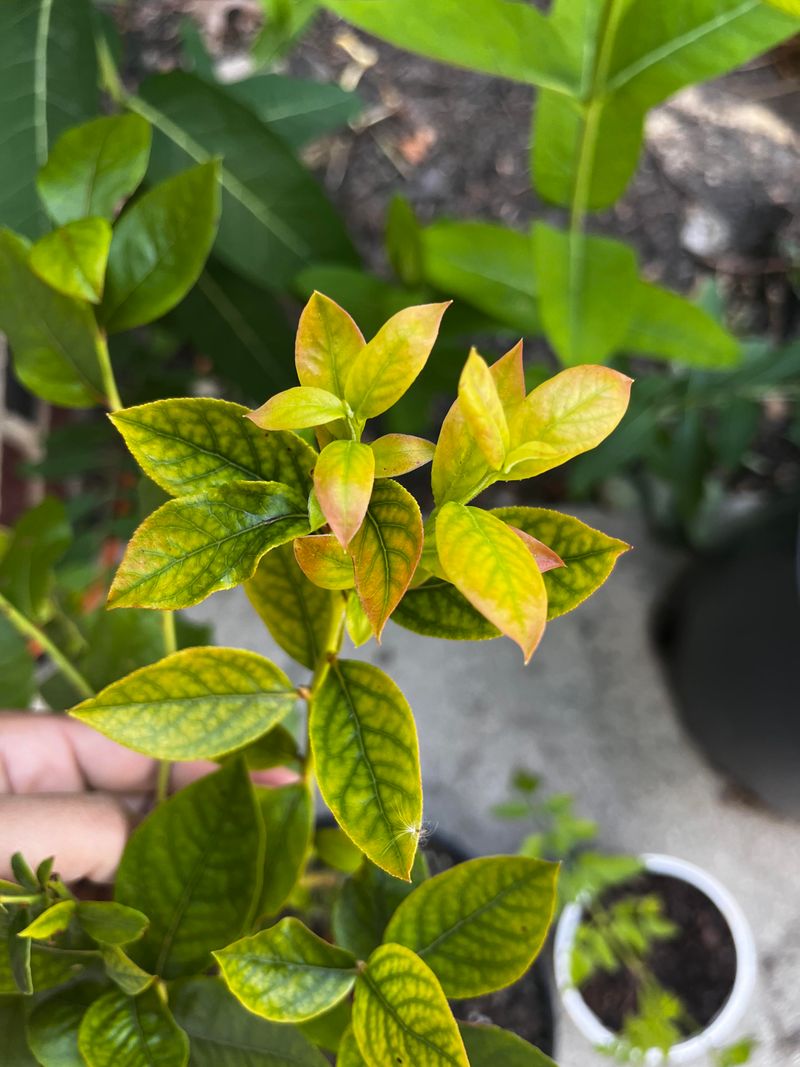
Yellow leaves in summer are not always a sign of autumn arriving early.
When blueberry leaves turn yellow during the hottest weeks of the season, it is usually a stress response tied to heat, water imbalance, or nutrient issues triggered by poor root function.
Iron chlorosis is a common cause in the Southeast. It happens when soil pH rises above the ideal range, locking out iron even when it is physically present in the soil.
Leaves turn yellow while veins stay green, creating a distinct striped pattern that is easy to identify.
Heat itself can accelerate chlorophyll breakdown in older leaves. Lower leaves often yellow first when the plant is under stress, as it redirects limited resources toward younger, more productive tissue higher on the plant.
Overwatering in heavy soils creates oxygen-poor root conditions that reduce nutrient uptake and cause yellowing similar to drought stress.
If your soil stays wet for more than two days after watering, drainage is likely the underlying issue and not heat alone.
Start with a soil test before adding any amendments. Applying sulfur to lower pH or iron sulfate to address chlorosis can help, but only if you know what the actual problem is.
Guessing at fixes can make soil conditions worse.