These Invasive Vines Are Spreading Through Georgia Yards And Tree Lines
If something is spreading along your Georgia fence line a little faster than seems reasonable, it might be worth taking a closer look.
Georgia’s long, warm, humid growing season is ideal for a lot of plants, including several invasive vines that can move through yards, tree lines, and wooded edges with surprising speed.
Some of these vines have been around for decades, originally introduced as ornamentals or ground stabilizers before their spreading habits became apparent. Others just showed up and made themselves at home.
Left unchecked, they can shade out native plants, put stress on shrubs, and add serious weight to established trees over time.
The good news is that early identification gives homeowners a real head start, and several of these vines are recognizable once you know what to look for.
1. Kudzu Covers Trees And Open Edges Fast
Few vines have earned the kind of reputation that kudzu has across the Southeast.
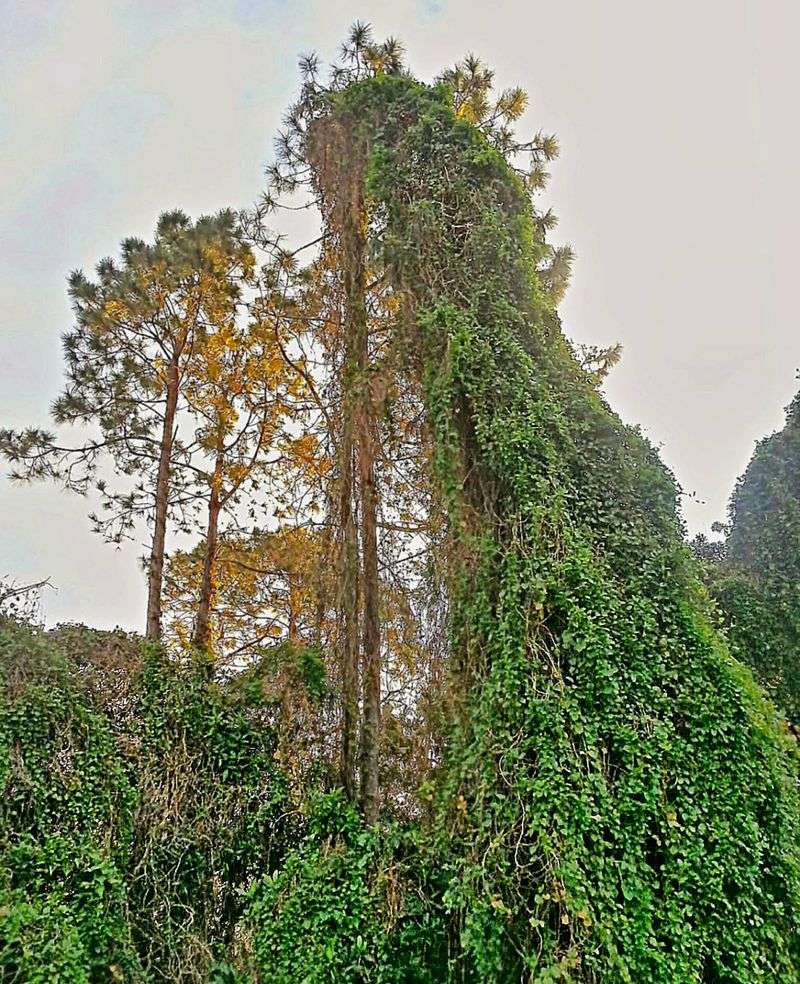
Along Georgia roadsides, tree lines, and open disturbed edges, kudzu can spread at a startling pace during warm months, covering fences, shrubs, and entire trees under a thick blanket of large green leaves.
It was introduced in the late 1800s and later promoted for erosion control, but it quickly became one of the most recognized invasive plants in the region.
Kudzu grows as a woody, climbing vine with large three-part leaves and a strong root system that can store enormous amounts of energy.
In Georgia’s humid summers, it can spread across open edges and up into tree canopies, blocking sunlight from the plants below.
Trees covered for extended periods can weaken significantly as their ability to photosynthesize is reduced.
Homeowners near wooded lots, vacant land, or disturbed edges may notice kudzu moving toward their yards from nearby areas. Catching it early, before the roots become deeply established, makes management far more manageable.
Repeated cutting of stems at ground level during the growing season can help reduce its spread, though full removal often requires persistence across multiple seasons.
2. Japanese Honeysuckle Spreads Through Yard Borders
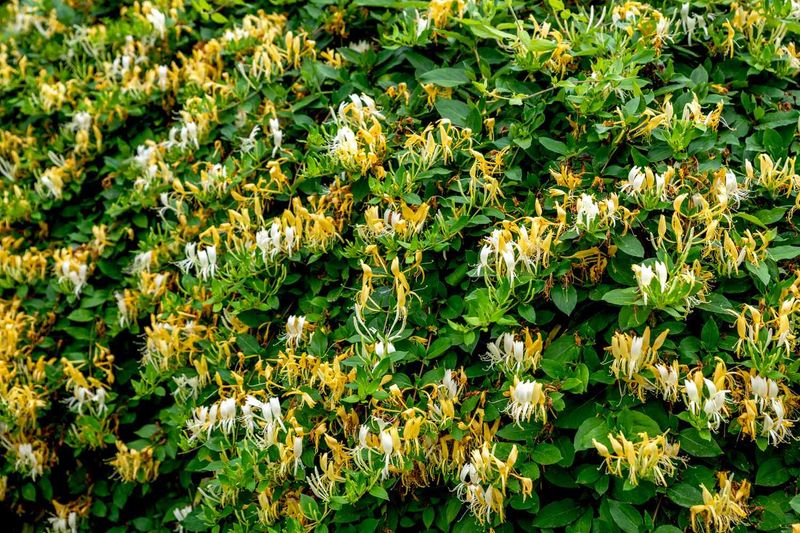
The sweet scent of Japanese honeysuckle along a yard border might seem pleasant at first, but this vine has a habit of spreading much farther than most homeowners expect.
It twines through shrubs, climbs fences, and weaves through native vegetation along wooded edges and disturbed borders throughout Georgia.
What starts as a few stems near a fence can gradually expand into a thick tangle that smothers low-growing plants beneath it.
Japanese honeysuckle has semi-evergreen to evergreen leaves in Georgia’s mild winters, which means it can keep growing and spreading during seasons when many other plants slow down.
Its white and yellow tubular flowers appear in spring and early summer and have a recognizable fragrance.
Birds eat the small dark berries and spread seeds into natural areas, which is one reason this vine has moved so widely beyond cultivated landscapes.
Yard borders, fence rows, and the edges where lawns meet wooded areas are common spots where Georgia homeowners first notice this vine. Early removal of young stems and seedlings is easier than managing established tangles.
Your Georgia Garden Changes Every Week. Your Plan Should Too.
Gardening in Georgia changes quickly throughout the season. Every Friday you’ll receive a simple weekly plan showing exactly what to plant, prune, fertilize, harvest, and protect so you never miss the right timing.
Cutting stems and following up consistently through the growing season can help reduce its foothold along borders and mixed shrub edges.
3. English Ivy Climbs Trees And Fences
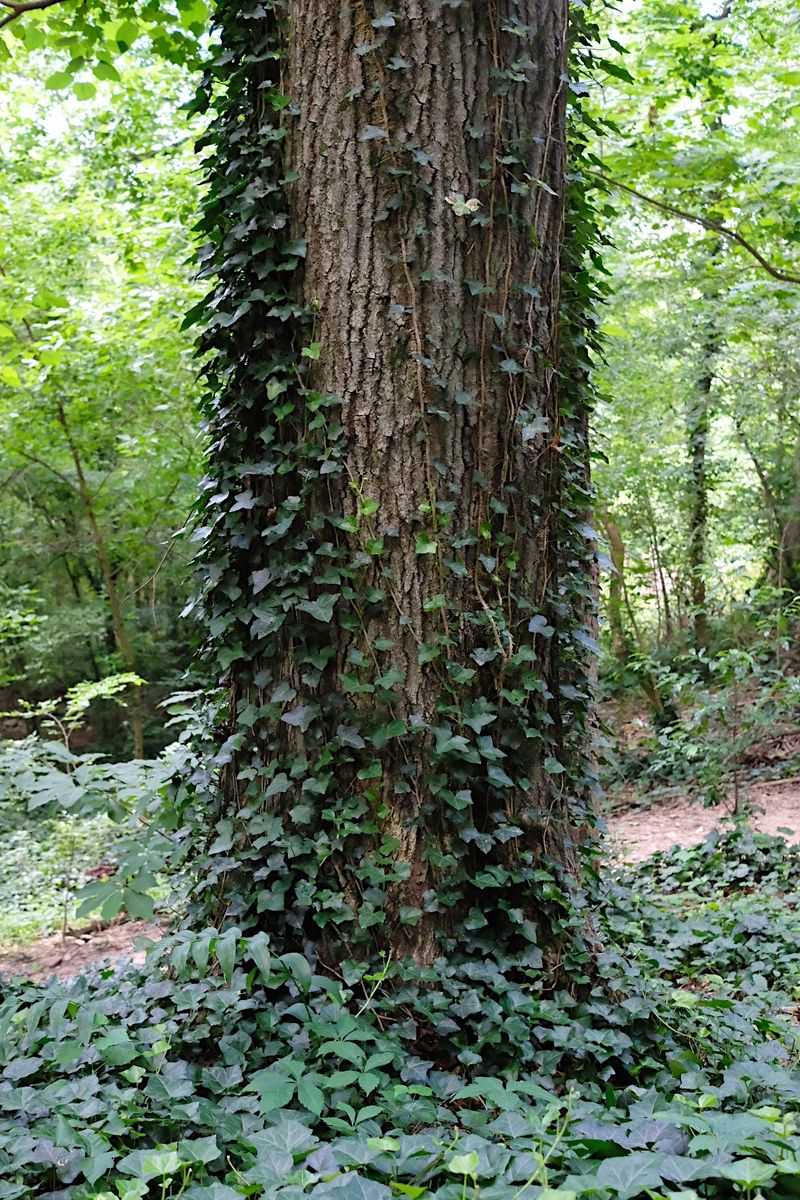
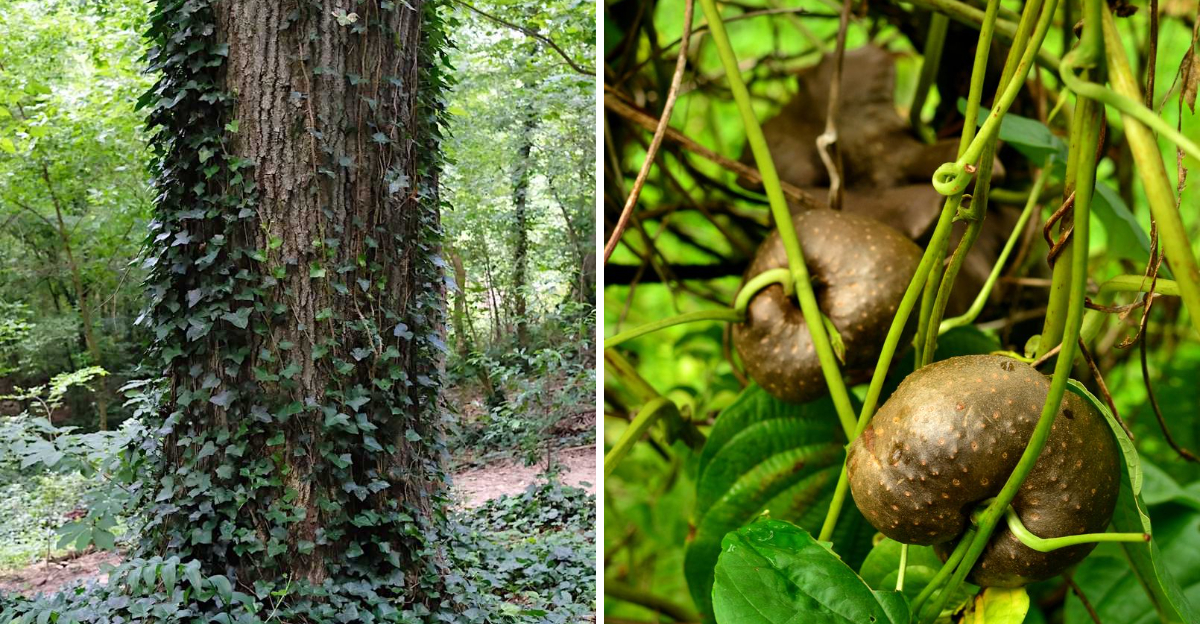
Walk through almost any older Georgia neighborhood and there is a good chance English ivy is growing somewhere nearby, whether it is carpeting a shaded slope, covering a fence, or climbing steadily up a tree trunk.
It has been widely planted as a ground cover for decades, and its ability to thrive in shade made it a popular choice for difficult spots.
Over time, though, many homeowners have discovered that it spreads well beyond where it was originally planted.
When English ivy climbs trees, it can become a serious concern. Thick ivy growth on tree trunks adds weight, retains moisture against the bark, and can make trees more vulnerable during storms.
As ivy moves up into the canopy, it shades out the tree’s own foliage. The mature form of English ivy produces berries that birds distribute into natural areas, which is how it moves from cultivated yards into Georgia’s wooded edges.
Removing ivy from trees starts at ground level by cutting all stems around the base of the trunk and allowing the upper portions to dry out naturally over time. Pulling ivy from the ground in sections, starting near the tree and working outward, helps reduce regrowth.
Consistent follow-up through the growing season is usually needed to keep it from returning.
4. Chinese Wisteria Wraps Around Tree Lines
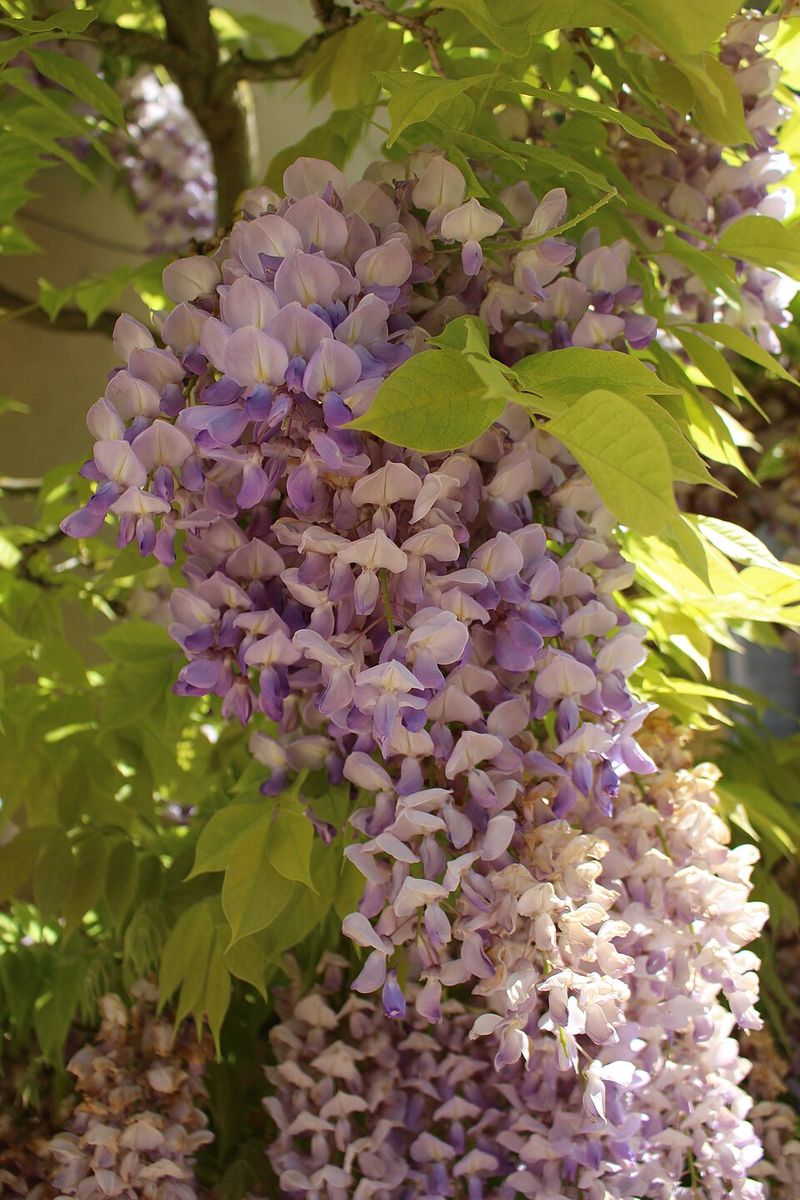
Clusters of fragrant purple flowers cascading from fence posts and tree canopies might look stunning in early spring, but Chinese wisteria is far more aggressive than its appearance suggests.
Across Georgia, this vine has escaped from old home landscapes and established itself along tree lines, wooded edges, and disturbed borders where it wraps tightly around trunks and branches.
Its woody stems can become extremely thick over time, constricting the plants it grows on.
Chinese wisteria is a vigorous climber that can reach high into the tree canopy. As it grows, its heavy stems add significant weight to branches and can cause structural damage during ice or wind events.
The dense foliage also shades out the trees and shrubs it climbs, reducing their ability to grow normally. Seeds are spread by the explosive release of seed pods, and the plant also spreads through underground runners.
Georgia homeowners near older properties or wooded lots sometimes find established wisteria that has been growing for many years. Younger plants are much easier to manage than mature, woody vines.
Cutting stems close to the ground and following up with repeat treatments through the growing season is a common management approach, though mature plants with deep root systems often require persistent effort over time.
5. Japanese Wisteria Creates Heavy Tangled Growth
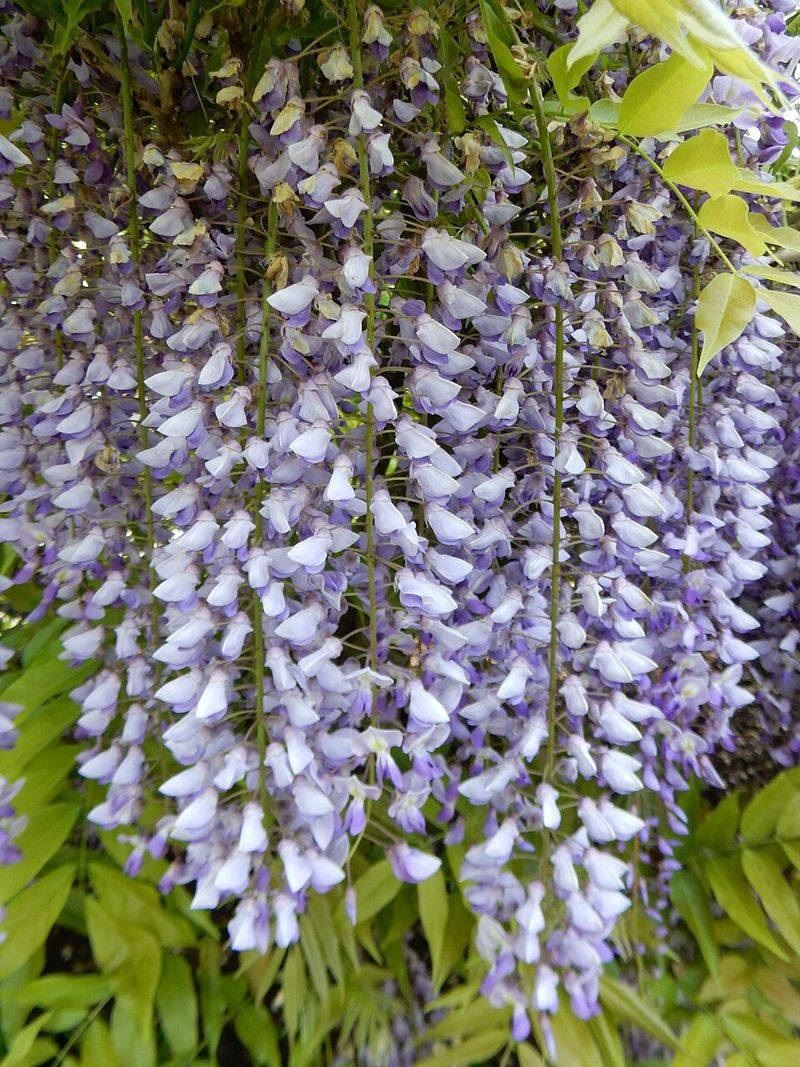
Tangled masses of woody stems climbing through shrubs and trees along a Georgia fence row are often a sign that Japanese wisteria has moved in.
Similar in appearance to Chinese wisteria, Japanese wisteria is equally aggressive and has been documented spreading from cultivated landscapes into natural areas across parts of the state.
Both species are considered invasive concerns in Georgia, and telling them apart can be tricky without close inspection of their flower and leaf details.
Japanese wisteria leafs out and blooms in spring, producing long drooping clusters of fragrant flowers in shades of violet to white.
Its twining stems wrap counterclockwise around supports, which is one distinguishing trait from Chinese wisteria, which twines clockwise.
Over time, the accumulated weight of its woody growth can put real stress on the trees and shrubs it uses for support, bending branches and restricting normal growth patterns.
Fence lines, wooded borders, and the edges of mixed shrub plantings are common spots where Japanese wisteria takes hold on Georgia properties. Catching young vines before they develop thick, woody stems makes removal considerably more straightforward.
Removing seedlings promptly and cutting established stems repeatedly through the season can slow its spread while larger, rooted plants are addressed more thoroughly over time.
6. Japanese Climbing Fern Creeps Through Wooded Edges
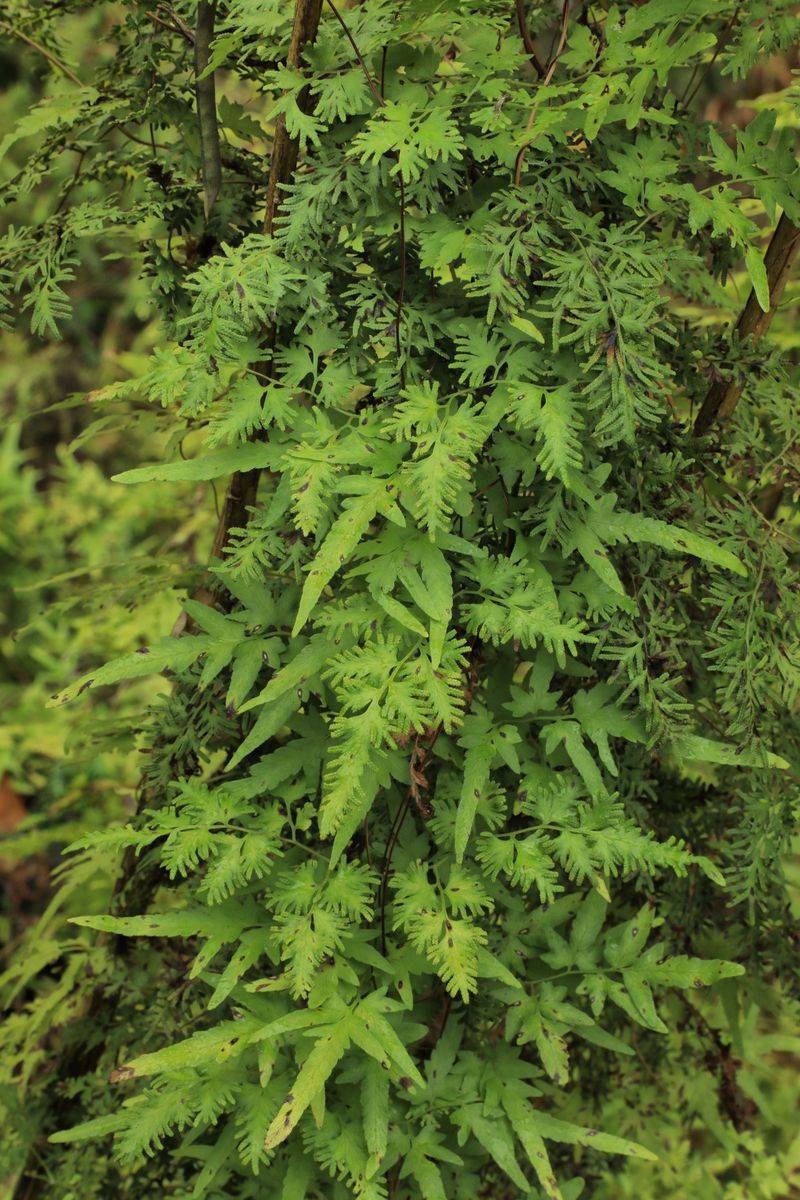
At first glance, the delicate lacy fronds of Japanese climbing fern can look almost too dainty to cause problems, but this plant has become one of the more notable invasive concerns in Georgia’s wooded edges and moist disturbed areas.
Though it is botanically a fern rather than a true vine, it behaves very much like one, climbing through shrubs, low branches, and native vegetation with wiry, twining fronds that can form dense mats over time.
Japanese climbing fern thrives in moist, partially shaded spots such as the edges of wooded lots, stream banks, and shaded borders. Its spores are extremely light and travel easily on the wind, which allows it to spread into new areas without obvious human help.
Once established, it can cover low shrubs and ground-layer plants, reducing light and crowding out native species that would otherwise grow in those spaces.
Georgia homeowners with wooded edges, moist low areas, or shaded borders near natural areas should keep an eye out for this fern’s distinctive lacy texture creeping through their landscape.
Small infestations are much easier to address than large established patches.
Removing plants before spore release and following up on regrowth through the growing season are both important steps in managing its spread on residential and rural Georgia properties.
7. Oriental Bittersweet Twines Through Shrubs And Trees
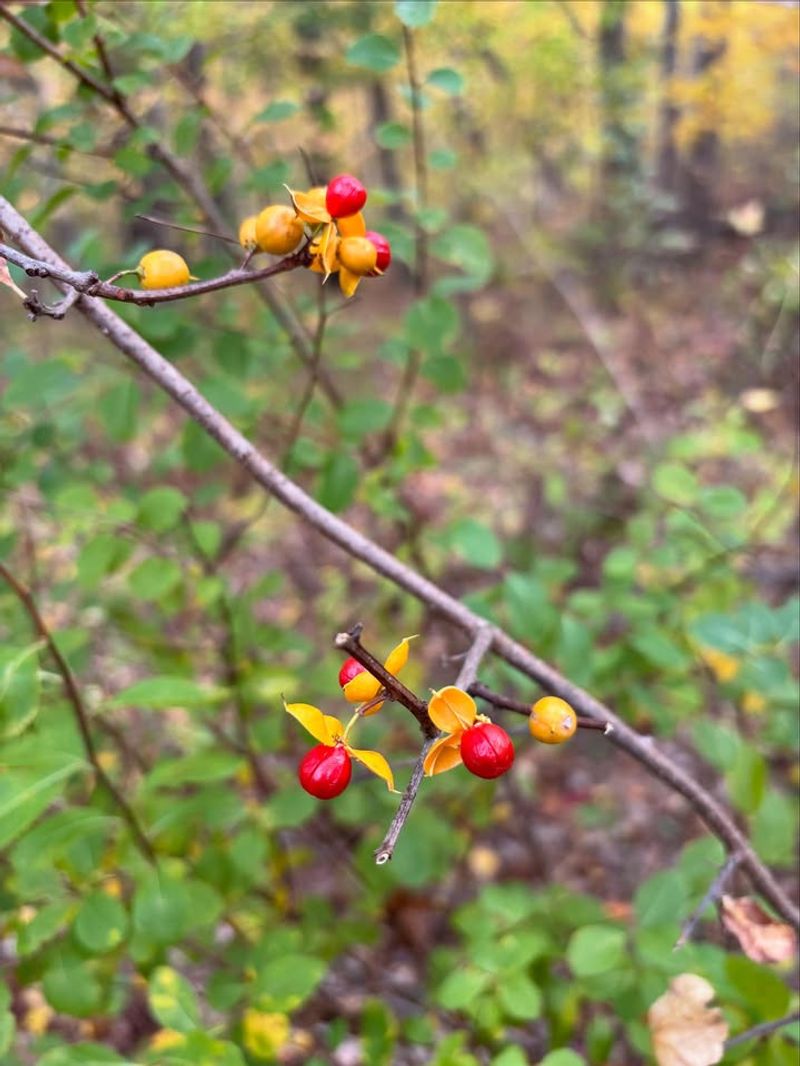
Bright orange and yellow berries clustered along woody stems in autumn make Oriental bittersweet look almost decorative, and that visual appeal has unfortunately contributed to its spread.
Stems and berry clusters were once commonly used in dried floral arrangements, which helped distribute seeds far beyond where the plant was naturally spreading.
In Georgia, Oriental bittersweet has been documented moving through shrub borders, tree lines, and wooded edges, where it twines tightly around stems and trunks.
Unlike the native American bittersweet, which produces berries only at the tips of its stems, Oriental bittersweet produces berries along the entire length of its stems. This is one of the more reliable ways to tell the two species apart.
Oriental bittersweet’s twining growth can girdle shrubs and small trees over time, cutting off the flow of water and nutrients through the plant’s outer layers.
Georgia homeowners near wooded lots or naturalized borders may spot this vine climbing through mixed shrubs or small trees along property edges. Removing plants before the berries ripen helps prevent further seed spread.
Cutting stems at the base and following up on root sprouts through the season is a practical starting point, though established plants with deep roots often require repeat attention before they stop resprouting.
8. Air Potato Spreads With Fast-Growing Vines
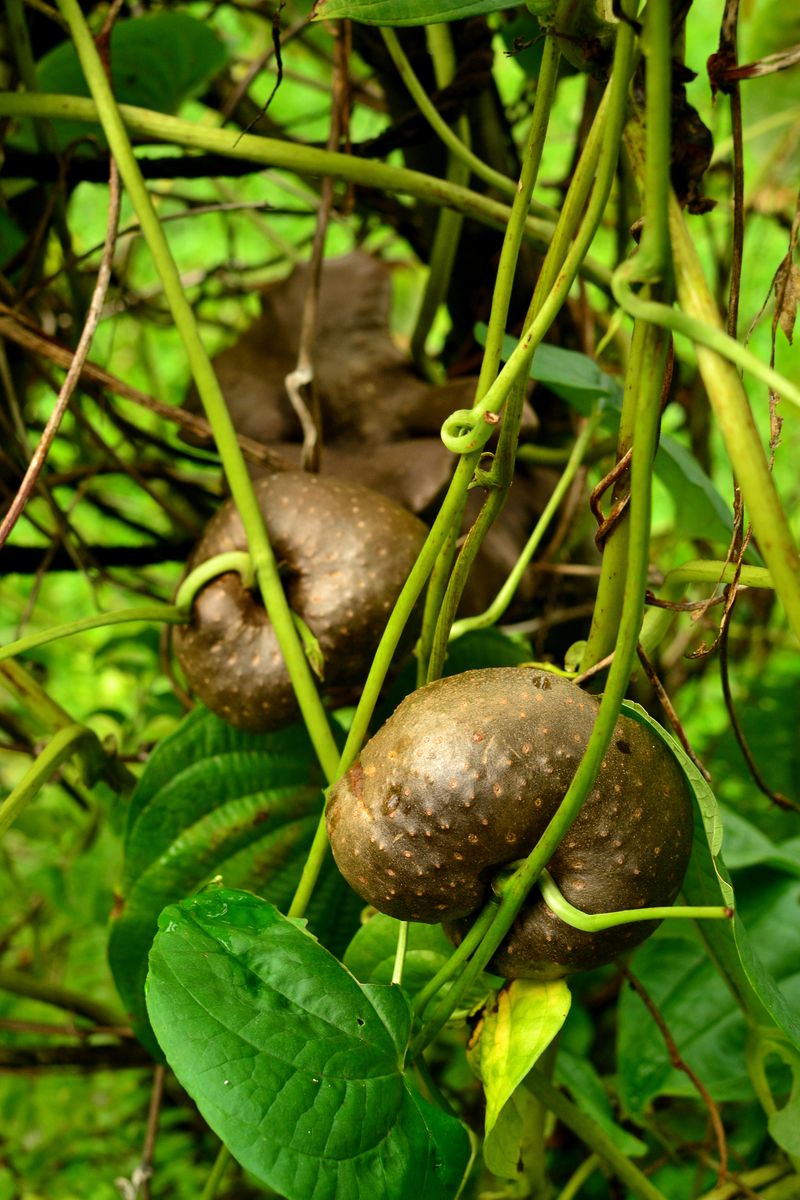
Scrambling over fences, shrubs, and low trees along Georgia’s warmer southern zones, air potato is a vine that can cover a surprising amount of ground in a single growing season.
Its large, heart-shaped leaves and twining stems move quickly through mixed plantings, and the small brown aerial tubers, called bulbils, that form along the stems drop to the ground and sprout into new plants.
Each vine can produce a large number of these bulbils, which is a big reason why this plant spreads so readily.
Air potato is most commonly found in the warmer parts of Georgia, where mild winters allow it to persist and spread more aggressively. It climbs by twining and can reach into shrub canopies, shading out the plants beneath it.
The bulbils are also easily moved by water, foot traffic, or yard equipment, which can spread new plants into areas that were previously clear.
Collecting and disposing of bulbils before they can sprout is one of the most practical steps homeowners can take to slow this vine’s spread. Cutting stems back repeatedly through the growing season reduces the plant’s ability to produce more bulbils.
Consistent follow-up is usually needed across multiple seasons because bulbils that fall to the soil can remain viable and sprout in future growing seasons.
9. Porcelain-Berry Covers Edges With Dense Growth
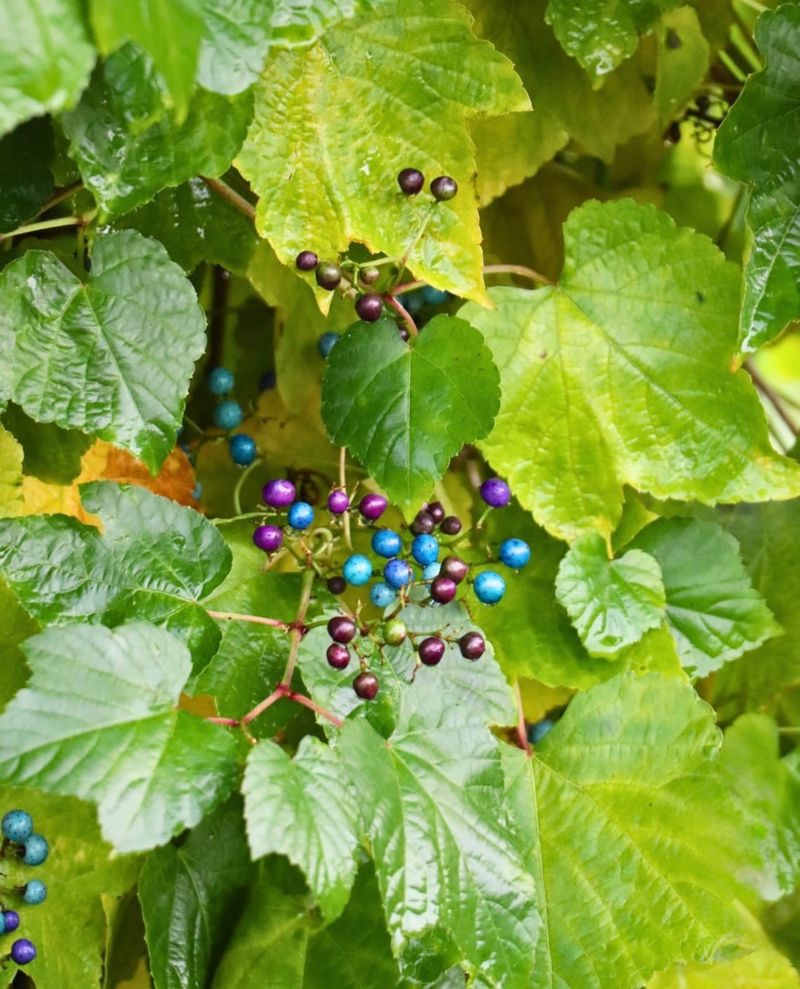
The multicolored berries of porcelain-berry, ranging from speckled green to turquoise, purple, and deep blue, are genuinely eye-catching, and that ornamental quality once made it a popular landscape plant.
That same attractiveness has helped it spread into natural areas across parts of the eastern United States, including Georgia. Birds that eat the berries carry seeds into wooded edges, fence rows, and disturbed borders far from where the vine was originally planted.
Porcelain-berry is a woody, twining vine that resembles wild grape in general appearance, and the two are sometimes confused when berries are not present.
It climbs aggressively through shrubs and along fence lines, forming dense tangles that shade out the plants below.
In Georgia, it tends to show up along disturbed edges, old fence rows, and the borders between maintained yards and adjacent natural areas.
Spotting porcelain-berry early, before it has formed a large established tangle, makes removal much more manageable. Young vines can be pulled or cut, and follow-up through the growing season helps prevent regrowth from root fragments.
Removing plants before the berries ripen is especially helpful for reducing the chance that birds will carry seeds into new areas of the yard or into nearby natural spaces.
10. Sweet Autumn Virginsbower Moves Through Sunny Borders
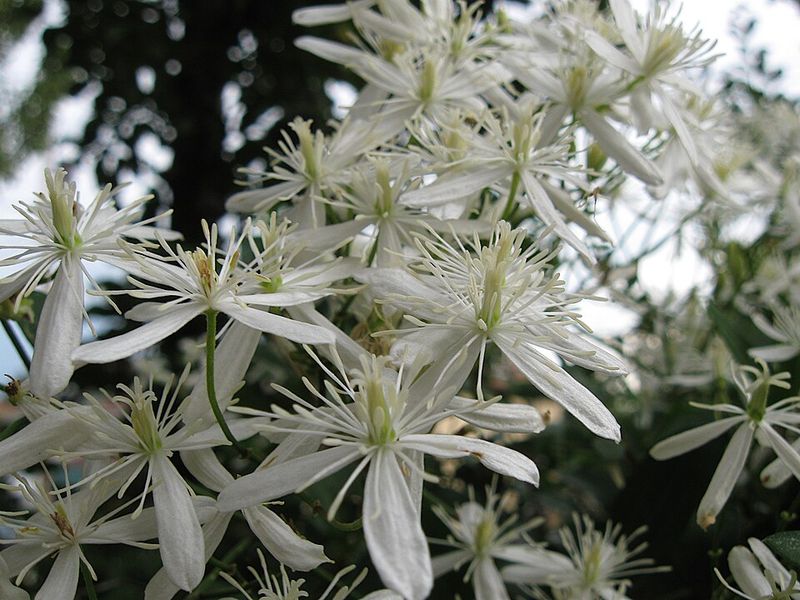
By late summer and into early fall, masses of small white flowers and fluffy seed heads along sunny Georgia fence rows and yard borders often signal the presence of sweet autumn virginsbower.
This vine blooms prolifically and produces an enormous number of feathery seeds that drift on the wind, allowing it to move into new areas quickly.
It has been widely planted as an ornamental and is still sold in some nurseries, which has contributed to its spread across many parts of Georgia.
Sweet autumn virginsbower climbs by twisting its leaf stalks around supporting plants and structures. It can scramble over shrubs, climb fences, and move through mixed borders with noticeable speed during the warm growing season.
In Georgia’s long summers, it has plenty of time to establish, bloom, and set seed before cooler weather arrives. The sheer volume of seeds it produces each season is one reason it can spread so persistently once it is present in a landscape.
Removing plants before seed heads mature and disperse is one of the most effective ways to limit its spread in a Georgia yard. Cutting stems back and following up on new seedlings through the season helps reduce the overall population over time.
Checking fence lines, sunny shrub borders, and open edges regularly makes it easier to catch new seedlings before they become established plants.