This Native Florida Shrub Is Replacing Pool Fences In Coastal Florida Yards
Coastal Florida yards have a privacy problem, and it is one that pool fencing alone does not exactly solve beautifully.
Nothing disrupts the relaxed seaside vibe quite like staring at a chain-link barrier from your lounge chair, and homeowners in Central and South Florida are increasingly looking for something greener and more natural to soften that view.
Seagrape is quietly becoming one of the more popular answers to that problem.
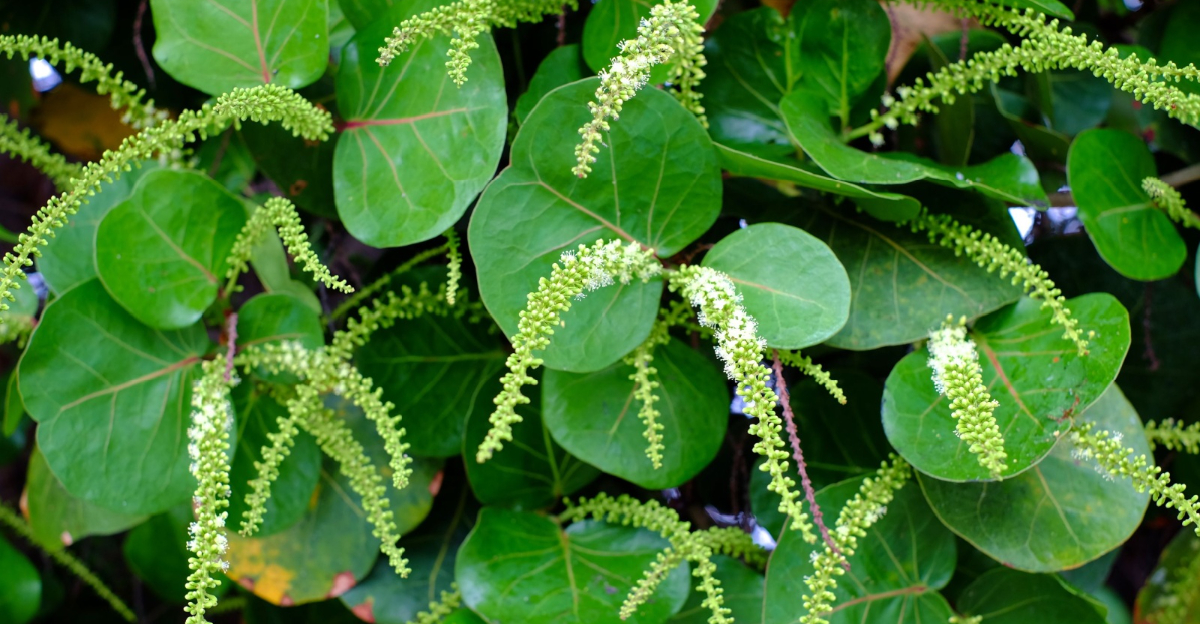
This native shoreline shrub brings large rounded leaves, impressive salt tolerance, and the kind of dense, lush growth that can seriously soften the look of required pool fencing in a coastal landscape.
There is one important distinction worth making upfront though. Seagrape is a visual screening option, not a legal replacement for the pool safety barriers Florida law requires.
That difference matters a lot before any planting decisions get made.
1. Seagrape Creates A Coastal Privacy Screen
Pool decks along the Florida coast can feel exposed, especially when the yard opens up to neighboring properties, walkways, or busy streets.
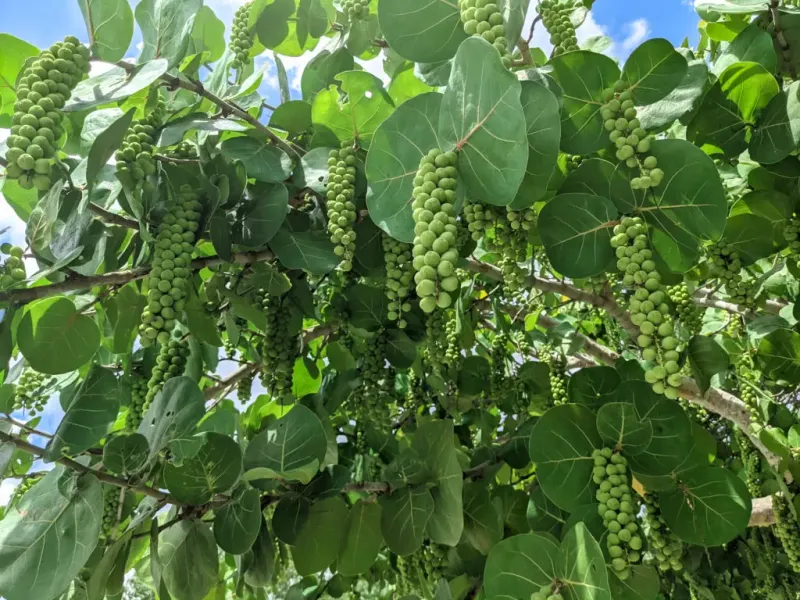
Seagrape, which grows natively along the shorelines of Central and South Florida, offers a natural way to create a leafy buffer around a pool area without relying entirely on hard fencing materials.
When given enough space and the right seaside conditions, it can grow into a dense shrub or even a small tree that provides meaningful visual screening.
The plant’s ability to thrive in sandy soil, handle salt-laden breezes, and maintain evergreen foliage throughout the year makes it a strong candidate for coastal poolside planting beds.
Unlike many ornamental shrubs that struggle near the water, seagrape is genuinely adapted to Florida’s coastal environment.
That adaptability is a big part of why so many homeowners near the shoreline are paying attention to it.
Growing seagrape as a privacy screen does take some planning. The plant needs room to spread, regular pruning to stay in its designated space, and a site that matches its natural habitat.
When those conditions are met, it can create a relaxed, tropical-looking screen that softens the visual hardness of a pool enclosure. For Florida coastal yards looking for a native option with real screening potential, seagrape is worth a serious look.
2. Big Round Leaves Hide Hard Fence Lines
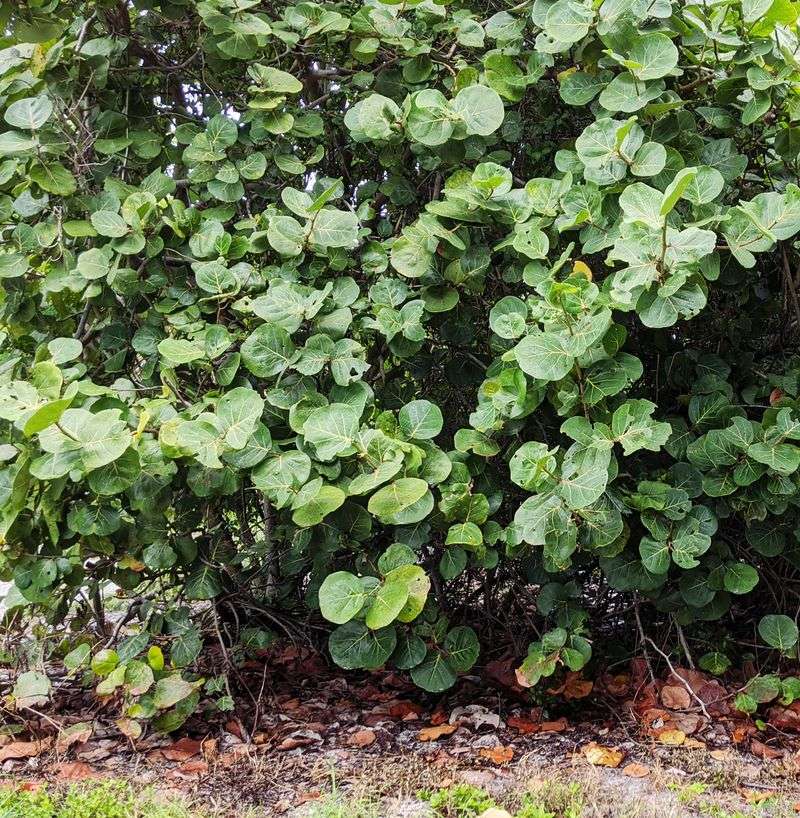
Few things interrupt a relaxed poolside atmosphere quite like a hard metal or vinyl fence running across the yard.
The straight lines and industrial look of a required pool barrier can feel out of place in a lush Florida coastal landscape, and that contrast is exactly what seagrape’s foliage can help address.
Its large, rounded, evergreen leaves create a soft visual layer that draws the eye away from the fence behind it.
Seagrape leaves can reach several inches across, giving them enough visual mass to partially or fully obscure a fence line from certain angles without removing the barrier itself.
The leaves also have a slightly leathery texture and a deep green color that adds a tropical character to the planting area.
When the shrub is positioned along a fence line with enough growing room, the effect is a more natural-looking boundary rather than an obvious safety structure.
Your Florida Garden Changes Every Week. Your Plan Should Too.
Gardening in Florida changes quickly throughout the season. Every Friday you’ll receive a simple weekly plan showing exactly what to plant, prune, fertilize, harvest, and protect so you never miss the right timing.
The visual softening works best when the seagrape is planted in a proper bed with enough depth for the roots to establish. Cramming the shrub into a narrow strip between a fence and a patio can limit growth and make pruning difficult.
Florida homeowners who plan the bed width carefully before planting tend to get much better results from their seagrape screening efforts.
The fence stays in place, does its job, and the seagrape makes the whole setup look considerably more inviting.
3. Salt Tolerance Makes It Poolside Friendly
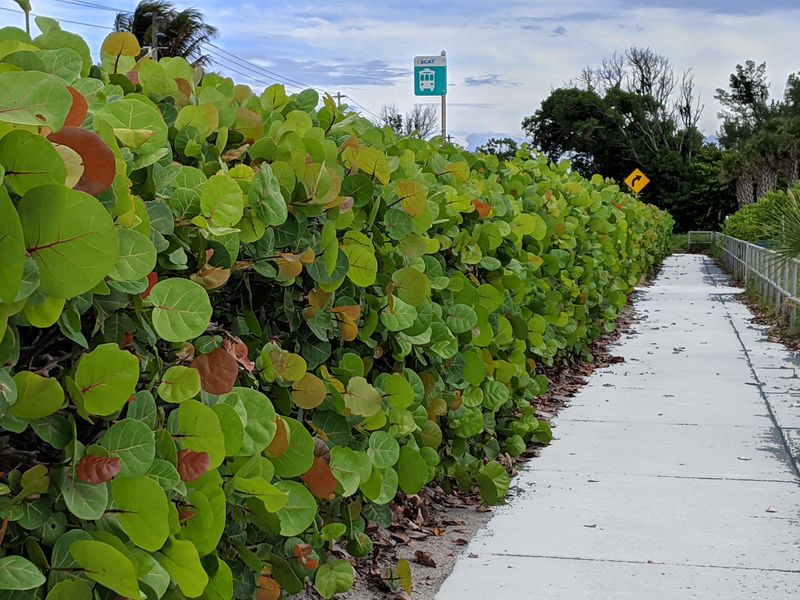
Salty breezes rolling off the Florida coast can take a serious toll on plants that were not designed for seaside conditions.
Leaves scorch, growth slows, and many ornamental shrubs simply struggle to stay healthy when exposed to consistent salt spray and drying coastal winds.
Seagrape handles those conditions far better than most plants, which is one of the main reasons it works so well in coastal Florida pool landscapes.
Its natural habitat is the sandy shoreline environment of Central and South Florida, where salt exposure, poor soil, and intense sun are just part of daily life.
That background gives seagrape a genuine advantage near pools that are close to the beach or open to coastal winds.
Plants that cannot handle salt stress often look ragged within a season or two, but seagrape tends to stay dense and healthy when sited correctly in these conditions.
The salt tolerance also matters because pool chemicals and splashing water can add another layer of environmental stress for nearby plantings.
While seagrape is not invincible, its coastal adaptations make it more resilient in these settings than many popular landscape shrubs.
For Florida homeowners who have watched other plants struggle along their pool perimeter, switching to a native species that actually belongs near the shoreline can make a noticeable difference in how the planting bed looks and performs year after year.
4. Dense Growth Softens The Pool Area
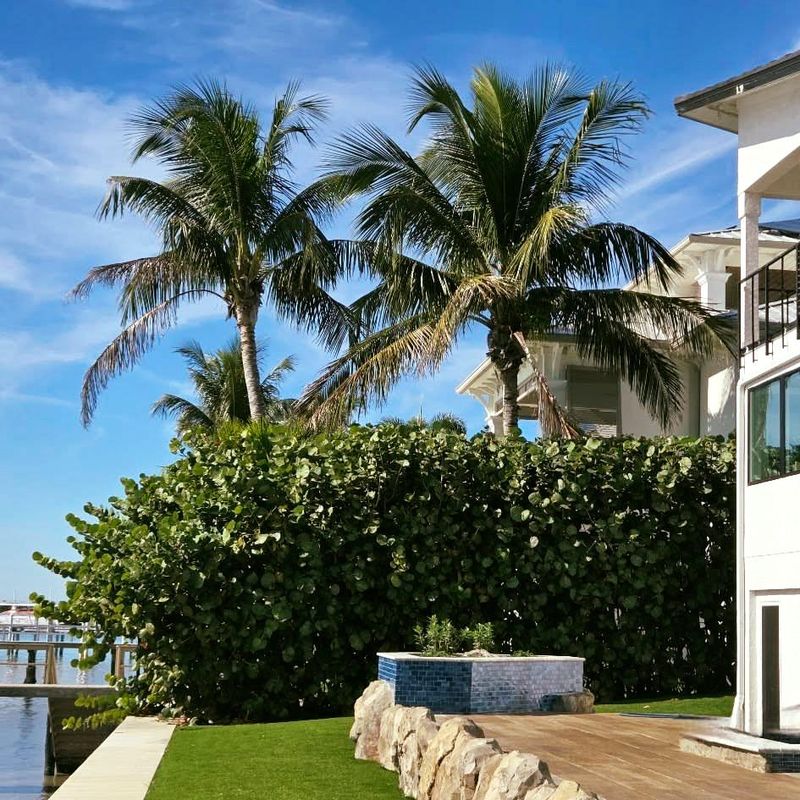
Walking out to a pool surrounded by thick, leafy greenery feels very different from stepping onto a bare deck edged by open fencing.
Seagrape, when established and well maintained, can build up into a dense, multi-stemmed shrub that creates a genuine sense of enclosure around a pool area.
That density is part of what makes it appealing to Florida homeowners who want a more relaxed, tropical-feeling outdoor space.
The layering of large leaves across multiple branches gives the planting a full, lush appearance that lighter-foliaged shrubs cannot match in the same way.
When seagrape fills in along a fence line or pool perimeter planting bed, the overall atmosphere shifts from exposed to sheltered.
It can also help block sightlines from neighboring properties or sidewalks, adding a layer of privacy that makes the pool area feel more personal and comfortable.
That said, dense growth comes with responsibilities. Seagrape needs enough space between plants and adequate airflow to stay healthy over time.
Overcrowding can create conditions where moisture lingers too long and plant health declines. Responsible pruning also plays a role in keeping the density looking intentional rather than overgrown.
Florida coastal homeowners who give seagrape the right amount of room and keep up with seasonal maintenance tend to enjoy the fullest, most visually satisfying results from their poolside plantings.
5. Pruning Keeps The Shrub In Bounds
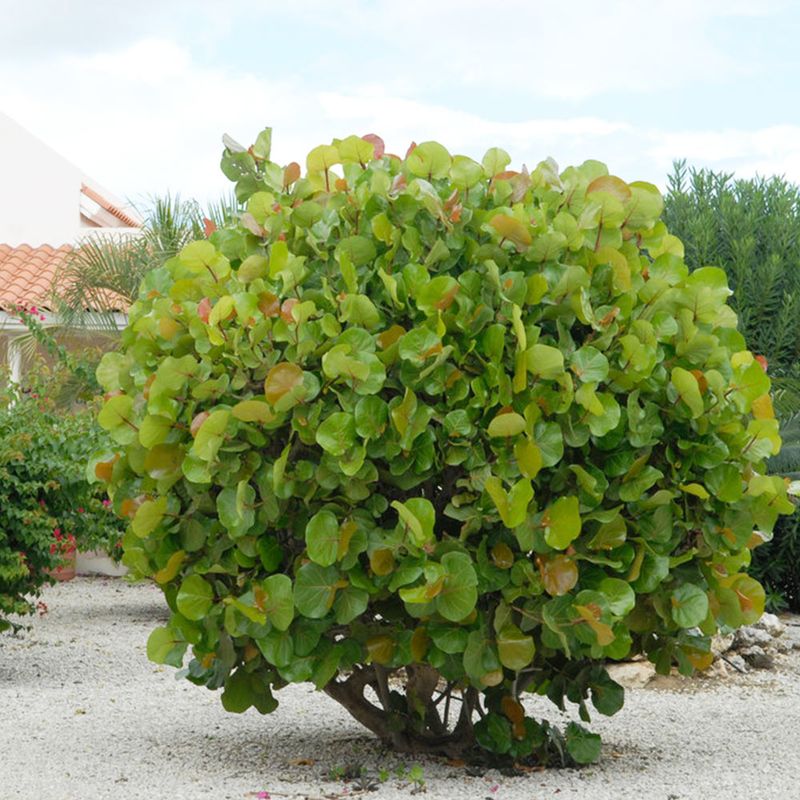
Seagrape is not a shrub that quietly stays small and tidy on its own. Left to grow without guidance, it can reach the size of a small tree, spreading branches and foliage well beyond the space most poolside planting beds are designed to accommodate.
Pruning is what turns seagrape from a sprawling coastal plant into a managed, attractive privacy screen that works within a residential yard.
The goal of pruning seagrape near a pool area is not to force the plant into an unnatural shape or keep it crammed into a narrow strip.
A better approach is to plan the planting space around the plant’s natural tendencies and then use pruning to guide its growth in a direction that serves the homeowner’s privacy goals.
Cutting back overly long branches, removing crossing limbs, and thinning the interior periodically can keep the shrub looking intentional and well cared for.
Timing and technique matter when pruning seagrape in Florida. Removing too much at once can stress the plant, and pruning at the wrong time of year may reduce the plant’s ability to recover efficiently.
Consulting local Florida-Friendly Landscaping guidance or a certified arborist familiar with native coastal plants can help homeowners develop a pruning schedule that keeps seagrape healthy, manageable, and visually effective over the long term.
A well-pruned seagrape screen looks far better than one that has been left to outgrow its space.
6. Coastal Yards Need Room For Seagrape
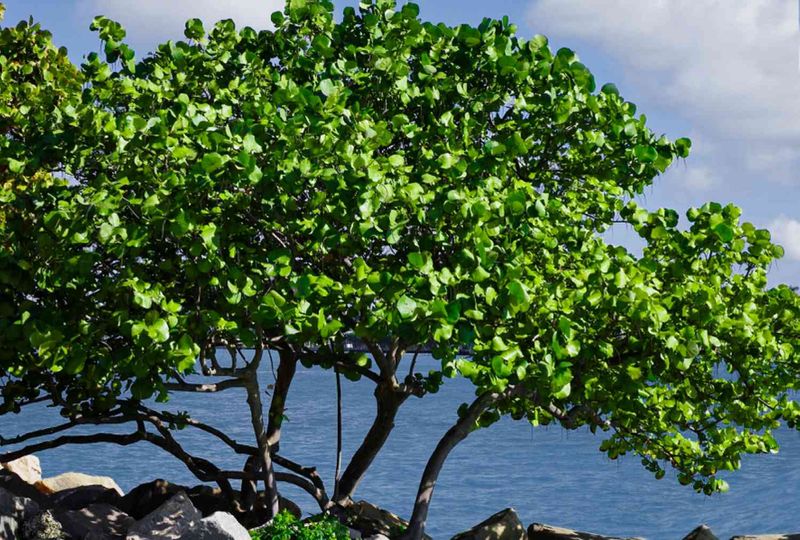
One of the most common mistakes Florida homeowners make with seagrape is underestimating how much space the plant actually needs to perform well.
Tucking it into a narrow strip between a pool deck and a fence might seem like a reasonable way to add some greenery, but seagrape simply does not thrive when it is crowded.
Its roots, canopy spread, and natural growth habit all require meaningful horizontal and vertical space to develop properly.
In a coastal Florida yard with enough room, seagrape can become a genuinely impressive screen over time. The key is selecting a planting location where the shrub has space to mature without constantly being cut back to fit a space that is too small for it.
Areas along side yards, back fence lines, or wider poolside planting beds tend to work better than tight corners or cramped walkways.
Leaf drop is another practical consideration for yards with limited room. Seagrape does shed older leaves, and those large leaves can accumulate on pool decks, in the water, and along walkways if the plant is positioned too close to those surfaces.
Giving the shrub a bit of distance from the pool edge reduces that maintenance burden.
Florida homeowners who plan the layout with the plant’s mature size in mind from the start tend to spend far less time managing problems and far more time enjoying the privacy and tropical feel that a well-sited seagrape screen provides.
7. Privacy Screening Is Not Pool Safety
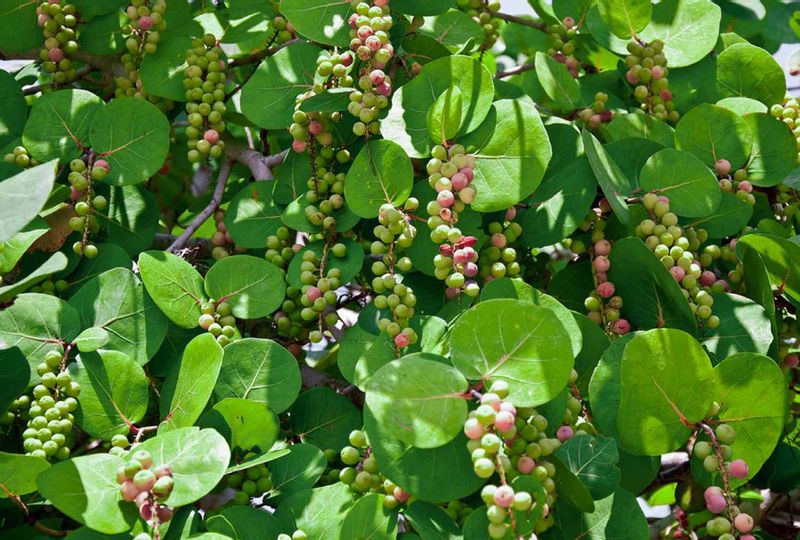
A lush seagrape hedge along a pool perimeter can look beautiful and feel private, but it does not do the same job as a required pool barrier.
This is a distinction that matters enormously for Florida homeowners, and it is one that sometimes gets blurred when people talk about using shrubs to replace fencing around a pool.
A privacy screen creates a visual buffer. A pool safety barrier is a physical structure designed to prevent unsupervised access, particularly by young children.
Florida has specific requirements for residential pool barriers, and those requirements exist for serious safety reasons.
A hedge, no matter how dense or well maintained, cannot reliably perform the access-control function that a properly installed fence, wall, or enclosure provides.
Branches can be pushed aside, gaps develop as plants grow unevenly, and foliage does not latch or lock the way a code-compliant gate does.
Seagrape can absolutely be part of a beautiful coastal pool landscape, and it can soften or partially hide the look of a required fence in a visually pleasing way.
However, describing it as a replacement for pool fencing is both inaccurate and potentially unsafe.
Florida homeowners who want to incorporate seagrape into their pool area design should think of it as a companion to the required barrier, not a substitute for it. The shrub handles the aesthetics, and the fence handles the safety.
8. Local Fence Rules Still Come First
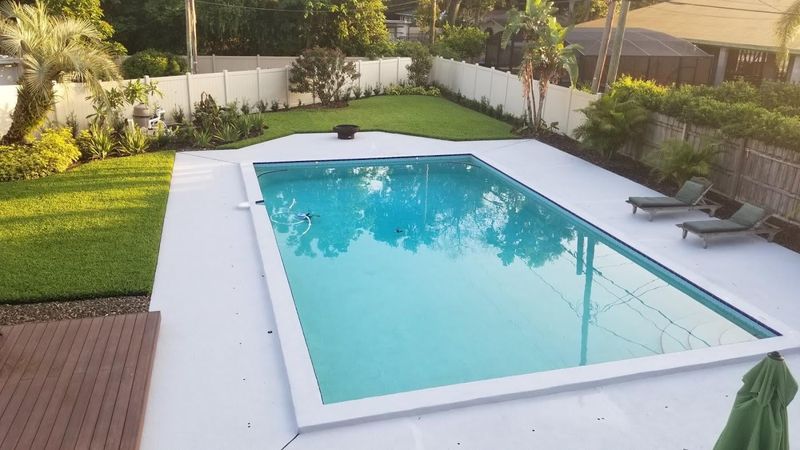
Before making any changes to the planting beds, fencing, or enclosures around a Florida pool, homeowners need to understand what local codes and state regulations actually require.
Florida pool barrier law sets baseline standards for fence height, gate hardware, latch placement, and barrier spacing, but individual counties and municipalities often add their own requirements on top of those minimums.
What is acceptable in one Florida community may not meet code in another.
Adding seagrape along a fence line sounds like a straightforward landscaping decision, but complications can develop over time as the shrub grows.
Dense growth that interferes with gate function, reduces fence visibility for inspection, or creates footholds along the barrier are all outcomes worth thinking through before planting.
A dense shrub planted too close to a pool gate, for example, could make it harder to operate the gate properly or obscure the latch from view.
Checking with local building or zoning officials before planting near a pool enclosure is a sensible step that many homeowners skip until a problem arises.
A qualified pool contractor or landscape professional familiar with Florida coastal codes can also help identify any concerns before the plants go in the ground.
Getting it right from the start protects both the safety function of the barrier and the investment made in the landscape.
In Florida, pool safety rules are non-negotiable, and the seagrape always comes second to those requirements.