Florida Native Edible Ground Covers That Replace Fussy Lawn And Still Look Beautiful
Lawn care in Florida is basically a part time job nobody applied for. The watering, the fertilizing, the constant battle against heat, pests, and soil that drains like a sieve or floods like a swamp.
At some point, a lot of Florida homeowners start asking a very reasonable question: what if there was something better? Turns out, there is.
And it feeds you on top of it. Florida has a surprisingly rich lineup of native edible groundcovers that spread beautifully and handle the climate without constant coddling.
They also pull double duty in ways a traditional lawn never could. You get coverage, you get curb appeal, and you get something you can actually harvest.
This is not about sacrificing a pretty yard for the sake of practicality. The plants on this list genuinely look good.
They just happen to be useful at the same time.
1. Browne’s Savory Replaces Fussy Grass In Damp Spots
That soggy low spot in the backyard where grass turns yellow and thin every rainy season might actually be the perfect place for something useful.
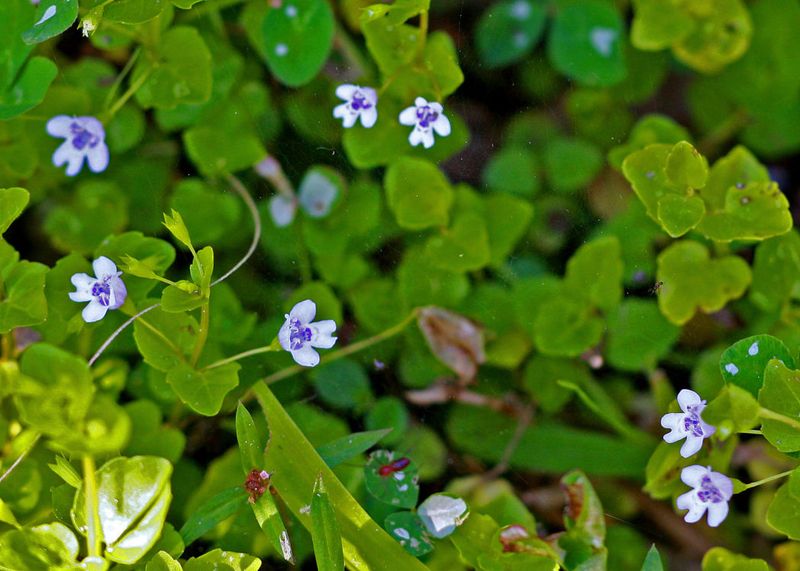
Browne’s savory, known botanically as Clinopodium brownei, is a native that genuinely thrives in moist to wet conditions.
It grows low to the ground and spreads gently through damp areas where turf simply refuses to cooperate.
The leaves carry a pleasant minty aroma that makes this plant stand out from other ground covers. Fresh or dried, the leaves and stems can be used to brew a simple herbal tea or added as a mild flavoring in cooking.
It belongs to the mint family, and that heritage comes through clearly when you brush against it or pinch a leaf.
Consistently moist soil is not optional for this plant. It will not perform well in dry or well-drained spots, so do not try to use it as a general lawn replacement across your whole yard.
Save it for low areas, pond edges, rain garden borders, or poorly draining patches where other plants look stressed. In those spots, it can form a soft, spreading mat that stays relatively low and tidy.
According to the Florida Native Plant Society and UF/IFAS resources, Browne’s savory prefers full sun to partial shade in wet environments. It works beautifully along the edges of retention areas or naturalized wet zones.
Wildlife also benefits, since the small flowers attract native bees and other pollinators throughout the warmer months.
Giving wet problem spots a plant that belongs there is one of the simplest ways to reduce lawn maintenance without sacrificing a green, living ground layer.
2. Partridgeberry Creeps Through Shade With Edible Red Fruit
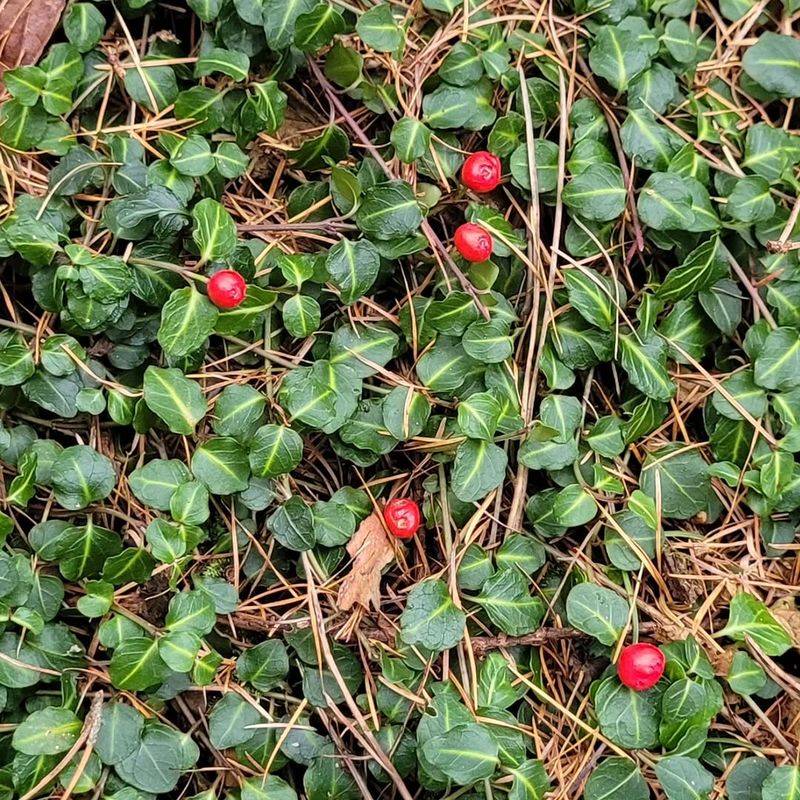
Shady spots under large oaks or along the edges of wooded areas can be some of the hardest places to grow anything attractive.
Partridgeberry, or Mitchella repens, offers a surprisingly elegant solution for those low-light corners where turf grass gives up entirely.
It creeps slowly along the ground, forming a soft, evergreen-looking mat that stays neat without much help from you.
Your Florida Garden Changes Every Week. Your Plan Should Too.
Gardening in Florida changes quickly throughout the season. Every Friday you’ll receive a simple weekly plan showing exactly what to plant, prune, fertilize, harvest, and protect so you never miss the right timing.
The small red berries that appear after flowering are technically edible, though most people describe the flavor as mild and not particularly exciting on its own.
Still, the fruit adds a pop of seasonal color and provides food for birds and wildlife that visit shaded areas.
Think of the edible quality as a bonus feature rather than the main reason to plant it.
Foot traffic is not something partridgeberry handles well. Place it where people are not regularly walking, such as under tree canopies, along shaded garden edges, or in naturalized areas that get appreciated from a distance.
It pairs nicely with other shade-tolerant native plants and can soften the bare soil that often appears under dense tree cover.
UF/IFAS and Florida Native Plant Society sources note that partridgeberry prefers well-drained, acidic, humus-rich soil in moderate to deep shade.
It is more commonly found in northern regions of this state, where cooler winters and woodland conditions suit it best.
Gardeners in central or southern regions may find it harder to establish. When sited correctly, though, it rewards patience with a lush, low-growing mat that feels right at home in a woodland-style setting.
Adding this native to the right shady spot brings year-round greenery and a quiet kind of beauty that conventional turf could never deliver.
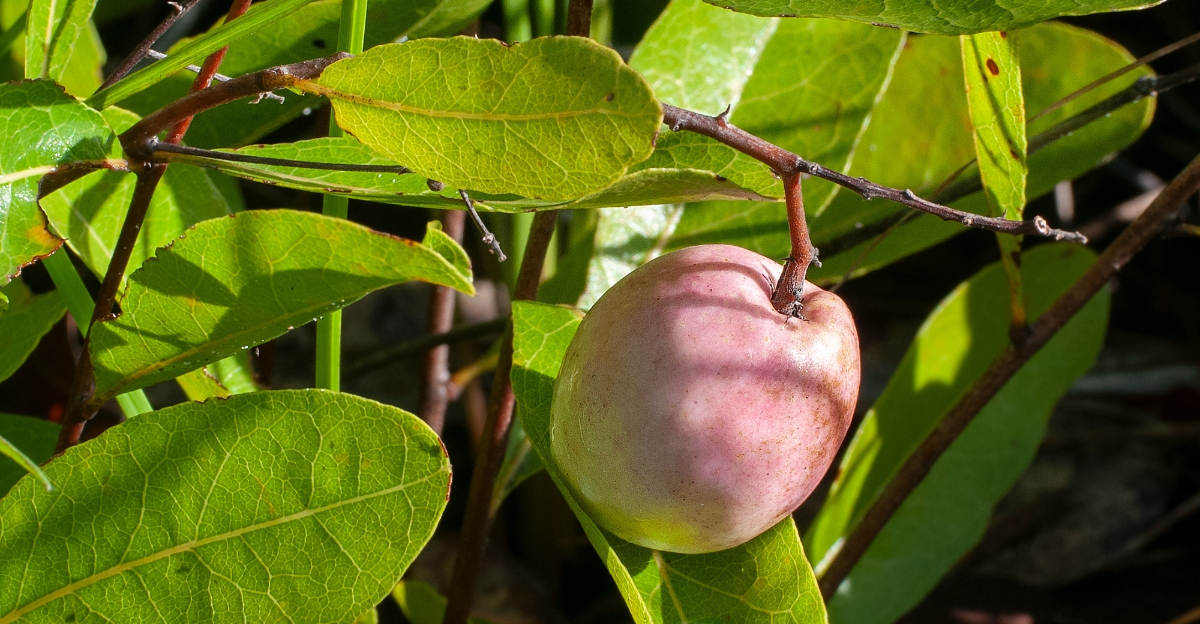
3. Gopher Apple Covers Sandy Soil With Subtle Native Fruit
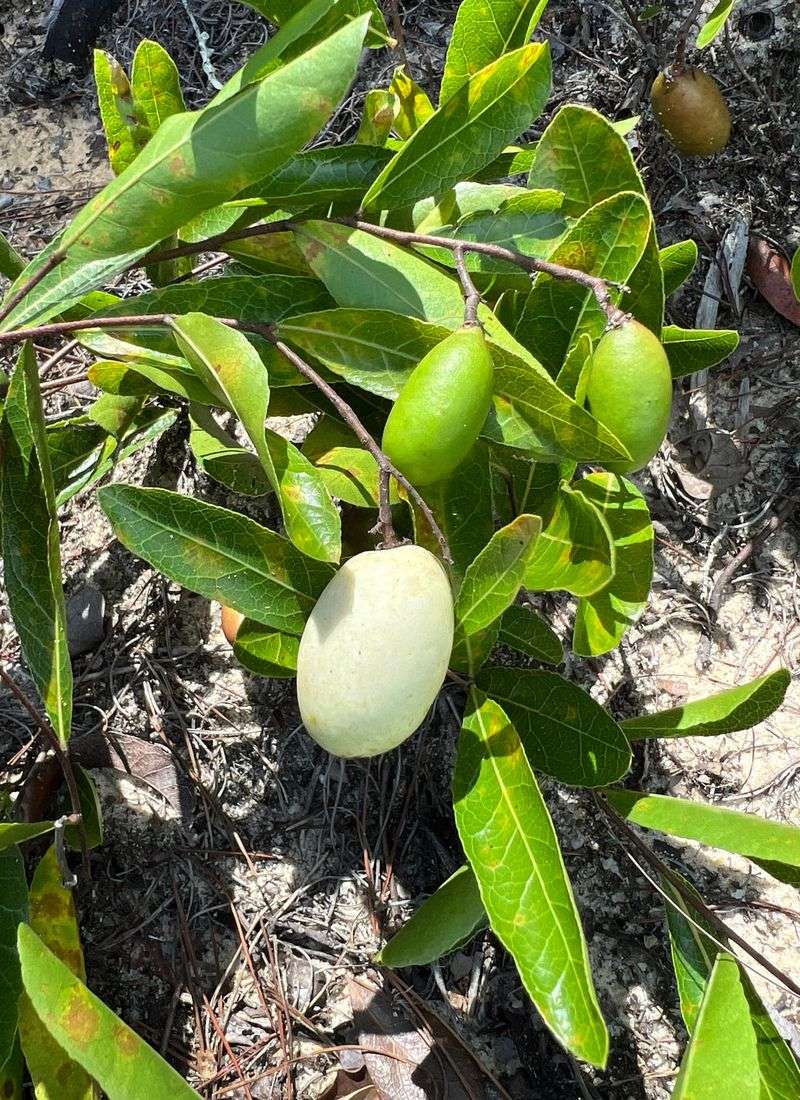
Dry, sandy soil baking under full sun is one of the most common yard challenges in this state, especially in scrubby inland areas and coastal zones.
Gopher apple, or Licania michauxii, is a tough native ground cover that was practically built for those conditions.
It spreads through underground runners and forms a low, dense layer of leathery leaves that holds its own in spots where turf grass looks exhausted by midsummer.
The fruit is edible, though most gardeners describe the flavor as bland or mildly sweet rather than bold. Do not plant gopher apple expecting a harvest worth bragging about.
Instead, value it for the combination of landscape function and edible interest it brings to challenging dry sites. Gopher tortoises, for which the plant is named, are among the wildlife species that rely on the fruit, which adds real ecological value to your yard.
Full sun and excellent drainage are non-negotiable for this plant. It will not thrive in wet or compacted soil, and it is not suited for high-traffic areas since it grows low but is not built to be walked on regularly.
Think of it as a naturalistic ground layer for dry, sunny patches along fence lines, open sandy strips, or areas transitioning to scrub habitat.
UF/IFAS sources confirm that gopher apple is highly drought-tolerant once established and requires minimal irrigation after the first season or two. It is a slow spreader, so patience is part of the deal.
Over time, it creates a stable, attractive ground layer that needs far less attention than turf. For gardeners dealing with sandy, sunny problem spots, this native brings both practical function.
It also offers a quiet connection to the native scrub landscapes that once defined much of this state.
4. Creeping Woodsorrel Adds Tart Leaves Where Spreading Is Welcome
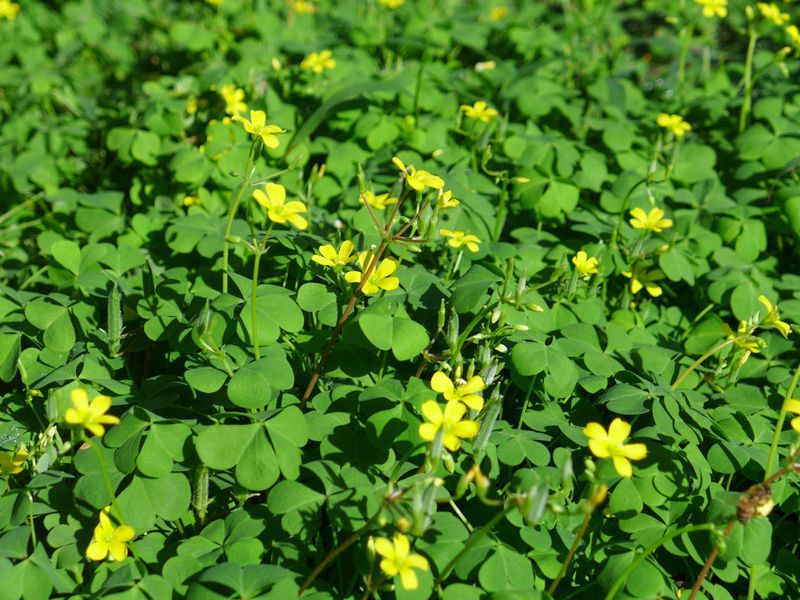
Spotted in sidewalk cracks, garden edges, and loose native patches across this state, creeping woodsorrel has a real reputation as a weed.
But Oxalis corniculata can still earn a careful place in informal edible plantings, as long as gardeners understand its spreading habit before they welcome it in.
The small, clover-shaped leaves have a bright, citrusy tartness that makes them a fun accent in salads or garnishes. Moderation matters here.
The tart flavor comes from oxalic acid, which is also found in many edible plants but should not be eaten heavily on a regular basis. Treat the leaves as a small accent, not a staple.
A few clean leaves in a salad or on a plate is a more sensible way to enjoy them.
As a ground cover, creeping woodsorrel works best where a loose, natural look is welcome. It can fit along shaded or semi-shaded edges, in informal edible pockets, or between stepping stones in low-traffic areas.
It is not a full lawn replacement, and trying to manage it like tidy turf may cause more frustration than reward.
The caution is its enthusiasm. Creeping woodsorrel spreads by seed and rooting stems, and UF/IFAS notes it can form dense mats that compete with cultivated plants.
That makes placement important. Keep it away from formal beds or delicate plantings.
Used with boundaries and realistic expectations, this native edible can turn a persistent volunteer into a useful, tart little ground-layer plant.
5. Wild Strawberry Adds Edible Fruit In The Right Northern Spots
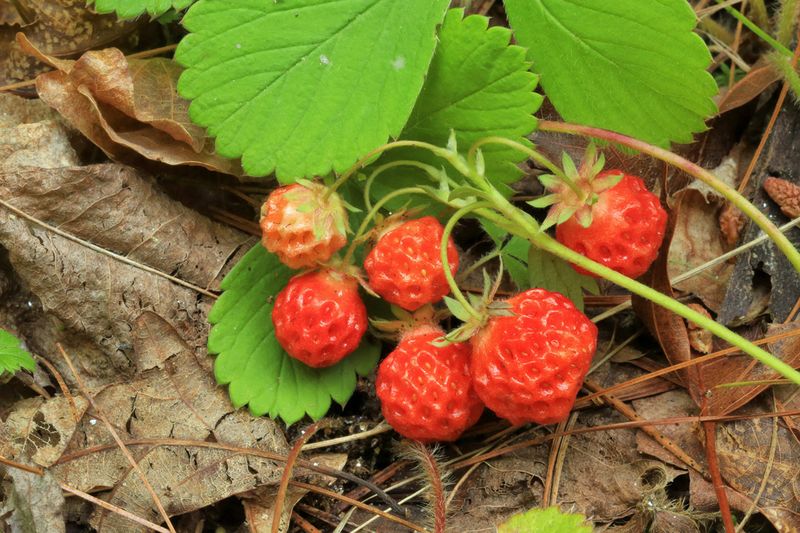
Small, intensely sweet, and packed with more flavor than their grocery store cousins, wild strawberries are worth noticing. They are the kind of fruit that makes you stop walking and crouch down to look closer.
Fragaria virginiana, the native wild strawberry, grows naturally in this state but only in a limited range. Its documented native occurrence is concentrated in Jackson and Leon counties, placing it firmly in the northern regions of the state.
Gardeners outside that natural range should approach this plant with realistic expectations. It may be available from native nurseries and worth trialing in the right conditions, but it is not broadly native across the entire state.
Those in the northern regions, particularly near Tallahassee and the Panhandle, are working within the plant’s actual home territory and will have the best results.
Where conditions are right, wild strawberry spreads through runners and forms a low, spreading mat in open sandy areas with full sun to partial shade.
The fruit is edible and genuinely delicious, small but flavorful enough to use in preserves or eat fresh off the plant.
The leaves can also be dried and steeped as an herbal tea, adding another layer of edible value to an already useful native plant.
Soil drainage matters a great deal. Wild strawberry prefers well-drained, sandy or loamy soil and does not do well in waterlogged areas.
It is not built for heavy foot traffic either, so use it along path edges, open naturalized areas, or sunny garden borders rather than high-use zones. UF/IFAS and Florida Native Plant Society resources confirm its limited native range in this state.
For those gardening in the right northern spots, this native ground cover brings edible fruit, spring flowers, and a soft spreading habit. It genuinely earns its place in the landscape.