The Worst Time Of Day To Water Squash In Michigan If You Want To Avoid Powdery Mildew
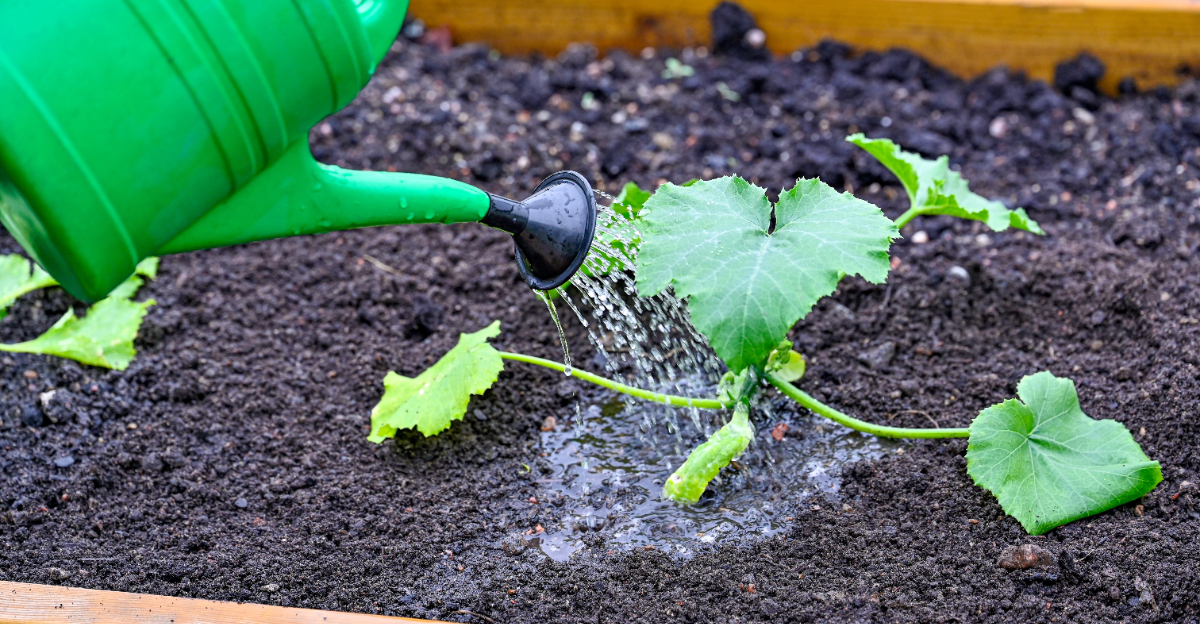
Powdery mildew and squash have a predictable relationship in Michigan gardens, and watering timing plays a bigger role in that relationship than most gardeners realize.
The disease needs specific surface conditions to take hold and spread, and certain watering habits create those conditions more reliably than others regardless of what variety is planted or how healthy the soil is.
Michigan’s summer humidity already loads the deck in powdery mildew’s favor through July and August.
Watering at the wrong time of day tips it further in a direction that becomes very difficult to reverse once the white coating starts spreading across the leaves. One simple timing adjustment removes a significant part of that advantage.
1. Evening Is The Worst Time To Water

Most gardeners reach for the hose after work when the day finally cools down, and honestly, that makes total sense. Evening feels like the perfect time to step outside and tend to the garden.
But for squash in Michigan, watering in the evening is one of the worst habits you can have if powdery mildew is something you want to avoid.
When you water late in the day, especially if any water lands on the leaves, that moisture sits on the plant through the entire night.
Michigan summers can feel warm during the day, but nights often cool down enough to slow the drying process significantly. The squash canopy, which is already thick and leafy, holds onto that dampness like a sponge.
Powdery mildew absolutely loves those conditions. The fungus responsible for this disease thrives when humidity is high and airflow around the leaves is limited.
An evening watering session can create exactly the kind of humid microclimate the disease needs to take hold and spread.
The main takeaway here is simple: avoid watering squash from above in the evening. If your schedule makes morning watering tough, try at least shifting to midday rather than waiting until after dinner.
Every hour earlier you water gives the plant more time to dry before nightfall. Small adjustments in your routine can genuinely protect your squash from one of the most common fungal problems Michigan gardeners face each summer.
2. Night Watering Keeps The Canopy Damp Too Long
Squash plants grow big, bushy, and beautifully dense, which is part of what makes them so productive. But that same thick canopy can become a problem when moisture gets trapped inside it overnight.
Night watering creates exactly that situation, and Michigan gardeners need to understand why this matters so much for disease prevention.
When water settles on or around the large leaves of a squash plant after dark, very little evaporation happens. The sun is gone, temperatures drop, and the air often becomes still.
That combination means the leaf surfaces and the spaces between them stay damp for hours and hours, sometimes all the way through until morning.
Powdery mildew thrives in high humidity environments, especially when airflow is poor. A squash canopy that has been watered at night becomes almost ideal for fungal growth.
Your Michigan Garden Changes Every Week. Your Plan Should Too.
Gardening in Michigan changes quickly throughout the season. Every Friday you’ll receive a simple weekly plan showing exactly what to plant, prune, fertilize, harvest, and protect so you never miss the right timing.
The spores that cause powdery mildew are already present in most garden soils, and all they need is the right conditions to take hold on leaf surfaces.
Think of the squash canopy like a tent on a humid night. Once moisture gets in and the air stops moving, everything inside stays wet.
Changing your watering schedule away from nighttime is one of the most practical things you can do to reduce that risk.
Even shifting watering to late afternoon instead of after sunset gives the plant a better chance to shed some of that moisture before conditions become ideal for fungal spread.
3. Powdery Mildew Does Not Need Wet Leaves To Start
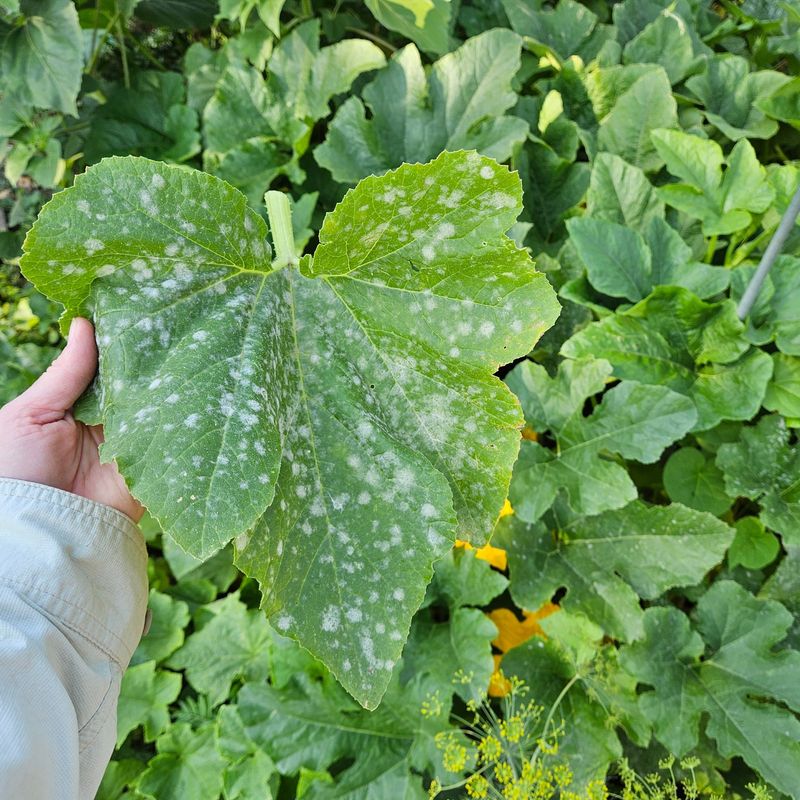
Here is something that surprises a lot of gardeners: powdery mildew does not actually need free-standing water on the leaf surface to start growing. Many people assume that as long as the leaves dry off after watering, they are in the clear.
Unfortunately, that is not quite how this particular fungal disease works.
Unlike many other plant diseases that require leaf wetness to germinate and spread, powdery mildew spores are happy to germinate in conditions of high relative humidity alone.
That means even if your squash leaves look dry to the touch, the air around them can still be humid enough to encourage fungal growth.
Overhead watering in the evening raises that ambient humidity significantly, even after the visible water dries.
This is especially relevant in Michigan during July and August, when summer heat and garden humidity can already be high.
Adding evening overhead watering into that mix pushes the conditions even further in the direction that powdery mildew prefers. Crowded plants, shaded inner leaves, and poor airflow all make the situation worse.
The practical lesson here is not to assume you are safe just because the leaves look dry. What matters is the overall humidity level around the plant, how much airflow exists between leaves, and how long those conditions last each night.
Watering at the soil level in the morning addresses all of these concerns far better than any evening overhead watering ever could, regardless of how quickly the leaves appear to dry afterward.
4. Morning Is The Better Watering Window
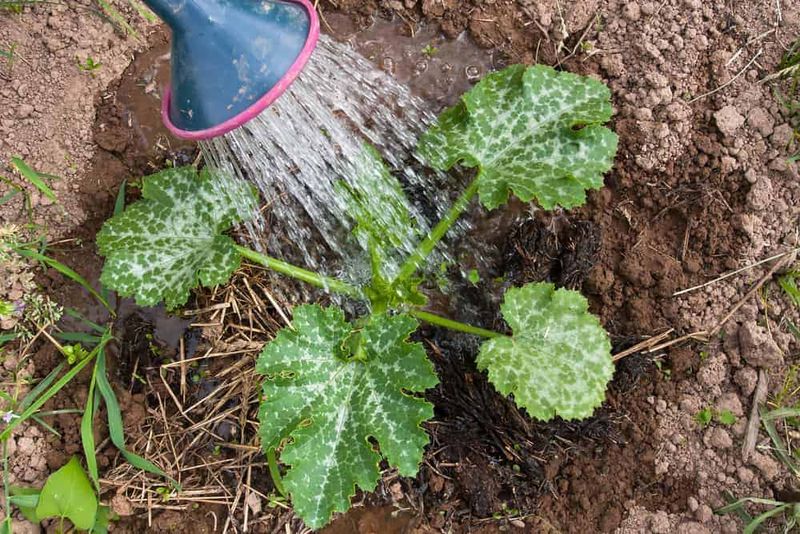
Watering squash in the morning is genuinely one of the best gardening habits you can build if you live in Michigan and want to keep powdery mildew at bay.
The reason is straightforward: morning watering gives the entire plant, including the soil surface and any leaves that do get splashed, the whole day to dry out naturally in the sun and warm air.
Michigan mornings in summer are usually warm enough to encourage quick evaporation, especially once the sun climbs higher.
By the time afternoon rolls around, any moisture that landed on foliage during your morning watering session has had hours to disappear.
That leaves your squash canopy much drier heading into the evening hours, which is exactly when you want it to be dry.
If you cannot completely avoid overhead watering, doing it in the morning is absolutely the lesser of the evils. Sprinklers or overhead hoses used early in the day still put some water on the leaves, but the sun takes care of that quickly.
The goal is to minimize how long moisture lingers on the plant, and morning simply gives you the most drying time possible.
Try setting a reminder or adjusting your morning routine to include a quick watering session before heading to work. Even watering every other morning deeply can be better than daily evening watering.
Your squash plants will respond well to the consistency, and your chances of dealing with a powdery mildew outbreak drop considerably when you make morning your go-to watering window.
5. Water At The Soil Instead Of The Leaves
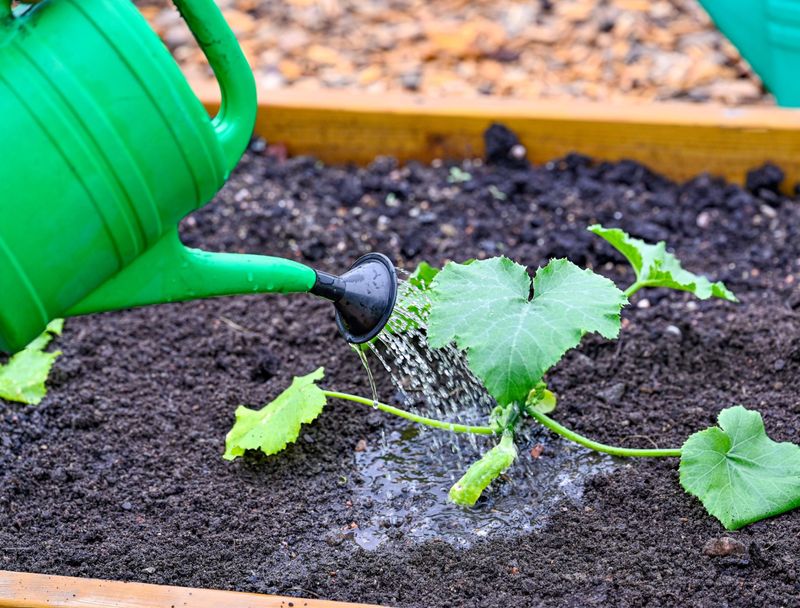
One of the smartest upgrades any squash gardener can make has nothing to do with timing and everything to do with technique.
Instead of spraying water over the top of the whole plant, directing water straight to the soil at the base of the squash keeps the foliage much drier and dramatically reduces the conditions powdery mildew loves.
Soaker hoses are a fantastic tool for this. You lay them along the base of your squash row, turn on the water, and moisture seeps slowly and evenly into the soil right where the roots need it most.
The leaves stay completely dry throughout the whole process. Drip lines work the same way and are another great option for gardeners who want a more permanent setup in their squash beds.
Even careful hand watering at the soil level works well if you do not have soaker hoses yet. The key is keeping the water low and directed at the ground rather than the plant itself.
A gentle stream aimed at the base of the stem gets the water to the roots without creating the humid leaf canopy that powdery mildew thrives in.
Keeping foliage dry is one of the most effective and practical things you can do to protect squash from fungal problems.
Combine soil-level watering with a morning schedule, and you have already taken two of the biggest steps toward a healthier, more productive squash patch.
The plants get all the hydration they need, and the leaves stay dry enough to resist fungal pressure all season long.
6. Give Squash Space For Airflow

Watering time matters a lot, but it is only one piece of the powdery mildew puzzle. Michigan State University has noted that powdery mildew is strongly favored by dense plantings and shaded areas inside the plant canopy.
That means how you space your squash plants is just as important as when and how you water them.
Squash vines can sprawl out surprisingly far, and when multiple plants grow close together, their leaves overlap and shade each other.
That shaded interior becomes a low-airflow zone where humidity builds and stays high for long periods, especially after watering.
It is exactly the kind of microenvironment where powdery mildew gets a strong foothold and spreads quickly from leaf to leaf.
Giving each squash plant plenty of room is one of the most effective preventive measures you can take. Most varieties benefit from at least three to four feet of space in every direction.
If you are growing vining types, guiding the vines outward as they grow helps open up the center of the planting, which keeps air moving through the canopy more freely.
Pruning a few of the older, lower leaves during the season can also help increase airflow without harming the plant. Fewer overlapping leaves means less trapped humidity and better light penetration throughout the canopy.
Pair good spacing habits with smart watering practices, and your squash patch becomes a much less welcoming environment for powdery mildew to take root and spread through your garden.
7. Check Leaves Before The Problem Spreads

Spotting powdery mildew early is one of the best advantages you can give yourself as a Michigan squash grower. The disease does not announce itself loudly at first.
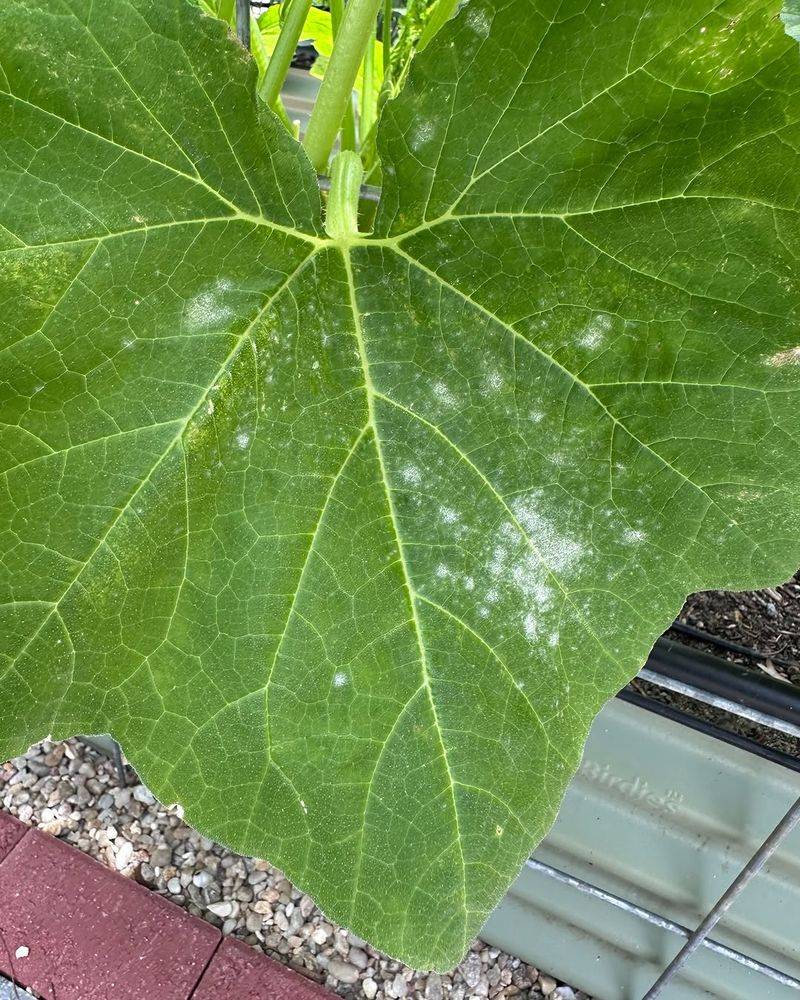
It starts quietly, usually as small white or grayish powdery patches on the surface of older leaves, and it can be easy to overlook if you are only doing a quick walk-through of the garden.
July and August are the months when Michigan gardeners need to be most alert.
Summer heat combined with humidity creates peak conditions for powdery mildew, and the disease can spread from a few spots to covering entire leaves within a week if conditions stay favorable.
Catching it early gives you a real chance to slow it down before it takes over.
Make a habit of checking the lower and inner leaves of your squash plants, not just the newest growth at the tips of the vines. Older shaded leaves tend to show symptoms first because they get less sunlight and less airflow.
Flip a few leaves over and look at the undersides too, since powdery mildew sometimes appears on the lower surface before it becomes visible on top.
Once you spot the early signs, removing affected leaves and improving airflow can help slow the spread.
Adjusting your watering schedule back to morning and switching to soil-level watering at the same time gives the plant a much better environment to push back against the disease.
Consistent leaf checks through midsummer are genuinely one of the simplest and most effective tools in your garden routine.
8. Water Deeply But Less Often
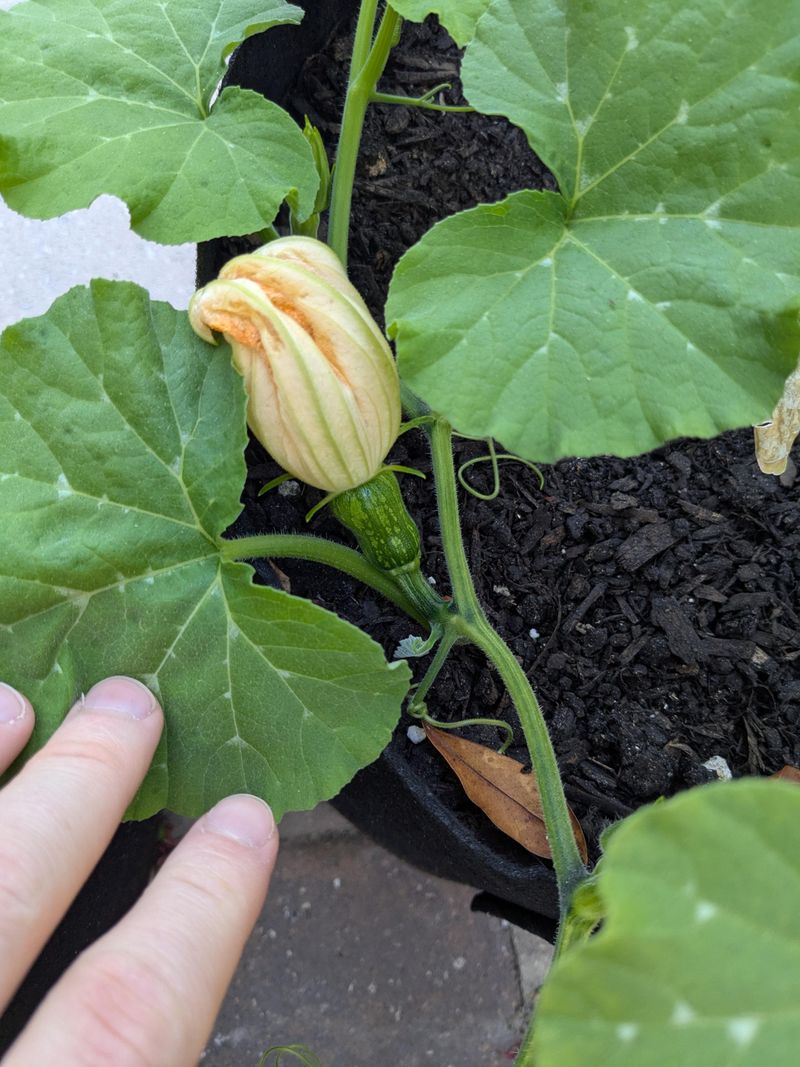
There is a watering approach that works really well for squash and also helps reduce powdery mildew risk at the same time: water deeply but less frequently.
Many gardeners instinctively water a little bit every day, but that habit can keep the soil surface and the air around the plant consistently damp, which is exactly what you want to avoid.
Squash plants have strong, deep root systems that can reach down into the soil to access moisture. When you water deeply, you encourage those roots to grow further down where the soil stays more consistently moist on its own.
A thorough watering session that soaks the soil several inches down is far more beneficial than a light daily sprinkle that only wets the top layer.
Constant light watering keeps the surface of the bed wet almost all the time, which raises humidity around the lower leaves and stems. That persistent dampness is a welcoming environment for powdery mildew and other fungal issues.
Deep, less frequent watering allows the soil surface to dry out between sessions, which naturally reduces that humidity problem.
Before you water again, check the soil moisture by pushing your finger two inches into the ground near the base of the plant. If it still feels moist at that depth, you can wait another day.
Watering deeply in the morning every two to three days, depending on rainfall and temperature, gives your squash all the hydration it needs.
All without creating the consistently wet, humid conditions that make powdery mildew so hard to manage in a Michigan summer garden.