This Michigan Garden Plant Accidentally Attracts Japanese Beetles And Aphids At The Same Time
Some plants end up doing exactly the opposite of what gardeners hope for, and this particular Michigan garden staple has a talent for drawing two of the most damaging pest species simultaneously without anyone intending for that to happen.
Both Japanese beetles and aphids respond strongly to this plant for different biological reasons.
However, the result is the same: it concentrates pest pressure in one area and creates a population source that spills over into nearby crops.
The plant itself is popular, widely available, and genuinely attractive, which is exactly why it ends up in so many Michigan gardens without anyone realizing the pest management problem it quietly creates every summer from mid-June through August.
1. Spoiler Alert: It’s Roses
Roses have earned their reputation as one of the most rewarding flowering plants a Michigan gardener can grow.
With hundreds of varieties available, from climbing roses to compact shrub types, there is almost always a rose that fits a garden space.
Their blooms are stunning, their fragrance is hard to beat, and watching them open through summer feels genuinely satisfying.
The catch is that roses are not a set-it-and-forget-it plant. They draw Japanese beetles because the beetles are strongly attracted to rose flowers, buds, and foliage.
At the same time, roses can pull in aphids, especially on tender new shoots and forming flower buds where soft plant tissue is easy to feed on.
Both pest problems can show up in the same season, sometimes even on the same plant at the same time. That does not mean roses are a bad choice.
It just means they need a gardener who is willing to stay engaged and check on them regularly. Roses reward attention in a big way. The blooms are worth it for most people.
But anyone who wants a completely hands-off garden should know upfront that roses will ask more of them than many other flowering plants in Michigan yards.
2. Why Roses Draw Japanese Beetles In Michigan
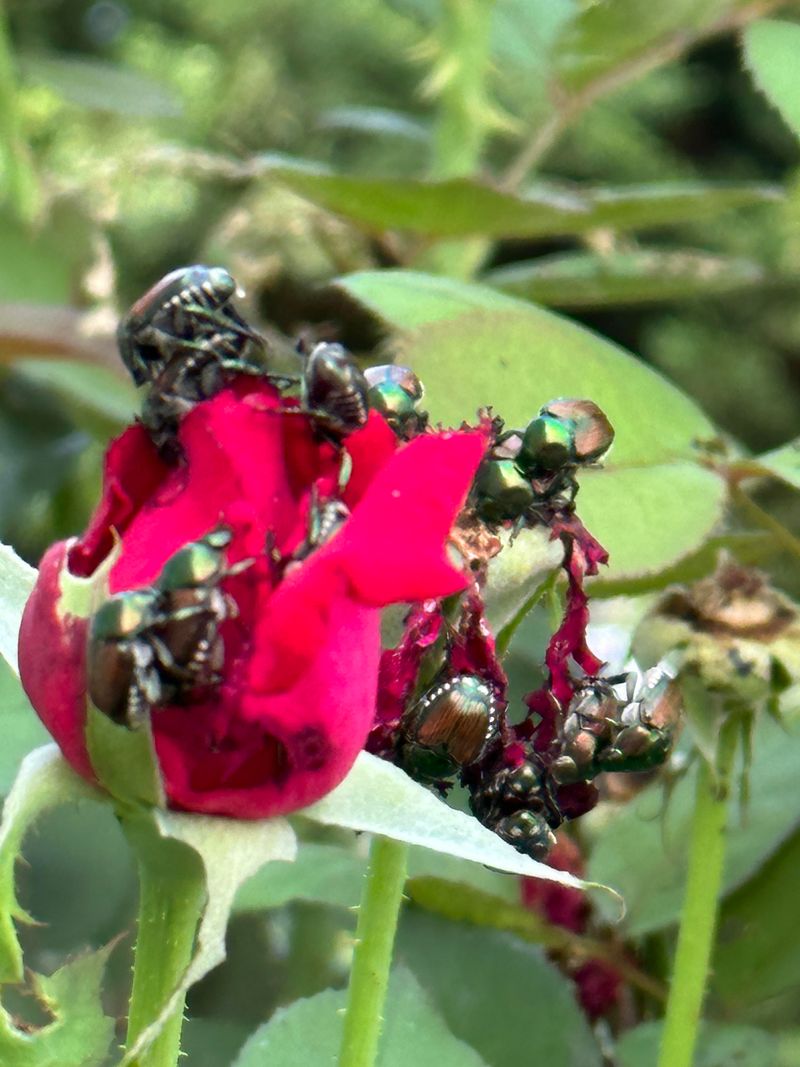
Japanese beetles are a well-known summer pest across Michigan, and roses happen to be one of their favorite targets.
Adult beetles are most active from late June through August, feeding during warm, sunny parts of the day.
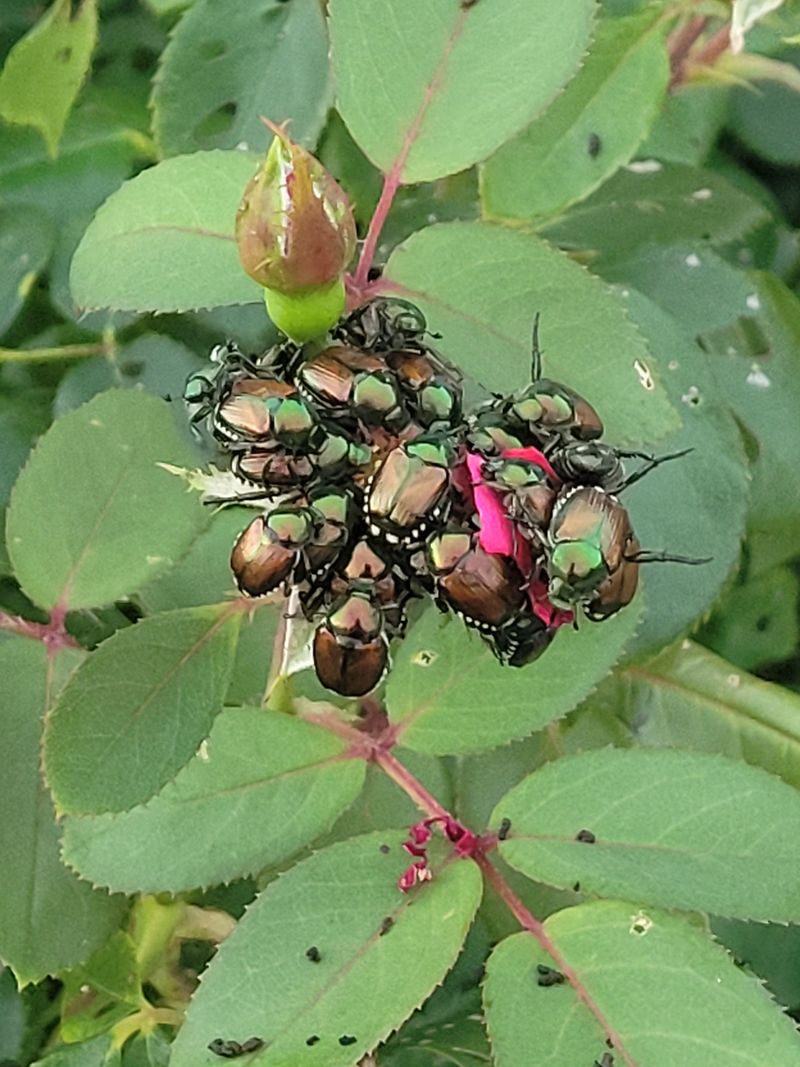
They chew through rose petals and leaf tissue in a lacy, skeletonized pattern that is hard to miss once it starts. Roses are attractive to Japanese beetles for a few reasons.
The flowers produce scent compounds that beetles respond to, and the soft petals and leaves are easy for them to feed on.
Roses planted in open, sunny spots, like a front yard bed with full afternoon sun, can become especially noticeable gathering spots during peak beetle season because beetles prefer warm, exposed locations.
Beetles also tend to release aggregation signals that bring more beetles to the same plant, so a small group can grow quickly if it goes unchecked.
Checking rose bushes every few days during July and early August is a smart habit.
Early morning is a good time to look, since beetles are a little slower when temperatures are cooler.
Your Michigan Garden Changes Every Week. Your Plan Should Too.
Gardening in Michigan changes quickly throughout the season. Every Friday you’ll receive a simple weekly plan showing exactly what to plant, prune, fertilize, harvest, and protect so you never miss the right timing.
Catching them early and removing them by hand into a bucket of soapy water is one of the most effective ways to manage small populations before they build up on your plants.
3. Why Roses Draw Aphids At The Same Time
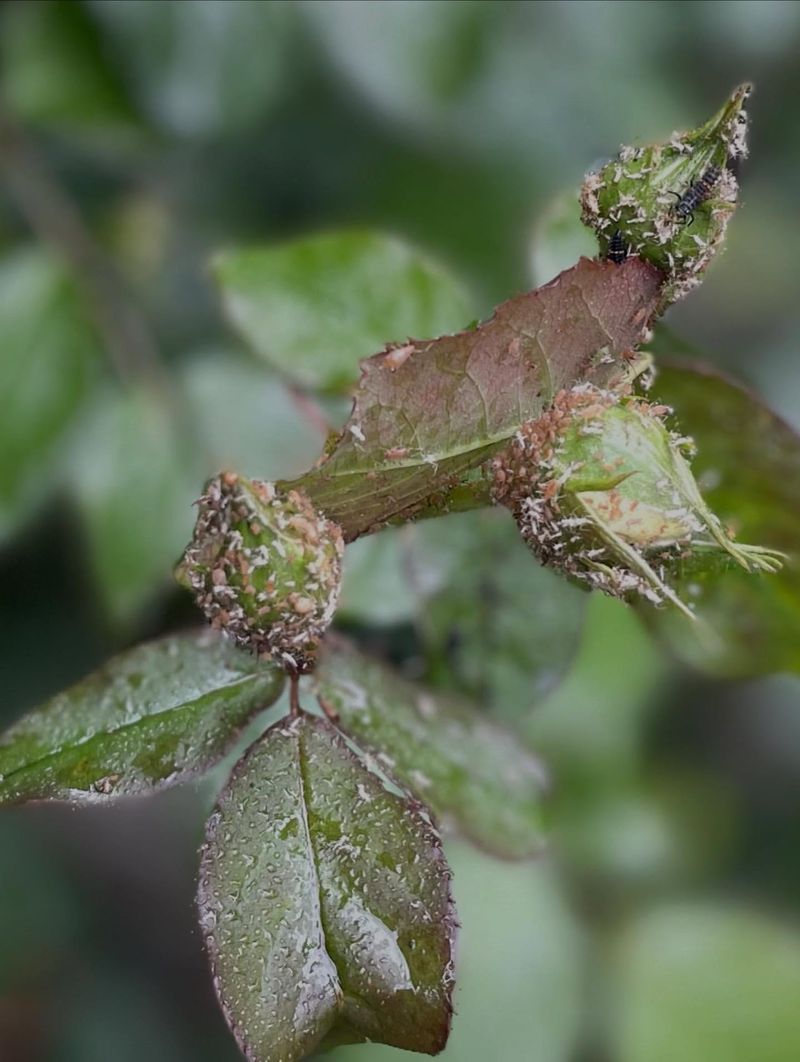
Aphids love roses for a very specific reason: roses produce a lot of soft, tender new growth throughout the growing season.
Every time a rose pushes out fresh shoots and forming buds, it is essentially offering aphids exactly the kind of plant tissue they prefer.
Aphids pierce that soft tissue and feed on the plant’s sap, and they can multiply quickly under the right conditions.
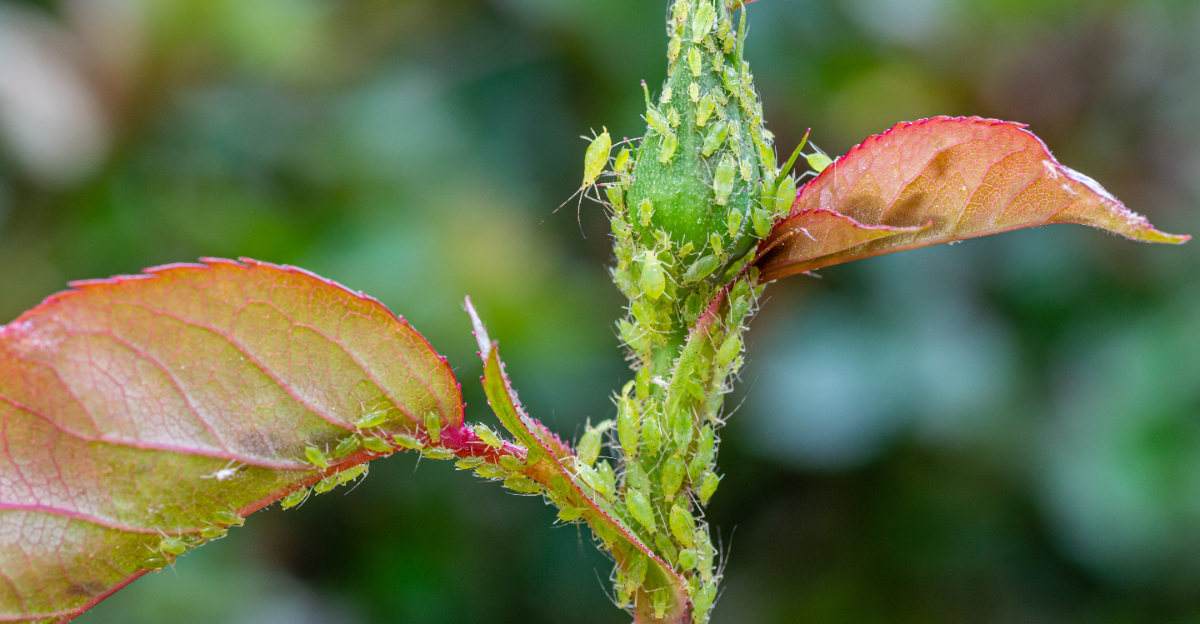
You will usually find aphids on the undersides of young leaves, along new stems, and clustered around flower buds before they open.
They tend to be small and green or pale, making them easy to overlook until the population gets large.
A heavy aphid infestation can cause distorted leaves, sticky residue called honeydew, and weakened new growth on the plant.
One thing that can make aphid pressure worse on roses is too much nitrogen fertilizer.
High nitrogen pushes extra lush, fast, soft growth, and that soft growth is exactly what aphids find most appealing.
Keeping fertilization balanced and steady rather than pushing the plant too hard can help reduce how much tender growth is available at any one time.
Paired with regular scouting, balanced feeding goes a long way toward keeping aphid numbers manageable on Michigan rose bushes throughout the growing season.
4. Why Some Gardeners May Want To Skip Roses
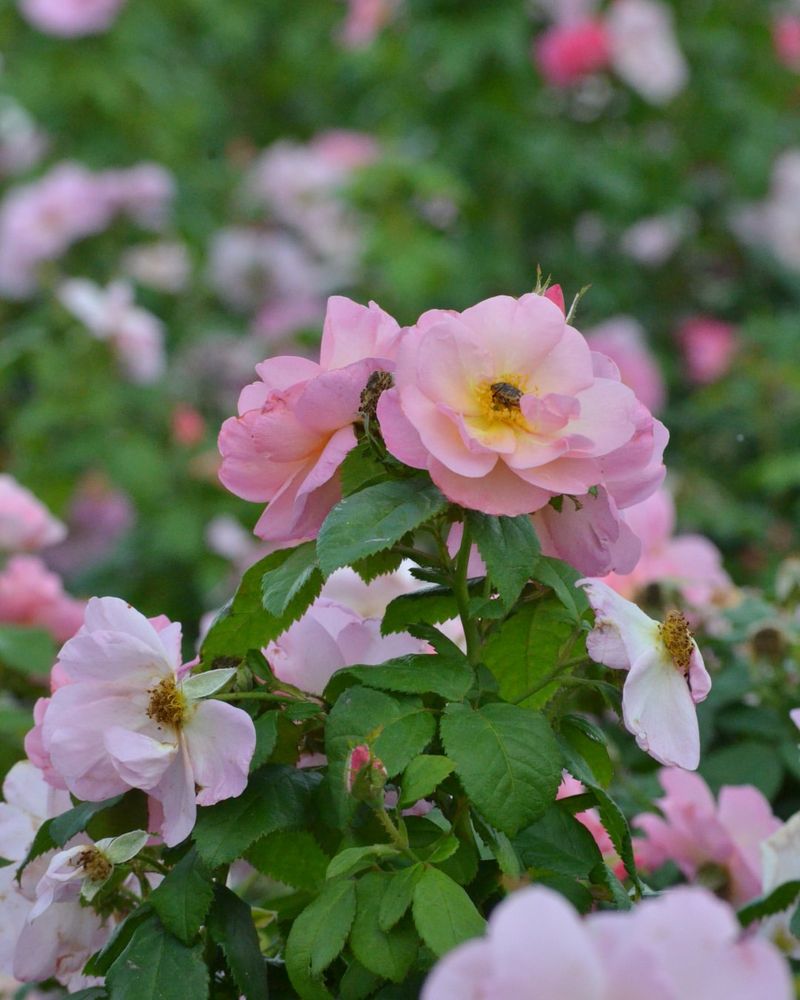
Roses are genuinely beautiful, but they are honest about the attention they need.
For Michigan gardeners who want a low-maintenance yard where plants mostly take care of themselves, roses can feel like a demanding commitment. They are not the kind of plant you plant once and walk away from for the entire season.
Beyond Japanese beetles and aphids, roses can also need regular monitoring for fungal issues like black spot and powdery mildew, especially in humid Michigan summers.
Pruning, deadheading, watering deeply without wetting foliage, and checking overall plant health all become regular tasks if you want roses to perform well and look their best through the season.
None of this means roses are a bad plant. It just means they are a high-engagement plant, and that suits some gardeners perfectly while others would rather spend that time on something easier.
The gardeners who love roses tend to enjoy the process of caring for them.
There is real satisfaction in checking a plant, catching a problem early, and watching it bloom beautifully as a result. Roses reward that kind of attention generously.
But anyone considering adding roses to a Michigan yard should go in with realistic expectations rather than assuming they will be a carefree addition to the garden.
5. Where To Put Roses If You Still Love Them
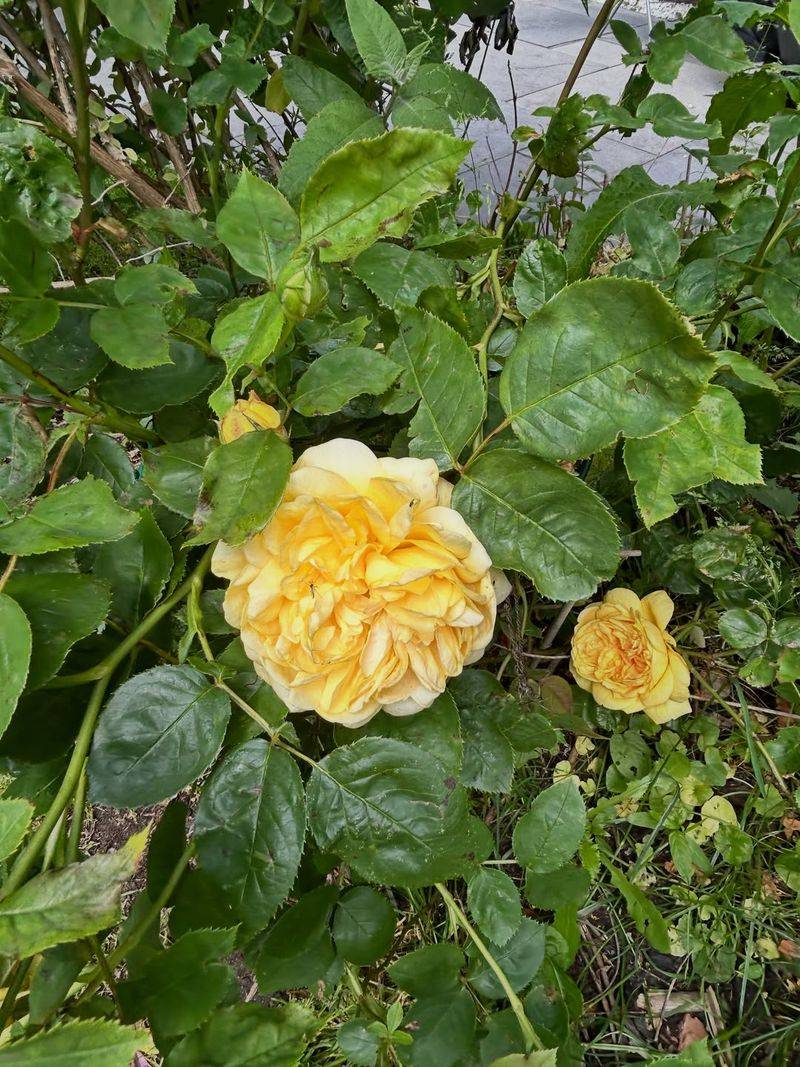
Placement makes a surprisingly big difference when it comes to growing roses successfully in Michigan.
Roses need full sun, ideally six or more hours of direct sunlight per day, for strong blooms and good overall plant health.
A spot with good air circulation around the plants also helps reduce the humidity that can encourage fungal problems during wet summer stretches. Beyond sun and airflow, think about access.
Roses that are easy to walk up to and inspect from multiple angles are much easier to manage than roses tucked into tight corners or crowded against fences.
You want to be able to check leaf undersides, look at buds, and spot early signs of beetles or aphids without having to crawl through other plantings or disturb nearby garden beds.
It is also worth thinking about where roses sit in relation to your most-used outdoor spaces.
Planting roses directly beside a patio seating area or a main entryway means any pest activity on the plants is right in your face every time you step outside.
A spot that gets full sun and easy access but sits slightly apart from your primary living areas gives you the best of both worlds.
You get beautiful blooms without turning every outdoor meal into a pest-scouting session right beside the table.
6. Keep Roses Away From Other Japanese Beetle Favorites
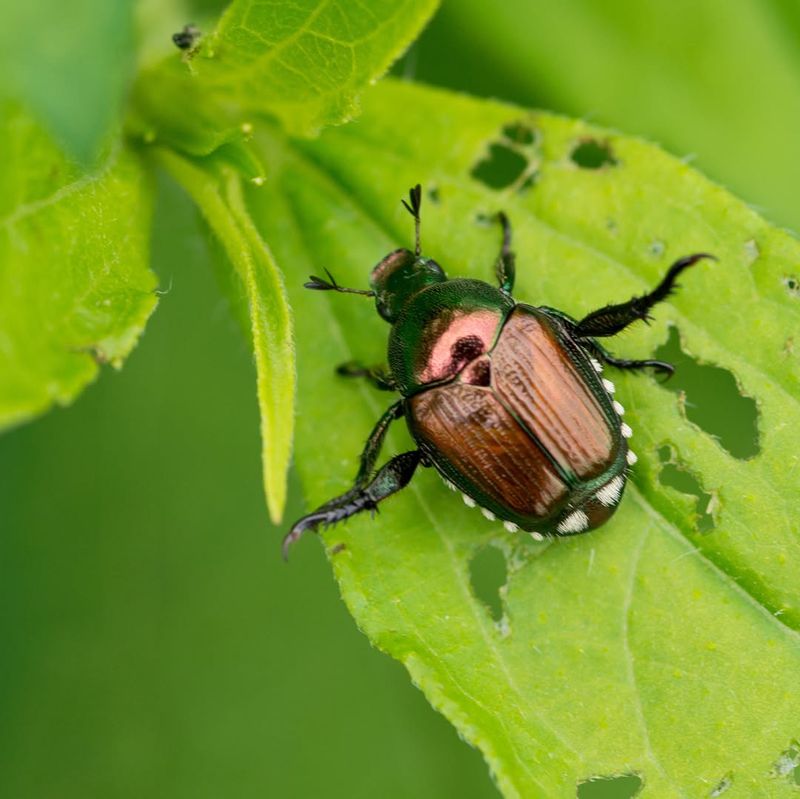
Grouping roses tightly with other plants that Japanese beetles love is one of the quickest ways to turn a manageable pest situation into an overwhelming one.
Beetles are already drawn to roses on their own, so surrounding them with additional beetle favorites just concentrates the problem in one spot and makes monitoring much harder.
Some of the plants beetles commonly favor in Michigan gardens include grapes, linden trees, ornamental crabapples and other fruit trees, raspberries, and certain ornamental shrubs.
None of these are bad plants, but planting them shoulder to shoulder with your roses during peak beetle season is like setting up a buffet in one corner of the yard.
Once beetles find one attractive plant, they tend to move around the immediate area and hit neighboring favorites quickly.
Spreading susceptible plants out across different parts of the yard is a smarter approach. It does not make beetles disappear, and it will not stop them from finding your roses entirely.
But it does make the garden easier to monitor because you are not dealing with a single hotspot where every pest-prone plant is packed together.
When each susceptible plant has some breathing room, you can check each one more efficiently and catch problems before they spread.
Thoughtful spacing is one of the simplest and most underrated tools in a Michigan gardener’s pest management approach.
7. Plant Sweet Alyssum Nearby For Aphid Helpers
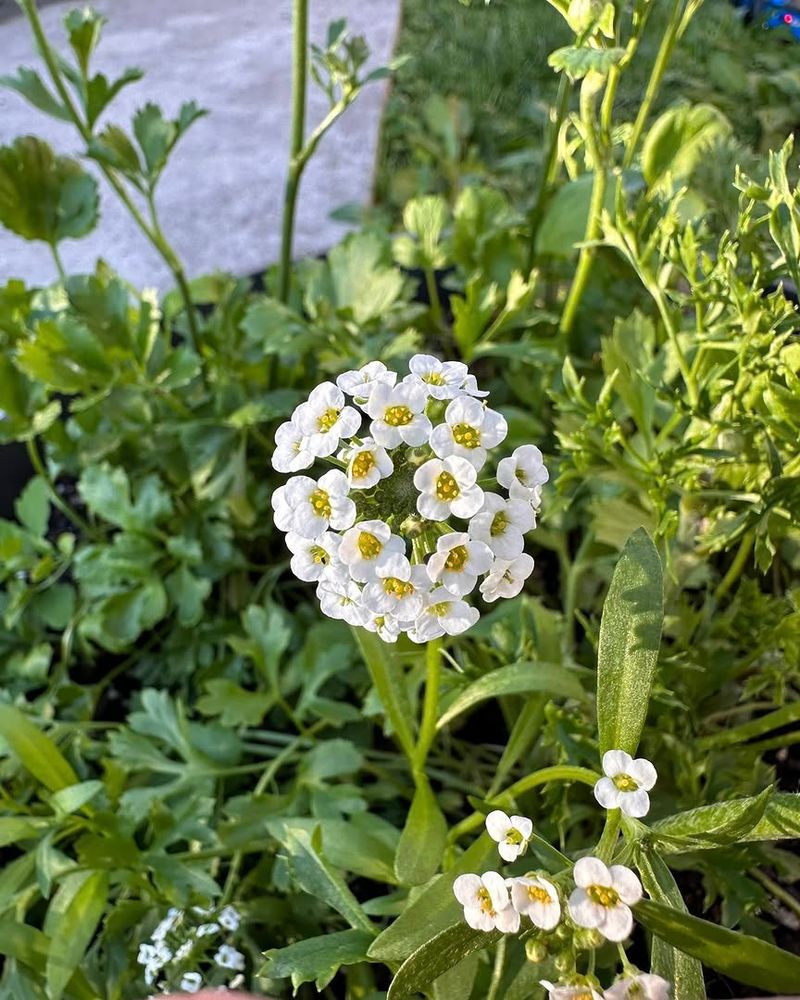
Sweet alyssum is a low-growing annual with tiny, fragrant white or purple flowers, and it is one of the most useful companion plants a Michigan gardener can add near a rose bed.
The small flower clusters provide nectar and pollen that attract beneficial insects including hover flies, lacewings, and lady beetles, all of which are connected with natural aphid management in garden settings.
Hover fly larvae, for example, feed on aphids, while adult hover flies need nectar from small open flowers to fuel their activity.
Lacewings and lady beetles are also well-known aphid predators at various life stages.
Planting sweet alyssum nearby creates a more welcoming environment for these helpful insects, giving them a reason to stay in and around the rose bed throughout the season.
It is worth being clear about what sweet alyssum can and cannot do. It will not make your roses invisible to aphids or Japanese beetles. Pest pressure can still develop, and you will still need to scout regularly.
What sweet alyssum does is help build a more balanced garden ecosystem around your roses, one where beneficial insects have food sources and reasons to hang around.
That kind of support works best as part of a broader approach that also includes good plant placement, balanced feeding, and regular monitoring rather than as a standalone fix.
8. Add Dill, Cilantro, Or Coriander Flowers For Beneficial Insects
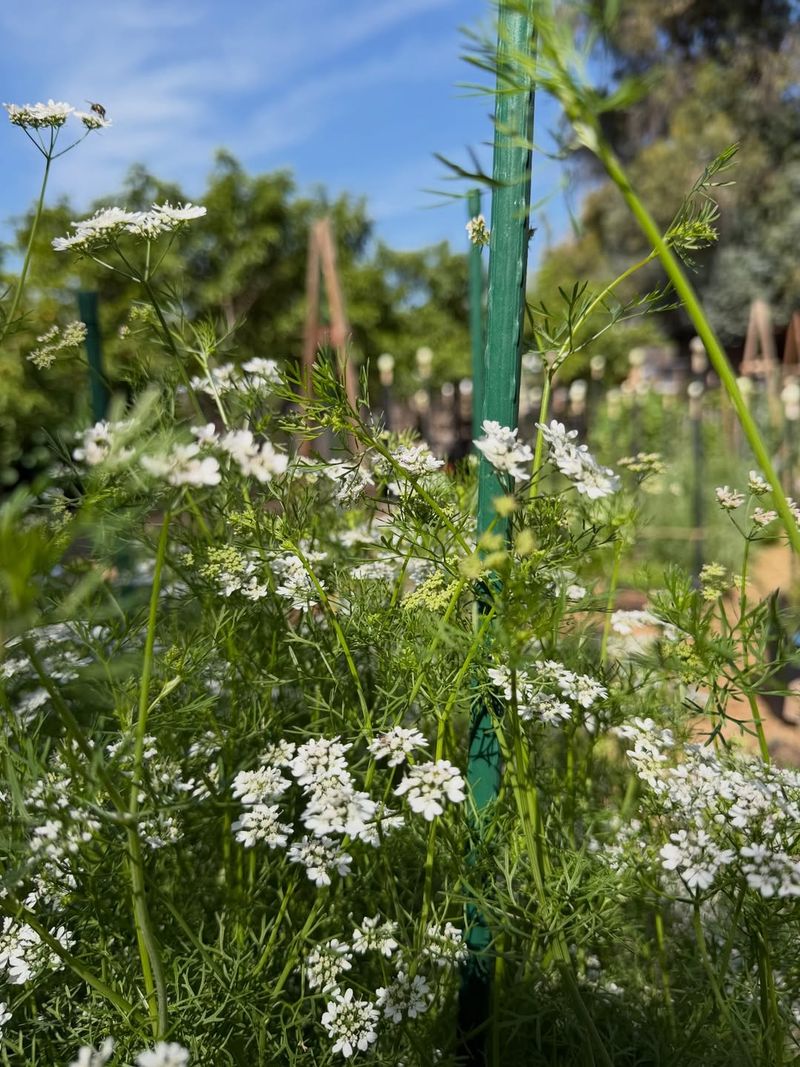
Flowering herbs like dill, cilantro, and coriander are surprisingly powerful allies for a Michigan rose garden.
When these plants are allowed to bolt and flower, their umbrella-shaped flower clusters, called umbels, produce nectar and pollen in a form that many small beneficial insects can easily access.
That includes parasitic wasps, hover flies, and other tiny insects that play a role in keeping aphid populations in check.
Most people grow dill and cilantro in the vegetable garden, but they work beautifully as a border or companion planting near roses too. You do not need a large patch.
Even a few plants allowed to flower near the rose bed can add meaningful support for the beneficial insect community in your yard.
Cilantro bolts quickly in summer heat, which actually makes it easy to have a continuous supply of flowers by staggering small plantings every few weeks. One thing to keep in mind is spacing.
These herbs should be planted close enough to the rose bed to be useful but not so close that they crowd the roses or block airflow between plants.
Good airflow around rose bushes helps reduce fungal pressure, so companion plants should complement the bed rather than compete with it.
Keeping a comfortable gap between the herbs and the roses lets you inspect both easily and keeps the overall planting healthy and productive through the season.
9. Use Yarrow Or Mountain Mint As A Perennial Insectary Border
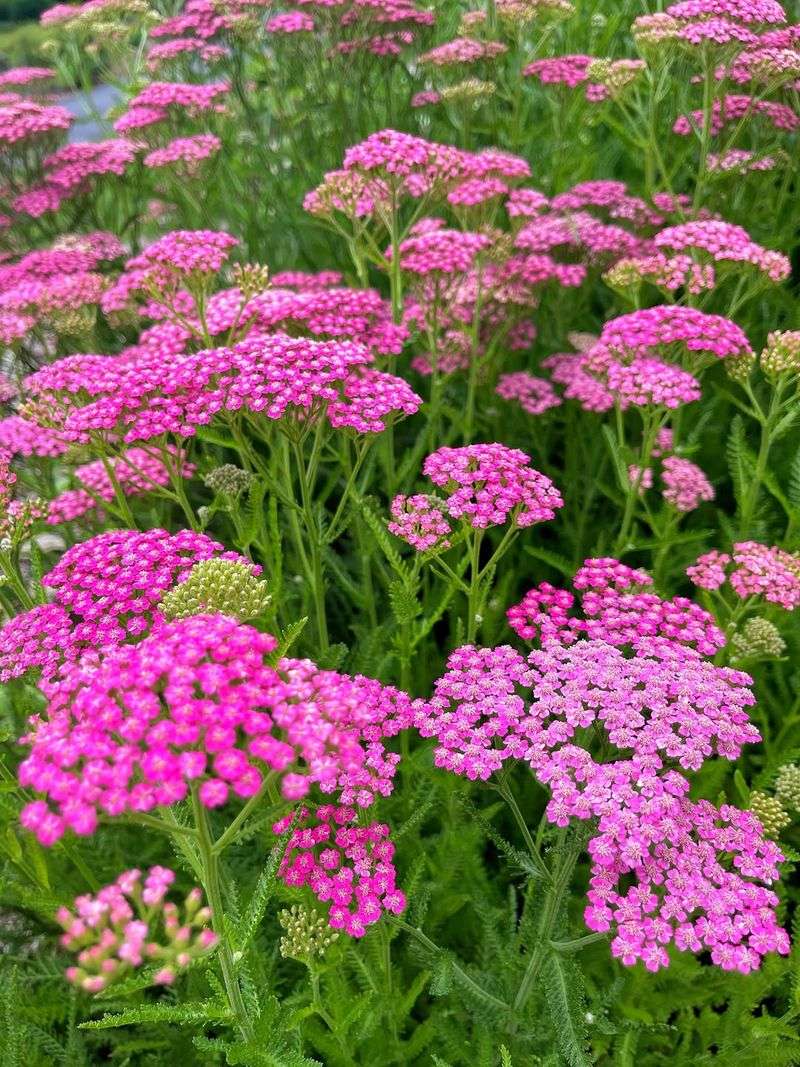
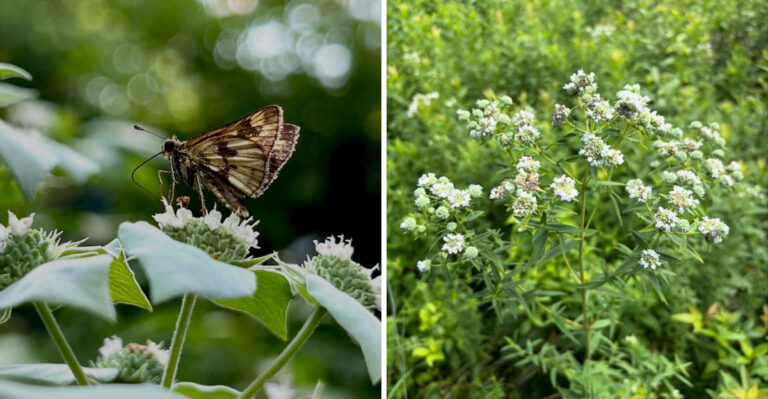
Yarrow and mountain mint are two perennials that Michigan gardeners can plant near roses to create a long-lasting insectary border that comes back year after year.
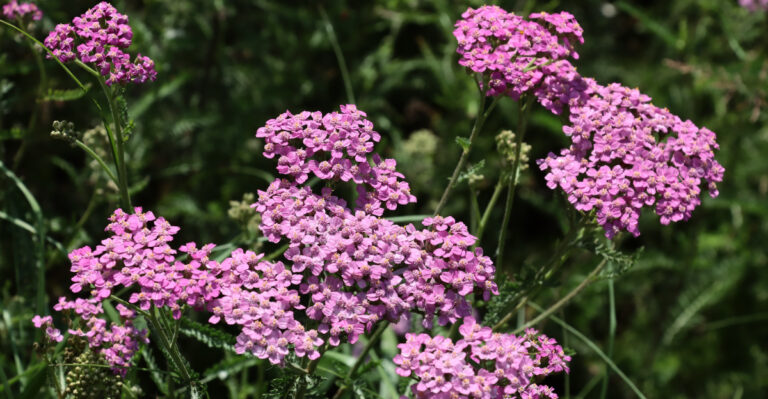
Both plants produce clusters of small flowers that are highly attractive to a wide range of beneficial insects, including parasitic wasps, predatory beetles, and other natural aphid predators and parasitoids that help keep pest populations in balance.
Yarrow is especially easy to grow in Michigan. It tolerates dry conditions well, spreads gradually over time, and blooms in shades of yellow, white, and pink through much of the summer.
Mountain mint is similarly tough and productive, with small white flowers that seem to buzz with insect activity from the moment they open.
Both plants are low-maintenance once established, which makes them a smart long-term investment for any gardener who wants to support beneficial insects without replanting every year.
The honest expectation here is that these plants support a more diverse and balanced garden ecosystem.
They can help build populations of aphid predators and parasitoids over time, and they make the garden more resilient overall.
They will not fully stop Japanese beetles or eliminate aphids from your roses entirely.
Think of them as part of a layered approach: good plant placement, balanced feeding, regular scouting, and a diverse planting that gives helpful insects a reason to stay in your yard all season long.
10. Keep Rose Growth Balanced Instead Of Overfed
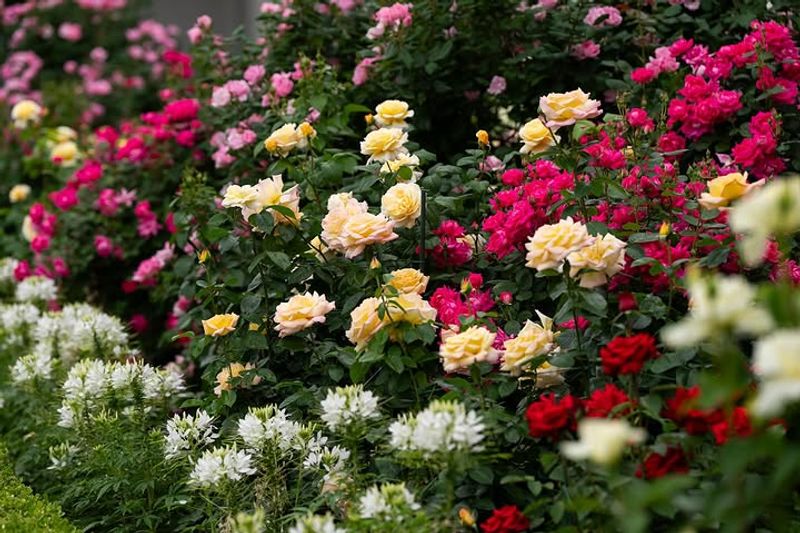
Fertilizing roses feels satisfying, and it is tempting to push them hard with nitrogen to get bigger, faster growth and more blooms.
The problem is that too much nitrogen produces exactly the kind of overly soft, lush new tissue that aphids find most appealing.
Overfeeding a rose does not make it stronger against pests. In many cases, it makes the plant more vulnerable to them. A more balanced approach works better for both plant health and pest resistance.
Steady, consistent watering supports strong root systems without forcing sudden surges of soft growth.
Compost worked thoughtfully into the soil improves overall soil health and provides a slow, gentle nutrient release that feeds the plant steadily rather than all at once.
When supplemental fertilizer is needed, following label directions and adjusting based on actual soil conditions and plant performance is smarter than applying on a fixed heavy schedule.
Roses that grow at a steady, healthy pace tend to produce firmer tissue that is slightly less attractive to aphids than plants pushed into rapid, floppy growth by excess nitrogen.
That does not mean you should starve your roses. They do need good nutrition to bloom well and stay vigorous.
The goal is balance, giving the plant what it needs to thrive without overloading it in ways that create easy opportunities for pests to move in and take advantage of overly tender growth.
11. Make The Rose Bed Easy To Inspect Every Week
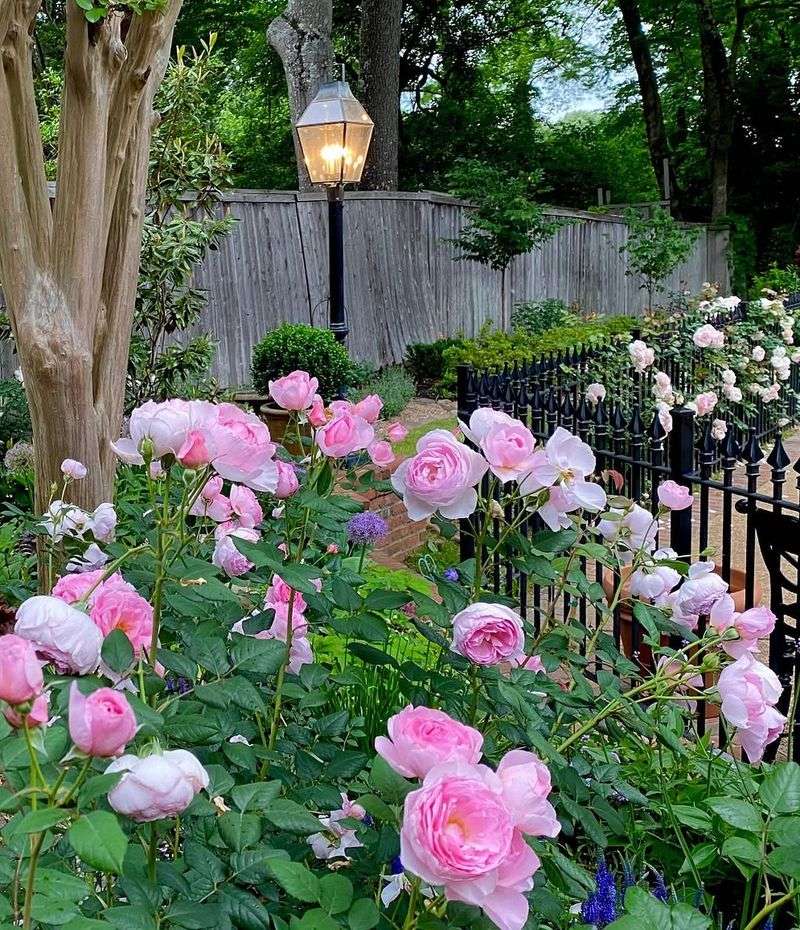
Designing a rose bed with weekly inspection in mind might sound like a small detail, but it genuinely changes how manageable the whole growing experience feels.
A rose bed that is easy to walk around, with open spacing between plants, clear access from multiple sides, and no crowded corners, is a bed you will actually check regularly.
And regular checking is the single most effective tool a Michigan gardener has against both Japanese beetles and aphids.
Full sun placement supports strong plant health and makes it easier to spot pest activity on leaves and buds.
Soil-level watering, whether through drip irrigation or careful hand watering at the base, keeps foliage dry and reduces fungal pressure.
Insectary flowers planted nearby, like sweet alyssum, yarrow, or flowering dill, bring in beneficial insects that support a more balanced pest environment around the bed without crowding the roses themselves.
Keeping beetle traps away from the rose area and staying consistent with weekly checks through June, July, and August covers the highest-risk period for both pest types.
Catching a small cluster of Japanese beetles early or spotting the first aphids on a new shoot makes all the difference before populations build. Roses are absolutely worth growing in Michigan.
They are high-reward plants that respond beautifully to smart placement, thoughtful care, and a gardener who checks in often enough to stay one step ahead of the season.