Turn Your Delaware Suburban Lot Into A Private Oasis With These 8 Screening Plants
Your new neighbor just installed a six-foot trampoline three feet from the fence, and suddenly every backyard barbecue feels like it’s being livestreamed. If you’re gardening on a typical Delaware lot, this scene probably rings a bell.
Houses sit close together, fences stop at waist height, and one wrong angle turns your patio into a stage. Screening plants solve this without the awkward conversation about property lines or the cost of a privacy fence.
Pick the right species, and within a season or two, your yard shifts from exposed to enclosed, from “everyone can see us” to “wait, where did the neighbors go?”
Delaware’s mix of humid summers, clay-heavy soil, and unpredictable coastal winds narrows the list considerably, but the plants that do thrive here grow dense, fast, and attractive enough that nobody will guess they’re doing double duty as a fence.
1. Thuja Green Giant (Arborvitae)
Imagine planting a tree that grows three to five feet every single year. That is exactly what Thuja Green Giant delivers, and suburban homeowners across the Mid-Atlantic absolutely love it.
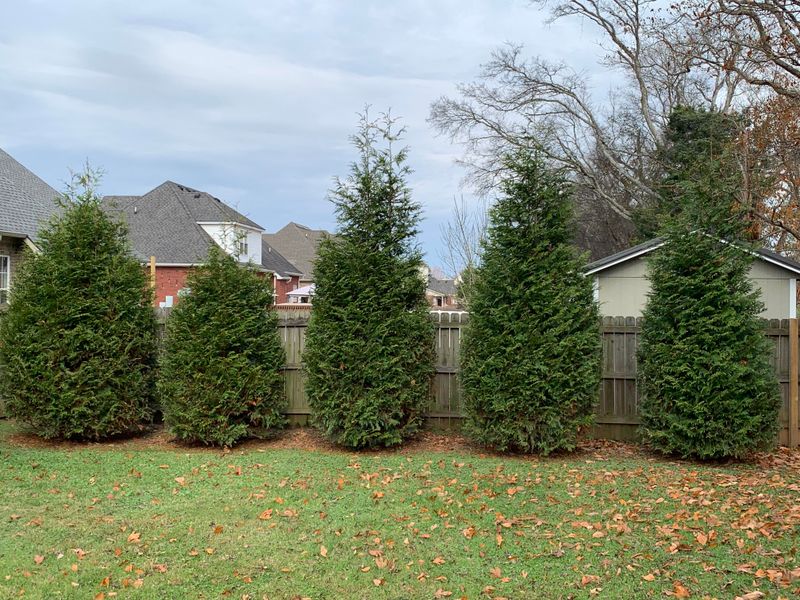
This evergreen powerhouse forms a dense, dark-green wall that blocks noise, wind, and prying eyes. Its natural pyramid shape means you rarely need to trim it into submission.
Thuja Green Giant handles Delaware’s humid summers and cold winters without complaint. It resists deer browsing, which is a huge win in neighborhoods where deer roam freely through backyards.
Plant these giants about five to six feet apart for a solid screen within two or three growing seasons. Give each tree a good soaking during dry stretches, especially in the first year after planting.
These trees prefer full sun but tolerate partial shade better than most fast-growing conifers. Well-drained soil keeps their roots happy and their growth rate impressively fast.
Mature trees reach forty to sixty feet tall and twelve to twenty feet wide, so give them room before planting near your house or power lines.
Pests and fungal issues rarely bother this variety. A light layer of mulch around the base helps retain moisture and keeps weeds down.
A single row along your property line transforms a bare, exposed yard into something that feels intentional and private. For screening plants Delaware homeowners trust most, Thuja Green Giant tops nearly every list for good reason.
2. American Holly
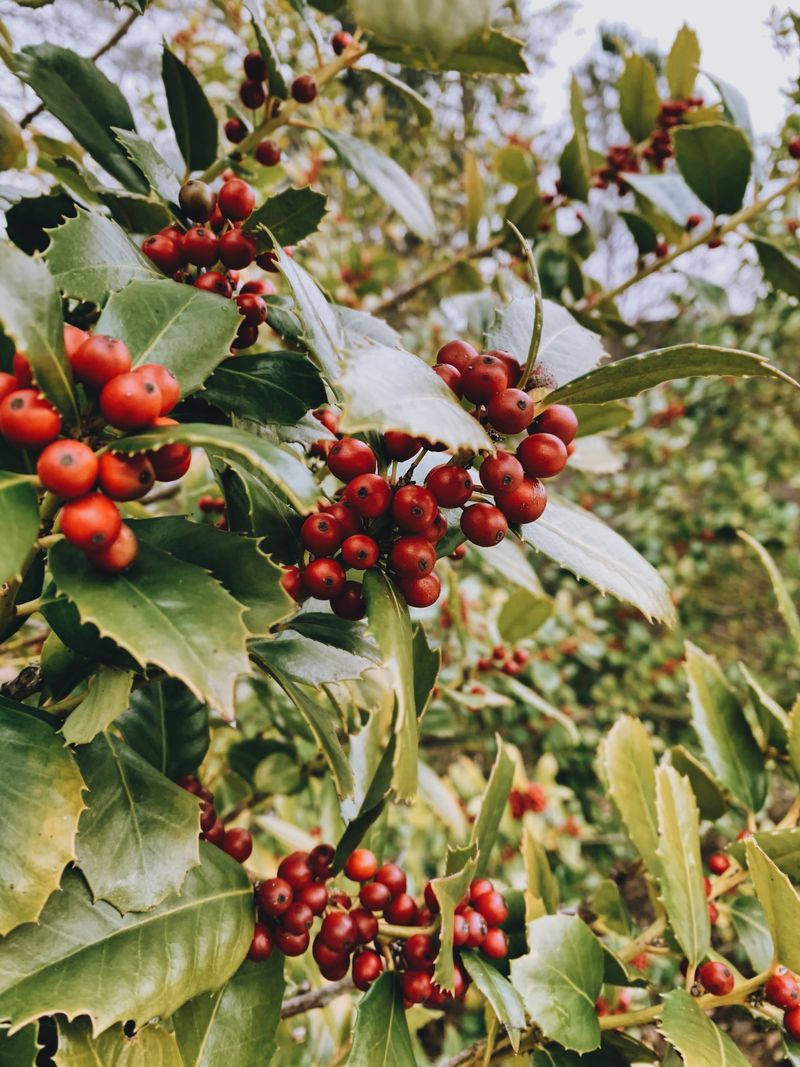
Few plants pull double duty as boldly as American Holly does in a suburban yard. It screens all year long and then rewards you with a showstopping display of red berries every winter.
This native tree is built for the Mid-Atlantic region, thriving in Delaware’s sandy loam soils and coastal humidity. It tolerates wet spots better than most evergreens, making it ideal for low-lying backyards.
American Holly grows slowly compared to Thuja, but patience pays off here. Mature specimens reach 40 to 50 feet tall, creating a permanent, wildlife-friendly privacy wall.
Birds go absolutely wild for those red berries, so expect cardinals and cedar waxwings to visit your yard all winter long. That kind of natural activity makes your outdoor space feel alive, not just enclosed.
You will need at least one male plant nearby to pollinate the females and produce berries. Most nurseries sell them labeled clearly, so ask before you buy.
Plant American Holly in full sun to partial shade, and water consistently during the establishment period. Once rooted deeply, it handles drought and salt spray with impressive resilience.
As a screening plant for Delaware suburban lots, American Holly brings native charm and year-round function. It is the kind of plant that makes your yard feel like it belongs to the landscape, not just sitting on top of it.
3. Techny Arborvitae
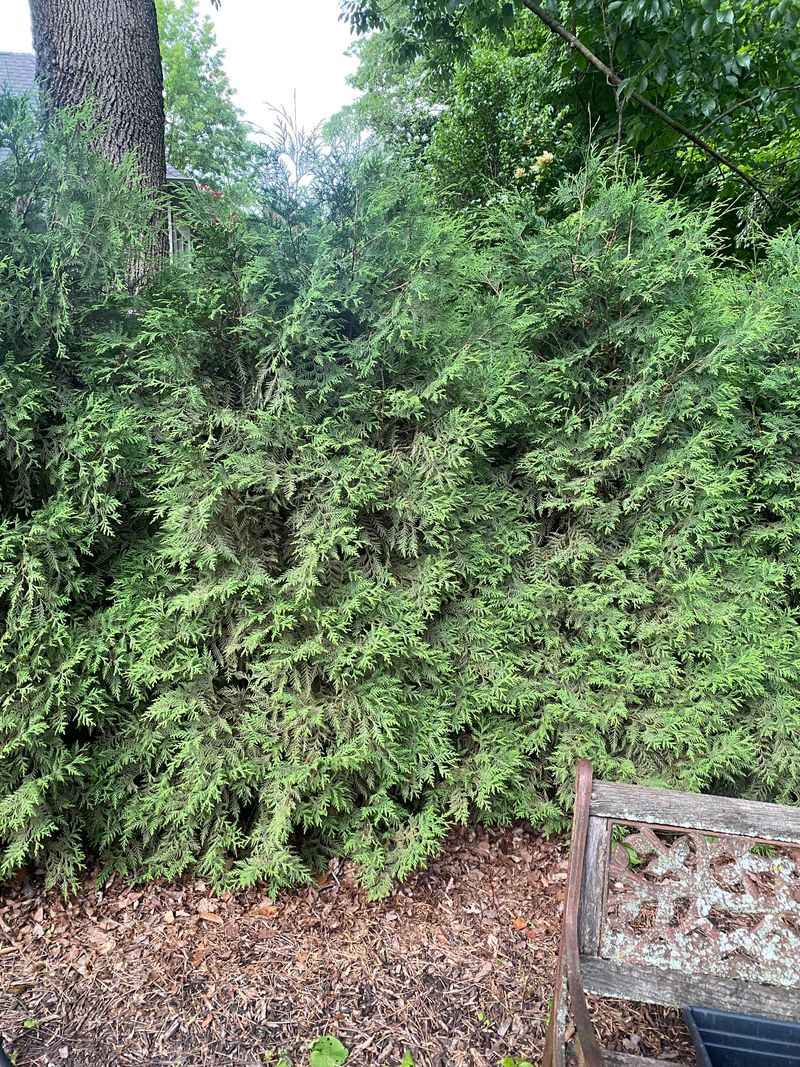
Not every yard needs a towering wall of green. Sometimes you want something shorter, wider, and a little more relaxed, and that is where Techny Arborvitae earns its spot.
This slow-growing arborvitae variety tops out around 15 feet tall and spreads up to six feet wide. That compact, rounded form makes it perfect for screening lower sight lines like fences, patios, and ground-level windows.
Techny holds its deep green color through even the harshest Delaware winters, unlike some arborvitae that turn an unfortunate bronze in cold weather. That year-round richness keeps your yard looking polished no matter the season.
It thrives in full sun and handles clay-heavy soils that would stress out faster-growing alternatives. If your backyard has drainage issues, Techny is one of the more forgiving options available.
Space plants about four to five feet apart to create a dense, interlocking hedge over time. Minimal pruning is needed since the natural shape stays tidy without much intervention.
Deer can occasionally browse arborvitae, so applying a repellent spray in late fall helps protect new growth through winter. A little seasonal maintenance goes a long way with this variety.
For homeowners who want reliable, low-maintenance screening plants that stay manageable in size, Techny Arborvitae is a smart investment. It builds privacy steadily, looks great doing it, and never outgrows its welcome.
4. Sky Pencil Holly
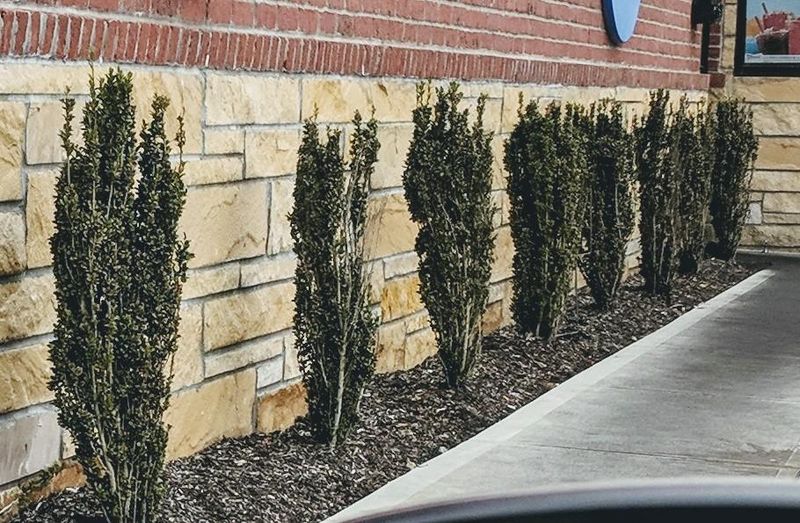
Some yards have no room for a sprawling hedge, but that does not mean privacy is out of reach. Sky Pencil Holly was practically engineered for tight suburban spaces where width is a luxury you cannot afford.
This Japanese holly cultivar grows in a striking vertical column, reaching eight to ten feet tall but only two feet wide. That pencil-thin silhouette lets you line a narrow side yard or fence line without eating up precious square footage.
The glossy, dark green foliage stays dense from top to bottom, giving you solid coverage right where you need it most. Planted in a row, these columns create a sleek, modern privacy screen that looks intentional and architectural.
Sky Pencil Holly performs beautifully in Delaware’s climate, handling both summer heat and winter cold without losing its shape. It prefers well-drained soil and full sun to partial shade for the best foliage density.
This variety grows slowly, adding about six to twelve inches per year, so patience is part of the deal. The payoff is a long-lived, nearly maintenance-free screen that holds its form without constant pruning.
Pair Sky Pencil Holly with lower shrubs in front to layer your privacy screen and add visual depth. That combination turns a plain fence line into something that looks like a professional landscape design.
As a screening plant solution for narrow Delaware suburban lots, Sky Pencil Holly proves that good things absolutely come in slim packages.
5. Inkberry Holly
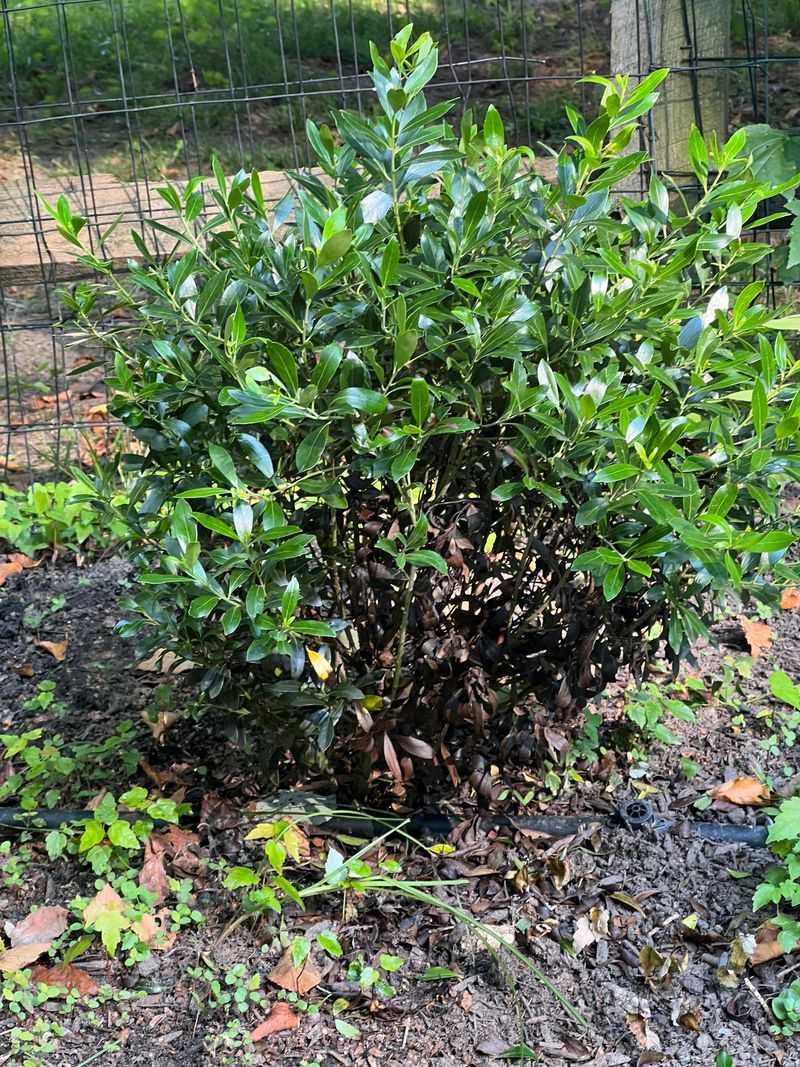
Here is a plant that thrives where others give up entirely. Inkberry Holly loves wet, boggy soil conditions that would rot the roots of most privacy shrubs within a single season.
This native holly is a workhorse in Mid-Atlantic landscapes, tolerating poor drainage, clay soil, and even occasional standing water. If your backyard has a low spot that stays soggy after rain, Inkberry Holly is your answer.
It grows into a dense, rounded shrub reaching five to eight feet tall, with glossy dark leaves that hold their color through winter. The small black berries that appear in fall are a favorite food source for migrating birds passing through the region.
Inkberry spreads gradually through root suckers, forming a natural thicket over time that becomes increasingly effective as a screen. That spreading habit means your privacy barrier actually improves with age without any replanting effort.
Plant it in full sun to partial shade, and it will adapt without complaint. Once established, Inkberry Holly is remarkably self-sufficient, needing little supplemental water or fertilizer to stay healthy.
It pairs well with ornamental grasses and native ferns for a layered, naturalistic border that looks both intentional and wild. That combination works especially well along property lines bordering wooded areas or drainage swales.
For screening plants that solve a drainage problem while building privacy, Inkberry Holly delivers a two-for-one benefit that few other shrubs can honestly match.
6. Wax Myrtle
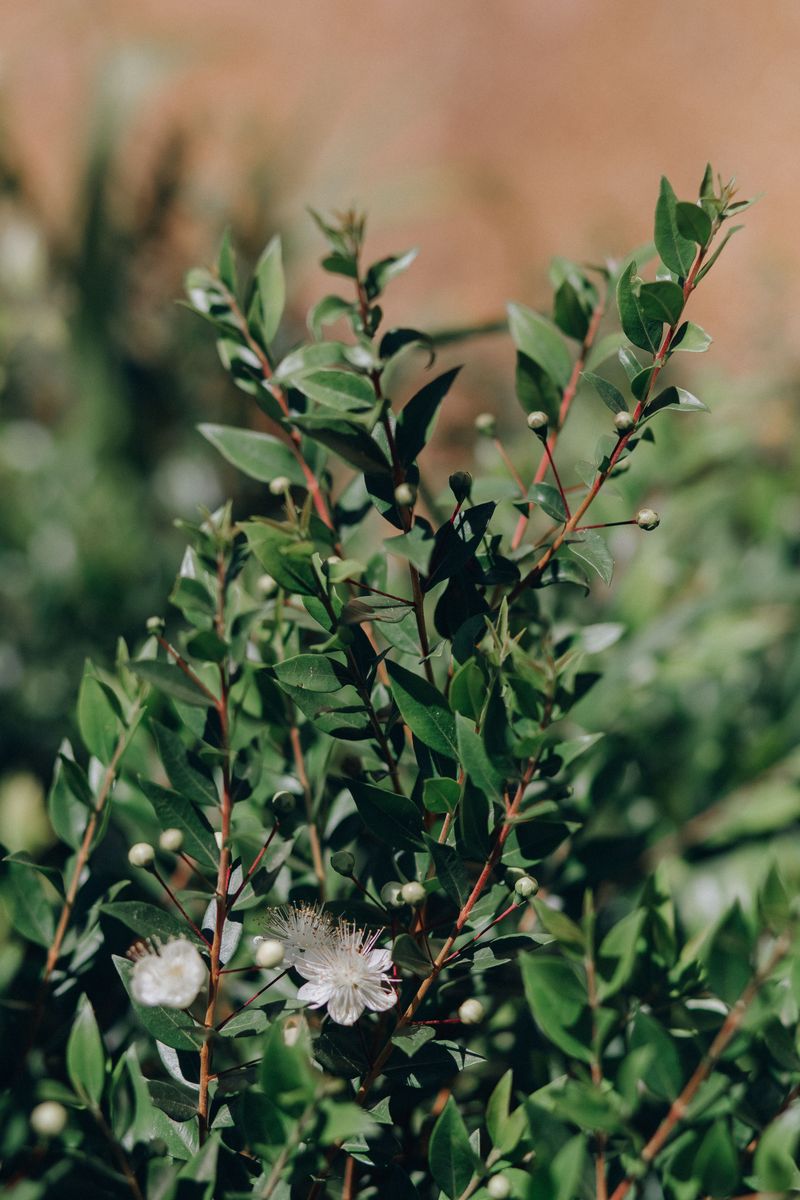
Walk past a Wax Myrtle on a warm afternoon and you will catch a faint, spicy scent that stops you mid-step. That aromatic quality is just one of the reasons this underused shrub deserves a serious spot on your planting list.
Wax Myrtle grows fast, sometimes adding three to five feet per year under good conditions. That speed makes it one of the quickest ways to build a substantial privacy screen on a suburban lot in the Mid-Atlantic region.
The gray-green foliage stays on the plant nearly year-round in Delaware, acting as a semi-evergreen screen through most winters. In colder years it may drop some leaves, but it rebounds quickly once spring temperatures return.
This shrub handles sandy, acidic soils with ease, making it a natural fit for coastal and inland Delaware properties alike. It also tolerates salt spray, which is a real advantage for homeowners near the shore.
Wax Myrtle can be grown as a large shrub or trained into a small multi-trunk tree, giving you flexibility in how you shape your screen. That adaptability makes it a great choice for creative landscape designs with varying height needs.
Plant in full sun for the densest growth and strongest fragrance. Space plants about six feet apart to allow natural spreading while still achieving solid coverage within two growing seasons.
Among fast-growing screening plants for Delaware yards, Wax Myrtle brings speed, scent, and a rugged coastal character that few other options can match.
7. Viburnum (Arrowwood Viburnum)
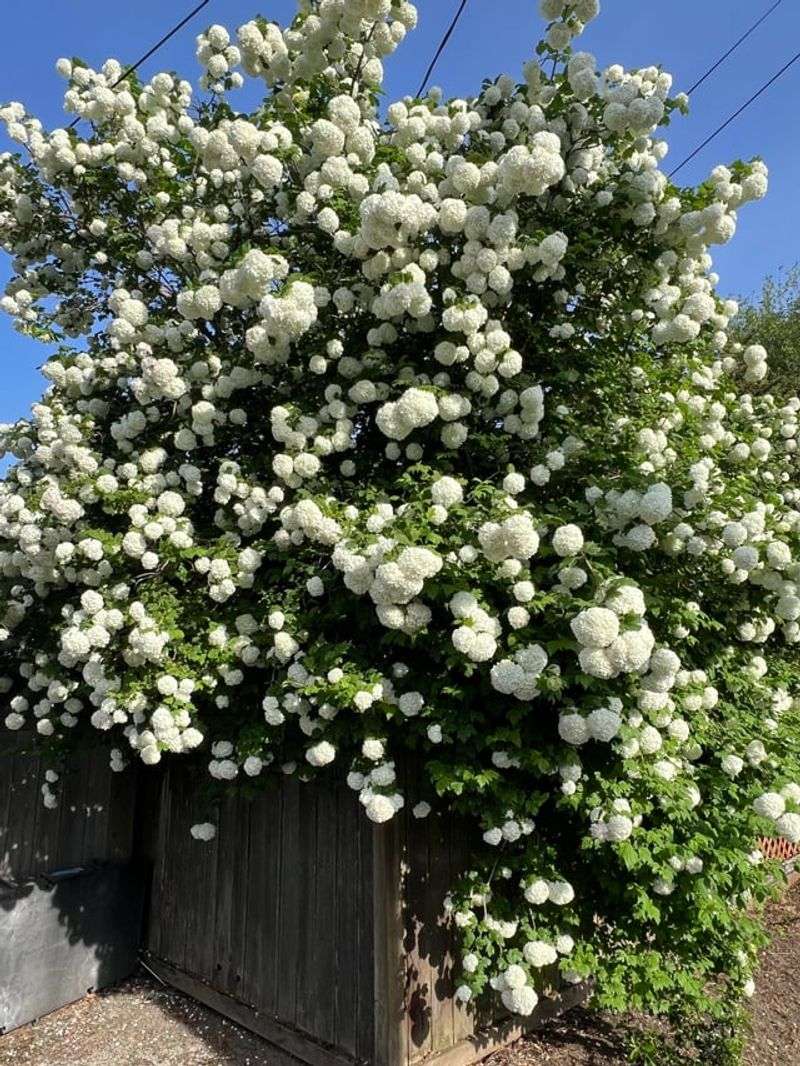
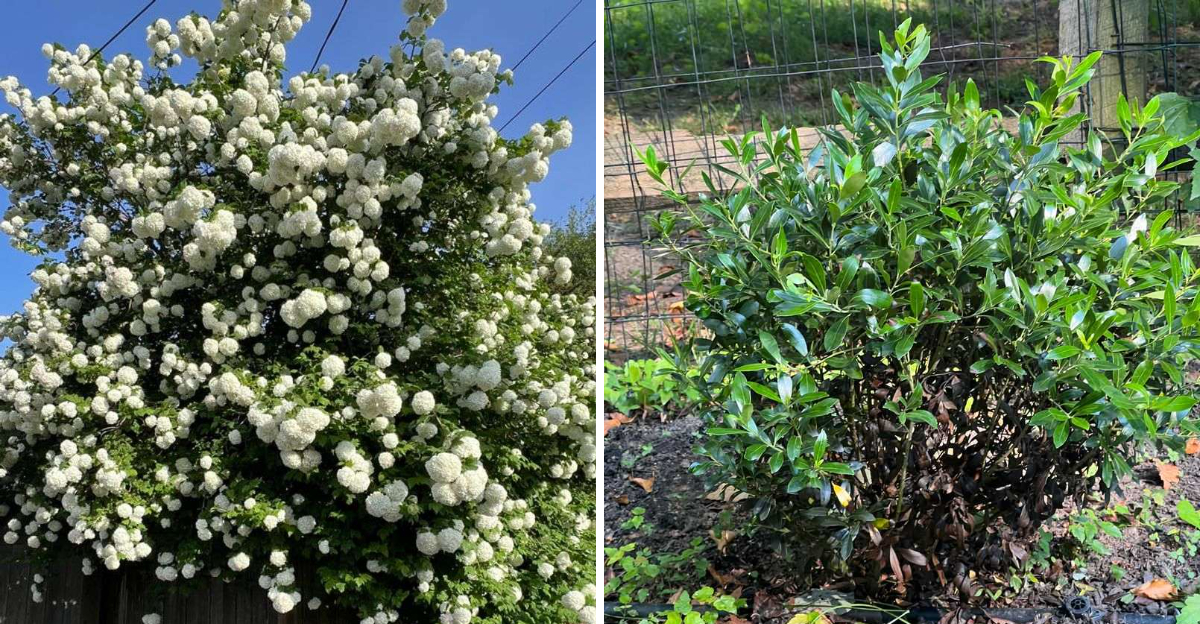
There is something genuinely joyful about a shrub that earns its keep in every single season. Arrowwood Viburnum blooms with flat-topped white flower clusters in late spring, then shifts into stunning fall foliage before producing deep blue berries that birds cannot resist.
This native viburnum grows six to ten feet tall and equally wide, forming a full, rounded screen that feels more like a living wall than a hedge. Its naturally dense branching structure provides solid coverage even in winter after the leaves drop.
Arrowwood Viburnum is one of the toughest native shrubs available for Mid-Atlantic suburban landscapes. It handles clay soil, poor drainage, full shade, and even road salt without significant decline in health or appearance.
The fall color alone makes it worth planting, with leaves shifting through shades of red, orange, and burgundy before dropping. That seasonal show adds real visual interest to a property line that might otherwise look static and flat.
Plant Arrowwood Viburnum in groups of three or more for the best screening effect and maximum berry production. Multiple plants also cross-pollinate more efficiently, increasing fruit set for your backyard birds.
Minimal pruning is needed, just occasional shaping after flowering to maintain a tidy form. This shrub rewards low-effort gardeners who want big results without constant intervention.
For screening plants Delaware homeowners want for a four-season display, Arrowwood Viburnum delivers beauty, wildlife value, and genuine privacy in one unforgettable package.
8. Eastern Red Cedar
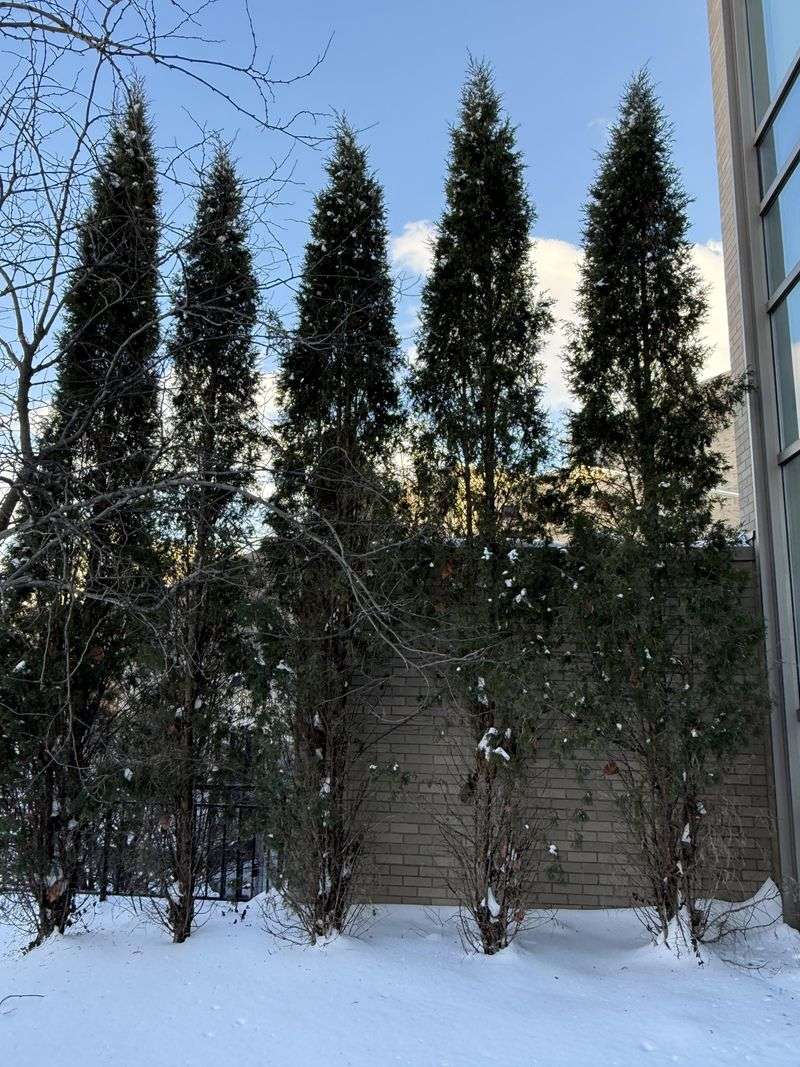
Long before suburban fences existed, Eastern Red Cedar was already doing the job of blocking wind and hiding what stood behind it. This tough native conifer has earned its place along countless Delaware property lines for generations.
Unlike the soft, feathery look of arborvitae, Eastern Red Cedar brings a rugged, textured presence with dense, scale-like foliage that stays green through even the harshest winters. Mature trees typically reach 30 to 40 feet tall, forming a solid, columnar wall of privacy.
It tolerates poor, rocky, or sandy soil, handles drought with ease and adapts to occasionally wet conditions, and shrugs off Delaware’s humid summers without missing a beat.
Deer tend to browse it far less than many other evergreens, and its dense branching gives songbirds a favorite spot for nesting and shelter.
Female trees produce small, blue-gray berries that persist through winter, feeding cedar waxwings and other birds when little else is available.
Space trees about six to eight feet apart for a tight, uniform screen within a few growing seasons. Full sun brings out the densest growth, though this cedar tolerates partial shade better than most people expect.
For a low-maintenance, wildlife-friendly screening plant that asks for almost nothing in return, Eastern Red Cedar remains one of the most dependable choices for Delaware suburban lots.