The Underrated Texas Porch Plant That Makes Scorpions Less Welcome Near Your Front Door
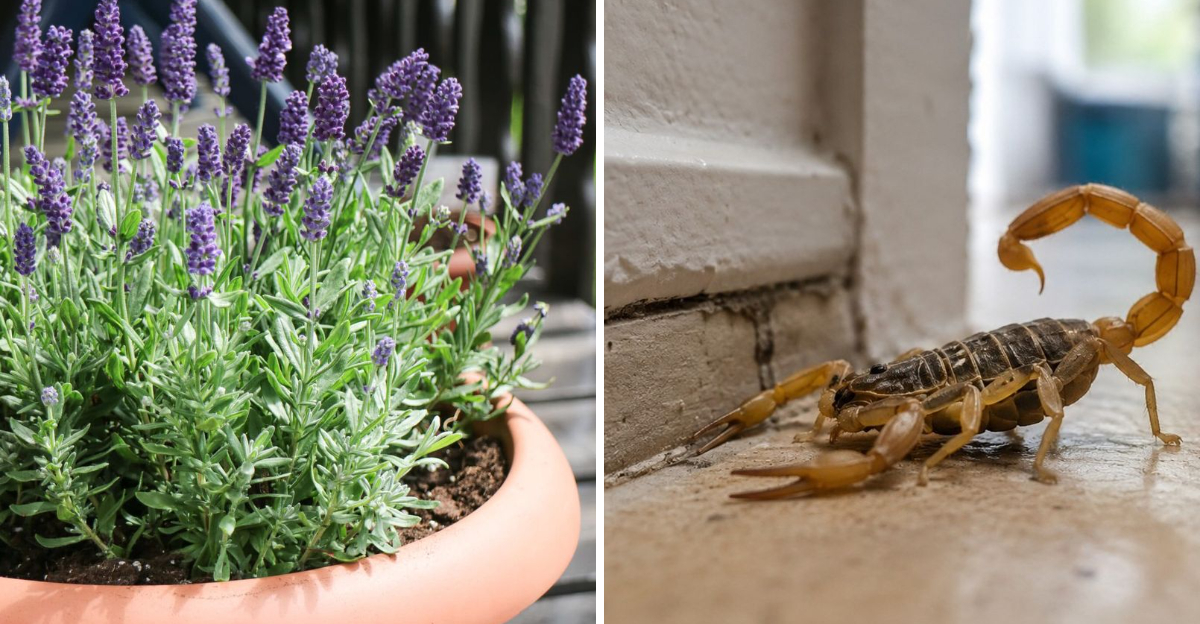
Finding a scorpion near your front door is the kind of discovery that changes how you approach every single entry and exit from that point forward. Shoes get checked.
Door frames get inspected. That casual barefoot step outside before bed becomes a thing of the past. And if you live in Texas, this is not an unlikely scenario. It’s practically a rite of passage.
Most people respond with chemical treatments around the perimeter, and those help. But there’s a porch plant that a growing number of Texas homeowners are using that takes a more natural approach to the problem.
This plant produces compounds that scorpions find genuinely off putting, making your front door area a much less attractive place for them to linger.
It looks great on a porch, handles the Texas heat without complaint, and works quietly around the clock without any reapplication needed.
Here’s the underrated porch plant that could make your front door feel a lot less nerve wracking.
The Potted Lavender Is Your Go-To Porch Plant
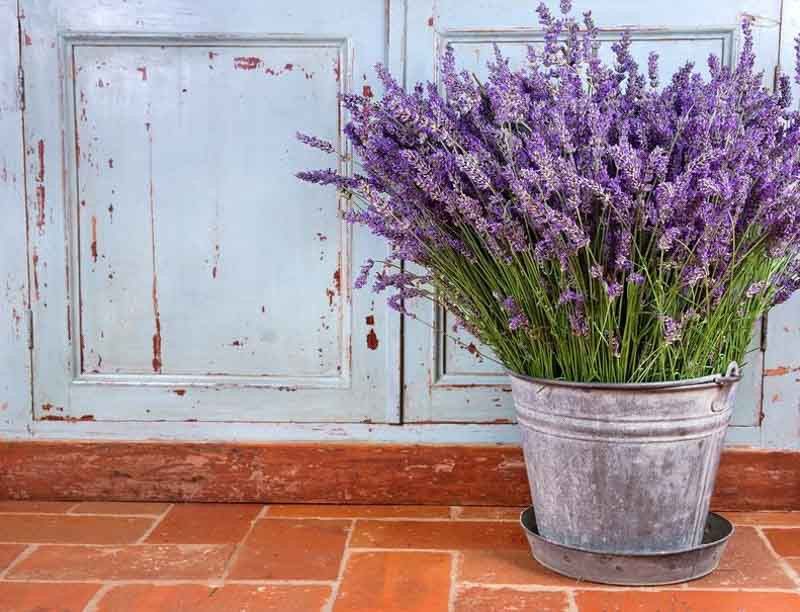
Walk past almost any well-kept Texas porch in the summer, and there is a good chance you will spot a pot of lavender catching the afternoon sun. Lavandula spp., commonly called lavender, is one of the most underrated container plants for hot, dry climates.
It thrives in conditions that would stress out most other plants, making it a natural fit for Texas front porches. Lavender loves full sun and dry, well-drained soil. In Texas heat, that is not a problem.
The plant actually prefers to dry out a little between waterings, so you do not have to fuss over it constantly. A terracotta or clay pot works especially well because it allows moisture to escape through the sides, keeping the roots from sitting in soggy soil.
The scent is what makes lavender stand out from ordinary porch plants. It produces a strong, clean fragrance that most people find pleasant but many insects find overwhelming.
That strong smell comes from natural oils in the leaves and flowers. Bees love lavender, but a lot of other bugs are not fans.
Beyond the scent, lavender looks beautiful on a porch. The soft purple blooms and silvery-green leaves add color and texture without requiring much effort.
You can find lavender varieties like Spanish lavender or Phenomenal lavender that handle Texas summers especially well. Spanish lavender tends to bloom repeatedly throughout the season, which keeps your porch looking fresh.
Starting with a healthy nursery plant rather than seeds gives you the best results and gets that fragrance working on your porch right away.
Why Scorpions Come Near Doors
Scorpions are not wandering near your front door by accident. They are on a mission. Most of the time, they are either hunting for insects or searching for a cool, sheltered spot to rest during the day.
Your porch, especially if it has clutter, moisture, or dim corners, can look like a perfect destination to them.
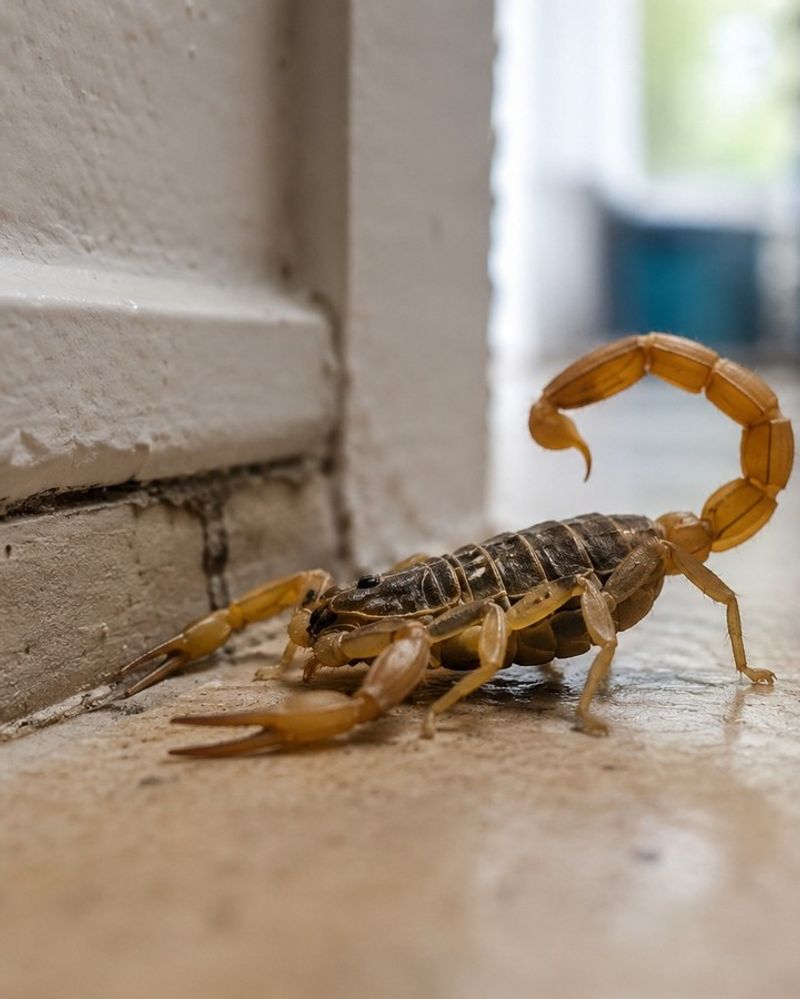
The striped bark scorpion is the most common species found near Texas homes. It is small, pale yellow, and surprisingly good at squeezing into tight spaces.
Your Texas Garden Changes Every Week. Your Plan Should Too.
Gardening in Texas changes quickly throughout the season. Every Friday you’ll receive a simple weekly plan showing exactly what to plant, prune, fertilize, harvest, and protect so you never miss the right timing.
These scorpions are active mostly at night, which is why you might not notice them until you nearly step on one. They are drawn toward areas where insects gather, so if your porch light attracts moths and other bugs, scorpions may follow.
Hiding spots are a huge part of the problem. Scorpions feel safe tucked under stacked boards, loose stones, heavy leaf litter, empty pots, doormats, and anything else that creates a dark, protected gap.
The closer those hiding spots are to your door, the more likely a scorpion is to end up inside your home.
Moisture also plays a role. Scorpions need water to survive, and damp areas near a foundation or under a leaky hose connection are attractive to them.
Understanding this behavior is important because it helps you see why removing hiding spots and reducing moisture near the porch matters just as much as any plant you place there.
Scorpions are simply following their instincts, and your job is to make your porch a place that does not reward those instincts.
How Lavender May Help
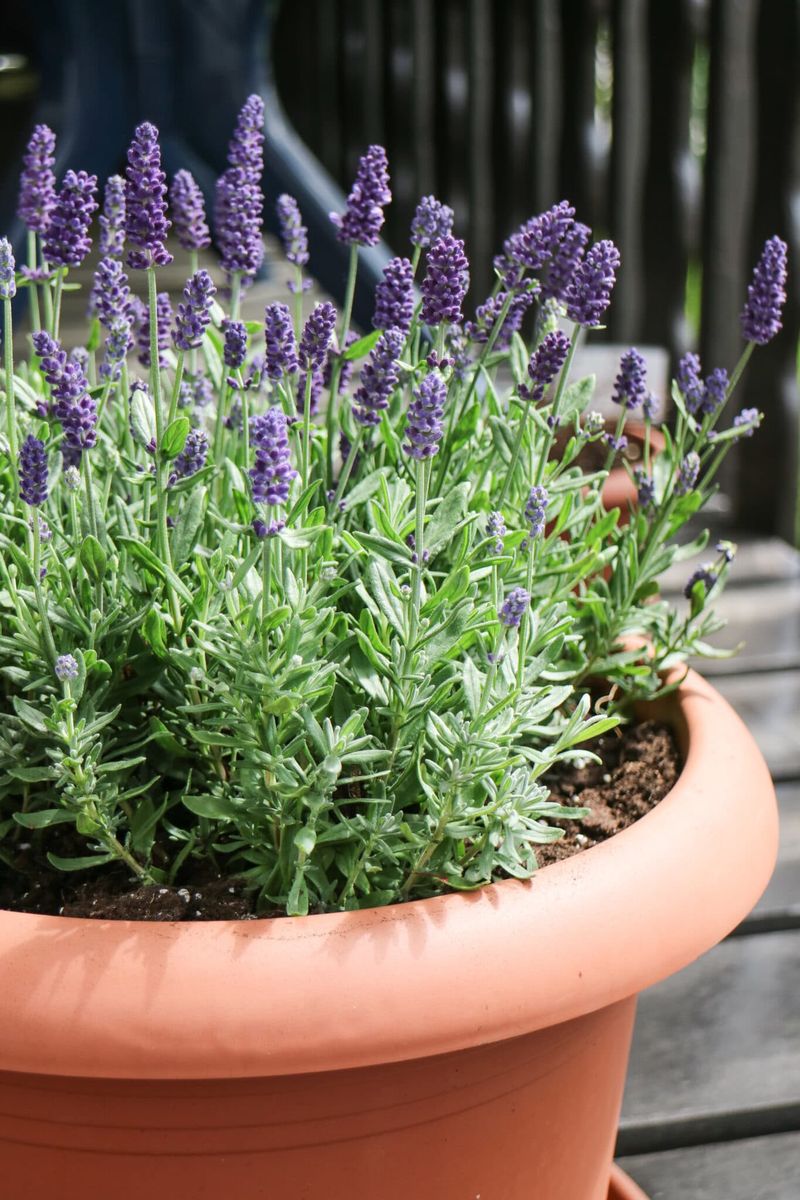
Lavender is not a magic shield that will guarantee zero scorpions on your porch. Anyone who tells you otherwise is overselling it.
What lavender actually does is contribute to a porch environment that is naturally less attractive to scorpions and the insects they feed on.
The plant’s strong essential oils, mainly linalool and linalyl acetate, are known to bother many insects. Mosquitoes, moths, fleas, and certain flies tend to avoid areas where lavender is present.
Fewer insects near your porch means less food available for scorpions, which reduces one of their main reasons for showing up at your door. It is a chain reaction that starts with a simple fragrant plant.
Lavender also contributes to a tidier porch setup. Because it grows upright in a compact pot with dry soil, it does not create the damp, messy ground cover that scorpions love to hide under.
Unlike thick mulch beds or sprawling ground cover plants near a foundation, a neatly potted lavender plant does not offer dark, sheltered gaps where scorpions can rest and wait.
Think of lavender as one layer in a larger strategy. On its own, it cannot solve a scorpion problem.
But when combined with good porch habits like removing clutter, sealing cracks, and reducing moisture, it adds a fragrant, insect-discouraging element that genuinely supports your efforts.
Some Texas homeowners also use dried lavender bundles near doorways as an extra layer of scent.
Fresh or dried, the plant earns its place on a smart, scorpion-aware porch without requiring complicated maintenance or harsh chemicals.
Why Pots Matter
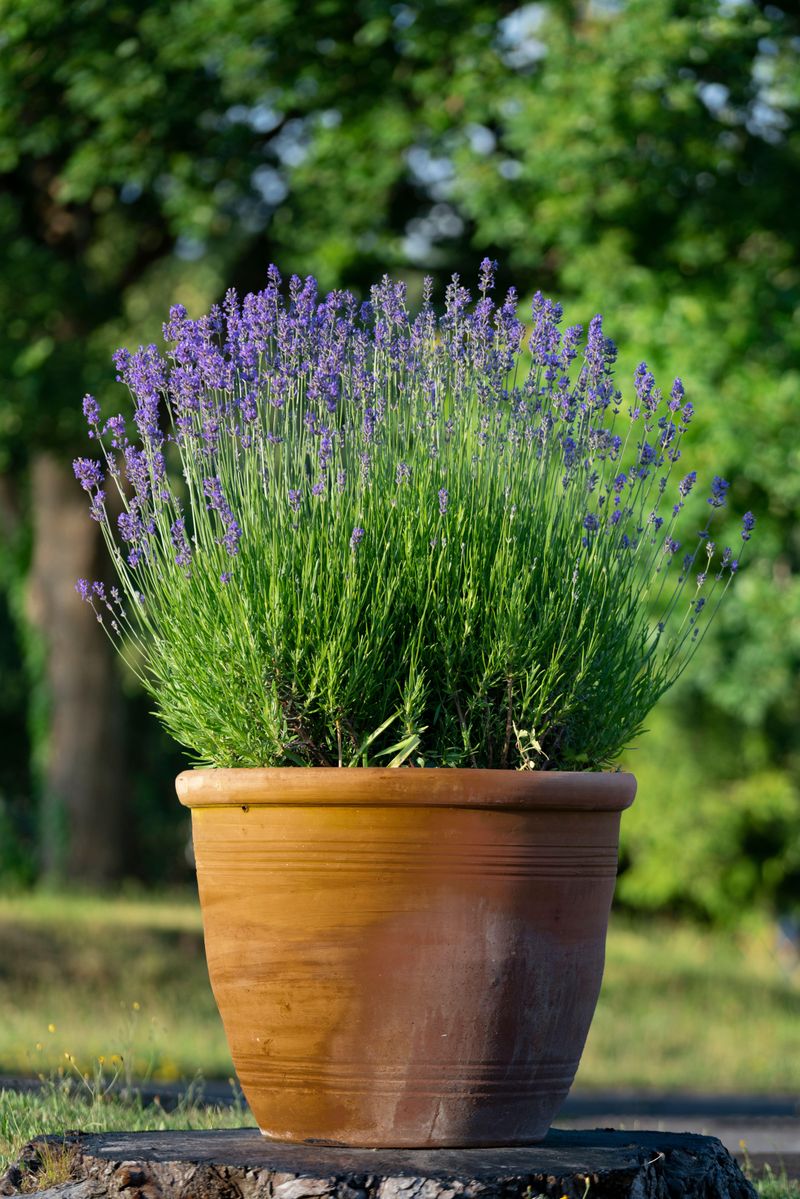
Choosing to grow lavender in a raised container instead of planting it directly in the ground near your foundation is a smarter move than most people realize. Pots give you control over the soil, the drainage, and the overall tidiness of the plant’s environment.
That control matters a lot when you are trying to make your porch less welcoming to scorpions.
Ground-level plantings near a foundation often come with thick mulch, which holds moisture and creates exactly the kind of dark, damp hiding spots scorpions look for. A raised pot eliminates that problem.
The soil inside a well-draining container stays dry between waterings, and there is no mulch layer piling up around the base of the plant. The gap between the pot and the ground is easy to see and easy to inspect.
A tidy pot is also easier to move. If you want to clean under it or check for unwanted visitors, you can simply pick it up and look.
That is a huge advantage over a planted bed that stays in one place all season. Lightweight pots on pot feet or small risers are especially good because they allow airflow underneath and prevent moisture from building up under the container.
Choose a pot with at least one large drainage hole at the bottom. Fill it with a sandy or gritty potting mix designed for herbs or Mediterranean plants.
Avoid regular garden soil, which holds too much water for lavender. Place the pot near your front door where it gets at least six hours of direct sun daily. That sunny, dry setup is exactly what lavender wants, and exactly what scorpions do not.
What To Fix Around The Porch
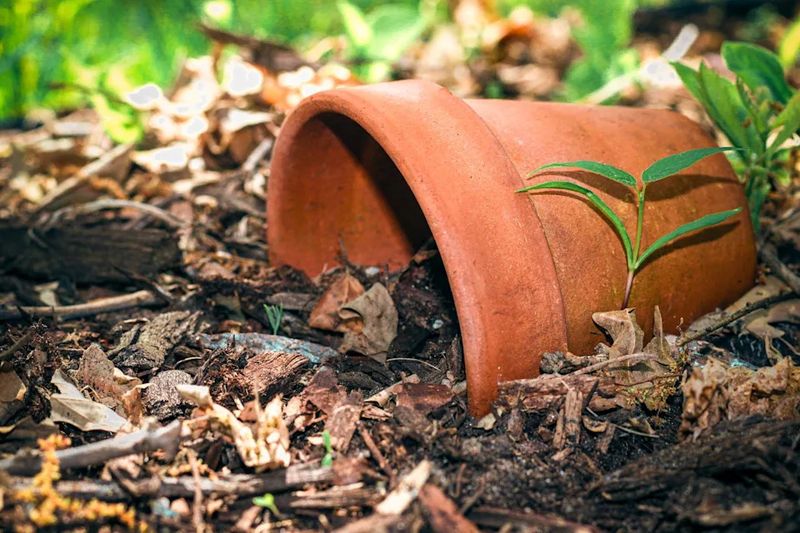
Lavender on your porch is a great start, but the plant alone cannot do everything. The most effective way to make scorpions less welcome is to remove the things that attract them in the first place. Your porch is worth a serious look with fresh eyes.
Start by clearing out anything stacked, stored, or sitting on the ground near your front door. Old boards, spare bricks, unused pots, stacked firewood, and heavy doormats are all common scorpion hiding spots.
If you must store items near the porch, keep them elevated on shelves or hooks so there is no ground-level gap for a scorpion to squeeze into.
Leaf litter and organic debris are another problem. Wet leaves and decomposing plant material hold moisture and attract the small insects that scorpions eat.
Sweep your porch regularly and clear debris from the corners and edges where it tends to collect. Pay special attention to the space between your porch and any nearby shrubs or bushes.
Porch lighting is worth reconsidering too. Standard white bulbs attract moths and other flying insects at night, and where insects gather, scorpions may follow.
Switching to yellow or amber bulbs, which are far less attractive to insects, can noticeably reduce nighttime insect traffic near your door.
Also check for any dripping faucets, poor drainage spots, or wet soil right next to your foundation. Even a small source of consistent moisture near the porch can draw scorpions in.
Fixing a leaky outdoor spigot or improving the slope of the ground away from your home can make a bigger difference than most people expect.
Seal The Front Door
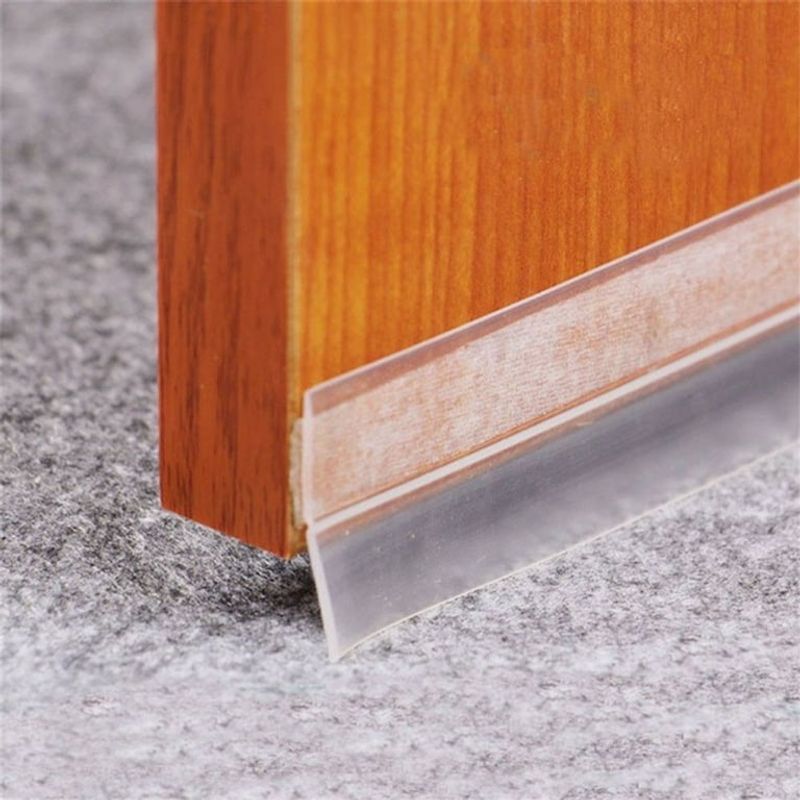
Here is the truth that every other tip in this article builds toward: keeping scorpions outside requires sealing the entry points they use to get inside.
A beautiful lavender plant and a clutter-free porch are both valuable, but if your front door has gaps, scorpions can still find their way in. Exclusion is the most reliable line of defense you have.
Start with the door itself. Check the bottom edge for a gap between the door and the threshold.
Even a space the thickness of a credit card is wide enough for a small scorpion to squeeze through. Install a door sweep or replace worn weather stripping to close that gap.
Quality door sweeps are inexpensive and easy to install with just a screwdriver. Move on to the door frame. Look for cracks where the frame meets the wall, especially near the corners.
Use a silicone-based caulk to seal those gaps. Check window screens near the porch too, and repair any tears or holes.
Scorpions can climb walls and enter through damaged screens on windows or vents near the roofline.
Do not overlook utility penetrations. Pipes, wires, and cables that pass through exterior walls often leave small gaps around them.
Foam sealant or caulk fills those spots quickly and effectively. Walk around the outside of your home once a year and look for new cracks or settling that may have opened up gaps.
Lavender supports a cleaner, less insect-heavy porch environment. But sealing your home properly is what truly keeps scorpions from crossing the threshold. Both strategies together give you the strongest protection possible.