These California Groundcovers Meet HOA Height Rules And Still Block Every Weed That Tries To Move In
Your HOA has rules, the weeds have plans, and your lawn is caught in the middle.
Finding a groundcover that stays low enough to satisfy the neighborhood association while still being tough enough to crowd out weeds feels like searching for something that does not exist.
Most options either look too wild, grow too tall, or require the kind of maintenance that defeats the whole purpose of planting a groundcover in the first place.
But California has some remarkable low-growing plants that can do exactly that.
From sun-baked front strips to shady side yards, these groundcovers spread wide, root deep, and make it very hard for unwanted plants to get a foothold.
Some release fragrance when you brush past them. Others attract hummingbirds or handle light foot traffic without complaint.
None of them will trigger a notice from your HOA.
What if your yard could look polished, stay low, and fight weeds all at the same time?
Seven plants on this list are about to change the way you think about California landscaping, and at least one of them is almost certainly perfect for the specific problem spot you have been ignoring.
1. Dymondia Keeps A Tight Silver Mat
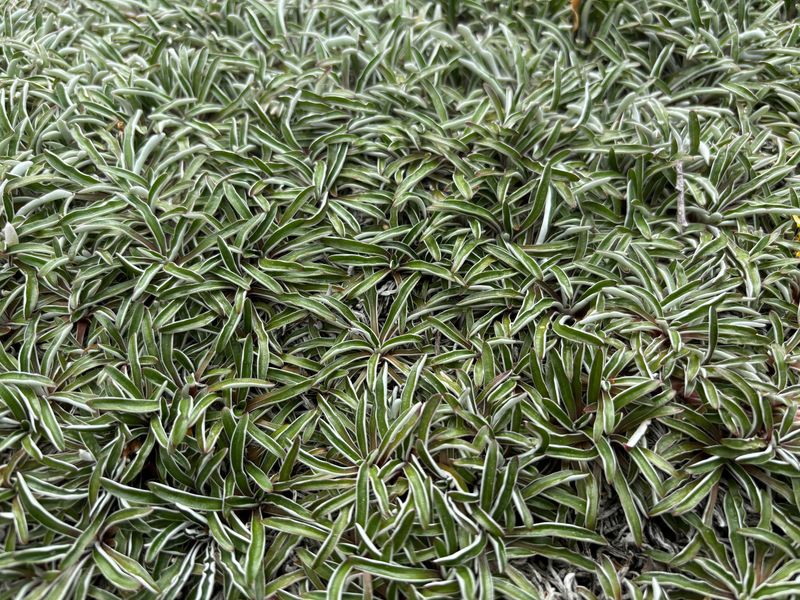
Not every groundcover earns the nickname silver carpet, but Dymondia margaretae wears it with pride.
This South African native has found a perfect second home in California’s sunny, dry landscapes. It grows only one to two inches tall, which makes even the strictest HOA inspector smile and move on.
Dymondia spreads slowly but steadily, knitting together a dense mat that leaves almost no room for weeds to sprout.
The narrow leaves curl slightly at the edges, revealing silvery-white undersides that catch the light and give the planting a polished, almost frosted look. Small yellow daisy flowers pop up in summer, adding a cheerful bonus.
Water needs are very low once the plant gets established, usually after one good season.
It handles full sun and reflected heat from driveways and walkways without complaint. Plant it six to twelve inches apart and let it fill in over time.
For weed suppression, density is the secret weapon.
As Dymondia fills gaps, it shades the soil and blocks light from reaching weed seeds below. Pair it with decomposed granite edges for a clean, modern look. It works beautifully in water-wise front yards, around boulders, and between flagstones.
Regular light watering during the first year sets it up for long-term success with very little maintenance needed afterward.
2. Kurapia Handles Foot Traffic Better
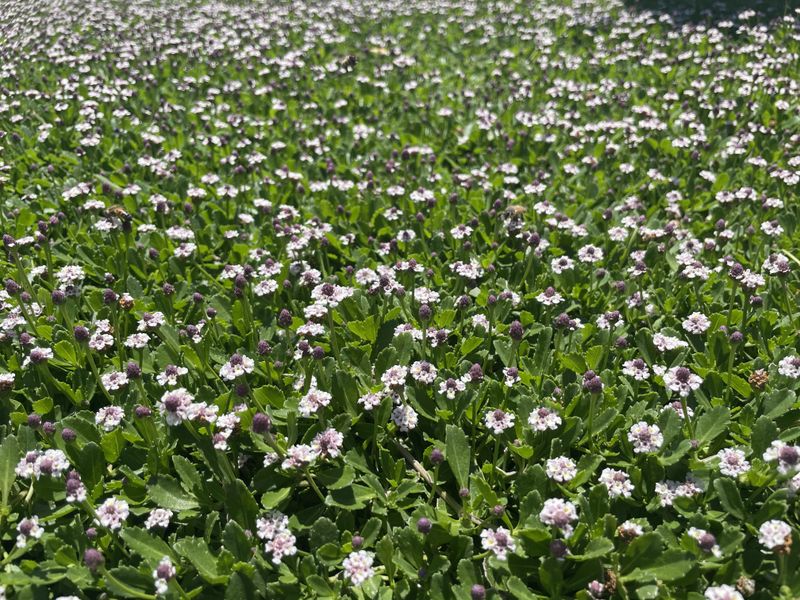
Some groundcovers politely ask you not to step on them. Kurapia takes the opposite approach.
This low-growing plant was developed specifically for California’s water-wise landscape goals, and it genuinely handles light to moderate foot traffic without falling apart. Gardeners who need something tougher than a delicate mat will appreciate that quality fast.
Kurapia stays under two inches tall without mowing, though an occasional trim keeps it tidy and satisfies most HOA standards.
It spreads aggressively through runners, covering ground quickly and forming a thick, even carpet. That fast coverage is one of its biggest advantages for weed suppression. Once Kurapia fills in, weeds struggle to find bare soil or sunlight.
Your California Garden Changes Every Week. Your Plan Should Too.
Gardening in California changes quickly throughout the season. Every Friday you’ll receive a simple weekly plan showing exactly what to plant, prune, fertilize, harvest, and protect so you never miss the right timing.
Tiny white flowers bloom from spring through fall, drawing pollinators and adding a soft, meadow-like charm to the yard.
It is sterile, so it will not spread by seed into neighboring properties, which makes it a responsible choice in California neighborhoods with tight lot lines.
Water use is significantly lower than traditional turf, making it a smart swap in regions facing drought restrictions.
Plant plugs about twelve inches apart and keep them moist during establishment. After that, reduce irrigation gradually. Kurapia performs best in full sun and tolerates some clay soil.
3. Creeping Thyme Adds Fragrance Underfoot
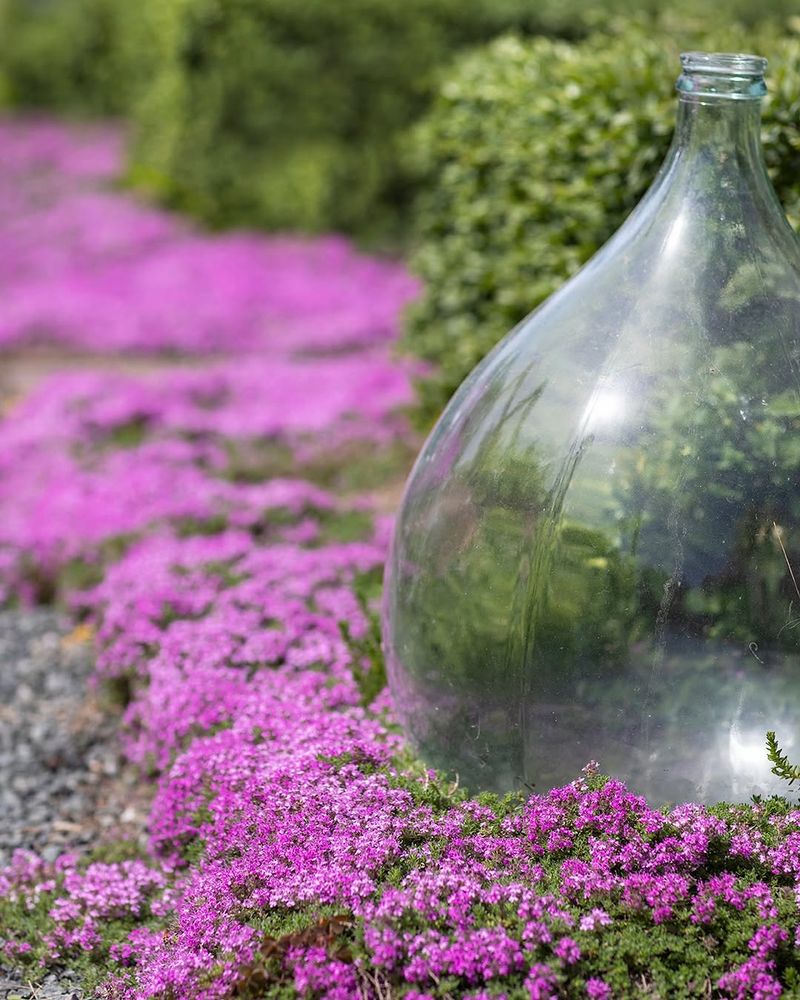
Walking through a garden and catching a sudden burst of herbal fragrance is one of the small pleasures of life. Creeping thyme delivers exactly that.
It releases its classic scent whenever leaves are brushed or lightly stepped on, turning an ordinary walk through the yard into something worth doing slowly.
Thymus praecox and its cultivars stay between one and three inches tall, comfortably within most HOA height limits.
The plant spreads outward in a flat, dense mat, filling in gaps between pavers, rocks, and other plantings. That dense growth habit makes it quite effective at crowding out weeds by blocking light and reducing open soil.
Full sun and excellent drainage are non-negotiable.
Thyme roots struggle in soggy soil, so raised beds, slopes, and sandy ground suit it perfectly. California’s Mediterranean climate feels tailor-made for this plant. Once established, it needs very little supplemental water and handles summer heat with ease.
Purple, pink, or white flowers appear in late spring and early summer, turning the mat into a buzzing landing strip for bees.
Trim lightly after bloom to encourage fresh growth and keep the planting neat. Creeping thyme works especially well along sunny pathways and in narrow strips between hardscape elements throughout California landscapes.
4. California Fuchsia Spreads With Summer Color
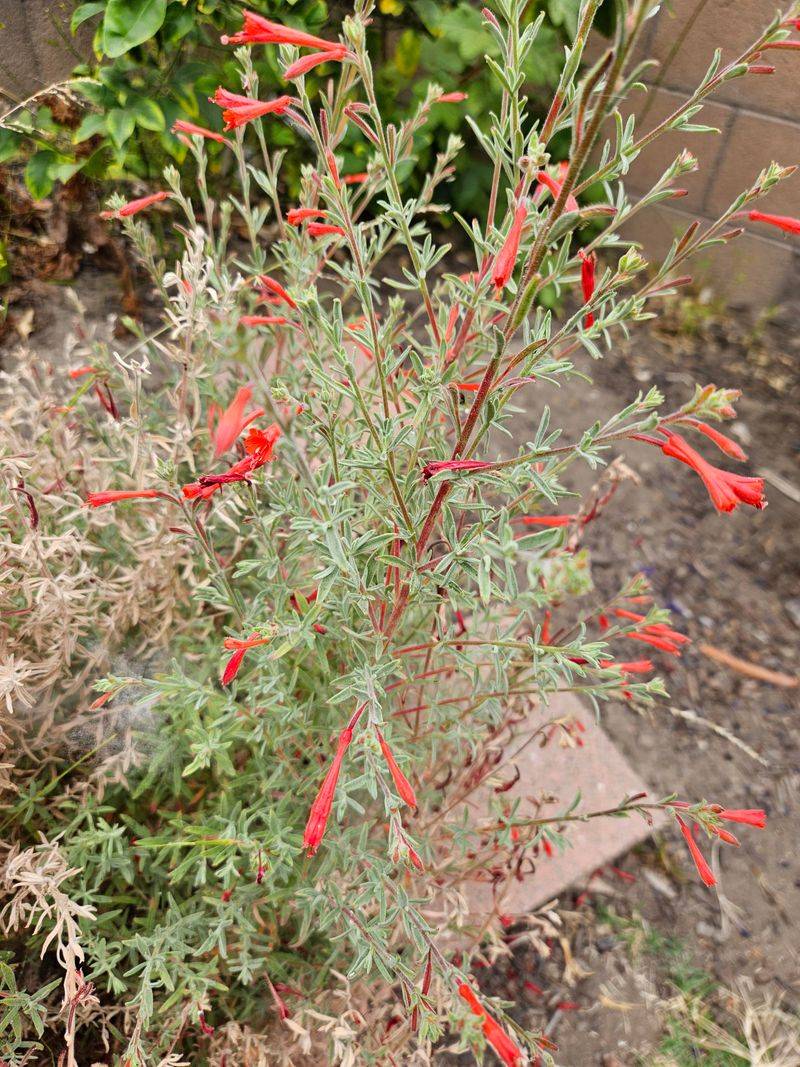
Few plants put on a late-summer show quite like California fuchsia.
When most of the garden starts looking tired and crispy in August heat, this native groundcover kicks into high gear with a burst of brilliant red-orange flowers that seem almost too vivid to be real. Hummingbirds notice immediately.
Epilobium canum includes several low-growing selections that stay under eighteen inches.
Varieties like Calistoga and Select Mattole hug the ground more tightly than the straight species, making them better choices for HOA-sensitive California yards.
Always confirm the mature height of the specific cultivar before planting, because some selections spread taller than others.
This plant thrives in dry, rocky, or sandy soil with excellent drainage.
It needs very little summer water once established, which aligns perfectly with California’s water conservation goals.
The plant spreads through underground runners, forming loose but effective colonies that shade the soil and reduce weed opportunities.
Placement matters with California fuchsia.
It looks best at the edge of a planting bed or along a slope where it can spread freely without crowding other plants.
Cut it back hard in late winter to encourage fresh, compact growth in spring. That annual reset keeps the planting tidy and the HOA happy.
5. Yerba Buena Softens Shady Corners
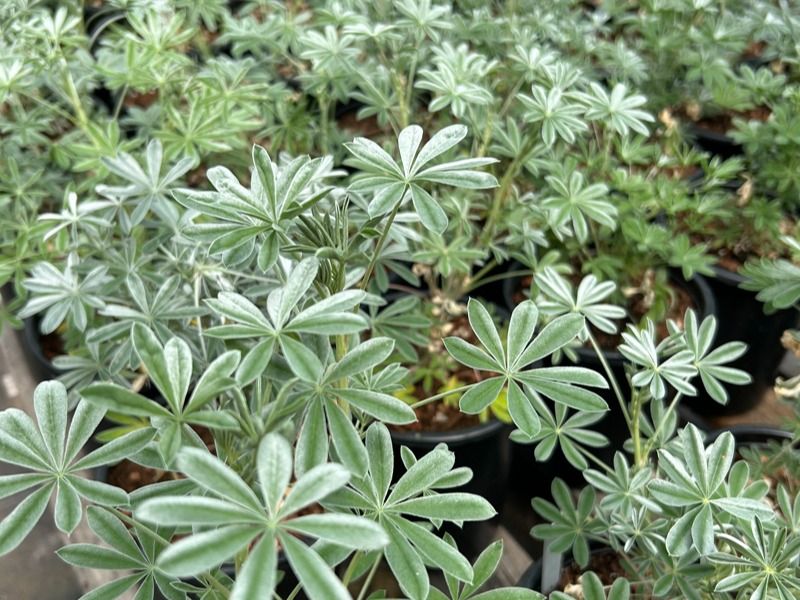
Most groundcovers want full sun, which makes shady corners a landscaping puzzle. Yerba buena solves that puzzle with quiet elegance.
This California native has been valued for centuries, long before anyone had an HOA to answer to. The name means good herb in Spanish, and the plant earns that title through fragrance alone.
Clinopodium douglasii grows as a delicate, trailing mat that rarely exceeds a few inches in height.
The small, rounded leaves release a fresh minty-spearmint scent when touched, making shaded garden corners suddenly feel like a retreat.
It spreads through slender stems that root as they creep, gradually filling in beneath trees, along fences, and in spots where other plants struggle.
Weed suppression in shade is always a challenge, but yerba buena helps by covering bare soil and reducing open growing space.
It works best in coastal California and cooler inland areas with some summer moisture. Hot, dry inland valleys may stress this plant, so match it to the right microclimate.
Pair yerba buena with native ferns or other shade-loving companions for a layered understory effect.
You will end up with a fragrant, low, soft carpet in a corner that once grew nothing but weeds and frustration. That is a genuinely satisfying outcome for any California homeowner.
6. Woolly Thyme Fits Narrow Strips
Narrow planting strips between a sidewalk and a fence are the awkward problem spots of California landscaping.
Too small for shrubs, too exposed for most shade lovers, and too visible to ignore. Woolly thyme steps into that gap with confidence and a surprisingly soft touch.
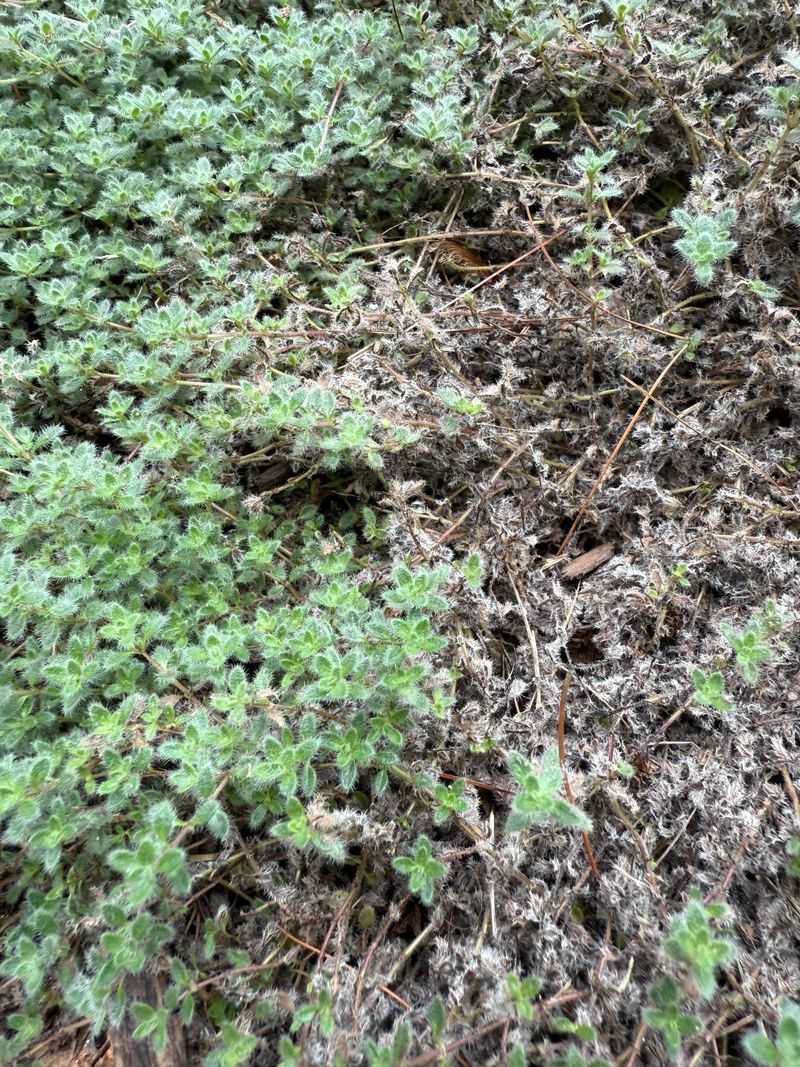
Thymus pseudolanuginosus earns its name from the fuzzy, almost velvety texture of its tiny silver-green leaves.
That woolly surface helps the plant retain moisture and reflect heat, making it well-suited to the intense sun and reflected warmth typical of narrow California strips.
The plant grows only half an inch to one inch tall, making it one of the lowest groundcovers available for HOA-sensitive sites.
Spread is slow but determined.
Woolly thyme creeps outward in a flat, even mat, filling in gaps and shading the soil beneath. Weed seeds have a very hard time germinating in established woolly thyme because the mat is so dense and the soil surface stays covered.
Light pink flowers appear in early summer, adding a soft blush of color to the silver-green carpet.
Full sun and sharp drainage are essential. Sandy or amended soil works best. Avoid overwatering, especially in summer, because excess moisture leads to problems in this plant.
Space plugs or small starts six to eight inches apart in narrow strips and water lightly but consistently through the first season.
After establishment, woolly thyme is remarkably self-sufficient, and for tight spaces with big HOA visibility, it genuinely delivers low-maintenance beauty season after season.
7. Creeping Rosemary Covers Slopes And Stays Tidy
Rosemary has a well-earned reputation as a kitchen herb, but its prostrate form is one of the most underused groundcovers in California landscaping, and that is a shame worth correcting.
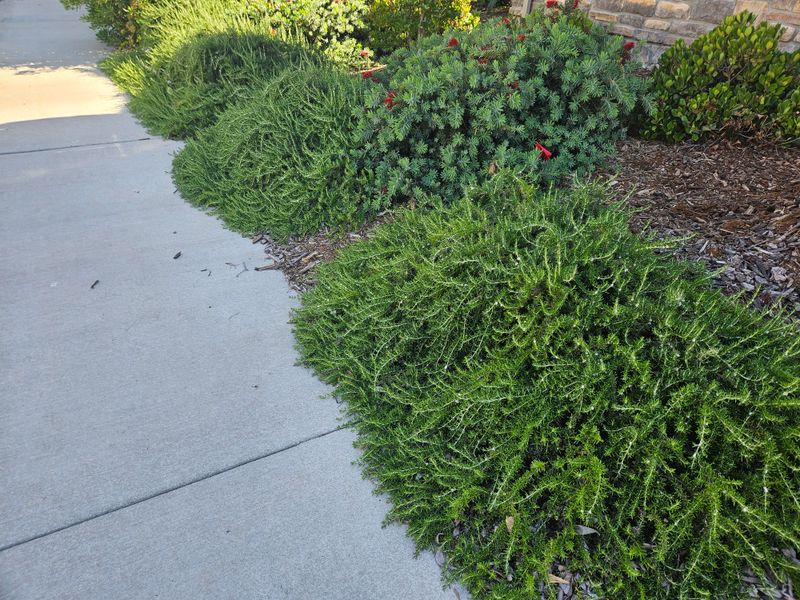
The trailing variety stays between one and two feet tall while spreading three to eight feet wide, making it a serious groundcover option for slopes, berms, and large strips where nothing else seems willing to cooperate.
The HOA friendliness of creeping rosemary comes from its naturally tidy, controlled growth habit.
It does not flop, sprawl aggressively into neighboring beds, or send runners into the lawn. It simply spreads in a predictable, attractive mounding form that looks intentional without requiring constant intervention.
A light shaping trim once a year keeps it looking polished and satisfies most neighborhood association standards.
Weed suppression is one of its quiet strengths.
The dense, aromatic foliage shades the soil beneath the plant effectively, and the strongly scented oils in the leaves appear to discourage certain weed seeds from germinating nearby.
Once a creeping rosemary plant reaches its mature spread, bare soil essentially disappears under the planting.
Drought tolerance is exceptional once established, which is the quality that makes it such a practical California choice.
It handles reflected heat from walls and paving, thrives in sandy or rocky soil with sharp drainage, and asks for almost nothing in the way of fertilizer or supplemental water after the first growing season.
Pale blue to violet flowers appear in late winter and early spring, covering the entire plant in a soft haze of color right when the garden needs it most.
Bees arrive in large numbers during that bloom period and the fragrance drifting across a sunny California yard is one of those small pleasures that makes gardening feel genuinely worthwhile.
8. Lippia Spreads Like A Lawn Without Acting Like One
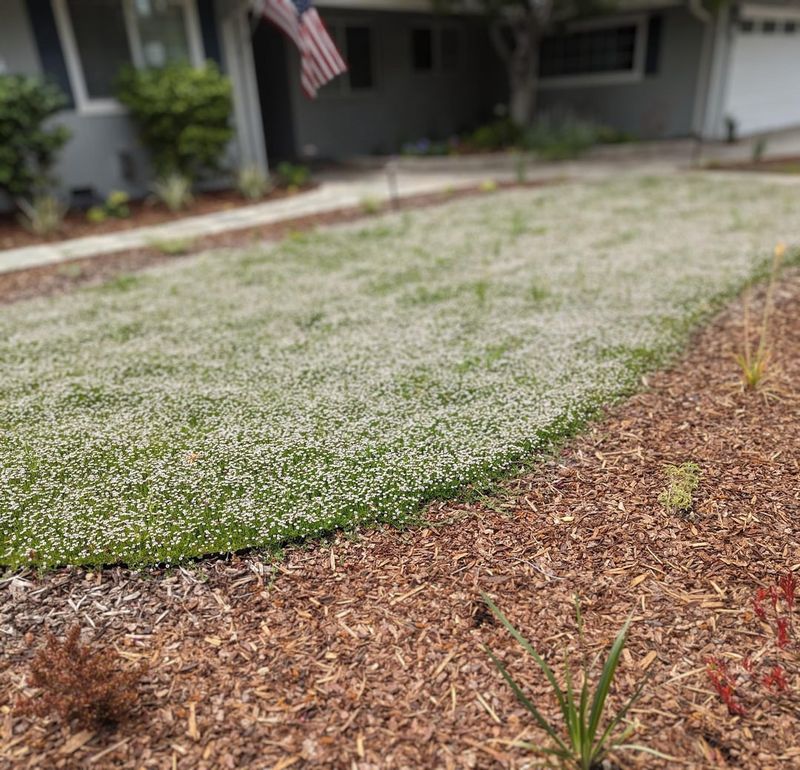
Lippia, also known as mat grass or Phyla nodiflora, is one of those plants that makes you wonder why anyone still bothers with traditional turf in California.
It forms a dense, flat mat that looks remarkably like a lawn from a distance but requires a fraction of the water, almost no mowing, and none of the fertilizer routine that keeps conventional grass alive through a California summer.
Lippia stays under two inches tall without any intervention, which puts it firmly in HOA-compliant territory across most California neighborhoods.
The plant spreads through runners that root aggressively wherever they touch soil, filling in bare ground quickly and leaving very little space for weeds to establish.
Once a Lippia planting reaches full coverage, weed pressure drops dramatically because the mat is simply too dense and too competitive to let anything else get started.
Small pink to white flower clusters appear throughout the warm months, attracting bees and small butterflies in surprisingly large numbers for such a low-growing plant.
The blooms are not showy from a distance but add a pleasant texture up close and keep pollinators active across the planting throughout summer and into fall.
Foot traffic tolerance is one of Lippia’s most practical qualities.
It handles light to moderate walking without falling apart, which makes it a genuine lawn substitute in areas where people actually move through the yard.
It bounces back from compression faster than most groundcovers and maintains its dense, even appearance through regular use.
Full sun and good drainage give the best results, though Lippia tolerates some clay and occasional poor drainage better than many other low-growing options.
Water use is well below traditional turf once established, making it a smart and increasingly popular choice for California homeowners navigating both HOA requirements and water restrictions at the same time.