Why Your Virginia Boxwoods Are Turning Bronze And What To Do Before Fall
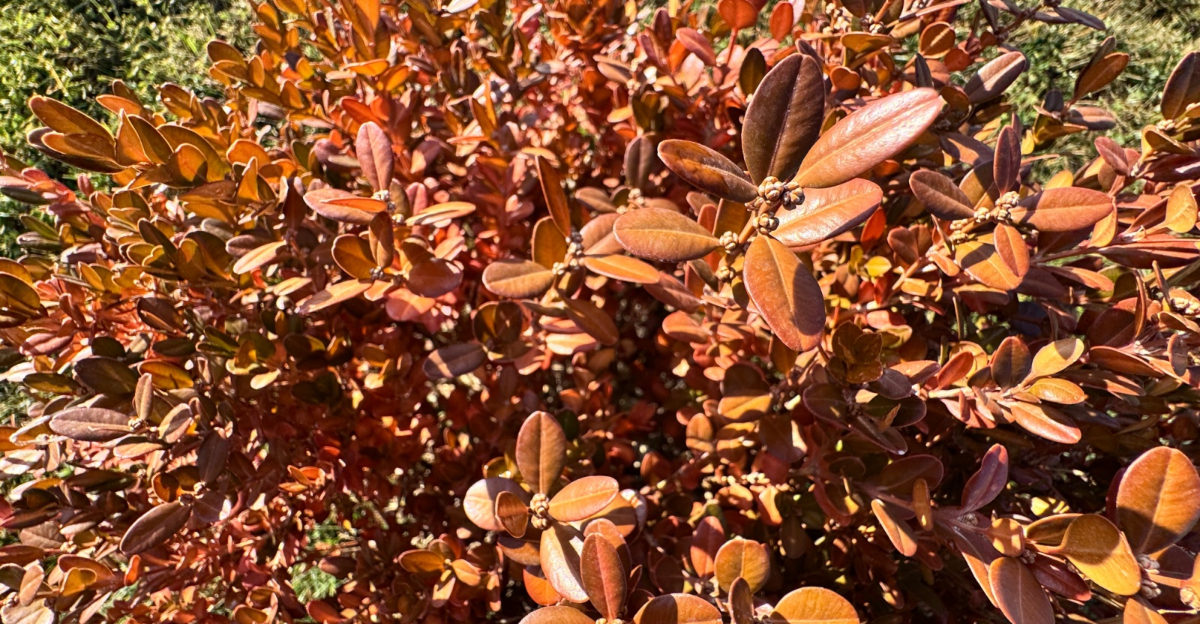
You step outside one morning and stop in your tracks. Those boxwoods you babied all spring, the ones that gave your Virginia front yard its polished, tailored look, have turned a rusty, coppery shade overnight.
It’s not the crisp green you remember planting them for. It looks more like old pennies left out in the rain.
If you’re wondering whether your shrubs are in real trouble, take a breath. You’re not alone in this. Bronzing is one of the most misunderstood problems boxwood owners run into.
Sometimes it’s the summer heat and drought talking. Other times it’s a preview of what winter is about to do, since cold wind and freeze-thaw cycles are actually the most common cause of all.
Either way, it trips up even seasoned gardeners across Virginia, where humid summers and cold snaps both leave their mark on foliage.
Here’s the reassuring part. Bronze boxwoods usually just need a little extra care and attention. In most cases, this color shift points to something specific and fixable.
Once you know the cause, getting your shrubs back to their glossy green selves is well within reach.
1. Sun Scorches Exposed Leaves
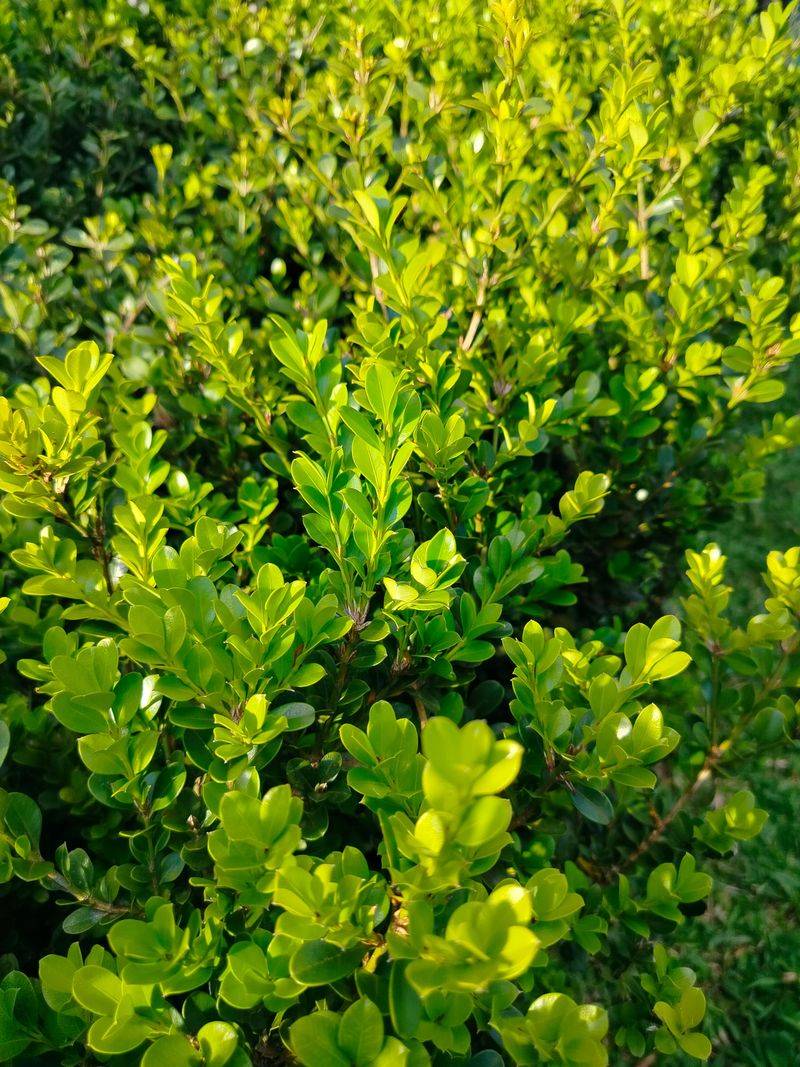
Step outside on a blazing July afternoon and feel what your boxwoods feel. Sun scorch is one of the sneakiest reasons boxwood leaves turn bronze, and most homeowners never suspect it.
When sunlight hits foliage with intense, unfiltered heat, the outer leaf cells break down fast. The damage shows up as bronzing or a yellowish-brown tint, usually on the side of the shrub facing south or west.
Boxwoods prefer bright but indirect light for most of the day. Planting them where afternoon shade offers relief makes a huge difference in how they handle summer heat.
If your shrubs are already established and struggling in the heat, consider adding a shade cloth during peak hours. A simple garden fabric draped loosely can cut leaf temperature by several degrees.
Younger boxwoods are especially vulnerable because their root systems haven’t spread wide enough to pull consistent moisture.
That combination of shallow roots and direct sun puts extra pressure on the plant, and leaves can turn bronze quickly as a result.
Reflective surfaces like white walls, driveways, or patios nearby can amplify heat damage significantly. Repositioning potted boxwoods or adding nearby taller plants for shade can shield them from that reflected intensity.
Pruning lightly in early spring helps open the canopy so air circulates better. Good airflow keeps leaf temperatures lower and reduces the chance of sun-related bronzing taking hold again next season.
2. Drought Dries Out Foliage
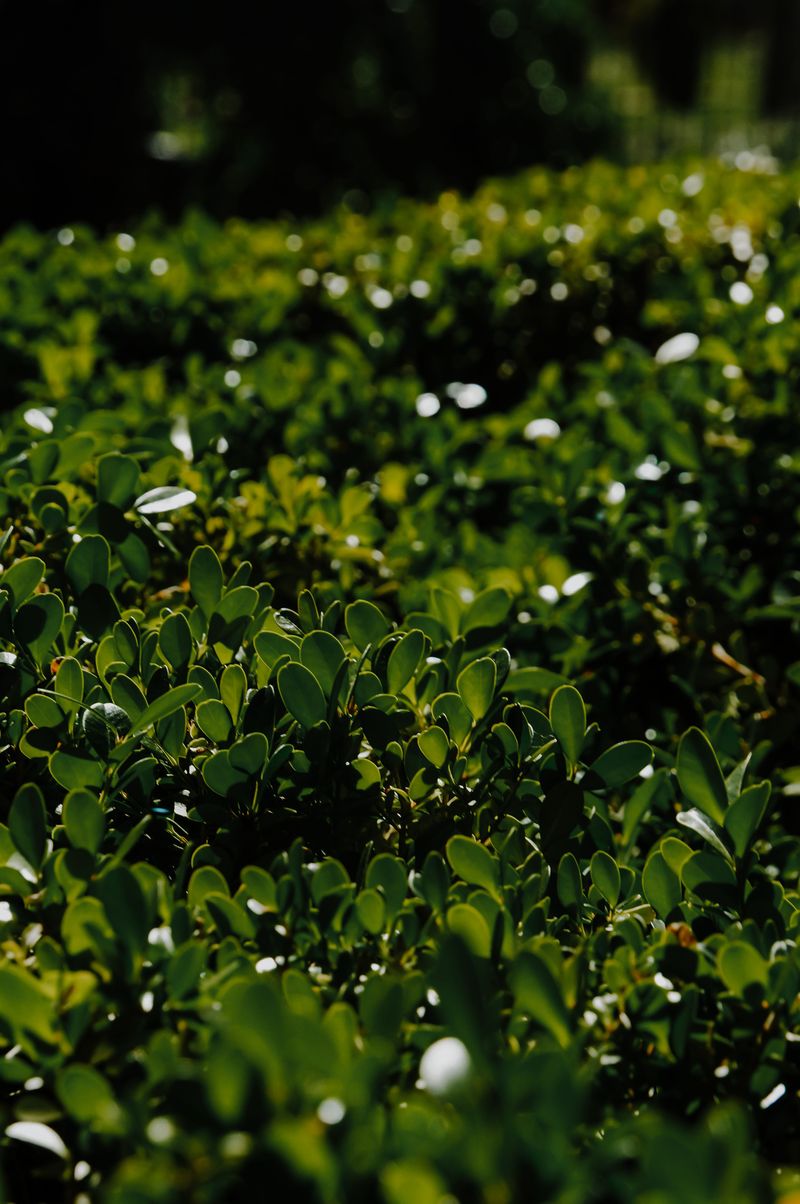
Dry spells hit boxwoods harder than most shrubs because their roots stay relatively shallow.
In Virginia, where summer humidity can vanish overnight into a dry stretch, soil moisture drops fast and leaves lose their green pigment just as quickly, shifting toward bronze or orange-brown.
Boxwoods need consistent hydration to keep foliage looking lush and healthy. A single week without rain during a Virginia heat wave can trigger visible bronzing across the entire plant.
Your Virginia Garden Changes Every Week. Your Plan Should Too.
Gardening in Virginia changes quickly throughout the season. Every Friday you’ll receive a simple weekly plan showing exactly what to plant, prune, fertilize, harvest, and protect so you never miss the right timing.
The tricky part is that drought stress looks a lot like other problems at first glance. You might mistake it for a pest issue or a fungal problem when the real culprit is simply not enough water reaching the roots.
Check the soil about two inches below the surface before assuming your plant is watered enough. If it feels dry and crumbly at that depth, your boxwood is thirsty and showing it through its foliage color.
Container-grown boxwoods face even faster moisture loss because pots heat up and dry out quicker than garden beds.
Those shrubs may need watering every other day during a serious dry stretch, especially in Virginia’s muggy late-summer stretches when heat lingers well into evening.
Grouping boxwoods together in the landscape actually helps them share a slightly more humid microclimate. That small buffer of moisture in the air around clustered plants slows down the rate of leaf dehydration.
Adding compost to the surrounding soil improves water retention significantly over time. Healthy, organic-rich soil holds moisture longer and gives roots a better buffer during the next dry spell that comes your way.
3. Mites Drain Leaf Chlorophyll
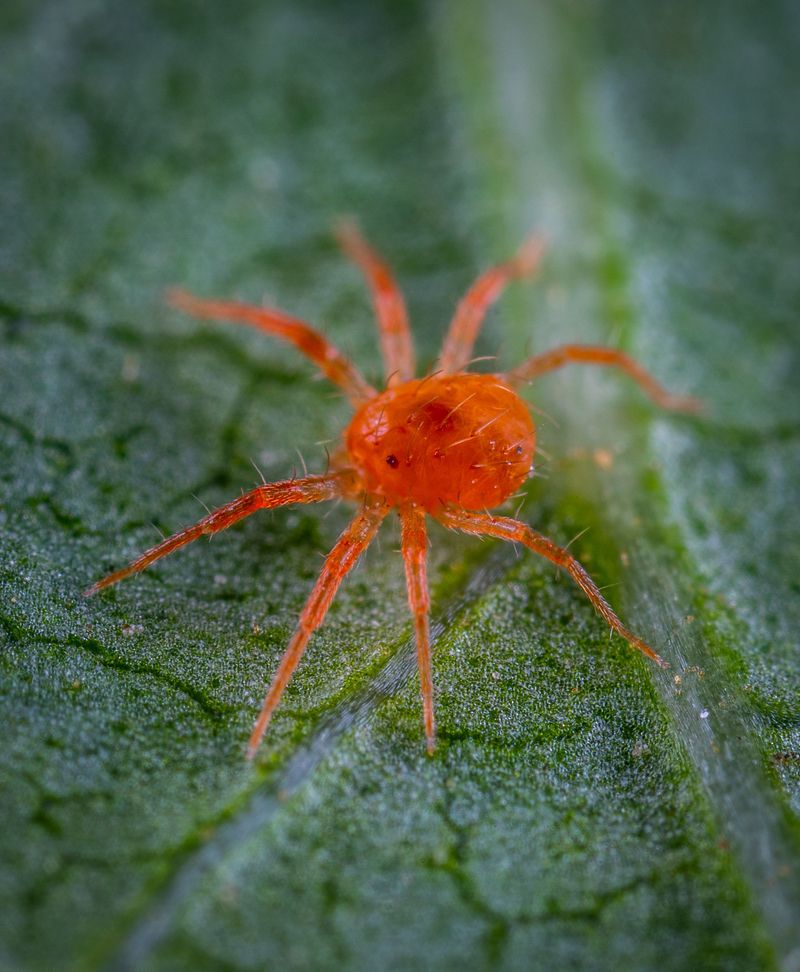
Small pests can cause a surprising amount of trouble, and boxwood mites are a good example.
These microscopic pests are barely visible to the naked eye, but their feeding turns healthy green leaves into pale, bronze-tinted foliage.
Boxwood mites feed on individual leaf cells and draw out the chlorophyll inside. Without chlorophyll, leaves lose their green color.
They take on that telltale bronze or silvery-bronze sheen that catches homeowners’ attention every summer.
The damage tends to start on the upper leaf surface and spreads outward from there. Hold a white sheet of paper under a branch and shake it gently to spot tiny moving specks that confirm a mite infestation.
Hot, dry conditions are a mite’s dream environment. When summer gets hot and humidity drops, mite populations can grow quickly.
This often happens within just a few weeks on shrubs that are already under pressure. A strong blast of water from a garden hose knocks mites off leaves effectively.
Repeat that process every few days for two weeks to break the population cycle before it gets out of hand.
Horticultural oil or insecticidal soap sprays work well for heavier infestations.
Apply either product in the early morning or evening to avoid burning leaves in direct heat, and coat both sides of the foliage thoroughly.
Keeping boxwoods well-watered reduces the chances of a mite problem significantly. Thirsty plants tend to attract mites faster, so healthy hydration is your best first step heading into fall.
4. Roots Stress From Poor Drainage
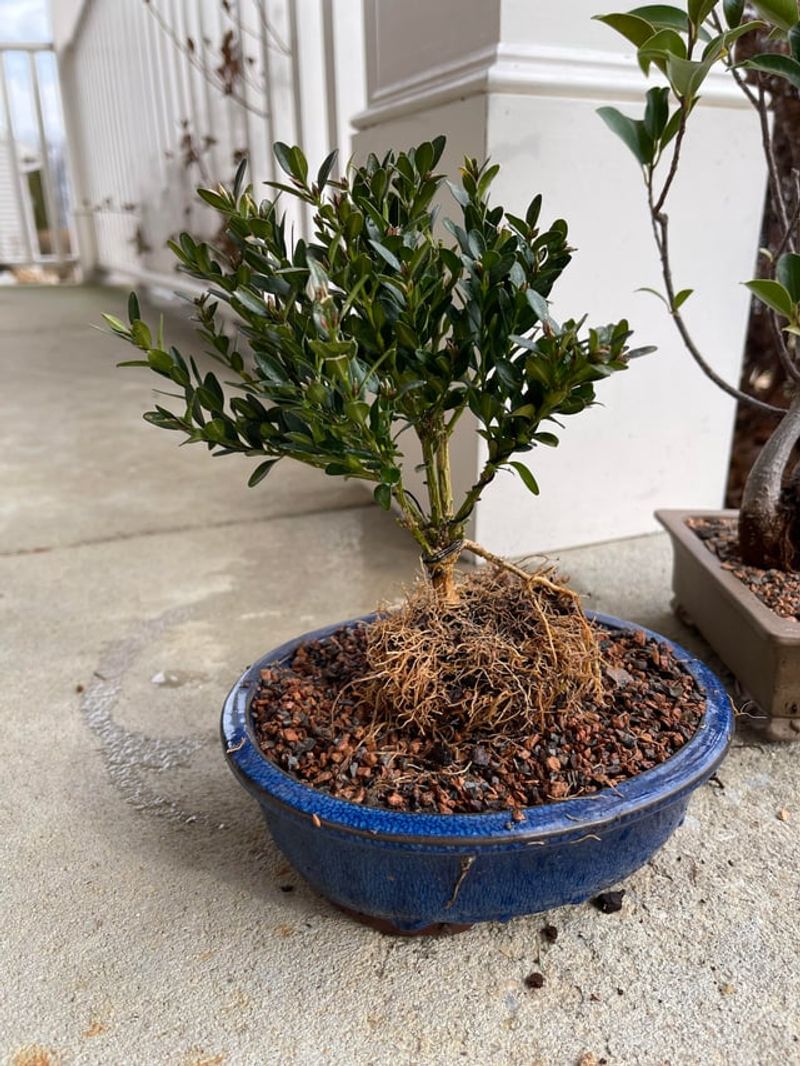
Soggy roots are unhappy roots, and boxwoods show it clearly through their foliage. Poor drainage is a leading cause of bronze leaves that most gardeners overlook because the problem hides underground.
When water sits around roots too long, oxygen gets pushed out of the soil. Roots that lack oxygen have a harder time delivering nutrients and water upward, and leaves often turn bronze as a warning sign.
Clay-heavy soils are the biggest offenders in many Mid-Atlantic and Southeastern yards. Water pools in clay rather than filtering through.
This creates a wet zone around the roots that slowly wears the plant down from below. Feel the soil around your boxwoods after a rainstorm.
If water is still pooling or the ground feels spongy 24 hours later, your drainage situation needs attention before the problem worsens heading into fall.
Raising the planting bed by even four to six inches can dramatically improve drainage for established shrubs. Adding a mixture of coarse sand and compost to the existing soil helps break up compaction and improves water movement.
For severe cases, installing a simple French drain nearby redirects water away from the root zone efficiently. That small investment pays off in healthier, greener foliage by the following spring.
Avoid planting boxwoods in low spots where runoff naturally collects after rain. Choosing a slightly elevated or sloped location from the start saves years of frustration and keeps those leaves looking their vibrant best.
5. Water Deeply Once Weekly
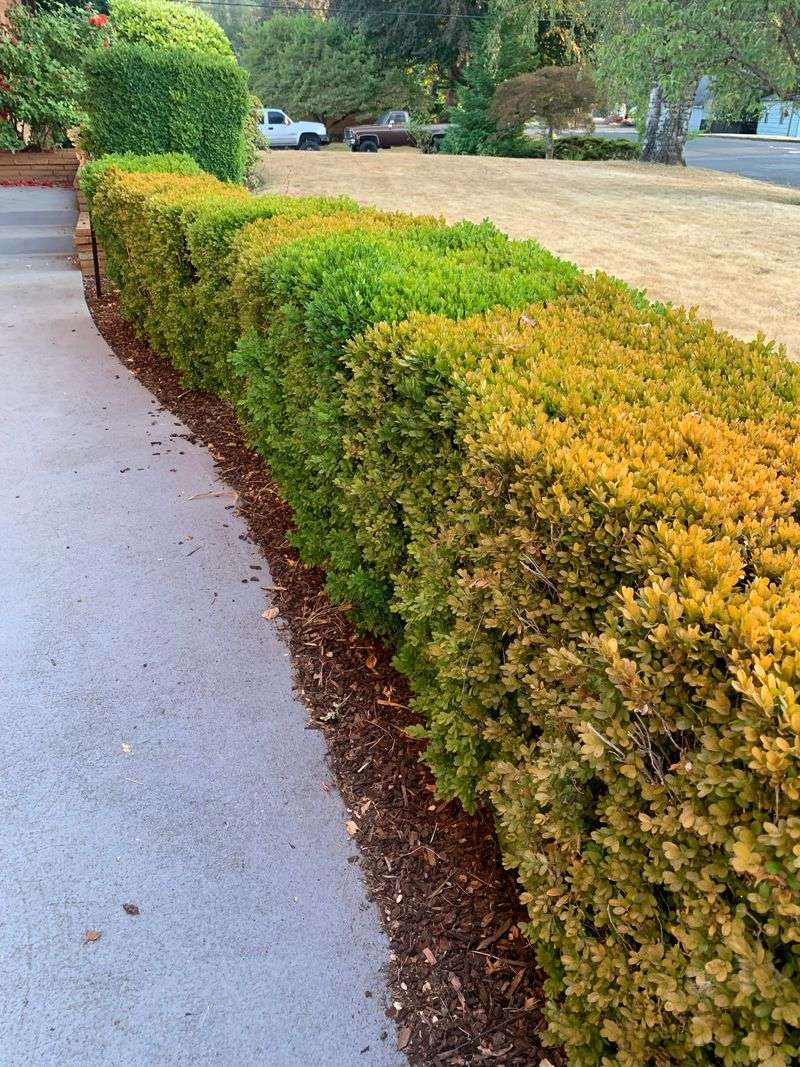
Shallow watering is worse than no watering at all for boxwoods. When you only wet the top inch of soil, roots never grow deep enough to access moisture during a real drought.
Deep watering once a week trains roots to reach downward into cooler, more consistently moist soil layers. That deeper root system makes your shrubs far more resilient when dry spells hit hard in late summer.
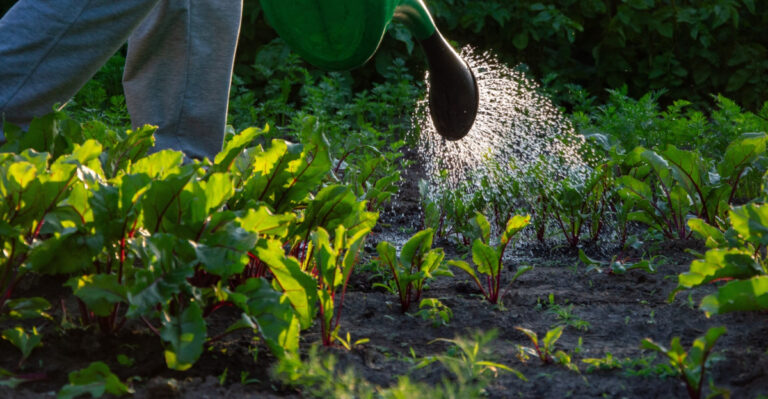
Aim to soak the soil to a depth of about eight to ten inches with each watering session. A slow trickle from a soaker hose left running for 30 to 45 minutes accomplishes this without wasting water through runoff.
Early morning is the best time to water boxwoods because foliage dries quickly as the day warms up. Wet leaves that stay damp overnight can invite fungal problems.
That only adds to the bronzing you’re already trying to fix. Skip watering during rainy weeks to avoid oversaturating the soil around your shrubs.
Overwatering mimics drought symptoms because both conditions prevent roots from absorbing nutrients properly.
A rain gauge in your yard takes the guesswork out of supplemental watering completely. If your area received at least an inch of rainfall that week, your boxwoods likely have what they need to stay healthy.
Boxwoods turning bronze from water stress can recover quickly once proper hydration resumes. Consistent, deep weekly watering is the simplest and most powerful step you can take before fall arrives to protect your shrubs.
6. Check Leaves For Mites
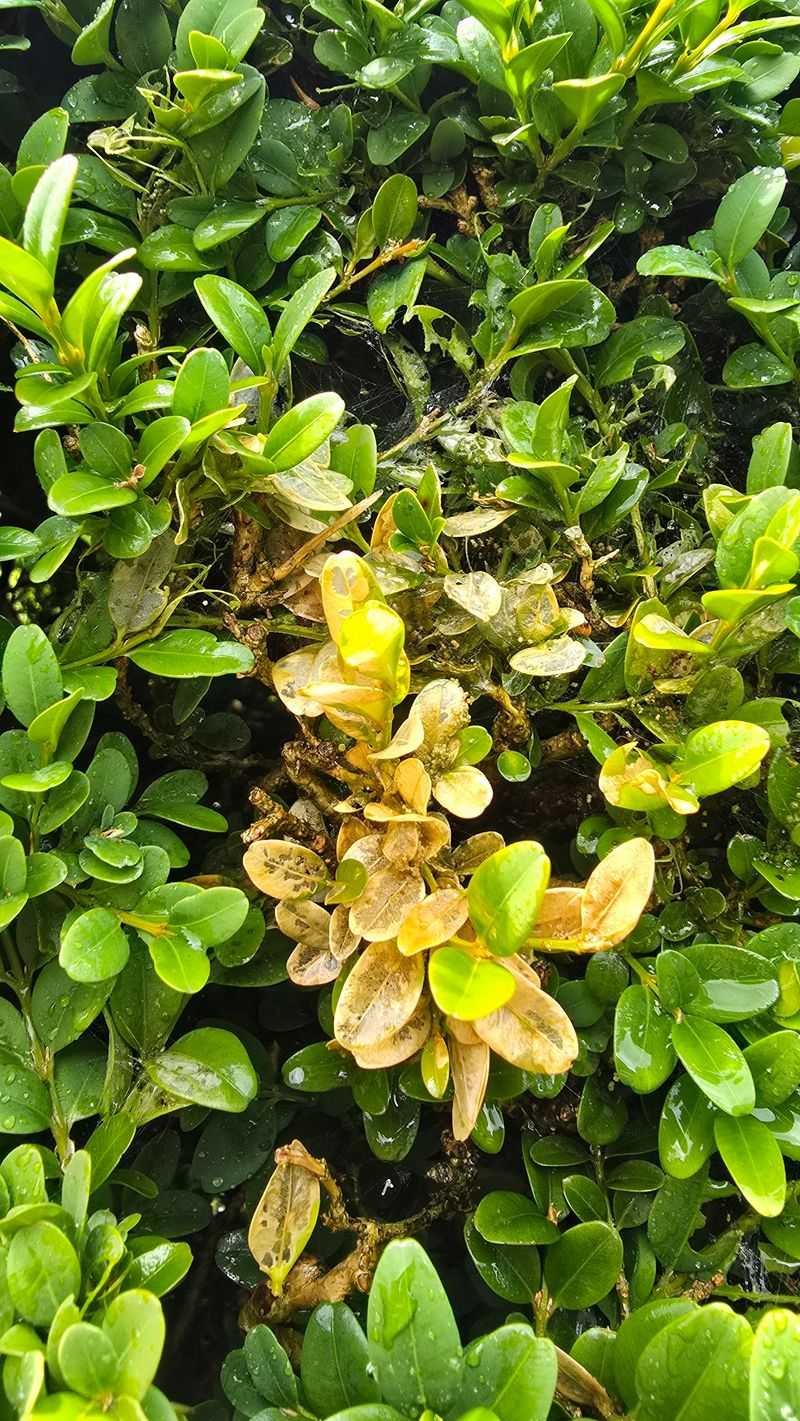
You cannot treat what you cannot see, so checking leaves for mites is a critical step before fall. A quick inspection takes five minutes and can save your entire boxwood hedge from serious damage.
Start by looking at the upper surface of leaves for a dusty, stippled, or bronze-flecked appearance. That texture is the first visual clue that mites have been feeding and draining chlorophyll from individual cells.
The white paper test is the fastest confirmation method available to any homeowner. Hold a sheet of plain white paper beneath a branch, give it a firm shake, and watch closely for tiny specks that crawl across the surface.
Moving specks mean mites are present and active on your plant. Specks that do not move are likely just dust or debris, so watch carefully for at least 30 seconds before drawing a conclusion.
Check multiple branches across different areas of the shrub for a complete picture. Mite populations often concentrate on the sunnier, drier side of the plant first before spreading throughout the entire canopy.
Inspect the undersides of leaves too, since some mite species prefer feeding on the lower surface. A magnifying glass helps you spot the tiny pests and any fine webbing they leave behind as evidence.
Catching mites early makes treatment far easier and less costly than dealing with a full-blown infestation. A quick leaf check every two weeks through summer keeps you ahead of the problem and your boxwoods looking green and strong.
7. Mulch Around The Base
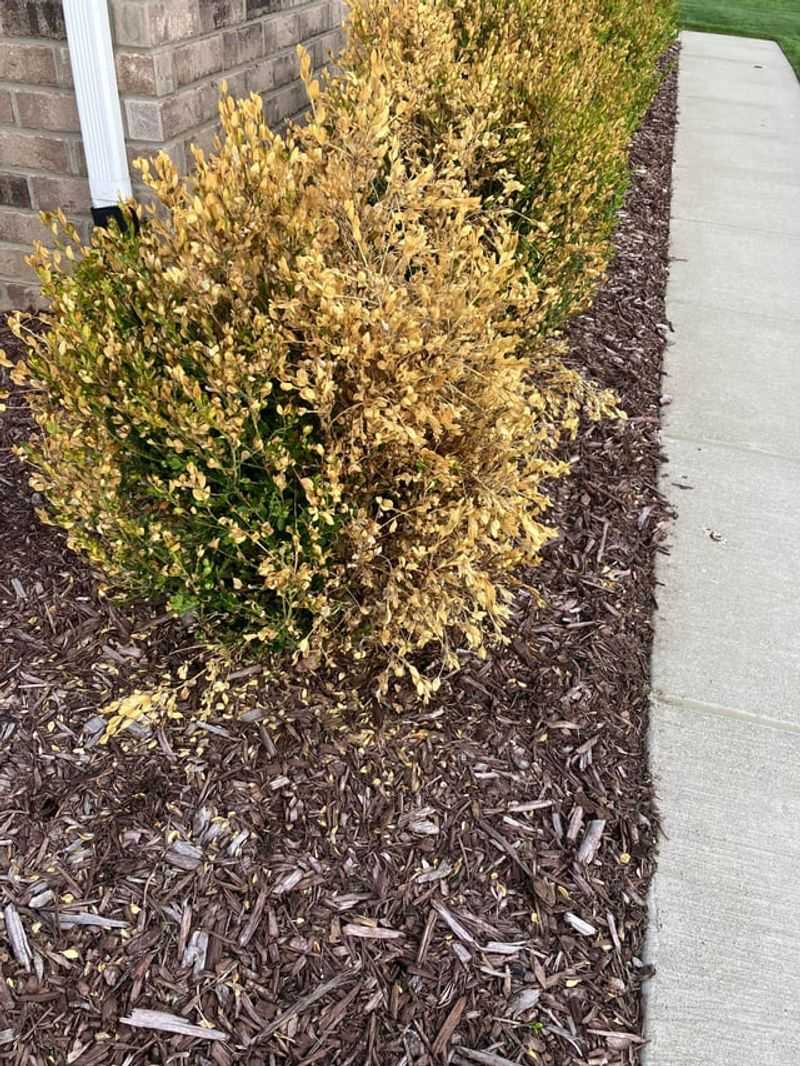
Mulch is one of the most underrated tools in any gardener’s arsenal. A proper layer around your boxwoods does more than look tidy. It actively protects roots from the stress that causes bronze leaves.
Mulch regulates soil temperature by acting as an insulating blanket around the root zone. During summer heat waves, that buffer can keep soil several degrees cooler than bare ground, which reduces root stress significantly.
Moisture retention is mulch’s other superpower for thirsty boxwoods. A two to three inch layer slows evaporation dramatically, meaning your weekly deep watering session stays in the soil longer where roots can access it.
Use shredded bark, wood chips, or pine needles for the best results around boxwoods. These organic materials break down slowly, gradually enriching the soil with nutrients as they decompose over the season.
Keep mulch pulled back at least two inches from the base of each shrub stem. Mulch piled directly against stems traps moisture and encourages fungal growth right at the most vulnerable part of the plant.
Spread mulch in a wide circle that extends at least two feet beyond the outermost branches. Covering that full root zone gives the most benefit and protects the widest spread of underground roots from heat and drought.
Fresh mulch applied before fall locks in late-season soil warmth and protects roots from early frost. That simple act of spreading a bag of mulch could be what keeps your boxwoods vibrant through the next growing season.
8. Test And Adjust Soil pH
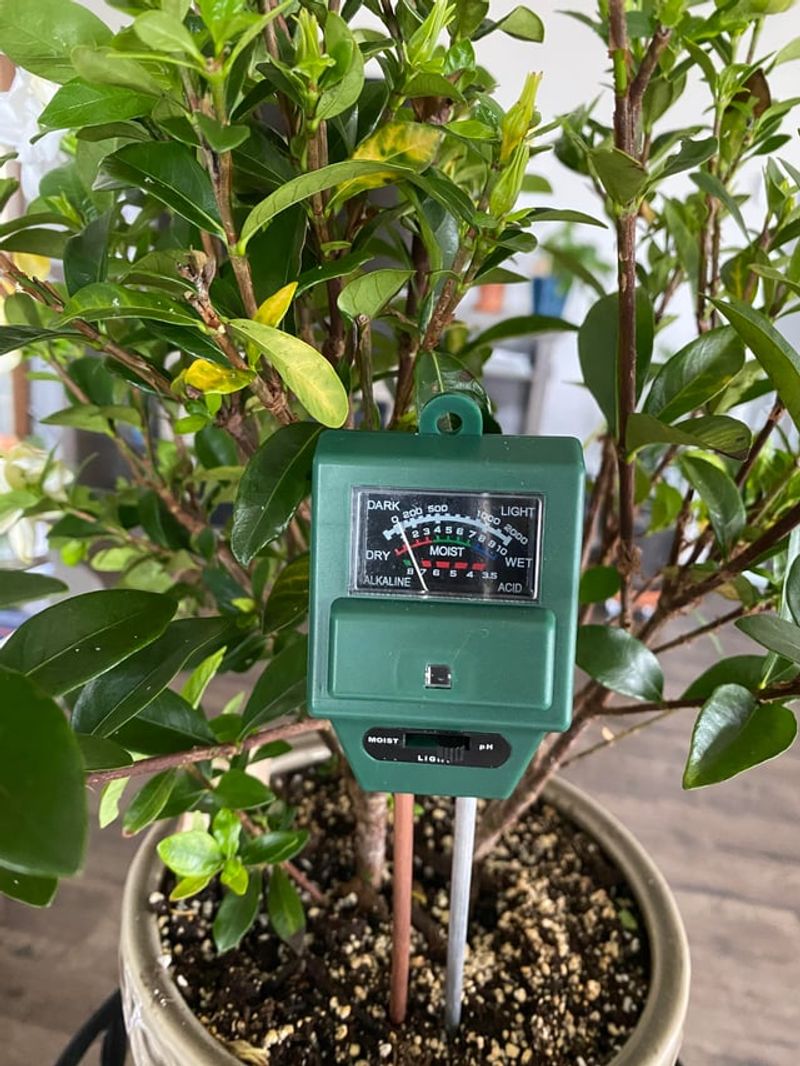
Soil pH is the invisible factor that controls everything your boxwoods can or cannot absorb. When pH drifts out of the ideal range, nutrients lock up in the soil and leaves start turning bronze even when fertilizer is applied.
Boxwoods thrive in soil with a pH between 6.5 and 7.5, leaning neutral rather than acidic. A basic soil test kit from any garden center gives you a pH reading in about ten minutes.
For a more detailed analysis, local cooperative extension offices often offer affordable soil testing with specific amendment recommendations included.
If your pH is too high, meaning too alkaline, sulfur applications bring it back into the correct range. Work elemental sulfur into the top few inches of soil according to package directions for the safest, most effective results.
Low pH soil, meaning too acidic, responds well to agricultural lime spread around the root zone. Lime raises pH gradually over several weeks, so patience is key after any amendment is applied to the soil.
Retest your soil about six weeks after making amendments to see how much the pH has shifted. Soil chemistry changes slowly, and a follow-up test tells you whether another round of adjustments is needed before winter sets in.
Getting soil pH right is the foundation for everything else you do to help boxwoods turning bronze recover fully. Fix the pH, and every other care step you take will work twice as effectively going forward.
9. Winter Wind And Cold Cause Bronzing Too
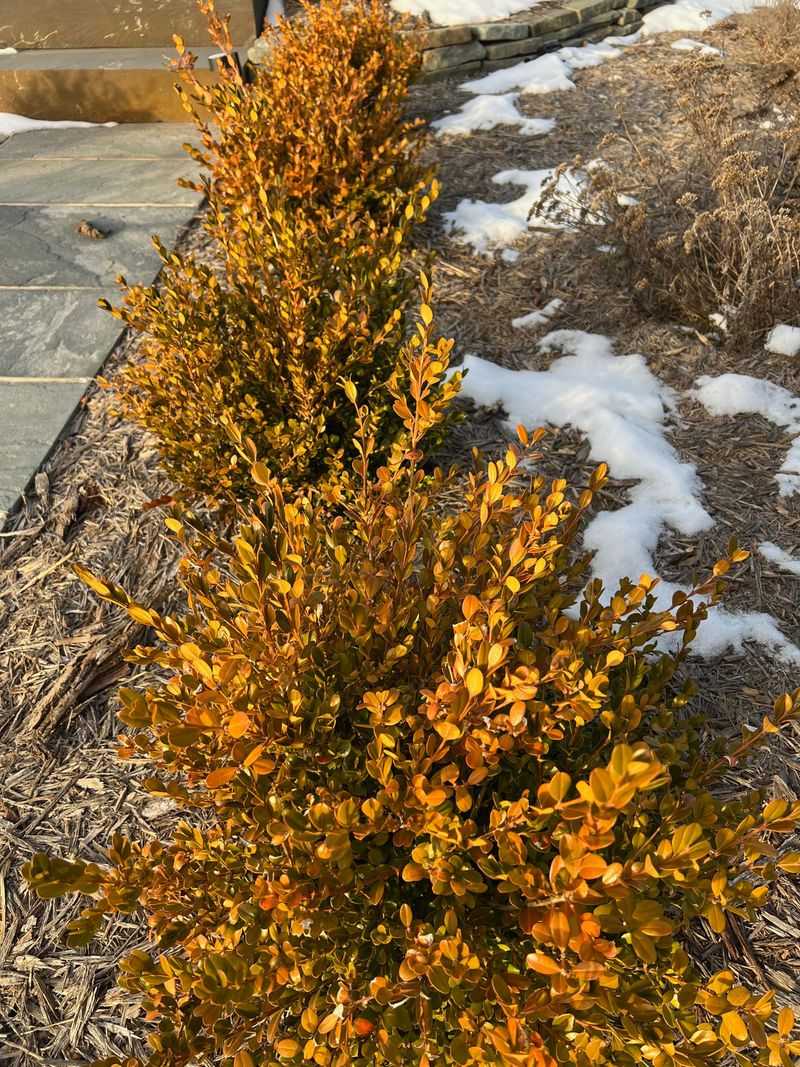
Not every bronze boxwood is a summer problem. In fact, winter is when most bronzing actually shows up, and it catches people off guard because their shrubs looked perfectly green all summer long.
Cold temperatures slow down chlorophyll production inside the leaves. When that green pigment fades, the orange and purple tones that were always hiding underneath become visible instead.
Freeze-thaw cycles make this worse. A stretch of mild days followed by a hard freeze puts real stress on the plant, and the leaves respond by turning that familiar bronze or rust color.
Sun and wind exposure play a big role here too. Boxwoods planted on the south or southwest side of a house, where winter sun is strongest and wind hits hardest, tend to bronze more than shrubs tucked into a shadier, more protected spot.
Here’s the part that should ease your mind. Winter bronzing rarely means your boxwood is in trouble. Most shrubs bounce back to green on their own once new spring growth kicks in.
If you want to head off winter bronzing before it starts, water your boxwoods well through fall so they go into the cold season hydrated.
A fresh layer of mulch around the base helps insulate those shallow roots, and wrapping especially exposed shrubs in burlap can shield them from the harshest winter wind.