Native Arizona Plants That Succeed Under Mesquite Trees Where Most Plants Struggle
Planting beneath a mesquite tree can feel like an impossible task. One plant after another goes into the ground with plenty of promise, only to fade, stall, or disappear before long.
After enough failed attempts, it is easy to believe nothing will ever grow well in that space. The combination of shade, thirsty roots, and dry soil creates conditions that challenge even experienced gardeners.
That does not mean every plant is destined to struggle. Some native species have adapted to these demanding conditions over thousands of years.
They are naturally equipped to grow where many popular landscape plants never become established.
Arizona landscapes are full of opportunities to work with nature instead of fighting it.
Choosing plants that naturally grow beneath mesquite trees can transform those difficult spots with far less effort.
1. Desert Honeysuckle Handles Light Shade
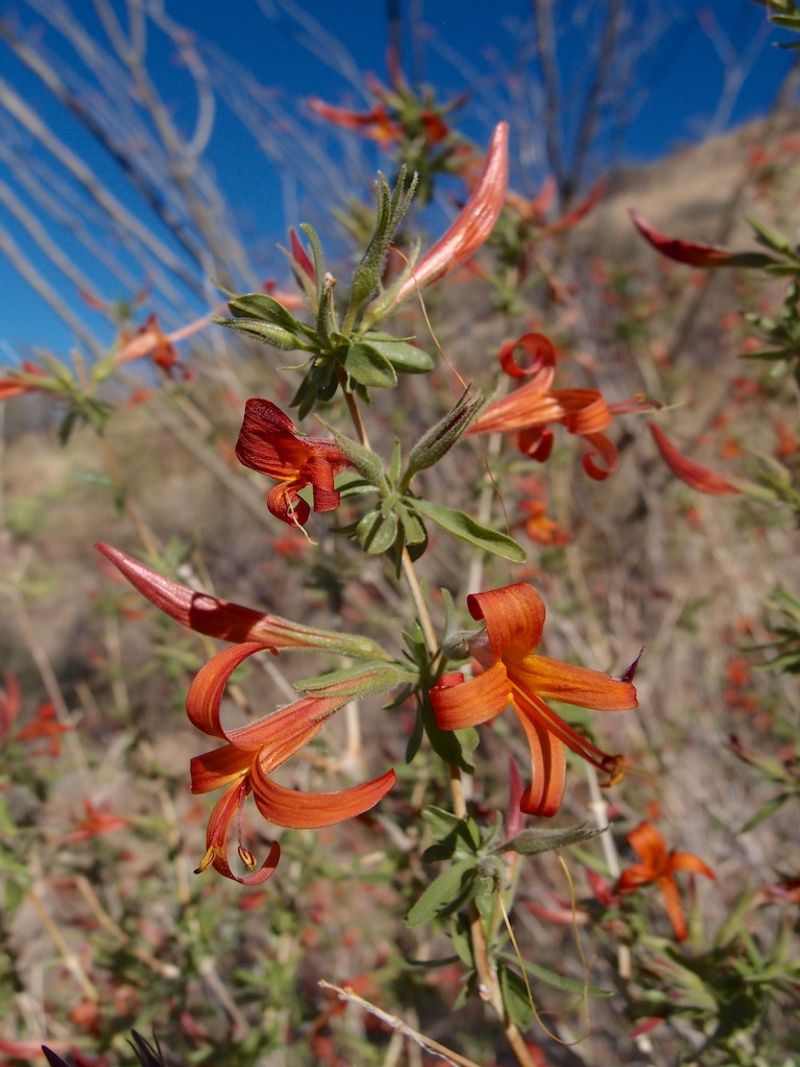
Few desert plants pull off bold color in shady spots, but desert honeysuckle does it without breaking a sweat. Those long, tubular flowers in orange and red are practically impossible to ignore.
Anisacanthus thurberi, commonly called desert honeysuckle, is a shrub that peaks in summer. That timing matters because most desert bloomers finish up before the heat really sets in.
This one leans into the heat and keeps going.
Under a mesquite, the filtered light keeps the plant from getting scorched on its upper leaves. Full-sun exposure can bleach the foliage during July and August.
A little overhead protection from mesquite branches actually improves its appearance.
Hummingbirds treat this plant like a rest stop on a long journey. The flowers are shaped perfectly for their beaks, and the blooming period stretches across several months.
Plant it where you can watch from a window or patio.
Water it deeply every week or two during its first summer. After that, monthly deep watering through the warm season is usually enough.
Winter rain typically handles things on its own.
Growth stays manageable, usually between three and five feet. Hard pruning in late winter keeps it tidy and encourages stronger spring growth.
Skip light trimming throughout the season since it tends to reduce flowering rather than help it.
Well-drained soil is essential, since this shrub performs best when its roots dry out between deep waterings.
2. Trailing Indigo Bush Spreads Beneath Trees
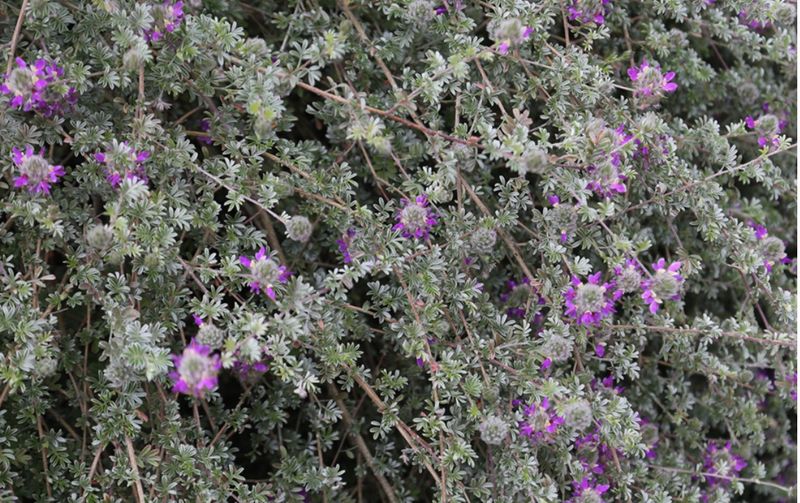
Ground covers under mesquites are hard to find, but trailing indigo bush fills that role naturally and without complaint. It spreads low, stays dense, and asks almost nothing from the gardener.
Dalea greggii creeps outward rather than upward, typically staying under two feet tall while spreading several feet wide. That horizontal growth pattern makes it ideal for covering bare, compacted soil beneath established trees.
Purple flower clusters appear in spring and sporadically through fall. They are small but numerous, giving the plant a soft lavender haze when viewed from a few feet back.
Pollinators work those blooms constantly on warm afternoons.
Root competition from mesquites does not seem to bother this plant much at all. It roots shallowly and widely, pulling moisture from the upper soil layer between rain events.
Your Arizona Garden Changes Every Week. Your Plan Should Too.
Gardening in Arizona changes quickly throughout the season. Every Friday you’ll receive a simple weekly plan showing exactly what to plant, prune, fertilize, harvest, and protect so you never miss the right timing.
That strategy works well in gravelly desert soils.
Planting it on the outer edge of the mesquite canopy gives it the best start. Once established, it will creep inward toward the trunk on its own.
Give it one full growing season before expecting significant spread.
Trim back any woody stems and any stems that show no new growth in early spring to keep the plant looking full.
Overwatering is the main issue to avoid. Well-draining soil and infrequent deep watering keep trailing indigo bush healthy and spreading steadily through the seasons.
Avoid frequent shallow watering, since deeper, less frequent soakings encourage stronger roots and better drought tolerance.
3. Chuparosa Grows Well Under Mesquite Canopies
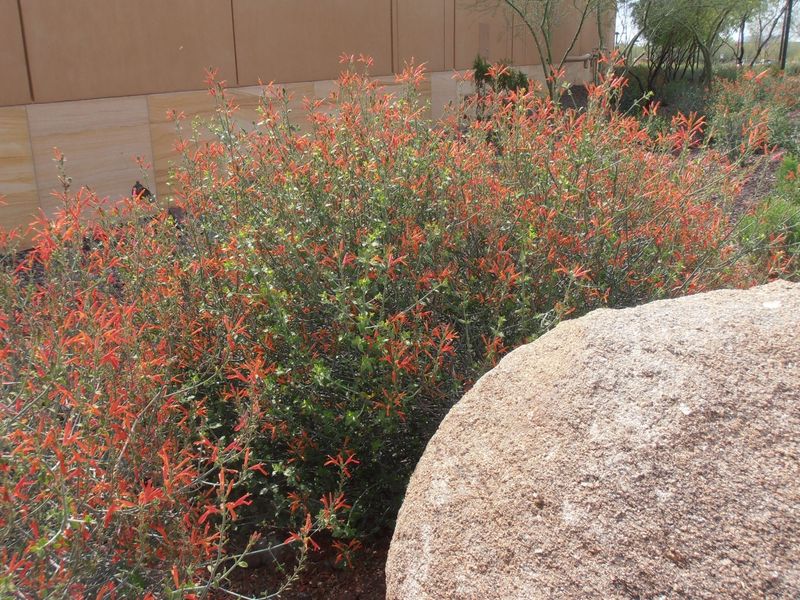
Chuparosa earned its name honestly. In Spanish, it means hummingbird sucker, and every hummingbird in the neighborhood seems to know exactly where this plant is.
Red tubular flowers cover the stems for months at a stretch.
Justicia californica blooms most heavily from late winter through spring, though flowers appear off and on all year in warmer locations. Under a mesquite canopy, the plant stays sheltered from the harshest afternoon sun, which helps extend bloom time.
It naturally grows along desert washes and rocky slopes, so lean, dry soil is not a problem. In fact, it prefers those conditions over rich, amended garden beds.
Planting it in unamended native soil under your mesquite gives it the best shot.
Mature plants reach four to five feet tall and wide. Under a large mesquite, they fill in the mid-layer nicely between the tree canopy and low ground covers.
That layered look is exactly what a natural desert planting should have.
Water every two weeks during summer once established. During cooler months, rainfall usually handles the workload.
Avoid overhead irrigation if possible since wet foliage in humid conditions can invite fungal issues.
Hard frosts can damage stems, but the plant rebounds quickly from the base. Cutting back frost-damaged growth in late winter clears the way for fresh stems and a stronger bloom cycle heading into spring.
New growth often appears quickly as temperatures warm, and those fresh stems produce the season’s brightest blooms.
4. Wolfberry Handles Dry Root Competition
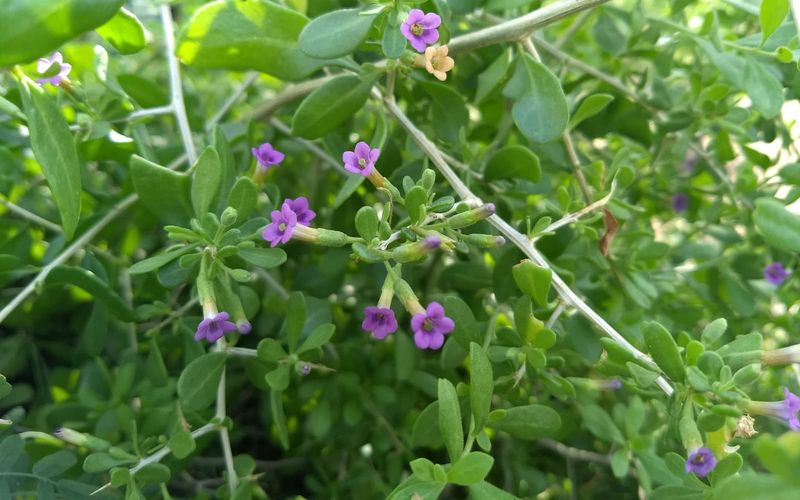
Root competition is brutal under established mesquites. Wolfberry does not just survive it, it seems almost designed for those conditions.
Tough roots, drought tolerance, and wildlife value make it a standout choice for this spot.
Lycium fremontii grows as a thorny, arching shrub that reaches four to eight feet depending on water availability. Under mesquites, it usually stays on the smaller end of that range, which actually keeps it from getting too large for the space.
Small purple flowers appear in early spring, followed by bright red berries that ripen by late spring. Birds go after those berries fast, often stripping the plant within days of ripening.
Planting wolfberry essentially means adding a bird feeder that refills itself every year.
Established plants need almost no supplemental water once rooted in. A deep soak every three to four weeks during summer is more than enough.
Overwatering causes more problems than drought in this species.
The thorns are real and sharp, so plant wolfberry away from high-traffic paths. Near a wall or fence behind the mesquite keeps it useful without creating a hazard.
Gloves are non-negotiable when pruning.
Pruning is minimal and mostly cosmetic. Remove crossing or damaged branches in late winter.
Skip heavy shaping since wolfberry looks best when allowed to grow in its natural arching form without much interference from pruning tools.
5. Hopbush Adapts To Filtered Desert Light
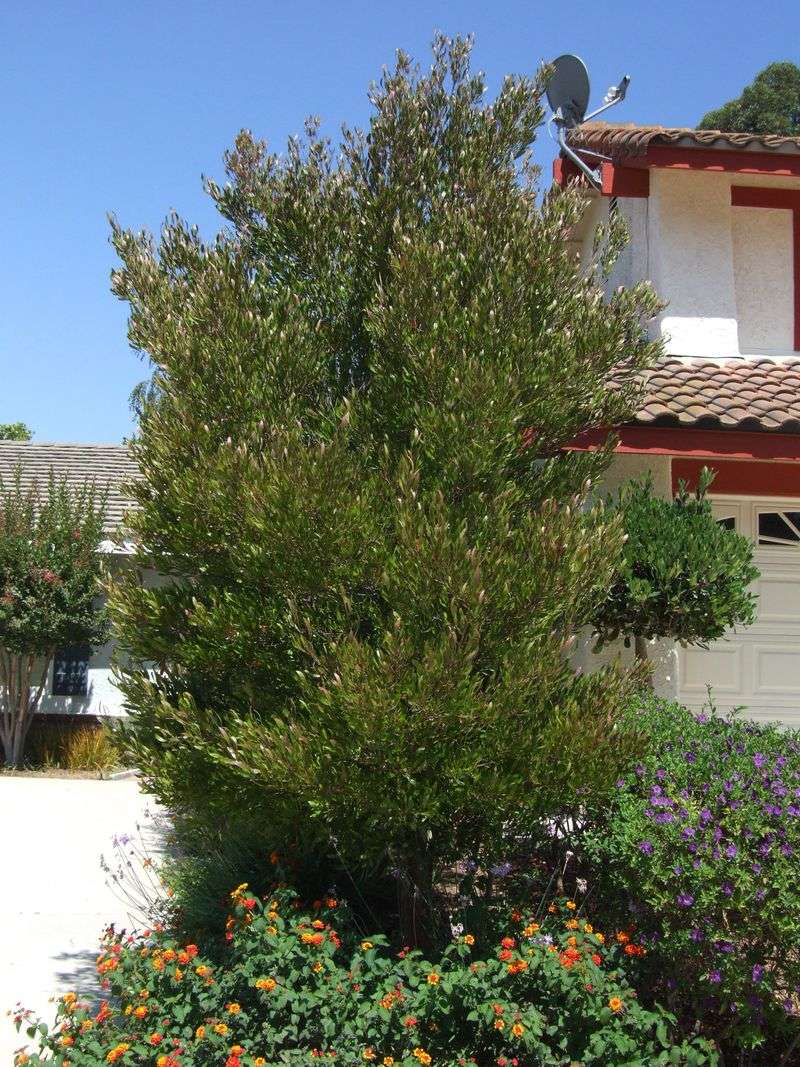
Not every plant under a mesquite needs to bloom boldly to earn its place. Hopbush brings structure, texture, and year-round interest without relying on showy flowers to make its point.
Dodonaea viscosa is a fast-growing evergreen shrub that reaches six to ten feet tall in full sun but stays more compact under canopy cover. That size flexibility makes it surprisingly adaptable to a wide range of planting situations.
The real show comes in late spring when papery, winged seed pods turn pink or reddish-bronze. Those pods hold on for weeks and catch the light in a way that makes the plant look almost decorative without any effort from the gardener.
Filtered light under a mesquite slows hopbush slightly but does not reduce its vigor significantly. It adjusts its growth angle toward available light, which gives it a slightly open, natural form.
That look works well in a layered desert planting.
Water deeply every two weeks during the first summer. After that, monthly deep watering during hot months is usually sufficient.
Established hopbush handles extended dry spells without showing stress in most soil types.
Pruning is optional but useful for shaping. Trim in early spring before new growth starts.
Removing lower branches creates a multi-trunk tree form that looks clean under larger mesquites and opens up the space for lower plantings beneath it.
6. Turpentine Bush Thrives With Very Little Water
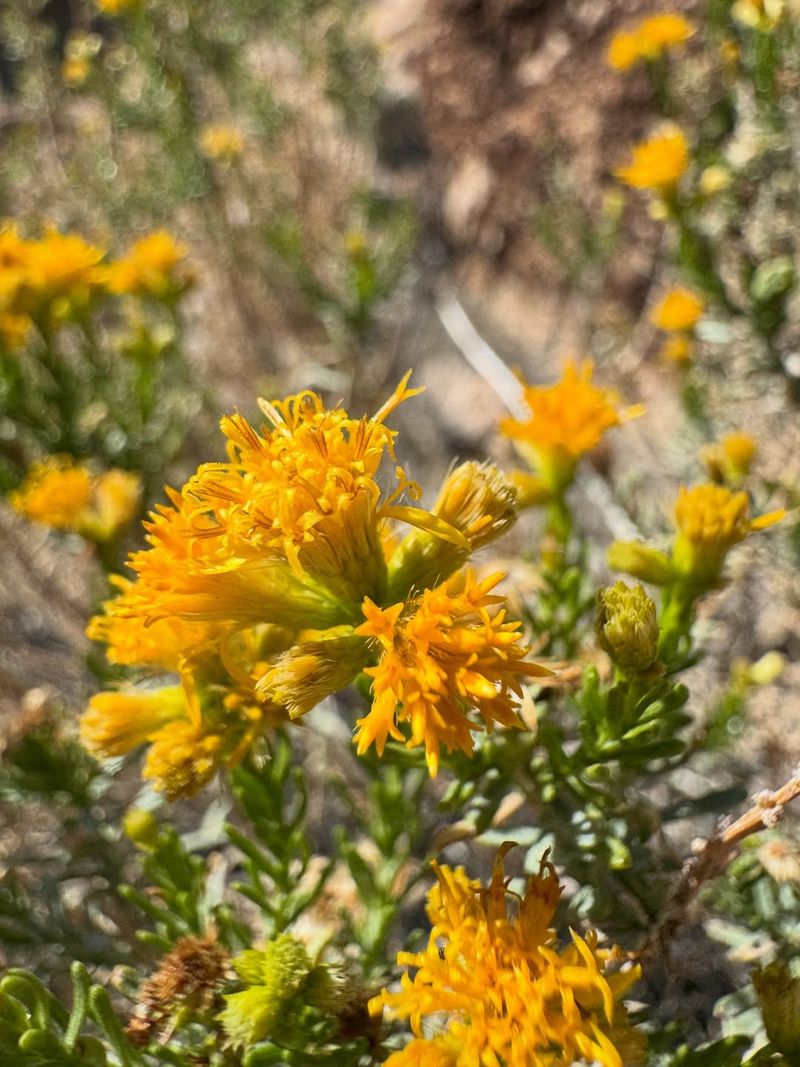
Crushing a leaf of turpentine bush releases a sharp, resinous scent that is instantly memorable. It is not unpleasant, just unmistakably wild.
And that toughness carries through every part of this plant.
Ericameria laricifolia blooms in fall when most desert plants have already gone quiet. Yellow flower clusters cover the plant from September through November, filling the garden with late-season color right when you need it most.
Under a mesquite, it handles the dry, compacted soil without complaint. It evolved in rocky desert foothills and canyon edges, so low water and poor soil are just normal conditions to this plant.
Amending the soil is unnecessary and actually counterproductive.
Mature plants stay between two and four feet tall and wide, making them easy to work with in smaller spaces.
A few planted together under a mesquite create a solid mid-height layer that fills the space without overwhelming it.
Watering once or twice a month during summer keeps it healthy without encouraging overly soft growth. Too much water makes stems floppy and reduces the natural density that makes this plant look good.
Butterflies and native bees swarm the fall blooms in large numbers. That late-season pollinator activity makes turpentine bush genuinely valuable in a wildlife-friendly garden.
Pair it with wolfberry nearby and you create a real wildlife corridor in a compact space.
7. Sacahuista Grows Well Beneath Desert Trees
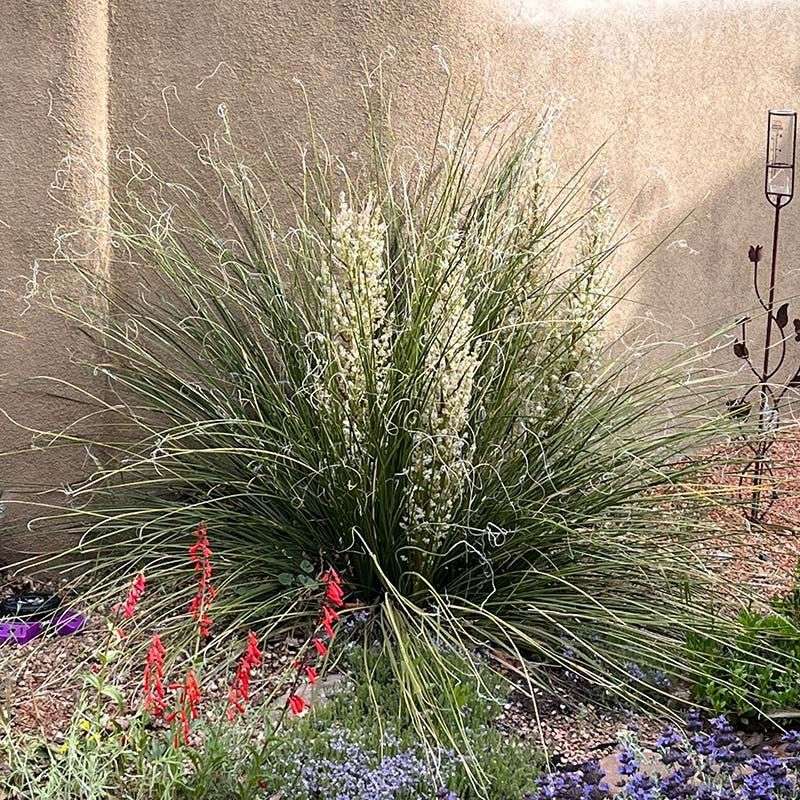
Sacahuista looks like a grass but behaves like a shrub. That combination of soft texture and structural form makes it one of the more versatile native plants for shaded or semi-shaded desert spots.
Nolina microcarpa produces long, narrow leaves that arch outward from a central base. Mature clumps can reach three to four feet tall and spread just as wide.
Under a mesquite, that arching form creates a natural mounding shape that looks completely at home.
Creamy white flower stalks rise above the foliage in late spring. They are not flashy, but they add vertical interest when most of the surrounding plants are between bloom cycles.
The dried stalks stay attractive well into summer.
Dry root competition is where sacahuista really proves itself. It pulls moisture from deep in the soil profile and stays green through extended dry periods when neighboring plants start to look stressed.
Very few ornamentals match that level of reliability.
Planting it on the north or east side of the mesquite trunk gives it the most consistent shade during peak summer heat.
That positioning reduces moisture loss from the foliage and keeps the plant looking full longer into the season.
Minimal care is required once it is established. Remove old flower stalks and any brown leaf tips in late winter.
Avoid cutting back the entire clump since sacahuista regenerates slowly from hard pruning and can take two or three seasons to fully recover.
8. Fairy Duster Thrives In Filtered Sun
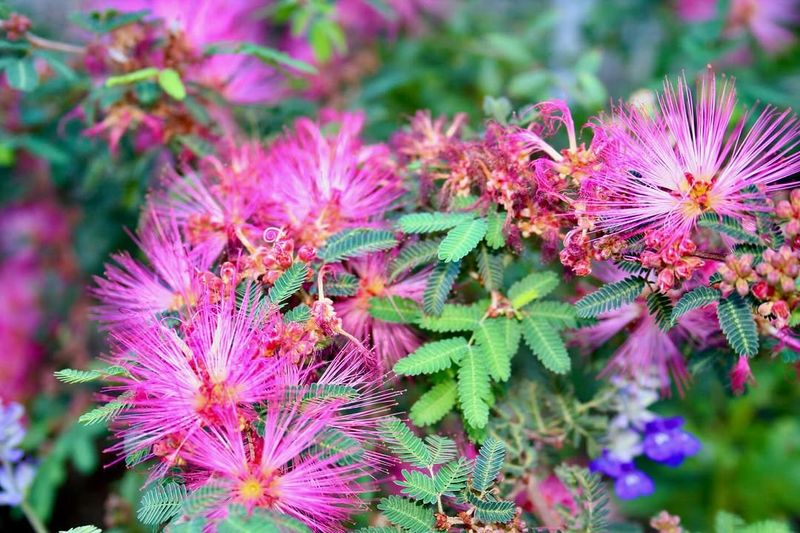
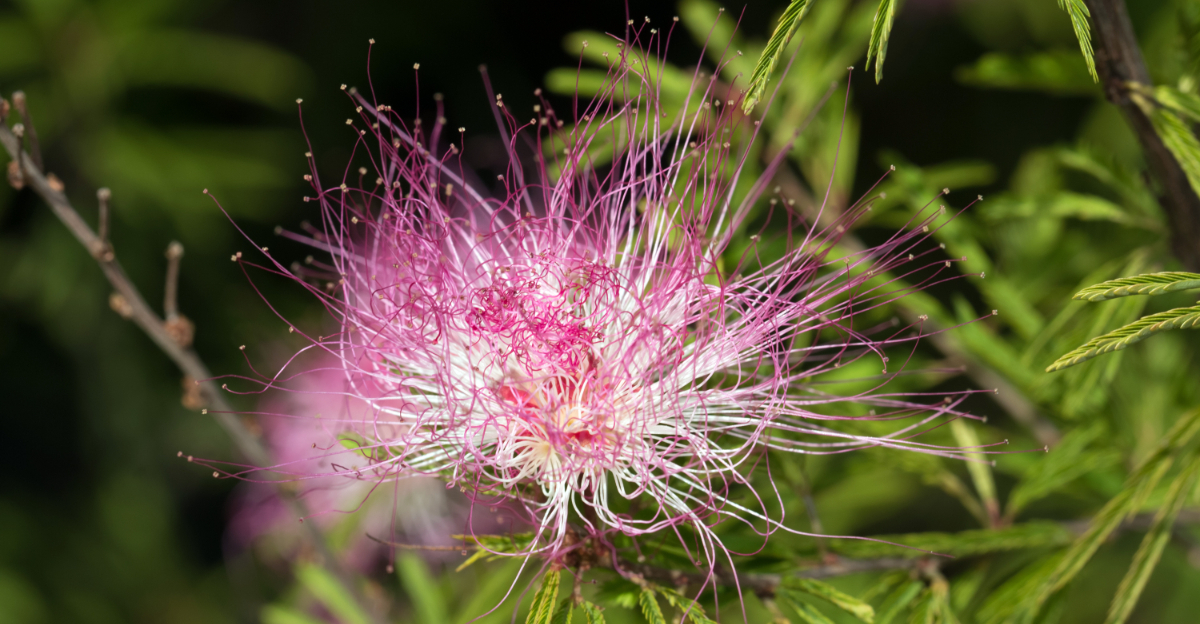
Bright pink puffball flowers on a plant that barely needs watering? Fairy duster delivers exactly that.
It blooms heavily in late winter and spring, right when most desert gardens look dull and tired.
Fairy duster, or Calliandra eriophylla, grows naturally across the Sonoran and Chihuahuan deserts. It handles the patchy shade under mesquite canopies without slowing down.
Filtered light suits it well, and it rarely needs supplemental water once rooted in.
Under a mesquite, it typically stays between two and four feet tall. That compact size means it fits neatly without crowding other plants.
Space a few together and you get a soft, feathery border that looks intentional.
Hummingbirds and native bees absolutely love the blooms. You will notice activity around this plant almost immediately after it flowers.
That wildlife value alone makes it worth planting.
Soil drainage matters more than soil richness here. Fairy duster prefers sandy or gravelly ground, which is exactly what you usually find under established mesquites.
Avoid areas where water pools after rain.
Established plants handle drought well, though a deep watering every few weeks during summer keeps them looking full. Skip the fertilizer entirely.
Rich soil actually reduces bloom production and can make stems leggy and weak.
Light pruning after the main bloom period helps maintain a compact shape without reducing future flowering.