What It Really Means When Blue Jays Keep Visiting Your Pennsylvania Yard
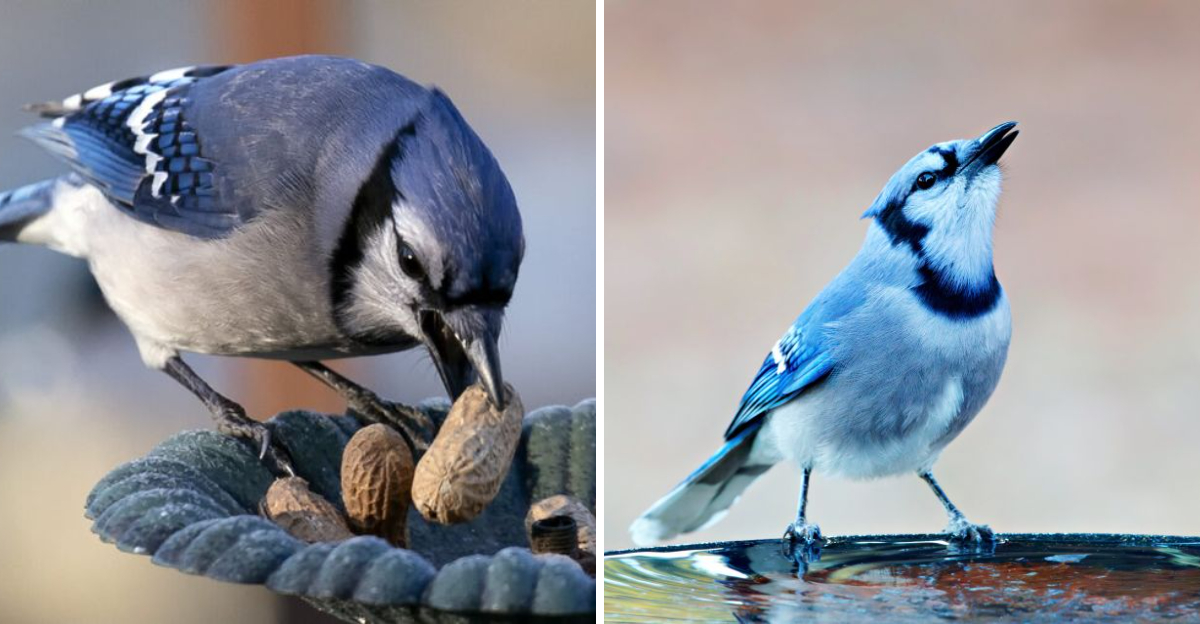
Blue jays are hard to ignore. Bold, loud, and absolutely striking with that vivid blue and white plumage, they have a way of making their presence known the moment they arrive. Some people love them. Others find them a little bossy.
But if blue jays have been showing up in your Pennsylvania yard regularly, there’s more to their visits than most people realize. Their presence is rarely random.
Blue jays are highly intelligent, highly observant birds, and where they choose to spend their time tells you something real about your yard and the environment around it.
From what your trees and shrubs are offering to what other wildlife might be nearby, a blue jay’s regular visits are loaded with information if you know how to read them.
Beyond the practical side, blue jays carry rich symbolism and folklore that has been passed down for generations across many cultures. Here’s what it really means when blue jays keep choosing your Pennsylvania yard.
1. Your Yard Has Reliable Food
Imagine setting out a fresh plate of your favorite food every single day. You’d come back for it without hesitation.
That’s exactly how Blue Jays think about your yard when it offers a steady, reliable food supply.
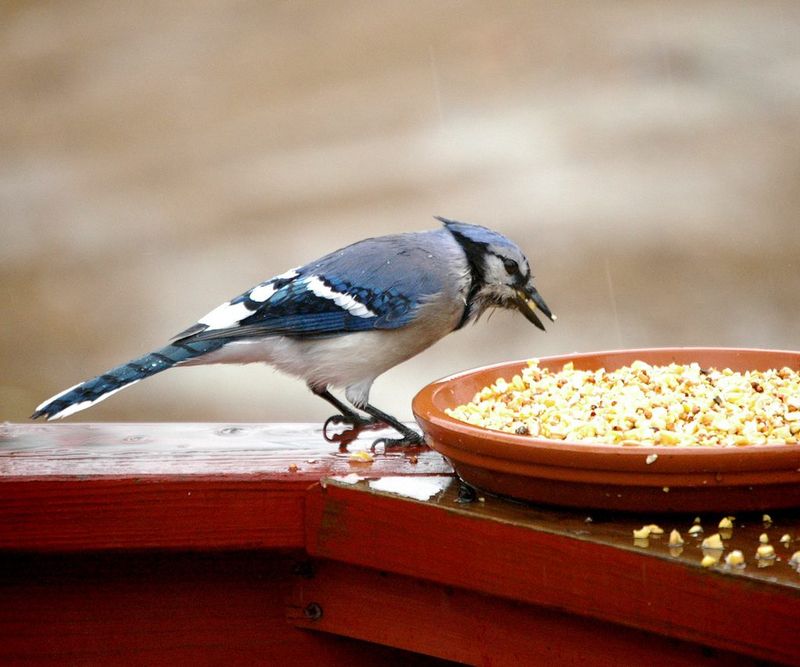
Blue Jays are opportunistic eaters, which means they take advantage of whatever good food is available. Acorns are their absolute favorite, but they also love peanuts, sunflower seeds, beechnuts, and suet.
If your yard consistently offers any of these, Blue Jays will remember it and return regularly.
Blue Jays have surprisingly strong memories. They can recall where food sources are located and will revisit those spots time and again.
Platform feeders work especially well because Blue Jays are larger birds and need more space to land and eat comfortably.
Keeping feeders clean and stocked is one of the simplest ways to encourage repeat visits. Dirty feeders can spread illness among birds, so rinsing them out every week or two matters. Fresh food also attracts more birds than old, stale seed that has been sitting out in the rain.
Peanuts in the shell are a particularly strong draw for Blue Jays. Watching one stuff multiple peanuts into its throat pouch before flying off is genuinely entertaining.
If you haven’t tried offering whole peanuts yet, it’s worth picking up a bag from a local garden or feed store. You may be surprised how quickly Blue Jays find them.
A reliable food source is often the single biggest reason these birds keep coming back to one yard over another in the neighborhood.
2. You Have Mature Trees
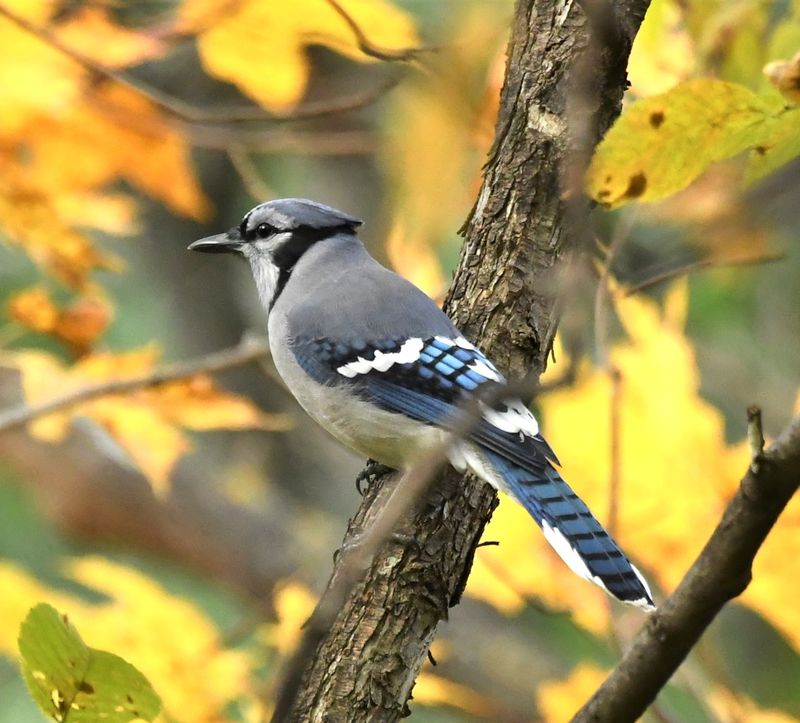
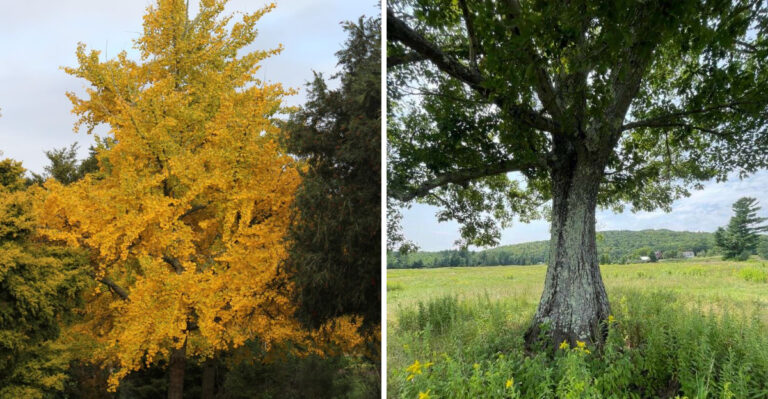
Walk through any Pennsylvania neighborhood where Blue Jays are common, and you’ll almost always notice something: big, old trees. Mature trees, especially oaks, are like five-star hotels for Blue Jays.
They offer food, shelter, nesting spots, and perches all in one place. Oak trees are the gold standard for Blue Jay habitat. A single mature oak can produce thousands of acorns in a good year.
Your Pennsylvania Garden Changes Every Week. Your Plan Should Too.
Gardening in Pennsylvania changes quickly throughout the season. Every Friday you’ll receive a simple weekly plan showing exactly what to plant, prune, fertilize, harvest, and protect so you never miss the right timing.
Blue Jays go absolutely wild for acorns and will spend entire autumn days collecting and storing them. Without oaks, many Blue Jays would simply move on to find better territory.
Beyond food, mature trees provide thick canopy cover that gives Blue Jays a place to hide from hawks and other predators. Dense branches also offer ideal nesting locations in spring.
Blue Jays build cup-shaped nests from twigs, bark, moss, and mud, usually tucked into the fork of a sturdy branch.
Younger trees just don’t offer the same benefits. A sapling won’t produce many acorns, and its thin branches don’t provide much shelter.
If your yard has been home to mature trees for decades, you have a natural advantage over neighbors with newer plantings.
Planting native trees now is still a smart long-term move. Native species like oaks, hickories, and beeches support not just Blue Jays but dozens of other bird and wildlife species too.
Even if those trees take years to mature, every bit of native planting helps. Mature trees are honestly one of the most powerful habitat features your yard can offer, and Blue Jays clearly know how to recognize a good thing when they see it.
3. They Feel Safe
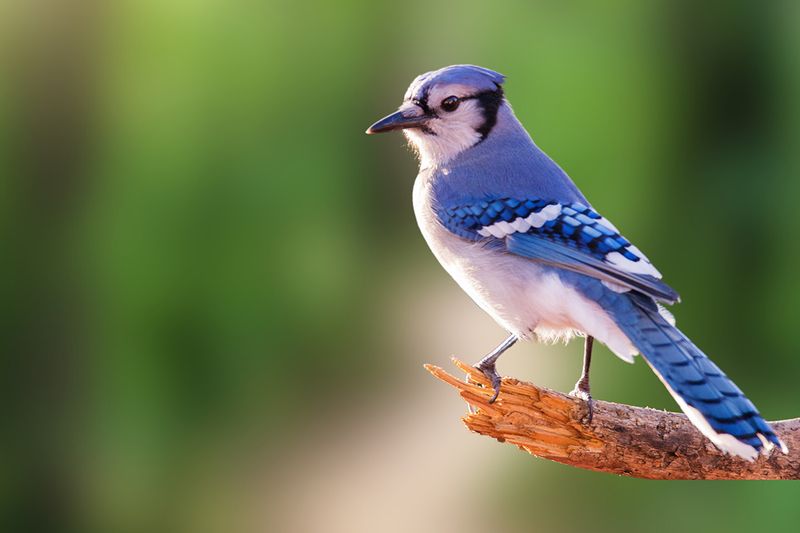
Blue Jays are not naive birds. They are sharp, observant, and extremely cautious about where they spend their time.
A yard that gets frequent Blue Jay visits is one that has quietly earned their trust. Safety for a Blue Jay means a few specific things. First, there needs to be cover nearby.
Dense shrubs, thick hedges, and trees with layered branches give Blue Jays a place to escape quickly if a predator appears. Open, bare yards with no cover make them nervous, and they won’t linger long in those spaces.
Second, there should be minimal disturbance. Yards with loud activity, aggressive pets, or frequent foot traffic near feeders can stress birds out.
Blue Jays are bold and loud themselves, but they still prefer a yard where they can eat and move around without constant interruption.
Perching spots also matter. Blue Jays like to land somewhere elevated before coming down to feed.
A fence post, a low branch, or even a shepherd’s hook can serve as a staging perch. From there, they scan for threats before committing to the feeder.
Keeping cats indoors is one of the most effective things you can do for backyard bird safety. Outdoor cats are one of the leading threats to wild birds in North America. Even a cat sitting near a feeder can be enough to drive Blue Jays away permanently.
When your yard checks all the boxes for safety, Blue Jays will relax, spend more time there, and even bring their young ones along during summer. That’s a sign your space has become genuinely trusted habitat for these smart, watchful birds.
4. They’re Storing Food
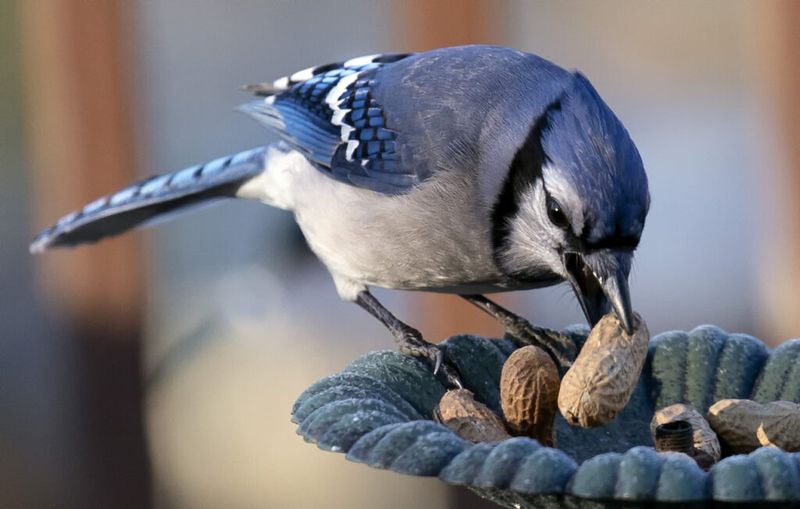
Ever notice a Blue Jay grab a peanut or acorn and then fly off without eating it? That’s not random behavior.
That bird is working hard, running a personal food storage operation that will help it get through the colder months ahead.
Blue Jays are one of nature’s most dedicated food cachers. Caching means hiding food in a secret spot to retrieve later.
A single Blue Jay can carry multiple acorns at once using its expandable throat pouch, and it may cache thousands of acorns in a single autumn season. That’s an impressive amount of planning for a bird.
The fascinating part is that Blue Jays actually remember where they hid their food. Research shows they use landmarks and spatial memory to locate their caches weeks or even months later.
Not every cache gets retrieved, though, and the forgotten ones often sprout into new oak seedlings. Blue Jays have played a major role in spreading oak forests across North America over thousands of years.
If you’re seeing Blue Jays make repeated quick trips to your feeder, taking food and flying off each time, your yard has become a valuable supply station in their caching routine. They’re not being greedy.
They’re being practical and preparing for harder times ahead. You can support this behavior by offering high-quality foods like whole peanuts and shelled sunflower seeds.
Placing feeders in a consistent spot also helps Blue Jays build a reliable routine around your yard.
Watching a Blue Jay cache food is one of those small backyard moments that reminds you just how clever wild birds can really be.
5. They’re Warning Other Birds
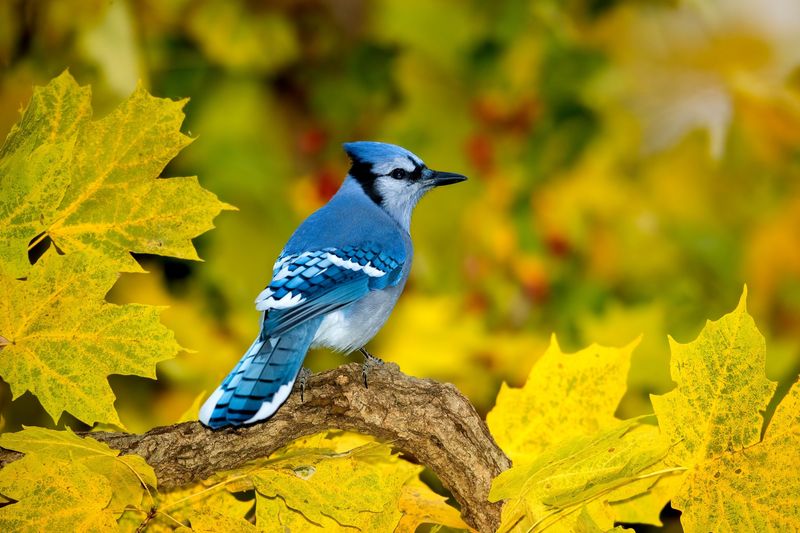
Loud, sharp, and impossible to ignore, the Blue Jay’s call is one of the most recognizable sounds in any Pennsylvania backyard.
But when a Blue Jay starts screaming from the treetops, it’s usually not just making noise for fun. Something has caught its attention.
Blue Jays are among the most effective alarm callers in the bird world. When they spot a hawk, owl, cat, or snake nearby, they erupt into loud, repeated calls that alert every other bird in the area.
Smaller birds like chickadees, nuthatches, and sparrows have learned to pay close attention to Blue Jay alarm calls and will often freeze or take cover immediately.
This alarm system works across species, making Blue Jays genuinely useful neighbors in a shared backyard ecosystem.
Some bird watchers actually use Blue Jay calls as a signal to look up and scan the sky for a passing hawk. It’s a surprisingly reliable tip-off.
Blue Jays can also mimic the calls of Red-tailed Hawks and Red-shouldered Hawks with impressive accuracy.
Researchers aren’t entirely sure why they do this, but one popular theory is that it may scatter other birds from a feeder, giving the Blue Jay easier access to food. Smart, and a little sneaky.
If your yard has regular Blue Jay visitors, you’ve essentially got a free early warning system running all day long. Next time you hear that familiar harsh call, pause and look around.
There’s a good chance a hawk is circling overhead or a neighborhood cat is creeping through the bushes. Blue Jays notice things most of us completely miss, and they’re loud enough to make sure everyone else notices too.
6. They Like Your Water Source
Picture a hot July afternoon in Pennsylvania. The air is thick and humid, and even the birds are looking for relief.
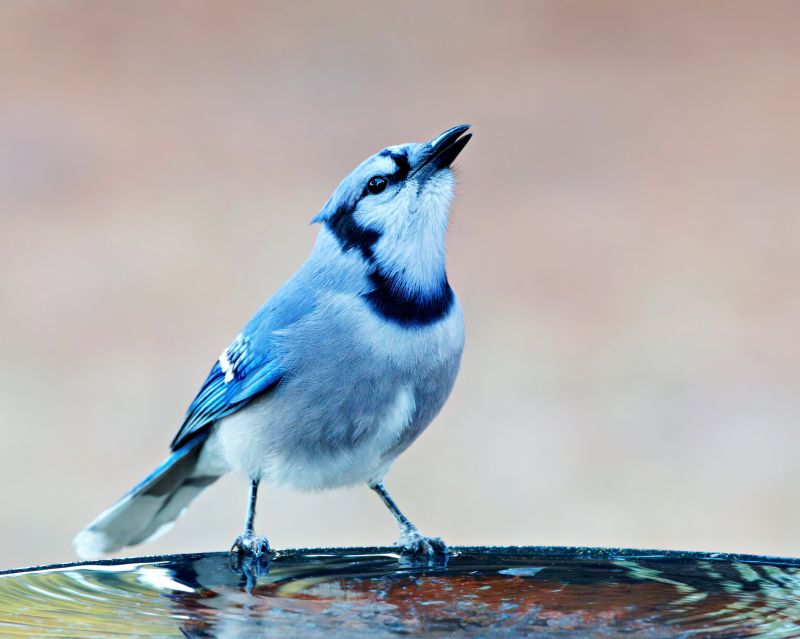
A clean, fresh birdbath becomes one of the most visited spots in the entire yard, and Blue Jays are among the most enthusiastic customers.
Water is a basic necessity that many backyard setups overlook. Food gets a lot of attention, but a reliable water source can be just as powerful for attracting Blue Jays.
They use birdbaths for both drinking and bathing, and they tend to splash around quite enthusiastically when they do bathe. Watching a Blue Jay take a full bath is genuinely entertaining and a little chaotic.
Keeping the water clean is non-negotiable. Stagnant, dirty water can harbor bacteria and parasites that harm birds.
Emptying and refilling your birdbath every two to three days during warm months keeps it fresh and appealing. Scrubbing out any algae buildup with a stiff brush once a week makes a real difference too.
Placement matters as well. A birdbath set near shrubs or low trees gives Blue Jays a quick escape route if a predator appears while they’re bathing. Completely open placements can make birds feel too exposed and vulnerable.
Adding a dripper or small solar-powered fountain to your birdbath is a worthwhile upgrade.
Moving water catches the attention of birds flying overhead and tends to attract a wider variety of species throughout the day. Blue Jays are especially drawn to the sound of dripping or splashing water.
A well-maintained water source signals to Blue Jays that your yard is a complete, comfortable habitat worth returning to season after season.