7 Texas Plants That Attract Purple Martins To Your Yard
Purple martins are one of the most sought after backyard birds in Texas, and for good reason. They’re beautiful, they’re social, and they have an impressive appetite for flying insects that makes them a genuine asset to any yard.
But attracting and keeping purple martins is not as simple as putting up a birdhouse and hoping for the best. Most people focus on housing, and that matters.
But what you plant plays a bigger role in attracting purple martins than most homeowners realize. The right plants create the right environment.
They support the flying insect populations that purple martins feed on, provide natural perching spots, and signal to scouting birds that your yard is worth a closer look. Get the plants right and the housing becomes far more effective.
Texas has some excellent native plant options that do exactly this, and they happen to look great in the yard while they work.
1. Texas Lantana
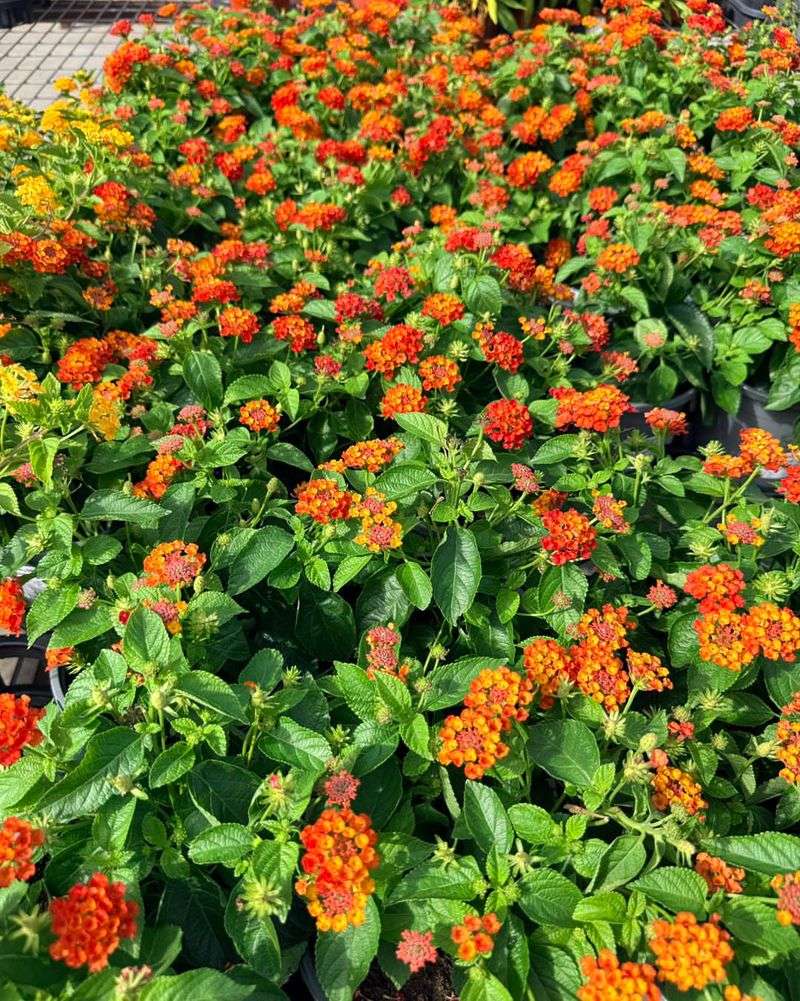
Walk through almost any sunny Texas neighborhood in summer, and you will likely spot the bold, fiery blooms of Texas lantana lighting up a garden bed.
This tough native shrub is a magnet for butterflies and small flying insects, which is exactly what you want if you are trying to support purple martins in your yard.
More insect activity in your garden means more aerial prey moving through the air column above your property.
Texas lantana thrives in hot, dry conditions and asks for very little in return. It blooms from spring all the way through fall, giving insects a long window of food and activity.
The clusters of orange, yellow, and red flowers are hard to miss, and they attract species like swallowtails, skippers, and sulfurs, all of which contribute to a lively, insect-rich yard.
One important tip: plant your lantana away from the purple martin house itself. Purple martins need a wide, open flight path around their housing, free from dense vegetation that could block their approach or make them feel unsafe.
Placing lantana along the edges or borders of your yard keeps the insect action going while preserving that critical open airspace.
Texas lantana is also deer-resistant and drought-tolerant, which makes it a practical choice for Texas gardeners who want low-maintenance beauty. It spreads nicely over time and can fill in large areas with minimal effort.
If you have never grown it before, look for transplants at your local native plant nursery. Once established, it practically takes care of itself while quietly doing the important work of supporting your local food web.
2. Mealy Blue Sage
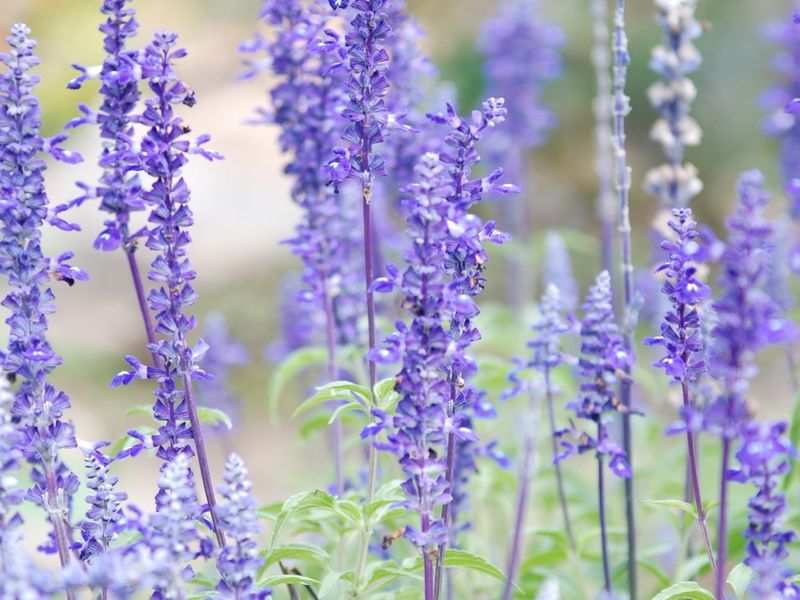
There is something quietly beautiful about mealy blue sage. Its soft, powdery blue-purple flower spikes rise above gray-green foliage like little torches, and pollinators absolutely cannot resist them.
Native to Texas and well-adapted to the heat, this plant blooms for months and keeps a steady stream of butterflies and small flying insects moving through your garden from late spring into fall.
For purple martin enthusiasts, that long bloom season is a real asset. Purple martins are aerial insectivores, meaning they catch every single meal on the wing.
Your Texas Garden Changes Every Week. Your Plan Should Too.
Gardening in Texas changes quickly throughout the season. Every Friday you’ll receive a simple weekly plan showing exactly what to plant, prune, fertilize, harvest, and protect so you never miss the right timing.
The more insects you have flying around your property, the more attractive your yard becomes to a scouting martin or an established colony looking for a productive territory. Mealy blue sage helps build that insect presence naturally and consistently.
Hummingbirds are also huge fans of this plant, which is an added bonus for anyone who enjoys backyard wildlife watching.
The plant grows well in full sun to partial shade, tolerates dry spells once established, and stays relatively compact, usually reaching about two to three feet tall.
That size makes it easy to tuck into borders, raised beds, or mixed native plantings without overwhelming the space.
Unlike some native plants that can be tricky to establish, mealy blue sage is forgiving and fast-growing. You can start it from seed or pick up transplants at most native plant sales or garden centers.
It pairs beautifully with other Texas natives like Texas lantana and Gregg’s mistflower, creating a layered planting that supports insects at multiple levels and keeps your yard buzzing with life all season long.
3. Gregg’s Mistflower
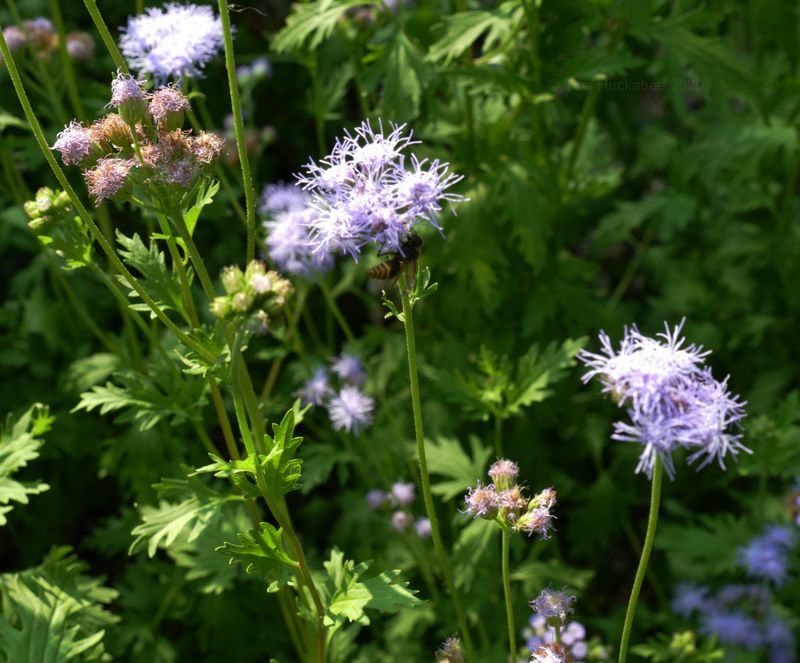
Every fall in Texas, something almost magical happens in gardens where Gregg’s mistflower grows. Queen butterflies arrive in waves, drawn to the fuzzy, lavender-purple blooms like they are following an invisible trail.
It is one of the most dramatic displays of butterfly activity you will see in a backyard setting, and it makes this native perennial one of the most valuable plants for anyone building a wildlife-friendly yard.
For purple martin gardeners, the connection is straightforward. More butterflies and insects mean a more active aerial environment.
Purple martins are fast, agile fliers that hunt insects at various heights above the ground. When your yard supports a strong insect population, it becomes part of the productive territory that martins scout and return to each spring after their long migration from South America.
Gregg’s mistflower blooms in late summer and fall, which fills a gap that many spring-blooming plants leave behind. It grows in full sun to partial shade and spreads easily through underground runners, forming attractive patches over time.
That spreading habit makes it ideal for naturalized areas or the edges of a yard where you want ground-level coverage without a formal, manicured look.
Pairing Gregg’s mistflower with open space and proper martin housing is the key to making it work in your overall martin-attracting strategy. The plant itself draws the insects, but martins still need clear flight paths and suitable housing nearby to feel at home.
Think of Gregg’s mistflower as one important piece of a larger puzzle, one that adds serious ecological value to your yard every single fall.
4. Frostweed
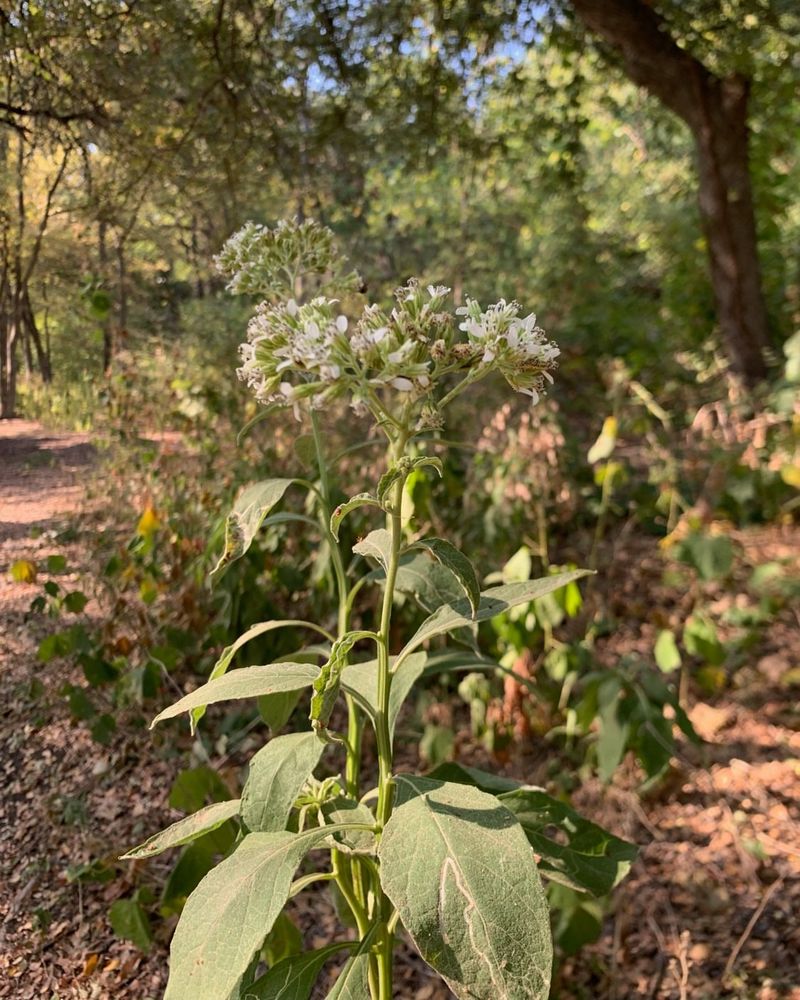
Frostweed gets its quirky name from a wintertime phenomenon where sap seeps through cracks in its stem and freezes into delicate, ribbon-like ice formations.
But in the warmer months, this Texas native earns its place in the garden for a completely different reason: it is an outstanding insect plant.
Clusters of small white flowers attract native bees, honey bees, and butterflies from late summer through fall, making it a key player in any insect-supporting native garden.
For purple martin enthusiasts, frostweed is especially useful in naturalized or semi-wild areas of the yard. It thrives in partial to full shade, which means it works well under trees or along fence lines where sunnier plants might struggle.
Placing it in these spots allows you to support insect life in areas that would otherwise go unused, effectively expanding the productive habitat in your yard without taking up prime open-air space.
One of the things that makes frostweed stand out is its reliability. It does not need much attention once established, and it comes back year after year from the same root system.
That consistency is valuable when you are trying to build a stable insect community that purple martins can count on during their spring and summer residency.
Unlike feeders or water features, frostweed works quietly in the background, supporting native bees and other pollinators without requiring any maintenance sprays or supplemental feeding. It is a genuinely low-effort plant with a high ecological payoff.
If you have a shady corner of your yard that feels underused, frostweed might be exactly what it needs to come alive with beneficial insect activity.
5. Tall Goldenrod
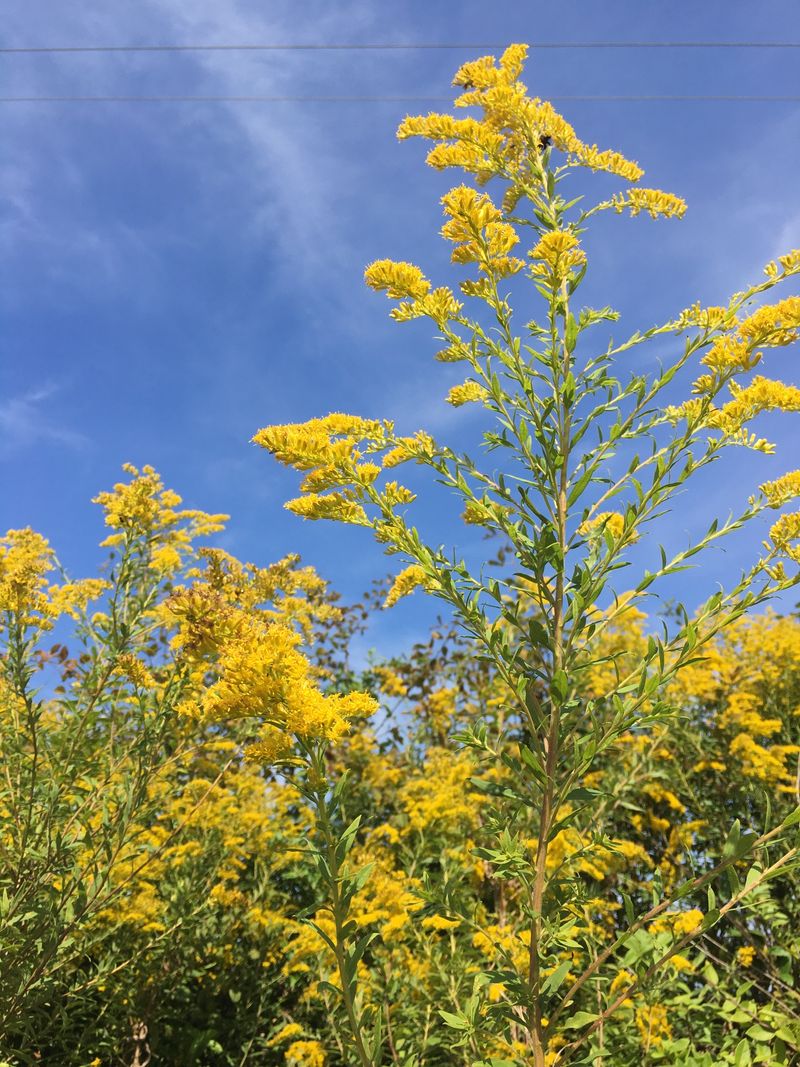
Goldenrod has a bit of an unfair reputation. Many people blame it for fall allergies, but the real culprit is ragweed, which blooms at the same time.
Tall goldenrod is actually a fantastic native plant that supports an enormous number of insects, including native bees, honey bees, and butterflies.
Its bright yellow plumes are like a welcome sign for pollinators, and a yard with goldenrod in full bloom is a genuinely exciting place for wildlife watchers.
For purple martin habitat, tall goldenrod brings serious value. It supports beneficial insects across a wide range of species, helping build the kind of active, layered insect web that aerial insectivores depend on.
Purple martins catch everything in flight, so a yard that generates consistent insect activity at multiple heights gives them more opportunities to feed efficiently without ranging far from their nesting site.
Tall goldenrod grows best in full sun and tolerates a range of soil conditions, including dry and rocky soils that are common across much of Texas. It can reach four to six feet tall in good conditions, creating a bold vertical element in a native meadow or border planting.
It spreads by both rhizomes and seeds, so give it room to naturalize if you want a low-maintenance patch.
Planting tall goldenrod alongside other late-season bloomers like Gregg’s mistflower and frostweed creates a powerful late-summer and fall insect corridor in your yard.
That extended bloom period keeps insect populations active right through the end of purple martin season, giving your colony every advantage as they prepare for their long southward journey each year.
6. Partridge Pea
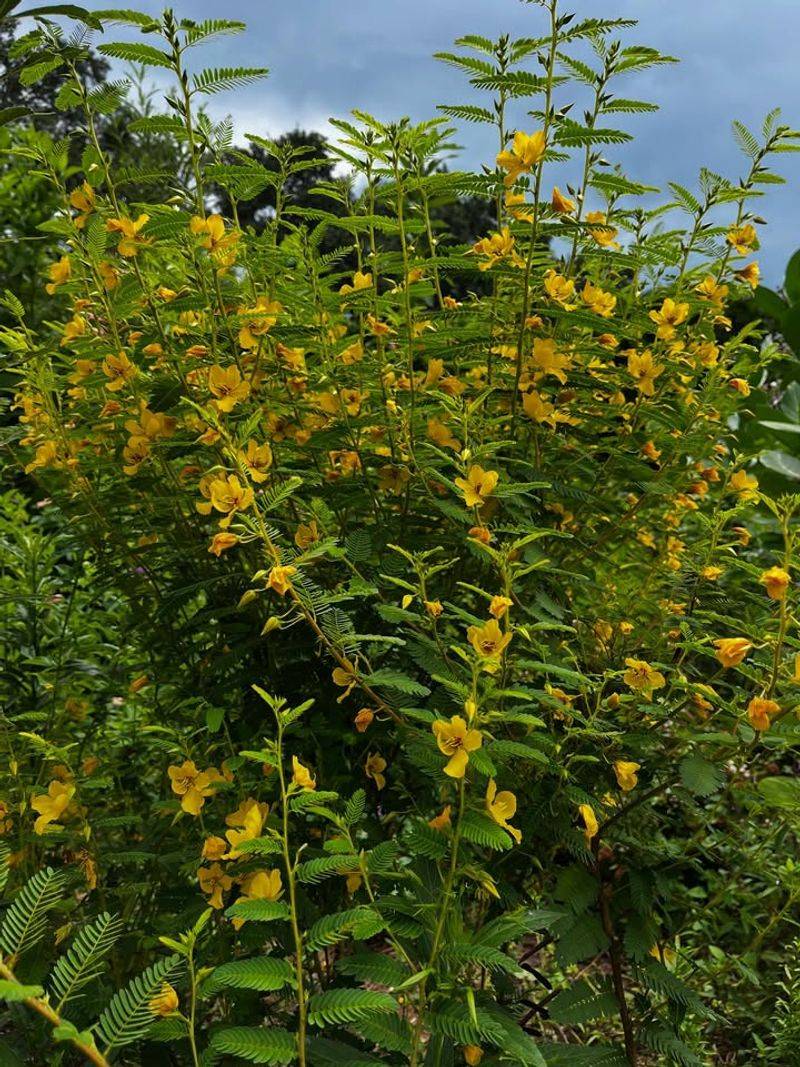
Bright yellow flowers, feathery leaves, and a cheerful, open growth habit make partridge pea one of the most charming native wildflowers you can grow in a sunny Texas yard.
It blooms through the heat of summer when many other plants are struggling, and it brings in bees and butterflies with impressive consistency.
For gardeners who want to add color and insect life to a sunny space, partridge pea delivers on both counts without much fuss.
What makes partridge pea especially interesting is that it offers extrafloral nectaries, tiny glands on its leaf stems that produce nectar even when the plant is not blooming.
This feature attracts ants, wasps, and other small insects throughout the growing season, adding another layer of insect activity to your yard beyond what the flowers alone can produce.
More insect diversity means a richer food environment for purple martins hunting overhead.
Partridge pea is an annual that readily reseeds itself, so once you establish it in a sunny spot, it tends to come back on its own each year. It grows well in poor, dry soils and does not need fertilizer or extra irrigation once it gets going.
That makes it a natural fit for prairie-style plantings, meadow gardens, or any open, sunny area where you want more insect life without creating dense, closed-in habitat that could interfere with martin flight paths.
It also serves as a host plant for several native butterfly species, including sulfurs, which adds yet another reason to include it in a wildlife-friendly yard. Plant it in drifts for the best visual effect and the strongest insect-attracting impact across your property.
7. Buttonbush
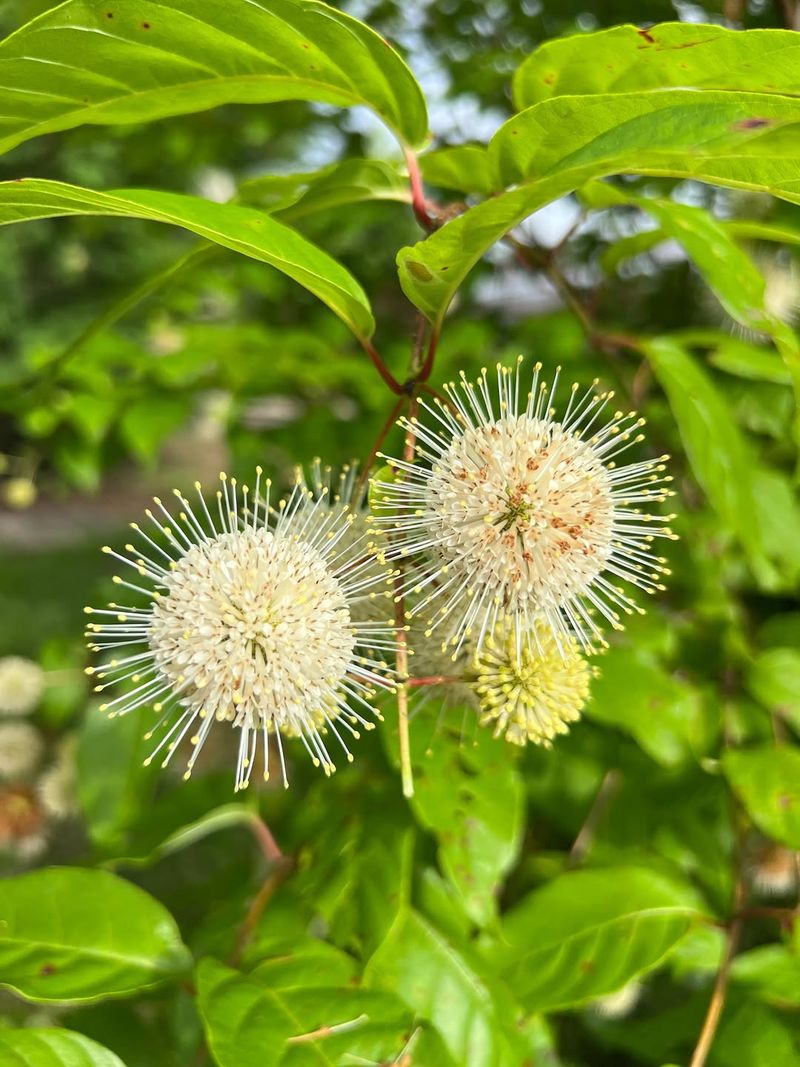
If your yard has a low spot, a rain garden, or a pond edge that stays consistently moist, buttonbush might be the most exciting plant you have never tried.
This native shrub produces unusual, globe-shaped white flowers that look almost like little pincushions, and they are absolutely packed with nectar.
Described by many naturalists as a true honey plant, buttonbush is a favorite of native bees, honey bees, and butterflies, making it a powerful insect magnet in the right setting.
For purple martin gardeners with wet areas on their property, buttonbush fills a niche that most other insect-supporting plants cannot. It thrives in conditions that would challenge or finish off drier-adapted species, and it can even grow in standing water during wet seasons.
That adaptability makes it a smart choice for Texas properties that experience seasonal flooding or have naturally boggy corners that are otherwise hard to plant.
One important note for anyone considering buttonbush near water: avoid allowing stagnant water to collect in containers or low spots nearby.
Still, standing water in small containers can become a breeding ground for mosquitoes, which is something no backyard wildlife gardener wants to deal with.
Moving water or a naturally draining rain garden paired with buttonbush keeps the insect life healthy and the mosquito pressure low.
Buttonbush blooms in summer and can grow quite large over time, reaching six feet or more in ideal conditions.
Planting it along a pond edge or at the back of a rain garden gives it room to spread while keeping the center of your yard open for the aerial hunting runs that purple martins love to make on warm summer evenings.