These Are The Reasons Maryland Crepe Myrtles Are Blooming Weaker This Summer
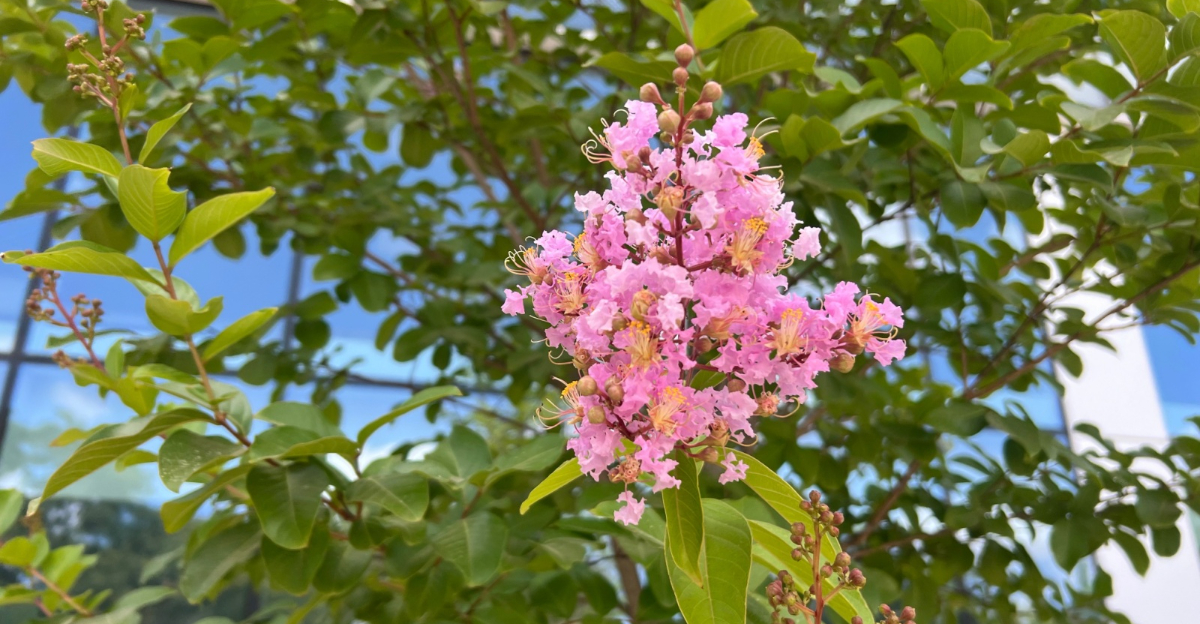
Crepe myrtles across Maryland put on a show last year, branches practically sagging under all that color. This summer, something’s off.
Gardeners from Baltimore to the Eastern Shore keep circling the same tree, tilting their heads, wondering if they imagined how good things used to look.
Some blooms came in thin and washed out. Others never bothered showing up at all. It’s tempting to blame bad luck or a stubborn plant having an off year, but the real story is more specific than that.
A cold snap that hit at exactly the wrong moment. Pruning cuts made a few weeks too early or too late. Soil that’s been quietly starving the roots without anyone noticing.
Maryland’s weather didn’t help either, running warmer and drier than normal for most of spring, then delivering one sharp, late freeze just as buds were trying to form.
None of this means your tree is doomed. It means there’s a fixable pattern here, and once you spot it, next summer looks a lot different.
1. Frost Damaged Early Buds
A late frost sneaking in during April can quietly wreck your entire bloom season. Crepe myrtles in Maryland started pushing out tender new buds earlier than usual this spring.
Those early buds are extremely fragile. One night of freezing temperatures is all it takes to blacken and shrivel them beyond recovery.
Frost-hit tips don’t get a second chance at blooming that season. It redirects its energy into recovery mode, pushing out replacement leaves instead of blooms.
The replacement growth that follows a frost event tends to be weaker and slower. Flower buds that form late in the season rarely develop into full, showy clusters.
This spring threw a handful of surprise cold snaps at Maryland, right when nobody expected another freeze. Temperatures dipped below freezing on nights that felt like winter had no intention of leaving.
Wrapping young crepe myrtles in frost cloth before a cold snap can protect those precious early buds. Even a single layer of breathable fabric can hold in enough warmth to make a real difference.
Older, established trees handle frost better, but they are not completely immune. Sparse blooms clustered only at the branch tips point straight to frost, not some mystery ailment.
2. Drought Lowered Bloom Hormones

Too little steady rain sounds harmless enough until you see exactly what it does to a crepe myrtle’s flowering signal. Soil moisture dropping too low disrupts the hormonal signals that trigger flowering.
Plants produce a hormone called florigen when conditions feel right for blooming. Prolonged dry stretches confuse that internal signal and delay or suppress the whole process.
Maryland saw a rainfall deficit during key bloom-triggering weeks this spring. That dry stretch left soil moisture and root activity low, which stressed the plants in subtle ways.
Stressed roots cannot efficiently deliver the nutrients needed for flower production. The tree stays alive and leafy, but the bloom response gets quietly shelved until conditions improve.
Your Maryland Garden Changes Every Week. Your Plan Should Too.
Gardening in Maryland changes quickly throughout the season. Every Friday you’ll receive a simple weekly plan showing exactly what to plant, prune, fertilize, harvest, and protect so you never miss the right timing.
Dry soil also encourages shallow root growth over time. Shallow roots make trees less capable of reaching the deeper moisture that steadier seasons would have provided, creating a compounding problem.
Few fixes matter more to a crepe myrtle than soil that actually holds moisture. If your planting area dries out fast, consider amending the soil with compost or organic matter to improve retention.
Deep watering schedules are another smart solution for parched Maryland yards. Giving roots a steadier moisture supply helps restore normal hormonal rhythms and sets the stage for stronger blooms next season.
3. Warm Spring Sped Up Bud Break
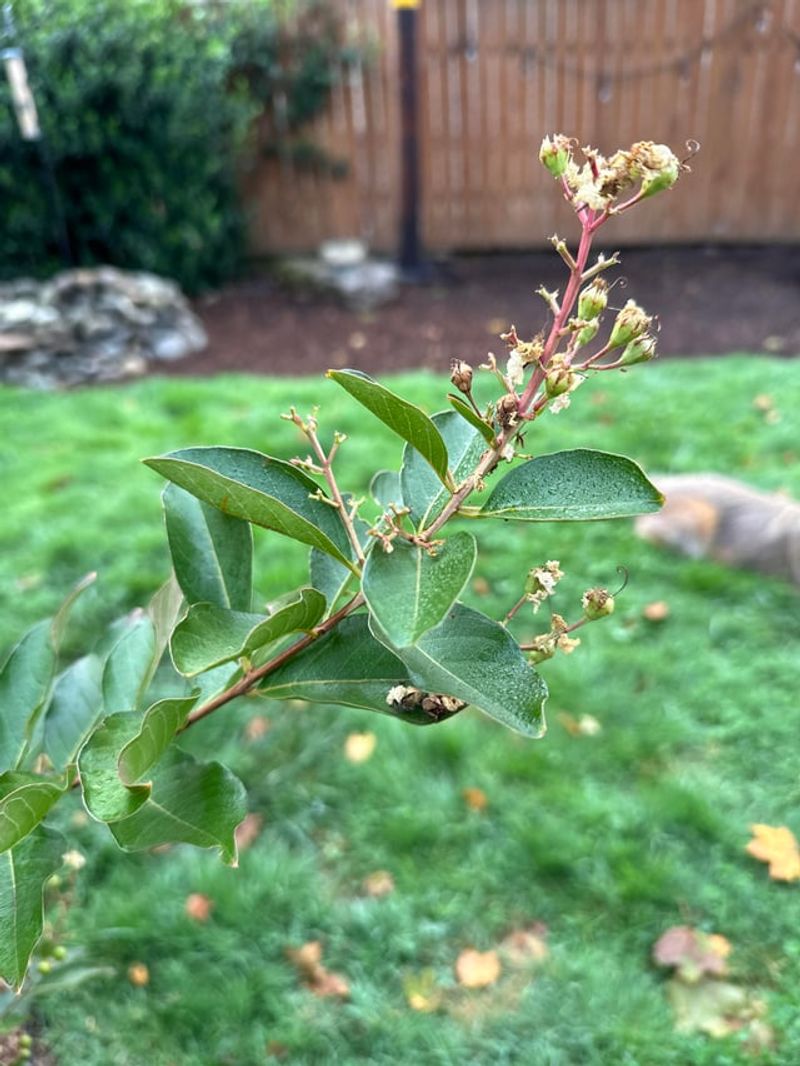
Crepe myrtles are heat lovers at heart, and a warm spring puts them in an eager mood. When soil temperatures climb early well before May, these trees simply rush to wake up ahead of schedule.
Maryland experienced a warmer-than-normal spring this year, with temperatures running several degrees above average. That warmth pushed the entire budding timeline forward by weeks.
An early start means everything else shifts forward too, including bloom time. By the time a late freeze arrives, those tender buds have nothing protecting them from the sudden drop.
Crepe myrtles need soil temperatures above 60 degrees Fahrenheit to begin active root activity. Eager roots mean the entire tree races ahead, bud break, growth, and bloom all pushed forward a step at a time.
You might have noticed your neighbors with exposed, wind-swept yards had rougher blooms this summer. Sheltered exposures warm up more gradually in spring, giving those trees a buffer against sudden swings.
Applying a layer of mulch in early spring can help steady the soil temperature around your tree’s roots. Mulch slows sudden warming and cooling, nudging the tree toward a more even pace.
A fast spring isn’t a lost cause, it’s just a tree racing ahead of its own timeline. Your crepe myrtle is not struggling permanently, it just needed steadier pacing to help Maryland crepe myrtles bloom fully.
4. Pruning Cut Flower Wood
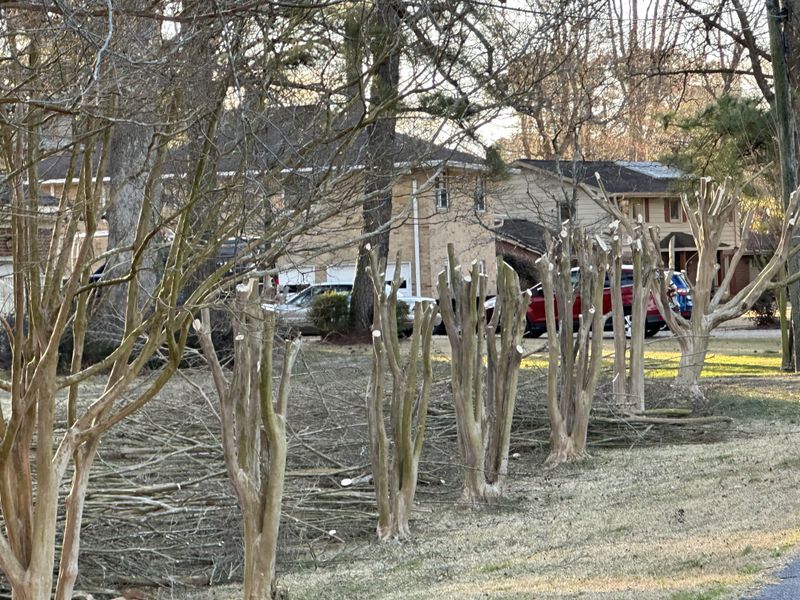
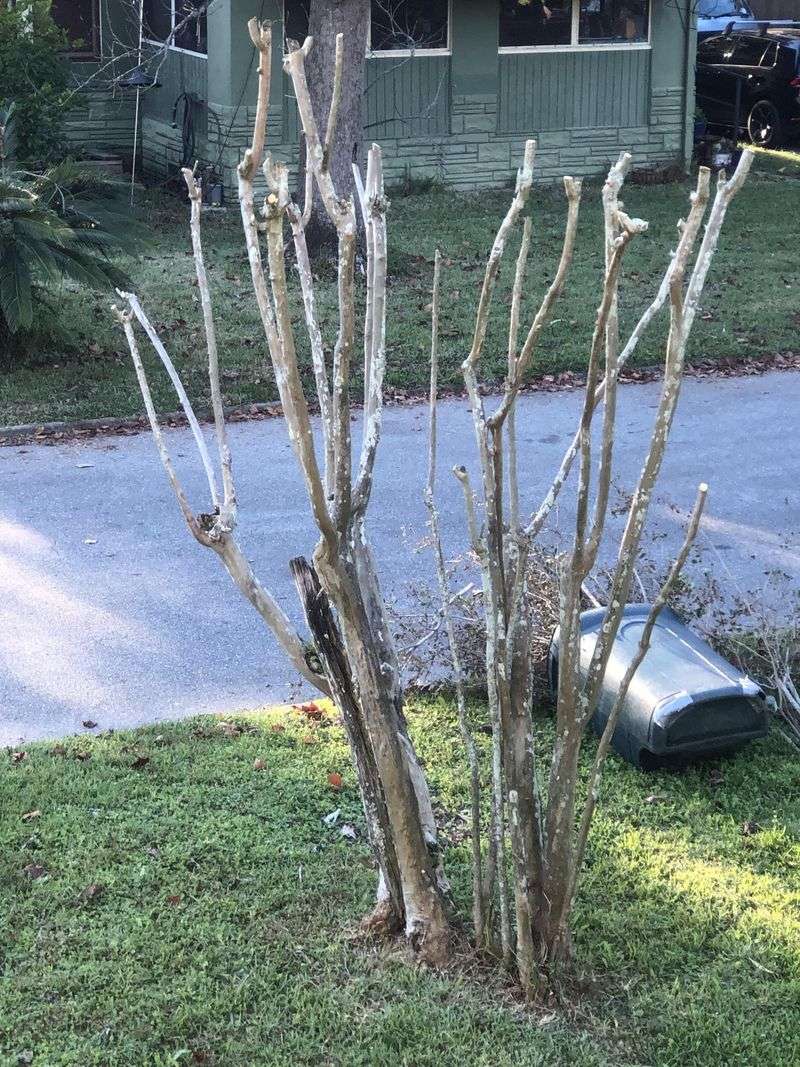
Crepe murder is a real thing, and your tree might be paying for it right now. Aggressive topping, the kind that leaves thick ugly stubs, removes the very wood where flowers form.
Crepe myrtles bloom on new growth that sprouts from last season’s branches. When you cut those branches off in late winter, you eliminate the launching pad for this summer’s flowers.
Many homeowners top their crepe myrtles every year out of habit or because a neighbor does it. The result is a weaker, knobby-looking tree that struggles to produce the lush clusters it was built for.
Light selective pruning is all these trees need in most cases. Removing crossing branches and withered wood keeps the canopy open without sacrificing the flower-producing growth points.
If you pruned heavily this past winter, your tree is spending most of its energy just regrowing what was removed. That regrowth effort leaves very little fuel left over for flower production.
You can stop this pattern cold, starting with next winter’s pruning shears staying put. Put the loppers away in January and February, and let the tree keep its natural branching structure intact.
Over time, a properly pruned crepe myrtle develops a graceful, layered shape. Fewer cuts mean more bloom wood, and more bloom wood means the spectacular summer color Maryland crepe myrtles are famous for delivering.
5. Nitrogen Boosted Leaves, Not Blooms

Your lawn fertilizer might be secretly sabotaging your crepe myrtle. High-nitrogen products applied nearby push the plant into leaf-growing mode instead of flower-producing mode.
Nitrogen is the nutrient responsible for lush, dark green growth, and when a crepe myrtle gets too much of it, the tree essentially forgets it was supposed to bloom.
Many Maryland homeowners fertilize their lawns in spring and fall without realizing tree roots extend far beyond the trunk.
Those roots absorb lawn fertilizer just as efficiently as the grass does, and a tree loaded with nitrogen channels its energy straight into producing more foliage.
The result is a beautifully green, full-looking tree that offers almost no flowers to show for itself, leaving homeowners puzzled by all that healthy-looking growth with nothing to admire come summer.
For blooming trees and shrubs, a low-nitrogen fertilizer with higher phosphorus content is the smarter choice.
Phosphorus supports root development and flower bud formation rather than leaf production, giving the tree a clearer signal about where to direct its energy. Look for fertilizer labeled with numbers like 5-30-5 or similar phosphorus-heavy ratios.
Apply it in early spring before bud break to send the right nutritional message at the right moment. Pulling back on lawn fertilizer within the drip line of your tree also helps reset the balance.
Dialing in the right nutrient mix is one of the quickest levers you can pull for a noticeably better bloom next season. It costs nothing but a little extra care with where the spreader goes.
6. Shade Limited Sunlight
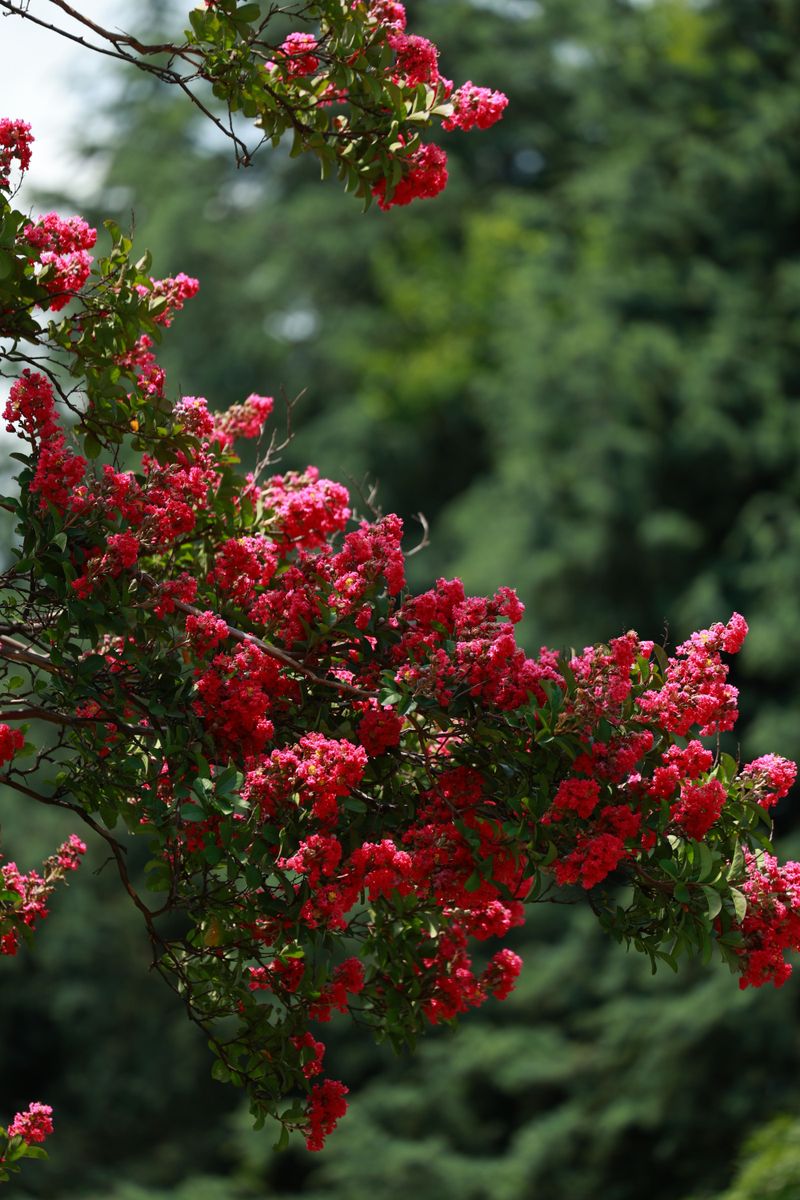
Crepe myrtles are sun-hungry plants, and shade is their quiet enemy. A tree that was once bathed in full sun may now be competing with a growing canopy from nearby trees.
Maryland landscapes change over time as oaks, maples, and other large trees fill in overhead. What was a sunny planting spot ten years ago might now receive only a few hours of direct light.
Crepe myrtles need at least six hours of direct sunlight each day to bloom well. Anything less and the tree shifts its focus toward reaching for light rather than producing flowers.
Leggy, stretched-looking branches are a telltale sign that your crepe myrtle is not getting enough sun. The tree grows tall and thin as it searches upward for the light it desperately needs.
Selective thinning of surrounding trees can dramatically improve the situation. Removing a few lower limbs from nearby shade trees lets more light filter down to your crepe myrtle without taking down the whole tree.
Transplanting a crepe myrtle is possible but stressful, especially for mature specimens. If moving the tree is not an option, focus on opening up the canopy above it to reclaim lost sunlight.
An extra hour of direct sun a day can be the difference between a so-so summer and a showy one. More sunlight means more energy, and more energy means the kind of vivid flowering that makes Maryland crepe myrtles so beloved.
7. Mildew Weakened Plants
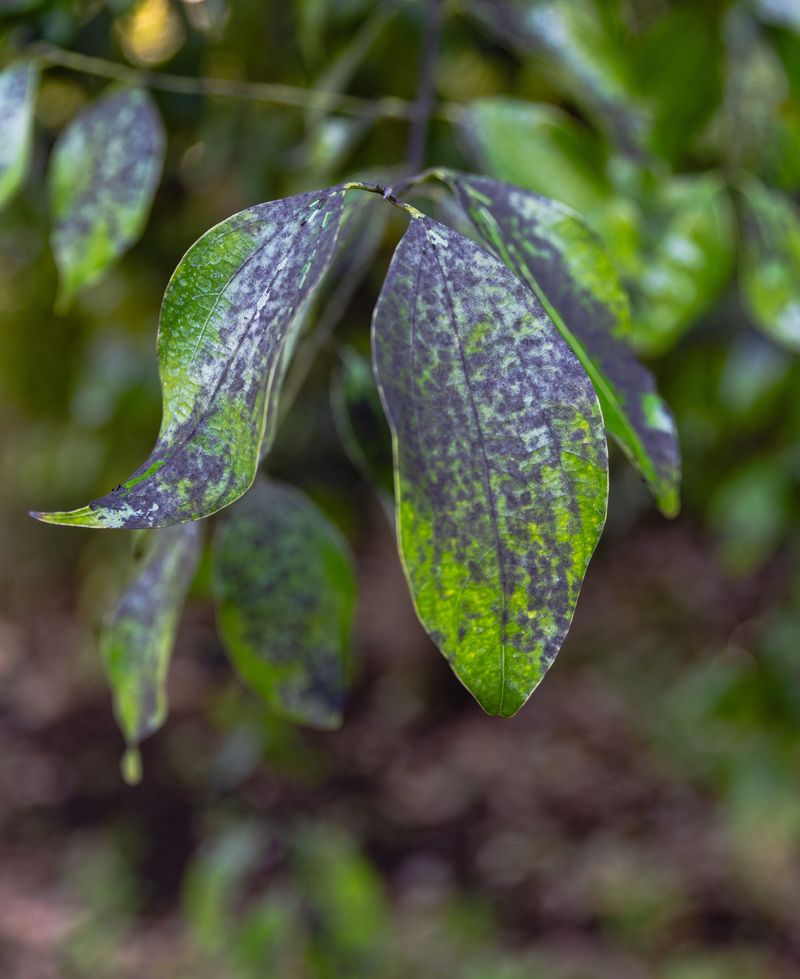
Powdery mildew on crepe myrtles looks almost pretty at first, like someone dusted the leaves with flour. But that white coating is a fungal infection that drains the plant’s energy fast.
Maryland summers are notoriously humid, creating ideal conditions for powdery mildew to spread. The fungus attacks young leaves and buds, interfering with the photosynthesis the tree depends on.
When mildew covers leaf surfaces, the tree cannot convert sunlight into energy efficiently. Less energy means fewer resources available for the demanding process of producing flower clusters.
Infected buds often fail to open fully or drop off before they develop. Gardeners sometimes mistake this bud drop for a watering issue when mildew is actually the hidden cause.
Opening up airflow through the canopy does more to stop mildew than almost anything else you can try. Thinning out dense inner branches allows breeze to move through the canopy, reducing the humidity that feeds fungal growth.
Fungicidal sprays containing neem oil or potassium bicarbonate can treat active infections effectively. Apply them early in the morning so the solution dries before afternoon heat sets in.
Choosing mildew-resistant crepe myrtle varieties for future plantings is also a wise investment. Names like Natchez, Tuscarora, and Sioux are bred specifically for resistance and tend to bloom stronger under Maryland conditions even in humid years.
8. Drought Drained Energy Reserves

The dry spring was only the opening act. A drought does not just make plants thirsty. It forces them to make hard choices about where to spend their energy.
By summer, many Maryland crepe myrtles were making those choices for the second time this year. Crepe myrtles facing water stress prioritize root and leaf health over blooming every single time.
Maryland experienced dry spells this summer that pushed many landscapes into mild drought conditions.
Even a few weeks of inadequate moisture during critical growth periods can significantly reduce bloom output.
When soil moisture drops too low, the tree closes its leaf pores to conserve water. Closed pores mean reduced photosynthesis, and reduced photosynthesis means less fuel for flower production.
You might notice leaf edges turning brown or leaves curling inward during dry stretches. These are the tree’s early warning signals that it is running low on reserves and pulling back on non-essential functions like blooming.
Deep, infrequent watering is far more effective than frequent shallow watering for crepe myrtles. A slow, deep soak once or twice a week encourages roots to grow downward toward more stable moisture levels.
Mulching around the base of the tree helps lock in soil moisture between watering sessions. A three-inch layer of organic mulch can reduce soil moisture loss by a surprising amount during hot, dry weeks.
Stockpiling moisture before the dry spell hits pays off far more than scrambling once the leaves start curling.
Well-hydrated Maryland crepe myrtles enter stressful dry periods with enough stored energy to keep blooming through the heat.