The Signs Your Michigan Crabapple Tree Has Cedar Apple Rust And What To Do Before It Spreads
Cedar apple rust has one of the more dramatic life cycles of any fungal disease affecting Michigan landscapes, alternating between junipers and crabapples in a way that can keep it circulating through a yard or neighborhood almost indefinitely if nothing interrupts it.
The orange, gelatinous spore masses that appear on junipers in spring are striking enough to notice, but the damage showing up on crabapple leaves a few weeks later is where most Michigan homeowners first realize something is wrong.
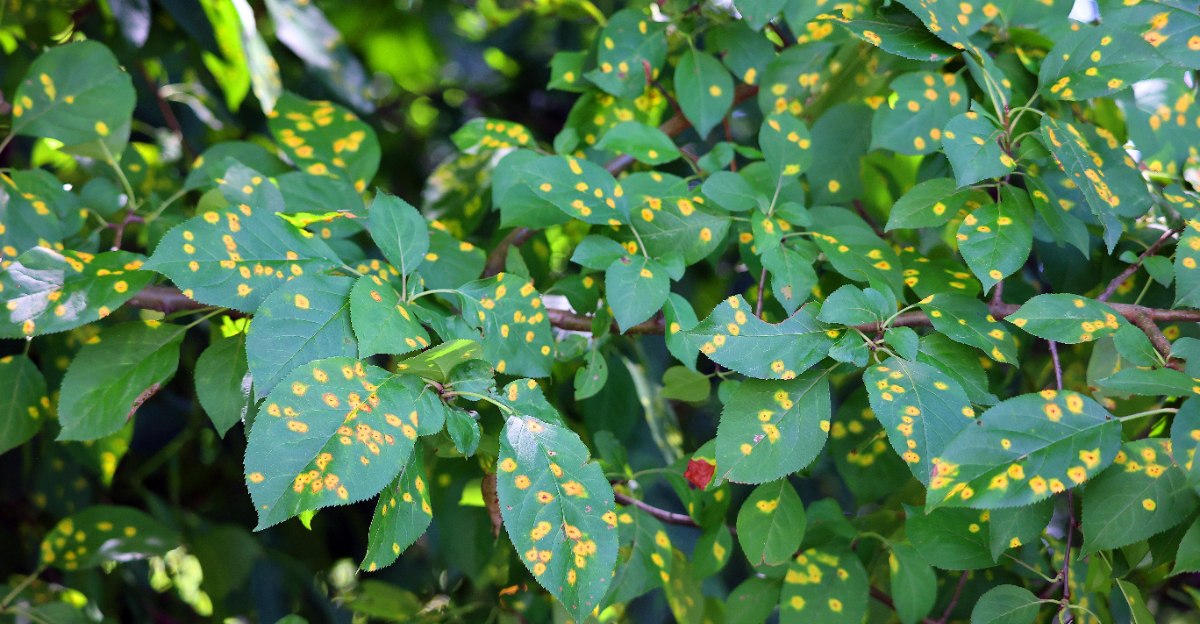
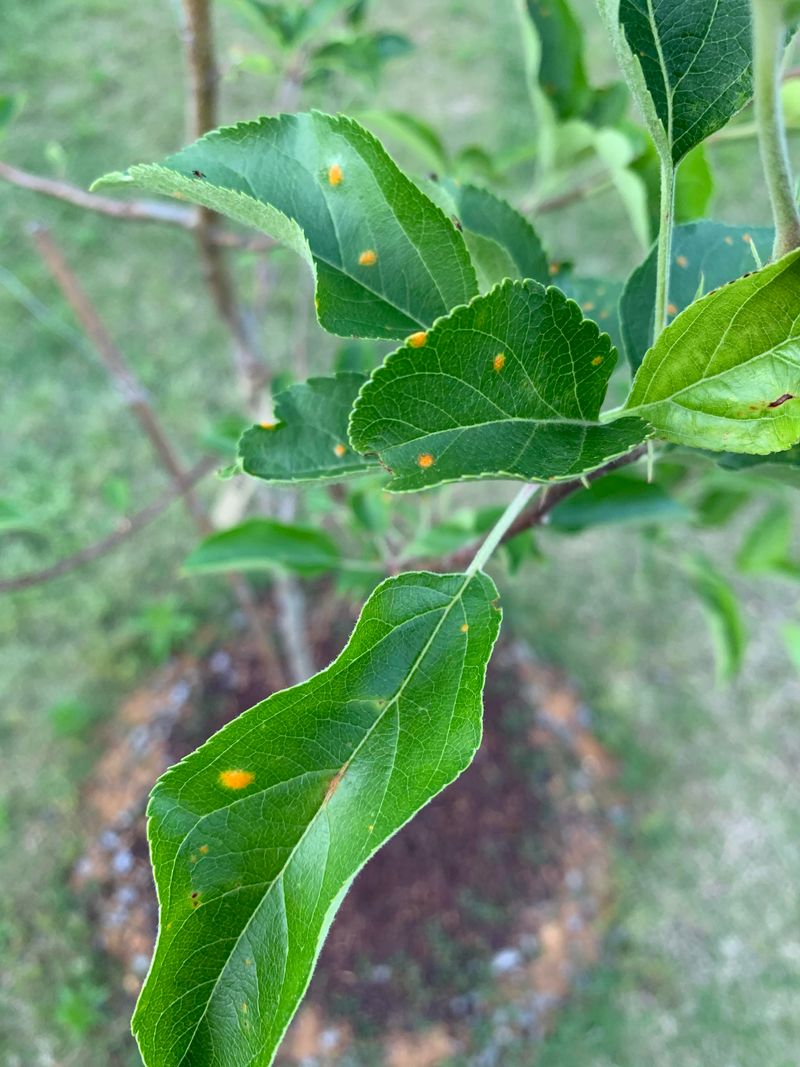
Yellow-orange spots on upper leaf surfaces, rust-colored lesions on the undersides, and premature defoliation are all signs that the disease has already completed its initial infection cycle.
Acting before those symptoms spread to neighboring trees requires understanding the timing and knowing exactly where to intervene.
1. Yellow Orange Spots On Leaves
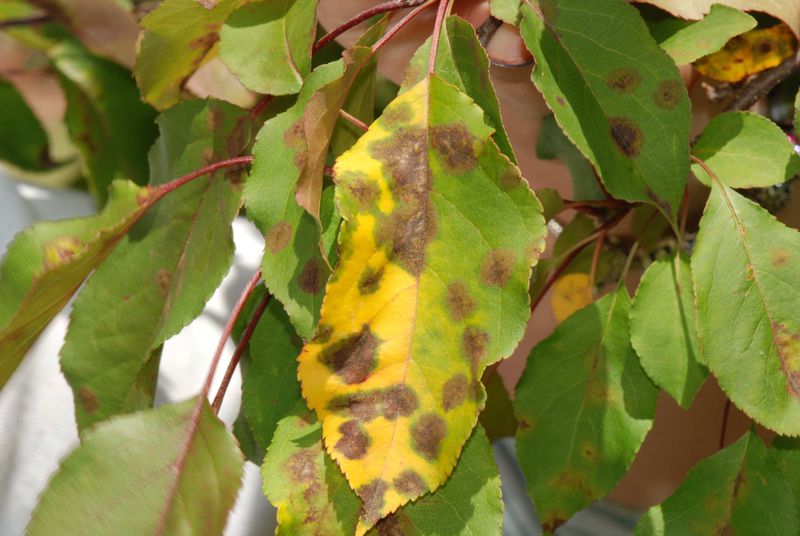
Something seems off about your crabapple leaves, and those pale yellow patches spreading across the surface might be your first real clue. Yellow orange spots are often among the earliest signs that cedar apple rust has found its way to your tree.
They can pop up after wet spring weather, especially when temperatures stay mild and moisture lingers on the foliage for extended periods.
These spots typically start small and light in color, almost easy to dismiss as minor leaf stress or sun damage. As the season moves toward summer, they grow more noticeable and take on a stronger orange tone.
Homeowners who catch them in the early pale stage have more time to respond before the disease progresses further into the tree.
One mistake many people make is looking at just one or two leaves and drawing a conclusion from that.
Cedar apple rust does not always spread evenly, so checking several branches at different heights gives you a much clearer picture of how far the infection has moved.
Look at both young and older leaves since rust can behave differently depending on leaf maturity.
If you spot consistent yellow orange patches appearing on multiple leaves across the canopy, that pattern is worth taking seriously. Take photos as you inspect so you can track changes over the coming weeks.
Early documentation makes it easier to compare progress and decide when it is time to bring in additional help or consider treatment options for the season ahead.
2. Bright Orange Red Spots With Dark Centers
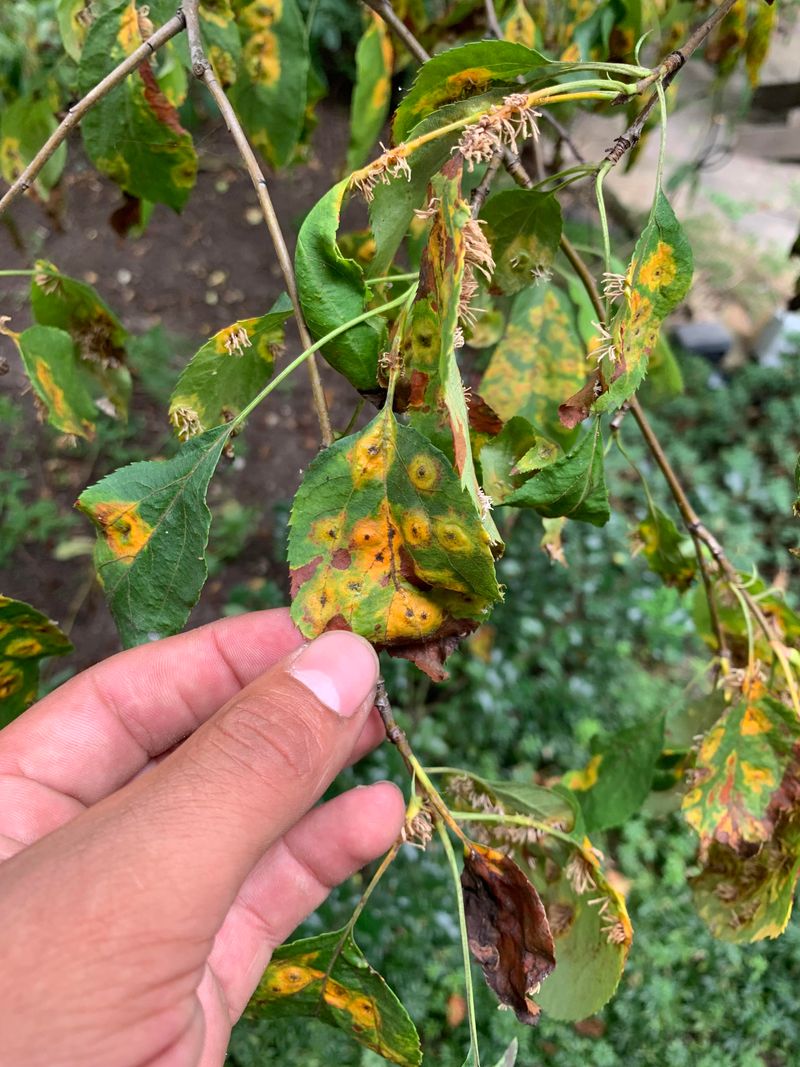
There is a certain point in the season when cedar apple rust stops being subtle. Spots that once looked pale yellow start shifting into a vivid orange red, and small dark dots begin forming right in the center of each lesion on the upper leaf surface.
That color change is not random. It signals that the fungal infection has been active long enough to mature and develop further.
The dark dots you see in the center of mature spots are actually fungal structures called pycnia.
They produce spores that are part of the disease cycle, so what looks like a simple cosmetic problem is actually an active biological process happening right on your tree.
Your Michigan Garden Changes Every Week. Your Plan Should Too.
Gardening in Michigan changes quickly throughout the season. Every Friday you’ll receive a simple weekly plan showing exactly what to plant, prune, fertilize, harvest, and protect so you never miss the right timing.
Knowing this helps you understand why the spots should not be ignored just because the tree still looks mostly green.
Homeowners trying to identify the problem early should look at the upper surface of the leaf carefully.
Bright orange red coloring combined with those small dark centers is a strong indicator that you are dealing with cedar apple rust rather than a different type of leaf issue.
Nutrient deficiencies and other common problems rarely produce that specific combination of color and texture.
Catching this stage means the disease is already progressing, but there is still value in identifying it accurately. Knowing exactly what you are dealing with helps you choose the right response.
Reach out to your local Michigan State University Extension office if you want a confirmed diagnosis before taking any next steps with your crabapple tree this season.
3. Raised Spots On The Leaf Surface
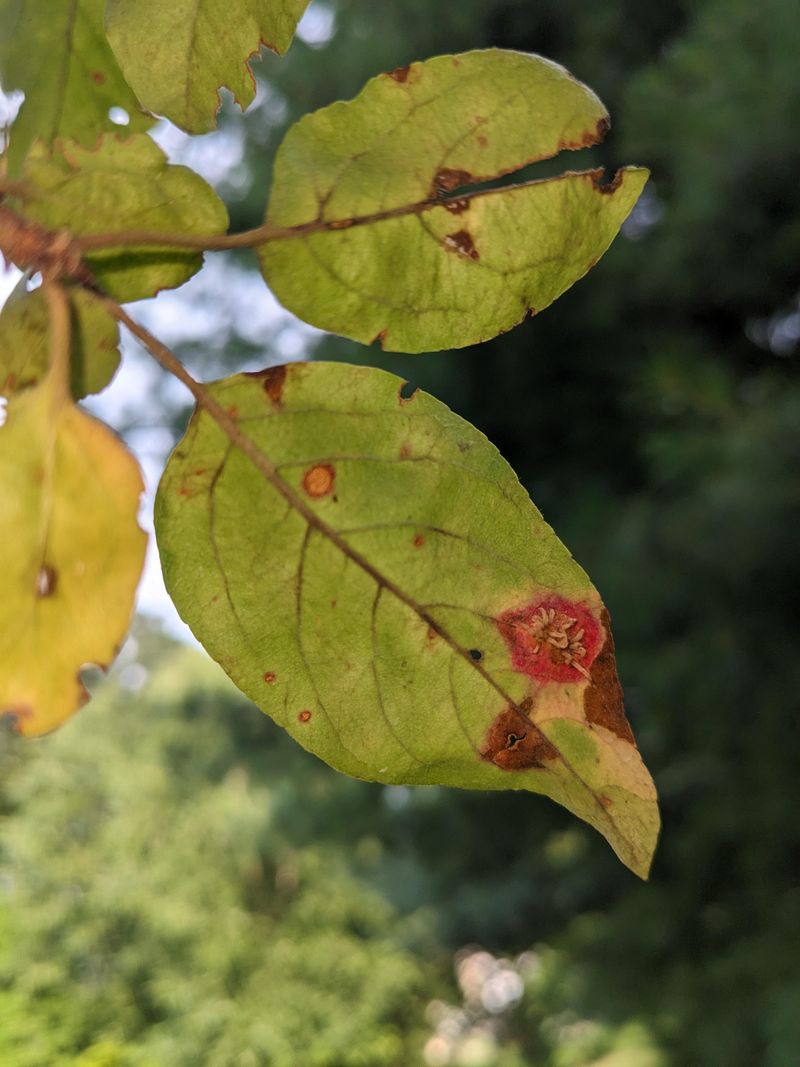
Not every leaf discoloration tells the same story, and texture is one detail that many homeowners overlook entirely. Cedar apple rust often causes spots that feel raised or slightly swollen when you run your finger across the leaf surface.
That physical change in the leaf tissue is something you can actually feel, which sets it apart from simple discoloration caused by sunlight, soil issues, or minor environmental stress.
Checking both sides of the same leaf gives you much better information than just looking at one surface.
The upper side of the leaf typically shows the orange or yellow coloring first, while the underside can develop tube-like or hair-like projections called aecia as the season progresses.
These structures are part of how the fungus spreads spores, and seeing them on the underside confirms that cedar apple rust is actively working through the leaf tissue.
Comparing the top and bottom of several affected leaves helps you understand how advanced the infection is at that point in the season. Early infections may show only slight raised texture on the upper surface with no visible underside growth yet.
Later infections display more pronounced structures underneath, which means the cycle is further along and spores may already be releasing into the surrounding air and traveling to nearby plants.
Taking the time to physically examine leaves rather than just glancing at the canopy from a distance makes a real difference in catching this disease accurately.
Grab a few affected leaves, look at both sides carefully, and compare what you see to reference images from a reliable source like Michigan State University Extension before deciding on your next move.
4. Spotted Fruit On Susceptible Crabapples
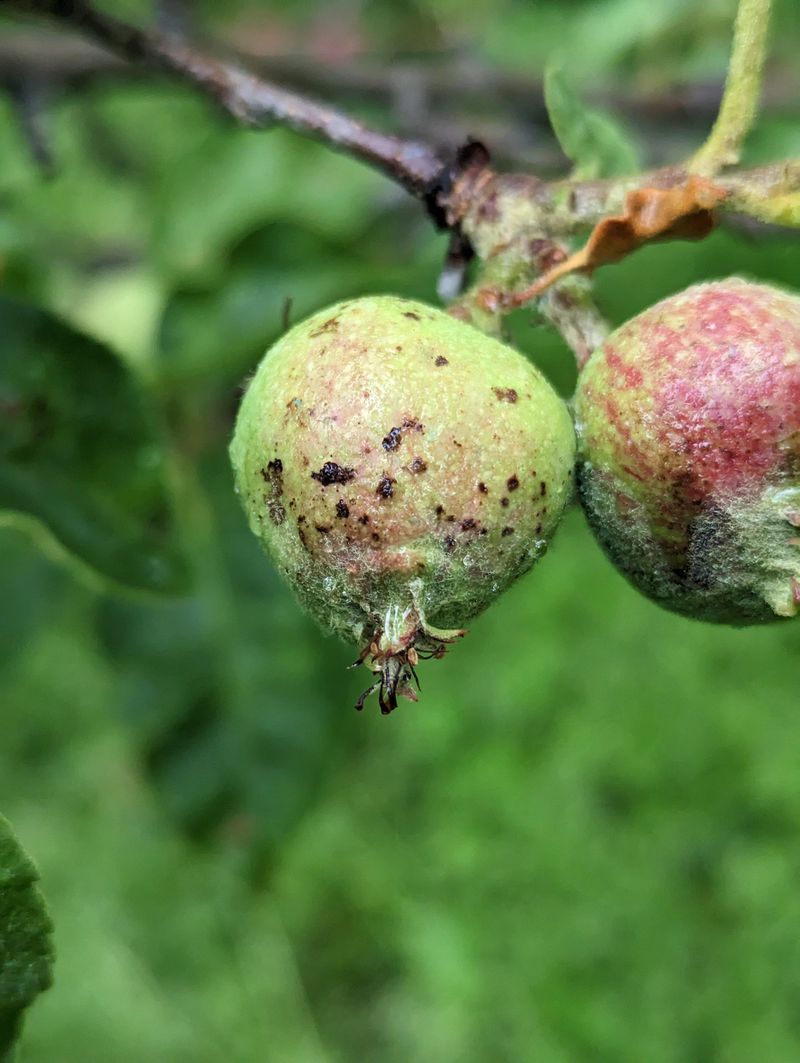
Most people focus on the leaves when looking for cedar apple rust, but the fruit can also tell part of the story.
While fruit symptoms are less common than leaf spots, they do appear on susceptible crabapple varieties and should not be overlooked during your inspection.
Spotting the problem on fruit as well as foliage usually means the infection has been present for a while and has spread beyond just the leaf tissue.
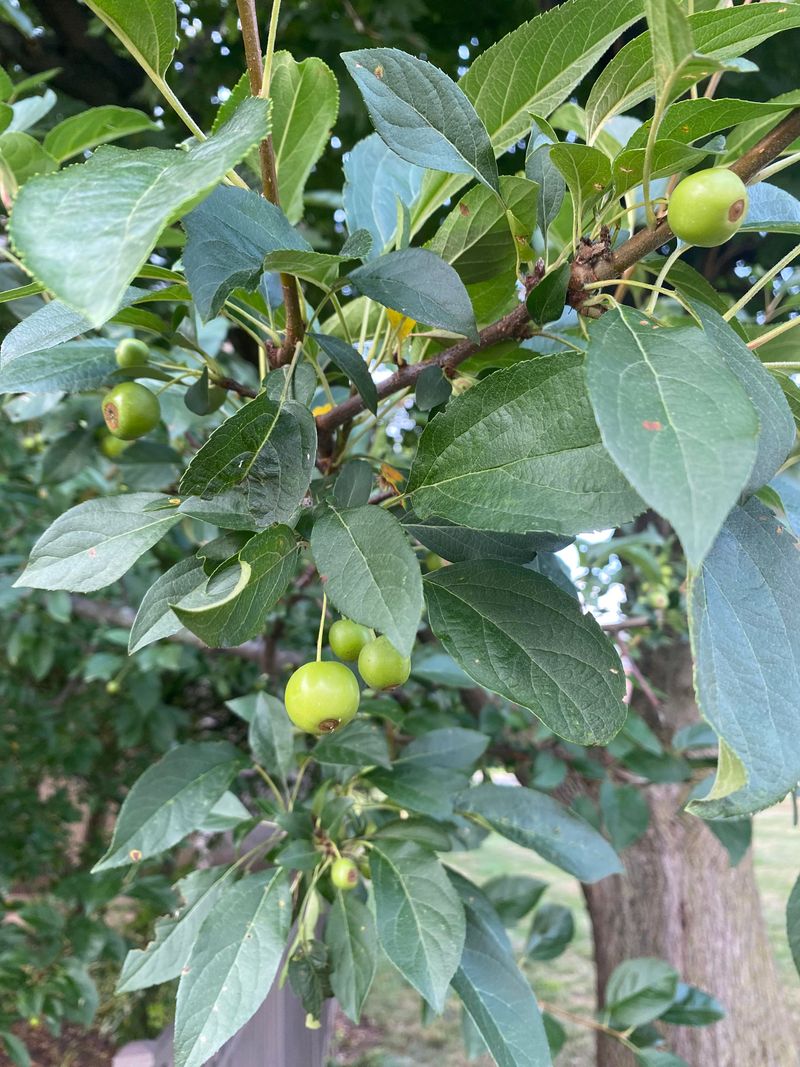
Fruit affected by cedar apple rust typically shows irregular spots that range from greenish to brown in color. Small dark dots may also appear within those spots, similar to what you would see on infected leaves.
The spots can make the fruit look rough or blemished, and heavily infected fruit may become misshapen or fail to develop properly as the season continues.
Checking the fruit is especially useful when you are not yet sure whether the leaf spots you noticed are actually cedar apple rust or something else.
Finding the same type of spotting on both leaves and fruit together strengthens your confidence in the identification.
It also gives you a better sense of how widespread the infection has become across the entire tree.
Walk around the full tree and look at fruit at different heights and locations in the canopy. Do not just inspect the low-hanging fruit that is easiest to reach.
Infections sometimes concentrate in certain areas depending on air circulation and the direction of prevailing winds during the spring spore release period, so a full inspection gives you the most accurate picture of what is happening with your crabapple.
5. Nearby Junipers May Be Part Of The Problem
Cedar apple rust has a two-host life cycle, which means it cannot complete its full cycle on a crabapple tree alone.
The disease also needs a juniper-type plant, such as eastern red cedar, Rocky Mountain juniper, or ornamental junipers commonly found in Michigan landscapes.
If your crabapple is showing rust symptoms, looking at nearby junipers is one of the smartest things you can do next.
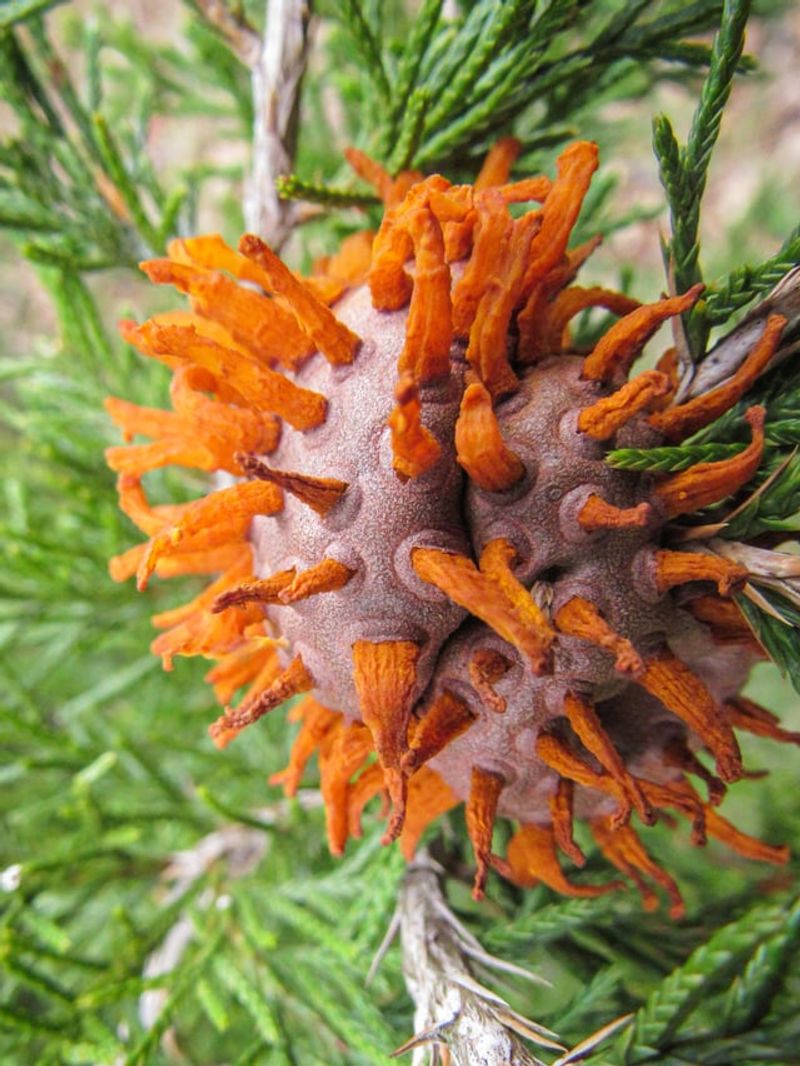
During wet spring weather, junipers infected with cedar apple rust produce striking orange gelatinous structures called telial horns.
These bright orange masses emerge from round galls on juniper branches and release spores that travel through the air to infect nearby crabapple and apple trees.
If you spot these orange growths on a juniper within a few hundred feet of your crabapple, that is a strong sign the two plants are connected in the same disease cycle.
Many Michigan homeowners are surprised to learn that the juniper in their front yard or a neighbor’s yard could be contributing to their crabapple problem.
The spores are windborne and can travel a meaningful distance, so proximity matters but is not the only factor.
Junipers showing galls or telial horns in spring confirm active spore release is happening nearby.
Removing the galls from junipers before they develop telial horns can help reduce spore release, but complete control requires managing both hosts thoughtfully.
Identifying which junipers in your yard or neighborhood are part of the cycle helps you create a more complete plan for protecting your crabapple trees in future seasons rather than only reacting after spots appear on the leaves.
6. Do Not Rely On Raking Leaves Alone
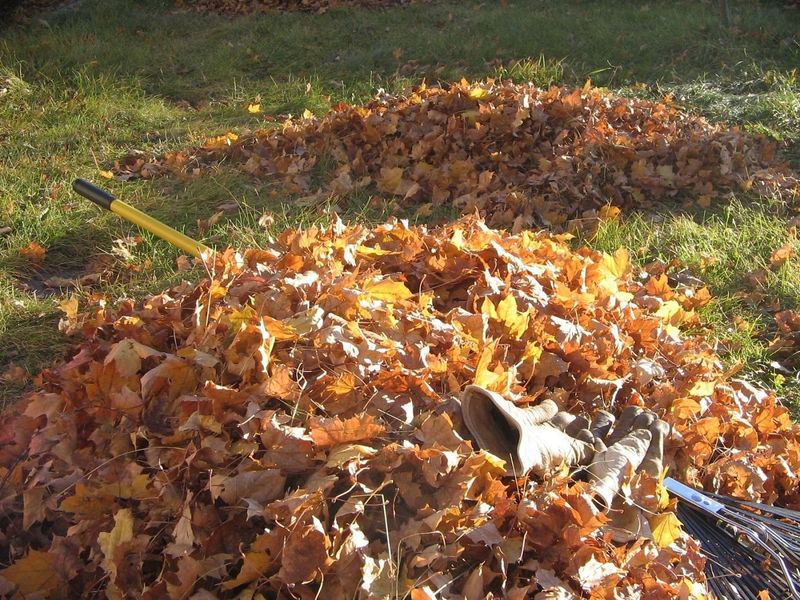
Raking up fallen leaves feels like a productive step, and it genuinely is good for overall garden hygiene. Clearing debris reduces habitat for a range of pests and pathogens that overwinter in leaf litter.
For cedar apple rust specifically, though, raking crabapple leaves will not solve the problem on its own, and assuming it will can lead to frustration when spots return the following spring.
The reason raking alone falls short comes back to the two-host cycle. Cedar apple rust does not overwinter in crabapple leaf debris the way some other fungal diseases do.
Instead, it survives through the winter on infected juniper tissue in the form of galls. Those galls sit quietly on juniper branches through the cold months, then activate and release spores again when warm, wet spring weather arrives.
So even if you rake every single leaf that falls from your crabapple this autumn, the galls on nearby junipers will still be ready to send spores your way next spring.
Raking is worth doing for general tree health and to reduce other fungal issues, but it should not be your only strategy against cedar apple rust.
A broader approach that considers both host plants gives you a much better outcome.
Think of leaf cleanup as one piece of a larger puzzle rather than a complete solution. Combine it with monitoring nearby junipers, considering resistant crabapple varieties for future plantings, and using fungicide preventively when appropriate.
Managing cedar apple rust well means understanding the full picture of how this disease moves through your yard across multiple seasons.
7. Use Fungicide Only As A Preventive Step
Fungicides are a common tool for managing cedar apple rust, but timing is everything when it comes to using them effectively.
Spraying after you already see spots covering the leaves means the infection has already taken hold in that tissue, and the fungicide cannot reverse what has already happened.
For fungicides to work against cedar apple rust, they need to be on the tree before the spores land and penetrate the leaf surface.
Michigan State University recommends applying labeled fungicides to broadleaf hosts, including crabapples, when orange telial horns first appear on nearby junipers in spring.
That orange display is your signal that active spore release has begun and that your crabapple is now at risk.
Following the product label carefully regarding timing, rate, and reapplication intervals is essential for getting any meaningful protection from the treatment.
Not every product labeled as a fungicide works against cedar apple rust, so reading the label before purchasing is important. Look for active ingredients that are specifically recommended for rust diseases on ornamental trees.
Products containing myclobutanil, propiconazole, or similar active ingredients are among those commonly used for rust control, but always verify that the product is labeled for the specific use you have in mind.
Avoid the habit of spraying just because spots appeared last year without checking whether active spore release is actually happening this spring.
Overusing fungicides adds unnecessary chemicals to your yard and can contribute to resistance issues over time.
Use them strategically, follow the label exactly, and pair them with other management steps for the best overall results on your Michigan crabapple tree.
8. Choose Resistant Crabapple Varieties For Long Term Control
Some crabapple trees seem to fight off cedar apple rust season after season without much help, while others struggle with heavy spotting every single year. The difference often comes down to genetics.
Certain crabapple cultivars have been bred or selected specifically for their resistance to rust diseases, and planting one of those varieties is one of the most practical long-term decisions a Michigan homeowner can make.
If your current crabapple gets severely spotted every year despite good care and timely fungicide applications, that is a strong sign that the variety is highly susceptible.
Continuing to fight the same battle each spring with a tree that lacks natural resistance can be exhausting and expensive.
At some point, it makes sense to think about what future plantings in your yard will look like and whether a more resistant variety would serve you better.
The good news is that there are many beautiful crabapple cultivars with strong rust resistance that also offer excellent ornamental value.
Varieties like Prairiefire, Adirondack, and Sugar Tyme are among those frequently recommended by Michigan State University Extension for their disease resistance combined with attractive flowers and fruit.
Talking with a local nursery professional familiar with Michigan conditions can help you narrow down the best fit for your specific yard and space.
Resistant varieties will not eliminate every trace of cedar apple rust in your landscape, especially if junipers are nearby, but they tend to show far less severe symptoms and recover more quickly.
Choosing the right tree from the start reduces the amount of ongoing maintenance your yard demands and lets you enjoy your crabapple through the seasons with far less worry about fungal disease.